
BrendAn
-
Posts
4,768 -
Joined
-
Last visited
-
Days Won
83
Content Type
Profiles
Forums
Gallery
Downloads
Blogs
Events
Store
Aircraft
Resources
Tutorials
Articles
Classifieds
Movies
Books
Community Map
Quizzes
Videos Directory
Everything posted by BrendAn
-
Easy scale FPV flying from the cockpit view with Cessna 182s
BrendAn replied to dominicm's topic in Remote Control
I wish this was available when I flew rc -
Asking: Are there many MSFS (2024) people here?
BrendAn replied to flying dog's topic in Aviation Videos
This is how I would like mine to run. Some good info -
Asking: Are there many MSFS (2024) people here?
BrendAn replied to flying dog's topic in Aviation Videos
Hope you get it sorted. -
i think it is a nice looking savannah. there is a foxbat on floats at our club same powerplant , it works. lots of 582 powered xairs on floats , and i am sure there are other examples so i can't see the savannah having a problem.
-
Asking: Are there many MSFS (2024) people here?
BrendAn replied to flying dog's topic in Aviation Videos
have you loaded it yet. i bought flight 2024. along with a joystick and pedals and a new gaming laptop. Ended up removing it . it was very slow and froze a lot. i would love to get it working properly. maybe i need a new desk top pc. -
STA-BIL® STORAGE • Keeps fresh fuel fresh for quick, easy starts after storage • Removes water from fuel to help prevent fuel separation • Protects the entire fuel system against gum, varnish, rust and corrosion • Contains powerful cleaning agents to remove gum and varnish build up that rob your engine of power and efficiency • Eliminates the need to drain fuel tanks before or after storage • For best results always store vehicles and equipment with a full tank of fresh fuel rather than a near empty tank. Always run the engine for up to 5 minutes after adding STA-BIL® to ensure the entire fuel system is treated and not just the fuel stored in the fuel tank • Use for storage and intermittent use. modern marine engines and motorcycles and jetskis for that matter are more advanced and complicated than most aircraft piston engines. if conditioners protect them whats the problem. this is the last i will comment on the subject. we shouldn't be taking over someone elses thread .
-
you asked for that skip. straight up insult when you could have said nice floatplane. its a well known fact if you want to land on water you need floats to do it more than once.😁 and that is a very nice looking savannah.
-
i know stabil works. it has to be approved for petrol not aviation. the fuel doesn't know what its in. but each to his own. i am not interested in looking up all the previous posts on the topic. if i want to leave my plane for more than 6 months i will just add stabil.
-
like a walk of shame😁
-
what do you mean. i read your post wrong. you mean reds first post at the top. i tried to open that too. i got bombarded with warnings and offers to fix my internet security .
-
what facts do you base this on.
-
Aero Ex - Valkyrie 1 Design
BrendAn replied to Peasant_Pilot's topic in Aircraft Building and Design Discussion
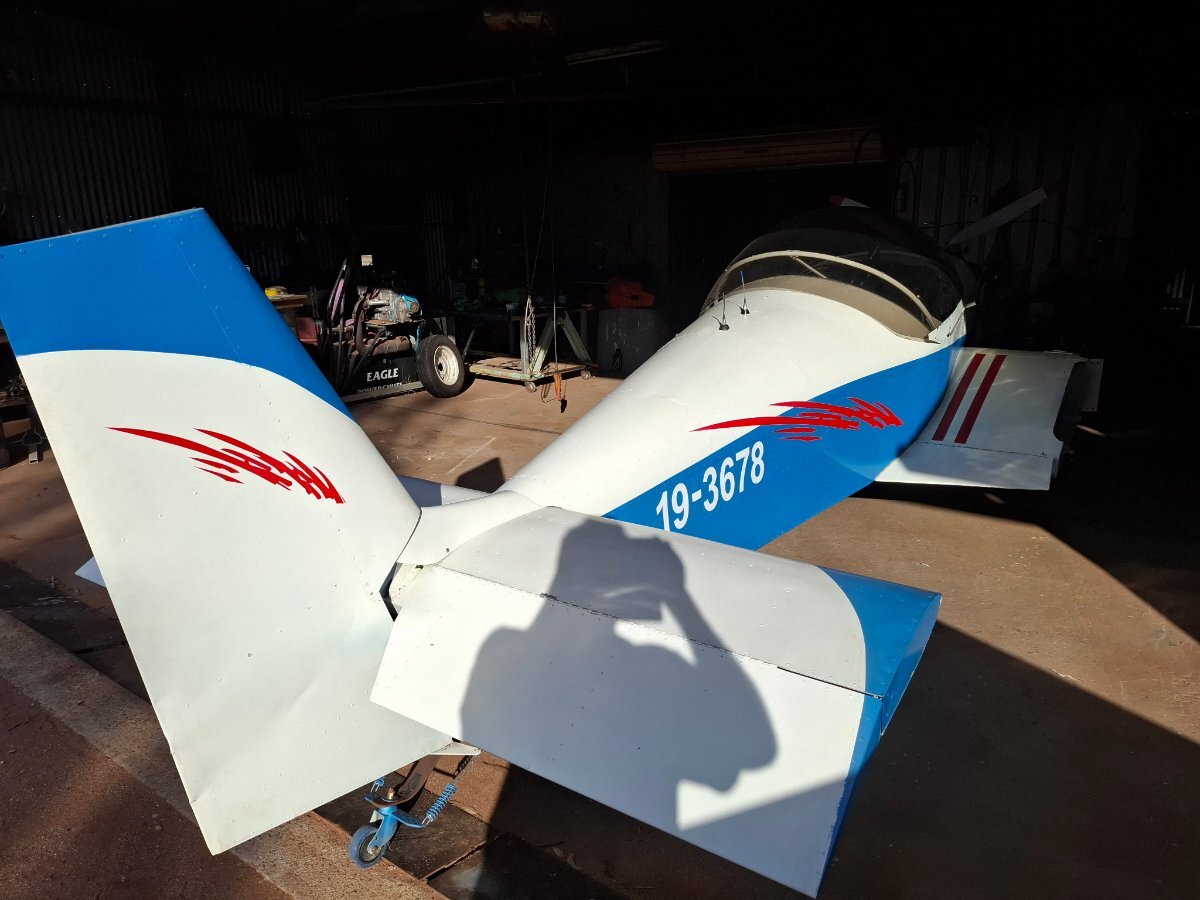
Hi Guys, Yes, that’s a modified Zodiac fuselage, it has a raised rear turtledeck with windows and a different spar arrangement, as I fitted the wing of a BRM Bristell LSA. It‘s funny, the blue and white Zodiac in the picture above is the first CH601 I built, back in 2000. A very docile and fool proof taildragger, just sat down nicely when three pointed. The price it sold for was ridiculous. Yes it was a bargain. The market is very quiet . -
The topic is about fuel left in the tanks long term. Fuel stabiliser keeps it mixed and fresh.
-
Aero Ex - Valkyrie 1 Design
BrendAn replied to Peasant_Pilot's topic in Aircraft Building and Design Discussion
He did a nice job of it. It's going to live in Deniliquin I think. -
Fuel stabiliser is your Friend
-
Aero Ex - Valkyrie 1 Design
BrendAn replied to Peasant_Pilot's topic in Aircraft Building and Design Discussion
This is a zenith taildragger rudder. It's the one I was going to buy but chickened out because it's a taildragger.
-
line up the live prop with the tail, thereby reducing drag to a minimum. The Twin Jab settled on a 50-100 ftimin descent. At 2,000 ft agl, that gives you around 20 minutes, or 25 nm to find somewhere to put the plane down. Flying over builtup Jo'burg that opens up a number of airfields as options rather than a'precipitous descent into an production models, Jabiru's computer based calculations indicate that this will go up to 110 KTAS). That gives you a five-hour endurance or a range of around 440 nm with VFR reserves. East of Waterkloof, we do a climb performance test from 5,500 ft to 7,000 ft- which worked out to a density altitude of around 7,500 to 9,000 ft. With both engines at 3,050 rpm, we slowed to B0 kt for best rate of climb, and averaged 670 ft/min. Rael tells me he carried out a similar test in George at 125 kg below gross from sea level to 10,000 ft and averaged 850 ft/min. That's not a fart in a bath, but it's nothing to turn your nose up at either - or in one sense, maybe it is. Finally, we checked single engine performance on the Highveld. With the left engine shut down and the prop a dead stick, we banked three degrees to the right, with the ball out to the right enough uninviting golf-course fairway - if you're lucky. Things were even better when we shui down the right-hand engine, which resulted in, at most, a 50 ft/min descent. Now, that gives you close on 50 nm to find your landing spot from 2,000 ft agl. spot on nev. the flight test confirmed what you said.
-
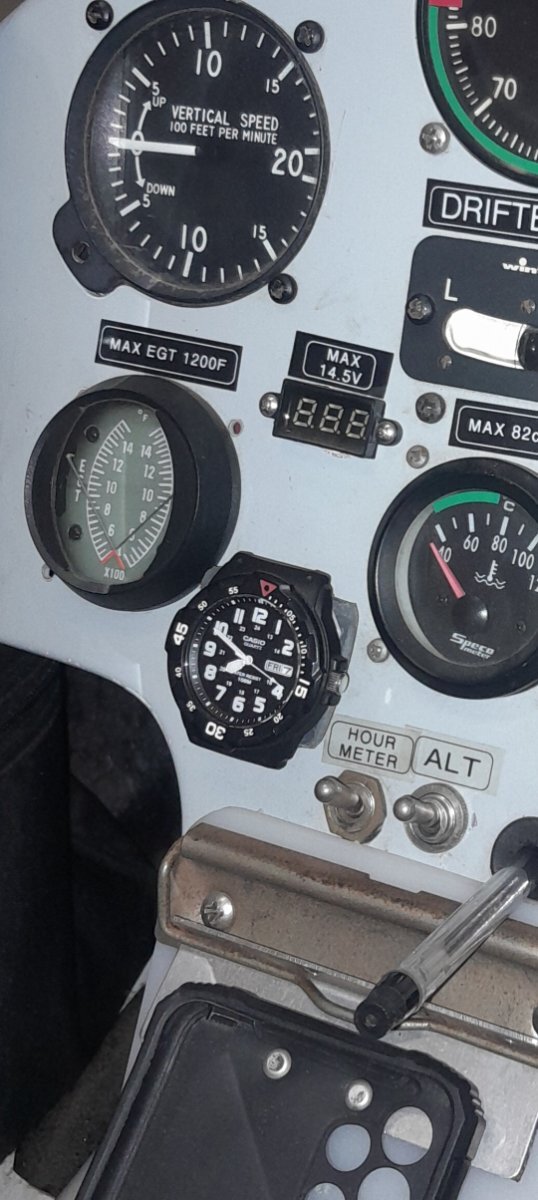
well you forced everyone wearing an aviator watch to get their tape measure out.
-
That was the post I was talking about.
-
i think your earlier post rubbed people the wrong way.
-
New Garmin G3X Touch efis replacement ?
BrendAn replied to BurnieM's topic in Instruments, Radios and Electronics
might be a colour tv but it only has a boring geography channel. no netflix -
so if it can't fly on one engine , what is the purpose of it. might as well have a j230
-
it only has 280kg payload. i am only passing on what is on the jab website.
-
Jabiru J432 Category Experimental Design Standard ASTM F2245 Engine 2 off, Jabiru 2200, 4 cylinder, 60 kW, 80 hp Propeller 2 off, 2 blade, fixed pitch, composite scimitar prop Cruise speed 125 knots TAS Stall speed VS0 (clean) 52 knots VS1 (full flap) 48 knots Climb rate 1,200 ft per min Max cross wind 14 knots Fuel capacity 135 litres Fuel consumption 30-32 litres/hr Range 550 nm Endurance 4.5 hours Max takeoff weight Experimental 760 kg Empty weight 480 kg Usable weight Experimental 280 kg