Leaderboard



Popular Content
Showing content with the highest reputation since 02/03/26 in all areas
-
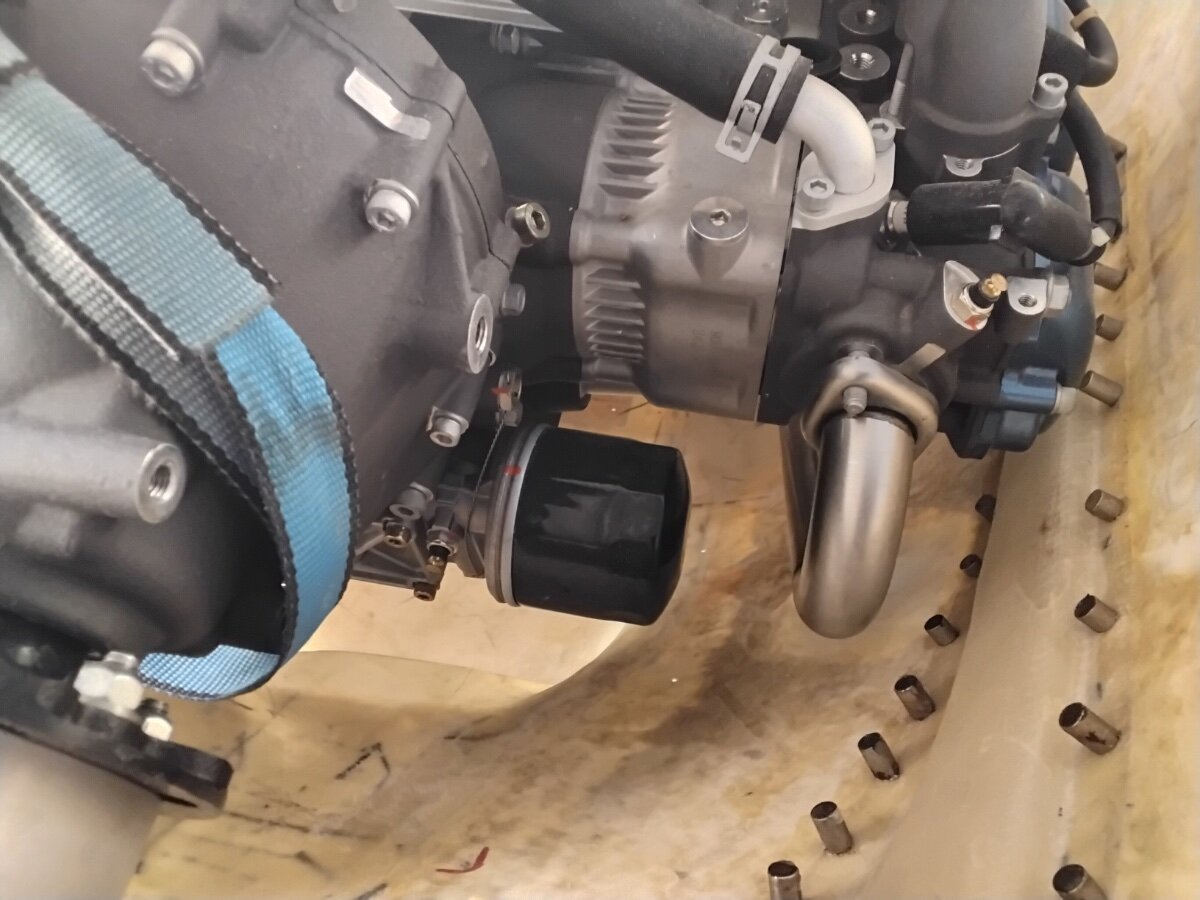
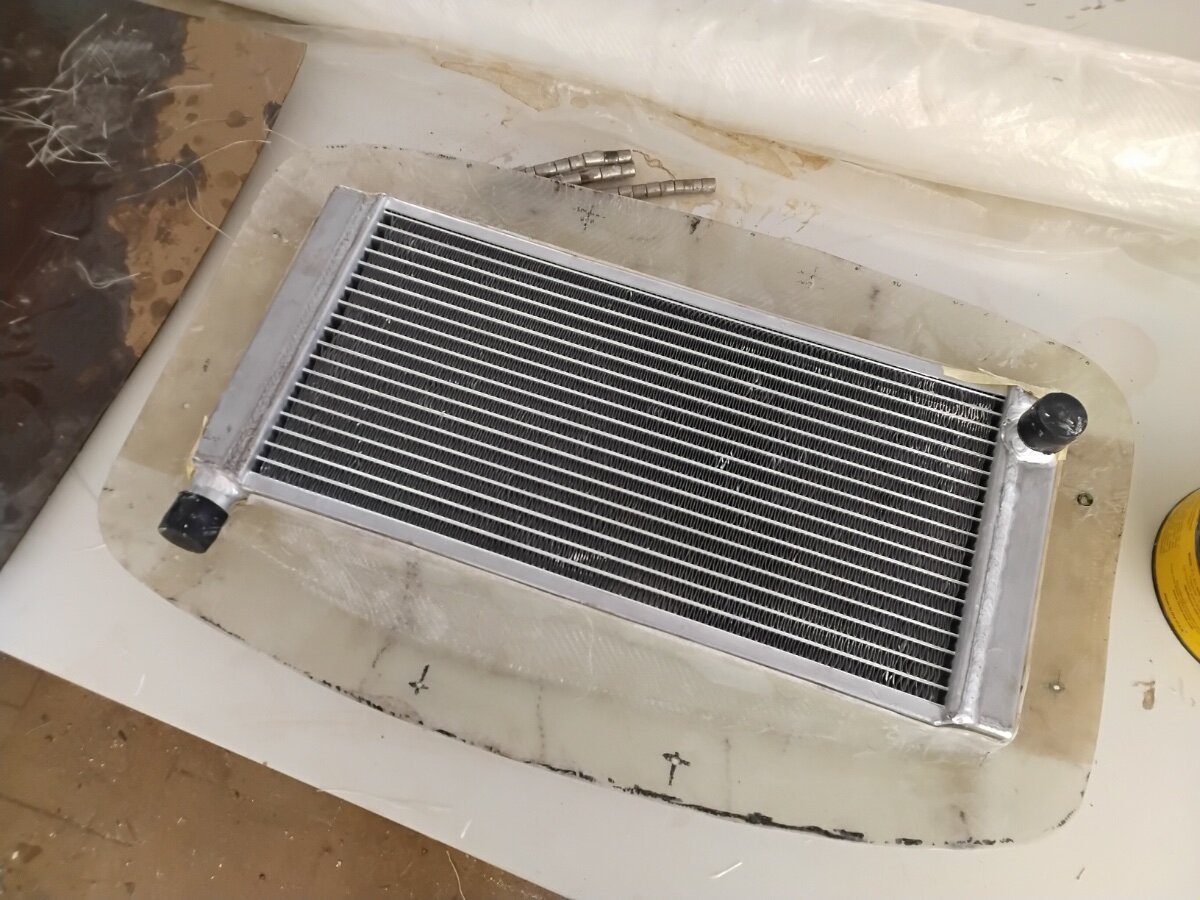
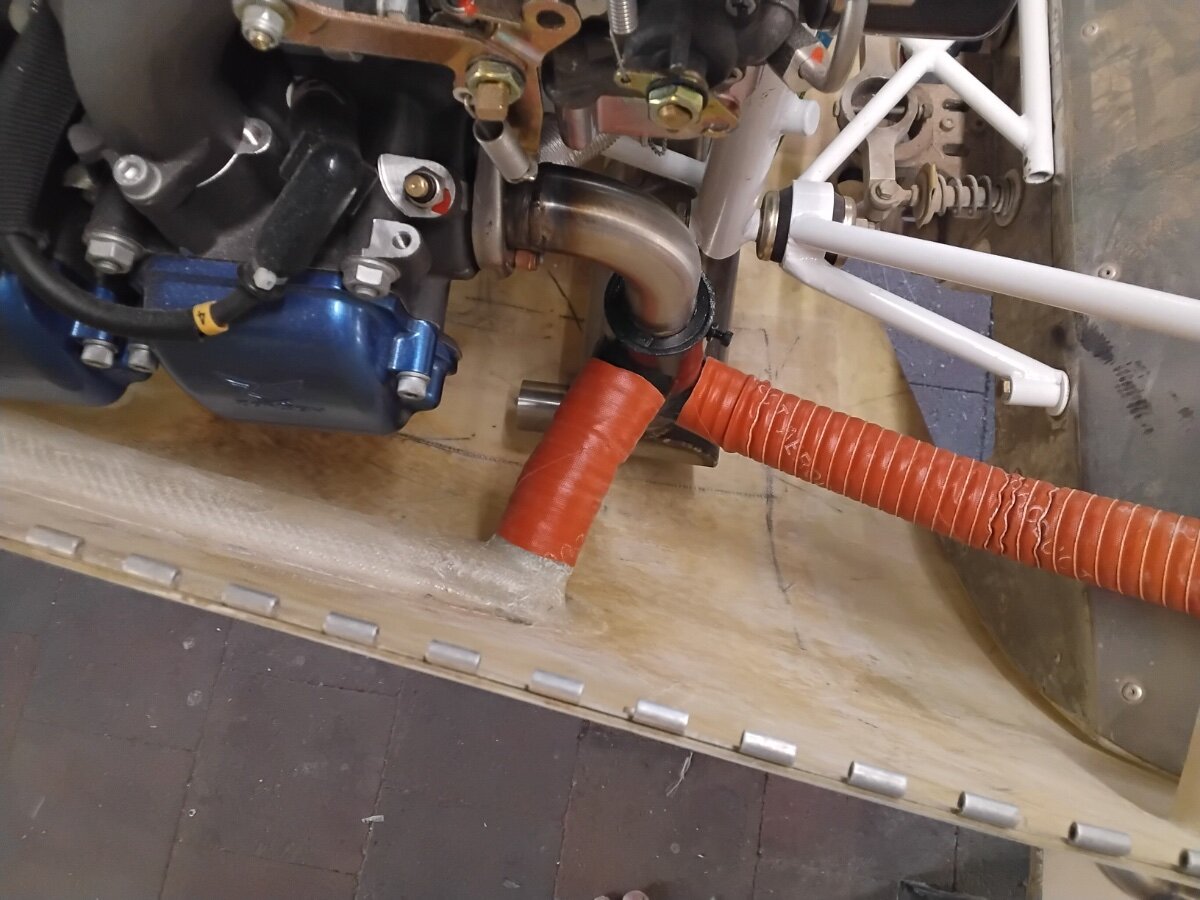
Earlier on in this thread, discussion arose about the proximity of the oil filter to the exhaust. Here is a photo of the clearance that we have with our installation. We will look at whether any insulation is required in due course. There is adequate clearance to allow the filter to be removed with the exhaust in place. The composite channel that you can see in the above photo is being bonded to the inside skin of the lower cowling. This is an air duct for cabin heat. It extends from the intake at the front of the cowl back to the heat muff around the exhaust, with scat hose connecting the composite duct to the muff inlet. The radiator is to be installed in the forward lower cowling. Our radiator is close to double the area of the standard Rotax cowling. The radiator mounting frame is attached to the lower cowling by 8 fasteners, allowing the fasteners to be released to remove the lower cowling without needing to disconnect the radiator. The engine mount turned out so well. I keep admiring it every time I get sent photo updates about the installation. All in all, it is coming together nicely. We are starting to get excited to test fly our 109hp J160.
 14 points
 -
Well, finally put the plane back together. Took my time on it. But THREE times I was interrupted by people coming in to have a chat. I was very careful about what it was I was doing so that I continued where I left off without missing anything. However, where I disappointed myself was being in a rush to do a circuit after starting it and rechecking the oil level. It was getting a little late and I ended up not doing a complete preflight check, it was just luck id even taken the pitot cover off! I survived, but clearly I wasn't in the right frame of mind to be flying, let alone a flight test. If there was an emergency in that frame of mind, would I have handled it well? If I get in a similar situation again, I'll be sure to just pack up and come back another day. It's not like there's any schedule to get somewhere.7 points
-
'Don't sump plugs hold the vehicles together" Seems that way after you get your car back from some service establishments .. or is 'tighten till it strips and backoff 1/2 a turn' Never quite sure😇7 points
-
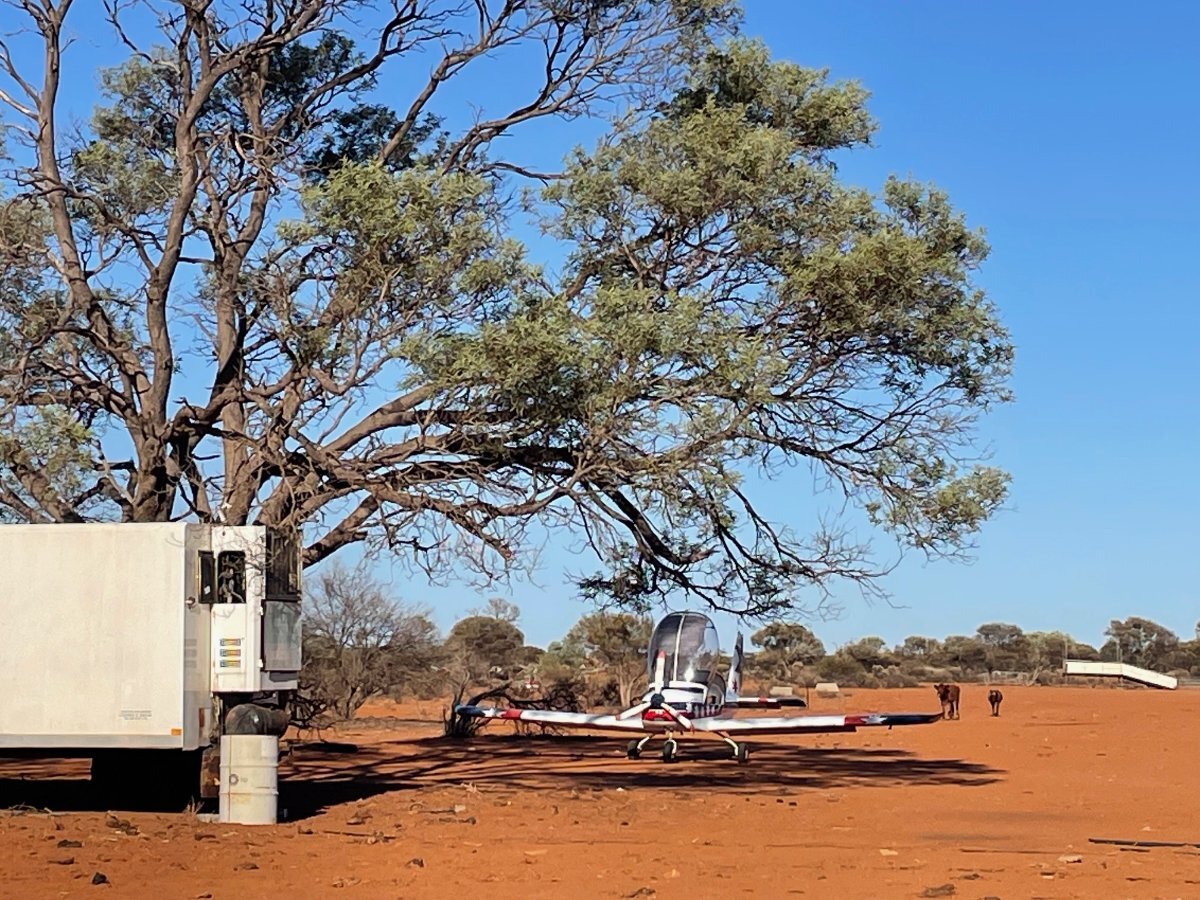
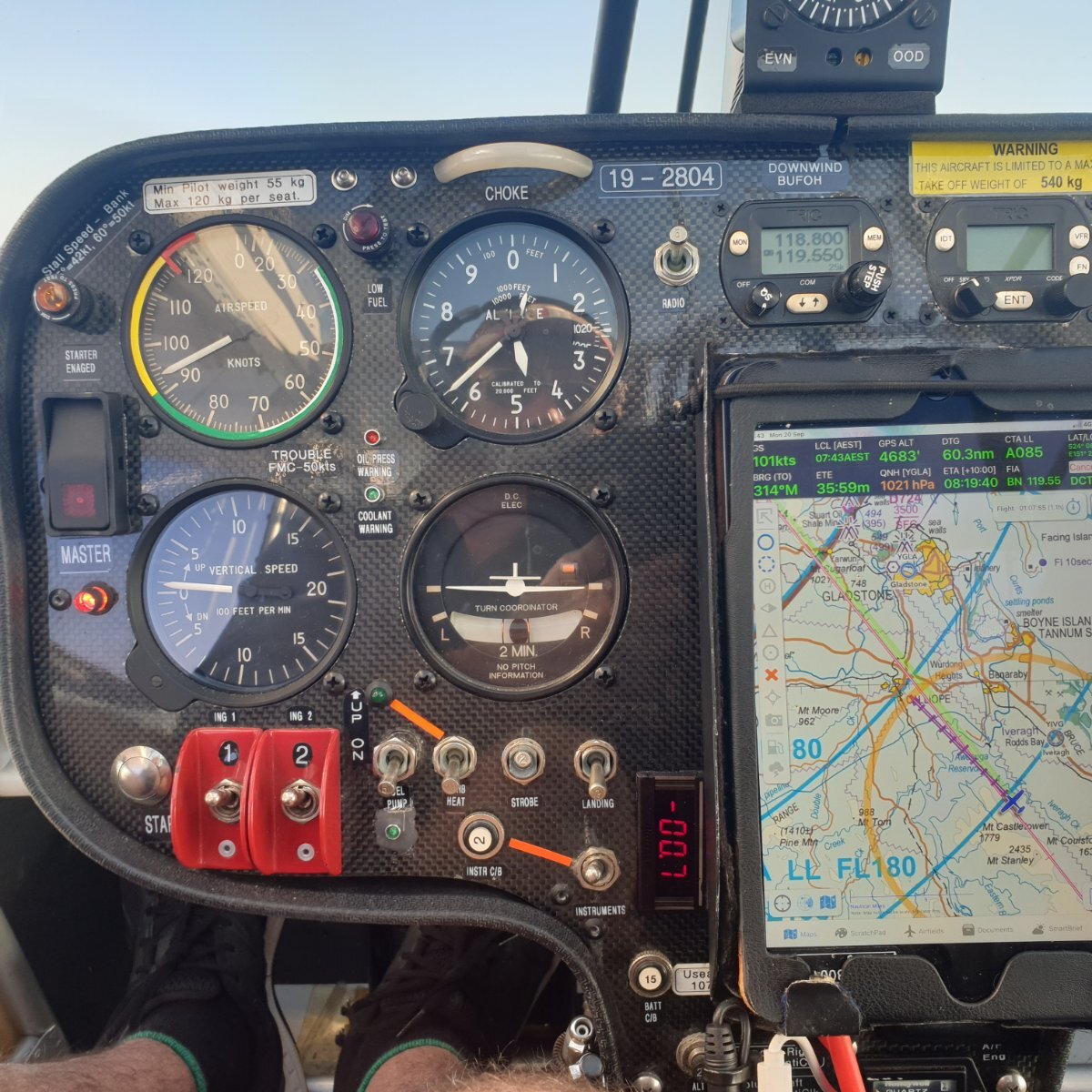
Left at 7:00 for Coodardy. The iPad was fully charged last night and on about 60% this morning. After landing a realised I didn't bring a chair. Then I grabbed the iPad and settled down on the ground with the ants and my iPad, it was dead flat. No book to read and an hour to spend filling the 1000L IBC's. Fortunately I watched where I was going on the way out because the old iPhone 6 is not too smart on OzRunways.
7 points
-
Hello again friends. Once more, a long break between updates ... The move to Mourilyan Harbour was a large enterprise but so happy we finally made the break. We are loving it up here, with the slower pace of life, minimal traffic, friendly people, great weather - for those who like it hot, and can put up with it sometimes being very humid - and awesome fishing. I have finally come to accept that I am unlikely to ever have the time to complete the DooMaw, I still have so many other things demanding my attention. So it is time to move it onto someone who has the time and skills to complete and enjoy it. I have drawn up an inventory of all the components and because of the move, that means it includes the large enclosed box trailer that it is still in after the move up here, so it will be very easy for anyone who decides to take it on, they can just drive up and hitch it on to tow back home. It will be offered at an extremely reasonable price, so if anyone here is interested let me know asap. I would rather it go to someone who has followed the build and given me encouragement along the way - but either way it will be on a first in, best dressed basis. I hope to get some adverts live today, they will be on the Classifieds on this site, RAAus site, Aviation Trader and Marketplace/Facebook's various Aviation Groups.6 points
-
https://www.youtube.com/watch?v=uVA9VCd5JqQ6 points
-
There's the Aeroplane's stated limit and your Limit. Both may be questioned. A High Wing can generally do a higher X wind than a low wing.. Rudder size and effectiveness count also . Small Planes don't have the Inertia larger ones do, so the Kick straight has to be close to touch down but better to touch down slower and on the into wind wheel (still banked) and countering the cross wind helping prevent weather cocking into wind OR wind raising the upwind wing and putting a tri gear Plane on it's nose. Nev5 points
-
These are made with brother label printer. Been over 10 years now. Allows your personal requirements.
5 points
-
Warbirds Over Scone has been bleeding cash for years and the only reason it's on again this year is Council handed the reins to Paul Bennet and washed their hands of it. Upper Hunter ratepayers are sick to death of paying through the nose for shindigs like this (and the WOFTAM that is Hunter Warbirds...) that only benefit a few - while at the same time, being bent over and shafted with a 30%+ rate hike. If PB can't make a go of it this year, it may not return - though I suggest he'll simply default to their 'prepackaged airshow' that does the rounds and seems to be fairly successful.5 points
-
this is a beautifully finished camel by scott matthews at latrobe valley. some of you may have watched his videos of the build over the last 3 years. finished now and a real credit to scott.4 points
-
RV-12 school builds are well-established in the US. Some in NZ as well that I'm aware of. I was one of about 15 or more mentors on the SAAA's build a few years ago that involved about 5 schools across Australia. In Perth, they ran two build sessions per week. I only helped out once a fortnight but one or two dedicated mentors were there for virtually every session and really made the project happen. The students were 15/16 year old's divided into about half a dozen teams. Our build started half way though the year and went into the next year with a new lot of students so they had to start from scratch to learn the basic skills. I was surprised by how awkward and uncoordinated some of the boys were in handling basic tools. They could barely use a screwdriver and we had a pretty high attrition rate as they soon realised that building a plane was essentially a slow and boring process with lots of repetitive tasks. A few were interested enough to see it though, and one young kid in particular was very keen and capable and was still there at the end. In the first year we had two girls in the group and they ran rings around most of the boys. They listened, read the plans, followed instructions and were careful and precise in their workmanship. The same could not be said for some of the boys who were careless and disinterested and didn't take it seriously, but they didn't last long. We built the main fuselage and firewall forward while other schools did the tail cone, empennage, and wings. Some SAAA Chpt 24 members at Jandakot jumped in at the end to finish off the engine, avionics and fibreglass work. The students weren't allowed to do fibreglassing or priming due to the hazardous materials issues. Overall I'd say the quality of workmanship was probably no better or worse than many other homebuilt aircraft. It was obviously assessed as being airworthy anyway. These were just my observations and I don't know how the other schools went. It eventually all came together thanks to the hard work of a small core group of mentors. The plane was/is called `Miss Tori". I don't know who owns it now but it was a very well equipped aircraft with dual Garmin G3 screens, autopilot, lights etc.4 points
-
The comments from Laurent-LV - who is obviously an engineer - under that video, leaves one gobsmacked that these Rotec blokes are still in business! It's amazing that someone hasn't sued them into bankruptcy.4 points
-
I don't think Verner has made the distance, unfortunately like some many others, including the "D" Motor. which is didn't think would either. . Early Gnome and Rhone Motors have very low hours before they Needed routine Maintenance and they Only turn a LARGE Prop at about 1200 RPM with a Lot of gyroscopic effects and a high usage rate of CASTOR oil which ends up all over the Pilot.. I'd like to see a bulkier and bigger dia Prop on that Motor and reduce all possible drag Like the dummy Machine guns for Instance. Jacko's Sopwith flew fine. I can't recall what engine was in it. The NZ stuff, Like always will be a well done thing .I've seen what they do and they punch well above their Weight in these matters. Nev4 points
-
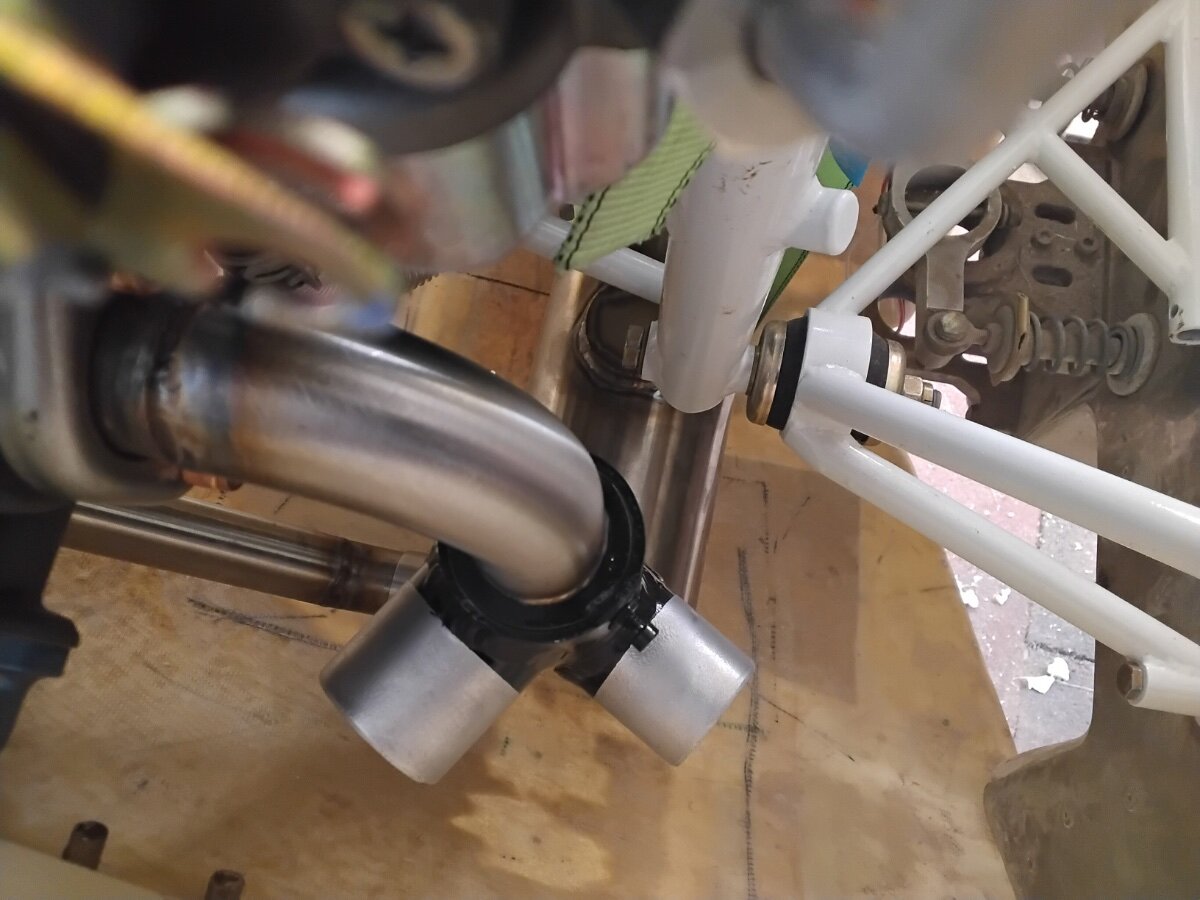
The cabin heat air intake duct has now been fully bonded to the lower cowling and the photo below shows the scat hosing geometry from the intake air duct to the heat sleeve around the exhaust pipe and then out to the cabin vent. Fasteners yet to be applied as this was a trial fit.
4 points
-
Correction - blue adventures advised two spanners. The oil tank is nowhere near as solid as a sump pan, so you risk tearing or cracking the weld4 points
-
Moneybox, "I I did see somewhere it mentioned up to 20kt cross wind." A 20Kt X wind component would be unusually high for small aircraft like yours. Your POH states 10Kt for TO/Landing. I would go with this and not try to "explore the envelope" in what can be a challenging flight situaton, with very little room for error. The most challenging X wind is a blustery one, it's there, then gone, then back - the pilot is fighting to mainatine straight & level while slipping on/of, into wind - not fun! Aircraft types may have very diffrent handling characteristics, in X wind landings, from relativly benign to scary. 😈4 points
-
i see windsocks that are tattered occasionally, if it was me i would have built a tabernacle mast to hang them on. so it could be lowered to replace the sock. bad things can happen to old farts on high ladders.4 points
-
It's a self centering technique to keep aircraft aligned on the centreline. 😄4 points
-
Below is an extract from Laurent-LV's video comment, he obviously has good engineering skills and has done his research and examination of the Rotec design. QUOTE: " The development of the ROTEC engines initially relied on the plans of a model engine, plans that were available for purchase at the time for hobbyists. The two ROTEC enthusiasts thought they could turn it into a business by making engines in sizes compatible with amateur-built aircraft. The issues begin at this stage because neither of the two brothers had any knowledge of mechanical engineering, let alone precision engineering. The technical solutions chosen for these engines are pure heresy, both in terms of engine architecture, materials used, and the complete absence of tolerance chains, etc. The problems with these engines are as follows: - Selection of materials for the various components - Lack of tolerance chains for assemblies - Absurd technical options regarding the reduction unit - Huge risks of breakage in the reduction unit - Cylinder-head connections not properly managed by the manufacturer, leading to leaks after a few hours - Incorrect materials and sizing of cylinders, resulting in deformations and corrosion attacks both externally and internally - Cylinder mounting on the engine block done through studs and nuts of incompatible quality, allowing the cylinders to potentially separate from the engine block - Apocalyptic combustion cycles, leading to rapid valve fouling, overheating, and seizing - The piston pivot point is incompatible with the crankshaft amplitude, causing piston skirts to rub against cylinder walls - Due to the lack of tolerancing, piston mounting on their bushings can sometimes feel stiff (seized) or loose, leading to rapid wear and the development of hot spots - Longitudinal guidance of the crankshaft within the engine case and the connection of the connecting rods to the master rod is completely uncontrolled. This results in uncontrollable friction depending on engine speed and load, causing overheating and premature wear of certain parts. - The angle formed by the rocker arm push rods and the rocker receptacle is too wide, allowing the push rods to disengage, thus rendering the valve operation ineffective - The connection of the valve covers to the cylinder heads is done using two screws located at the center of the covers. Tightening the screws causes deformation of the covers, creating a "banana" shape that allows leaks to appear around the engine - Overall lubrication system and circuit are catastrophic - Ignition management relies on technical solutions unworthy even for a lawnmower - The alternator drive system is a makeshift bush repair installation There are dozens of critical issues with these engines, concerning both the 7- and 9-cylinder models. As they are, these engines should NOT under ANY CIRCUMSTANCES be used in manned flying vehicles. Even on the ground, they present significant dangers to people staying in the vicinity. As for the manufacturer's arrogance, their audacity in selling engines assembled from worn-out parts, even those from engines that have crashed, should be enough to deter anyone who takes the time to inquire before purchasing these decorative objects that should remain static." That's got to be a large enough analysis, and seemingly professional opinion, to make anyone understand, that the Rotec engine falls far short of what is required for a reliable aircraft engine.3 points
-
In the latest round of information gradually seeping out about the MH370 search, it has been revealed that the Ocean Infinity, carying out further searching under its latest contract with the Malaysian Govt, has carried out two more searches, over 28 days, ending Jan 23, 2026 - and has still found nothing. Ocean Infinity's latest search contract started in March 2025 and ends in June 2026. It seems unlikely that Ocean Infinity will carry out further searches in the chosen area, before its contract ends. The families of the lost pax have joined up in a group called Voice370 and are pleading with the Malaysian Govt to extend the search limit time - and to extend the search contract to other interested parties. It's currently unknown as to whether the Malaysian Govt will agree to this. There must be a limit on the amount of money and effort expended in this constantly fruitless search. Families of flight MH370 victims push for wider search WWW.PERTHNOW.COM.AU Malaysia is being urged to extend the search for a flight carrying 227 passengers that disappeared en route from Kuala Lumpur to Beijing 12 years ago.3 points
-
There is an active aero club at Innisfail Airport - meets for tea/coffee Saturday Mornings 0930. Regs Alan3 points
-
That was an ANSETT DC4 out of Perth Fuel system issue.. Tell people to go away when you're doing important things and IF you HAVE to Leave Make a NOTE to your self about where you were at. Shift changes have been found to be an obvious potentially dangerous disconnect Tag things. Nev3 points
-
You’ve just mover a shovel full from your bucket of luck into your bucket of experience. Thanks for putting this out there. It’s really important that we learn from each other.3 points
-
Hi MB, I've emailed you the Evektor Bulletin for the Crosswind Limt increase, 18kts by the way. Bulletins are available on the Evektor Website. Evektor Bulletins3 points
-
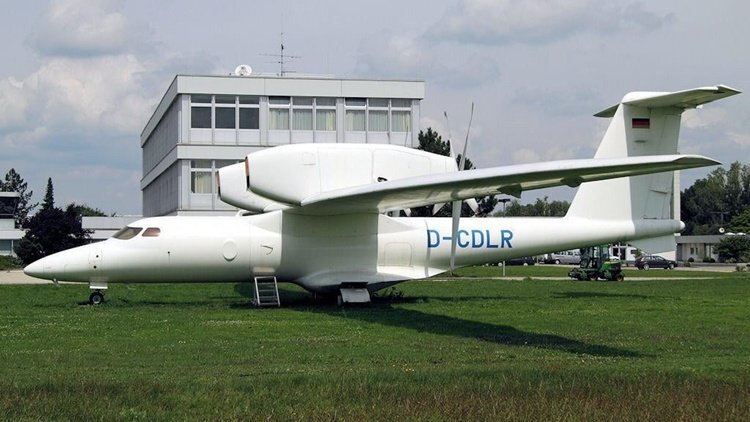
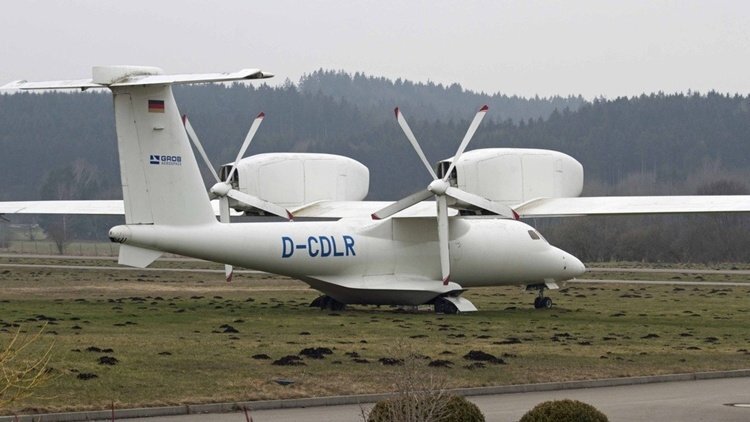
The Grob Strato 2C was a German experimental high altitude research aircraft. Powered by two turbocharged piston engines and featuring an extremely long span wing of composite construction, one aircraft was built in the 1990s, but was abandoned despite setting a world altitude record for piston-engined aircraft on its last flight. In April 1992, the German Aerospace Center (Deutsches Zentrum für Luft- und Raumfahrt e.V - DLR) commenced a programme to develop an aircraft to carry out atmospheric, stratospheric and climatic research. It chose Grob Aerospace to design and build an aircraft to meet these requirements, based both on its experience in use of composite material in aircraft structures together with its successful development of the Egrett surveillance aircraft, with the aircraft expected to be operational by 1996. In order to meet the requirement to operate at an altitude of 24,000 m (78,700 ft) for 48 hours, Grob designed a twin-engined aircraft with a straight, very high aspect ratio wing of 56.5 m (185 ft 4½ in) span. The wings featured winglets, and were mounted across the top of the fuselage which terminated in a T-tail configuration. The aircraft was designed to be crewed by two pilots, and could accommodate two scientists and associated mission equipment in a pressurised cabin. A galley, rest facilities and a toilet were provided. Unlike the Egrett, which was powered by a single turboprop engine, the Strato was powered by two wing-mounted pusher compound engines consisting of a turbocharged piston engine with the Gas Generator from a PW127 turboprop engine to provide a constant supply of pressurised air to the piston engine at high altitude. This had the advantage of maintaining power at high altitudes. Each engine drove a 6 m (19 ft 8 in) diameter five-bladed propeller. Construction of the airframe moulds started mid-November 1992, with airframe construction beginning in April the following year, starting with the tailplane. The airframe was completed in 1994 and engine installation commenced.
3 points
-
He’s had considerable angst along the way with his chosen power plant, but doggedly preserved….I sincerely hope that he doesn’t come to regret his tenacity in that regard. 🙏3 points
-
Fitting that thermostat creates a problem you MUST solve. You must eliminate any Possibility of AIR in the supply side of the Oil system. Nev3 points
-
I ended up buying a couple of copper washers from the local mechanic. It was exactly the right size too (18 od 12 id) ☺️ The one that was on there was aluminium. It had just the slightest weep over the period I've run it, about 40 hours.3 points
-
I think he said earlier that he had a handheld GPS witth airfield waypoints. So not exactly no backup.3 points
-
I regularly make a written note of my total error between aircraft compass and chart heading on my flight record sheet so I can use that info for heading whenever / if ever needed. Just a habit of mine.3 points
-
Or a backup iPad 🙂3 points
-
Yep, but that process won’t fill the radiator if the thermostat is blocked (and yes, it is fully blocked at low temperatures, unlike the coolant thermostat which does have a small bypass).3 points
-
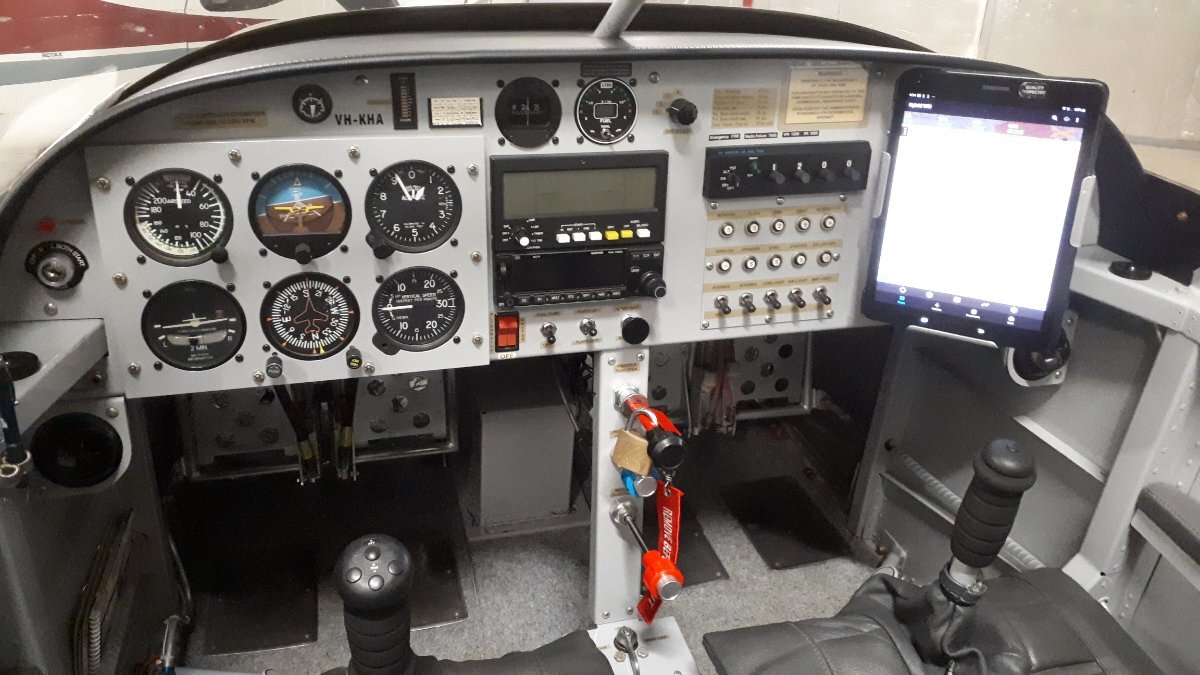
I’ll second (third?) the RAM mount on the longish arm. I used to have an iPad mini on a 75(?)mm arm and it worked well (and that was in a low wing - never had a problem). On your panel, I’d look at putting the mount below the Hobbs meter. It doesn’t matter if you can’t see it in flight, and it’s easy to move the tablet to check it at flight’s end.3 points
-
I used a ram mount, two ball ends and a 100mm long arm allows a lot of flexability of position. The foot is about the size of an engine gauge. I made the tablet mount. 10 inch tablet takes up little space because it is on an angle facing the pilot.
3 points
-
A quick look on google maps, satelite, shows a terminal building, probaly has a toilet, gliding club, most likely toilet beer and food. Plenty of grass parking much like Narromine. I talked to my antique friend today and we are going.3 points
-
WA is a problem for all skillsets. Yes, companies could train people up but within a year you know anybody with a skillset is going to the mining industry for double the money. Not sure how any non-mining company could compete without putting up their prices (a lot).3 points
-
And be aware of target fixation. 🙃3 points
-
Flyins are great as they really are a social event where we can have endless discussions about our aircraft and flying them ! Airshows are often a bit commercial. I always attend the Antiquers annual flyin - they have activities organised and its great to catch up with friends.3 points
-
He hit the Bulls eye with same issues described in the video above and the other video about the engine specifically.2 points
-
Chisels. Nobody mentioned a chisel. Chisels and sump plugs go together like apple pie and cream. I'd like a dollar for every sump plug I've come across that sported a heap of chisel gouges - and rounded corners.2 points
-
All tok tok. No Fix fix. Some clown mucking around with the airbox made the school gazelle use 23 L/hr instead of the usual 16, and guess who found out the Hard way.. Nev2 points
-
thruster is low wing too and it works for him2 points
-
For those of you who have a Rotax with a thermostat fitted, how do you do the initial fill? When cold, the radiator is bypassed, so it won’t get any oil. I have worked out a method, but I’m interested to see how others did it. Note: I’m not asking for people’s opinions on whether thermostats should be used. That already been thrashed in other threads. 😛2 points
-
That's great! So why the concern about iPad / magenta line, reliability and inability to establish a heading? I have never flown in WA, it may be a little like western NSW (where I did all my GA training). In the pre GPS era, I was comfortable, in what the city VFR pilots called features terrain. I moved to the Sydney Basin, had to have a local pilot with me for the first few flights - I couldn't see the landmarks for the buildings. Its what you get used to. I was trained to take heading notes. While heading will change over time, the failure of devices (compass/heading indicator & now EFB/GPS) should not be anything more than a minor inconvenience . The X country pilot expects not to easily recognise subtle features - fly your heading. Horizon indistinct - fly your heading. Your last heading, will likly get you to some feature, that will allow you to reorient (if necessary).😈2 points
-
Cappy apologizes for bringing the NES back to matters aviation (avref), but he just came across a hand cranked movie (Cappy (c)) of Turbo and his 1st aircraft build. He still starts all of his aircraft that way, even after being sanctioned numerous times by the AUF and even by EEan ...... and he has trouble running like-the-wind these days.2 points
-
I 3D printed, built and flew this new design from Eclipson. Super simple to build and flies like a far more expensive composite glider. https://www.youtube.com/watch?v=56JD9H02GLM2 points
-
..... as all NES regular readers already know, Turbo and Cappy were best mates throughout this entire period (they were Coffee every day in Lygon St type mates) and Cappy can attest as to the look that Turbo perfected throughout the period when the Wizz had his high profile in footy (see pics below) ... (although I must confess that I think that Turbo signing mistaken identity Wizz autographs for little kids was going a little bit too far). Turbo today has changed a little bit, although he has aged well, yet he still has rockstar status in sectors of Melbournistan society (Turbo is like a caucasian and younger version of Mick Gatto) and still receives free tucka at all Lygon St restaurants, plus there is a permanent reserved parking spot for the 'Vette in the centre of the restaurant strip down there. Turbo loves that life, did well to heed Cappy's advice to stay out of Liberal politics when they tried to draft him in to lead the party, and as my best mate of over 60 years I know that he is much better than that, and ...... In photos taken by Cappy during that period, the Wizz is on the right, and a young Turbo is on the left ..... although I do think that Turbs added blonde hair pieces, plastic chains & a Cappy sized codpiece for the photos.2 points
-
https://aboutregional.com.au/raaf-decision-sends-five-heritage-aircraft-back-to-temora/496868/ Some of the very rare collection now permanently grounded - very sad indeed.2 points
-
A hundred years ago on my very first lesson in a C150 during January Melb at YBSS clear blue skies short final the donk stopped! Instructor said just keep flying, lower nose a little, landed, donk fired right up again, carby ice on day one, I learnt fast😂😂 Another time a little later on doing an RNP into YMMB in the old Beech truck (B200) early one morning as the sun was turning up for work sea fog rolled in real quick down the far end of the Rwy, by the time I got on to a taxiway heading towards the tower for parking I could barely see each taxi light, hence to say I left the old Beech truck there and went home via taxi, far more dangerous actually😂2 points