

turboplanner
-
Posts
24,363 -
Joined
-
Last visited
-
Days Won
159
Content Type
Profiles
Forums
Gallery
Downloads
Blogs
Events
Store
Aircraft
Resources
Tutorials
Articles
Classifieds
Movies
Books
Community Map
Quizzes
Videos Directory
Posts posted by turboplanner
-
-
About 70 - 80% do, and you could say that is about the correct speed for the road with the exception oh highway cruise where people would select "their" speed. Sometimes the father would influence the whole family. I can remember one telling his daughter she had to learn to drive at 130 km/hr. That created the situation Facthunter was talking about where you couldn't really predict what other traffic was going to do, and when we had laws where if you exceeded 100 km/hr you had to prove you were driving safely, some would stick on 100 and speed up to stop you passing, then slow down when you finally got past. What the road authorities do now is work to a set of benchmarks such as road width, corner radii, grade standards, crests etc. to set an optimum limit for safety. The speed cameras have achieved maybe a 95% conformity of traffic flow, and that makes traffic more predictable and that reduces misjudgement crashes. Above the open highway limits (100, 110 etc) there's still an urge by some to sit on higher speeds, but point to point cameras will make them conform over time. I used to drive in the region of 150 to 200 when I was doing about 70,000 km a year, but was always tired for days afterwards until I realised I was burning a hep of adrenaline due to the concentration required, so I slowed down somewhat, and speed tickets and point slowed me down some more to the point where I realised the closer I was coming to the mean 100 km/hr, the less cars and trucks I had to pass on the trip, and that has extended to punching the destination into the computer, and watching the time to destination virtually stay the same, even though I may have had to slow down for extended periods, so while being a slow learner, I'm a lot more strategic on highway driving now. However, the Highway speed limit is usually a political one, and most are too low. At the other end of the scale, when the proposals started for 50 km/hr speed limits instead of 60, it was political also, usually due to residents phoning police and asking for traffic to be slowed down in their street; the calibrated eyeball syndrome. At that time the US town limits were 48 km/hr, so I checked their fatality rate and it was 13 times ours! Sure enough, our 50 and 40 zones haven't worked and we are much closer to US figures in that bracket these days; and we have started to go to 30. The problem with this has been that we previously made our own judgements in the 60 zone, and the mean traffic speed on wet days may have been 40, and in busy shopping precincts may have been as low as 20, but nearly a generation have been trained to drive on speed limits, so the mean average has increased in those zones."here is plenty of evidence that drivers do that themselves in the absence of a limit.
In motor racing you drive at 10/10, and in 12 years I had about six crashed which would be fatals out on the road without the concrete safety fence/roll cage etc Peter Brock's final accident is a good example of what happens with 10/10 driving on public roads; one unexpected bump, the tyres unload and you can be facing a tree. I drive at about 6/10, but with a high level of concentration. To think 100 km/hr is either safe or boring is a big mistake. On one business trip, around 3 pm I was out on the Calder Highway north of Bendigo heading into the Mallee with wide open paddocks, plenty of visibility and only one car in sight in front of me. He was also cruising at 100, so I settled back a couple of hundred metres behind him and basked in the afternoon sun. Off to the right I saw a car approaching on a side road. We were about the reach an intersection at the same time, and he slowed down and stopped at the stop sign, allowing the car in front of me to continue. I was approaching and he had to give way to me also. I thought he was, but after sitting there for some time, he pulled out on to the highway a few metres in front of me. There was no chance for me to stop, so I made the decision to slam into the back of him square on. At that moment around him I saw a fuel taking coming towards us. If I bounced him into the tanker things were going to get serious. I used cadence braking and edged two wheels off the road. He hadn't bothered to accelerate so just before I was about to hit him I put the other two wheel on to the grass and finished up with fence up to the windscreen. Unless I had been alert, I never could have pulled that off and it could have involved the tanker.I'm not sure which limit you mean there....the posted limit, which I find absolutely mindnumbing, or personal limit, which definately does keep you working, but possibly a bit overworked to keep up for any length of time.There has been lots of science about optimum stress zones for optimum alertness, but they appear largely ignored.
If it was a 12 ft sealed road with no embankments, ditches obstacles or trees each side maybe, but refer to the Peter Brock comment above.Many pollies quote the condition of the roads, but even many of the old 12ft wide spray seal roads I consider good for speeds well above the posted limit in daylight conditions (100) if one was allowed ,generally speaking of course, as some aren't up to that standard.The Road Authorities work on a set of standards at two levels, worldwide and Australia wide.
Victoria's wire barriers have had 3,000 strikes so far, and are saving lives to the extent that there is a huge expansion programme. I would expect we will see speed limits on wired road to go up from 100 to 110
-
 1
1
-
-
They actually believe what they say, but the very substantial revenue goes into General Revenue and not into a roads fund which could speed up passive safety items like anti-collision barriers, intersection and road design improvements. so human nature being what it is, they like the money and satisfy themselves with the thought that it's a VOLUNTARY tax. They've pretty much managed to grind us all down to common speeds, but it hasn't produced a matching volume in fatality reductions.Authorities claim speed cameras aren’t about revenue raising, but genuine safety. I will only truly believe that when their infringement notices allow recipients of the fine to nominate a registered charity to pay it to (ie. Red Cross, Salvos, etc).Fair enough, we can still accumulate demerit points that eventually stop recidivist speeders, but I’m convinced revenue is the prime motivator for speed cameras. (Sorry about contributing to thread drift)
-
 2
2
-
-
The beginnings of it are already in cars with Level 1 Autonomy and infocentres. When you start the engine the infocentre is dormant until you push yes for acceptance of the terms and conditions...every time....for every trip; very easy to step to interlocks, facial recognition for drugs and fatigue and live reaction analysis.The way our regulator is heading, there'll soon be a cognitive function analyser in the cockpit that we are required to obey before start-up. I often hear people comment on age, with an inference toward loss of skills. However, since shedding the urge to self-destruct in my younger career, I reckon I'm actually a safer pilot than ever before. happy days.You'll hear the term "Connected Cars" more and more; General Motors have pushed back their release by two years for unspecified reasons, but connected cars will be streaming information live to the manufacturer, and presumably subscribers provided privacy issues can be sorted out.
-
Mostly the people who work in road safety ignore the public because of the thousands of people who keep saying they can fix the road toll by fitting governors to cars etc.M61A1 - I support the general thrust of your argument regarding road accidents.After a driving life, spanning 50 years, in 4 countries, motorbikes to semi's, I long ago realised that the focus on speed as THE cause and the main regulatory focus, is at best a Government convenience and a bit of propaganda that will have little impact on vehicle accidents, as long as we are allowed to drive at speeds that will result in fatalities when a vehicle is caused to stop very suddenly.
Excessive speed (almost totally unrelated to posted/legal speed limits) for prevailing road conditions is but one symptom, out of many, of poor driver training/skill and misdirected policing.
The authorities would seem to have little interest in addressing the rout cause of road accident focusing instead on the simple easily identifiable symptoms.
I have a strong suspicion that the medical lobby (Dr's) have had a lot to do with this oversimplification - science and impartial investigation has been "thrown out the window".
What gets me is 95 +% of the public go along with this BS.
However, the statistics are very detailed, and the discussions around the world go on every day.
Speed is an easy political solution to show "effort". If you take a photo the result is back and white, the police don't have to argue with the driver or take him to court, and there's a trail of numbers to give to the press.
Just like a few people on this site, many of the public don't think it can happen to them anyway so there's no political pressure to go any further
-
1
-
-
The reason for my comments was the blatant grab for three works in progress, electric, autonomous, non-ownership. This one fits in with the electric cars that have radiator grilles, and autonomous trucks that have driver cabs, and prime movers.I bow to your experience Turbs, but your scepticism sounds quite a bit like that which greeted horseless carriages over a century ago.I have no doubt that here in rural Australia the diesel 4WD will not be replaced by self-drive electrics any time soon, but in denser-settled areas the days of two or more fossil-fuel cars per household are numbered. I know inner city people who already live quite happily without a car. The trend towards more affordable housing will be helped enormously when people no longer have to spend up large on cars and garages. I look forward to streets no longer clogged with parked cars.
How soon? Remember how fast TV and video swept away our movie theatres? Massive shopping centres turned town centres into ghost towns? Mobile phones displaced whole industries, as well as phone boxes?
Self-drive technology is still imperfect, but so was lots of other technology which we now trust our lives to.
Melbourne has a population of around 4.5 million. Maybe 10,000 ride bikes to work, but of they want to go to the snow they need a car. Maybe 2 million use public transport, and that requires you to get to where it will pick you up, and get off where it will stop. Maybe two thirds of those people need a car to get to the train station, and they all need a car to get to the snow.
The sociology of it indicates that cars will be around for a long time, and with your own car you can leave, arrive, pick another destination, change your mind and finally drive home without restriction.
With regard to electric and autonomy, both require break-throughs to happen to be economically feasible. There's nothing to say that those break-throughs won't be announced next week; we've been waiting for the battery break-through now year by year for about 40 years, so that's the time scale so far. I'm just saying let's keep our feet on the ground.
-
1
-
-
Plenty of people disregard the law when driving a car. A driver is required to drive with the legal vision qualification, or wear corrective lenses.I see plenty of drivers that clearly have problems with their eyesight, they aren't hard to pick. They're the ones overcompensating for object's that aren't as close as they think, as opposed to inattentive or distracted. They're one's who get a fright when they realise you're there.Both are dangerous, but changing the colour won't fix anything, and it would appear that authorities just aren't willing to look at the problem. In another crash here a few years back, an aquainatnce lost both grandparents in one crash at an intersection. The driver's glasses (one of the grandparent's) were found in the glovebox in the investigation. The result? the changed the intersection at tremendous cost.
Once again, lucky it wasn't a motorcyclist they hit.
We need to stop treating the symptoms and start treating the problem, but that costs money and doesn't earn any. I'm not convinced our government actually has the competence to do it in any case.
Plenty of people are handicapped, but meet licence standard, plenty hide medical issues etc.
Quite often those things are discovered during investigation of accidents involving death or injuries, and they all go into the database, so it's possible to analyse any increasing trends.
-
FH, one current researcher I know in the UK is focussing on people hitting things which they didn’t see as against speeding. It’s similar to an issue some people have brought up here.
-
1
-
-
Never miss a chance do you. We actually know whether that’s a possible factor from the detail analysis.They might actually find that makes the biggest difference in the road toll... -
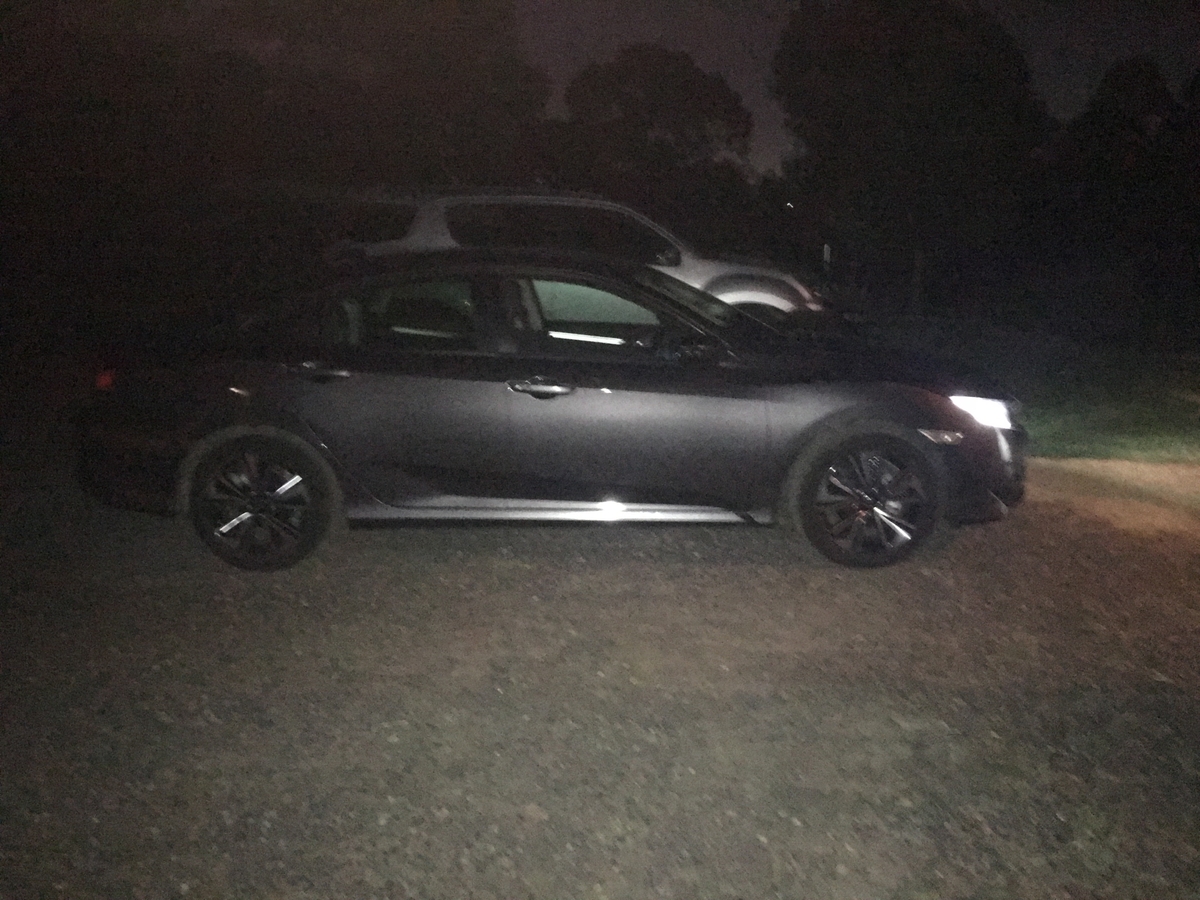
He's right, it is a problem; thousands of people would have to hand their licences back. Some colours come to the top in detailed statistics.Might be time to see the optometrist or maybe hand in the licence if you can't see a car regardless of colour in a side street at a reasonable distance....
-
Good point, just started the engine; strong side lighting at the front, no illumination at all at rear.It's not a problem when the grey cars are approaching with running lights showing. It's when these cars are coming from the side, say for instance, coming out of a shaded side street. -
This is a loser on three counts OK.And the end of that era is nigh:https://www.bbc.com/news/business-45786690
1. It's electric and electric's running out of rose coloured glass, since we are yet to solve the battery, weight, total cost of life, and CO2 gap needed.
2. It has to be autonomous so it can reposition itself etc. My experience with a Level 1 autonomous car is rapidly curing me of the thought that somehow the nerds had found the magic algorithm. Take Adaptive cruise control; you set your cruise control as normal, and your car reads the distance from the car in front and slows down when it does, then accelerates back up to the setting. I slobbered for that for years; no more constantly changing the setting to suit the turkey in front, or disengaging it. However, I didn't realise that (a) for safety ACC sets the distance behind the car in front to match what a 93 year old would choose. (b) if the driver ahead lifts his foot suddenly then unless his brake lights go on you have no warning as your car instantly matches the degree of slowing, so you stretch into your shoulder harnesses, and if he brakes hard, you brake just as hard, rather than using your spare space to slow down more gently for the obstruction which caused him to brake. I normally get 150,000 + km from brake pads, so that will be coming down to about 20,000. Worst of all, on a city freeway, the car ahead slows, your car slows, and there's a big juicy gap for three other cars to slide into thinking you've just decided to slow down. Now I don't use the Cruise Control. The anti collision detectors go off if there's a traffic light pole beside you, or a piece of grass sticking up, or, apparently if they just get a fright. The Lane Keeping Assist, which produces shimmy if you cross a lane line, and leaves it on just for a little in case you're asleep, has improved my lane precision as much as the cane used to improve my maths, but it can't cope with the way local councils paint white lines all over the place, and sometimes you shimmy like a hot dancer.
That's just Level 1.
The fatality rate to date of Level 4, I seem to remember is greater than human error, and Level 5 is a long long way off.
3. It requires a sociological human shift like giving up your wife and renting a plastic dummy. Uber still is the biggest car fleet operator in the world but doesn't own a car, but if you ride in an Uber you have a chance of being raped, stabbed, rooked or being accused of the same, so the gloss has thinned somewhat. This vehicle would require Level 5 autonomy plus additional technology so it could relocate to a desirable pick up point and interface with a charger, and wash itself between pick ups, which, for example is what Avis/Budget/Thrifty will do for you, and it would have to compete with local "Use and Return" services, where you ride your bike to a car parked at the pick up point, use a code to unlock it, go and pick up your item from Bunnings, then return it to the parking spot. Silly me, I forgot Bunnings will give you a ute at the store. Use and Return also owns no cars; you simply register your car for the service, get the security system fitted, and your car will be earning money when you aren't using it. You can then ride your bike to........
There's nothing wrong with dreaming; Ford and GM actually built gas turbine trucks, and we had concept cars with atomic power units forecast to sweep the world within a decade in the last century. I've also drawn plenty of futuristic cars and trucks, but turning them into repeat orders at a production profit is the snag.
-
 1
1
-
-
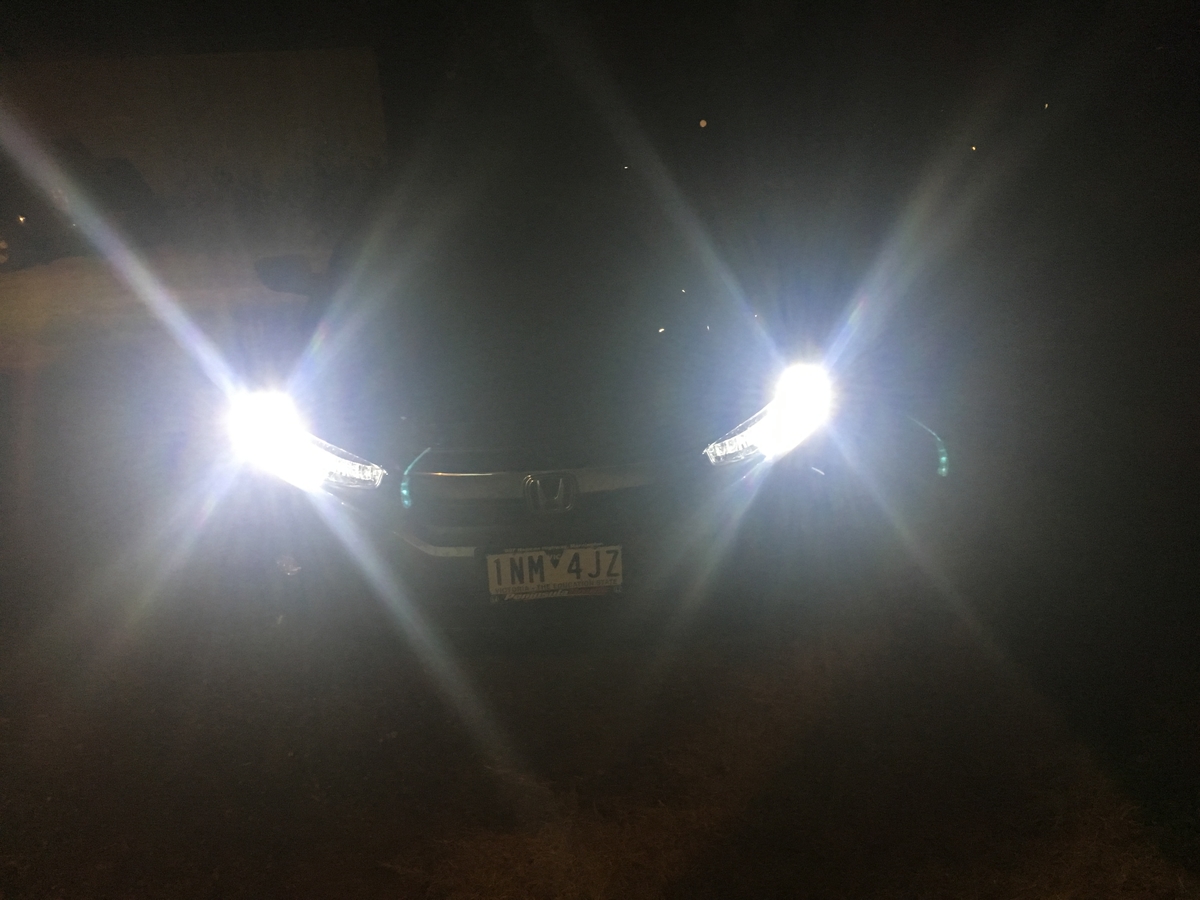
The colour's not so much of a problem as it was OME; the latest models have mandatory LED driving lights on with the engine running. Bet you'll notice and be irritated by them next time you go out.
-
A robber broke into a house. A parrot in the house screamed “Jesus will get you!!”
He told the parrot to shut up.
Jesus was a Doberman.
-
1
-
 1
1
-
-
Box Hill is a Chinese enclave now, so you can dine out on great food for less than $20.00 now, Mount Waverley is a Hong Kong investment precinct, so I would think Burwood would go that way also.
-
1
-
-
What size engine?This is what helps me. I can look over my shoulder and see if there is fuel in the collector tank. I have found on long trips when the wing tanks (2 of 104 litres total) are less than 20% remaining that the collector tank fuel level lowers due to refilling being slowed. I believe the main contributing factor for this is due to the lower volume of fuel in the wing tanks being a lesser mass weight that does not force the fuel down the fuel feed lines between the tanks and the collector tank; remembering that the displaced air needs to go up these same lines. I can see the glass fuel filters and observe the flow rate through them, as the delivery rate slows the fuel level within the filters lowers. I have them mounted vertical. I like to see things so I know what is occurring as much as possible.This setup allows real time monitoring of the fuel situation and on two occasions I have diverted and topped up with fuel. Once going to Watts Bridge and turned around and landed at Kingaroy for fuel and another time returning from Donnington and I diverted to Lakeside and took on some fuel.. Each time I would have had enough fuel but best to be sure.
I am going to change the vent setup so the air in the collector tank bleeds off via a dedicated line and that should / may prevent this situation of slow delivery of fuel into the collector tank.
Without this set up I could find a situation where the fuel is not delivered to the engines fuel pump in sufficient quantity from the wing tanks due to surging / free surface within the tanks and the engine will perform accordingly.
You can see the air / fuel level in the image and when the level reaches the alloy band the low fuel light displays and that is 5 litres remaining. When that occurs I am in no doubt about how long I can fly for - about 15 mins at reduced rpm.
[ATTACH]38343[/ATTACH]
-
The Cherokee has a dream system with deep wing tanks and a measuring tab about half way down so you can visually check the available total fuel quite accurately, then deduct to usable etc.I don't think anyone has made an accurate gauge, fuel flow meter measuring what has been used versus known quantity via accurate dip-stick or visually full tanks of a known capacity would be the best way of determining fuel remaining. cars, caravans and trucks are not reliable in tank gauges.What I have also done several times on difficult trips is arrange for the tanks to be left low the night before the trip, then fill with a known quantity before takeoff and deduct the fuel burn from that.
-
I was asked to investigate the cause of a 6x4 fuel tanker crash on a Pacific Island. The driver was descending a steep hill, in top gear, when the brakes failed. The truck picked up momentum very quickly and the driver’s only action was to yell “Jesus save us!”, but the truck continued on, rolled over and he was killed. The passenger survived. I found that the air system had failed, but he still had a perfectly good spring park brake system to flick on.
-
1
-
-
God doesn’t work that way, as many people have found out the hard way. There was a flood and a guy managed to climb on to his roof. Some time later an SES boat came past and offered to pick him up. “No thanks” he replied “I trust in the Lord. A second SES boat came past later and got the same reply. Later a helicopter noticed him and attempted a rescue but they got the same speech. The water kept coming up and he drowned and found himself in front of God. He let out a string of expletives about how he had trusted God and been let down. “What do you mean? You idiot” said God, “I sent two boats and a helicopter!Yep I agree entirely.Imaginary friends who are ascribed great powers to save a life after the problem occurred but we're unable to prevent the disaster in the first place leaves a bit to be desired.
Would have made far more sense to invoke his powers and make the aircraft run on air or for fuel to materialise out of air or glide to the destination no matter how far away.
Then the rest of us might actually start to think there might be something in this god story.
But as it is - life spared by virtue of a solid airframe seems to be the most likely explanation.
-
4
-
1
-
-
You can look at the properties of fire retardant resin. There is a photo somewhere of a Shell gas tanker in England on fire after a crash, where the FRP tanker, constructed using fire-retardant resin was squashed and then rebounded to its shape with a large hole in the corner the spilled gasoline caught fire , but can be seen bubbling from boiling, still contained in the FRP.All types of fibreglass will burn, but worse than this, all resins lose their structural integrity as they heat up. As Nev suggests, anything that postpones this can save your life. Don't underestimate the value of wood as a fire insulator. A SS-lined plywood firewall is easy to integrate into a composite aircraft and will keep its shape far longer than fibreglass resin, which will quickly turn to slop.-
1
-
-
FT, those of us who design and build things know that there are challenges every morning; it took me three months to finally solve a puzzle which enabled me to design a B Double once. The fuel gauges themselves are probably accurate, but the application is to fit a fuel tank into a very slim wing, which I certainly prefer to the LSA55 behind the seats, but the height is so limited that there is continual wash and the readings change whenever you bank.you would think by 2019 Jab would come up with a reliable fuel gauge. -
You can Richard; if you know whats there at the beginning and you know the fuel burn at climb and cruise (which is very consistent) you can caluculate your endurance minutes enroute.That would make an aircraft unsafe you have to be able to check how much fuel you have.Sure you have fuel gauges, but even in GA they don't always read as accurately as fuel burn x minutes elapsed.
-
2
-
-
What I found with the J170 is that it was very difficult to get an accurate fuel volume. The gauges were not accurate enough for flight planning and there were no datum tabs, so I cut a piece of dowel for a dip. The wing tanks were separate from the skins and wing structure so height was small, while length was big.
On the slightest slope one side would dip low and the other high. If you did a second dip in reverse you could work out how many liters gross were in there. The second problem was if you filled both tanks at night for an early morning flight, even on a slight slope one tank would drain significantly. It was manageable but if someone was new to these tanks he/she could be very easily be caught out on a cross country trip.
-
1
-
-
Does anyone know what model it was?
-
It was only a guess that that’s what might have happened, but you don’t have a choice in a case like that.
At the point of origin he is required to flight plan the fuel stop locations with the legally required reserve for each stop.
If there is a horrific headwind or no fuel at one of the stops, he is not going to make the next the next destination with a legal fuel reserve, so his legal obligation is to stop and find some fuel or replan to an alternate field with fuel and with a reserve.
if you’ve done Performance & Operations you’ll be able to do replanting in the air.

The over-eager neophyte crashes and burns.
in Aircraft General Discussion
Posted
Fatigue and inattention are right up at the top. A student spends around 120 hours; way above rec flying.
The majority of crashes are as you say, but we can reduce deaths by road design and separating trees from cars, and two way roads date back thousands of years to when people walked on tracks; they are not suitable for cars.
You can be very skilled but fatigued, or picking up something from the floor, or punching a GPS, or be unlucky like Peter Brock was and be hit by a road defect. It's amazing how many drivers finish their driving careers in their 80's with very average driving skills.
Attention is one of the big factors, and needs to be taught. I put a snap question to a lot of people, asking what they are seeing, and their focus point is often several hundred metres before mine, sometimes just a few metres ahead of the vehicle. When I give them an aiming point and explain that by looking there they can see incidents, and traffic bunching up, a whole new world opens up for them.
Distraction with phones, texting, GPS, itunes etc. probably would have turned the fatal statistics into a J curve upwards if it hadn't been for cable barriers in Victoria. I also find I'm distracted just being involved in a hands free conversation if I have to concentrate. This is at the top of Victorian compliance and enforcement and they have just made a big purchase of high definition cameras specifically programmed for mobile phone use detection.