skippydiesel
-
Posts
8,276 -
Joined
-
Last visited
-
Days Won
84
Content Type
Profiles
Forums
Gallery
Downloads
Blogs
Events
Store
Aircraft
Resources
Tutorials
Articles
Classifieds
Movies
Books
Community Map
Quizzes
Videos Directory
Everything posted by skippydiesel
-
ASIC, Do I need an ASIC card?
skippydiesel replied to Moneybox's topic in Student Pilot & Further Learning
I agree 100% . That's why I don't understand why pilots dont band together to do something about it. Why our organisations ,RAA/SAA ,are pursuing this with considerable vigour😈 -
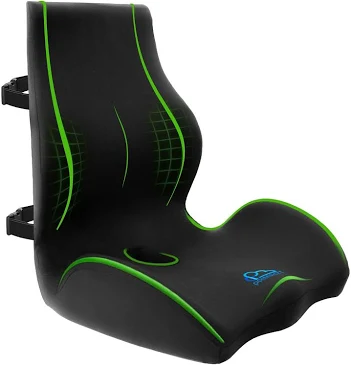
FYI; You can get bucket seat cushions from almost any car wreckers. Just wonder around until you find a car seat (x2) that suits. You will have to remove the frame (not hard) and likly replace (or modify) the fabric/leather if warn. (The one on the right is for an office chair)😈

-
" I put light open cell weather strip around the door edges" If its the stuff from Bunnings Aerospace, you will be lucky to get much more than a season out of it. Next time get closed cell - far more durable & won't hold moisture and retains it shape better. Lots of suppliers but if close to a "Clark Rubber" they usually have a very good (but pricey) selection. You will need to know the width, depth & how long (they sell by the m). 😈
-
ASIC, Do I need an ASIC card?
skippydiesel replied to Moneybox's topic in Student Pilot & Further Learning
By what authority, did the ARO ask to see your ASIC? Did you ask the ARO for his ASIC details? Did he have one on display? I ts likly he has no right to be photographing your ASIC (your twin may suddenly have a copy around his neck) Another one of the massive inconsistencies, in this completely worthless card, is that the ARO /Security Guard may be be the guy to mows the grass, paid a little extra to added to his statement of duties, possibly have no training or authority as such. 😈 -
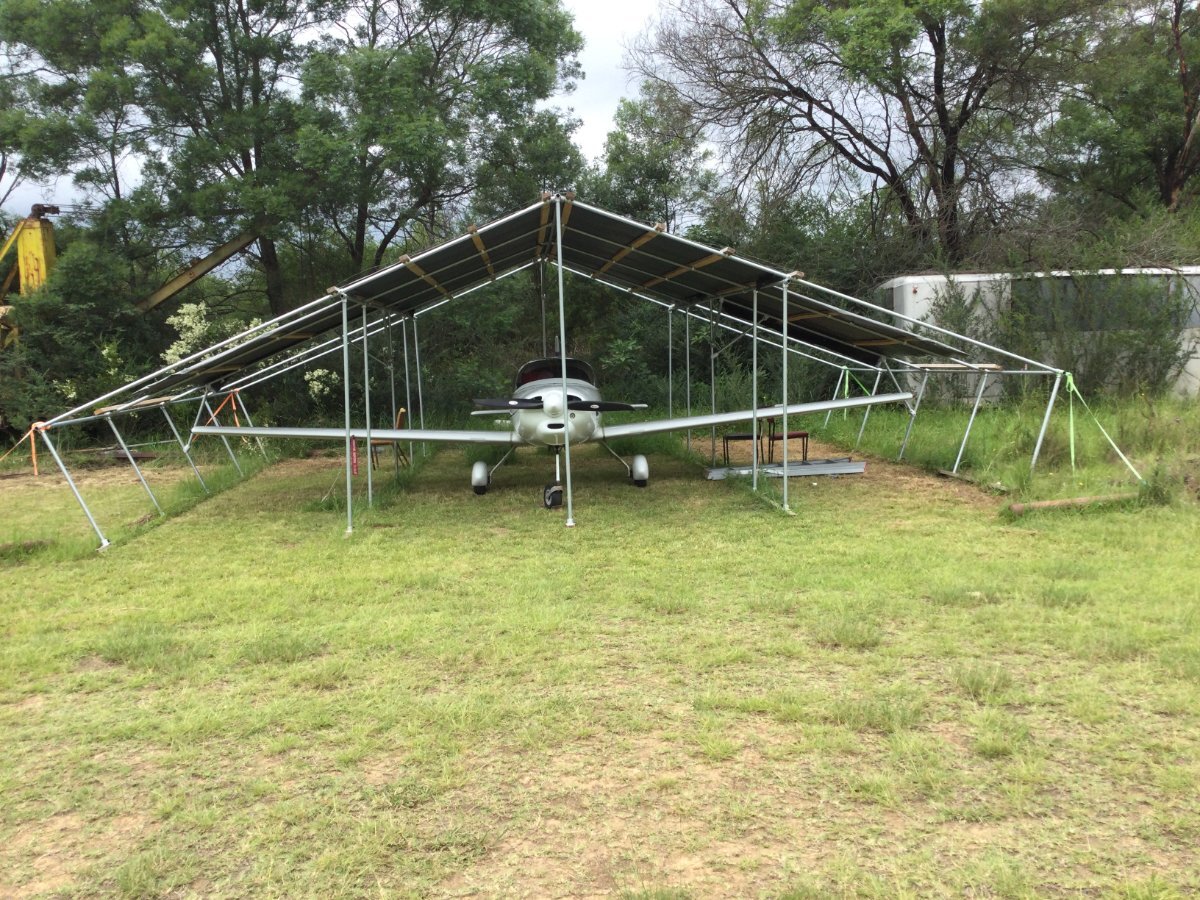
Not mine. Front of aircraft poles, are easily removed, to get aircraft in/out. 😈
-
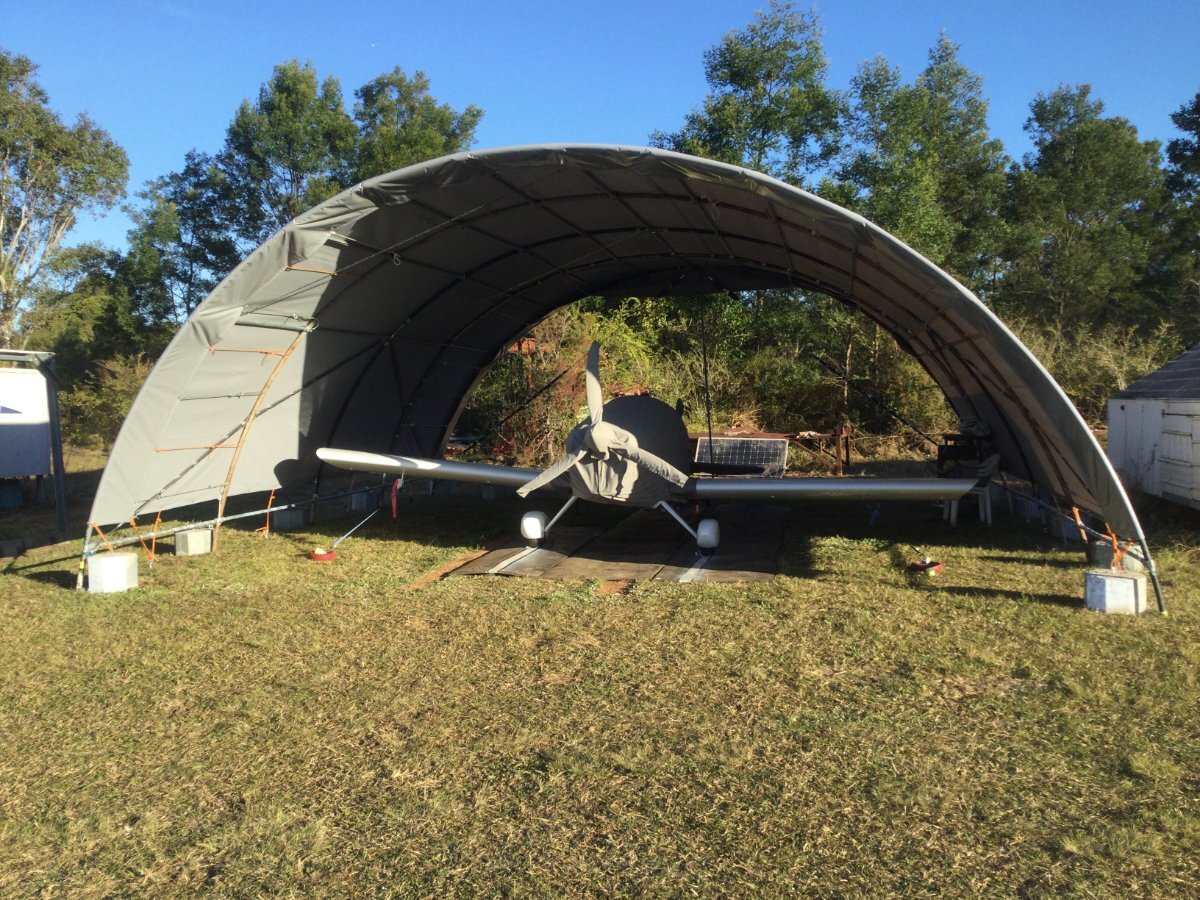
Moneybox, Some of the figures that you are quoiting, seem way out of proportion to the value of the aircraft and the benefit that may be derived, from such a costly structure, that is unless you intend to rent space or live in it. Examples of cost effective hangers 😈
-
Terrific job. All credit to the young pilot - luck and skill on her side.😈
-
ASIC, Do I need an ASIC card?
skippydiesel replied to Moneybox's topic in Student Pilot & Further Learning
The requirement for an Australian Security Identification Card (ASIC), was a gross overreaction by our Government to the Twin Towers, New York, terrorist attack 11/11/2001, 25 years ago. ASIC is part of a parcel of upgraded security legislation, which included a requirement for Regular Passenger Transport (RPT) airport owners (mostly Councils) to commit to enhanced security requirements (fencing/gates etc). Despite it being without any merit (for small regional airports) it has been continued (with little resistance from the private aviation community?????). RPT airports are designated Security Controlled Airports (you will see something to this effect in ERSA), Anyone wishing unescorted access to the operational side of the airfield, is required to hold a current ASIC Private pilots wishing to access a Security Controlled Airport, will require an ASIC, if they wish to comply with the law (I believe there may bea $5,000 fine for non compliance - in the unlikly chance you get caught) The NEED, for private pilot, wishing to access most regional airports, to have an ASIC is a completely artificial/unnecessary construct, by the Federal Government, for no good purpose. The rules governing access to these airports are positively torturous eg as a PIC you can land without an ASIC but may not exit your aircraft without being escorted by someone who has an ASIC. Airports without RPT activity, do not legally require a pilot to hold/display an ASIC. So some airfields, with far greater aircraft movements, do not legally require ASIC (go figure!) Along with many private pilots, I acquired an ASIC when they came in. In the following 5 years, I never once was asked for it - a common experince. Small regional RPT airports often only give "lip service " to the legislation eg ineffectual security fencing, gate access codes publicly available, no security personnel, etc. The issuing of ASIC has been farmed out to the private sector - you now apply through a third party, who must make a profit ie increased cost to the pilot You can not use your ASIC clearance for any other purpose other than airport access ie its no good as a photo ID, etc Note: There are diffrent "grades" of ASIC - as pilot requiring unrestricted access to certain areas of an airfield eg fuel bowsers, you will need a Red ASIC. Having an ASIC, confers only limited access, on an airfield ie you can not necessarily access all areas, particularly those in proximity to RPT aircraft/activities. The rules around ASIC have evolved over time - I may or may not have covered all salient points. 😈 -
New CASA booklets on Sydney/Gold Coast airspace changes.
skippydiesel replied to Garfly's topic in AUS/NZ General Discussion
Good one!. Thank you for the opportunity to reiterate what I am trying to change for the good of all private pilots Most, if not all airfields, that charge for use, will have at least one sentence saying something to the effect of; Landing Fees Apply. Some will add - Refer to WebSite (or similar). Just a few will detail their charges. So doing the right thing and listing their fees will add little if any bulk to the individual ERSA page. Should you be misguided enough to believe being referred to a web site is good enough; First- you should understand that this is not complying with the requirements, that the provider of a good/service, is required to divulge their charges up front ie you the customer should not have to go searching for the information. Second - all to often the web site is difficult to navigate, may be vague as to what is being charged for, what the charge is or may just not haven the information eg Canberra All I am asking is that they do the same as the few - Its not a big ask and has the added bonus of complying with Consumer Law, redosing your planing time as PIC and the need to make contact with the ARO/ Council/ or whomever might have the information (if your lucky). I am astonished that I don't have 100% vocal/active support in this. 😈 -
I don't do the computer link up thingy.😈
-
New CASA booklets on Sydney/Gold Coast airspace changes.
skippydiesel replied to Garfly's topic in AUS/NZ General Discussion
Yep!! The Sydney Region booklet now takes in Shellharbour (Woolongong) & Williamtown (Newcastle). This has turned what was a handy targeted(Sydney Basin) booklet into a novel - not so good. 😈 -
Rightly or wrongly, I have never had the impression that our leaders are ACTIVELY pursuing the following: Removing the requirement for private pilots to have an ASIC, to legal access most regional airports. Where an airfield management wish to charge for access, the fee schedule be published in ERSA (no publish / no pay). For non-controlled, congested airspace (eg Sydney Basin) the mandatory carriage/use of a two-channel radio and an ADSB Out Transponder. Communications in uncontrolled airspace tightened – Minimum Mandatory calls: “10 Nm …..” when within a 10 Nm radius & 5000 ft AGL, of an ERSA listed airfield. “Overhead …..” within 3 Nm & 5000 ft AGL, of an ERSA listed airfield. “Joining Circuit ….” & “Down /Up Wind……” 😈
-
AI?😈
-
Is it too late for me?
skippydiesel replied to Builds By Baz's topic in Student Pilot & Further Learning
Now naughty Danny, this sounds a bit like the I have a friend..... beginning to a story. Who is the widow & what did you do with her?😈 -
What do you do with your pilot licence?
skippydiesel replied to Builds By Baz's topic in AUS/NZ General Discussion
I guess there was no mirror handy.😈 -
What do you do with your pilot licence?
skippydiesel replied to Builds By Baz's topic in AUS/NZ General Discussion
Its seems to me, that taking time to look at ourselves, in the metaphorical mirror, might just deliver some insight into how others see us😈 -
What attack? It would seem to me that FlyBoy1960 has given a fairly even handed (slightly biased in favour of the subject) summary, on the contribution style, of the person in question. 😈
-
Be careful T510, you may be being lured into a "Troll" trap. The temptation to respond in kind, may just result in censure from The Administrator. 😈
-
No reflection on the changes or the personnel moving in/out, up/down in RAA. In the last 50 years or so, the concept of a trained /professional manger, has almost completely disappeared. We now have people, in management roles, who have trained in some other discipline altogether (eg Flight Training, Aeronautics, etc). It is assumed that because they have excelled or at least met their performance expectations, in their origination discipline, they can just move seamlessly into management. True, sometimes the aspiring manager has taken a short course or two in management. Unfortunatly this is mostly "window dressing" What has this got to do with RAA? Simply - If you want an cost effective organisation, it must be run by a professional manger(s). Only managers have the holistic skills to bring together all of the facets in a well run organisation/business. While it helps that a manger has some understanding/empathy for the bushiness, this should never be the primary selecton criteria (all too often it is). Note: In almost every in every profession, there are those who would seem to be born with the skill (talent), while others, who have been trained seem less skilled. This does not change the basic premise. I have no particular insight to the running of RAA, however will say that over the many years of my membership, RAA seems to lurch from one crises to another, interspersed with periods of calm. Unfortunately the perception of a self serving bureaucracy, seems to have deepened. I would question - "Does RAA represent its membership at all" 😈
-
Roasted cornflakes😈
-
"Mrs M has a little problem with motion sickness " When you are in Cruise, teach her to fly the aircraft - I bet the nausea will disappear immediately😈
-
I think you will find that in all liquid cooled IC engines, the coolant will be at its hottest close to the combustion chambers and coolest where it leaves the heat exchanger/radiator. The engine manufacturer (Rotax) will decide on the optimum point in the cooling system, for sampling the temperature as an indication of system operating condition. My knowledge is limited to 912ULS - there are two coolant temperature sensors - in head 2 & 3 😈
-
Not that it matters but my reference, Saturday 25 @ 18.01, that I was refering to, the day ahead of yours. https://www.bp.com/content/dam/bp/country-sites/en_au/australia/home/products-services/fuels/opal-factsheet-storagehandling.pdf My reference has no date. If you had checked you would have seen that I am correct. 😈
-
My "jerrys" are plastic, curtesy of Bunnings Aerospace. I always use a Mr Filter Funnel, specifically because there can be contamination at any point in the fuel supply system (water/dust/insects/metal shards/etc). The contamination that caused my drains valves not to seat/seal properly is almost certainly all from paint flaking around my tank fill point . No way can I guard against this (an in tank fill point filter sox would do this but can figure out a way to fit one to my filler point). One good thing, there is almost no more paint around the fill point. 😈
-
Speculation: If this is an early 914 the sensors are reacting to Cylinder Head Temperature (CHT) As you have alluded, Rotax later 914's had the senors registering Cylinder Head Coolant Temperatures. I guess that Rotax felt that CHT was not especially meaningful for an engine with liquid cooled heads. If you are concerned about your engines coolant temperature; Later Engine: I think finding a way to read the temperature at the same location as Rotax would be advisable. May need a stand alone gauge/sensor. Early engine: This might be a question for the Rotax Owners Forum - Where you should locate the sensor for a meaningful reading & what temperature (at this location) would be acceptable?? https://www.rotax-owner.com/en/rotax-forum 😈