


old man emu
-
Posts
5,297 -
Joined
-
Last visited
-
Days Won
78
Content Type
Profiles
Forums
Gallery
Downloads
Blogs
Events
Store
Aircraft
Resources
Tutorials
Articles
Classifieds
Movies
Books
Community Map
Quizzes
Videos Directory
Posts posted by old man emu
-
-
I see that I should have set the parameters for this discussion.
1. Flight in the airspeed range of zero to 250 kts - what the majority of private pilots use.
2. Flight below 10,000 ft on QNH - where the majority of private pilots fly.
3. Flight in the "NORMAL" category - no aerobatics beyond stalls and incipient spins, no descents at angles greater than, say, 45 degrees.
-
1 hour ago, kgwilson said:
The high stalls I did had the ASI back to about 35-40 knots
Does an ASI give an instantaneous reading, or is there a lag time due to the distance between the pitot inlet hole and the diaphragm, and then the response time of the guts of the ASI?

The ASI is an application of old mate, Bernoulli's
-
52 minutes ago, Garfly said:
Also because the wind (relative or otherwise) can't get at the bubble.
Why would it have to? I would like to see your reasoning for that statement.
1 hour ago, Thruster88 said:You cannot use a spirit level in an aircraft because of acceleration.
That's a statement that cries out for an explanation
-
16 hours ago, Yenn said:
OMEs bubble and his A of A meter would not agree with each other.
It is very clear that nobody has bothered to read and comprehend my description of how a spirit level could be calibrated to be used as an AoA gauge.
To turn it into an AoA indicator, the aircraft would be lifted by the tail until the chord line of the wing was aligned to the longitudinal plane (usually about 4 degrees nose down-tail up). Once that alignment was made, the slip indicator can be fitted to the aircraft so that the bubble is centralised.
The aircraft is then returned so that the longitudinal axis is aligned with the horizontal plane. At this point the bubble should be off-centre by the same angle as the chord line is to the longitudinal axis of the aircraft. The position of the bubble can be marked on window of the indicator. This shows the position of the chord line at its best angle to the airflow to produce Lift, as concluded by the aircraft designer. (Clarification: If the longitudinal axis of the fuselage is "level", the chord of the wing will be at the AoA set by the designer - usually about 4 degrees.)
The aircraft can then have the nose raised until the chord line of the wing is at 15-16 degrees above longitudinal plane. The location of the bubble is marked. That mark shows the position of the longitudinal axis of the aircraft when the wing will begin to stall. The distance between the two marks is 12 degrees, in theory.
-
I have now struck through the obviously offensive words in my original post in the hope that the discussion can now be centred on the theme of the thread, a discussion of whether or not knowing the mathematical description of lift generation is of greater value to the average pilot than learning by experience the simple fact that as the nose of an aircraft goes up beyond a certain angle, the wing is unable to produce sufficient to "Lift" cause the aircraft to be supported at a constant altitude?
And can we keep the discussion within the usual envelope of the majority of pilots who don't have teh need to cross the boundaries of the envelope of enjoying a flight?
-
 1
1
-
-
5 hours ago, APenNameAndThatA said:
OME *still* thinks that you can tell angle of attack with a slip indicator. Also, a slip indicator will not tell you your angle of bank, unless you are not turning. This is just bizarre.
Not bizarre. The problem is with the inability of a certain person to think outside the box, or to have any experiences outside their restricted world.
This is what is commonly called a builder's spirit level
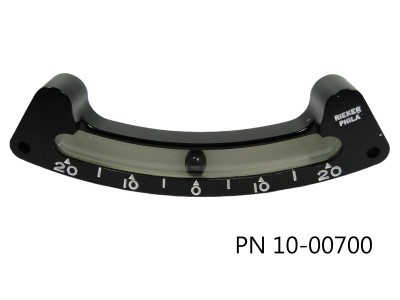
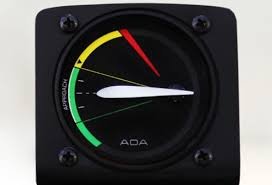
This spirit level can be used to lay out lines in the vertical and horizontal planes as well as a line which is at 45 degrees to both the other two planes. Silly me assumed when I was talking about using a spirit (bubble)level that the reader would have had experience of using one. Obviously, in one case, I was wrong. Unfortunately, I initially chose the wrong item to illustrate what I meant by a bubble level. Consequently, I removed that image and replaced it with the image of something pilots would recognise. Unfortunately, I failed to remember that some people can only read the words and see the pictures, but cannot comprehend their deeper meaning.
So let's go into an explanation of how one would buy a slip indicator and apply it to be used as an AoA guide.
An aircraft has three planes of symmetry - vertical (yawing plane), longitudinal (roll) and lateral (pitch). A spirit level can be used to align the aircraft with reference to any one of these planes. For example, when taking measurements for the weight and balance of an aircraft, the longitudinal axis of the aircraft is aligned to the horizontal and lateral planes. When an aircraft is aligned to those two planes, it should be in its straight and level configuration. At that time, a "slip indicator" can be fitted to the instrument panel aligned to the lateral plane. This is the usual way one of these devices is fitted and used.
However, a slip indicator can also be aligned to the longitudinal axis of the aircraft. In this configuration it becomes a "pitch" indicator. To turn it into an AoA indicator, the aircraft would be lifted by the tail until the chord line of the wing was aligned to the longitudinal plane (usually about 4 degrees nose down-tail up). Once that alignment was made, the slip indicator can be fitted to the aircraft so that the bubble is centralised. The aircraft is then returned so that the longitudinal axis is aligned with the horizontal plane. At this point the bubble should be off-centre by the same angle as the chord line is to the longitudinal axis of the aircraft. The position of the bubble can be marked on window of the indicator. This would indicate the position of the bubble when the aircraft was flying at the best AoA for Lift generation. The aircraft can then have the nose raised until the chord line of the wing is at 15-16 degrees above longitudinal plane. The location of the bubble is marked. That mark shows the position of the longitudinal axis of the aircraft when the wing will begin to stall.
So, does that clarify the use of a spirit level as a tool to monitor an aircraft's AoA ?
Can we now get back to the discussion of whether or not knowing the mathematical description of lift generation is of greater value to the average pilot than learning by experience the simple fact that as the nose of an aircraft goes up beyond a certain angle, the wing is unable to produce sufficient to "Lift" cause the aircraft to be supported at a constant altitude?
-
Yes, a good summation of the European market situation and throws light on the complications caused by bureaucracy in the name of "public safety".
It amazes me how airport operators can put such ridiculous charges on permission to land a plane, especially in Australia where the airports were often created before 1950. Do those councils which own the airports charge a fee to motorists who drive on the roads maintained by local councils? Not on your Nelly.
Maybe COVID will give these avaricious councils a wake up call. Can you imagine the fall off in many airport movements simply due to COVID movement restrictions?
-
21 hours ago, APenNameAndThatA said:
You put the pic, and idea, of the bubble level as a joke, right?
I was wondering how long it would take you to start flaming me, yet again. I'm sick of your trolling.
Once again you ignore the content of the discussion to incite trouble. You don't contribute in a meaningful way to any discussion of topics I post. And yet you are able to give a sensible response to Spacey.
So I used an unusual illustration. Too bad you don't have enough experience to recognise the type of spirit level it was. Just for you, I've replaced the image with something familiar.
Now, if you can't make a sensible input into the discussion, why don't you jump in your widdle plane and see how long you can fly a course of 090T.
-
2 minutes ago, skippydiesel said:
The exception would be those supplying the respective combatants.
And that's not a load of Krupp.
-
Last month I got into a discussion here of the Newton/Bernoulli theories of lift generation. I decided to research the subject so that I could write an informative paper on the subject and publish it here. Well, I did do that research. I read as much as possible on Newton's Three Laws of Motion, and I studied up on Bernoulli's theorem. I also delved into flat plate aerodynamics which really is the starting point of aerofoil design.
I came up with some really good stuff and figured out some good examples to explain the things I had found out. I had even created a lot of the text in my mind. Then this morning, as I was washing up the breakfast dishes and looking out the into the distance through the kitchen window, I had a Eureka! moment.
I realise that for a pilot, knowing the physics of lift generation is not necessary for piloting an aircraft. Does an 8-year-old need to know the aerodynamics of one of these in order to "fly" it?
Does any average person know the physics of how their car manages to turn corners? Or the thermodynamics of the combustion process that produces the forces necessary to propel a car? NO. As long as the driver has the skills required to make the car go in the desired direction, and the desired velocity, then the practical operation of the car is achieved.
The critical thing a pilot must know is that at a certain angle of upward pitch, the wing fails to produce sufficient lift to maintain the weight of the aircraft at a certain altitude. Call that loss of sufficient lift what you like, a rose by any other name would smell as sweet. Vast amounts of experimentation indicate that this pitch angle, which is the angle between the chord line of the wing and the direction of the airflow relative to that chordline, is close to 15 degrees. So all a pilot needs to know to maintain lift is to keep the angle of the chord line to relative airflow direction below 15 degrees.
There is also the other obvious factor in lift creation - the velocity of the airflow relative to the win surface. But that's sort of obvious. You have to keep the airplane moving forward if you want to get from A to B. And we'll ignore the special situations where the velocity of the air approaching the wing is greater than the total Thrust produced by the power train and the aircraft "stands still" or gets carried backwards.
S
o, how does a pilot maintain that angle? In the majority of aircraft that the average private pilot would fly, there is nothing to use as a visual reference to compare the chord line with the relative wind direction. The obvious tool would be something like a bubble level set on the instrument panel when the aircraft was trestled in its cruise position, and calibrated to show position pitch angle from 0 to 20 degrees with reference to the chord angle.If the DIY method doesn't suit your style, you could always fit an Angle of Attack Indicator.So why should the myths, falsehoods and the Newton/Bernoulli debate about lift generation of a body with one curved surface and one relatively flat surface, continued to be pounded into pilots when they do not advance the the skill level of pilots in operating an aircraft? The only "theory" that a pilot needs to know is that if the aircraft is raised in pitch too much, not enough Lift will be produced and the aircraft will begin to fall due to the effects of Gravity, until other aerodynamic forces act on it to alter its motion (Newton's First Law). With that nugget of "theory" the pilot only has to explore the visual inputs the environment provides as the amount of Lift approaches that break point.
-
 3
3
-
 1
1
-
-
What would happen to the US dollar if civil war broke out on 21st January?
-
I have had the chance to view Skippy's aircraft - not inspect it, and discuss the necessary repairs that would put this aircraft back in the air. Luckily there is a photographic record of the cause of the ground impact and this record is consistent with the pilot's report of the incident. The damage to the aircraft is also consistent with the pilot's report and the photographic evidence of the cause.
The aircraft basically had a "belly landing' after the undercarriage was broken. As the impact occurred at the landing flare, the speed would have been in the low 30 kt range. The undercarriage legs fractured equidistantly above the reference point of the main gear axles. The frame for the front wheel was damaged. The firewall does not appear to have been affected. The engine has been certified for return to service. Obviously a new prop is required.
This model of aircraft can be purchased from the manufacturer in kt form. Therefore there are good, clear instructions for the removal and replacement of the undercarriage components. There are some small patch up jobs to be done to the lower engine cowl and some fabric repair to the flaps. All the required parts are available from the manufacturer.The major cost input to this repair, apart from replacement parts, would be the labour costs, since time is money. If the purchaser was a DIYer, then the final cost of this aircraft would represent the aircraft as is, plus parts and consumables. In comparison to the purchase price of the same make and model of aircraft, this sale represents good value. Price is not stated, but open to reasonable offers.
Cosmetically the aircraft is in good condition. It has been, and still is hangared in a weather-proof building. The aircraft has the wings and tailplane removed from the fuselage, making transport by large car float a reasonable means to bringing it home.
In comparison to the purchase price of the same make and model of aircraft, this sale represents good value. Price is not stated, but open to reasonable offers.
And Skippy didn't ask me to write this.
-
9 hours ago, Wirraway said:
I am just trying to find something in my price range, which meets some parameters. skippy’s aircraft meets them all, apart from cost.
Ah! The flaw in the otherwise flawless plan - cost. It is the bane of us all.
-
1
-
 2
2
-
-
Hmmm! So my suggestion to go out and play with the gliding performance of your usual aircraft wasn't so naff after all.
-
I think that you can get these from an auto clip supplier like this mob at Campbeltown, near my place, Southern Cross Auto Clips. I Googled auto door panel clips. and panel clips for cars to find it.
It would be helpful if we had a picture of the clip. Obviously some other Drifter owner would have to provide the picture.
-
11 hours ago, Roundsounds said:
I’d love to see this instructor try this in a taildragger
OK. So you've got a Cub. Good luck to you. I repeat:
THIS TOPIC RELATES TO THE PILOTAGE OF AIRCRAFT WITH TRICYCLE UNDERCARRIAGE DESIGN.
If you notice, there are two pairs of eyes in that cockpit, with one pair being told to keep a look out ahead. The instructor, is the one who has his head inside the cabin and is operating the control column. I guess he has the experience to operate the control column while the student maintains direction with the rudder. Also, there is no intention to do anything more than a fast run along the ground, simulating and maintaining the attitude of the early part of a take-off run.
58 minutes ago, kgwilson said:I never lose forward reference straight ahead except when on a steep climb out & it seems obvious to me to look out the side to make sure I am still straight especially if there is a good crosswind at takeoff.
You have obviously twigged to this method after your years of experience. I posted the video for the information of inexperienced pilots.
-
1
-
-
2 hours ago, poteroo said:
Are you sure it isn't being confused with the 'slipstream effect'
Okay! Okay! Slipstream. propeller torque, sudden willy willy, Act Of God. Doesn't matter. I was only writing an introduction to pull people in. Now I have edited the first part with a strike through.
So, watch the video and discuss that !
-
1
-
-
2 hours ago, mnewbery said:
Questions you need answers for:
1. Budget budget budget budgetWhat is the complete list of hardware required for a simple, but practical simulator for 409tonner's needs?
-
What would happen if some of these Councils whacked a berthing fee on wharves and boat ramps, or introduced a toll for crossing the footpath to enter a service station? Maybe the Councils could introduce a 6 cpl "Local groundwater protection levy" for petrol stations. What about an entry fee to playgrounds?
Those are fair "user pays" fees for people who want to use Council facilities.
-
I wonder if some of our discussion on aircraft ownership, especially when the question is posed by a student pilot, has put the wind up a lot of buyers.
-
1
-
-
There's definitely something amiss here. Obviously and experienced pilot operating from his home runway which has plenty of open space to put the plane down onto. Why would you try a turn back?
The only thing I can think of is that he was overtaken by the fear of damaging an aircraft that was in his care, so he wanted to get it back on the runway. To my mind this was a Human Factors incident.
-
Now we have devastating proof in our own backyard of the danger of turning back. Is a controlled descent to the ground a better option than spinning in?
-
Strewth, how do you explain how the fuselage ended up sitting on top of the wing? And whre's the engine?
-
I see that I should have written in big letters:
THIS TOPIC RELATES TO THE PILOTAGE OF AIRCRAFT WITH TRICYCLE UNDERCARRIAGE DESIGN.
-
1
-

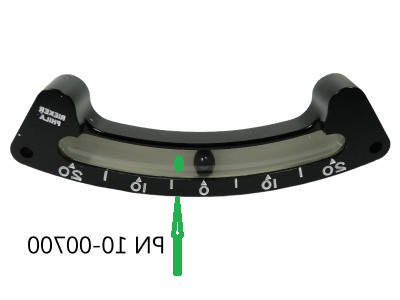
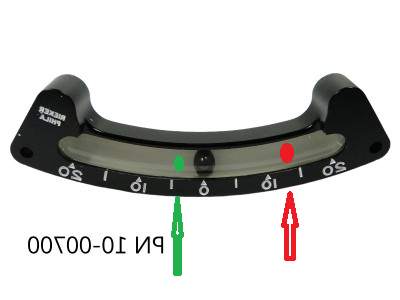

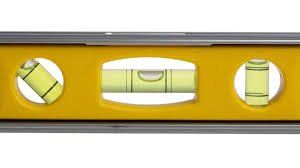 This spirit level can be used to lay out lines in the vertical and horizontal planes as well as a line which is at 45 degrees to both the other two planes. Silly me assumed when I was talking about using a spirit (bubble)level that the reader would have had experience of using one. Obviously, in one case, I was wrong. Unfortunately, I initially chose the wrong item to illustrate what I meant by a bubble level. Consequently, I removed that image and replaced it with the image of something pilots would recognise. Unfortunately, I failed to remember that some people can only read the words and see the pictures, but cannot comprehend their deeper meaning.
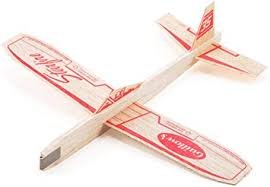

Learning about lift generation - a waste of time.
in Student Pilot & Further Learning
Posted
Then how come we rely on slip indicators to advise us of rotation around the vertical plane (yawing)
I think that this statement indicates a lack of understanding of Vector Analysis of Forces.
Also the device is attached to the aircraft. Therefore, it is subject to the same vectors of Force as the aircraft.