


old man emu
-
Posts
5,297 -
Joined
-
Last visited
-
Days Won
78
Content Type
Profiles
Forums
Gallery
Downloads
Blogs
Events
Store
Aircraft
Resources
Tutorials
Articles
Classifieds
Movies
Books
Community Map
Quizzes
Videos Directory
Posts posted by old man emu
-
-
I'm never without some Blu-Tac to hold a screw to a driver while it is being manoeuvred into a tight spot. I actually have screwdrivers with a spring loaded tube that goes over the head of the screw to hold it. I never seem to remember that I have them, because they aren't in the screwdriver drawer of my tool cabinet.
-
 1
1
-
-
Lots of talk about causes and cures, but has anyone sent in a report to CASA and RAAus to make it official?
-
The NTSB report on this fatal off runway excursion has just been released.
-
1
-
-
44 minutes ago, Ryanm said:
I hope you’re able to spend some time with family and friends and not in complete isolation.
You haven't met my family. I'm opting for isolation.
-
 1
1
-
 3
3
-
-
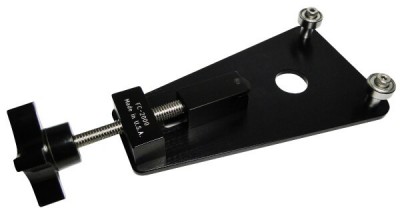
Hey! Methusala, I was being serious. That's why I was told to always use a special filter cutter like this
 or this
At close to AUD100 from Spruce and specialty, a bloke with a modicum of wit and wisdom could fettle one of these together for about $20.
-
Don't cut open your old oil filter with a hacksaw. The swarf from the cut will confuse you.
-
1
-
1
-
-
Geez! This is getting all technical and stuff. All I was saying that an area of powered aircraft performance is gliding, and can you catch a thermal in a powered aircraft with the no help from the engine. I specified a situation where the engine was running at idle revs, simply to eliminate the danger of not being able to restart it.
I was looking for responses simply about going out and committing aviation for fun.
-
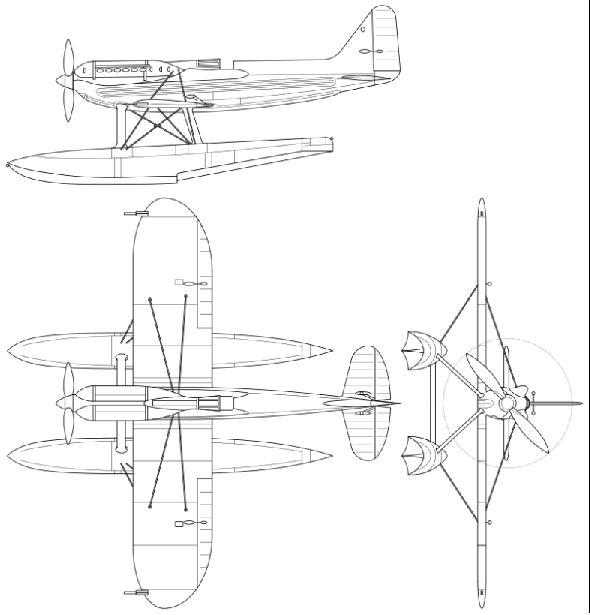
I think that is is drawing a long bow to say that the Spitfire was descended from the Supermarine SB-6 racer.
Following the Schneider Trophy win in 1931, Mitchell and Supermarine stopped playing with racers to concentrate on meeting Ministry of Air specifications for a monoplane replacement for the Gloster Gauntlet biplane. Their entry into the military competition was the Type 224, an inverted gull-wing design with open cockpit and fixed U/C, powered by a Rolls Royce Goshawk engine In the competition it proved to be slower than expected; had cooling problems and climbed slowly.
However, Mitchell was already in discussions about a number of improvements - these included a new wing, tailplane, and engine arrangements - which would give it a top speed of 265 mph (426 km/h). The Ministry felt that, as eight rather than four guns would be needed, a wholly new aircraft, rather than a modification of the Type 224, was called for. In 1933, Supermarine had asked the Air Ministry for the name "Spitfire" to be reserved for it. So, although Mitchell and Supermarine learned a lot from the aircraft designed for the Schneider Trophy, in actual fact it was the failed Type 224 that was the ancestor of the Spitfire.
-
The old "tape the nut into the spanner trick" is an essential trick to learn. It can be used anywhere that a spanner can go, but the eye can't see.
-
STORING SUPERGLUE
Superglue is activated by moisture. Store it in an airtight container with some desiccant such as silica gel that you get in little sachets in a lot of packaged goods. Or you could use a handful of uncooked rice.
Because superglue is activated by moisture, be careful to cap the container as soon as possible when the humidity is high.
-
42 minutes ago, IBob said:
a little bottle of the glue with integral brush
That's true. I've used that method of applying in some situations, but generally people just grab the tube and squeeze lots from it.
-
To label or not to label? That is the question.
-
I'm putting this thread here to become a repository of tips'n'tricks that people come across as they are making things. You know, the little thing that you find makes the job easier. As my dear of Dad kept telling me as I grew up, "Learn the lurk, not the work." So here's my first 💡 moment.
USING SUPERGLUE
Superglue is great stuff for making quick bonds, usually between the things you want to join together and your fingers. Videos show people applying it in steady streams from the bottle or tube with no problems. They must be actors using water, because in real life you can't do that and get the pieces off your hands.
I was trying to join two small pieces made from sheet material. I found that if I simply applied a number of dots of glue spaced around the borders and some down the centerline, when I joined the pieces together, they stuck like shlt to a blanket.
Another fine example of "Less os More"
-
 1
1
-
-
RFguy,
I'm being serious here.
I firmly believe that it is your duty to firstly notify RAAus and the manufacturer of the situation in your aircraft. I would strongly recommend, in fact, say to do it first, contact CASA and advise them of the defect.
There will be some here who will exhibit their paranoia about "The Man", but if you tell CASA they will have to do something about it. RAAus and the manufacturer might sit on it. You've saved your life by identifying the problem, and no doubt, rectifying it, but what about the other poor bugger who might find him/herself dealing with an in-flight fire over inhospitable country?
-
1
-
2
-
-
1 hour ago, lee-wave said:
Merry Christmas
everyone from a completely lockdowned, miserably humid Sydney....
-
That's why I suggested pulling the throttle back to idle revs. Keep the engine firing, but not doing much else.
-
Nobody seems to want to simply go out and see if they can emulate the behaviour of an unpowered aircraft i.e. a true glider, just for the sheer fun of it.
Y'all want to get all serious about engine failure during straight and level flight. Lighten up!
-
1 hour ago, RFguy said:
per another post, engine idle can be negative thrust at best glide speed .
In that other post, figures provided for a particular aircraft that showed that at 2000 rpm and 65 kts, the propeller was giving no thrust, not any drag.
Be nice to see the data and equations to see how they would apply to other aircraft.
-
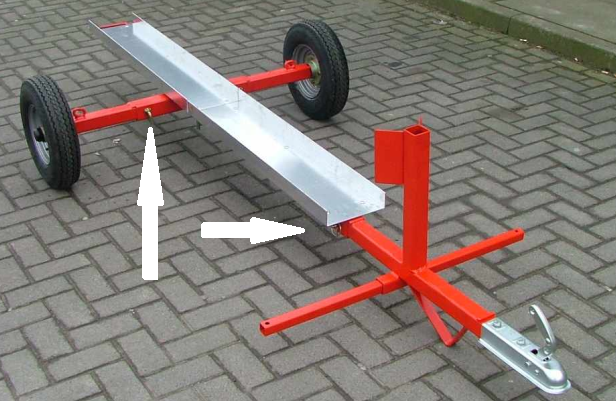
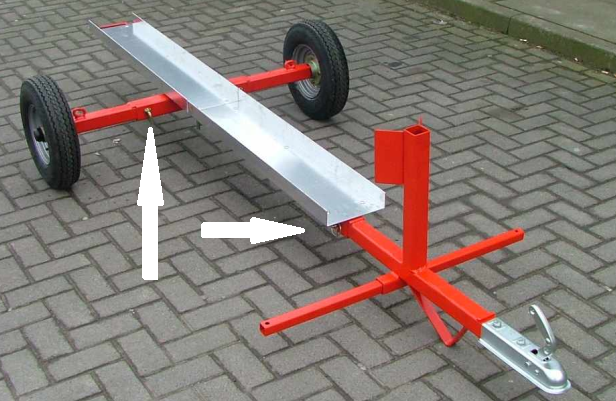
That looks like my bike trailer with a plane loaded on it.
-
1 hour ago, facthunter said:
If your missus is the real deal she'll fly it more than you do and you will have to get your OWN. Nev
Nev,
You live in a world where Trump is a sane, benevolent ruler.
-
1
-
1
-
-
12 hours ago, Marty_d said:
Why don't you choose a girlfriend WITH a sense of humour?
Because they mature into wives who can't take a joke.
-
1
-
1
-
-
This is what the collapsable trailer I am going to build for transporting my bike.
It can be dismantled by pulling out the pins that hold the sections.together.
-
Can you imagine living in East Anglia during the middle to end of WWII? Many days per week masses of USAAF four-engined bombers would be forming up over that area. Imagine the noise of 400 big radial engines fitted to 100 bombers taking off from one airfield to join other groups of 100 before heading off across the channel. Then at night, further north in Lincolnshire, the roar of hundreds of Merlin engines as the RAF set off on raids.
-
2
-
1
-
1
-
-
1 hour ago, Blueadventures said:
pencil on paper
Ahh! Those Russians!
-
2
-
 or this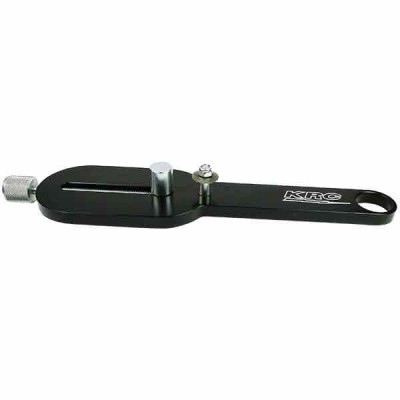


Good Instructors know the little tricks - Directional control on the runway
in Student Pilot & Further Learning
Posted
ACCIDENT INVESTIGATOR: Mr Student Pilot, can you tell me what happened to make your plane veer off the runway?STUDENT PILOT: I was having my first lesson in taking off. I lined the plane up on the centreline and gently pushed in the throttle. My instructor told me to put in some right rudder to counteract propeller torque. So I did. I pushed the right rudder pedal all the way. The next thing was the plane turned sharply to the right and tilted over to the right and ran off the runway.How many of you have been told to use the rudder to counteract propeller torque during take-off? How many have been told how to judge how much rudder to put in?I found this video which deals with a method to obtain the visual inputs a pilot needs when forward vision is lost simply due to the normal pitch up angle at rotation or during a climb.
When they asked Lindbergh which window he wanted to get rid of in the Spirit of St Louis, he said, "The front one". He was used to flying with big bags of mail in front of him and didn't really need the front window anyway. In this video you will be shown where to look in an airplane anytime you lose your forward visual reference. Like Lindy, you will learn to fly the airplane using what might be dubbed "The Lindbergh Reference". This reference point is critical for takeoff, landing, climbs, and slow flight. Learning to use it will dramatically improve your takeoffs and landings.
The reference point is that part of the instrument cowl that curves down on the left side towards the edge of the window. The hardest part of learning to use this method is to train yourself to stop looking forward over the cowl when it blocks your view, and to turn your head to the side.