


old man emu
-
Posts
5,297 -
Joined
-
Last visited
-
Days Won
78
Content Type
Profiles
Forums
Gallery
Downloads
Blogs
Events
Store
Aircraft
Resources
Tutorials
Articles
Classifieds
Movies
Books
Community Map
Quizzes
Videos Directory
Posts posted by old man emu
-
-
The very first thing you notice on your first solo flight is how the aircraft goes up like a fart in a bath. Why? Because previous to your first solo you've been hauling around the weight of the instructor. Throw the instructor out and for the same velocity/air density combination as it was ten minutes earlier, the Lift generated is much more.
-
 1
1
-
-
And it's a good question, worth the discussion.
Now the question has been phrased in a more practical way. As I see it, the question is, "When it gets hot, should I lighten my aircraft?". The only ways to do that practically are to take out unnecessary junk, or reduce the amount of fuel carried.
I'm thinking that we are using the wrong figures for air density. At 20 °C and 101.325 kPa, dry air has a density of 1.2041 kg/m³. As pressure increases, with temperature constant, density increases. Conversely when temperature increases, with pressure constant, density decreases. Air density will decrease by about 1% for a decrease of 10 hPa in pressure or 3 °C increase in temperature.
That 1% is one percent of 1.2041 kg/m^3. It's the kg/m^3 figure that needs to be corrected when used in the Lift formula.
-
2 hours ago, pmccarthy said:
Don't go, big Julie, don't go.
-
 1
1
-
 1
1
-
-
I was learning to fly RC slope soarers from a really good site near Camden. It had a southwesterly aspect and was the top of the rise from the Nepean River. The slope rose up quickly, resulting in good orographic lift, plus the occasional thermal coming through. My instructor and some to the experienced pilots got into dynamic soaring. The idea is to launch off the front of a crest and fly to the the back of the crest and dive. Then they would pull up and fly up the back of the crest. When they got to the top, the wind would give them a boost. So, with each pass they would build up speed.
Can't do it anymore because the land to the southwest of the slope is now all
little boxes,
little boxes,
little boxes made of ticky-tacky
Little boxes made of ticky-tacky
And they all look just the same.
-
2
-
1
-
-
Have you ever watched a great sportsperson, actor, musician etc prepare for a performance? They spend a lot of time going through the motions in their minds and, where necessary, carrying out the body movements.
The absolutely cheapest flying instruction is to sit in the aircraft you are learning in and go for mental flights. We all lament those days when the weather prevents us from taking a flying lesson IN THE AIR, but they are a godsend for the student pilot. Since the planes are grounded, there is usually unlimited access to them. So go out and sit in the plane and go through each exercise in your mind, imagining what things should look like and at the same time push and pull things as you would at the various stages of the flight. Even now, although it is ages since I actually committed aviation, I can sit here at my desk and fly a circuit though my mind's eye and so stalls, incipient spins, steep turns, yadda yadda.
-
1
-
 1
1
-
-
I'm going to say something about metric -v- imperial on https://www.socialaustralia.com.au
-
3 hours ago, Neil_S said:
Will order if not in stock.
And you'll pay US wholesale + freight + Australian suppliers markup + GST + postage to your place.
-
4 hours ago, facthunter said:
These are godly matters, not meters or metres. Nev
Would an atheist use anti-matters?
-
4 hours ago, facthunter said:
Everything suffers as you get less dense air .
That's so true!
We all know that hot air is less dense than cold air. They have a specially constructed Chamber in Canberra where hot air accumulates. As a result, we all suffer.
-
4
-
 1
1
-
-
4 hours ago, cscotthendry said:
Not doing this is usually the worst source of electrical noise in audio and radio equipment.
As an aside, if the airframe was used as the conduit to completed the circuit, wouldn't that set up a magnetic field that would affect a compass? I know that such effect can be accounted for by doing a compass swing, but you have to have a reason for doing the swing. The first reason is obviously the magnetic effects of the airframe, engine and other components, but are the effects of electrical current flow another?
-
53 minutes ago, aro said:
Also the engine power is reduced (unless you have a turbo) so acceleration is reduced which increases the time it takes to get to the higher speed.
I said I wasn't going to talk about that in this thread. Not that the statement is incorrect, though.
-
Apennameandthat has one of these, A-22LS which is the Light-sport version for the American market with a higher gross weight of 600 kg (1,323 lb) for the landplane and 650 kg (1,433 lb) for the seaplane. So, if you add a really drag-inducing undercarriage you can increase the MTOW by 50 kg. It seems logical that the same plane, with a much less drag-inducing u/c can easily take off with an all-up weight of 650 kg.
Using this data from Camden airport at 4:00pm 22/1/21
Airfield elevation: 230'
Temperature : 36C
Air pressure: 1005.9 mb
Humidity 13%
you get a density altitude of 3100'
11 hours ago, skippydiesel said:a Forum member could be thought to be confession/advocating the deliberate breaking of the rules covering the operation of an RAA registered aircraft.
If you take note of the title to this thread, it contains the word "VIRTUAL". To me that implies that the question calls for an exploration of the effects of putting a variety of numbers into the Lift formula,
Lift = {1 x (density x TAS)^2 x 1} /2
turning the handle and seeing what comes out the other end. There's no inference that anyone has, or plans to, use the results of that exploration to exceed the MTOW of their aircraft. If anything, the results of the exploration would show that
1. Lift is dependant on air density for a given TAS
2. Lift is dependant on TAS for a given air density
3. Lift is dependant on the combined effects of air density and TAS.
For those who don't like working with algebra and mathematics, the exploration would show that for a given air density different from 1013 mb you have to go faster to get the same lift as at 1013 mb. This translates to:
1. Faster speed on the ground before you can rotate, and the other way, faster speed on the ground at the flare.
2. Longer ground roll on take off because it takes longer to accelerate to rotation speed, and the other way because touchdown ground speed is higher.
3. Longer ground roll on take off because air density affects power output of normally aspirated IC engines.
I'm not going to list the further effects of temperature and density on aircraft performance once in the air as that's worth its own thread.
-
 1
1
-
-
15 minutes ago, Thruster88 said:
Isn't the OP asking what weight would give the same performance at 45°C as he gets at 600kg and 15°C?
Quite possibly, and it is a good question. I wish he'd come back and comment on what has been posted.
Isn't it true that there are some aircraft that in Australia are limited by legislation to a MTOW of something like 600 kg, but under legislation elsewhere are permitted 750 kg? And there are no differences between the Australian aircraft and the European one?
-
Just like sports car manufacturers brag about how much horsepower their engines have, battery brands tend to do the same thing with their performance attributes. Enough brands and companies have told people over the years that "more is better" when it comes to cold cranking amps, that a lot of folks now believe it always the case. While more may be better, it may not be necessary and it may be more expensive.
One of the performance attributes is how many cold cranking amps (CCA) a battery can generate.
So how is this determined? Since "Cold" is in the name, they put a battery in a cold environment (0°F/-18°C) and measure the discharge load in amperes that a new, fully-charged battery can deliver for 30 seconds, while still maintaining terminal voltage equal to or higher than 1.20 volts per cell.
Why did they pick a cold environment? Ask anyone who lives in a cold climate with a high-mileage diesel truck- it takes a long time to start some vehicles, whether that is due to high compression engines, extremely cold temperatures or both. Does a J230 in Australia operate in these conditions?
A good starter will draw amps under load (while cranking the engine). So if the battery can deliver can deliver 200 amp when it is is chilled to -18C, it will produce more than that at our usual air temperatures. Buying a 300CCA battery would be overkill, unless you want to run a full glass panel, air conditioning and cabin entertainment system at the same time.
Getting to the point of your question, the 300CCA battery will not generate extra torque. It will just provide power for longer. And keeping a starter motor cranking for extended period of time will overheat it and burn it out.
-
1
-
-
2 hours ago, FlyBoy1960 said:
They are easy formulas to calculate but some manufacturers include simple tables like this for people that don't have a calculator
That table is not good for answering the OP's original question. If the published MTOW is exceeded, can you calculate how much above it the wings can lift.
Clearly the question relates to going beyond manufacturer's advice. Remember that the in one famous operation in DC-3 (or C-47) aircraft, they overloaded the planes like a Tokyo commuter train and they still flew.

I'm hoping for some discussion on the assumptions I made. This is an interesting topic.
There is one factor that the Lift formula cannot account for, and that is the location of the Centre of Gravity. I suspect that an aircraft's wing is capable of generating very much more lift that would be required, but getting the Balance within the envelope might be the idea's killer.
-
What Facthunter says is true, but I thought that the question started in the simplest situation - seal level in a standard atmosphere. If you do the calculations for that, then you get a table basically of rotation speed and aircraft take off weights. Then you could create tables for those values at different densities.
A thing you have to know is the maximum TAS the aircraft can attain after a ground run, and still clear, say. a 50 ft high object. Obviously, there comes a point where there is insufficient runway length for that.
Here we go with the algebra!
v^2 = u^2 + 2as
where v = final velocity
u = initial velocity
a = acceleration
s = distance
Rearranging the terms to solve for "s" we get
1/2 (v^2/a) = s
Where can we get a value for "a" from?
We could do a time trial to determine average acceleration and use
a = (v - u)t
where t = elapsed time.
However, since acceleration is
a = F/m
Every time you changed the weight of the aircraft you would have to recalculate the average acceleration since F is coming from the Thrust generated ultimately by the engine, there is a limit to that, which one would have to know.
-
-
Actually, it is showing 079 True if the picture was taken in Brisbane and the compass has not been calibrated for all the steel and electronics around it.
-
19 minutes ago, Yenn said:
that they never try to reverse them and don't know what a neutral turn is
Oh, good. We're back on topic.

-
1
-
-
On 21/01/2021 at 7:23 PM, Garfly said:
"Immediately play this exact music through intercom.."
Music hath charms to soothe the savage beast.
Now smartarse, get that plane off the runway without the engine running.

-
1
-
-
Does it only show 0 to 180 degrees?
-
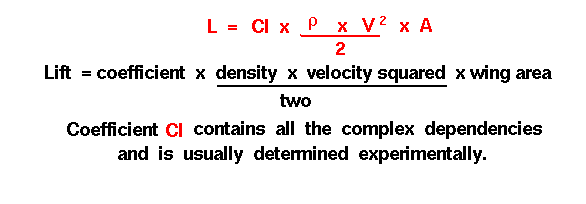
I hope I've read into the question correctly and we are back into the Lift equation, albeit this time in purely practical terms
We want to calculate what conditions are need for a wing to generate sufficient Lift to balance, or exceed the weight of the aircraft. So let's look at what can and cannot change in that formula.
Total Lift - This is the result of the calculation.
Coefficient of Lift - unchangeable as it is part of the aerofoil design
Density - We know that is a variable thing.
Velocity - That's in True Airspeed, and since density and temperature are involved, it is a variable
Wing Area - That is part of the aircraft design so in unchangeable.
If we acknowledge the involvement of Coefficient of Lift and wing area in lift creation, but know that they are not variables, we can assign them the value of one (1) for calculation purposes.
Therefore the Lift equation becomes
Lift = {1 x (density x TAS)^2 x 1} /2
If you know the air density and the TAS you can calculate Lift. If, on the other hand , you know what Lift you need, then you have to fiddle with density and TAS. In this case, because you are operating from a certain altitude and at a certain known density, then by pluging in the known density and fiddling with the TAS you can calculate how much faster your takeoff speed will be above the speed for MYOW.
-
Photo taken in the afternoon with the car facing East?
-
1
-
-
Reading from the Judgement, I was struck by the description of the aircraft turning to the left of the centreline after takeoff. The turn was said to have been quite noticeable. I wonder if, given the description of the second T & G, the aircraft was in the early stages of a stall/spin, and only the running into the Ferris Wheel prevented the usual outcome of a stall/spin.
The other thing that struck me from reading the judgement was that the Court accepted the experts saying that the standard of pilotage was "below standard". A Court is supposed to be a seeker of fact. It will accept opinion evidence, based on the analysis of facts - drawing a reasonable conclusion - but that opinion has to be reasonably objective.
In this case, to say that the pilotage was below standard was an subjective opinion. By what standard did they judge the pilotage? I believe that the fact was that the pilot had about 80 hours or so of experience. He had obtained his RAA Pilot's Certificate, but at those hours - which would have included all the time since he started to learn to fly - he could be compared to a P-plater. The Experts were all very high time pilots. Were their opinions based on their own large store of experience and knowledge, or did they put themselves in the mind of the P-plater?
What are the criteria for good pilotage? Obviously the pilot had met some recognised standard to be issued with a pilot's certificate. The owner of the aircraft obviously felt that the pilot was competent to carry out the flight, since the aim of the flight was to be able to display a locally built aircraft to the public, and all that entails for a manufacturer. Who of us hasn't made a poor pilotage decision early in our flying experience? How many high-time pilots make mistakes. There is not hard and fast standard for pilotage against which a pilot's actions can be measured. In fact, the experts all agreed that in this case, the first approach and go-round indicated good pilotage. Did this pilot's level of pilotage suddenly fall dramatically as he flew downwind? The Court should have placed no weight on those opinions.
LSA's have a MTOW of 600 kg. My plane flys badly if that weight is exceeded. Can a "virtual weight" be calculated from deviation from standard atmosphere?
in Student Pilot & Further Learning
Posted
You are correct. It was getting late and I was tired when I wrote that.
The total Lift created will be the same, but the excess of created Lift over required Lift will be greater because the required Lift has been decreased by the weight of the instructor.