


old man emu
-
Posts
5,297 -
Joined
-
Last visited
-
Days Won
78
Content Type
Profiles
Forums
Gallery
Downloads
Blogs
Events
Store
Aircraft
Resources
Tutorials
Articles
Classifieds
Movies
Books
Community Map
Quizzes
Videos Directory
Posts posted by old man emu
-
-
49 minutes ago, danny_galaga said:
I've decided I'm not marking anything. Just gonna guess each time I need to know
That's how you end up with a mare's nest.

-
 1
1
-
-
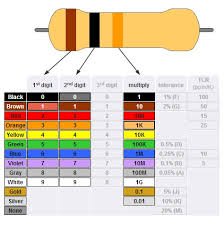
Why not adapt the system of coloured bands that is used to identify electrical resistors?
Use heat shrink tube on the wires to create a pattern and make up a written record of what wires each pattern represents.
It is common to have earth wires solid black, but if you are using white aviation quality wiring, then you would have to use black heat shrink for those wires. As long as your maintenance records have a copy of the Legend for the code, anyone can interpret the rings of heat shrink on a wire. The important thing to do, however, is to indicate which end of the sequence is the start. You could do that by choosing one colour of shrink tube, or by simply putting on a spot of paint or nail polish (I suggest fluorescent green) at the starting end.
-
The British started the war with daylight bombing, but lacking escort fighters with enough range to give full protection, they were savaged by the Luftwaffe, so changed to night time bombing. In the early part of the war, the Germans had the superiority in fighter aircraft as well as anti-aircraft batteries coverage. There must have been an agreement that the British would keep up their night raids and the USAAF would raid during the day.
It wasn't until January 1943 that the USAAF carried out its first raid to Germany. On January 27, 1943, the 8th Air Force sent 64 planes from their base in England in what would be the first U.S. bombing of Germany. Both B-24 bombers and B-17 Flying Fortresses, known for their ability to take heavy fire, began their raid on the German port of Wilhelmshaven. Fifty-three planes managed to hit their targets and shot down 22 German planes. The raid was considered a success, doing significant damage to the infrastructure at Wilhemshaven while only losing three U.S. bombers in the process.
It was not until the introduction of the Lockheed P-38 Lightning and Republic P-47 Thunderbolt fighters that the bombing raids could claim a measure of success. Able to carry large Lockheed-designed drop tanks, the fighters were able to escort the bombers for much of their missions. The first Allied fighters over Berlin were 55th Fighter Group P-38s on March 3, 1944. When the Merlin-powered North American P-51 Mustang was introduced in late 1943, with a laminar-flow wing for efficiency, the final escort fighter development of the war was complete.
-
The bomb load capacity of the B-17 -v- the Lancaster might well be a product of the development of the two aircraft. The B-17 was basically started on a blank sheet of paper, although it was an entry into a Government military aircraft acquisition competition. It's closest predecessor was the Boeing 247, a twin-engined 10-passenger + 2 crew airliner. The Lancaster, on the other hand, evolved through a number of high wing, multi-engined from the Avro 642 Eighteen through the Manchester. This allowed the Avro simply to enlarge proven designs. Also the British had aircraft from other makers such as Vickers and Short Bros who were producing multi-engined aircraft early in the 1930's.
-
 1
1
-
-
Supposedly the greatest bomber of WWII, if one is to believe the American propaganda, the B-17 was indeed a flying fortress. Actually, it was an inefficient tool requiring 10 crew to deliver 4800 lbs of bombs. The Lancaster, with a crew of 7 delivered 14,000 lbs and the Wooden Wonder had a crew of 2 to deliver 4000 lbs. However, what it lacked in carrying capacity it made up for in numbers.
Unfortunately, many B-17s were lost, not to enemy fire, but to Murphy's Law. If something can go wrong, it will at the most inconvenient time. The B-17 was built with the cause of its own destruction.
-
Stick something out into the airstream and it creates Drag.
The Fairey-Youngman flap was patented in 1941. These flaps were large, around 1/3rd of the wing chord. Their movement went in two phases, controlled by a linkage.
Firstly the flap lowered below the wing and approximately parallel, making the aircraft almost a sesquiplane. This gave improved lift, but with little extra drag, and was used for landing. The flaps could be extended further for landing, now rotating downwards to 30° as a slotted flap. With the use of flaps, wing loading was reduced and also gave a gain in lift coefficient. The Fairey-Youngman flap and its initial downward parallel movement was superseded for other aircraft by the Fowler flap, which too had an initial parallel movement, although rearward sliding.
Fairey Aviation used this flap design for the Fairey Barracuda dive bomber, as the design could be modified to also tilt the extended flap upwards, acting as a dive brake.
-
1 hour ago, onetrack said:
a huge resource of civilian wood-workers and carpenters
I wonder if that was because Britain was still making a lot of the bodywork frames of its motor vehicles from timber, while the USA was using the pressed steel method of construction. The British aircraft industry was still using a lot of wood in its aircraft.
The Flamingo was a twin-engined civil airliner designed by de Havilland, and was the first all-metal stressed-skin aircraft built by de Havilland; only the control surfaces were fabric covered. First flew in December 1938.
-
 1
1
-
-
7 minutes ago, onetrack said:
It kind of makes you wonder what the Defence chiefs were thinking
Needs must.
We had to cobble together the CAC-12/13 Boomerang. Fortunately we had the bits and pieces and production licences for engines and airframe components. We also had a cluey designer in Lawrence Wackett who could make the patchwork quilt.
-
Damn! You beat me posting this.
I like the little comment about timber supplies dwindling during the war years. When you consider the amount of timber used for crates to transport everything from SPAM to 1000 lb bombs, and the number of these crates produced, it's a winder that there was a sapling left within the whole of the USA by 1945.
-
 1
1
-
-
Splitting the thread:
This request has been forwarded to the Moderators. I don't know how to do it, so have left it to Ian.
There is a nasty side track in these last few posts that gentlemen should not be taking. (I wonder if this nastiness is COVID related.) Please consider using the PM facility to tell the person whose post you don't like why you are offended by it. And yes, I have been known to fail in this method - mea culpa.
So now let's get back on track and restrict this discussion to the original question: What aircraft in the RAA LSA category would you choose to do it in. AND WHY? Note that the enquirer was asking about RAA LSA aircraft so that rules out most things with more than two seats.
-
2
-
-
38 minutes ago, aro said:
Would you be able to turn to starboard if the rudder was attached to the extreme port side of the boat?
Here's a Viking longship with its rudder attached to the extreme side.
If anyone really wants to drift off this topic, here's a paper of marine rudder design. https://www.tandfonline.com/doi/full/10.1080/17445302.2016.1178205
Interestingly, the paper discusses the performance of rudders in terms which we are familiar with in aeronautics. Seems a fluid is a fluid, it's only the density that changes.
-
Here's another example of a rudder being used to change direction.
Say you were in a boat going across a mill pond (no tidal effects or currents) in a straight line at 5 kts. You decide to make a quick change of heading of, say 25 degrees to port. So you push hard on the tiller which causes the rudder to move out of alignment with the fore/aft axis of the boat, exposing more of the rudder to the water on the port side of the boat. The boat begins to change heading.
Was it drag or something akin to the results of Bernoulli's Principle that caused the boat to change direction?
-
1 hour ago, aro said:
Lift on one side" is an inaccurate picture.
I'd say more simplistic than inaccurate. You have to allow a little bit of leeway in how things are expressed in written form. Too technical and the entry will go on for pages. Too simplistic and it trivialises the entry.
1 hour ago, aro said:Lift is the result of a difference in pressure between one side and the other.
This statement puts you in the Bernoullian camp, facing off against those in the Newtonian camp. The true answer is still hotly debated, but until that truth is defined, then both camps will contribute to the explanation in various situations.
14 hours ago, old man emu said:Let's not get into the Bernoulli -v- Newton debate just now.
-
15 hours ago, Jase T said:
I assume you use the word 'lift' in your original question to mean a force in the upward (in relation to gravity) direction?
Actually, I was trying to imply a reaction to forces generated when a fluid moves over a surface that has more curvature on one side than on the other. We accept that generally we talk about Lift as the resultant force of air moving from fore to aft across a wing. Let's not get into the Bernoulli -v- Newton debate just now.
Now the horizontal stabiliser is a wing. The elevators are moveable parts of that wing and when they move, is the result of that movement a change the camber of the wing and therefore change the Lift produced, or do they simply expose more surface to the airflow, creating Drag.
It's probably clearer with the Vertical Stabiliser/Rudder. Usually the vertical stabiliser is a symmetrical wing - same curvature on both sides. When the rudder is moved from its neutral position, does it create lift on one side by changing the camber of the symmetrical wing, or is it just a sheet of material thrust out into the airstream to cause drag?
In aircraft of low Mass, if you put your hand and arm out of the cockpit into the airstream, you can induce a movement (usually yaw) to the side your arm is located. That has to be completely due to Drag.
-
3 hours ago, Jase T said:
I assume you use the word 'lift' in your original question to mean a force in the upward (in relation to gravity) direction?
Actually, I was trying to imply a reaction to forces generated when a fluid moves over a surface that has more curvature on one side than on the other. We accept that generally we talk about Lift as the resultant force of air moving from fore to aft across a wing. Let's not get into the Bernoulli -v- Newton debate just now.
Now the horizontal stabiliser is a wing. The elevators are moveable parts of that wing and when they move, is the result of that movement a change the camber of the wing and therefore change the Lift produced, or do they simply expose more surface to the airflow, creating Drag.
It's probably clearer with the Vertical Stabiliser/Rudder. Usually the vertical stabiliser is a symmetrical wing - same curvature on both sides. When the rudder is moved from its neutral position, does it create lift on one side by changing the camber of the symmetrical wing, or is it just a sheet of material thrust out into the airstream to cause drag?
-
7 minutes ago, facthunter said:
Application of most controls will cause more drag.
Granted. But is it the additional force of Drag that does the job, or an increase in Lift force?
Leaving out any discussion of the placement by the designer of the tailplane and vertical stabiliser for "straight and level" flight, do these two control surfaces work by reducing speed on one side (Drag), or increasing Lift on the opposite side to the direction of deflection
-
The various instruments we have in our aircraft are talking to us from the time we do the pre-flight until we do the post-flight inspections. Some have simple messages to tell us, and some more complicated. THe more complicated the message, the more effort is put into the communication design of the instrument to make its message clearer. Here is a story that illustrates that at times, poor communication design can kill. It was the Day the Music Died.
-
2
-
2
-
-
See! I told you that it was a good idea to explore the gliding potential of your aircraft.
-
1
-
1
-
-
Leaving out changes to power settings, we move the elevator to induce pitch changes and the rudder to induce yaw changes. But how do these moveable surfaces at the rear of fixed surfaces produce the forces necessary to change pitch and yaw angles? Are these devices increasing Drag, or increasing aerodynamic Lift?
-
7 hours ago, APenNameAndThatA said:
Well done on clawing one back.
Listen, mate.
I'm getting well and truly sick of you flaming me. I have yet to see you make a positive contribution to any topic on this forum. You might think that you are being quite smart, but all you are doing is showing what a moron you are. If you can't stop flaming me then F off.
-
Per ardua ad Astra
-
1 hour ago, facthunter said:
More correctly it's the decelerative force you are subject to that does the damage to you.
Yes and no. In an impact, there are a couple of things that cause injury.
Let's look at the vehicle itself.
Prior to the impact, the vehicle, of mass m, has a velocity, v1. As a result, it has momentum, p = (m x v1). After the collision its mass remains the same, but its velocity will change to v2. The change in momentum due to the collision is m(v1 - v2). Since it takes time for a collision to start, then end, Time, t, is involved. This gives the component {m(v1 - v2)}/t.
(v1 - v2)/t. is change in acceleration, Delta a, or, in terms of collisions, rate of change of momentum.
We know that Force = m.a
or Force = m.(v1 - v2)/t.
Therefore, Force.t = m(v1 - v2).
The application of a Force for a period of time is called Implulse. So Impulse in this case is equal to the magnitude of the change in momentum.
Here are two examples of the injurious effects of Impulse.
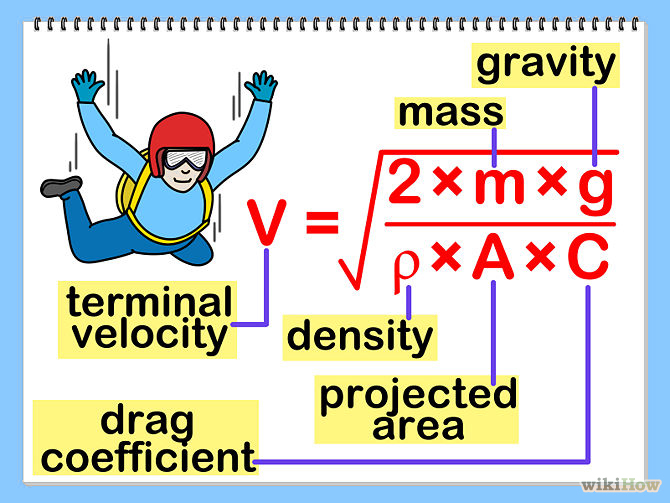
Imaging two pallets of goods dropped in an air drop operation. If the the first one is kicked out without a parachute, it will reach a terminal velocity, and collide with the ground at that velocity. What will be its terminal velocity?
Since we are comparing two pallets of the same projected area, falling through air of the same density, then we can set p and A both at unity. This means the terminal velocity of two identically loaded pallets is only dependent on their drag coefficients. The parachute will add to the pallet's drag coefficient, so it will reach a lower terminal velocity. When the pallet collides with the ground, it will suffer a much greater change in Momentum than the pallet with the chute.
Now, switching terms around we can get
v = p/m
But we also know that Kinetic Energy = 1/2 m.(v^2). This allows us to work out the Kinetic Energy of the pallets as they hit the ground.
K.E. = 1/2.m.(p/m)^2
OK. That deals with the Forces involved in a collision. The other cause of damage, especially to the our bodies, is their Inertia.
Before the collision, our internal organs are sort of floating about in boney cages, and everything is moving in straight line at constant velocity (Newton No.1). When everything around our bodies stops due to a collision, the inertia of our skeletons, brains and organs makes them keep going at the same speed until they either hit something, or reach the limits of their natural movement.
Heads go forward, but reach their limit of movement because the torso is connected to the vehicle by restraining belts. The neck and spinal column can snap from over-extension. Similarly the aorta, coming out of the heart can rupture because the heart is better restrained in the chest cavity. The brain suffers most because it is floating in fluid and when the skull stops moving, the brain keeps going, crashing into the skull bones. Injury ranges from concussion to severe trauma to the brain tissue.
-
1
-
-
Who was the instructor from Goulburn?
-
21 minutes ago, APenNameAndThatA said:
Inertia and momentum are the same thing.
You messed up because you don't know the meaning of Newton's First and Second Laws. Inertia is a concept. Inertia is simply the tendency of an object to follow a straight line trajectory at a constant speed, unless acted upon by an external force. The tendency of an object to resist changes in its state of motion varies with mass. The more inertia that an object has, the more mass that it has. A more massive object has a greater tendency to resist changes in its state of motion. The sense of the word "inertia" comes from the Latin "iners", which means "lazy"
The Momentum of a body is something that it possesses due to the product of its mass and its velocity. We can measure both these quantities to calculate the momentum the body possesses.
3 hours ago, facthunter said:Inertia CHANGE covers it. To change, it has to be accelerated or decelerated.
NO. Momentum is the thing that changes due to acceleration (positive or negative). You can only change the inertia of a body by adding or removing mass.

Labelling high temperature wiring
in AUS/NZ General Discussion
Posted
Labelling the wiring makes it easier to chase a circuit is something doesn't work, after the engine goes in and before the maiden flight.