


old man emu
-
Posts
5,297 -
Joined
-
Last visited
-
Days Won
78
Content Type
Profiles
Forums
Gallery
Downloads
Blogs
Events
Store
Aircraft
Resources
Tutorials
Articles
Classifieds
Movies
Books
Community Map
Quizzes
Videos Directory
Posts posted by old man emu
-
-
I've just read through this thread from the start. It has drifted more than Pangea, so I've decided this:

That's Golden Advice, which I will happily accept.
-
 2
2
-
 1
1
-
-
Gotta love them electricky gizmos. Always better than a magnetised needle on a string.
-
1
-
-
2 hours ago, Thruster88 said:
I am guessing
Why the hell should I answer whether a guess is right or not? You've given no reasons why you come to your guessed value, not have you set the conditions for when the observation of the reading was made. If you slam the throttle lever to the wall, does you plane immediately try to sit on its bum?
2 hours ago, APenNameAndThatA said:if he aircraft was flying nose down 30 degrees, steadily, what would the AOA meter say the AOA was?
I'm glad that you said "steadily", which implies uniform motion. Everything should be in equilibrium. Also you say "nose down", so I take it that your reference line is the longitudinal axis of the aircraft. That's nice and clear. However, you don't say if the aircraft is flying steadily earthwards at an angle of 30 degrees or is trying to fly "parallel" to the earth's surface with the nose 30 degrees down. I am going to answer for the first case.
If you followed my installation instructions the longitudinal axis of the spirit level would be at +4 degrees to the aircraft's longitudinal axis. Since the AoA is the angle between the chord line and the direction of airflow with reference to the longitudinal axis of the aircraft, and the chord line doesn't know up from down, then the ball or bubble would be at +4 degrees. The ball or bubble is travelling down the slope at the same velocity as the rest of the aircraft.
-
28 minutes ago, Kyle Communications said:
If the DAME signs you off directly on the Basic Class 2 medical
I thought that the idea of aligning the Basic Class 2 with the Austroads medical, which any GP can sign off on. If there are conditions on the Austroads approval (Sleep Apnoea and eyesight) you might have to see a sleep specialist of get an eye test and if they are OK you can continue to drive commercially. What planet do CASA staff live on if they think that there are any greater risks flying a plane that in a lot of cases would weigh less than a vehicle a Learner driver can drive, than there are in driving commercially?
-
 2
2
-
-
4 hours ago, Mike Gearon said:
Okay. I’ve not seen the original thread
Mike,
It seems that you are not Robinson Crusoe there. In that thread I described the whole process of setting up the device. I'll not repost it here. What is happening is that people are dropping in with comments akin to "That's B...sh!t" without providing a countering argument from which their point of view can be assessed.
The spirit level approach might seem steampunk to people who have been brought up with the convenience of digital devices, but digital devices are simply versions of steam driven devices. Neither is good nor bad.
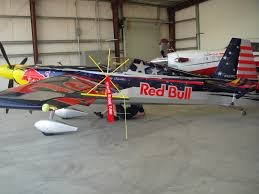
Here, on the wingtip,
is a common tool used in aviation which is somewhat related to the ball in a tube. Can anyone prove that they don't do their intended job?
11 hours ago, APenNameAndThatA said:I’ve already tried that line of reasoning. For example, that if an aircraft was flying vertically straight up, the AOA indicator would show an angle of attack of 90 degrees.
That comment is taking the context of the argument to an absurd extreme. Actually, a spirit level in an aircraft going vertical in either direction would stop at the end of its range of travel. If that range extended to 90 degrees, yes it would show that. However, I, foolishly, expected to be directing my posts to people who fly aircraft within a limited range of movement around the lateral axis of the aircraft. If you can get a Foxbat, or a C-172 to fly vertically upwards, or vertically downwards (without exceeding Vne) then my suggested device is not for you. If, however, one's particular operations require flight at AoAs close to the stalling AoA, then the suggested device might prove useful.
3 hours ago, aro said:A stalled aircraft will not follow a ballistic trajectory.
aro, there's an outbreak of headlice at a local primary school. Can you attend because you're blood good at nit-picking. However, you are not much good are reading, so don't volunteer as a teacher's aide.
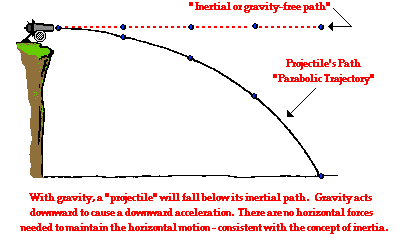
In relation to the path an aircraft would follow if the power was reduce when the aircraft was in "straight and level" flight, I said, and highlighted,
15 hours ago, old man emu said:This simple trajectory is likely to be modified by the longitudinal stability designed into the aircraft.
For your benefit I know I should have listed all the things that would alter that trajectory from the theoretical, but there are other readers here.
3 hours ago, aro said:Physics, and aerodynamics past PPL level. I don't see any more qualifications than many other posters to the site.
Did you study trigonometry in school? Most people did. And when was the last time most people used what they learned in school? When they completed the last trigonometry exam question when they were in school. In my line of work, I had to use trigonometry as a basic tool. Admittedly, it was at the simple end of the spectrum, but so is the basic physics of flight. Also I had to apply the Laws of Motion and understand things like inertia, centripetal force, centre of mass, impulse and so on. These were my tools of trade, so I know how to use them, the same way as an aircraft woodworker knows how to make scarf joint in a spar, or an welder can join pieces of metal.
14 hours ago, aro said:You need to measure AOA in relation to the aircraft.
That statement clearly indicates that you have not even had the courtesy to read the description of the set up. Until you do, don't say anything more.
14 hours ago, aro said:Gravity moves around relative to the aircraft as the attitude changes.
Can I have some of what you are smoking? Most physicists will say that, in relation to the planet, the acceleration due to gravity is a vector directed towards the centre of the planet. Since the aircraft and the planet are as one with respect to astronomic bodies, one can discount the effects of the gravitational forces exerted by those bodies.
16 hours ago, aro said:inertia is mass. An object has the same inertia with or without gravity
Inertia, is a property of an object by which it opposes any Force to put it in motion or, if it is moving, to accelerate it by changing the magnitude or direction of its velocity. Inertia is a passive property and does not enable a body to do anything except oppose forces. A moving body keeps moving not because of its inertia but only because of the absence of a force to slow it down, change its course, or speed it up. In that case, the object has zero inertia. If the object is subjected to the Force of gravity, then it attains inertia. If you take the case of an object motionless on a surface, then it also has no inertia because the force of gravity is mathematically negated by the resistance of the surface to further movement of the object. It is in an equilibrium of forces. If you apply another force to the object, you upset that equilibrium. The force changes the velocity of the object and you have unbalanced the sum of the forces in the system.
-
3 minutes ago, aro said:
There's the problem. It won't work in a descent
I've just about had enough of your unsubstantiated claims. Put up or shut up.
-
7 minutes ago, aro said:
So your aerodynamics is basically PPL? Why do you think that prevents people questioning your information?
Based on my experience in one field of physics, I have developed the ability to understand the descriptions and calculations involved in other fields. Since this forum is not for aerodynamics engineers, by more for laypersons, I deliberately step away from the really deep stuff, that is now more applicable to aircraft that no one here is likely to fly.
I attempt to simplify what I am saying , but it seems that it is not simple enough for some.
-
3 minutes ago, APenNameAndThatA said:
It is true that a spirit level will work to determine aoa is straight and level flight. Same as a artificial horison could. But straight and level flight is not where you need to measure aoa.
Thank the Deities we finally agree on something. But who ever said in the original discussion that we were talking about straight and level flight? I'm sure that the discussion was about flying at AoAs close to the stalling angle, and I think it was also in relation to circuit work. And I reiterate, straight and level flight is one condition of AoA in a range of AoA's that it is possible to fly at aircraft at.
-
5 minutes ago, APenNameAndThatA said:
And speak to a flying instructor about your AoA device.
Speak to a LAME about how a slip indicator is fitted to an aircraft. Which axis it aligned with?
16 minutes ago, APenNameAndThatA said:If something has a mass of 3 kg, it exerts 30 N of force,
Of course it does. But how much mass acted upon by an acceleration of 9.81 m/s/s exerts a force on a weighing device of 3 kgs? Don't forget that I was at pains to say I was talking about "weight" in layman's terms as opposed to Force in physacist's terms.
-
1 hour ago, aro said:
An example from the previously linked Social Australia post (where we can't comment)
You mean this one? https://www.socialaustralia.com.au/topic/1408-centrifuges/?tab=comments#comment-50048 Doesn't seem to be closed to further comment. If it is, please advise Ian to open it up. I was hoping for the discussion of that topic to move over there.
2 hours ago, aro said:A "straight and level angle of attack" is an example of something that doesn't actually exist
Then why do aircraft designers go to all the trouble of instructing draughtsmen to design wing attachment points so that the chord line of the wing is at approximately +4 degrees above the longitudinal axis of the aircraft?
In aerodynamics, angle of attack specifies the angle between the chord line of the wing of a fixed-wing aircraft and the vector representing the relative motion between the aircraft and the atmosphere. The term "straight and level" implies that the aircraft is not turning, not altering altitude. That's the condition most people want to be in when cruising from A to B. In straight and level flight, all the vertical forces acting on the aircraft are balanced. This graph shows that at an angle of attack of about +4.5 degrees, the Coefficient of Lift has a value of one (1).
That coefficient is neither reducing nor increasing the lift for a given combination of air density, airspeed, or wing area. As you pointed out, an aircraft can fly within a large range of angles of attack, and those conditions you described do occur. "Straight and Level" is one of the conditions within that range.
2 hours ago, aro said:Lift doesn't change significantly in a climb, descent or straight and level.
Medic!!! He's shot himself in the foot!
Doesn"t change significantly? We could work it out, and I agree that the magnitude would not be massive, but change it does.
2 hours ago, aro said:Climb and descent are a result of power settings
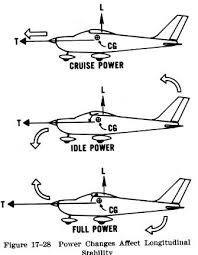
Power setting are how thrust is produced. Thrust results in velocity. Velocity is a factor in the creation of Lift. Change the velocity and you change the lift FOR A GIVEN AoA. When you demonstrate the stalling characteristics of your plane, what exactly is the exercise all about? I'd say that it is to show the dangers of stalling the aircraft at low altitude where recovery cannot be completed. Have you ever simply gone hands off and reduced power? The nose won't go up to the degree it does when you are demonstrating stalls and stall recovery. The aircraft, which has an intitial horizontal velocity will follow a ballistic trajectory.
This simple trajectory is likely to be modified by the longitudinal stability designed into the aircraft.
Now, aro, you questioned my qualifications to post stuff about the motion of aircraft. Will these suffice?
Bachelor of Science in Agriculture - where I learned to research topics and draw conclusions from that research, Plus experience in experimental design.
Traffic Accident Reconstruction Specialist - Application of the Newtonian Laws of Motion, including conservation of momentum and energy.
Passed several Commercial Licence Theory Examinations
Unrestricted Private Pilot's Licence
Practical Aircraft Maintenance experience.
Practical general automotive experience.
I think that will do.
-
2 hours ago, Thruster88 said:
A 3kg mass will have 30 N of force due to gravity, there is no 0.3kg anywhere
I can see that the problem with you blokes is that you cannot read. I started to post by defining the word "weight"
3 hours ago, old man emu said:"Weight" is the layman's term for expressing the magnitude of the Force which is directly dependant on the mass of of an object and the acceleration due to gravity in a relationship that can be expressed algebraically as F = ma.
Then I said,
3 hours ago, old man emu said:If we determine the "weight" of the object, to be 3 kg,
If we now put on our lab coats and become scientists, we will start talking in terms of Newtons. The scale shows us that the object exerts a force of 3 Newtons on the weighing mechanism. Therefore in the equation F=ma, it is F that equals 3. We agree that a is an acceleration of 9.81 metres per second every second. If, for simplicity's sake, we round 9.81 to 10, then 3 = m.10. Therefore m = 3/10 which is 0.3.
Mass: If you could count up the number of protons, neutrons, and electrons in an object, this would be a measure of the mass. The mass is essentially "how much stuff" is in an object.
Weight: There is a gravitational interaction between objects that have mass. If you consider an object interacting with the Earth ie affected by gravity, this force is called the weight. The unit for weight is the Newton.
I agree that if an object exerts a force of 30N, then it contains mass equal to 3 kg. But I never said that. I said that the Force (weight, whatever) was 3 kg. Read what I say, because I do think about what I write.
1 hour ago, APenNameAndThatA said:OME compares his theories favourably to those of Einstein and Darwin and b) still believes that his angle of attack measuring device might work. Have I got that right OME?
Scientific theories are the most reliable, rigorous, and comprehensive form of scientific knowledge, in contrast to more common uses of the word "theory" that imply that something is unproven or speculative. Lacking the facilities to test my theory, I cannot completely dismiss my device as ineffective. Until those tests are done, it still remains a theoretical use of the bubble in the tube.
23 hours ago, Student Pilot said:This thread has just become one giant pocket pissing contest.
I agree, and I think I'm the urinal.
-
21 hours ago, APenNameAndThatA said:
I correct your wrong posts more than other people’s posts
Let's go through your posts and find out how many others you have corrected
21 hours ago, APenNameAndThatA said:Do you understand that sonething with a weight of 3 kg has a mass of 0.3 kg?
"Weight" is the layman's term for expressing the magnitude of the Force which is directly dependant on the mass of of an object and the acceleration due to gravity in a relationship that can be expressed algebraically as F = ma. The acceleration due to gravity is given a conventional standard value of exactly 9.80665 m/s/s. It is acceptable to approximate that value to 9.81 m/s/s. This of course is considered an average value as exploration has shown that the acceleration due to gravity at a certain altitudes varies due to the variation in the gravitational attraction of the crust. The average value is for an altitude called Mean Sea Level.
So, if an object is placed on a weighing device, the device measures the force exerted by the object by either compressing a spring system, activating a tensiometer, or balancing standard "weights". If we determine the "weight" of the object, to be 3 kg, and we use an accepted value for acceleration due to gravity, then,
F = ma
F/a =m
Substituting the known values,
3/9.81 = m
3/9.91 = 0.3058 kg
or
3/9.80665 = 0.3059 kg
or, if we approximate 9.81 to 10.0 for simpler arithmetic
3/10 = 0.3 kg
21 hours ago, APenNameAndThatA said:Do you understand that a spirit level can determine AOA?
Do you understand what a theory is? I proposed a theoretical way of indicating AoA. Lacking access to a Foxbat or C-172, I was not able to test the theory by experimentation. I stand better than Darwin and Einstein in that their theories cannot be tested to absolute truth, whereas mine can.
21 hours ago, APenNameAndThatA said:Do you understand that if an airplane cannot maintain altitude it means that it has stalled
Do you understand that if an aircraft cannot maintain altitude it simply means that the Lift is insufficient to balance firstly the force of gravity and aircraft mass, plus any other detractors you want to add to the effects of gravity. All things being equal, ie wing area and air density, you can have an airspeed that is insufficient to produce the required amount of Lift while maintaining a "straight and level" angle of attack. The aircraft will simply descend on a ballistic trajectory.
Note that the Coefficient of Lift, an important factor in the Lift equation, is also dependant on the fluid dynamic pressure, in turn linked to the fluid density and to the flow speed, so the Coefficient of Lift varies constantly.
21 hours ago, APenNameAndThatA said:Do you understand that the best AOA of an aeroplane can be determined with the aeroplane static on the ground and a spirit level?
Do you know how to rig a wing?
21 hours ago, APenNameAndThatA said:I hope you do, because if you don’t you are nothing but a troll who has never contributed anything positive to this forum and lack the experience to know what a spirit level is.
Well, to all and sundry, APenNameAndThatA has just called you trolls.
-
2
-
-
I hold the highest level commercial driver's licence available in Australia. I also hold a NSW Bus Driver's Authority. Because of my age I do a medical every year. Sixteen years ago I was diagnosed with work-related stress, which was sub-divided into depression and anxiety. I left that workplace, but have been taking one of the medicines listed in this
Once you are diagnosed with depression and anxiety, you are doomed. You can't get the diagnosis change to "He' OK now." It is the same as asking a widower if he is still beating his wife. So, if I got my doctor to fill out the Basic Medical report at the same time as he did the driver's licence one, I'd be OK to drive a bendy-bus full of primary school kids along a freeway in peak hour, but CASA would probably require multiple reports from psychiatrists and then refuse the licence.
Someone should go through CASA with a shipping container of DCMs and clear the place out of staff who only ever go into the higher altitudes in office lifts.
-
1
-
-
1 hour ago, aro said:
What qualifications do you have that you come and give "lectures" and call people who disagree hecklers?
Before I answer that, answer this: Why is it that the only person whose posts that Apennameandthata and Aro insist on nit=picking are OME's?
Further, why is it that Apennameandthata and Aro don't contribute any more than to say, 'You're wrong' and fail to provide anything more than that?
-
1 hour ago, Thruster88 said:
We already have it, called basic med in Australia.
Where can you find CASA's list of things that you are permitted to do as the holder of a Basic Medical? A similar list is provided in the above New Zealand CAA link. The results of a comparative study would be worth seeing.
This describes how to get one of these certificates https://www.casa.gov.au/files/new-basic-class-2-medical-certificate-fact-sheet-pilots
Basic Class 2 medical certificate
Since July 2018, a Basic Class 2 medical certificate is available as an alternative to a full Class 2 certificate for private operations. It has the following operational restrictions:
only private day operations under the visual flight rules (VFR) and below 10,000 feet
a maximum of five passengers
only piston engine aircraft
maximum take-off weight (MTOW) of less than 8618kg
no use of operational ratings (e.g. instructor rating, instrument rating)
no use of flight activity endorsements (e.g. aerobatics, low level).
-
2 hours ago, APenNameAndThatA said:
Your challenge is to recognise that
Rebuttal is not simply telling someone they are incorrect. Rebuttal in technical discussions requires presentation of researched material.
-
There's a time and place for everything. Reacreationalflying dot com is the place for seriousness. Socialaustralia dot com is the place for taking the piss and also for some degree of seriousness.
Here, I expect intelligent debate. Over there I expect hecklers.
-
2
-
-
Please. Enough of the discussion of fugal force on this site. If you want to continue it, go to the Science tab in the sister site.
Thanks,
Old Man Emu
-
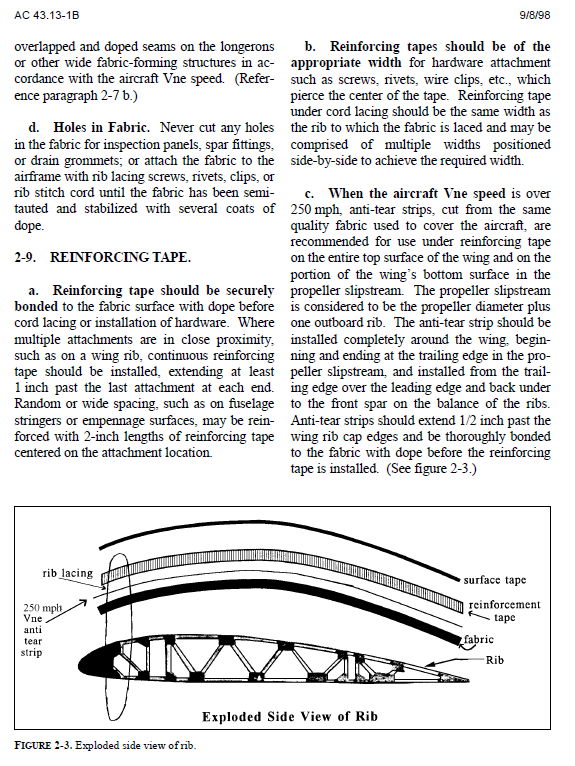
This is from FAA AC 43.13 and explains how to cover surfaces if the Vne is greater than 250 mph (~220 kts)
-
1
-
-
Grab a couple of Panadol then.
https://www.socialaustralia.com.au/topic/1408-centrifuges/?tab=comments#comment-50048
-
That Indian guru is an expert on the Vaimānika Shāstra, an early 20th-century Sanskrit text on aeronautics, obtained allegedly by mental channeling, about the construction of vimānas, the "chariots of the Gods". The existence of the text was revealed in 1952 by G. R. Josyer, according to whom it was written by one Pandit Subbaraya Shastry, who dictated it in 1918–1923. A Hindi translation was published in 1959, the Sanskrit text with an English translation in 1973. It has 3000 shlokas in 8 chapters. Subbaraya Shastry allegedly stated that the content was dictated to him by Maharishi Bharadvaja.
A study by aeronautical and mechanical engineering at Indian Institute of Science, Bangalore in 1974 concluded that the aircraft described in the text were "poor concoctions" and that the author showed a complete lack of understanding of aeronautics. But we all know that academics always fight non-academics who propose ideas radically different from those of the academics.
A good read. http://upload.vedpuran.net/Uploads/121113the_vimanika_shastra.pdf
and a review http://cgpl.iisc.ernet.in/site/Portals/0/Publications/ReferedJournal/ACriticalStudyOfTheWorkVaimanikaShastra.pdf
-
 2
2
-
-
52 minutes ago, APenNameAndThatA said:
You do know the AoAI would not work, right?
If you stood on a ladder, jokes would still go over your head.
-
That's where I got my Divine Inspiration for the simple Angle of Attack indicator.
I swear,
-
1
-
 1
1
-
-
Miles was the name used between 1943 and 1961 to market the aircraft of British engineer Frederick George Miles, who, with his wife – aviator and draughtswoman Maxine "Blossom" Miles – and his brother George, designed numerous light civil and military aircraft and a range of curious prototypes.
Most well-known of the aircraft produced are the Magister and Gemini, but Miles Aircraft Company produced nearly 50 different aircraft, or aircraft designs. During WWII, Miles Aircraft were the sort of unsung heroes as they were mostly involved in the production of aircraft for training purposes, both for ab initio, advanced and gunnery training. Like all British aircraft designers, they were involved in research into supersonic flight, and for post-war civil transport. Since their main business during the war was the production of established designs, their aircraft design people could be set to complete research designs without affecting contract production.
This is a good starting point https://en.wikipedia.org/wiki/Miles_Aircraft


Turns at low IAS
in Student Pilot & Further Learning
Posted
It's nit-picking when aro ignores the rider I put on my statement that if an aircraft was travelling on a straight path, neither climbing nor descending and that the excess of the Thrust force over all Drag forces in allowing the aircraft to maintain a constant airspeed, then in theory it would descend in a ballistic trajectory BUT in practice an aircraft will not follow the ballistic trajectory because there are sources of other forces, such as indeed Lift generated by the wing and drag from a stopped propeller adding to the inherent drag of the aircraft.
If, in an attempt to appease the nit-pickers, I add riders, then it should be courteous of the nit-pickers to also read and understand the riders.
aro is referring to my statement that an object moving with a constant velocity - and velocity can have a value of zero - has no inertia. This comes from Newton's First law, since an object will only react to the imposition of an external force. Inertia is resistance to external forces that want to result in an alteration to current rate of movement. In the case of an object moving at a constant velocity, one would be quite correct that the object possesses potential inertia due to its mass. It's not until an external force acts on the object that acquires inertia.
So I say to aro, "Prove it! With references".
DAMN and BLAST! I ignored the advice.