


old man emu
-
Posts
5,297 -
Joined
-
Last visited
-
Days Won
78
Content Type
Profiles
Forums
Gallery
Downloads
Blogs
Events
Store
Aircraft
Resources
Tutorials
Articles
Classifieds
Movies
Books
Community Map
Quizzes
Videos Directory
Posts posted by old man emu
-
-
47 minutes ago, lee-wave said:
Beat you there... I graduated top 100% of primary school students in Fiji and studied a little bit of basket weaving...
If this was posted in a thread in the sister forum, I would have posted a ROFLMA emoji.
However in the climate of this thread such a post is not well received. Please don't throw 100LL onto a fire.
-
3 hours ago, Peter Piper said:
May I interest you in a thought experiment and some Socratic questioning?
Read your PMs
-
OK. I give up. Old Man Emu is an absolute dickhead who is not worth entering into discussions with. "No one thought ..." No one ever produced a rebuttal argument.
-
Protection from landing flat as in Thruster's illustration is pretty hard to design into an aircraft. I believe that flat pancake impacts are a little more common in gliders, for reasons I don's know, but they usually cause severe injury to the spine which can result in death. The spine can't handle vertical forces - see "hang by the neck".
Impacts of the aircraft at a nose down angle often result in the fracture of the airframe at the firewall, same as heavy landings on the nosewheel. Clearly the fact that there is a large mass attached to the rest of the airframe usually at only four points has some effect.
Another common result is that the rear of the fuselage bends due to the tail section compressing into the forward section which has already stopped.
-
15 hours ago, Peter Piper said:
What say you, Mr Emu
First, Peter, it's Old Man Emu or OME, but thanks for the polite appellation.
Secondly, thanks for taking the time to research and post the above response. It is most interesting.
Thirdly, it is the nature of this forum for people to add their two cents' worth. It is the nature of forums, and, although a noble thought, is not democratic.
Fourth, the thread was closed at my request.
Fifth, based on a long history, of similar attacks on what I have said by a certain party, to open another thread to do as you suggest would be an "Open, Sesame" for further attacks.
Sixth, other people have had enough of this topic. In my opinion it is because the difference between the scientist's "mass" and the layman's "mass" has not been understood. And when I throw in terms like Avogadro's Number, Planck's Constant and mention the current definition of the kilogram, the level of misunderstanding rises exponentially.
Seventh, you have hinted at your academic qualifications, and I, too, have qualifications in science at the baccalaureate level, as well as internationally recognised qualifications in the application of Newton's Laws to daily occurrences. However, no one else has disclosed their training and experience in this field when attempting to rebut what I have said.
Therefore, I reluctantly decline your offer. I regret that I have to do that, as it sounds like a really interesting process.
With thanks,
Old Man Emu
-
Whoa there Neddy! Before we wander off into appropriate materials - which is an appropriate path to take - let's get the skeleton done first, then think about its skin.
I've has second thoughts about a geodesic structure. I think that it might be too inflexible for the goal of reducing the magnitude of the Impulse. What we want is for the structure to crumple, but not transfer the Impulse to the cabin area. Perhaps that means putting some sort of cockpit pod inside the fuselage.
This is a plan for an Old Timer RC plane that we can use to illustrate some points.

It's clear that the fuselage is basically a girder construction with the cockpit. The problem is that the cockpit is located in a space between the girders, which might allow everything forward of it to intrude into that space.
-
Yeah. I think it's been done to death.
-
Whys is it that after 120 years, are we still building airframes like T-model Fords? We are still making the basic box kite design that Hargraves used in his experimental work. In the past 60 years, the automobile industry has expended probably billions of dollars to engineer occupant safety into their vehicles. Why hasn't this knowledge been applied to aircraft, especially those at the lower end of the MTOW spectrum?
Have a look at pictures of aircraft which have impacted solid objects while having a degree of forward motion. That cuts out those impacts resulting from a flat spin where the whole of the fuselage impacts the ground at the same time. In every one of those pictures you will see that, for front-mounted engined aircraft, there is massive distortion of the front of the aircraft, extending back into the passenger space. This is a sure indicator that the airframe around the engine was very rigid.
The rigidity of the front of the aircraft caused the Impulse of the impact to be transmitted through the airframe without diminishing. (Impulse in physics means the change in momentum over a period of time. The longer the time, the smaller the Impulse.) It is the magnitude of the impulse that determines the severity of damage to the airframe and occupants.
The research done by the automotive industry has resulted in the change in the design of chassis from the rigid ladder type to the less rigid unibody (monocoque). Of further value has been the application of data obtained from crash tests to design impact absorption (crush zones) which apply the impact forces to deforming the structure, making noise and heat. The data is also used to design construction that diverts the direction of the impulse away from the passenger cage, or prevents the uncrushable engine and gearbox from entering that cage.
I know that weight is the enemy of aircraft. Perhaps a solution would be to use the geodetic structure that Barnes-Wallis first applied to the Wellesley and later the Wellington. Barnes-Wallis hit upon a revolutionary structural idea – rather than building an aircraft structure on the principle of a beam, which supports an external aerodynamic skin, he developed a new type of structure which had the structural members formed within the aerodynamic shape itself. This required the structural members to follow the curved outer shape of the fuselage and wings. https://www.barneswallisfoundation.co.uk/life-and-work/geodetic-aircraft-design/ Basically what he did was divide the rectangles that are found in a ladder frame into a lot of smaller triangles.
Geodetic :the shortest possible line between two points on a sphere or other curved surface. A geodetic (or geodesic) airframe makes use of a space frame formed from a spirally crossing basket-weave of load-bearing members. By having the geodesic curves form two helices at right angles to one another, the members became mutually supporting in a manner that the torsional load on each cancels out that on the other. In addition to being comparatively light and strong, the fact that the geodetic structure was all in the outer part of the airframe meant that the centre was a large empty space, ready to take payload or fuel.
The structure was good for war planes as it could take a lot of damage without breaking.
http://ww2today.com/wp-content/uploads/2012/09/Wellington-bomber-fire-damage-595x301.jpg http://www.ww2aircraft.net/forum/attachments/aircraft-pictures/171269d1309098874t-battle-damaged-aircraft-ww2-wellington5.jpg
-
 1
1
-
 1
1
-
-
9 hours ago, lee-wave said:
in other words which object had the greater mass
That is another way of putting, "Which would you rather have dropped on you, a tonne of feathers or a tonne of bricks?".
Two identical objects filled with stuff. Let's consider the objects to be 40 foot shipping containers. The density of osmium is 22610 kg/m3. If the containers are in deep space, we can fairly assume that there is no air between individual feathers, so it is fair to say that we could compress the feathers closer together than we could on Earth. However, it is unlikely that we could compress them to the same density as osmium, so the density of the feathers would be less and so the mass would be, too.
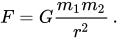
It could be done by the use of Newton's law of universal gravitation, which says
the attractive force (F) between two point-like bodies is directly proportional to the product of their masses (m1 and m2) and inversely proportional to the square of the distance, r, between them:
But since you don't have values for the masses, you have to try something experimental. If you could fix one container in place (the reference container) and bring the other (the target container) within a known distance (r), then you could see which container moved towards the other. If the target container does not move, then you would know that the reference container's gravitational force on the target container was not sufficient to overcome the target container's inertia and move it. Therefore the reference container has the feathers and the target one the osmium. If the target container was the one that moved, then it is the one with the feathers.
-
-
3 hours ago, Peter Piper said:
Can someone explain what is going on?
In a number of threads, APenNameAndThatA has been provoking me. You would have to go back through a lot of posts in a number of threads to see all that has been done. I've offered a lot of stuff and links where possible, but instead of making positive contributions or sensible rebuttals he has simply sought to enrage me.
I'm sorry that your introduction to this fine and very useful forum has been marred by the antics of one person. Don't think that the standards of the forum are in the gutter. It is a very useful resource and I look forward to your contributions in the future.
-
50 minutes ago, APenNameAndThatA said:
I said I read the link you posted. I didn’t. I lied
And that's been the problem all along. You don't read anything and are able understand it. Then you go and pick the nits out of it and twist them around in order to antagonise. I have been saying that mass refers to the number of molecules, while weight refers to the force that mass would exert if it was accelerated at ~ 10 m/s/s.
In introducing those pictures I was illustrating that The markings on the scale reflect the use to which the spring scale is to be put, and I said that plain and clear. A scale marked in kilograms could be found in everyman's fishing tackle box, but a scale marked in newtons is likely only to be found in a physics classroom.
There is only one crime that I abhor, and that is lying. I can forgive any other crime from littering to murder, but I can't forgive lying. So if we ever met, face-to-face, the next thing you would see is my back.
1 hour ago, APenNameAndThatA said:The sooner it does, the sooner we can move onto angle of attack meters.
What's the point, you wouldn't read any part of the discussion to understand what is being said.
1 hour ago, APenNameAndThatA said:if you are trolling,
I'm not the one sitting under a bridge waiting for the Billy Goats Gruff.
-
I fear that this topic has become an Oozlum bird.
It would be churlish of me to use my Moderator's authority to lock this thread, so another moderator might like to. In all good faith I can't see this discussion reaching agreement. The only consensus that I can see is that we agree to disagree.
-
I can tell you that according to the scientists working in the area of chemistry, one litre of water contains 55.55 mols of water, therefore contains
55.55 x 6.02214076 × 1023. water molecules ( mols x Avogadro's Number).
In Norse mythology, Gram (Old Norse Gramr, meaning "Wrath") is the sword that Sigurd used to kill the dragon Fafnir. It is primarily used by the Volsungs in the Volsunga Saga. Nowhere in the Volsunga Saga is a clear description of Gram given. And I can't find a satisfactory definition of "gram" in the places I can find a definition of "second" and "metre". Currently the kilogram is defined as 6.62607015 × 10⁻³⁴ joule x second.
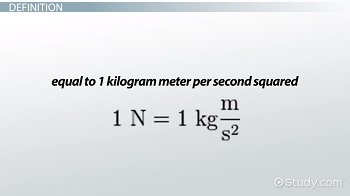
The joule (symbol: J) is a derived unit of energy in the International System of Units. It is equal to the work done on an object when a force of one newton acts on that object in the direction of the force's motion through a distance of one metre. The units that the joule is derived from are:
As an aside, if you multiply joules by seconds, as the this 6.62607015 × 10⁻³⁴ joule x second says to do them you get kg x velocity, which is momentum.
The problem that I have is that the kilogram is being defined by itself.
-
4 hours ago, Thruster88 said:
So teacher you want us to believe you were using an obsolete system of units all along?
Obsolete in the eyes of the SI unit system, but for distance and mass the units are simply 1/1000th of those of the SI system.
5 hours ago, Thruster88 said:If you can prove the a litre of water has a mass of 100grams using any system of measurement I will come back to class.
Measuring scales that tell us the "weight" of an object are actually scales that tell us the force required to stop the object from falling further towards the Earth. They measure the equal and opposite force to the force of gravity. If their indicator scales were marked in SI units, they would show this force in Newtons. In 1948, the 9th Conférence Générale des Poids et Mesures (CGPM) Resolution 7 adopted the name Newton for this force. Thus the word "Newton" in this usage is new to the vocabulary. Since it is a new term, it is not likely to displace each language's word for "weight" in the vernacular. So scales continued to be marked with the words kilogram or pound, depending on the local common term.
When we talk about the weight of an aircraft, we are talking about the number of Newtons of force it applies to a measuring device.
-
4 hours ago, APenNameAndThatA said:
So you are saying that an average light sport aircraft has a mass of about 40 kg?
3 hours ago, APenNameAndThatA said:OME, are you saying that a litre of water has a weight of 1 kg and a mass of 100 grams?
Yes and Yes.
For the last time. "weight" is something that matter has if it is influenced by the gravitational attraction of another bit of matter. We use that word in our day-to-day lives to refer to the resultant force caused by the effect of the gravitational attraction of the Earth. In round figures that resultant force is found by multiplying the amount of mass by approximately 10.
Mass is simply the number of atoms that compose the sample of matter. Think of mass as the number of bricks in a wall.
This picture shows a spring scale. The face is divided with marks that indicate how far the the spring has been stretched. The distance stretched is related to the resultant force which is equal to the product of the mass and acceleration due to gravity is applied to the spring. The markings on the scale reflect the use to which the spring scale is to be put.
This scale is used to tell the "weight" of objects.
This scale is used to show the number of Newtons of Force applied to the spring.
-
2 hours ago, APenNameAndThatA said:
So does that mean that if an RAAus aeroplane has a maximum takeoff weight of 600 kg it has a maximum takeoff mass of about 60 kg?
Exactly. By George, he's got it! He's really got it!
Does this affect our calculations? Not really if at the beginning you specify the units you want to work with. If you see the MTOW quoted as 600 kgs, you know that you are going to be talking in units of in the centimetre-gram-second (CGS system) and you are referring to a unit called kilogram-weight which is mass x acceleration due to gravity. If you quote it as 60 kg mass, you are working in the International System of Units (SI) (metre-kilogram second), and ignoring the acceleration due to gravity.
Since Mankind began comparing the amount of things by weighing, it has used values that are really a comparison the the force of Gravity. So our cultures have named certain amounts of force as by many names, https://en.wikipedia.org/wiki/List_of_obsolete_units_of_measurement. In every field except the basic sciences, a word that describes the heaviness if something is really relating the force it exerts due to the acceleration due to gravity.
The etymology of the word "weigh" is Old English wegan (class V strong verb, past tense wæg, past participle wægon) "find the weight of, measure; have weight; lift, carry, support, sustain, bear; move," from Proto-Germanic *wegan (source also of Old Saxon wegan, Old Frisian wega, Dutch wegen "to weigh;" Old Norse vega, Old High German wegan "to move, carry, weigh;" German wiegen "to weigh," bewegen "to move, stir"), from PIE root *wegh- "to go, move, transport in a vehicle." And "wagon" is from the same source.
It's pretty obvious that if you tell a non-physicist that your plane has a mass of 60 kgs, they will imagine that you are flying something like the Gossamer Albatross.
-
1 hour ago, APenNameAndThatA said:
I did follow the link. I am clarifying that you still say that something with a weight of 3 kg has a mass of 0.3 kg.
Yes. But you keep seeming to dispute that. There must be some words that are causing confusion because the maths is correct. Please indicate what is confusing you.
1 hour ago, onetrack said:weight is the laymans everyday term, mass is the specific scientific term
Correct. Mrs Einstein told Albert to go an buy her three kilograms of potatoes for her cooking. Albert came back with a quantity of potatoes that Mrs Einstein recognised as about right for her version of three kilograms of potatoes. Albert said, 'There you are my Love, 300 grams of potato matter'.
-
1
-
-
What's the point of posting links to explanations given by people other than myself when the enquirer obviously won't follow them?
-
Sorry that I didn't jump to reply to your demand for a reply, but I've wasted too much time trying to show someone who has no understanding of the manipulation of algebraic equations and a complete lack of primary school arithmetic ability to know that three divided by ten is the decimal fraction 0.3 .
How you are ever going to be able to do the simple calculations required for aerial navigation has me stumped.
-
3 hours ago, APenNameAndThatA said:
If I sit a 1 kg weight on my desk, it exerts about 10 N force on the desk but neither it nor the desk are accelerating.
And the materials and structure of the desk are able to exert a force of 10 N as an equal an opposite force. Try putting 1000 kg on the desk and see if the 1000 kg accelerates downwards.
-
" it turns out that the only thing that you were interested in was that sine 45 = 0.7." When and where did I ever indicate that I did happen to use a value of 45 degrees to illustrate a position of a wing relative to the longitudinal axis of an aircraft, or to indicate an angle relative to the longitudinal axis of a wind tunnel that an aerofoil could be placed?
I repeatedly said that my point was not related to anything more than that all the diagrams we are shown about how the Lift force produced by an aerofoil can confuse when you consider diagramming the Lift produced by an aerofoil from plan view as it is placed at different angles to the air stream coming at it. It was other people who wandered off talking about what happens when the aerofoil is attached to a fuselage and taken into the air to bank and roll and loop.
3 hours ago, APenNameAndThatA said:if I am forcing a box steadily across the floor, I am not exerting a force on it because it is not accelerating
And we can have perpetual motion machines and free energy.
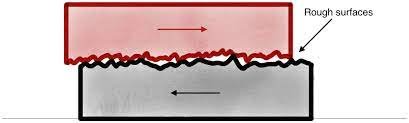
When the box is on the floor there is a mechanical interaction between the floor and the surface of the box that is in contact with it because both surfaces are not absolutely smooth even to the molecular level. This mechanical interaction prevent the two surfaces moving against one another and is called Friction.
In order to slide the box, that Friction force has to be overcome. Say you want to move the box from left to right. You apply a Force to the left side of the box, so you create a Force vector acting from left to right. In accordance with Newton's Third Law, the mechanical interaction creates a force vector acting from right to left. Since at all times the force on the box arising from the acceleration due to gravity is the same, we can recognise it mathematically by assigning a value of one unit of force to it.
Therefore, to move the box we have to apply a Force to the left side that will overcome the Friction force acting to the right. I've spent too much time trying to explain this, so you can do your own research and read this: https://x-engineer.org/undergraduate-engineering/physics/solid-mechanics/how-to-calculate-friction-force/
3 hours ago, APenNameAndThatA said:you repeatedly state that something with a mass of 0.3 kg has a weight of 3 kg.
An African forest elephant has a weight of 25,000 N
What is the mass of the African forest elephant?
Weight is another word for the force of gravity mg. We can solve for the mass using the formula W=Fg=mg. (use the formula for weight)
25,000 N=m(9.8 s2 m)(plug in values for weight and g)
m=25,000 N/(9.8 m s^-2)(solve for mass m)
m= 2,551 kg
And if you don't believe that, ask Jabiru7252. He understands.
3 hours ago, APenNameAndThatA said:You can have a force without anything being accelerated.
I bet you can't explain that statement
-
13 minutes ago, facthunter said:
Mass is how much STUFF is in it.
Too true. The big problem is that we really cannot work out the mass of an atom so that we can multiply that number by The Avogadro constant which is the proportionality factor that relates the number of constituent particles (usually molecules, atoms or ions) in a sample with the amount of substance in that sample. The numeric value of the Avogadro constant expressed in reciprocal mole, a dimensionless number, is called the Avogadro number, which is exactly 6.02214076×10^23 is thus the number of particles that are contained in one mole (not one of these).
The mole (symbol: mol) is the unit of measurement for amount of substance in the International System of Units (SI). It is defined as exactly 6.02214076×10²³ particles. The trouble is that, for example, one mole of water contains 6.02214076×10²³ molecules, whose total mass is about 18.015 grams. Notice the circular argument? The mass of 1 mole of a substance is equal to its relative atomic or molecular mass in grams. The relative atomic number is related to Carbon, whose atomic number is 6 and atomic weight is 12. You could work out the mass of an atom of carbon by the use of Einstein's equation,
but that a real lot of energy since C^2 is a massive number.
-
53 minutes ago, aro said:
We do not agree. That is an equation about acceleration. You can have a force where acceleration is zero.
If you push a box of bricks across the floor at a constant speed, you are exerting a force to overcome friction. You can measure the work done as force x the distance you moved the box. Acceleration (once the box is moving at a constant speed) is zero, but you have a force that must be used if you want to calculate e.g. work and power.
aro, I am crying tears of blood. You keep saying that I know f-all about physics. I cry because you know f-nothing.
In physics, a force is any interaction that, when unopposed, will change the motion of an object. A force can cause an object with mass to change its velocity (which includes to begin moving from a state of rest), i.e., to accelerate. Force can also be described intuitively as a push or a pull. A force has both magnitude and direction, making it a vector quantity. It is measured in the SI unit of newtons and represented by the symbol F.
Characteristics of Force:
Forces are due to an interaction of at least two objects.
It may change the state of motion of an object.
It may change the shape of an object.
The very definition of Force involves a change in velocity over time (acceleration) F = m.a Force is proportional to acceleration, which is defined as the rate of change of velocity. It is also proportional to mass for a particular acceleration, but we don't usually talk about varying the mass, except if we are talking about stall speeds at different amount of load a plane is carrying, but let's not go there right now.
Work is the energy transferred to or from an object via the application of force along a displacement. Work is a scalar quantity, so it has only magnitude and no direction. Work transfers energy from one place to another, or one form to another. The SI unit of work is the joule (J), the same unit as for energy.
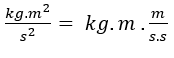
To calculate the amount of work done we use the equation W = Force . distance (W = F.d = m.a.d) The units of Work are Joules which have the dimensions
which is the result of multiplying mass by acceleration by distance
In your example of a box being pushed across the floor, consider Newton's Third Law - equal and opposite forces.
If you want to move the box in a certain direction, you apply a force to it. Because of the surface of the box and the floor are not perfectly smooth (an impossible situation, ever an molecular level) they lock together.
To get the box moving you have to overcome that mechanical interlocking. That resistance to movement due to mechanical interference is called Friction, which is a Force acting in the opposite direction to the desired direction of movement. The level of friction that different materials exhibit is measured by the coefficient of friction. The formula is µ = f / N, where µ is the coefficient of friction, f is the amount of force that resists motion, and N is the normal force, or force acting at right angles to the desired direction of motion. In this case, it is the force of gravity.
Moving the box involves exerting a Force that is equal to Force to overcome the Friction force. Once that force has been overcome, the box will move and Work will be done. To keep the box moving you have to apply a force that is greater that Friction force. Since the force due to gravity never changes while you are applying the force to overcome Friction, you can assign it a value of 1 in calculations and add the real value in at the end of the calculations. Perhaps this diagram will help.
-
3 hours ago, APenNameAndThatA said:
So OME, you've got some great info about what happens to the lift of the wing when someone is doing a hesitation roll. Would you care to summarise it for us?
Using the hesitation roll was a bad choice of illustration. What I really wanted to show was a wing generating lift at an angle the average pilot rarely goes to. I admit it screwed up what I was intending to discuss.
3 hours ago, APenNameAndThatA said:One more question: what is "kilogram-weight"?
This is where the fight begins. Sorry, but this is going to involve some definitions.
I think we agree that the magnitude of a force is the result of the acceleration of a mass, which we can calculate using the equation F = m.a
The biggest problem in understanding this is getting our heads around what exactly is a kilogram. The kilogram, symbol kg, is the SI unit of mass. It is defined by taking the fixed numerical value of the Planck constant h to be 6.626 070 15 × 10^-34 when expressed in the unit Joules times s seconds, which is equal to kg m2 s -1 , where the metre and the second are defined in terms of c, speed of light and ∆νCs,( radiation produced by the transition between the two hyperfine ground states of caesium (in the absence of external influences such as the Earth's magnetic field) has a frequency, ΔνCs, of exactly 9192631770 Hz.)
I don't know about you, but I can't visualise that as a ball of matter.
Let's look at something tangible. Suppose we had a box of a dozen golf balls. They are manufactured to a standard, so we can assume that each one has the same amount of matter in it as the others. That represents the "m" in the equation. If I take a spring balance and cover the inscribed scale with masking tape, I have a device that that obeys Hooke's Law - the force (F) needed to extend or compress a spring by some distance (x) scales linearly with respect to that distance. If I connect the box of golf balls to the spring balance, the spring will stretch and I can mark the position of the pointer that indicates the length the spring has stretched on the masking tape.
Let's say that we apply Hooke's law by taking the length of stretch of the spring and working out the force required to stretch the spring that far and plug that value into our original Force equation. For the sake of the discussion, let's say that the value of the force was 14 Newtons, and we know that the acceleration due to gravity where we did the weighing was 9.81 m/s/s. The units of mass are kilograms because we are working in Newtons. So we have
F = m.a
14 = m. 9.81
Dividing both sides by 9.91
14/9.81 = m
1.427 kg = m
So the force registered by a scale is not really a measure of the amount of matter being weighed. The weight of an average adult exerts a force of about 608 N.
608 N = 62 kg × 9.80665 m/s2 (where 62 kg is the world average adult mass)
So, to finally answer your question, a one kilogram-weight is the force resulting from the from the acceleration of (1 divided by 9.81) kilograms of matter due to the Earths gravitational attraction acting on the mass. 1 divided by 9.81 = 0.102 kg of matter.
If you go to the greengrocer to buy a 1 kg mass of potatoes, his scale will be marked off with symbols that say kilograms, but you know that in reality, when he puts your potatoes into the weighing pan, the spring in the scale will stretch is response to the application of 9.81 Newtons of force.
Scales show Kilograms because that is what people understand best, but it is really just an estimate of the mass above them. Scales should really show Newtons, but that might confuse people!
Thanks for coming. I'm here 'til Thursday. Try the veal.






 but that a real lot of energy since C^2 is a massive number.



Will someone settle up on a bet?
in AUS/NZ General Discussion
Posted
True.
I suppose that one's credibility to others depends on the reputation one has earned. By that, I mean that I hope that when the topic is of a serious nature, my reputation is that what I say has merit. On the other hand, I am quite happy to have the reputation for quick wit and repartee in the appropriate place. That means my reputation is like two-sided Roman god Janus
Peter clearly identified that I often use the Socratic method to "sell" my line. I suppose that in these busy modern times, people don't want to lounge under an olive tree and philosophise over a flagon of Chian wine (the most prized wines in classical Greek antiquity). People want the sound grab. So one must try to suit the "market". As for those who are happy to engage in a very academic and complex approach to basic physics, rebuttal must be at the same level of complexity as the proposition.
My biggest annoyance with the "weight/mass" thing is that no one was prepared to accept that the two words refer to different things. The words arise from different concepts
weight (n.): Old English gewiht "weighing, weight, downward force of a body, heaviness," from Proto-Germanic wihti-. The original sense of the Old English verb wegan "find the weight of, measure; have weight; lift, carry, support, sustain, bear; move, was of motion, which led to that of lifting, then to that of "measure the weight of." The older sense of "lift, carry" survives in the nautical phrase weigh anchor.
mass (n.): late 14c., "irregular shaped lump; body of unshaped, coherent matter," from Old French masse "lump, heap, pile; crowd, large amount; ingot, bar" (11c.), and directly from Latin massa "kneaded dough, lump, that which adheres together like dough," probably from Greek maza "barley cake, lump, mass, ball," which is related to massein "to knead," from PIE root *mag- "to knead, fashion, fit."