Leaderboard



Popular Content
Showing content with the highest reputation since 07/01/11 in Aircraft Comments
-
To expand on my previous: Undaunted by aerodynamic reality, the design team at Pilatus/Britten-Norman has announced plans for the BN2-XL (Extra Loud), promising more noise, reduced payload, a lower cruise speed, and increased pilot workload. We spoke to Mr. Fred Gribble, former British Rail boilermaker and now Chief Project Engineer. Fred was responsible for developing many original and creative design flaws in the service of his former employer, and assures he will be incorporating these in the new BN2-XL technology under a licensing agreement. Fred reassured BN-2 pilots however that all fundamental design flaws of the original model had been retained. Further good news is that the XL version is available as a retrofit. Among the new measures is that of locking the ailerons in the central position, following airborne and simulator tests which showed that whilst pilots of average strength were able to achieve up to 30° of control wheel deflection, this produced no appreciable variation in the net flight path of the aircraft. Thus the removal of costly and unnecessary linkages has been possible, and the rudder has been nominated as the primary directional control. In keeping with this new philosophy, but to retain commonality for crews transitioning to the XL, additional resistance to foot pressure has been built into the rudder pedals to prevent overcontrolling in gusty conditions (defined as those in which wind velocity exceeds 3 knots). An outstanding feature of Islander technology has always been the adaptation of the 0-540 engine, which mounted in any other aircraft in the free world (except the Trislander) is known for its low vibration levels, so as to cause it to shake and batter the airframe, gradually crystallise the main spar, desynchronise the accompanying engine, and simulate the sound of fifty skeletons fornicating in an aluminium dustbin. Britten-Norman will not disclose the technology they applied in enhancing this effect in the XL, but Mr. Gribble assures us it will be perpetuated in later models and sees it as a strong selling point; "After all, the Concorde makes a lot of noise," he said, "and look how fast it goes." However, design documents clandestinely recovered from the Britten-Norman shredder have solved a question that has puzzled aerodynamicists and pilots for many years, disclosing that it is actually noise which causes the BN-2 to fly. The vibration set up by the engines and amplified by the airframe, in turn causes the air molecules above the wing to oscillate at atomic frequency, reducing their density and causing lift. This can be demonstrated by sudden closure of the throttles, which causes the aircraft to fall from the sky. As a result, lift is proportional to noise rather than speed, explaining amongst other things the aircraft's remarkable takeoff performance. In the driver's cab (as Gribble describes it), ergonomic measures will ensure that long-term PBN pilots' deafness does not cause inflight dozing. Orthopaedic surgeons have designed a cockpit layout and seat to maximise backache, enroute insomnia, chronic irritability, and terminal (post-flight) lethargy. Redesigned 'bullworker' elastic aileron cables, now disconnected from the control surfaces, increase pilot workload and fitness. Special noise retention cabin lining is an innovation on the XL, and it is hoped in later models to develop cabin noise to a level which will enable pilots to relate ear pain directly to engine power, eliminating the need for engine instruments altogether. We were offered an opportunity to fly the XL at Britten-Normans' developmental facility, adjacent to the Britrail tea rooms at Little Chortling. (The flight was originally to have been conducted at the Pilatus plant, but aircraft of Britten-Norman design are now prohibited from operating in Swiss airspace during the avalanche season). For our mission profile, the XL was loaded with fossil fuel for a standard 100 nm with Britrail reserves, carrying one pilot and nine passengers to maximise discomfort. Passenger loading is unchanged, the normal under-wing protrusions inflicting serious lacerations on 71% of boarding passengers, and there was the usual entertaining confusion in selecting a door appropriate to the allocated seat. The facility for the clothing of embarking passengers to remove oil slicks from engine cowls during loading has also been thoughtfully retained. Startup is standard, and taxying, as in the BN-2, is accomplished by brute force. Takeoff calculations called for a 250 decibel power setting, and the rotation force for the (neutral) C of G was calculated as 180ft/lbs of back pressure. Initial warning of an engine failure during takeoff is provided by a reduction in flight instrument panel vibration. Complete seizure of one engine is indicated by the momentary illusion that the engines have suddenly and inexplicably become synchronised. Otherwise, identification of the failed engine is achieved by comparing the vibration levels of the windows on either side of the cabin. (Relative passenger pallor has been found to be an unreliable guide on many BN-2 routes because of ethnic considerations). Shortly after takeoff the XL's chief test pilot, Capt. "Muscles" Mulligan, demonstrated the extent to which modem aeronautical design has left the BN-2 untouched; he simulated pilot incapacitation by slumping forward onto the control column, simultaneously applying full right rudder and bleeding from the ears. The XL, like its predecessor, demonstrated total control rigidity and continued undisturbed. Power was then reduced to 249 decibels for cruise, and we carried out some comparisons of actual flight performance with graph predictions. At 5000' and ISA, we achieved a vibration amplitude of 500 CPS and 240 decibels, for a fuel flow of 210 lb/hr, making the BN-2 XL the most efficient converter of fuel to noise since the Titan rocket. Exploring the constant noise-variable speed and constant speed-variable noise concepts, we found that in a VNE dive, vibration reached its design maximum at 1000 CPS, at which point the limiting factor is the emulsification of human tissue. The catatonic condition of long term BN-2 pilots is attributed to this syndrome, which commences in the cerebral cortex and spreads outwards. We asked Capt. Mulligan what he considered the outstanding features of the XL. He cupped his hand behind his car and shouted. "Whazzat?" We returned to Britten-Norman field convinced that the XL model retains the marque's most memorable features, while showing some significant and worthwhile regressions. Pilatus/Britten-Norman are however not resting on their laurels. Plans are already advanced for the three-engined Trislander XL, and noise tunnel testing has commenced. The basis of preliminary design and performance specifications is that lift increases as the square of noise, and as the principle of acoustic lift is further developed, a later five-engined vertical takeoff model is another possibility.5 points
-
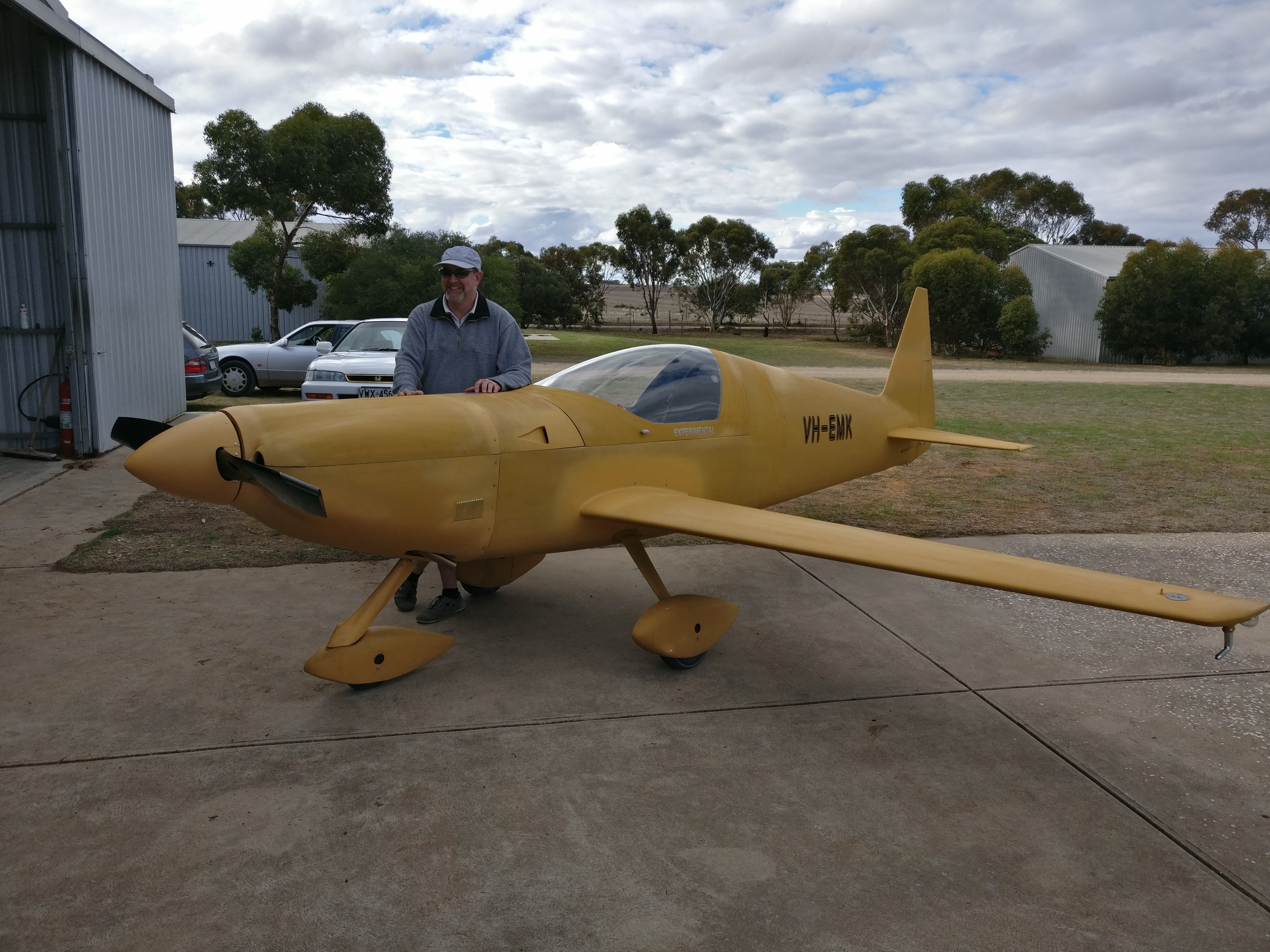
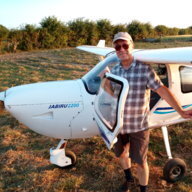
Here is our very own Australian Bug, based at Rollo’s Airfield near Murray Bridge, SA. It is Jabiru 3300 powered and tops out at close to 200ktas.
 5 points
 -
This bloke has a very good 15 minute video of why he bought a Cozy MKIV Canard aircraft, and what the drawbacks are in their design. In essence, despite being promoted as "stall-proof", they're tricky to fly. A flapless wing (the design can't be fitted with flaps) makes for high speed takeoffs and landings, meaning a longer runway is needed. The tiny undercarriage and high landing/takeoff speeds means it is unsuitable for rough airstrips - and most importantly, a narrow C of G, and strict attention to load positioning, means you can't afford any mistakes in that load positioning. When he flies alone, he has two bags of shot that are required on board to balance the aircraft - and fat friends in the passenger seat, are out. So, not an aircraft that appeals to all, as it's quite unforgiving in numerous areas. Obviously, this bloke loves the advantages - high cruise speed, low fuel consumption, and a reduction in engine noise. He's a good presenter, with clear simple information and explanations - a lot of YouTubers would do well to copy his informative style.4 points
-
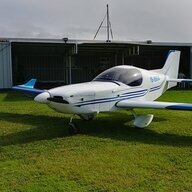
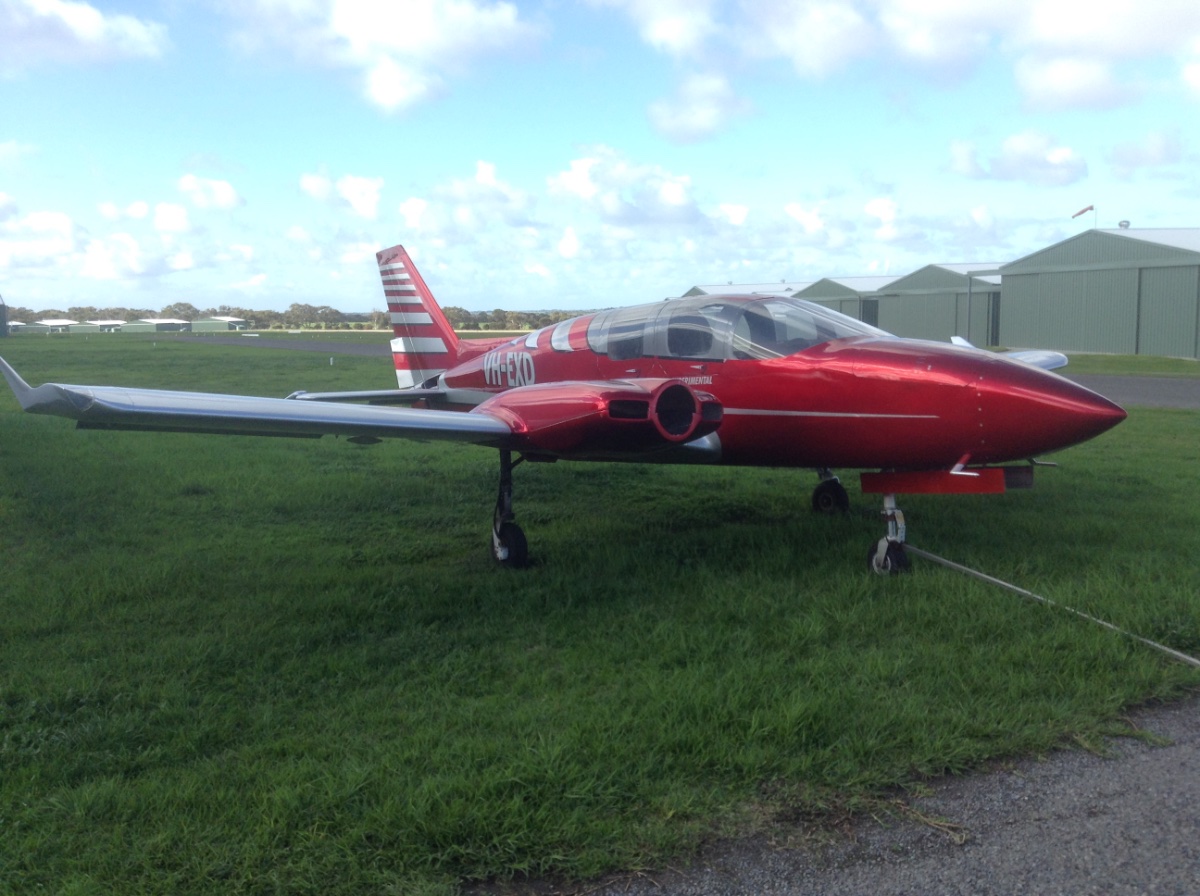
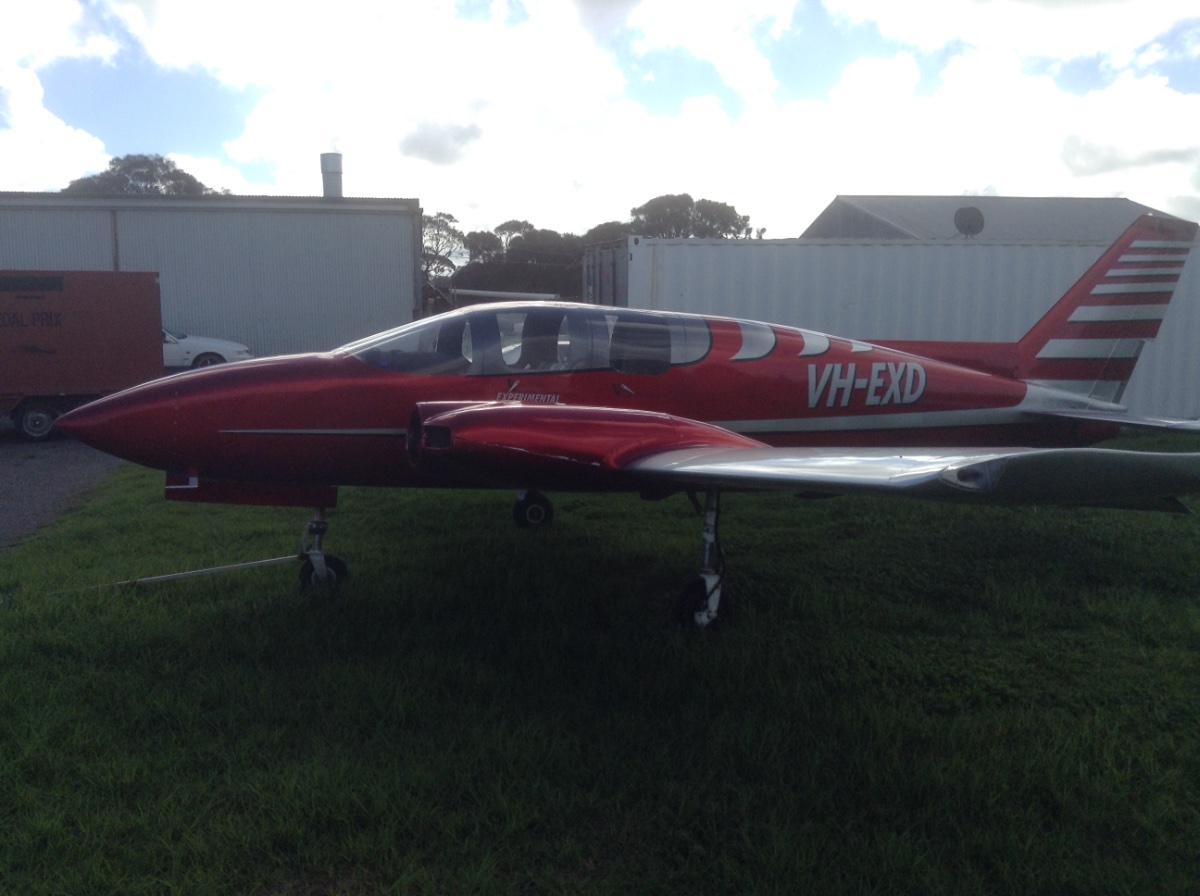
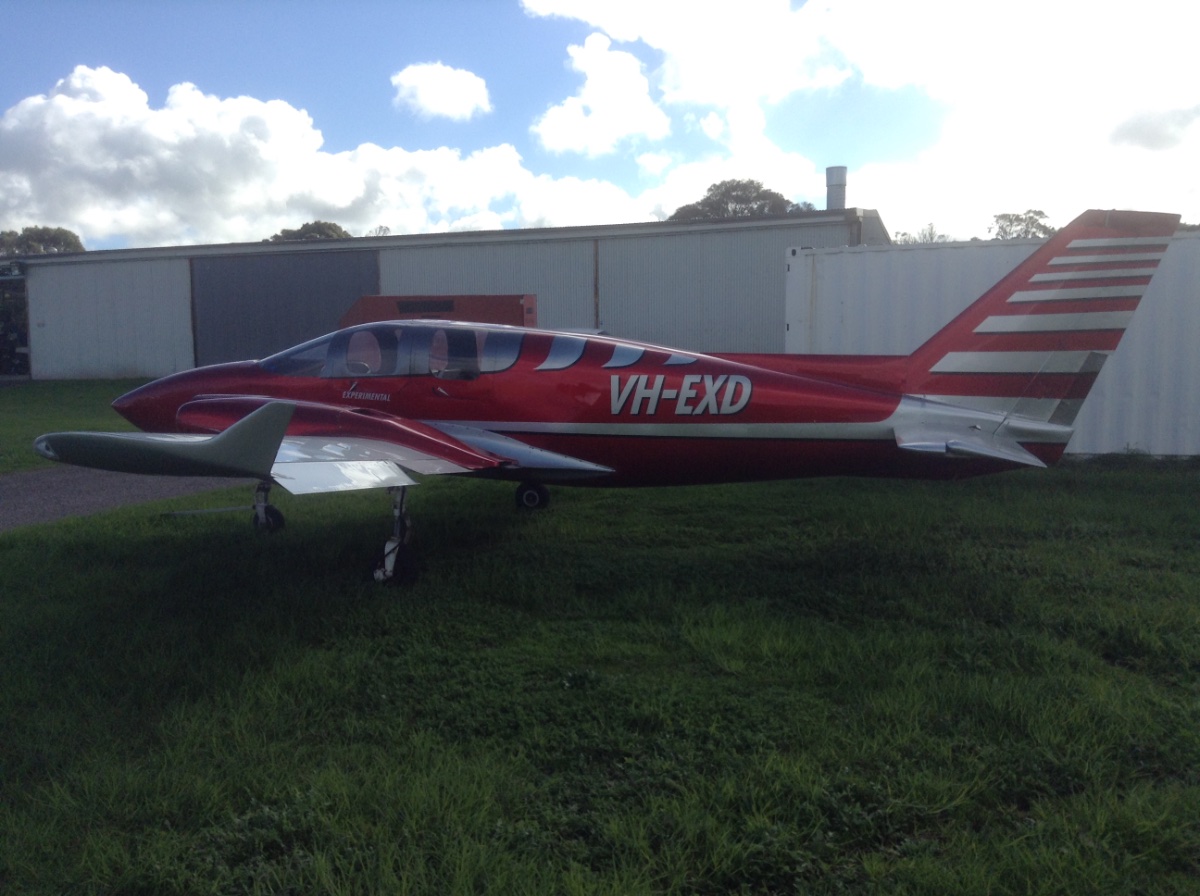
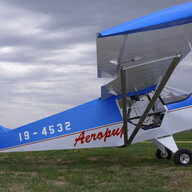
Lucky the rego on the bottom one doesn't end in an H4 points
-
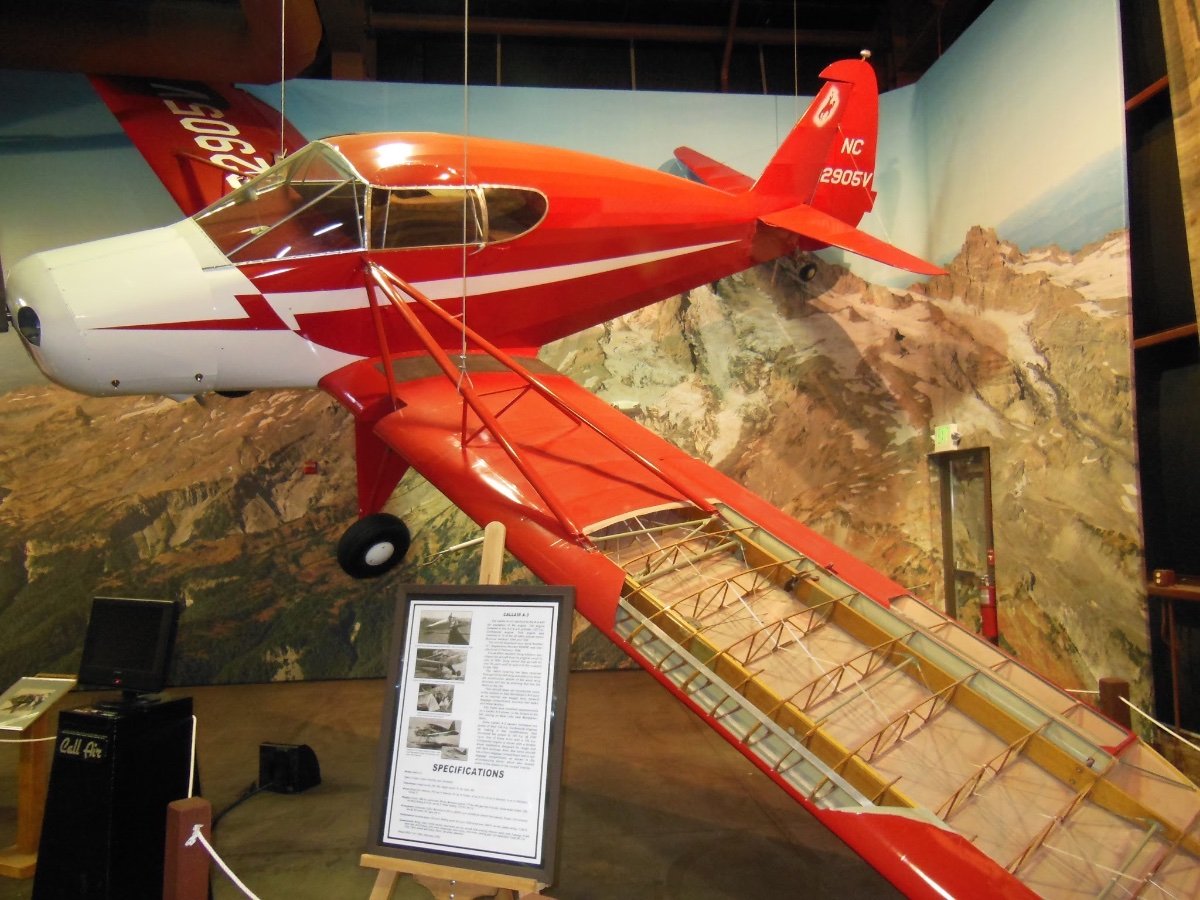
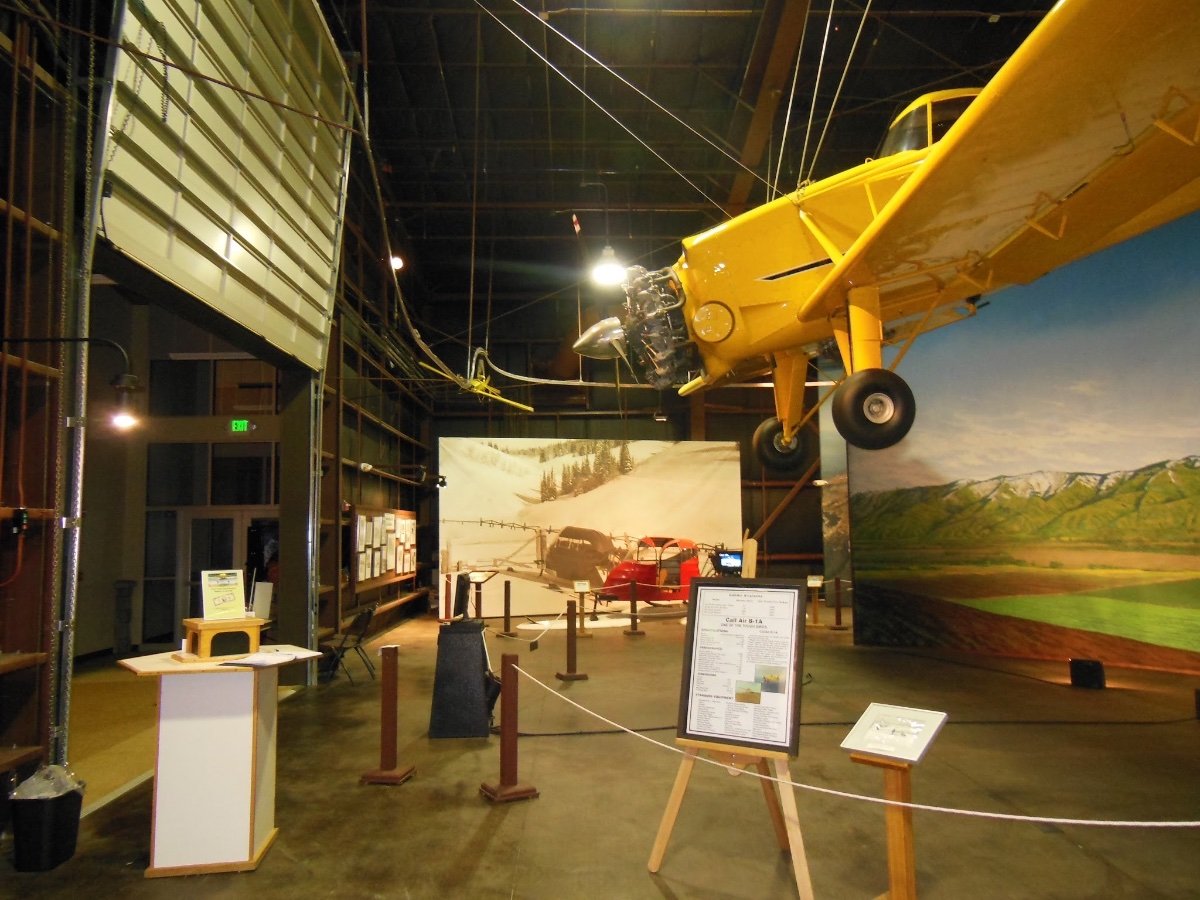
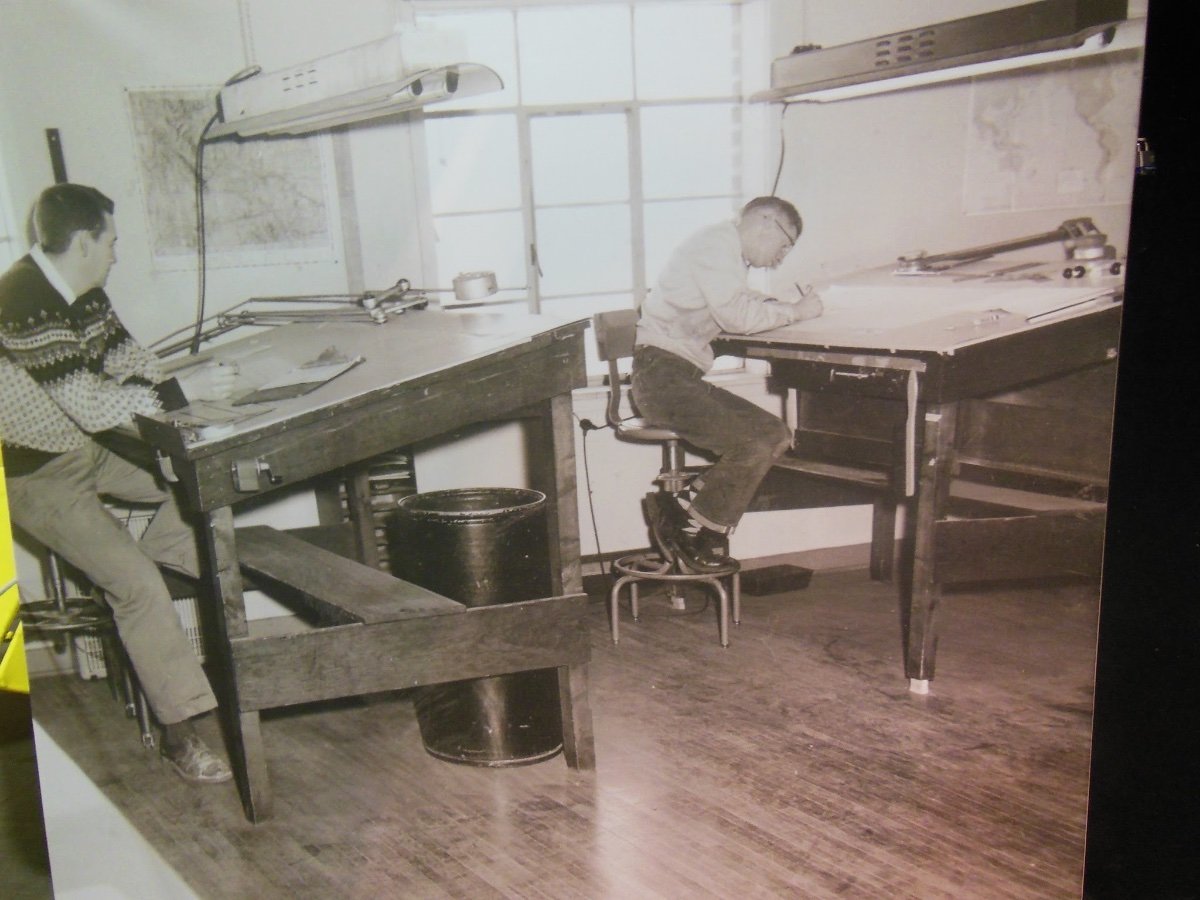
Some pics from my visit to the CallAir Museum in 2013. Glen Call was my guide.
4 points
-
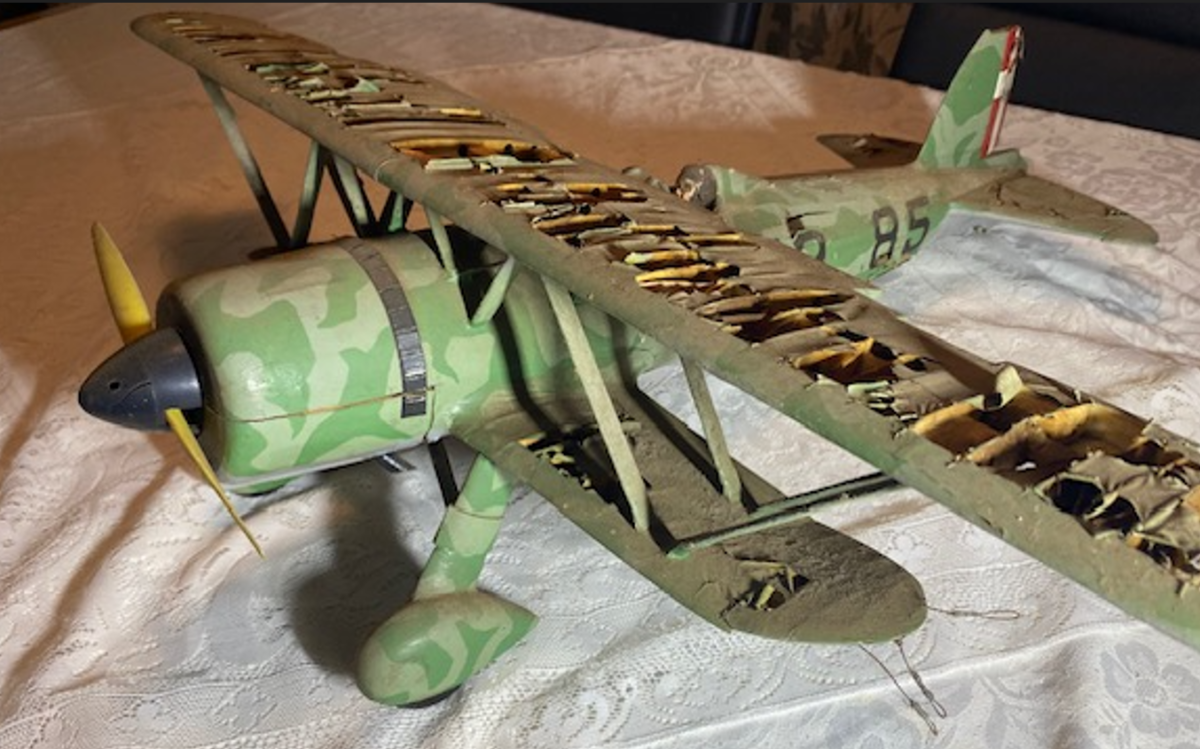
I built a 1/4 scale R/C Jungmeister from plans. It spun to the ground on about the fourth flight, moved onto ultralights after that heart break.
4 points
-
It was disappointing that Garry was much maligned by some. He produced a design that is exceptionally strong and with a performance envelope as good as and often better than many plastic fantastics even today and that was 11 years ago. I was at his factory a number of times when people would call in & he would stop and show them around and discuss anything they asked about. When things got very busy he had some young people come in for work experience and in the case of the Sierra that hit the Ferris Wheel there were a few issues of holes being drilled in the wrong place etc. That may have been from inexperienced staff and the bits were not replaced so got picked up by ATSB and blown out of all proportion even though they had nothing to do with the incident. Scapegoats are always needed in public situations and they found one. So Garry lost his Factory licence, his Instructor rating and what was left of his faith in the system. The Ferris wheel aircraft was rebuilt and flew again well. It was eventually sold at a significant discounted price due to the history, nothing else. That incident cost Australia one of its most innovative aircraft designers and manufacturers. Garrys first love was Gliding and he is now in one of the best parts of the world to continue this. I am not sure how the structural failure event has changed anything as I have heard nothing since.4 points
-
Gary's probably gone into hiding, to avoid this God-bothering idiot, below. I've never seen so much religious rubbish posted on one website. http://www.the-testament-of-truth.com/truth/web/gary1.htm4 points
-
FIDO Fog Investigation and Dispersal Operation (which was sometimes referred to as "Fog Intense Dispersal Operation" or "Fog, Intense Dispersal Of") was a system used for dispersing fog and pea soup fog (dense smog) from an airfield so that aircraft could land safely. The device was developed for British RAF bomber stations, allowing the landing of aircraft returning from raids over Germany in poor visibility by burning fuel in rows on either side of the runway. https://en.wikipedia.org/wiki/Fog_Investigation_and_Dispersal_Operation If you watch the film towards the end when the use of FIDO is shown, you see someone put a tag with the drawing of a dog on it beside the name of an airfield where FIDO was available.4 points
-
EJJ is the Cavalier that flew from NZ and was based at Heck field , the owner built it in NZ he was a German guy Gunter it ws in the same hangar as our aircraft3 points
-
I suspect the Jodel in the third pic is unrelated3 points
-
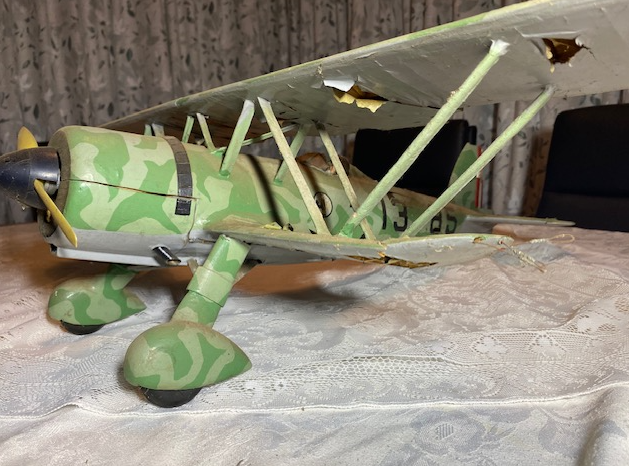
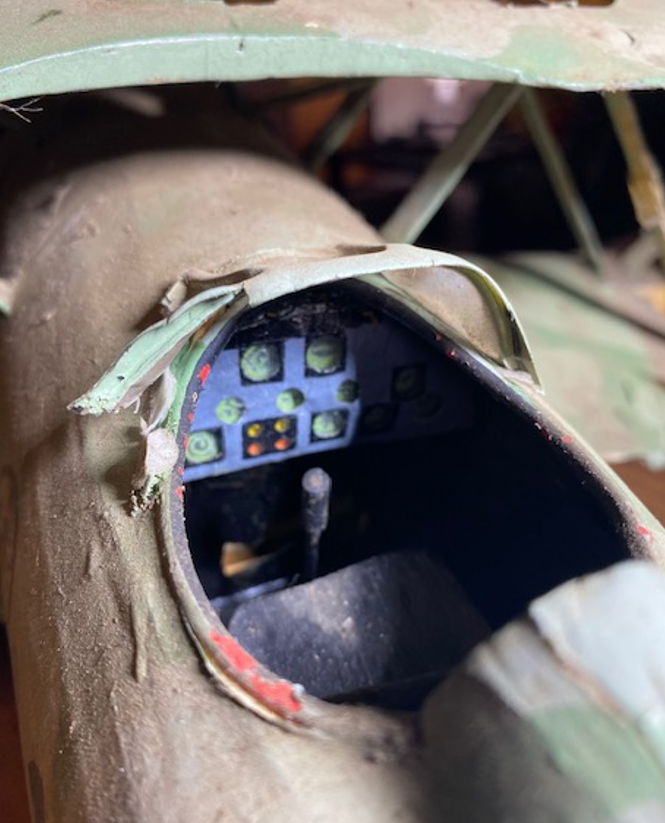
I scratch built one of these as a scale control line model with a third line throttle control many years ago. Sadly, it never flew but I still have the now very much worse for wear relic that I can't bring myself to part with. All the numbers and decals were hand painted. It's hardly a competition winner but not bad for a 16 year old. Never thought that one day I'd have a pilot's licence and build a real aircraft.
3 points
-
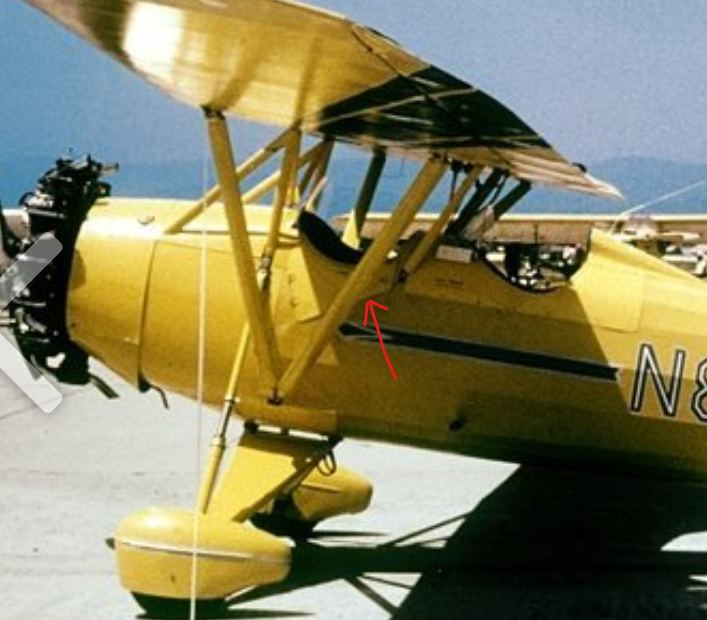
Unless it's an optical illusion, there seems to be a small hinged door on the port side of the front cockpit visible in the yellow one.
3 points
-
And our very own one at Goolwa, albeit stretched.
3 points
-
3 points
-
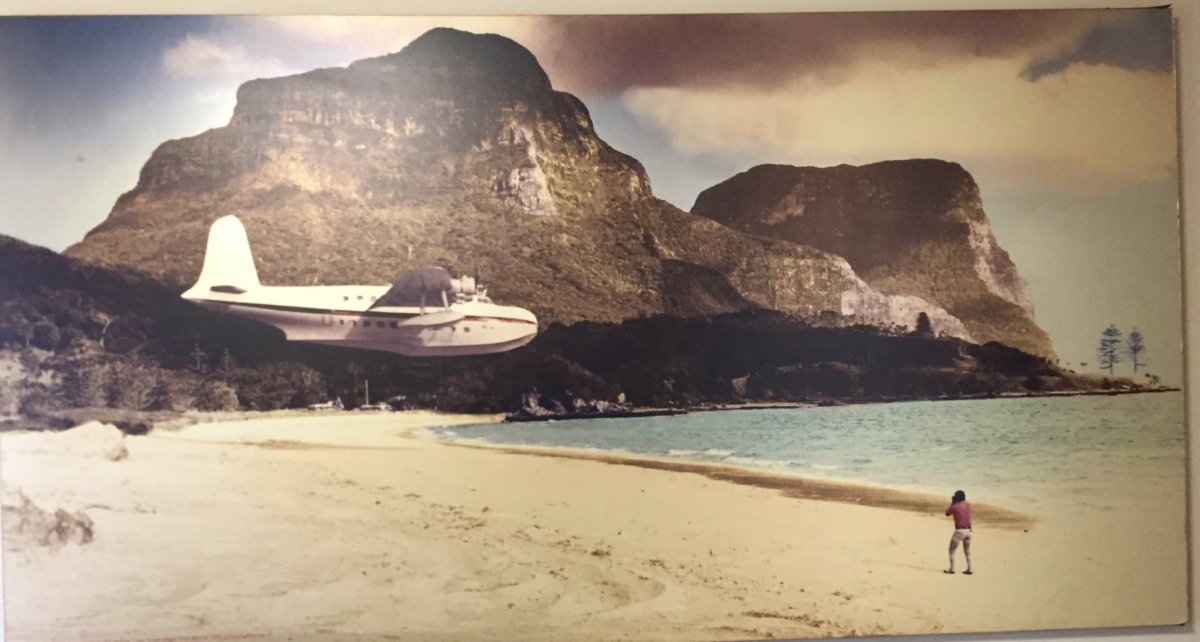
As a slight thread drift, I have a huge (6ft long) photo adorning my lounge room wall of Sunderland VH-BRF coming into land on the lagoon at Lord Howe Island back in 1974. These old aircraft had quite interesting history's, and VH-BRF was no exception if anyone is interested reading about it in the attached link. https://aussieairliners.org/shortfb/vh-brf/vhbrf.html
3 points
-
That's terrifying!........deep respect for the test pilot/s........3 points
-
That's a pretty awesome plane. Van's Aircraft is celebrating its 50th anniversary this year. More than 13,000 flying now. Van's total performance is a real thing.3 points
-
Many years ago I saw 3676 at (I think) Goolwa, SA. It took me a while for the blue painted script name to register:- "Proctalgia" When looking for a plane to build I considered the Rebel, but thought it a tad heavy for RaAus rego.3 points
-
Nev, Wood and fabric may be old fashioned skills BUT they are materials that are better suited to repair than composites and easier than metal... and potentially more 'green' than the fashionable composites. This coming from a middle aged fart who has built and played in all construction methods and I am trending back towards wood and fabric for my last two aircraft and looking at replacing the composite wing on one of mine with replacement in wood n fabric.3 points
-
Back to the Sierra: years ago I dropped in to Garry’s Taree factory for some industrial espionage- I was looking for design ideas for my wing flaps. Garry is the sort of energetic, Can-Do bloke this country is running short of. He insisted I go for a fly. His son took me up in a Sierra and impressed me with its stability and speed.3 points
-
Garry was (is?) a member of this forum, and his profile spells his name with 2 R's - Garry.3 points
-
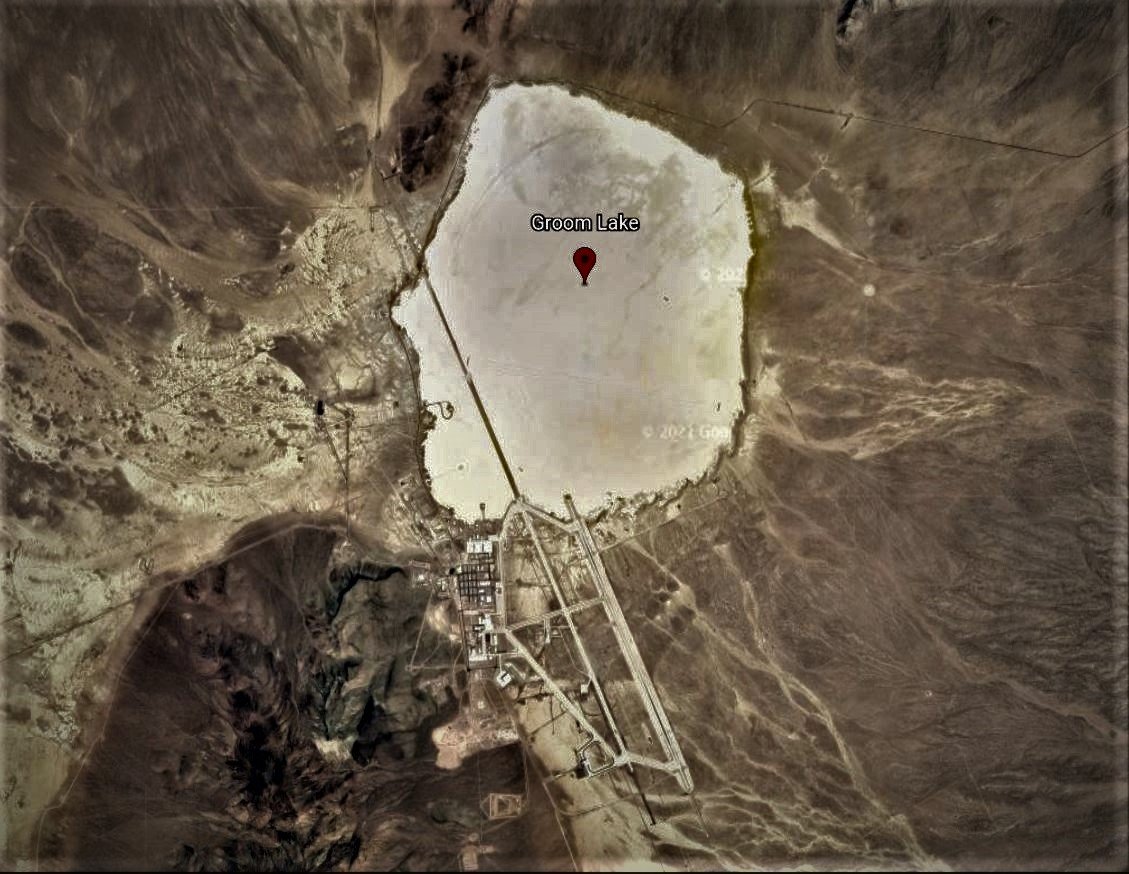
The A-12 Oxcart was built for the CIA as a single seater and could fly 10,000 feet higher than the SR-71, had a top speed of Mach 3.35 (SR-71 3.2), but a shorter range. Its first flight was April 26 1962 and it was retired 1968 following a catfight with USAF who wanted the glory (the SR-71 flew from 1966 - 1999). The CIA flew the Oxcarts out of Area 51 on Groom Lake. The book Area 51 by Annie Jacobsen describes the early days of the Oxcart reconnaisance of Russia. The aircraft skins were made of Titanium and after a flight remained so hot that several mechanics were badly burned when they started working on them too soon. The Russians used to overfly Area 51 and the mechanics would sit an Oxcart out on the apron and use gas heaters to heat the skin so it would be giving an infra red heat signal when the Russians arrived. The aircraft were retired when the CIA were able to put photographic equipment into satellites and take the same pictures from orbit in the comfort of their offices. This photo of Groome Lake, Nevada shows the long runways across the lake. To the right of the solid line is another, longer runway which curves around to the right giving the pilot a lot more length. Groom Lake is a satellite field of Nellis Air Force Base. I flew a Cherokee over Nellis AFB in 1979 on the way to the Grand Canyon. Groom Lake is not far away, but I didn't know about it then. Will have to go back some time.
3 points
-
The best looking military jet of its time.3 points
-
The Bantam was designed and built by Max Clear who had his own airfield at Te Kowhai near Hamiltion in NZ. Max was an amazing aviator and I lived not far away and used to watch him doing very good aerobatics in the Pitts he built in the 70s from my veranda on warm Summer evenings. At the peak of production his company Micro Aviation was shipping quite a few to South Africa each month & he had various people helping to build them. I got to fly a few and they were delightful. All of the Bantams I flew were 2 stroke Rotax powered. Sadly Max died of cancer in 2011 and his family were not interested in the business or aviation. The business sold but at the time in 2012 the airfield did not. There were 6 hangars there at the time. Total production before Max's death was 354 Bantams. The airfield was eventually sold to a private consortium and they hold flying events and country fairs etc there. I flew the C172 and Archer in many times & there was always a great welcome, cup of tea & a yarn.3 points
-
But Nev that was in the days when an air ticket cost a year’s pay.3 points
-
There is a photo of the fuselage of the first one received in 2004 on the Avspecs website & it is almost unrecognisable. I imagine they just removed all the fittings & completely built a brand new airframe & wings. The photos they have of the new wings and fuselage show impeccable workmanship which is reflected in the videos of the finished product. There is another Mossie that has recently been found in a shed in Mapua near Nelson. The old bloke, John Smith died 6 months ago and he was an avid collector of old military aircraft. He had a P51, Tiger Moth, Vampire, 2 x P40s as well as multiple bits of many different aircraft. The Mossie looks in pretty good nick & is going to be restored and displayed at Omaka as far as I know. It looks like it would easily be able to be restored to flying condition though. Details are HERE3 points
-
Most of the Coachwood was sourced in North Queensland by forester Ian Gillison, who worked for the Commonwealth Foresty Bureau in Mackay. His sons now live in Yungaburra and near Albury. Many wooden propellors used in WW2 planes were made of North Queensland rainforest timbers. The Venables sawmill in Cairns handled a lot of the timber. My father flew Mosquitoes in 85 Squadron and mostly in night fighters. Also late in the war dropped propaganda pamphlets over France and Italy to demoralise German troops. Very high casualty rate, of the 70 guys he started with only six were left at the end of the war.3 points
-
Ceratopetalum apetalum, the coachwood, scented satinwood or tarwood, is a medium-sized hardwood tree, straight-growing with smooth, fragrant, greyish bark. It is native to eastern Australia in the central and northern coastal rainforests of New South Wales and southern Queensland, where is often found on poorer quality soils in gullies and creeks and often occurs in almost pure stands. Its timber is light and easily worked. It is used for flooring, furniture and cabinetwork, interior fittings, turnery, gun stocks, wood carving, veneers as well as spars and masts for boats. Courtroom number three of The High Court of Australia is beautifully and completely furnished with coachwood timber. The Genus Ceratopetalum includes C. gummiferum, the New South Wales Christmas bush. (I love that bloody tree.)3 points
-
Been around for a bit as at Airventure in 2011 The Adventourer Kit Heli from Composite Helicopter Debuts at AirVenture By Mary Bernard - July 29, 2011 0 After seven years of development, Peter and Leanne Maloney of Composite Helicopters made their first appearance at AirVenture to promote their five to six place kit helicopter, the KC518 Adventourer. Carbon fiber and Kevlar composite construction with power from a single turbine engine (either the RR250 C20B/J or the RR250 C18/T63) make for a potentially impressive package, though the helicopter will not fly for the first time until August or September. The Mahoneys are working toward certification with both New Zealand’s Civil Aviation Authority (CAA) and the FAA, and they intend to continue manufacturing and supporting kits, which will only benefit from the certification process, Peter Mahoney said.The company plans to have U.S. distributorship with staff who will be able to provide initial flight testing and transition training, though it’s recommended that customers who may not already be currently licensed to fly a helicopter get training in a Robinson before piloting the Adventourer. One of the strengths of this kit, the company says, is its unique “frameless airframe,” which is designed and engineered to be assembled from the outside in in a specific predetermined order. Based on preliminary design data with the C20B/J engine, performance specifications are estimated to include a 135-knot cruise speed, 3.6 hour endurance (on standard tanks) and 5.26-hour endurance with auxiliary tanks, though as Mahoney points out, that’s more than most pilots and passengers would want at one stretch. The hover ceiling (IGE) is expected to be more than 10,000 feet, rate of climb more than 1000 feet per minute, and maximum operating altitude 14,000 feet. With the C20 engine, the max gross weight of the helicopter will be 3200 pounds, and the empty weight 1750 pounds, leaving a useful load of 1450 pounds. The left and right storage lockers have 9 cubic feet of space each, and an aft storage locker has 9.6 cubic feet. There is literally enough room to stow a surfboard and a lot more. The cockpit will have dual controls, and the panel will have dual EFIS displays, though which type was not specified. A cargo swing, spray system, tinted windows, and doors with upper and/or lower windows are options. The basic kit price is $335,000, and the quickbuild option adds $44,500. The estimated completed price of the Adventourer is $395,000. Customer visits to the New Zealand factory are encouraged. For more information, visit www.compositehelicopter.com. The Composite Helicopter display at AirVenture is in front of Hangar D.2 points
-
What a sweet looking aircraft. 👍2 points
-
Just sold my Jabiru and purchased an Escapade 2200 with Rotec water cooled heads.2 points
-
The Pipistrel Taurus Electra is an electric powered version of the Pipistrel Taurus self launching glider. Refer Gliders section.2 points
-
Yes agree, but the gopro footage will earn you kazzilions of dollars and likes on youtube... these are modern times, nobody cares about slip skid AoA, they just want to see brown pants action! So you cannot make the wool too long lest it be seen in the camera view and detach viewer fake news brain cell.2 points
-
The Curtiss looks good for married couples. Passenger is too far away to be a backseat driver.2 points
-
The Junkers Jumo 205D opposed-piston engines were a work of art. The lower crankshaft ran 11° behind the upper crankshaft, so the exhaust ports opened and closed first, allowing proper exhaust scavenging and therefore good fuel economy, along with a clean exhaust. https://en.wikipedia.org/wiki/Junkers_Jumo_2052 points
-
A Vari-Eze sounds different because the prop is disturbing the sound waves coming from the exhaust pipes. My grandson used to have great fun by standing in front of a circulation fan making a monotone sound with his voice and projecting it towards the rotating fan blades.2 points
-
If a post-WWII picture of a now-historic plane wasn't taken with Marshall's hangar in the background, the plane was never in Australia2 points
-
All radials don't like revs without manifold pressure. Operated properly the bearing loads are minimal and power balances out centrifugal force.. The four row engine was very complex and I'm sure would have many prohibited RPM ranges. The twin row with 3 power recovery turbines had the best specific fuel consumption figures of any Piston engine of the time. Nev2 points
-
During the pandemic I participated in a global roll rate challenge where we discovered the lies told about aircraft roll rates. Videos of multiple rolls were independently analysed for the steady, maximum roll rate at Va. Often multiple examples of the same type flown by different people. Cessna 152 about 60 deg/sec. Super Decathlon is around 100 deg/sec. Pitts S-2B at 140 deg/sec compared to a figure of 240 deg/sec quoted in a magazine (by myself). Pitts S-2C at 210. The Yak 55 at 110 deg/sec rolls faster than a Yak 52 - nice to roll but whoever claimed "...rolls (to the right) at well more than 180 degrees/second (measured up to 352 degrees/second to the right) ...." is a far worse liar than I was. "It has been used in international aerobatic competition up to the Advanced level .... is capable of every manoeuvre in the Aresti catalog." Advanced category (and others) has changed dramatically over the years. These days it is extremely hard work to get it through an Intermediate sequence - it is nearly as good as a Pitts S-2A. I nearly bought one but went for a Decathlon instead.2 points
-
The Centurion Tank used the lower horsepower version called Meteor MK4B V12 650hp.2 points
-
Thinks: I could overtake one of those........)2 points
-
From memory most of it is fabric over an aluminium tube frame2 points
-
They pop up anywhere. There are lists on sites like Pilotmix, mostly LSA types, some from Wiki lists, such as List_of_military_aircraft_of_the_United_States, often find them while looking for something else. Surprising what pops up when you put an odd enquiry into a search engine. Sometimes you watch a Youtube video, and the playlist down the side, or at the end of a video will throw up something rare or unique.2 points
-
An Aeroplane that looks right and is right. It's construction would allow rebuilding and repair although it's a lot of fabric and wood. (OLD fashioned skills). Nev2 points
-
They were a little more efficient than that - 1170L of fuel in three tanks in the fuselage. Also they were race engines - required high octane fuel and when given crap fuel blew pistons very easily. And even when not blowing pistons the engines were regularly blowing oil pipes and having other issues ... and then there were the two position variable props and the issues with them ... and the undercarriage that regularly refused to retract. At least the under carriage problem was better than refusing to extend 😉 I have always been fond of the last of the DH88's - named Boomerang - that had a nice silver and blue paint scheme - the original 3 whilst stunning in their all over green/red/black with silver/while/gold stripe were not to my eye as nice as the overall silver with tapering blue on nose/engines. I've seen Grovenors House fly at old warden and from a pilots perspective it looks is scary at takeoff and touchdown - there is no visibility directly ahead, the three point attitude is at the stall (15deg), the highly tapered wings are happy to drop at the stall and it all happens at over 85nts minimum.2 points
-
These are quite a nice handling aircraft, apparently. I have a friend in California who owns one. John H. Martin is his name, he ran a big private waste/recycling operation out of Bakersfield. He gifted the business, and apparently, the Broussard as well, to his son Jeff - who is showing Juan Browne around the Broussard, below - and Juan is quite impressed with it. It's the French equivalent of a Beaver. The Martins modified their R-985 in the Broussard with fuel injection, which helps the fuel economy a bit - if "economy" is something you could ever use in the same sentence, as "P&W R-985!2 points
-
All of this and it can only lift 10 tons and do 80 kn ? I saw the good year blimp at Oshkosh trying to land just before a storm front. It was one of the most dangerous things I have ever seen. As it happens they were actually doing a live cross at the time for the Chicago news which got replayed just about everywhere and the reporter was getting violently thrown around, one minute she was on the floor, the next minute she was on the roof and she was screaming "we are going to die" they cut away from the story after that but said afterward she survived without a scratch. She did a follow-up later in the evening bulletin saying they hit some minor turbulence and she apologized for swearing etc. in calm winds, these things must be fantastic but if you get anywhere near a storm front I think you are lucky to live because not only does it go up and down it also goes left to right, sideways and every other direction at the same time. After the storm it passed through we went over and spoke to some of the guys who are looking after the mooring mast and they said it was the closest to disaster they had ever seen. This blimp pictured above is about 4 times bigger which probably makes it 10 times less maneuverable2 points
-
Only two remain flying and I was fortunate enough to be at Oshkosh the year they were both there ... AND thanks to my lovely wife, fortunate enough to have a fly in Fifi.2 points
-
DG is an RAF serial prefix, and VT registrations are from India.2 points