Jump to content

red750

Moderators
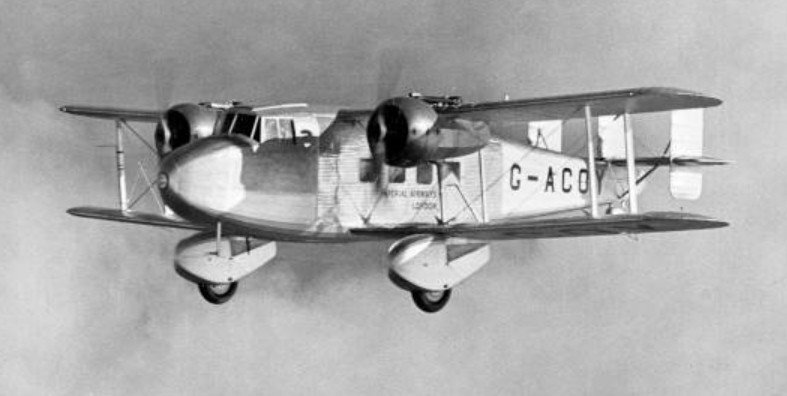
  • Posts

    8,236
  • Joined

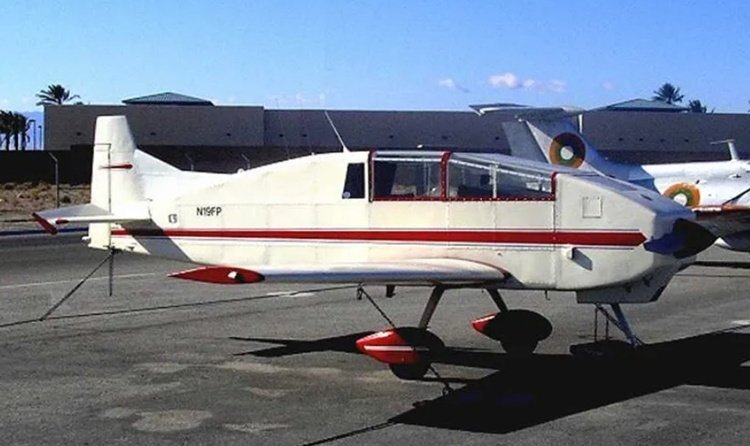
  • Last visited

  • Days Won

    78

Everything posted by red750

  1. The above is a direct copy of the Wikipedia page. On another site, I found this: It had a tail with 3 vertical stabilizers enabling use of existing hangars and to provide sufficient fin-area to maintain flight on only 2 engines running at one side. Ceiling on only 2 engines was 2440m. There is a large amount of additional data on this website: https://www.aircraftinvestigation.info/airplanes/Douglas_DC-4E.html
  2. The Douglas DC-4E was an American experimental airliner that was developed before World War II. The DC-4E never entered production due to being superseded by an entirely new design, the Douglas DC-4/C-54, which proved very successful. Many of the aircraft's innovative design features found their way into the Nakajima G5N bomber after the single DC-4E prototype was sold to a Japanese airline and clandestinely dismantled for study by Nakajima at the behest of the Imperial Japanese Navy. The design originated in 1935 from a requirement by United Air Lines. The goal was to develop a much larger and more sophisticated replacement for the DC-3 before the first DC-3 had even flown. Such was the initial interest from other airlines, that American Airlines, Eastern Air Lines, Pan American Airways and Transcontinental and Western Air (TWA) joined United, providing $100,000 each toward the cost of developing the new aircraft. As cost and complexity rose, Pan American and TWA withdrew their funds in favor of the Boeing 307 Stratoliner, which was anticipated to be less costly. With a planned day capacity of 42 passengers (13 rows of two or more seats and a central aisle) or 30 as a sleeper transport (like the DST), the DC-4 (as it was then known) would seat twice as many people as the DC-3 and would be the first large aircraft with a nosewheel. Other innovations included auxiliary power units, power-boosted flight controls, alternating current electrical system and air conditioning. Cabin pressurization was also planned for production aircraft. The novel tail with three low vertical stabilizers enabled use of existing hangars and provided sufficient vertical fin area to allow the aircraft to take off with only two engines on one side operating. The wing planform was similar to the DC-3, with a swept leading edge and almost straight trailing edge. The four 1,450 hp (1,080 kW) Pratt & Whitney R-2180-A Twin Hornet 14-cylinder radials were all mounted with noticeable toe-out, particularly the outer pair.
  3. The de Havilland DH.92 Dolphin was a 1930s British prototype light biplane airliner designed and built by the de Havilland aircraft company. The Dolphin was designed as a modernised version of the de Havilland Dragon Rapide, incorporating ideas from the company's DH 86A and de Havilland Dragonfly but using new main assembly designs. It had a DH 86A-style nose to accommodate two crew side by side and increased span wings of unequal span, Dragonfly-like. It first appeared with the trousered undercarriage of these earlier biplane transports, but a retractable landing gear, rather like that of the DH.88 Comet was fitted before flight. Onboard air-stairs were one of the passenger access novelties. It was powered by two 204 hp (152 kW) de Havilland Gipsy Six piston engines. Fuel tanks were in the wings, as in the Dragonfly, to avoid the fire hazard of the Rapide's engine nacelle tanks. One prototype was built and first flown on 9 September 1936. Geoffrey de Havilland's log shows that he flew it only once more. No others were built as it proved to be too heavy structurally and the prototype was scrapped in December 1936. The only photo of the Dolphin on the internet.
  4. No, this is a freeze frame from a video of the flyby. I couldn't get a link to post. Comments on the video said they were throwing the C-17 around like a fighter.
  5. Interesting photo showing decompression cloud on a C-17 left wing only, the right wing clear.
  6. According to airport-data.com, this Avid Flyer was built in 1995. https://airport-data.com/aircraft/photo/000802937
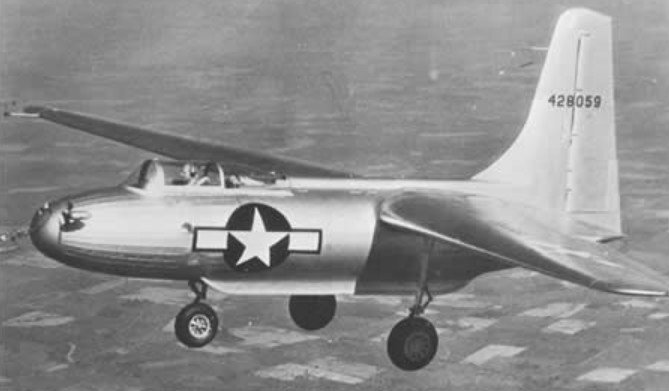
  7. The captions must have been written by very early AI typing what it thought it heard. The subject pilot's name is spelled at least 4 different ways.
  8. Popping a door in a Bonanza is similar - cold and loud. Did it once doing solo touch and goes at Moorabbin back in the 70's. Made it a full stop, closed and latched the door, back to the holding point and off again. The door sat about 3 inches ajar during the landing.
  9. The PC-Aero Elektra One is a single seat, electric powered composite aircraft. A mockup was constructed by ES-Technik and shown at the AERO Friedrichshafen show in 2010. The Elektra One was built with support from Solar Hangar and Solar World. The business concept is to produce electricity for the aircraft from solar panel equipped hangars with excess energy fed back into the power grid. The Elektra One has a four-hour endurance with onboard lithium batteries and solar panels. A tricycle gear variant was displayed in 2014. The company has planned two-seat and four-seat versions, to be called the Elektra Two and Four. The Elektra One was test flown in March 2011, using 3 kW of power. In August 2011, the Elektra One won the Lindbergh electric aircraft prize presented at the EAA AirVenture airshow in July 2011. Variants Elektra One Single seat Sun Flyer Two-seat trainer - (proposed) 1320 lb gross, 616 lb empty, 3 hr range in optimal solar conditions.
  10. The only report is behind a newspaper paywall. Covered on both 7 and 9 news.
  11. The plane was a Jabiru 120. The pilot sustained a broken elbow.
  12. The Croses EC-9 Para-Cargo is a 1960s French six-seat tandem-wing cargo-carrying homebuilt aircraft designed by Emilien Croses. Developed from the earlier two-seat EC-6 Criquet and three-seat EC-8 Tourisme, the Para-Cargo was a cargo-carrying aircraft with a tailwheel landing gear and a tandem wing similar to the Mignet Pou-du-Ciel family. It could carry up to six persons or 450 kg (990 lb) of freight and was intended especially for carrying skydivers: the aircraft was equipped with a large side door that hinged inward and upward to facilitate skydiver egress. Another door at the rear of the fuselage was provided to allow oversize loads to be carried. The Para-Cargo aircraft had Cosandey Flaps, rear wing mounted upward deflecting flaps that can be used independently to assist in roll control, or jointly as an elevator, that were often mistaken for ailerons . At least two examples (F-ACVC and F-PYBC) had been built by 1965. At least 2 units were built.
  13. https://www.stuff.co.nz/travel/360988211/moment-boeing-787s-undercarriage-collapses-gate
  14. red750

    gm dc6b.jpg

    I uploaded this image to Google Maps on the Essendon Fields Airport page in 2016. Look at the number of views it has accumulated.
  15. Gloster Trent-Meteor http://www.aviastar.org/air/england/gloster_trent-meteor.php
  16. The Douglas XB-43 Jetmaster is an American 1940s jet-powered prototype bomber. The XB-43 was a development of the XB-42, replacing the piston engines of the XB-42 with two General Electric J35 engines of 4,000 lbf (17.8 kN) thrust each. Despite being the first American jet bomber to fly, it suffered stability issues and the design did not enter production. United States Army Air Forces (USAAF) leaders in the Air Materiel Command began to consider the possibilities of jet-propelled bombers as far back as October 1943.[citation needed] At that time, Douglas Aircraft was just beginning to design a promising twin-engine bomber designated the XB-42. Reciprocating engines powered this aircraft but they were buried in the fuselage, leaving the laminar flow-airfoil wing clean of any drag-inducing pylon mounts or engine cowlings. The airframe appeared ideally suited to test turbojet propulsion. Douglas confirmed the feasibility of the concept and the USAAF amended the XB-42 contract in March 1944 to include the development of two turbojet-powered XB-43 prototypes, reduced from an initial order of 13 test aircraft. The Douglas design team convinced the Army that modifying the XB-42 static test airframe into the first XB-43 was a relatively straightforward process that would save time and money compared to developing a brand new design. Douglas replaced the two Allison V-1710 engines with a pair of General Electric (GE) J35 turbojets (the first American axial-flow jet engines ever used), then cut two air intakes into each side of the fuselage, aft of the pressurized cockpit. Removing the propellers and drive shafts freed enough space for two long jet exhaust ducts. Without any propellers present, there was no chance of striking the blade tips on the runway, so the entire ventral fin/rudder unit of the earlier XB-42's full four-surface cruciform tail was omitted. Douglas compensated for the loss of yaw stability by enlarging the dorsal fin/rudder unit. Douglas Aircraft was keen to mass-produce the new bomber and the USAAF considered ordering 50. The company was poised to roll out as many as 200 B-43s per month in two versions: a bomber equipped with a clear plastic nose for the bombardier, and an attack aircraft without the clear nose and bombing station but carrying 16 forward-firing .50 in (12.7 mm) machine guns and 36 5 in (127 mm) rockets. Nothing came of these plans. The USAAF was already moving ahead with a new bomber, the XB-45 Tornado, designed from the outset for turbojet power and promising major improvement in every category of performance.
  17. Paraglider escapes death after plane tears through parachute canopy WWW.NBCNEWS.COM A woman paragliding over the Austrian Alps survived a horrifying midair collision with a plane. Video shows the plane come up behind her, before it rips through her parachute, briefly sending her free falling...
  18. red750

    Hawker Hind

    The Hawker Hind is a British light bomber of the inter-war years produced by Hawker Aircraft for the Royal Air Force. It was developed from the Hawker Hart day bomber introduced in 1931. An improved Hawker Hart bomber defined by Specification G.7/34, was purchased by the RAF as an interim aircraft, while more modern monoplane bombers such as the Fairey Battle were still in development. Structural elements were a mixture of steel and duralumin with the wings being fabric covered; the main differences compared to the earlier Hart was a new powerplant, (the Rolls-Royce Kestrel V) and the inclusion of refinements from the earlier derivatives such as the cut-down rear cockpit developed for the Demon. The prototype (Serial number K2915) was constructed very rapidly due to Hawker's development work for other proposals and made its first flight on 12 September 1934. A variety of changes were subsequently incorporated ("ram's horn" exhaust manifolds, Fairey-Reed metal propeller and engine improvements) with the first production Hind (K4636) flown on 4 September 1935. The Hind went into service in November 1935 and eventually equipped 20 RAF bomber squadrons. A number were also sold to foreign customers including Afghanistan, the Republic of Ireland, Latvia, Persia (Iran), Portugal, South Africa, Switzerland, and Yugoslavia. By 1937, the Hind was being phased out of front line service, replaced by the Fairey Battle and Bristol Blenheim, with many of the Auxiliary Air Force squadrons changing their role to fighter or maritime patrol units. At the outbreak of the Second World War, 613 Squadron retained the Hind for army co-operation before re-equipping with the Hart derivative, the Hawker Hector, in November 1939. The Hind found a new career in 1938 as a training aircraft, representing the next step up from basic training on Tiger Moths. It continued in use as an intermediate trainer during the war. Hind trainers were also operated by Canada and New Zealand. In 1941, Hinds flew operations in their original role as light bombers against Axis forces. South African Hinds were employed against Italian forces in Kenya during the East African Campaign and Yugoslav Hinds were used against the Germans and Italians. Iranian Hinds were used briefly against Allied forces during the Anglo-Soviet invasion of Iran. Imperial Iranian Air Force bases were occupied by the Allies and their aircraft were destroyed or dismantled by the invading British. Hawker Hind aircraft were also used by the Afghan government to suppress the tribal revolts of 1944–1947. Variants Hind Mk I Two-seat light bomber aircraft for the RAF, powered by a 477 kW (640 hp) Rolls-Royce Kestrel piston engine. Afghan Hind Similar to the Hind Mk I, four aircraft fitted with Rolls-Royce Kestrel V engines, plus another four aircraft fitted with Kestrel UDR engines; eight built for Afghanistan. Latvian Hind Two-seat training aircraft, powered by a Bristol Mercury IX radial piston-engine; three built for Latvia. Persian Hind Modified version of the Hind Mk I, powered by a Bristol Mercury VIII radial piston-engine; 35 built for Persia. Portuguese Hind Similar to the Hind Mk I, two aircraft built as bombers, two aircraft built as trainers; four built for Portugal. Swiss Hind Two-seat unarmed communications aircraft; one built for Switzerland. Yugoslav Hind Modified version of the Hind Mk I, two aircraft fitted with Rolls-Royce Kestrel XVI piston-engines, one aircraft fitted with a Gnome-Rhone Mistral engine; three built for Yugoslavia.
  19. I got this low for an image on Google Earth. I didn't turn off the markers..
  20. The Handley Page HP. 75 Manx was a British experimental aircraft designed by Handley Page that flew test flights in the early 1940s for possible transport, bomber and fighter aircraft projects. It was notable for its unconventional design characteristics, being a twin-engine tailless design of pusher configuration. The Manx (named after a well-known breed of stub-tailed housecat) was built to participate in a flight research program investigating problems associated with tailless aircraft. The partially-swept wings supported the vertical stabilizers of a twin tail, with elevons for pitch and roll control. Construction of the prototype was subcontracted to Dart Aircraft of Dunstable. There were serious issues encountered early in the development phase that caused a delay in the testing program. After it was delivered in 1939, redesigns had to be made because the Manx was too heavy, and there were also structural integrity issues with the main spar. An unorthodox aspect of the Manx design incorporated into the aircraft was that the main undercarriage was retractable, while the nose gear remained fixed. Taxi tests began in early 1940, but inspection revealed serious deterioration of the wing structures, which required extensive repair. These and further problems delayed the maiden flight until June 1943 (sources conflict as to whether it was 11 or 25 June.) The first flight was terminated early when the canopy was lost in mid-flight, but the pilot managed to land the plane safely. In December 1945 the Manx's regular crew were killed flying the Handley Page Hermes prototype. The Manx had accumulated only about 17 hours of flight time over approximately 30 flights when flight tests were finally terminated in April 1946. The sole example built was scrapped in 1952.
  21. The Bellanca 28-92 Trimotor was a racing aircraft built to compete in the Istres-Damascus-Paris Air Race of 1937, and was paid for by popular subscription in Romania. Christened Alba Iulia ("White Julia", registration YR-AHA) it was piloted by Captain Alexander Papana of the Romanian Air Force . The aircraft was a low-wing cantilever monoplane with a similar fuselage to the Bellanca 28-70 and 28-90, but was fitted with three engines, one in the nose, and one in each of two underwing nacelles. The nacelles also housed the main undercarriage units when retracted. The fuselage was of tubular steel construction and covered by aluminum back to the cockpit. Aft of the cockpit, the fuselage was covered with fabric. The wings and tail were plywood-covered, and the control surfaces were covered by fabric. The main undercarriage partially retracted into the rear of the wing engine nacelles, but the tailwheel did not retract. Installed in each wing of the aircraft was a 250-HP (186 kW) Menasco C6S4 Super Buccaneer engine. The C6S4 was a direct drive, air-cooled, inverted, straight-six aircraft engine. The C6S4 was supercharged and displaced 544 cu. in. (8.9 L). Each C6S4 engine drove a 6-ft. 6 in (0.15 m) diameter, two-blade, adjustable-pitch propeller. A 420-HP (313 kW) Ranger SGV-770 engine was in the nose of the 28–92. The SGV-770 was an air-cooled, inverted, V-12 engine. The engine was supercharged, displaced 773 cu. in. (12.7 L), and had gear reduction for the 8-ft. 3 in (0.076 m) diameter, two-blade, adjustable-pitch propeller. All of the trimotor's engines were hand cranked to start. The 28-92 had a fuel capacity of around 715 gallons (2,707 L). The aircraft had a span of 46-ft. 4 in (0.10 m), a length of 28 ft 4 in (8.64 m), and weighed 4,700 pounds (2,100 kg) empty. The 28-92 had a top speed of 285 mph (459 km/h) and a 3,000 miles (4,800 km) range at 250 mph (400 km/h) or a 4,160 miles (6,690 km) range at 200 mph (320 km/h). Landing speed was 75 mph (121 km/h). In 1938, Bellanca re-registered the aircraft in the United States as NX2433 and entered it in the Bendix Trophy cross-country race. Frank Cordova was the pilot for the race, and the trimotor flew as race number 99. Unfortunately, because of engine trouble, the aircraft did not finish the cross-country race. The aircraft competed in the 1939 Bendix Trophy race, placing second, piloted by Arthur Bussy. After being sold in South America, the 28-92 ended its days rotting in a small field in Ecuador.
  22. The SNCASE SE.100 was a French two-seat, twin-engined fighter that first flew in 1939. Mass production was planned to begin late in 1940 but the Fall of France prevented this. The origins of the SE.100 predate the creation of the SNCASE (Sud-Est) company in the nationalisations of 1937. It was designed by Pierre Mercier and Jacques Lecarme at Lioré et Olivier and was initially designated the LeO 50. Underpowered by two Gnome-Rhône 14M engines, the design was recast to use the more powerful Gnome-Rhône 14N-20 and -21 engines, the same used in the Lioré et Olivier LeO 451 bomber, and renamed the SE.100. The aircraft was of conventional all-metal construction, having a mid-wing layout. As with most French twin-engined aircraft of the era, the engines were handed, one airscrew rotating clockwise and the other anti-clockwise, to minimise torque. The aircraft had a twin tail. In production models it was planned to redesign the wing to use components from the LeO 451 wing to ease production. The fuselage was short in appearance, with a long nose and a very short tail, the cockpit being connected to the gunner's position aft by a windowed corridor. The undercarriage was very unconventional, a taildragger with single main wheel at the front and one rear wheel fitted under each vertical tail and retracting into them, rather than two main wheels under the wings or engine nacelles and a single tail wheel as per usual practice. The aircraft was fitted with four Hispano-Suiza HS.404 20 mm cannon in the nose and one in the gunner's post. The first prototype of the SE.100 flew on 29 March 1939 at Argenteuil, and a number of necessary changes were identified during the tests. It was destroyed in a crash on 5 April 1940.[1][2] The aircraft proved to be around 100 km/h faster than the Potez 631, the French Air Force's current twin-engined fighter, and production was authorised. While the tests were proceeding, a second prototype was being built, incorporating the changes, the most obvious of which was the removal of the windowed corridor in the fuselage and its replacement by additional fuel tanks. The armament was increased to six cannon in the nose, two in the gunner's post and one additional cannon in the floor of the gunner's post. As the second prototype was being built, the Citroën company was preparing to mass-produce the aircraft at their Paris works, deliveries planned to begin late in 1940. At least two paper variants were studied, the SE.101 powered by Pratt & Whitney R-1830 Twin Wasp engines, and the SE.102 powered by a different version of the Gnome-Rhône 14N. The SE.500 and SE.800 were to have been a 12-passenger transport and a four-engined transport, respectively, derived from the SE.100.
×
×
  • Create New...