
kgwilson
-
Posts
4,924 -
Joined
-
Last visited
-
Days Won
144
kgwilson's Achievements

Well-known member (3/3)
-
They will only hear you if you broadcast on 122.6. Monitoring is receiving only.
-
Shop around if you can. With automotive and aircraft parts that limits the number of potential suppliers. I wanted a couple of new bar stools for my new kitchen island counter. There are plenty of on line suppliers and most have identical items with different names. One had the stools I wanted on special but were only $10.00 less than another site. Price range for the same item varied by nearly $100.00 over 5 sites. The cheaper one had a $103.00 delivery charge & the next best was free. The most expensive also had a delivery fee. Guess which ones I bought.
-
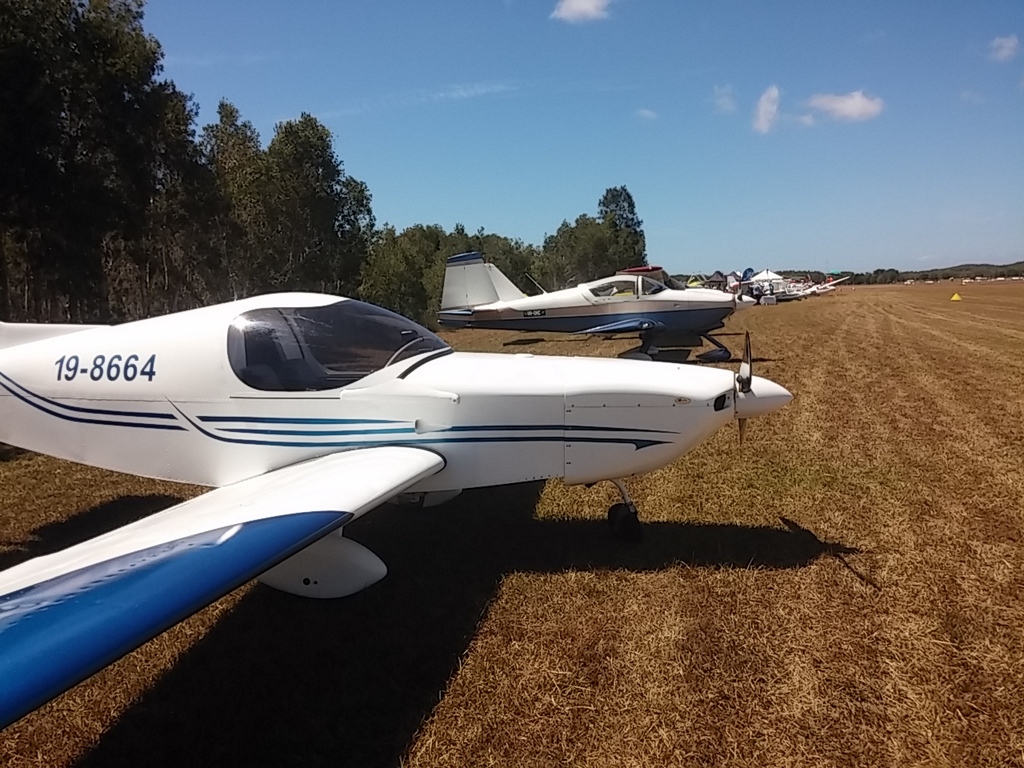
Definitely a contender for the ugly aircraft award.
-
When the Skecho2 was approved for use in NZ they disallowed the use of suction mounts. I've had mine fall off a few times but the bubble canopy is not perfectly flat anywhere so it does not stick well except along the side close to the base where it is fairly flat so it stays there mostly.
-
It’s just hit me hard that I can’t do this :(
kgwilson replied to danny_galaga's topic in Student Pilot & Further Learning
It is different for everyone. I turned 76 in February and my BFR expired in November 24. I had a bad case of Shingles that lasted 4 months, then a lot of wet weather, sold my house & bought another & am full on with renovations. I flew my aircraft in January with an instructor and was very rusty. My navigation skills in the air and general flying ability are fine but thinking about organising a BFR and what I need to demonstrate to an instructor has left me pondering whether i'd manage everything. I haven't flown more than a hundred miles from home since 2020 and am unlikely to go long distance any more so maybe I'll just do the BFR without Navs. I am not sure I will be able to remember everything i need to know about XC flight by dead reckoning. First though I need to go for a couple of flights with an instructor to get my skill levels back. One day i know I will have to give up flying. I still have a few years ahead of me but don't know how many. I read somewhere years ago the quote below. "One day you will walk to your hangar knowing that this is your last flight or one day you will walk to your hangar not knowing that this is your last flight. You will not do both". I fully intend it to be the former. -
When I built my aircraft (2014) I routed the VDO tacho wires in the same loom as most of the others and had a similar problem as they were getting induction current from the others. The wires should be in a twisted pair and kept away from others as far as I can recall. You could use shielded wires as an alternative. Anyway by separating them the tacho has functioned perfectly since I did that.
-
ASIC, Do I need an ASIC card?
kgwilson replied to Moneybox's topic in Student Pilot & Further Learning
The response to Fosythe is nothing more than than pollie waffle that says absolutely nothing and takes 4 paragraphs and about 150 words to say that. -
ASIC, Do I need an ASIC card?
kgwilson replied to Moneybox's topic in Student Pilot & Further Learning
At many regional airports with some RPT, the terminal and GA are separated by some distance. Often the GA area is close to the local Aero Club and access to/from the aerodrome is via their clubhouse access or security gate. While they say you are required to have an ASIC, generally you can land and access the aero club with the RPT terminal some distance away. I have operated to/from a number of aerodromes without an ASIC without any problems and avoid the RPT terminal area. I have not been asked to produce the ASIC card I don't have anyway. -
I posted this because you quoted my post and said the reference made has no date on it, that's all.
-
The document I uploaded is not the one you have quoted. It is this one uploaded last Sunday attached again petrol-life-vehicle-tanks.pdf
-
I have a Jabiru 3300A engine as specified in an earlier post. I only use Avgas if I can't get Automotive 95 or 98 ULP.
-
Yes it does. At the bottom of each page it states "Issued January 2010, supercedes Feb 2005."
-
A paper published in 2010 by BP relating to petrol life in vehicle fuel tanks is just as relevant today as it was back then. PDF file attached petrol-life-vehicle-tanks.pdf
-
What do you do with your pilot licence?
kgwilson replied to Builds By Baz's topic in AUS/NZ General Discussion
Everyones Aviation journey is unique. I have been obsessed with flying ever since I was a little kid. From paper darts to balsa wood cutout spitfires, kites and eventually model aircraft starting with gliders with aerofoil doped tissue wings & then powered models with 3/4 cc diesel engines & up to 1.5cc at around age 12. A friend of my father was a pilot during WW2 & owned a Tiger Moth & he took me for my first flight. I was 9 or 10. Girls & motorbikes dominated during my teens & I travelled the world in my early 20s & saw early hang gliders in Switzerland & returning to NZ in 75 got in to hang gliding which I flew right in to the 90s. I flew my first powered aircraft in the late 70s, a weight shift controlled Quicksilver, & then began my journey to obtaining a PPL initially in a C150, then C152, C172 & my favorite touring aircraft Piper Archer 2 (PA28-181). I built my current aircraft over nearly 5 years from 2010 & fly this currently though I don't go on long trips these days. When the sun is shining and the air is still I still get the same buzz with an early morning trip down the river and along the coast or just somewhere not too far away. I have always related to the poem by John Gillespie Magee in a letter to his parents in 1941. Oh! I have slipped the surly bonds of Earth And danced the skies on laughter-silvered wings; Sunward I've climbed, and joined the tumbling mirth of sun-split clouds,—and done a hundred things You have not dreamed of—wheeled and soared and swung High in the sunlit silence. Hov'ring there, I've chased the shouting wind along, and flung My eager craft through footless halls of air .... Up, up the long, delirious, burning blue I've topped the wind-swept heights with easy grace Where never lark, or even eagle flew— And, while with silent lifting mind I've trod The high untrespassed sanctity of space, Put out my hand, and touched the face of God.- 71 replies
-
- 11
-

-

-

-
The brand of battery has no bearing on whether the engine will start or not. It has to spin the engine when cold to more than 300 rpm, that's all. I know of a number of Odessey batteries that have not gone the distance. They are expensive and as a rule of thumb you get what you pay for but they are no better than a number of other brands in my opinion.


