

winsor68
-
Posts
3,578 -
Joined
-
Last visited
-
Days Won
14
Content Type
Profiles
Forums
Gallery
Downloads
Blogs
Events
Store
Aircraft
Resources
Tutorials
Articles
Classifieds
Movies
Books
Community Map
Quizzes
Videos Directory
Posts posted by winsor68
-
-
-
-
If this is the Ted from Isa who flew gyros I knew his poor wife was always beside herself with worry when he flew. I hope she I'd ok too if still in the picture.
-
Sounds great. Lets hope it's up before Xmas...will have a browse.
-
That is what Virgin Galactic has been claiming and aiming for Nev.It never could be, by the very nature of it. All the space programmes have been very risky, and probably luck has been involved too. If you want airline safety levels applied, it won't happen. Nev -
Can anyone who was around "back then" elaborate? I'm sure there was more to it. I'm sure there were a lot of old pilots back at the time these engines made an appearance warning of dire consequences to come...No, dont think so.Also remember most of the engines we play with are not certifiedWith a stroke of a pen they could say they all need LAME annual inspection
-
My opinion.... I reckon not even the obviously brave and risk accepting Richard Branson will be silly enough to stick passengers in this thing. I love the machine...just can't see it as being commercially certified to the same level as a regular RPT aircraft any time soon sadly.
I hope I am wrong...but I believe they jumped the gun on this...sure glad for that...but I don't think the safety margin is good enough for passenger ops yet.
-
Already did back when they "certified" it didn't they?... CASA isnt going to bring in new rules just for Jabiru -
Yes...so make that 75% pilot failure (he didn't mention it was fuel starvation and it wasn't a polite time to ask)Was that the one that had the fuel run out ?.....near Kutabul.... -
It's nothing compared to the regular half dozen motorcycle incidents handled at the ED in a weekend...but given that their are so few aircraft operating out of this area...four survivable crashes in half as many years does give one reason to stop and think... 50% pilot failure...50% engine failure. All survivable.
Getting a bit sick of having to worry one of my mates (hope I can still call them all that even if we don't always see eye to eye on politics) is going to burst through the doors on a trauma trolley. Fly safe guys.
-
 1
1
-
-
There was a trike had an engine failure at 300 feet and survivable (for the pilot) arrival on Sunday locally as well.
-
I discovered the AUF through the magazine...We never controlled which newsagents stocked our magazine, they do that themselves, we have stopped providing as a possible stocked item because it was costing us twice what it earned, it may have been that even so those few sold were turned into new members but we don't know that for sure.....in fact why don't I ask now, did our magazine have anything to do with any of you who read this becoming a member? I know it didn't me, I was into RC and went looking for airborne magazine (modellers mag) at guess www.airborne.com.au which turned out to be the trike manufacturer....and from there I was hooked....Andy-
1
-
-
Lapsed member here...Col, the 'slush' fund as you call is there to ensure our organization survives into the future. Any responsible organization would be expected to exercise fiscal responsibility on behalf of its membership and establish the long term security of having some money in the bank. Currently it is only about half of what really should be there. We have several Coroners reports to look foward to in the near future due to the high fatal accident rates in past years. Any judgement against the RAAus could very quickly lead to a civil law suit against us which has the potential to instantly deplete and 'slush' fund we may have. I can hear the roars of dissatisfaction now from the membership if that occurred and we could not fund our liabilities. Our insurance in this case is limite and only covers so much. The board would like to see the fund increase for additional security into the future which is why we are looking closely at areas including the magazine where we are loosing money. I too like a quiet place with my magazine and coffee and I will fight against the day when we don't have the magazine to do that with. Additionally we are doing work for the regulator (CASA) and not receiving fair compensation for our efforts,this is another area that needs to be rectified quickly.One point...and I have made it before...but I always enjoyed reading the magazine. I have not found the magazine for ale in any newsagent since my membership lapsed. Not a single one...and believe me I look every time I go into a newsagent. I have mentioned this before...it seems a shame as there are regularly other customers looking through the selection of aviation magazines so potential converts missing out on reading about Ra-Aus.
-
Not even 30000+ hours in your log book and several previous successful forced landings from engine failures will save you in this situation.I agree; but it won't help if the engine dies at 50 feet and you have to get across a six-lane road and a ten foot high cyclone wire fence, to reach the school playing field on the other side. That's what caught the RV 3 pilot.-
2
-
-
Probably not helpful to the discussion...but I always felt the standard control layout in the Savanah was one of it's most redeeming features.
-
Sadly I still have a brother who blames engine failure. Can tell him 50 times that engine failures don't cause aeroplane crashes to no avail.
I am also comforted by recent safety discussions regarding partial engine failures.
-
Thanks David. At least something positive may have come out of Uncle DBs death.I think you are referring to the cockpit sill reinforcement kits that were being produced by Graham Moodie (I hope I have that right) after he saw parts of a report that my son wrote to the QLD branch of ATSB, after he and I examined a wreck of an RV3 and an RV6 (both fatal) at Toowoomba, with ATSB's permission, at least a decade ago. (We were looking for data relating to lower leg injury, in a quite different context, but the fuselage collapse mode was something we noticed in the process). I could not approve an EO under CAR 35 because the aircraft is experimental, and therefore does not comply with any normal design standard - so the wording of CAR 35(2) is impossible to meet; however I saw what Graham was doing, and it looked to me to be helpful. Both those aircraft folded as you describe due to outward buckling of the cockpit sill, which completely nullifies the effect of the safety harness; the turtle deck behind the cockpit had paint marking from the windscreen arch in both of them; the fuselage had acted as a giant nut-cracker in fact.I would be interested to know whether the Mudgee aircraft had this mod. installed. However the presence or otherwise of the reinforcement has no bearing on the cause of the accident. -
Don't underestimate the strength of special needs kids...my sister in law can't talk or remember to much...but she could knock someone out from the command seat of an aeroplane and pitch for the Yankees.I was once asked to give a special needs kids a flight, I kinda just let it go as I was never comfortable with having him near the controls, maybe I was to careful but I just didn't feel comfortable about taking him up on my own, I'm pretty strong so I wouldn't get over powered but it would be hard to bring him back battered n bleeding.-
2
-
-
No. What I was referring to is that if my memory serves me correctly the Jab motor attracted controversy when it was first designed because it was not certified to the same standard as previous aero engines...I believe Lycoming etc had a much more rigorous test regime to achieve certification.Um - I'm still somewhat in the dark. Every GA aircraft has its maintenance system identified in the Log Book Statement - on the first page of its log book. If it has a Lycoming engine, the Log Book Statement will normally specify the appropriate Lycoming maintenance manual. If it's a VH-registered Jabiru, it will specify the appropriate Jabiru maintenance manual. The specification of these in the Log Book Statement makes them mandatory. An owner or operator can apply to CASA to alter or vary the maintenance system; fleet operators often develop their own maintenance system.I have no idea how RAA handles that - or even if it does address it at all.Does that answer your question?
This was contentious "back then"...and today's outcomes were expected by the pilots I knew.
-
The schedule that Lycoming follows...Which "they" are you referring to? And which CASA schedule? -
I thought they were exempted from strictly following the CASA schedule...Routine maintenance. Being certificated (NOT certified) does not remove the necessity for maintenance. The fact that it's necessary suggests that the valve guide temperatures are a bit on the high side - which again says that the CHT is getting a tad higher than was demonstrated during the 50 hour certification endurance run.The temperature limits given in the TCDS are based on the temperatures that were exceeded for at least 50% of the endurance run; that's how they were established in the first place. The engine has to be run for 25 2-hour blocks, during the first hour of which the power is varied from idle to takeoff power; and the second hour is held at maximum continuous power, and red-line temperatures. CASA sits-in on all such tests. The engine is stripped and inspected afterwards, and carbon build-up in the guides would have been seen - so one must therefore deduce that if they are carboning up in service, then the CHT and/or the EGT are exceeding the TCDS limits. Hence my comments re the cold junctions.I don't think you are correct re Lycomings etc; it doesn't have to be done frequently, but those air-cooled engines all run very close to limiting conditions for the exhaust valve guides. Continental has gone through about four changes in exhaust guide material over the years, and they still give trouble. The Rotax has liquid-cooled heads, whose main advantage is that they make it easier to cool the exhaust guides. Some Lycomings have oil passages in the head to try to reduce the guide temperatures; I hate to imaging what the maintenance issues are when those passages carbon up, as they must. Cars don't do it because they do not run the same duty cycle as an aero engine.
-
I would guess it's quite a bit later than WW1. Probably 1930's is my guess...
-
 1
1
-
2
-
-
Jabiru has a great crash test program.
Can't argue they are best in class in that regard.
-
2
-
 3
3
-
-
The cost of Australia's airline shananigans will be due soon enough...it's the Australian public that will pay....
Currently it is the airline staff at lower levels who are "paying" the price. A few years ago pay and conditions for ground staff were regulated alongside safety and compliance...the entry of low cost carriers with "low cost" staff has seen a lot of monkeys enter the profession who are happy to get paid peanuts...as the more "conscientious" workers move into other fields...soon everyone will have forgotten exactly what it is they are there to do.

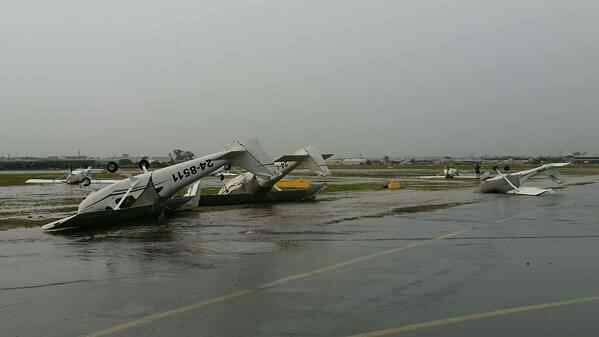
How many here fly gliders too?
in Gliders and Soaring Aircraft Usergroup
Posted