
-
Posts
8,045 -
Joined
-
Last visited
-
Days Won
71
Content Type
Profiles
Forums
Gallery
Downloads
Blogs
Events
Store
Aircraft
Resources
Tutorials
Articles
Classifieds
Movies
Books
Community Map
Quizzes
Videos Directory
Everything posted by red750
-
The Boeing C-97 Stratofreighter is a long-range heavy military cargo aircraft developed from the B-29 and B-50 bombers. Design began in 1942. The first of three prototype XC-97s flew on 9 November 1944 and the first of six service-test YC-97s flew on 11 March 1947. All nine were based on the 24ST alloy structure and Wright R-3350 engines of the B-29, but with a larger-diameter fuselage upper lobe (making a figure eight or "double-bubble" section) and they had the B-29 vertical tail with the gunner's position walled off. The first of three heavily revised YC-97A incorporating a wing with higher-strength 75ST alloy, taller vertical tail and larger Pratt & Whitney R-4360 engines of the B-50 bomber, flew on 28 January 1948 and was the basis of the sole YC-97B, all production C-97s, KC-97s and civilian Stratocruiser aircraft. Between 1947 and 1958, 888 C-97s in several versions were built, 811 being KC-97 tankers. C-97s served in the Berlin Airlift, the Korean War, and the Vietnam War. Some aircraft served as flying command posts for the Strategic Air Command, while others were modified for use in Aerospace Rescue and Recovery Squadrons (ARRS). The C-97 Stratofreighter was developed towards the end of World War II by fitting a second lobe on top of the fuselage and wings of the B-29 Superfortress with the tail, wing, and engine layout being nearly identical. The XC-97 and YC-97 can be distinguished from the Boeing 377 Stratocruiser and later C-97s by the shorter fin, and later ones by the flying boom and jet engines on the tanker models. The prototype XC-97 was powered by the same 2,200 hp (1,600 kW) Wright R-3350 engines as used in the B-29. The XC-97 took off for its first flight on November 9, 1944, just after the death of Boeing president Philip G. Johnson. On 9 January 1945, the first prototype, piloted by Major Curtin L. Reinhardt, flew from Seattle to Washington, D.C. in 6 hours 4 minutes, an average speed of 383 mph (616 km/h) with 20,000 lb (9,100 kg) of cargo. The tenth and all subsequent aircraft were fitted with the 3,500 hp (2,600 kW) Pratt & Whitney Wasp Major engines and taller fin and rudder of the B-50 Superfortress The C-97 had clamshell doors under its tail so that two retractable ramps could be used to drive in cargo, but it was not a tactical airlifter able to deliver to primitive forward bases. The doors could not be opened in flight, but could be removed to carry out air drops. The C-97 had a useful payload of 35,000 lb (16,000 kg), which could include two 2½-ton trucks, towed artillery, or light tracked vehicles such as the M56 Scorpion. The C-97 featured cabin pressurization, which made long flights more comfortable. The C-97 was developed into the civilian Boeing 377 Stratocruiser, a transoceanic airliner that could be fitted with sleeper cabins and featured a lower deck lounge. The first Stratocruiser flew on July 8, 1947. Only 56 were built. Number built 77 (plus 811 tankers) For operational history and details of the 25 variants, click here.
-
The CZAW Parrot, also called the CSA Parrot, is a Czech light-sport aircraft that was designed and produced by Czech Aircraft Works, now Czech Sport Aircraft of Prague. The aircraft first flew on 15 June 2005 and, while it was available, it was supplied as a complete ready-to-fly-aircraft. The Parrot was discontinued in May 2008, after three were completed and the design developed into the PS-10 Tourer. The Parrot was designed to comply with the US light-sport aircraft rules. It features a cantilever high-wing, a two-seats-in-side-by-side configuration enclosed cockpit, fixed tricycle landing gear with wheel pants and a single engine in tractor configuration. The Parrot is made from aluminum sheet. Its forward-swept 11.4 m (37.4 ft) span wing has an area of 9.5 m2 (102 sq ft). The forward sweep allows the cabin to be forward of the wing, providing pilot visibility in turns. Standard engines available were the 100 hp (75 kW) Rotax 912ULS and the 120 hp (89 kW) Jabiru 3300 four-stroke powerplants. The Parrot was first flown on 15 June 2005 and the prototype was immediately shipped to the United States to be displayed at AirVenture 2005. The design was added to the Federal Aviation Administration's list of approved special light-sport aircraft in January 2006. By May 2008 three Parrots had been completed and the aircraft was discontinued. The design was included in the intellectual property transferred from CZAW to CSA in 2009 and then redesigned with components from the PS-28 Cruiser and designated as the PS-10 Tourer. The PS-10 Tourer first flew on 6 December 2010 and was first publicly shown at the Aero show in Friedrichshafen in 2011. By December 2012 the PS-10 was not yet advertised for sale by CSA. Variants Parrot Base model with gross weight of 600 kg (1,323 lb). First flown 15 June 2005, discontinued May 2008 after three built. PS-10 Tourer Developmental evolution of the Parrot to include common engine cowling, nose gear and rudder assemblies with the PS-28 Cruiser, plus the addition of rear windows, larger elevator trim tab, removal of rudder horn and the empty weight was reduced. First flown 6 December 2010.
-
The General Aircraft GAL.42 Cygnet II was a 1930s British single-engined training or touring aircraft built by General Aircraft Limited at London Air Park, Hanworth. The Cygnet was designed at Slough by C.W. Aircraft Limited in 1936. It was the first all-metal stressed-skin light aircraft to be built and flown in the United Kingdom. The prototype, powered by a 90 hp (67 kW) Cirrus Minor engine, and registration G-AEMA was first flown in May 1937 at London Air Park, Hanworth. It had a fixed tailwheel undercarriage and low cantilever wing with rounded wingtips and a split trailing edge flap that ran under the fuselage. Two persons sat side by side in an enclosed cabin with a reverse-sloped windscreen. The metal airframe had a very slim semi-monocoque tailcone which carried the tailplane and a single, triangular fin and rudder. The prototype soon underwent a number of modifications, with the Cirrus Minor engine being replaced by a 130 hp (97 kW) de Havilland Gipsy Major engine, the cockpit canopy being revised to have a more conventional forward-sloped windscreen and the centre section of flap underneath the aircraft's fuselage removed. Thus modified, it was entered into the 1937 King's Cup Race on 10–11 September that year, finishing 13th. Airworthiness certification for the new type was slow, partially due to the Cygnet's extensive use of pop riveting, so that C.W. Aircraft made no sales of the Cygnet, while the company had also invested heavily in another design, the C.W. Swan, a six-seater to be powered by two de Havilland Gipsy Six engines. Overextended, C.W. aircraft became insolvent and was shut down in March 1938, with all rights for the Cygnet, together with the prototype, being sold to General Aircraft Ltd (GAL). For more details of the history of the Cygney, click here.
-
The Epic Victory was the second experimental jet designed by Epic Aircraft, a company that was based in Bend, Oregon. Epic Aircraft declared bankruptcy in 2009. Its assets were acquired by Aviation Industry Corporation of China and LT Builders Group; which as of July 2010 were in the process of restarting production of the Victory. The Victory is a single-engine very light jet that was intended to be powered by a single Pratt & Whitney Canada PW600. Epic used the Williams FJ33 engine for testing but planned to switch to the PW600 for final production. The aircraft seats 4 to 5, including the pilots, in a 2+2 or a 2+1+2 configuration. The aircraft took Epic six and a half months to design from concept to a flying prototype, with the first flight on 6 July 2007 from Roberts Field in Redmond, Oregon. The company had intended that the jet would be available for less than US$1 million. The aircraft was displayed at the Experimental Aircraft Association's AirVenture fly-in in 2007 at Oshkosh, Wisconsin, where the company began accepting down payments. The prototype's Federal Aviation Administration registration expired on 31 May 2017. It has not been renewed and the aircraft has been deregistered.
-
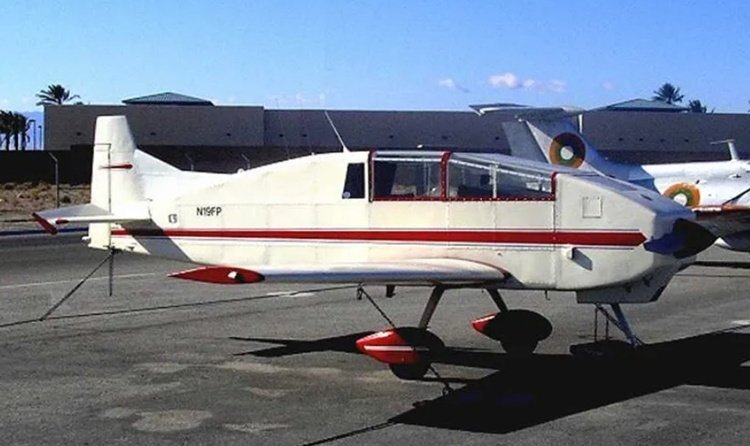
The Coupé-Aviation JC-01 is the first of a series of very similar designs of two seat, single engine sports aircraft, amateur built from plans in France from 1976. These provided a range of engine sizes and undercarriage layouts, but total production was small. The JC-01 and its variants were designed as conventional two-seat side by side light aircraft that could be built from plans by amateurs. The different models are chiefly distinguished by engine choice, though undercarriage configurations vary and there are slight alterations to the vertical surfaces. The J-01 and the J-2 have identical spans, wing areas and lengths, though the J-2, with a 90 hp rather than 65 hp engine and a tricycle rather than conventional undercarriage weighs more: empty, the J-01 weighs 330 kg (728 lb), the J-2 500 kg (1,103 lb). The J-2 has a constant chord, one piece low wing. Its inner panels have no dihedral but the outer ones are set at 4°. Both the main box spar and the rear spar have spruce booms and plywood webs. The leading edge is ply covered and fitted with fixed slots. The wing, including ailerons and flaps is Dacron covered overall. The empennage of the J-2 is conventional and cantilever, with the horizontal tail mounted on top of the fuselage; both fin and rudder are swept, the latter only slightly. The fixed surfaces are ply covered but control surfaces are fabric covered. The elevator has a trim tab. The fuselage of the J-2 is a three frame truss structure with a ply covered forward section and fabric covering aft. A 67 kW (90 hp) Continental C90 flat four engine in the nose drives a two-blade, fixed pitch propeller. Its fuel is stored in a tank immediately aft of the engine firewall. The cockpit, placed over the wing, seats two side by side under a large, rearward sliding canopy, with a space behind the seats which can take up to 20 kg (44 lbs) of baggage. The J-2 lands on fixed tricycle gear. The mainwheels have oleo-pneumatic damping and mechanical brakes; the nosewheel swivels. Plans were available to amateur builders for the construction of the JC-01 and its variants and about a dozen JC-01s were built. Two remained on the French civil aircraft register in 2010, together one example of each of the other variants making the total number of all variants built at least fifteen. Some builders included their own name and initials in the aircraft description, for example the Dessevres-Coupé JCD 01 and the Coupé-Brault JCFB 01. Variants Data from Jane's All the World's Aircraft 1984/85[1] and Fox-Papa JC-01 Original version with 48 kW (65 hp) Continental A65 engine and unswept rudder. Later the prototype was modified with a swept rudder. At least one was built with a Limbach L1700 engine. Tailwheel undercarriage. First flown 16 March 1976. JC-2 (Specifications below) Similar to JC-01 but with a 67 kW (90 hp) Continental C90, 50% heavier, swept vertical tail and tricycle undercarriage. First flown May 1981. JC-3 Lightened JC-01 with swept vertical tail and 51 kW (68 hp) Limbach L 1700 or 60 kW (80 hp) L 2000 engine. JC-200 "Refined" version of JC-2 with a 75 kW (100 hp) Rolls-Royce Continental O-200 engine, first flown 18 August 1989.
-
Not saying that your discussion is wrong or not worth pursuing. What I'm saying is that in respect to this particular accident, you are creating unproven assumptions to support your narrative. The students lack of experience may have resulted in him not having the peripheral awareness of the speed if the ground rising to meet him resulting in the bounce.
-
The Piper PA-47 "PiperJet" was a single-engined very light jet (VLJ) that was intended to be developed and built by Piper Aircraft. However, following a change of ownership at Piper, it was decided to redesign the aircraft as the PiperJet Altaire. Despite being technically successful, the Altaire project was canceled in October 2011 due to economic conditions. The aircraft is the first proposed single-engined civilian aircraft with a podded engine located on the tail. The PiperJet was announced in October 2006, as a competitor to the twin-engined Eclipse 500 and Cessna Citation Mustang. The aircraft's fuselage was the same cross section as the propeller-driven Piper PA-46 series, with a 4 feet (1.2 m) increase in length. It was to be capable of carrying up to 7 passengers and cruise at 360 knots (666.7 km/h), at a maximum altitude of 35,000 feet (10,668.0 m). Maximum range was expected to be 1,300 nautical miles (2,407.6 km), with a full-fuel payload of 800 pounds. Piper selected Williams International to supply its FJ44-3AP turbofan engine for the PiperJet. Due to the engine being mounted above the center of gravity, power was highly stabilizing (addition of power would push the nose down), which could have been disconcerting to pilots. Initially, Piper designers incorporated an automatic pitch trim system to coordinate horizontal stabilizer angle of incidence with power setting. This system was later replaced by a vectored thrust nozzle, developed by Williams International, which resulted in reduced weight and simplified manufacturing processes. A design feature of the aircraft was the use of a straight duct air intake design for the vertical stabilizer (tail) mounted engine, similar in engineering design concept to a McDonnell Douglas DC-10, rather than the s-duct arrangement of most trijet aircraft designs such as the Dassault Falcon 900. A selling price of US$2.199 million in 2006 dollars was initially set and as of February 19, 2007, Piper announced that it had received 180 pre-orders. An entry-into-service date of early 2010 was initially anticipated, later changed to 2011-12. In October 2009 the company indicated that it had delayed the delivery of the first customer aircraft to mid-2013 and had informed depositors. The PiperJet did not enter production and in October 2010 Piper announced it would instead develop an aircraft with a larger circular-section fuselage known as the Piper PiperJet Altaire. The 160 customers who had placed orders for the PiperJet retained their delivery positions with the new aircraft and at the same $2.2 million price.
-
https://www.msn.com/en-au/news/australia/air-canada-plane-starts-taxiing-towards-runway-with-baggage-handler-trapped-in-its-cargo-hold/ar-AA1U4KaP?ocid=winp2fptaskbarhover&cvid=dabb4b40a56046baea3acfee820c275e&ei=40
-
- 1
-
-
The Dyn'Aéro MCR4S is a four-seat development of the French two seat, single engine Dyn'Aéro MCR01. It first flew in early 2000 and is sold as a kit for homebuilding in several versions by SE Aviation of Pontarlier. The MCR4S is a four-seat development of the Dyn'Aéro MCR01 and retains many similarities. Both types are low wing, single engine monoplanes with T-tails. The major changes are an increase in fuselage length to accommodate an extra row of seats with generous windows and the replacement of the flaperons seen on the long span variants of the MCR01, which have wings of about the same span as those of the MCR4S, with slotted flaps. The wing and all control surfaces of the MCR4S have carbon fibre spars and ribs, to which preformed aluminium skins are glued. The wings have constant chord and carry 3° of dihedral. The ailerons are short, leaving the rest of the trailing edge of each wing divided between two double slotted, three position flaps. Winglets were introduced in 2001 and modified to have straight (in plan) trailing edges from 2002. The MCR4S has a T-tail with an all-moving tailplane. The fin is an integral part of the carbon fibre monocoque fuselage shell which also features a small ventral fin. The cabin seats up to four, depending on the variant, in two side-by-side rows. Entry is via the large, forward hinged, two piece canopy. Two large windows light the rear seats, the port side one doubling as an emergency exit. A variety of Rotax flat four engines may be fitted, driving a two or three blade propeller, which may have fixed or variable pitch. The MCRS4 has a tricycle undercarriage. The main wheels are mounted on short, vertical legs beneath the wings, as on the Club and ULC variants of the MCR01, with a track of 2.33 m (7 ft 8 in). All undercarriage wheels and legs are faired. The Dyn'Aéro MCR4S flew for the first time on 14 June 2000. The MCR4S structure has been used by EADS Defence & Security for its EADS Surveyor 2500 drone. The first public appearance of the MCR4S was at the International Air Rally held at Cranfield just nine days after the first flight. French certification was gained in June 2001 (DGAC) and the first customer, aircraft designer Pierre Robin, flew his aircraft shortly afterwards. UK certification (LAA), though sought, had not been achieved by 2009. In mid-2010, 90 MCR4Ss appeared on the civil aircraft registers of European countries excluding Russia. Variants Data from Jane's All the World's Aircraft 2011/12 Current (2010) versions are based on the MCRS4S-2002 specification. MCR4S evolution Powered by the new Rotax 915 iS engine and developed by SE Aviation in Pontarlier, France. MCR2S Ibis Two seat configuration with large baggage volume. Rotax 912 engine. Pickup Two seat, lightened to 290 kg (639 lb) empty, to produce a microlight aircraft with two seats, maximum internal capacity and performance. Rotax 912UL or ULS engines of 80 to 100 hp (60 to 75 kW). Three seat Three seat, powered by a 60 kW (80 hp) Rotax 912 UL or JPX 4TX75 engine. Four seat Four seat, powered by a 74 kW (99 hp) Rotax 912 UL-S engine. Four seat Performance (Specifications below) Four seat, powered by an 85 kW (113 hp) Rotax 914 UL engine. CITEC Powered by a Wilksch-120 90 kW (120 hp) two stroke, three cylinder diesel engine. Dyn'Aéro Twin-R Twin engine version, first flown March 2011.[1] MRC ULC Version lightened to 230 kg (507 lb) empty weight, with tricycle landing gear and powered by an 80 hp (60 kW) Rotax 912 UL or 100 hp (75 kW) Rotax 912 ULS powerplant. The aircraft has a cruise speed of 250 km/h (155 mph) with the 80 hp (60 kW) engine. MRC M Version of the MRC ULC with conventional landing gear and powered by an 80 hp (60 kW) Rotax 912 UL or 100 hp (75 kW) Rotax 912 ULS powerplant.
-
Copy and paste without checking. Conversions now corrected. That's what happens when you hurry.
-
John, there's a profile for that in the Electric Aircraft section of the showcase.
-
The Club ULM Rotor Ptenets-2 (Russian: Птенец-2, English: Chick or Fledgling) is a Russian ultralight aircraft, designed and produced by Club ULM Rotor of Kumertau, Bashkortostan. The aircraft is supplied complete and ready-to-fly. The aircraft was designed to comply with the Fédération Aéronautique Internationale microlight rules. It features a strut-braced high-wing, a two-seats-in-side-by-side configuration enclosed cockpit, fixed tricycle landing gear and a single engine in pusher configuration. The aircraft is made from aluminum tubing, with its flying surfaces covered in Dacron sailcloth. The fuselage is made from fibreglass. Its 10.2 m (33.5 ft) span wing has an area of 12.7 m2 (137 sq ft). The tail is supported by four tubes that allow space for the pusher propeller. Standard engines available are the 50 hp (37 kW) Rotax 503 and 64 hp (48 kW) Rotax 582 two-strokes and the 60 hp (45 kW) HKS 700E four-stroke powerplant.
-
The Ikarus C52 is a German ultralight aircraft, designed and produced by Comco Ikarus, introduced at the Aero show held in Friedrichshafen in 2011. The aircraft is supplied as a complete ready-to-fly-aircraft. An evolution of the Ikarus C42, the C52 was designed to comply with the Fédération Aéronautique Internationale microlight rules. It not only updates the older design, but offers more comforts. The C-52 is not intended to replace the C42 in production, but instead to act as a higher-end complementary model. Like the C42, it features a strut-braced high-wing, a two-seats-in-side-by-side configuration enclosed open cockpit, fixed tricycle landing gear and a single engine in tractor configuration. The aircraft differs from the earlier C42 primarily in that the landing gear is a cantilever design, the tail is constructed of carbon fibre and the engine mount was redesigned. Its 9.45 m (31.0 ft) span wing employs V-struts with jury struts and has an area of 12.5 m2 (135 sq ft). Standard engines available are the 80 hp (60 kW) Rotax 912UL and the 100 hp (75 kW) Rotax 912ULS four-stroke powerplants.
-
The Coavio DF 2000 is a single-engine, high-wing all-metal ultralight aircraft with side-by-side seating for two. Built in Italy, production began in 2004. The DF 2000 was designed to provide a fast, robust, comfortable, low-cost side-by-side two-seat ultralight with a short take-off run. It has a conventional layout not unlike that of, for example, the Cessna 152, with a high wing, swept vertical tail and tricycle undercarriage. Structurally, it is mostly built from aluminium alloy, reinforced with TIG-welded 4130 steel tubing in the cockpit area. The wing has constant chord and is braced on each side by a single, broad streamlined strut from the bottom of the fuselage. The shallow, turned-up wing tips are formed from composites. Inboard flaps are fitted. The cockpit area, under the wings and fitted with dual controls, is accessed by upward-hinged doors with deep glazing. Aft, the fuselage becomes more slender, though the swept fin has a long fillet. The rudder has a trim tab and the low-set, parallel-chord tailplane carries a balanced elevator. The tricycle undercarriage has main wheels which are cantilever spring-mounted from the lower fuselage and a steerable nose wheel. All wheels are usually spatted. The DF 2000 family uses several engine/propeller combinations, mostly from the Rotax 912 series of 80 to 100 hp (60 to 75 kW) flat-4s but also the 85 hp (63 kW) Jabiru 2200 and 120 hp (89 kW) Jabiru 3300 powerplants. The DF 2000 first flew in about 2001 and went into production three years later. 54 DF 2000 series aircraft have been built up to 2021. Variants Details from the manufacturer. Spartan Lightest DF 2000, 60 kW (80 hp) Rotax 912 UL engine, 2-blade wooden propeller. Mechanical trim control and flap actuation. DF 2000 Light (or Base) Standard version, as Spartan but painted and with oil pressure gauge. DF 2000 Plus 75 kW (100 hp) Rotax 912 ULS engine, composite 3-bladed propeller with ground-adjustable pitch. Electrical elevator trim control and flap actuation, flap hinge fairing, partial cabin ventilation and additional instrumentation. Wheel spats and landing light. DF 2000 Top (Specifications below) As Plus with a bigger oil cooler, radio and further instrumentation, upholstered seats and cabin panelling. Landing lights, radio and cockpit heater standard. Two-colour external paintwork. Flight-adjustable pitch propeller an option. DA Evolution de Luxe version with either 75 kW (100 hp) Rotax 912 ULS or 64 kW (86 hp) Jabiru 2200[2] engine. As Top, but with full cabin ventilation, improved seating and electrical aileron trim control. Improved external lighting. Three colour external paintwork and bigger spinner.
-
The Douglas AC-47 ("Puff, the Magic Dragon")
-
Wikipedia description of Cotton duck. Cotton duck (from Dutch: doek, meaning "cloth"), also simply duck, sometimes duck cloth or duck canvas, is a heavy, plain woven cotton fabric. Duck canvas is more tightly woven than plain canvas. There is also linen duck, which is less often used. Cotton duck is used in a wide range of applications, from sneakers to painting canvases to tents to sandbags. Historically, white untwilled cotton or linen fabric uniforms of this name were worn by British and French soldiers serving in the tropics. Duck fabric is woven with two yarns together in the warp and a single yarn in the weft. Duct tape or duck tape is cloth- or scrim-backed pressure-sensitive tape, often coated with polyethylene. A variety of constructions exist using different backings and adhesives, and the term "duct tape" has been genericized to refer to all of them. A variation is heat-resistant foil tape useful for sealing heating and cooling ducts, produced because standard duct tape fails when used on heating ducts.
-
UPS cargo plane crash. Louisville Kentucky
red750 replied to danny_galaga's topic in Aircraft Incidents and Accidents
There was an episode of Air Crash Investigation on Channel 7 this afternoon which reported on a DC-10 crash almost identical to the above accident, with the engine separating from the left wing just after takeoff with the plane rolling to the left, crashing, killing all 270 on board. The rear mounting lug appeared to be damaged when the engine was being reinstalled after a previous repair, causing a fatigue crack in the lug. The breakaway engine damaged the hydraulic lines in the leading edge of the left wing, preventing the outer slats on the wing from operating, preventing that wing from creating the correct lift. -
The Comp Air Jet is an American eight-seat, low-wing, pressurized, tricycle undercarriage, turbofan-powered civil utility aircraft marketed by Comp Air for amateur construction. The company website does not list it as being in production in 2022. In 2002 the co-owners of Aerocomp, which is now known as Comp Air, Steve Young and Ron Lueck announced the Comp Air Jet project. The jet is constructed from a "proprietary carbon-fiber hybrid sandwich" and powered by a Ukrainian Ivchenko AI-25 engine. Alternative engines planned for included the Pratt & Whitney JT12-8 or CJ610 or projected future Williams International or Agilis engines. On July 10, 2004 the Comp Air Jet flew for the first time from Merritt Island Airport. Though the gear was not retracted during the flight, the aircraft still reached speeds of 157 kn (291 km/h). The jet landed after 37 minutes with the landing taking about 2000 feet. On January 11, 2005 Aerocomp flew the prototype back to the Merritt Island Airport for further development work after more than 30 hours of flight testing at Space Coast Regional Airport, Titusville, Florida.
-
The Collins Dipper was an American homebuilt flying boat that was designed and produced by Collins Aero of Chadds Ford, Pennsylvania and first flown in 1982. The aircraft was supplied in the form of plans for amateur construction. Only one was built and none remain registered. The Dipper was a conversion of a Cessna 150, adding a fiberglass hull and nose to the Cessna land plane. Development was protracted and started in 1964, leading to a first flight in 1982. The Dipper featured a strut-braced high-wing, a two-seats-in-side-by-side configuration enclosed cockpit with doors, retractable tricycle landing gear and a single engine in pusher configuration mounted above the cabin on struts. The aircraft is made from aluminum and fiberglass, retaining the Cessna 150's wing and lift struts. The 33.4 ft (10.2 m) span wing employs a NACA 2412 airfoil, mounts flaps and has a wing area of 160 sq ft (15 m2). The standard engine used was the 180 hp (134 kW) Lycoming O-360 powerplant. The aircraft nose wheel retracted forward and the main landing gear retracted upwards into the rear window space. The Dipper had a typical empty weight of 1,100 lb (500 kg) and a gross weight of 1,760 lb (800 kg), giving a useful load of 660 lb (300 kg). With full fuel of 39 U.S. gallons (150 L; 32 imp gal) the payload for pilot, passengers and baggage is 426 lb (193 kg). The manufacturer estimated the conversion time from the plans as 1000 hours.
-
Piper PA-23 (Apache and Aztec)
red750 commented on red750's aircraft in General Aviation (multi engine)
-
The Schweizer RU-38 Twin Condor is a two or three-seat, fixed gear, low wing, twin boom covert reconnaissance aircraft. RU-38 is the US military designation for the aircraft, indicating Utility, Reconnaissance. The Schweizer company model number is Schweizer SA 2-38A Condor and, in its three-seat configuration, Schweizer SA 3-38A Condor. Based on the Schweizer SGM 2-37 motor glider, a total of five RU-38s were produced between 1995 and 2005. The aircraft remains in production by Sikorsky Aircraft after acquiring Schweizer. The development of the Schweizer SGM 2-37 motor glider for training use at the United States Air Force Academy led to two reconnaissance versions of that design, carrying the company model numbers SA 2-37A and SA 2-37B. In Central Intelligence Agency, US Army and US Coast Guard service these were designated RG-8A and RG-8B. The RG-8s were employed in border security and surveillance missions. In the mid-1990s, the Coast Guard decided that the aircraft would be more useful if their capabilities were improved to include night operations by the addition of more mission sensor equipment. Discussions with Schweizer Aircraft resulted in a plan to upgrade two RG-8As and to build one new aircraft to provide a total of three. The RU-38 was intended to fulfill both the low altitude, quiet, over water/hostile terrain reconnaissance role and also the high altitude standoff surveillance role. The design missions for the RU-38A were: Border integrity Counter-terrorism surveillance Drug enforcement Electronic intelligence Fishery patrols Illegal alien surveillance Intelligence collection Maritime patrol Pollution patrol & environmental monitoring Search and Rescue In converting to the new RU-38A configuration, the conventional RG-8A airframe was greatly modified by: Removing the single 235 hp (175 kW) Lycoming O-540-B powerplant Installing two Teledyne Continental Motors GIO-550A engines with a 3:2 gear reduction to 2267 operating rpm. The engines are mounted one in the nose and the other in the rear of the fuselage. Enlarging the crew compartment Improving the engine mufflers Increasing the wingspan from 56.5 ft (17.22m) to 84.13 ft (25.65 m) Changing the single tail fin to a twin-boom configuration with two fins Greatly enlarged sensor bays Improved noise signature reduction Tricycle landing gear replacing the conventional landing gear For details of the two variants, click here.
-
Thanks rgm, but I can't get any details, and there are hardly any usable photos. A number of Youtube videos. There is a forum, which I didn't register for, with member comments like this forum, which have all been redacted out. There is nothing with description, history or specifications. The Wikipedia page when you search for Pchelka-2 brings up the twin engine Antonov An-14, whose model name is Pchelka, Bee in English.