red750
-
Posts
8,104 -
Joined
-
Last visited
-
Days Won
71
Content Type
Profiles
Forums
Gallery
Downloads
Blogs
Events
Store
Aircraft
Resources
Tutorials
Articles
Classifieds
Movies
Books
Community Map
Quizzes
Videos Directory
Everything posted by red750
-
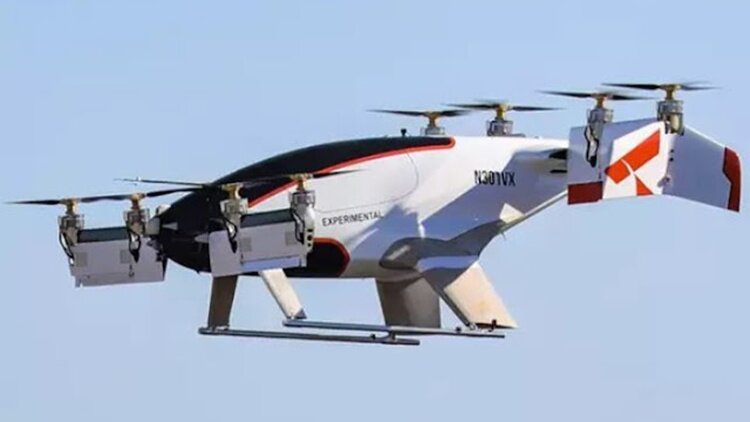 The Airbus Vahana (Sanskrit: Vāhana, or Vahanam literally means "vehicle") was an electric-powered eight-propeller VTOL personal air vehicle prototype, or eVTOL, financed by A³ (pronounced "A-cubed"), by Airbus and Airbus Urban Mobility. The Vahana project started in 2016 as one of the first projects at A³, the advanced projects and partnerships outpost of Airbus Group in Silicon Valley. Airbus "envision[s] Vahana being used by everyday commuters as a cost-comparable replacement for short-range urban transportation like cars or trains". It was planned to be a part of urban air mobility. The project was finished in December 2019. The convertiplane aircraft design, funded by the European aircraft manufacturer Airbus, called Vahana (Sanskrit: "vehicle"), started in 2016. It was being developed at A³ (A-cubed), the expanded project and partnership outpost of Airbus in Silicon Valley. Airbus said "Our work on this demonstrator confirms our belief that fully autonomous vehicles will allow us to achieve the scale required of Urban Air Mobility."[6] Then-CEO Tom Enders said: "I'm no big fan of Star Wars, but it's not crazy to imagine that one day our big cities will have flying cars making their way along roads in the sky." To test the Vahana concept, small models flew in Santa Clara, USA in 2017. Vahana was planned to become part of urban air mobility. In June 2017 at the Paris Air Show the prototype Vahana Alpha One (registration N301VX) was publicly presented for the first time. 31 January 2018 the first flight took place in Pendleton, Oregon. The full-scale aircraft Alpha One demonstrator reached a height of 5 meters within 53 seconds. By August 2018, more than 25 hover flights had been completed and the transition to forward flight had been tested. By January 2019, the second aircraft, Alpha Two, was completed, while the first was testing transitions to forward flight, but was not yet flown with the wings horizontal. On 3 May, it achieved its first full transitions to forward flight, reaching 90 kn (170 km/h) on its 58th flight. Airbus will not produce serial versions of the Vahana or the ducted-rotor CityAirbus demonstrators. Airbus finished the Vahana project in December 2019 in favor of the CityAirbus. The last flight took place on 14 November 2019, after 138 test flights with a total flight time of over 13 hours and a distance of 903 km were made. The longest single flight duration until then was 19 minutes, 56 seconds and the longest single distance covered has been 50,24 km. Configurations include electric helicopter and eight fan tilt-wing. For both configurations the hover performance estimates were based on blade element momentum theory. Vahana found the electric helicopter configuration superior at low ranges, and the tilt-wing configuration superior at longer ranges. The designer has not finalized the Vahana project and hope that "the electric tilt-wing configuration provides a DOC advantage and many other advantages such as reduced noise and enhanced safety for urban mobility". For both vehicles a common payload weight will be 200 lb (90 kg). A helicopter gearbox power density is assumed to be 6.3 kW/kg. Both configuration will assume 15 kg for avionics components and 15 kg for a crash rated seat. electrical actuators will take 0.65 kg each (8 units for helicopter and 12 units for tilt-wing). Additionally, the tilt-wing has two actuators (4 kg each). An additional 10% is for fittings and miscellaneous hardware. The cruise power of the tilt-wing is lower than the cruise power of an electric helicopter. The disk loading for both configurations is similar to those of many existing light helicopters. The electric helicopter hover power at short ranges is lower than those of the tilt-wing. Some drawings and explanations of Vahana can be seen under SELF-PILOTED AIRCRAFT FOR PASSENGER OR CARGO TRANSPORTATION. One of the reasons why Vahana was being developed as a self-steering aircraft was because the developers expected the available human pilots would not be sufficient in number for the anticipated volume of flights. Another reason was the higher payload and saving on labour expenses. In contrast to autonomous driving, autonomous flying has to be navigated at a significantly higher speed and in three instead of two dimensions. This requires higher computing speed and faster sensors and actuators. Autonomous navigation is carried out with a Lidar system, together with cameras and radar.
 -
ht Why Britain Rejected a Faster Hurricane - Dailytopis DAILYTOPIS.COM By December 1940, Britain faced sustained bombing while struggling to replace combat losses. To prepare for a potential disruption in Hurricane or Spitfire
-
- 2
-

-
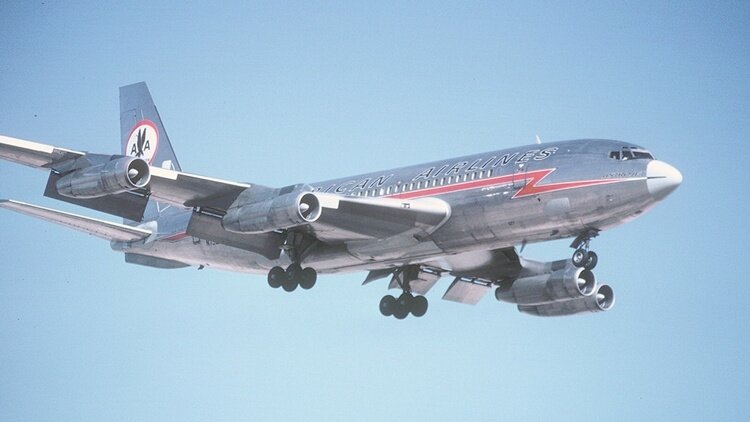 The Boeing 720 is a retired American narrow-body airliner produced by Boeing Commercial Airplanes. Announced in July 1957 as a 707 derivative for shorter flights from shorter runways, the 720 first flew on November 23, 1959. Its type certificate was issued on June 30, 1960, and it entered service with United Airlines on July 5, 1960. A total of 154 Boeing 720s and 720Bs were built; production ended in 1967. As a derivative, the 720 had low development costs, allowing profitability despite relatively few sales. Compared to the 707-120, it has a length reduced by 8.33 feet (2.54 m), a modified wing and a lightened airframe for a lower maximum takeoff weight. Originally designed to be powered by four Pratt & Whitney JT3C turbojets, the initial 720 could cover a 2,800-nautical-mile [nmi] (5,200 km; 3,200 mi) range with 131 passengers in two classes. The reconfigured 720B, powered by JT3D turbofans, first flew on October 6, 1960, and entered service in March 1961. It could seat 156 passengers in one class over a 3,200-nautical-mile [nmi] (5,900 km; 3,700 mi) range. Some 720s were later converted to the 720B specification. It was succeeded by the Boeing 727 trijet. Shorter range 707 Boeing announced its plans to develop a new version of the 707 in July 1957. It was developed from the 707-120 to provide for short- to medium-range flights from shorter runways. The model was originally designated 707-020 before being changed to 720 at the input of United Airlines. Compared to the 707-120, it has four fewer frames in front of the wing and one fewer aft: a total length reduction of 8 feet 4 inches (2.54 m). The new model was designed to a lower maximum takeoff weight with a modified wing and a lightened airframe. The wing modifications included Krueger flaps outboard of the outboard engines, lowering take-off and landing speeds—thus shortening runway length requirements—and a thickened inboard leading edge section, with a slightly greater sweep. This modification increased the top speed over the 707-120. It had four Pratt & Whitney JT3C-7 turbojet engines producing 12,500 lbf (55.6 kN) each. At one point in the development phase, it was known as the 707-020, then 717-020, although this was the Boeing model designation of the KC-135 and remained unused for a commercial airliner until it was applied to the MD-95, following Boeing's merger with McDonnell Douglas in 1997. Because the aircraft systems were similar to the Boeing 707, no prototype Boeing 720 was built; any different systems were tested on the Boeing 367-80. The first 720 took its maiden flight on November 23, 1959. The type certificate for the 720 was issued on June 30, 1960. It first entered service with United Airlines on July 5, 1960; 65 of the original version were built. The 720B version of the 720 had JT3D turbofan engines, producing 17,000 lbf (75.6 kN) each. The JT3D engines had lower fuel consumption and higher thrust. The maximum takeoff weight for the 720B was increased to 234,000 lb (106,000 kg). The 720B first took to the skies on October 6, 1960, and received certification and entered service with American Airlines in March 1961;[7] 89 720Bs were built in addition to conversions of American's 10 existing 720s. As a modification of an existing model, the 720 had minimal research and development costs, which allowed it to be successful despite few sales. The company built 154 Boeing 720s and 720Bs from 1959 to 1967. The 720's wing modification was later added on the 707-120B and on 707-120s retrofitted to the B standard. Design The Boeing 720 is a four-engined low-wing cantilever monoplane. Although it was similar to the Boeing 707, compared with the 707-120, it was 8 ft 4 in (2.54 m) shorter in length, and had a lighter structure through use of lighter forged metal parts and thinner fuselage skins and structures. Fuselage The rearmost of the 707's over-wing emergency exits was deleted on each side, which reduced passenger capacity, while two over-wing exits were an option for higher-density configurations. Wings The 720 uses an improved wing based on the 707 wing. The wingspan remained the same as the 707-120. For the 720, the wing was changed between the fuselage and inner engines by adding a wing root glove. This glove reduced the drag of the wing by decambering the root, which reduced the "middle effect", thereby increasing the effective local wing sweep. The wing root glove reportedly increased the drag divergence Mach number of the wing by Mach 0.02. Engines Though initially fitted with turbojet engines, the dominant engine for the Boeing 720 was the Pratt & Whitney JT3D, a turbofan variant of the JT3C with lower fuel consumption and higher thrust. JT3D-engined 720s had a "B" suffix; some of American's 720Bs were conversions of JT3C-powered 720s. Like the 707, the 720/720B used engine-driven turbocompressors to supply high-pressure air for cabin pressurization. The engines could not supply sufficient bleed air for this purpose without a serious loss of thrust. The small air inlets and associated humps are visible just above the main engine inlets on the two inner engine pods of all 720s and 720Bs; the lack of the turbocompressor inlet on the outer starboard pod (number 4 engine) helps spotters distinguish 720/720Bs from most 707s, which had three turbocompressors. For Operational History, click here. Variants 720 First production variant with four Pratt & Whitney JT3C turbojet engines Several high-density seat configurations delivered to Eastern Airlines included four over-wing escape hatches and brake cooling fans to effect quick turns on short-haul sectors.[citation needed] These aircraft, designated "720-025", were certificated to carry up to 170 passengers, provided that certain safety requirements were met. 720B Improved variant with four Pratt & Whitney JT3D turbofan engines; American Airlines converted its 720s to 720B standard.
 -
What is the aircraft with forward swept wings?

-
Fifty eight years since my first solo (1968) and 40 years since my last flight, but I still remember a bit about the first solo. Moorabbin Airport, runway 17, Beechcraft B19 Sport (2 seat Musketeer). Straightforward circuit, good landing. "Well done" from the Tower. I'd love to get off the ground again, but not many RAAus aircraft can handle a 132kg 81yo pax. I'll never fly again myself. My medical history takes up half an A4 typed page.
-
Lufthansa cancels 800 flights in strike - leaving more than 100,000 passengers stranded | Daily Mail Online WWW.DAILYMAIL.CO.UK The German airline was hit by 24 hours of industrial strike action yesterday over a pay dispute.
-
https://www.dailymail.co.uk/news/article-15546941/Air-India-pilot-DID-turn-fuel-switches-crash-disaster-human-intervention-certainly-intentional-Western-sources-claim.html?ito=social-facebook
-

Maintaining a certified aircraft.
red750 replied to Moneybox's topic in Instruments, Radios and Electronics
This is a bit off topic but relates to exorbitant prices. I heard on Sunrise that a hotdog at the Superbowl cost $60.00. -
Young pilot killed in plane crash was ‘not meant to be on the flight’ 7NEWS.COM.AU ‘All you ever wanted to do since you were a toddler was to become a pilot.’
-
The 32-year-old Clifton man was the sole occupant of a Beechcraft King Air aircraft which crashed into a crocodile-infested marshland near Normanton Airport, in outback Queensland near the Gulf of Carpentaria, on Friday evening. Second deadly plane crash within hours claims life of young pilot 7NEWS.COM.AU Severe weather impacted the search for the pilot’s body, which has now been recovered.
- 1 reply
-
- 3
-

-

-
You wouldn't want a strong crosswind.
-
That 7News quote above was copied from a link on Facebook. One of the commenters said Leo Howard n had trained him from first flight to advanced aerobatics.
-
From 7 News Adelaide “We are devastated at this time and send our condolences to the other families involved.” Experienced pilot Leo Howard is being remembered as a loved family man after he was killed in a fatal light plane crash at the Murray Mouth. The 53-year-old and two young men, understood to be trainee pilots, were onboard a single-engine Cessna aeroplane when it plunged into the ocean at Goolwa South, killing all three. Investigators are now trying to determine who was flying the plane.
-
A search and rescue is under way after a light plane crashed into the ocean south of Adelaide. The aircraft plunged into Long Bay, off Goolwa South, just before 4.30pm local time (5pm AEDT) today. Emergency services, including water police and a helicopter, are at the scene trying to find the occupants. It's unclear how many people were on board at the time. The incident happened in front of several witnesses out on the bay this afternoon.
-
Fortunately my spellchecker underlines errors in red. Even so, when an incorrect word is typed but is spelt correctly it doesn't highlight it. Otherwise, my posts would ALL read like Jerry's. (Sorry mate.) I usually proofread, but as the intended message is in my head, I often don't see the error till after I have submitted the post, and have to click on the edit function to correct it.
-
Unfortunately there has been a number of instances where members are making personal attacks against other members, particularly in the discussion regarding aero engines vs auto engines, starting in the Hecks Field accident topic. Please keep your comments directed at the subject, not the poster. If this continues, suspensions may be necessary.
-
Turboplanner posted: I just gave you an example of an engine in continuous power demand. Briggs and Stratton manufacture 10 million stationary engines per year. You wrote a story based on the words. The design of the two types of engines are based on the Industry Constant Power Demand/Intermittent Power demand terms.
-
Light aircraft crash at Heck Field 27/01/26
red750 replied to red750's topic in Aircraft Incidents and Accidents
Turboplanner's reply has been transferred to Aero engines vs Auto engines -
This is a continuation of the discussion started in the topic Light aircraft crash at Heck Field 27/01/26
-
Light aircraft crash at Heck Field 27/01/26
red750 replied to red750's topic in Aircraft Incidents and Accidents
The discussion started with the second last post on page 3. We are now on page 6. I don't know how to split off and transfer so much of a topic. I have opened a new topic in the Engines and Props forum. All further posts on this subject are to be switched to that forum/topic. -
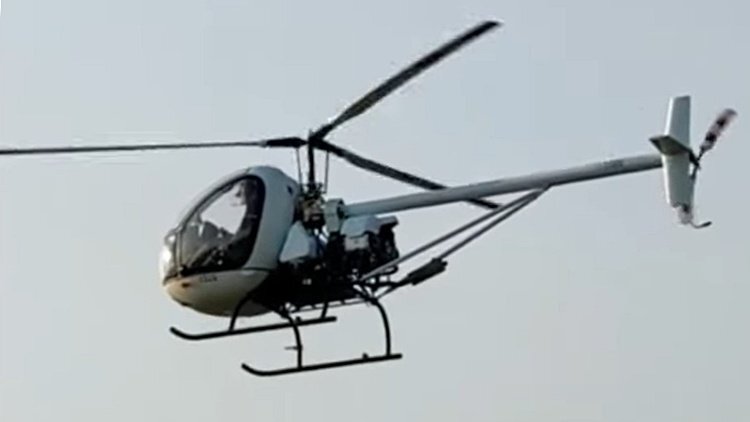
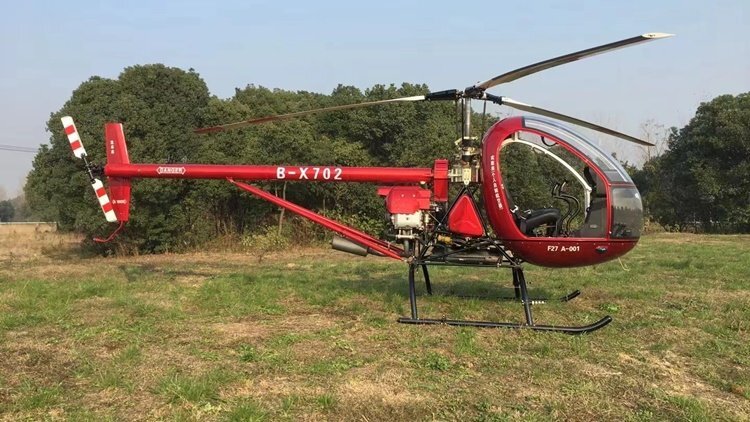
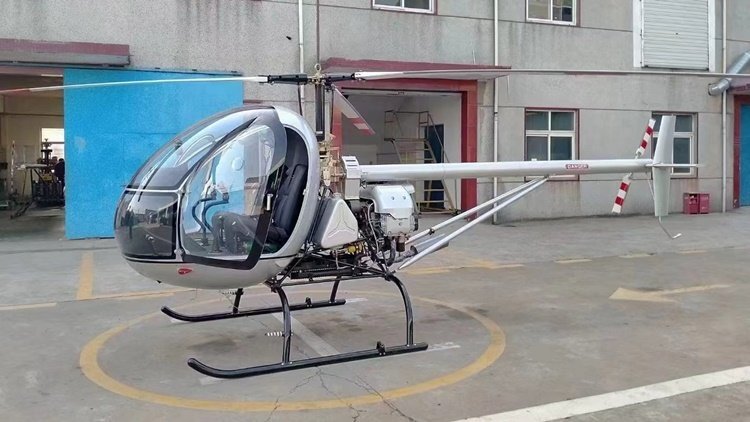
Changzhou Zhonglian Aviation Technology Co., Ltd. has produced a two seat light helicopter with twin piston engines that is sold in kit form. There is no information available on it other than their own website, which naturally is a promotional type rather than a history and development discussion as found in Wikipedia. There are, however, a lot of very short Youtube and TikTok videos showing it thrown around like the cattle wranglers in the NT fly their R22's. They claim the twin engines provide a safety backup in the event of an engine failure. The website quotes a price of $160,000 down from $180,000. I assume that's US$, so the reduced price equates to A$231.000. They compare themselves to Robinson helicopters in the support area, saying factory spare parts are readily available and can be supplied quickly, whereas you may need to buy secondhand parts, or parts recovered from damaged Robinsons, which could result in long delays. Their claims, not mine. The aircraft is a Zhonglian F27. The title on this video quotes a price of US$230,000. Websites https://www.zhonglianaviation.com/product/experimental-helicopter-kits-for-sale/the-zhonglian-f27-helicopter-is-a-home-built-aircraft-ultimate-faq-guide-–-kits-certification/
-
Sorry, when it popped up I didn't check the date. Facebook have been doing that a lot lately, possibly longer. Posting things that happened months ago as if they just happened.
-
Renowned aerobatic pilot Rob Holland tragically lost his life on Thursday, April 24, 2025, when his experimental aircraft crashed at Langley Air Force Base in Hampton, Virginia. The accident involved an MX Aircraft MXS, a high-performance, single-seat plane built by an Australian company specializing in aerobatic and racing aircraft. https://dailytopis.com/legendary-aerobatic-pilot-rob-holland-dies-in-crash-at-langley-air-force-base/
-
Ignored Warnings, Fatal Decisions, and Years of Silence — The Ricky Nelson Mystery Is Finally Solved and It Isn’t Good MS2.XYNO.ONLINE In a shocking conclusion that overturns decades of speculation, the mystery surrounding the tragic death of rock and roll legend Ricky...