


old man emu
-
Posts
5,297 -
Joined
-
Last visited
-
Days Won
78
Content Type
Profiles
Forums
Gallery
Downloads
Blogs
Events
Store
Aircraft
Resources
Tutorials
Articles
Classifieds
Movies
Books
Community Map
Quizzes
Videos Directory
Posts posted by old man emu
-
-
When you sub-contract out the manufacture of parts for an aircraft, you have to be sure that the sub-contractor can meet quality standards. Here's a case where a sub-contractor could not.
-
 2
2
-
-
I had to carry around $US10K ( Green backs talks all languages!) in a brief case to bribe everybody
Is it corrupt, or is it Captialism gone feral? We are lucky in Australia to have had instigated controls on prices, at least for transactions between members of the class that doesn't control capital. In the countries you mention, it's dog eat dog with no controls. You want something done, you'll pay the doer's price or go without. What we are not used to is the Poor, or I should say, Unrich, using the same tactics as the Rich. If you control the "asset", you set the price.
I'm glad that we have a wage setting system in Australia, so that you can go into a cafe and be served by a person who does not have to rely in "tips" in order to end up with a decent income at the end of the week.
Coffee Shop Positions Sorted By Salary
[TABLE]
[TR]
[TD valign=top]
Position
[/TD][TD valign=top]
Average Starting Wage
[/TD][TD valign=top]
Entry-Level
[/TD]
[/TR]
[TR]
[TD valign=top]
Cashier
[/TD][TD valign=top]
$7.25 – $9.00 per hour
[/TD][TD valign=top]
Yes
[/TD]
[/TR]
[TR]
[TD valign=top]
Barista
[/TD][TD valign=top]
$7.25 – $9.00 per hour
[/TD][TD valign=top]
Yes
[/TD]
[/TR]
[TR]
[TD valign=top]
Baker
[/TD][TD valign=top]
$7.25 – $9.00 per hour
[/TD][TD valign=top]
Yes
[/TD]
[/TR]
[TR]
[TD valign=top]
Assistant Manager
[/TD][TD valign=top]
$12.00 – $14.00 per hour
[/TD][TD valign=top]
No
[/TD]
[/TR]
[TR]
[TD valign=top]
General Manager
[/TD][TD valign=top]
$14.00 – $16.00 per hour
[/TD][TD valign=top]
No
[/TD]
[/TR]
[/TABLE]
The average wage for all workers in the USA from May 2019 to January 2020 was between $US 10.92 to $10.98. Covid has raised that to $US11.74, but that is a high point and the rate is coming down. That's $AU 16.00 last year, and $AU17.00 now. The Basic Wage in Australia is $19.84. The Australian average hourly rate is $44.
-
 1
1
-
 1
1
-
-
Higher octane more power output
The compression of the fuel/air mixture enables the engine to develop. Engine power is generated when combustion exerts a force on the piston and pushes the piston down the cylinder during the expansion stroke. The higher the piston is in the bore the higher the compression ratio. When combustion begins, more force will be exerted on the piston in a higher compression engine than in a lower compression engine. As compression ratio increases, the piston moves higher in the bore at top dead centre.
High compression increases your risk of knocking, which is why high compression engines run high octane fuel. Gases heat up when they’re compressed, so the increased heat density due to compression can lead to the fuel prematurely combusting before the spark plug ignites it. That's "knock". If the combustion occurs before the piston reached TDC, the force of the expanding combustion gases acts against the piston moving to TDC, and that resisting force goes through the head of the piston to the con rod and eventually to the crankshaft bearings. Since the engine is not designed to take forces acting in that direction, damage occurs.
So, it's not higher octane = more power, it's more compression = more power, and more compression = higher internal cylinder temperatures, which can lead to premature ignition = a need for higher octane rated fuel.
My 1942 bike has a compression ratio of 6:1. It was designed for 74 octane fuel. It happily runs on 91 octane, and for a treat likes a drink of 100LL, but even though the engine has just been reconditioned with new cylinder sleeves, piston and rings, it won't produce any more than 22 HP at 4300 RPM, as it did when it was first fired up on 74 octane petrol.
-
I wish people would, once and for all, ditch this myth that Octane Rating of a fuel is equivalent to the power output of a fuel. The amount of power a fuel can produce in an internal combustion engine depends firstly on its inherent energy content and secondly on how close the introduced air/fuel mixture is to the stoichiometric air-fuel ratio. Kero has an energy content of 43 Mj/kg and petrol 44-46 Mj/kg. Pretty much the same. Octane Rating is an empirically derived value. Octane ratings are not indicators of the energy content of fuels. They are only a measure of the fuel's tendency to burn in a controlled manner, rather than exploding in an uncontrolled manner.
During the combustion process, if the unburnt portion of the fuel in the combustion chamber is heated (or compressed) too much, pockets of unburnt fuel may self-ignite (detonate) before the main flame front reaches them. Shockwaves produced by detonation can cause much higher pressures than engine components are designed for, and can cause a "knocking" or "pinging" sound. Knocking can cause major engine damage if severe.
The octane rating of gasoline is measured in a test engine and is defined by comparison with the mixture of 2,2,4-trimethylpentane (iso-octane) and heptane that would have the same anti-knocking capacity as the fuel under test: the percentage, by volume, of 2,2,4-trimethylpentane in that mixture is the octane number of the fuel. For example, gasoline with the same knocking characteristics as a mixture of 90% iso-octane and 10% heptane would have an octane rating of 90. A rating of 90 does not mean that the gasoline contains just iso-octane and heptane in these proportions, but that it has the same detonation resistance properties.
The reason that kero doesn't work well in a spark ignition engine is because its Flash Point ( +37 - 65C) is too high for good vapourisation, which means that its stoichiometric air-fuel ratio cannot be attained. Basically you are introducing an over-rich mixture to the cylinder. If you had a fuel pre-heater that got the fuel up to about 40C before it was introduced to the cylinder, then it should, in theory be as good as petrol.
I don't suppose there are many of us who could say whether a kero tractor ran better at the wheat harvest than at sowing.

-
1
-
-
I wonder if the reason that kero is expensive here and hard to find is that there is a much greater demand now for Avtur and Jet A-1.
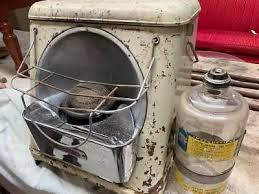
I remember going to my local Ampol service station (it wasn't called a 'servo' back them) and filling a 5 gallon drum with kero at a bowser. We used the kero in a portable Fyreside heater. There was an art in fitting the full glass container of kero into the heater without spilling any. Then another skill was required to light the wick and get the mantle on before it issued black, smelly smoke.
-
1
-
-
Try this American mob who have a facility at Camden NSW - Desser The Industry Leader in Top of the Line Aircraft Parts
I don't know what stock they carry, but you can always ask.
-
Please bookmark this link
Y - Australia
https://en.wikipedia.org/wiki/List_of_airports_by_ICAO_code:_Y
-
There is also much more carbon build up in the inlet manifold and under inlet valves.]reducing gas flow.
That sounds counter-intuitive. I would expect the carbon build-up to be on the exhaust side. You would think that carbon would not condense from the vapour/air mixture coming into the engine, but combustion products would be in the exhaust mixture.
It is odd that kerosene is so expensive, and hard to obtain in Australia. That could be due to the fact that we have electricity for lighting and heat as well as gas for heat. This mob Kerosene Where To Buy - Kerosene Heater Fuel sells in industrial quantities. It has high flash kero at $4 per litre. This is the high flash point (~ 150C) stuff that's safer for cleaning. They also have regular kero at $2.75 per litre which has a flash point between 38 and 72C.
The average price of kerosene around the world is 0.92 Australian Dollar per liter. However, there is substantial difference in these prices among countries. As a general rule, richer countries have higher prices while poorer countries and the countries that produce and export oil have significantly lower prices. The differences in prices across countries are due to the various taxes and subsidies for kerosene. All countries have access to the same petroleum prices of international markets but then decide to impose different taxes. As a result, the retail price of kerosene is different.
In less developed countries, kerosene is used for lighting and cooking as well as in small capacity engines. In those countries, the price is generally below the world average.
-
Err... Use of ICAO codes
This one's in a grey area. The post is in the Trips thread. That implies that the ICAO codes refer to two airports. First line of the second paragraph clarifies departure and destination locations.
Despite having commented on the use of ICAO codes in other threads, where the codes can confuse, I would let this example "go through the the 'keeper".
It would have been a better post if Posts # 7 and 9 had been in Post #1, but that's just OME being a pedant.
-
During the late 19th and early 20th Centuries, kerosene was used in many ways to cure ills of all sorts.
An old man I knew was telling me that during the Spanish Flu epidemic of 1919, he was a babe in arms. The 'flu struck his family, killing a sibling and laying low his parents and himself. The District Nurse arrived to see to the family. She prescribed a drop of kerosene on a sugar cube which was then sucked. The old man was in his nineties when he told me that, so it worked. Perhaps that would be a cure for COVID.
My grandfather was a dairy farmer from the Northern Rivers of NSW. He had a multitude of mixtures and poultices based on kero to treat maladies in cattle and horses.
Beware the cars sales yard that washes their cars with kero. Spray them with water and the paint sparkles like new, despite being chalky when dry.
-
Ya just never know, do ya?
Glad to hear that you are back home.
-
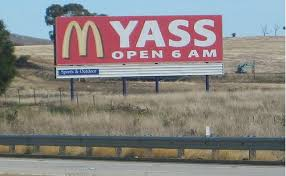
what would the code be for a YASS airfield
-
1
-
 2
2
-
-
YBDG is about 55nm wsw of YSHT? You can't be serious? Are you a pilot?? I thought this was an aviation related forum ?
Yes, Flightrite. The topic of using ICAO airport codes was discussed here about a year ago. The argument was, as Red750 put it, that there are a lot of non-flyers accessing this site, and also we are scattered all over the country and international as well. If we were to rely solely on ICAO codes, many of us would either be unable to recognise a location, or would have to have a link to the list stored on our bookmark bar for quick reference.
One of the things we like to promote here is clear communication. As a first step, that means trying to avoid jargon, except where the context of the post makes the jargon clear. You have been a very active contributor since you joined two months ago, and we welcome that. Nobody means to demean you, but please make yourself aware of the customs followed here.
-
4
-
3
-
 1
1
-
-
Saying what people expect you to say, when they expect you to say it, is much more important
That's true of any conversation where accent and syntax cause problems. Context is also important. In trade, it is possible to converse where accent distorts the exchange because both parties are concentrating on the same subject.
The same goes for situations where there are two words for the same thing. Spanner is the standard term used in British English, while wrench is typically used in American English. A double-end spanner is referred to as an open-end wrench by the Americans. Or ask a young person to select a 1/4" diameter bolt. Confusion, but tell them its about 6 millimetres and they'll go straight to it.
-
. It's ones where you can barely comprehend a single word of the transmission that worry me.
With minimal training, a person with an aviation ELP level 6 assessment can relatively easily assess another person as being expert or not. However, assessing a person as being at level 5 or below is much more difficult and requires expertise in linguistics. Basically, any native speaker of English who has a basic knowledge of aviation terms will have no difficulty in being assessed at Level 6. Refer to the video in Post #69 above to see what is tested in an ELP assessment.
From an approved assessor's website: You will need an English assessment for CASA pilot licences, drone pilot licences or aviation radio operator licences. If you are a recent arrival to Australia or not a ‘native’ English speaker you must have the English assessment by an aviation English specialist.
So who is doing the ELP tests? We are all aware of certain questionable organisations operating in the overseas pilot training business. Is it a common practice in this business to fudge required exams in order to push students through?
-
With friends like the USA, who needs enemies?
What was the British jet fighter that the US crushed?
-
they can sensationalise things and get the gullible population to fall for it..
Come the Revolution, Comrade, and the People will have the power!
Oh. That hasn't worked before, has it?
-
1
-
-
See what it costs to send a letter/small parcel by courier.
International postal rates are incredibly high. I want to buy a voltage regulator for my bike. It is about the size of a tin of Eclipse mints, but the cheapest postage is $US30.
-
1
-
-
Be like a door-to-door salesman. If there is no answer at the first door, go on to the next one.
-
First things first. Isn't the most serious problem the unintelligible pronunciation of persons who should have an ELP?
What is an aviation ELP assessment?
An aviation ELP assessment involves a candidate being tested on their ability to communicate in English in the aviation environment, where safety is paramount. The assessment involves two-way communications between the assessor and the candidate, and covers:
- pronunciation
- grammatical structures and sentence patterns
- vocabulary
- fluency
- comprehension
- interactions while communicating.
Who can conduct an aviation ELP assessment?
With minimal training, a person with an aviation ELP level 6 assessment can relatively easily assess another person as being expert or not. However, assessing a person as being at level 5 or below is much more difficult and requires expertise in linguistics.
A small number of specialists are approved to assess people at all levels. These assessors are approved under regulation 61.270 of the Civil Aviation Safety Regulations and are referred to as Specialist assessors in this information sheet.
What standard do I need to meet to pass an aviation ELP assessment?
The assessment standards are in the Part 61 MOS. There are six assessment levels for aviation ELP with level 6 (expert) being the highest. If you are assessed at level 1, 2 or 3, you cannot get a licence or use a radio. Level 4 and 5 assessments are acceptable for obtaining a licence and using radios, and expire after three and six years respectively. A level 6 assessment doesn’t expire.
-
1
- pronunciation
-
"Cynics and conspiracy "believers" opinions " (your choice of terms) .
I was using those terms because I formed the opinion from posts here that some of us were in that group. Actually, if you read the whole sentence I was saying that until proof had been given that an informant had been penalised, Old man Emu would not accept those opinions.
If you really want to raise Hell, write to the Opposition Shadow Minister for Infrastructure and Transport; to your local member; to your local Council, and finally, to local and state media. Unless the wider community is made aware of safety issues that they don't meet on a daily basis, public opinion cannot be harnessed to improve issues.
Of course we believe that the training of foreign students is based on the income it produces, not the quality of pilot it produces. We know that certificates in many areas can be bought. Moderators here clear out ads for this type of business all the time.
-
1
-
1
-
-
Is an anonymous report via REPCON acceptable?
REPCON does not accept anonymous reports. REPCON staff cannot contact an anonymous reporter to verify the report or to seek additional information. Further, REPCON staff must be satisfied that the reporter's motivation for reporting is aviation safety promotion, and that the reporter is not attempting to damage a rival or pursue an industrial agenda.
If you go through the results of investigations of matters reported through REPCON (link to reports) you will see that most deal with commercial operations. There are some that deal with overloaded communication matters at places like Byron Bay and Far North Queensland. None of these reports seem to come from the light end of aviation dealing with language problems.
The conclusion is that those in the light end of aviation either don't know about REPCON, or are reluctant to use it. You can't expect CASA to deal with a problem if it has not been advised of it. Also, from what has been said in this thread, the language problem seems universal. So, if people from all over the country start bombarding CASA with REPCONs dealing with the same problem, then a pattern will emerge and CASA will at least investigate.
The cynics and conspiracy believers can voice their opinions, but until there is proof that a person reporting was penalised by CASA, then I won't accept those opinions.
-
1
-
-
You have missed the point about REPCONs. You are not dobbing yourself in if you report that in your opinion a misunderstood radio transmission had the potential to cause a safety issue. There's no way that you are saying that you were involved in a close call incident. What if you were approaching an airport and gave an inbound call, then monitored the calls associated with that airport but could not get a clear impression of what was happening in the circuit because the calls were unintelligible?
The reason REPCONs need your contact details is so that they can verify the report. If that wasn't there, there would be lots of malicious complaints that would waste investigators' time.
-
1
-
-
Another case of "Survived the crash - injured by the rescue".


I shake my head!
in AUS/NZ General Discussion
Posted
If you ever get the chance take a look inside a Yak 18T or 52. Those things look like they came out of a Peoples Co-operative Tractor factory.