


old man emu
-
Posts
5,297 -
Joined
-
Last visited
-
Days Won
78
Content Type
Profiles
Forums
Gallery
Downloads
Blogs
Events
Store
Aircraft
Resources
Tutorials
Articles
Classifieds
Movies
Books
Community Map
Quizzes
Videos Directory
Posts posted by old man emu
-
-
A high winged aircraft might achieve the same stability without dihedral as a low wing with it due to the pendulum effect of the airframe hanging from the wing.
Almost certainly the straight wing as making it “one of the worst aircraft he ever flew”Probably no doubt about that - low wing aircraft with no dihedral, or did it have some? But Lindberg flew either the first or second protptype
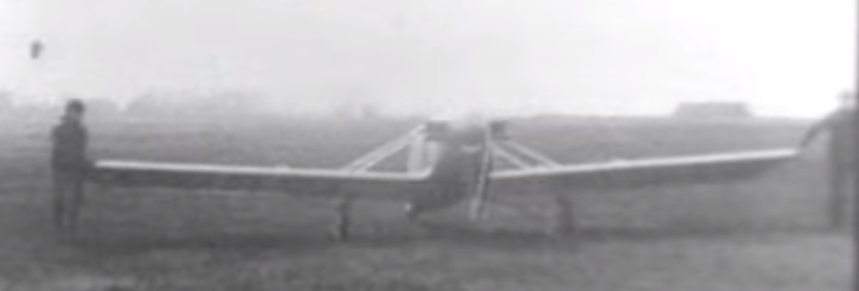
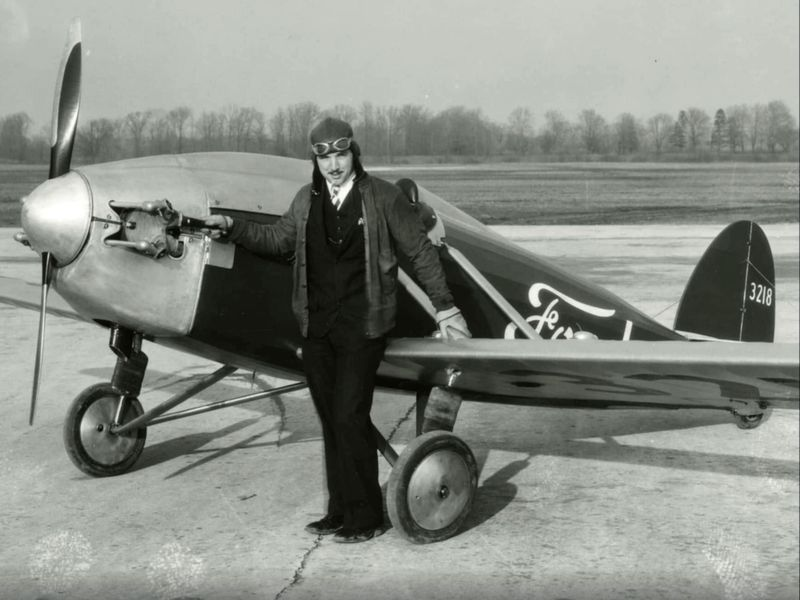
From the pictures in this video, there seems to be some. Flivver 2A (Flivver 3218) The third prototype was larger with a 22 ft (6.7 m) wingspan, had a fabric-covered steel frame, featured wing struts, a 50-gallon fuel tank, a dihedral increase, and a custom 143-cubic-inch (2,340 cm3)-Ford designed, horizontally opposed two-cylinder engine using Wright Whirlwind components that produced 40-horsepower (30 kW).

The video shows the Flivver 2A during an attempt to win a long distance record for light planes in 440 to 880 lb (200 to 400 kg) "C" class. The race was set from Ford Field in Dearborn Michigan to Miami, Florida. The attempt was stopped by bad weather at Titusville, Florida, where the propeller was bent, but still achieved a 972 mi (1,564 km) record. The pilot placed wooden toothpicks in the vent holes on his fuel cap to prevent moist air from entering and condensing overnight. On February 25, they took off to complete the flight, circled out over the Atlantic where the motor quit and he went down off Melbourne, Florida. Investigation of the wreckage disclosed that the toothpicks had plugged the fuel cap vent holes, causing an engine stoppage.
-
 1
1
-
-
Noyce!
-
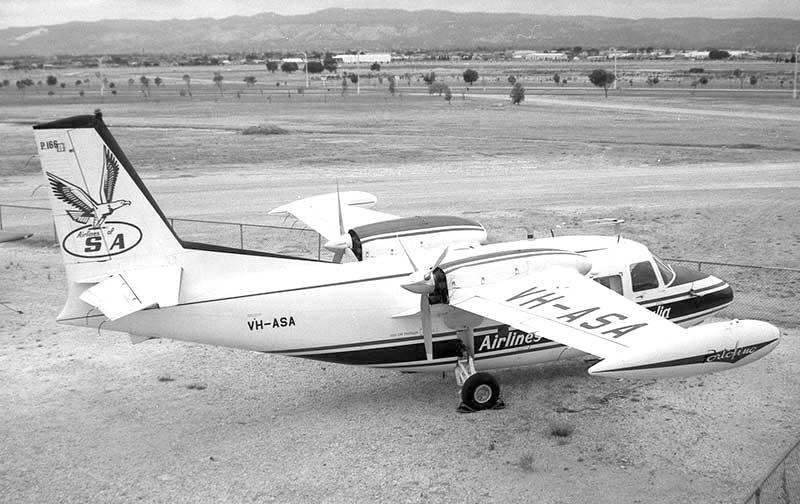
I can see the advantage in gull wings for flying boats, and the wonderful Piaggio P.166B,
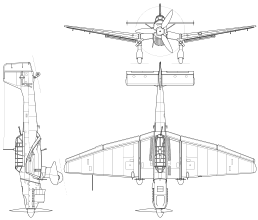
but where's the advantage in the inverted gull wing for the Stuka?
-
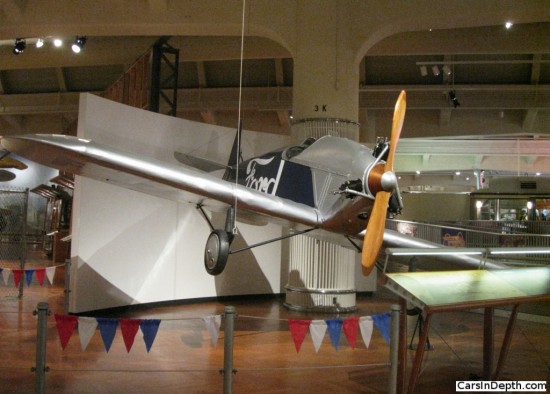
Just about every aeroplane has wing diherdral. The only one I've really looked at that doesn't as the Ford Flivver.
https://www.thetruthaboutcars.com/2014/07/henry-fords-flying-flivver-the-model-t-of-the-air/
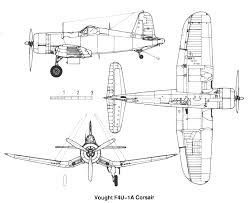
As for the Corsair, I can see that the gull wing would reduce the overhead space when the wings are folded.
As for allowing the wing to join the fuselage to join the fuselage at 90 degree, neither the Corsaid not Stuka have their wings attached at 90 degrees. Look at the 3-views.
-
 1
1
-
 1
1
-
-
Two of the famous aircraft of WWll were the Stuka and the Corsair. Both were designed with gull wings. I wonder what the advantage of that design was over the usual horizontal design.
-
That method sucker, big time. Because the corflute for the shapers was cut with the columns going up and down, there wasn't enough surface area for the glue, so the sheet did not glue down. Also, they did not have resistance to sideways moving, so bent to the trailing edge when the sheet was pulled down. That's why the Clark-Y looks like a symmetrical one.
I've decided to go back to scratch and cut ribs. I'll still cut them from corflute, and with the columns vertical, but before I glue them down, I'll put a strip of masking tape along the top and bottom edges of the ribs to give the glue something to stick to. It makes it easier, too, to glue ribs as there's not much room to get a glue gun into the shapers after the first one has been glued. Ribs can be glued one at a time. Considering the weight of the plane when built, I don't think that it needs wing spars. This plan is the first I've seen where a spar is used in a corflute wing. The columns run horizontally from root to tip, and that's a pretty strong structure.
-
An almost perfect solution!
-
1
-
-
Here it is:
-
1
-
-
According to the specs of my motor
Voltage (V) = 6 volts
Voltage constant (Kv) = 3026
Then
V x Kv = RPM
6 x 3026 = 18,156 RPM
The torque Constant (Kt) = 1355/Kv = 1355/3026 = 0.44
And now I'm lost. It's bedtime so I'll go looking for answers tomorrow.
-
Here's one to think about:
-
1
-
-
Can't. It has a cone molded on the hub.
-
Since I'm building the Lawn Dart from scrounged materials, I am going to use the motor out of the Easystar 1 that I used to have. The Easystar weighed 24 oz (680 gms) with a 6V NiXX battery pack. I don't know what the Lawn Dart will weigh as yet, but it is pretty light.The motor is a Multiplex Permax 400. The only performance data I can find is for when it is getting 7 volts or better.
The prop was a 5x4, but in pusher configuration, but the Lawn Dart will need a tractor prop. I haven't made the landing gear yet, so it could be long to get the tips off the ground, as long as the AoA when sitting is less than 15 degrees.
Any suggestions?
-
It's good that people are giving consideration to perceived drawbacks of using steam. The first step to solving a problem is to identify the problem.
With due consideration to all other factors, I think the big killer of a steam engine in any for of transport is the cost of regular certification. Can you imagine the requirements CASA/RAAus would impose in relation to boiler certification? Then there would be the requirements demanded by the WH&S regulators. Finally, where are you going to find a qualified boiler certifier?
I reckon that it is possible to make a steam engine system that could efficiently power an aircraft, but Regulation would make its use so expensive that it would cripple the economic value of the product.
-
1
-
1
-
-
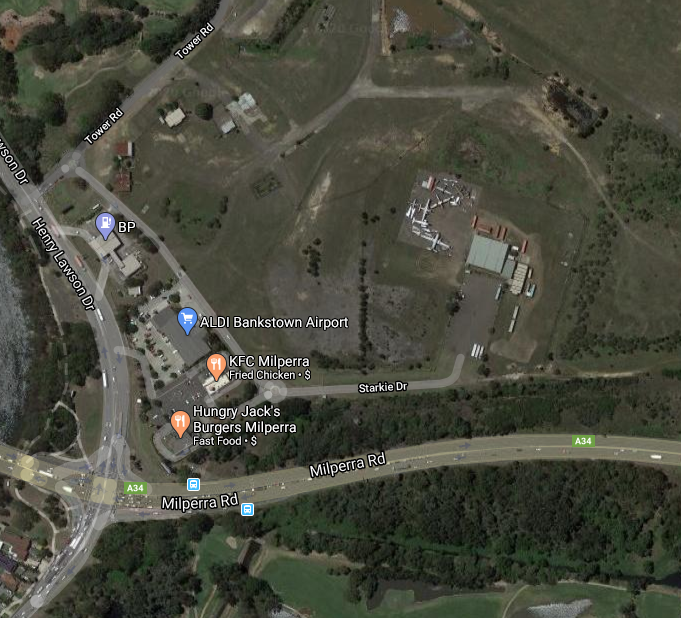
No, HJ's, Aldi KFC and BP were off the fenced airport boundary. Your joy flight site would have been at the southern end of the north-south runway that the current lease-holders closed so they could commercialise the land on the northern boundary.
The corner of the airport near Milperra Road was a swamp which became a dumping ground. I'd hate, as a tenant, to have to suffer the consequences of a soil pollution test in that area.
-
Are we going to set some parameters for this discussion?
The first one would have to be Torque, then operating RPM. This would let us talk about Horsepower to take the discussion into the colloquial, which most people consider the best criteria for an engine.
Following those, we would have to put a limit on the weight of the system. That would determine the number of cylinders our engine had. It would also affect the design - Two or Four Stroke.
Then we would have to look at fluid supply and recovery.
I'm assuming that we would use a compressed gas fuel.
-
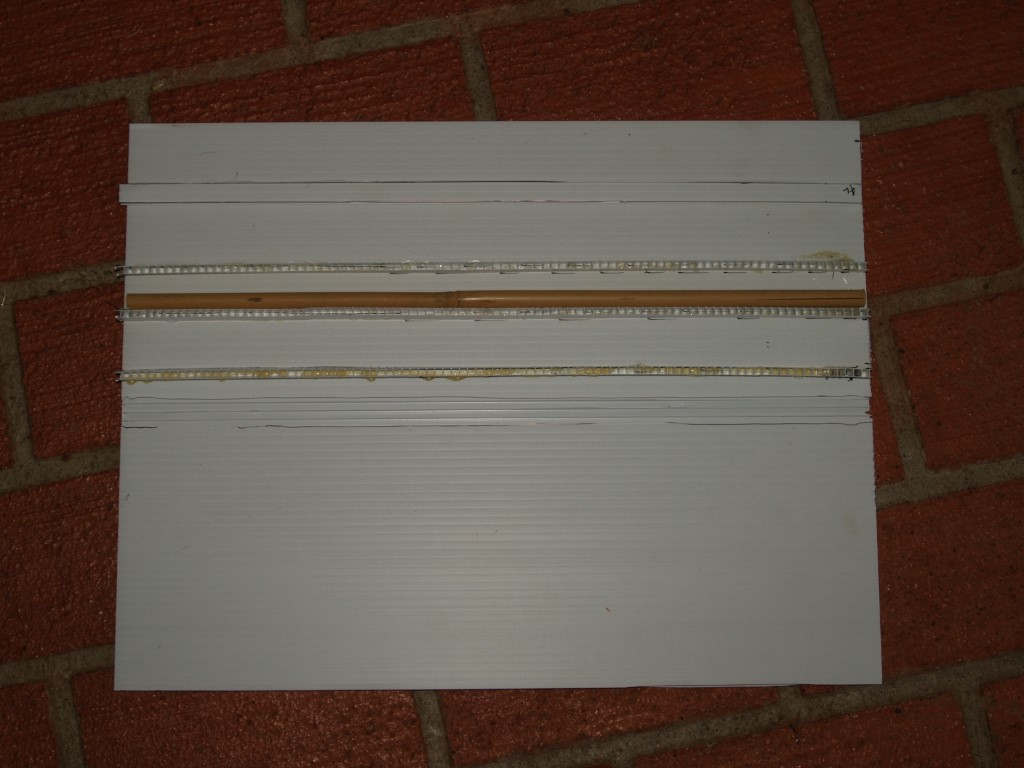
I think it's supposed to be a Clarke-Y. I made the other half of the wing today, and before I closed it up I took a photo to show how the shapers and the spars went in.
If I made these wings again, I think I would use the printed aerofoil shape to make template from wood, then make a stack of rectangular pieces of corflute and cut the aerofoil shape with my bandsaw. I'd get a more accurate shape.
-
2
-
-
Isn't it against the law to have carnot knowledge?
Only if its with an imbecile.
-
 1
1
-
-
I would think that a steam turbine would be much lighter than a piston engine
See. Someone with other experiences has proposed an alternative to a piston-based system.
-
It will never be lighter than you could build an infernal combustion jigger
NEVER say, "Never."
Man will never fly. Man will never go to the Moon. Man will never give up.
-
This is the brake spring for Harleys with a 45 cu in engine:
The price is in $US, but postage is ridiculous.
-
1
-
-
There are lots of videos on Youtube showing how to get the last drops out of a pressure can by recharging the can with compressed air. They usually say to use 90 psi. Other videos will show you how to put a tyre valve stem into a pressure can so that the you can refill the useful contents, then insert the valve core and pressurize the can.
Steam powered engines in planes was left behind a hundred plus years ago, now I wonder why?Sarcasm or a real question? I'll take it as a real question.
Why not have steam power? Who would have thought that diesel engines would work in small aircraft? We know that the Junkers Jumo 205 aircraft engine worked for the Germans. It was successful as a power unit for non-combat applications such as the Blohm & Voss Ha 139 airliner. Its more fuel-efficient operation lent itself for use on Germany's few maritime patrol flying boat designs during World War II, such as the BV 138 and BV 222. These were all big aircraft. How many cars were powered by diesel engines in the mid-20th Century? Not nearly as many as now.
70 years of development in materials science has improved the power to weight ratio of these engines and the efficiency of their energy conversion. Why not steam engines?
The big difference between Internal Combustion Engines (ICE) and steam engines is how the pressure that moves the piston is created. In an ICE, the high pressure gas is created by burning fuel inside a confined space (the cylinder). In a steam engine, the high pressure gas is created outside the confined space and introduced to it. In both cases, the flow of gas into, and out of the confined space is controlled by a valve system. It would be quite possible to convert an ICE to a steam engine simply by connecting the steam supply to the intake manifold. (Disregarding rusting) It is interesting to note that a steam engine, like an electric motor, produces maximum torque as soon as it is started.
Here is a video which shows two types of boilers used to produce steam for industrial purposes.
The dryback boiler design would be most suitable for adaption to a vehicle engine as the fuel burn is not continuous. Once maximum pressure has been reached, the fuel burner is turned off (or back to just a pilot light) until the steam pressure drops to a determined level. This is exactly the way a workshop air compressor and tank work. It would not take much to miniaturize the design of an industrial boiler to a size suitable for a small vehicle power plant. The flame is contained within the structure of the boiler, and for a small engine, one can imagine that a 9 kg bottle of propane would last a while if the air/fuel mixture was set correctly.
-
1
-
-
The smell of the Western Red Cedar in the place used to make me ill. Great when you get air sick as well.
-
Vale Australian Aviation Museum, Bankstown.
When I was at Bankstown Airport last week, I noticed that the Australian Aviation Museum was gone. No planes. No buildings. Nothing but a redevelopment construction site. Also gone are the old Chieftain Aviation building and the other buildings at the corner of Tower Road and Starkie Drive.
You can't let aviation history and nostalgia stand in the way of non-aviation commercial development.
-
1
-
-
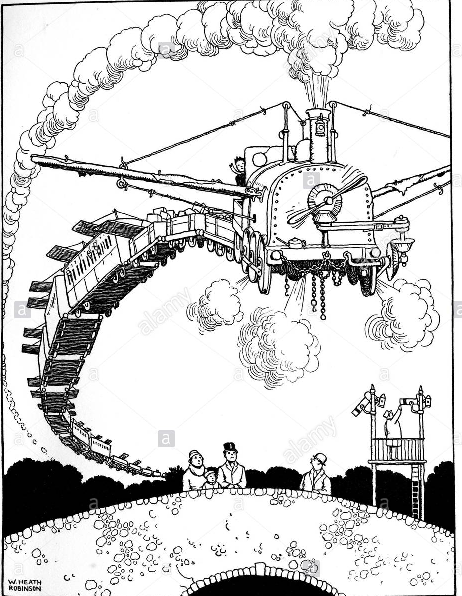
The possibility of using a steam engine in aviation will depend, as with all power generating systems, on the total weight of the system compared with the weight of an internal combustion engine. Here is a video of a proof of concept that shows that, with further refinement, a steam engine could swing a prop.
A really big advantage of a steam engine for an aircraft is that its power output is not diminished by air density at altitude. The steam engine relies on increasing the vapour pressure by heating water. Boiling is the process by which a liquid turns into a vapor when it is heated. The boiling point of a liquid depends on temperature, atmospheric pressure, and the vapor pressure of the liquid. When the atmospheric pressure is equal to the vapor pressure of the liquid, boiling will begin. The purpose of the heat source in a steam engine is to vaporize water, so, if the atmospheric pressure is reduced, then the vaporization occurs at a lower temperature. This produces "wet steam" which is a mixture of gaseous water and liquid water droplets. If wet steam is heated further, then the droplets become gaseous, increasing the pressure if the whole mixture. If the boiler tubes are kept at 100 C, then at altitude, the boiler will produce superheated steam.
In the proof of concept model, it is easy to see that certain modifications are needed to make the system practical. A pump would replace the pressurized water tank to feed water to the boiler. Perhaps a condenser could be fitted to recover some of the water and return it to the tank. Maybe a tank of compressed air could be included to improve fuel combustion at altitude. There are probably many suitable light-weight materials that could be used in the construction of the engine components to further reduce weight. Fuel storage could be adapted from automotive systems.



Unfortunately a fatal crash near Maitland Airport 17/5/20
in Aircraft Incidents and Accidents
Posted
Why couldn't he say that planes built from kits or plans are subject to similar rigorous pre-registration inspections as Hot Rods and other modified motor vehicles have before they are allowed out on public roads?
The meeja never questions the build quality of a motor vehicle that leaves the road for non-mechanical reasons.