


old man emu
-
Posts
5,297 -
Joined
-
Last visited
-
Days Won
78
Content Type
Profiles
Forums
Gallery
Downloads
Blogs
Events
Store
Aircraft
Resources
Tutorials
Articles
Classifieds
Movies
Books
Community Map
Quizzes
Videos Directory
Posts posted by old man emu
-
-
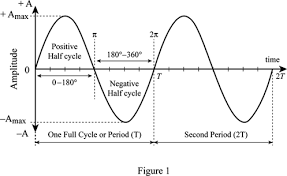
The hertz is defined as one cycle per second. The hertz relates to a system where a feature of a Dependent Variable varies over time. In the illustration, the Dependent Variable is the Amplitude (or distance from a reference point), and the Independent Variable is Time. Probably the best way to describe a "cycle" is graphically. In this illustration, one cycle is the distance from one peak to the next, or from one trough to the next.

If in this illustration T = one second, then the illustration shows one Hertz. If you squeeze the peaks and troughs together, you get more cycles in the time period, "T". More cycles in the same length of time means more hertz per second.
-
Ohm's Law
Electrical injury is a physiological reaction caused by electric current passing through the body. The injury depends on the density of the current, tissue resistance and duration of contact.
The Figure shows a person connected to a voltage source. There are connections to the left hand and the left foot. The “total body resistance” of the person is composed of the very low (approximately 300 Ω) internal body resistance plus the 2 skin contact resistances. The skin contact resistance will usually be between 1000 and 100,000 Ω, depending on contact area, moisture, condition of the skin, and other factors. The skin thus provides most of the body's protection from electric current.
alt=An external file that holds a picture, illustration, etc. Object name is eplasty09e44_fig3.jpghttps://www.ncbi.nlm.nih.gov/pmc/articles/PMC2763825/bin/eplasty09e44_fig3.jpg[/img]
The total resistance from red to green is the sum of the resistances, let's say dry, soft skinned hands ~ 50,000 ohms, and internal resistance of 300 ohms.
50,000 + 300 + 50,000 = 100,300 ohms.
Voltage supplied is 240 VAC
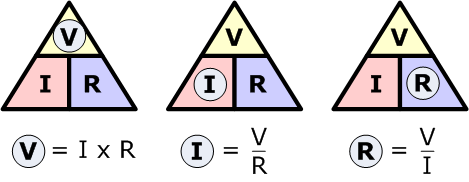
Current = V/R = 240/100300 = 0.00239 Amps = 2.39 MA
Currents at about 1 milliamps (MA) can cause tingling. Going up to 75 MA can actually trigger ventricular fibrillation which could lead to death. A reading of 1500 milliamps would cause severe tissue and organ damage.
-
you've got me with "kangarooing the dike"?
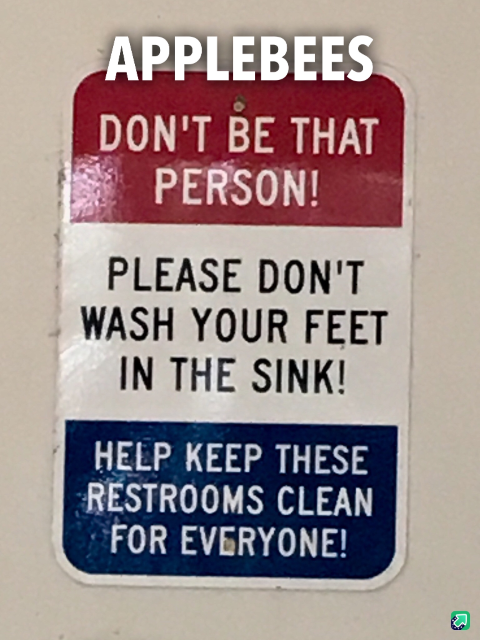
"kangarooing" is the act of squatting over your toilet.
Then there's the other practice that is associated with a religion:
-
Their dunnies are not as good as ours either
The first time I went to the USA, I got into my hotel room to find that the toilet bowl was full of water. The Room Service guy must have thought I was some back-country hick when I called to report the broken toilet. Still, a toilet bowl full of water is way better than a squat hole in the floor. It's amazing to see those in the toilets of an international airport. Gives "kangarooing the dike" a whole new meaning.
-
 1
1
-
 1
1
-
-
It always astounds me when the American 220VAC is done with 2 phases 180 degrees apart.
Why?
If there's a way to be contrary, the Yanks will be.
-
1
-
1
-
-
Come on, it should have had its first crash by now!
Festina lente, my son. Festina lente. Rome wasn't burnt in a day.
I got this done today. That hot glue makes great filets.
Pylon 500 said, "I'm assuming that the 'airfoil' shape on the top of the cabin is later cut off, and the one piece wing sat on the now flat top?"
I had a look at the plan and the fuselage and realised that you are correct. I'll cut the aerofoil shaped bit off along a line from the rear cabin bulkhead to the front one. The wing will then rest on the top of the fuselage sides.
The wings should be made today (Monday 11/5/20)
-
3
-
-
Yes, the aerofoil shape in the plan is simply there to show the thickness of the spars. The centre section box is hollow which allows the dihedral brace to set the dihedral and lets the wing sit on the top of the fuselage. I'll tape the wing joint with 100 mph tape.
I used to have a glider with a main and rear spar which slid into tubes on the opposite wing. These had a tendency to come loose through wear. Joining wings like that is OK if you have to transport the plane. It makes for a smaller bundle, but I've just got to go though my side fence to get into the park I want to fly in.
-
I don't know how conversant you are with Excel, but it is possible to create what you want using that program. It can be set up to highlight time-based maintenance tasks etc. Just remember that the designs you have seen are often not much more that an Excel spreadsheet that has had pretty colours and unusual fonts used to make it appear appealing to the eye. I'm no whizz at using Excel, but if you made a list of what you wanted your system to do, then someone experienced with Excel could run up something useful for you in no time.
As for saving and restoring your data, all you need is a flash drive and to remember to back up the Excel data to the flash drive every time you add to it.
-
Go into the machinery maintenance apps and find what you like in them. Put the good points down on paper, then create something in Excel that will allow you to use the points you like.
-
1
-
-
I use this form in RA.
The only difference I see between the RAA form and the VH- Maintenance Release is that the MR comes in a book with each form set numbered, and the book is kept. The RAA one can be printed on both sides of a sheet.
-
A.Delfosse BADGERY, on whose family property at Badgerys Creek, Sydney, made one of the first flights in Australia, was another early pilot whose war service affected his mental state. In 1913 he received his pilot's certificate (No 717) at Hendon. He joined the RFC and was posted to Egypt early in WWl. Whatever happened their shattered his nerves and he was sent back to England for duty as a flying instructor. There, his nervous condition robbed him of the ability to even fly by himself. No doubt the frequent crashes and deaths amongst students and instructors further ruined his love for flying. In the end, he was discharged, "Medically Unfit" and returned to Australia, where he seems to have moved out of the aviation business.
Here's his Service Record View Digital Image
-
 1
1
-
-
To get a fair price comparison, ask a LAME how much he charges for inspecting the engine and airframe log books, Maintenance Release form and ADs/Service Bulletins during the course of an Annual/100 Hourly. I bet that most LAMEs don't charge for that essential examination when setting up the worksheets for the job.
The other thing is that logbook compliance is only as good as the last good entry. I've seen logbook entries that are scant in recording what has been done, inspected or replaced during service, and others that have complete details of what was done.
Further, it is the aircraft's owner who is responsible for ensuring that the manufacturer's maintenance schedule is followed, and that ADs and Service Bulletins have been attended to. If you are going to have your aircraft services by someone else, then when you drop off the keys, you should also drop off the results of your searches into published material relating to your aircraft. Further, you should insist that logbook entries are comprehensive and complete, based on the published material.
-
2
-
1
-
-
Sorry about the slightly misleading title, but I couldn't think of a better one.
Anyway,
This talk is about team leadership and uses as its example United Airlines Flight 232 which crashed at Souix City Airport after a compressor fan failure in one of its engines. The talk covers the incident with sufficient detail, before applying the actions of the crew to the topic of cockpit cooperation and team leadership. I've seen several documentaries about this incident, but this talk focuses on the relationships within the cockpit and how those relationships resulted in an unexpectedly good outcome. In fact, if it wasn't for a chance aerodynamic effect just 50 feet above the runway, the result might have even been better.
-
1
-
 1
1
-
-
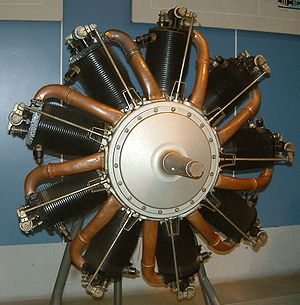
It is essentially very strong magnets that were in a case that rotated around a field of wires in a pattern, these wires were fixed to the frame. Rotating around these wires that were stationery the casing was attached to the load this case be the propeller, the casing spun.
Does that remind you of an early IC engine?
80 hp Le Rhône Model 9C
-
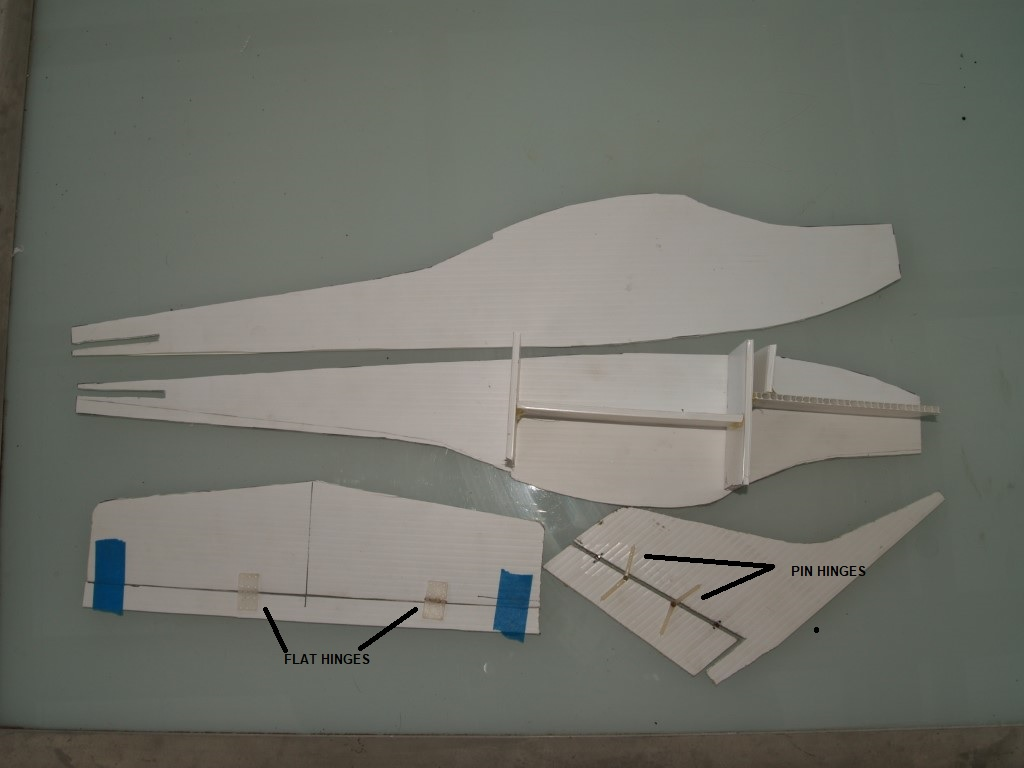
Someone dared ask for me to update this build. I've cut the fuselage sides; rudder/fin and tailpane/elevator. I've found a small prop for the brushed motor. I just need to make a tight fit for the prop on the motor's output shaft. I was digging through my 30-year-old bits'n'pieces box and found some pin hinges for the rudder, and some flat hinges for the elevator. The bulkheads and floors have been glued together with hot glue.
Since I'm spending the day home-schooling my grandson, I'm not moving forward with the plane construction. However, he and I have nearly finished a puppet of the character in his English writing work. I'm not impressed with the lack of information that the school has given in relation to teaching arithmetic. If I knew what the leanring path was that he had to travel I'd be more at ease with teaching him.
Here's where I'm up to with the plane:
-
5
-
-
Would you class the Bessler as a "Gotta light?" aircraft?
-
 1
1
-
-
Every rubber band I go to utilise, generally snaps as soon as I stretch it!
You are supposed to roll it on ... not stretch it over.
-
1
-
1
-
-
Don't forget that this is a trainer, and a bit of fun to make during lockdown. Better to buckle a half-priced lawn dart than a $1000 thing of beauty.
No doubt there will be a few more rubber bands used to ensure wing security, but some much larger balsa and plywood jobbies hold their wings on with a couple of nylon screws, so what's wrong with some rubber bands?
-
Ultra high quality hot glue gun stuff from the $2 shop. C'mon! It's a lawn dart, not a Concurs d'Elegance entrant.
By the way. I looked at the A4 print out. It is provides the same sized pieces as the A3 print. You just have another section of fuselage to join to the front and rear.
-
1
-
-
All the theoretical knowledge in the World is useless in completing a task that involves problem solving and the wielding of tools. The only way to confirm competency of a student in manual task like aircraft maintenance is to test the student's ability to actually do the job correctly. You either develop a course that's "hands on" or you take your bl**dy hands off it.
-
2
-
2
-
-
Coronal Mass Ejection (CME) could disrupt all electronic communications on earth. If this was to happen almost all of our electrical systems, electronic gadgets, and all our global communications systems would fail.
If it happened, the only twitters you'd know about would be from the little birdies. Can you imagine the psychological conditions of the Millenials?
-
1
-
1
-
-
What I don't like is the sort of course where the taught material consists largely of the regulations.
I'm with you on that. The reason that people have designed courses that accentuate the Regs, is that the designers have not got an answer to the question "What do attendees want from the course?" That's the second question that needs to be answered after "Is there interest in a course of this nature?" The stupid thing is that the required content for an aircraft maintenance course is already set out in the Certificate ll in Aircraft Line Maintenance course. training.gov.au - MEA20518 - Certificate II in Aircraft Line Maintenance
Now to be issued with a Certificate, a person has to receive the training from an approved training organisation, but there is no rule against an experienced person or persons training others to meet the competencies outlined in the course details.
When my Dad was trying to teach me the skills associated with some task, he always said, "Learn the lurk, not the work." By this he meant that I should learn methods that made a task simpler to complete satisfactorily, but not to cut corners on quality. In running a hands-on course, there should be a leaning towards teaching people the little tricks that make a job easier. Here's an example that's not quite aircraft maintenance related, but could be useful. Before cutting plywood shapes from a sheet of plywood, lay down a strip of masking tape and draw the cutting line on the tape. Then when the cut is made, the edges of the cut will not fray.
So, an good hand-on course would teach you how to, perhaps, carry out a leak-down test on the engine, but while doing so, show you how to prevent the propeller spinning while you are doing the test. These untold tips'n'tricks are picked up either by your own experience, or passed on to you from another person's experience.
-
4
-
-
Where did you get the templates to download?
Open the Youtube file and you will find a link to the plans in the info underneath. You can download the plans in A3 or A4 size. Four sheets for A4 and two for A3. I'm using the bigger A3 size and it cost me 40 cents at Officer Works to get the two sheets printed. I'm using 5 mm corflute from Bunnings @ $9 per sheet (99 x 600). You need two sheets because the plans don't have a drawing for the belly and top skins. One sheet will give you the wings and fuselage sides and bulkbeads. The other sheet is needed for belly and top skins and for wing spars. The video shows the use of a balsa strip to strengthen main spar. I'm going to use a bamboo garden stake. No use wasting good balsa on a lawn dart!
Depron from Bunnings is about $16 per sheet. I scored some Depron, so I think I'll use the A4 plans, which I printed myself, to make a silhouette glider for my grandson. I'll use corflute for the wings and tailplane.
Instead of hauling out my box of balsa, I used some 3 mm ply for bulkhead A and for the dihedral brace. I also made the tail skid from balsa. I'll probably dig out some 5 mm ply for the landing gear block. If you have a bandsaw or scoll saw, it makes it easier to cut out the shapes. You'll need some sticky tape to seal the edges of the fin, tailplane and possibly front of the fuselage after you cut them, otherwise they will trap the oncoming air. Also, if using corflute, cut any vertical bulkhead with the tubes of the corflute running top to bottom. That makes the piece more crush resistant due to the strength of a column.
-
1
-
-
I now live in a straw bale house with a hanger 20 meters away
Good luck keeping the wolf from the door!





OME's Lawn Dart Build
in Remote Control
Posted
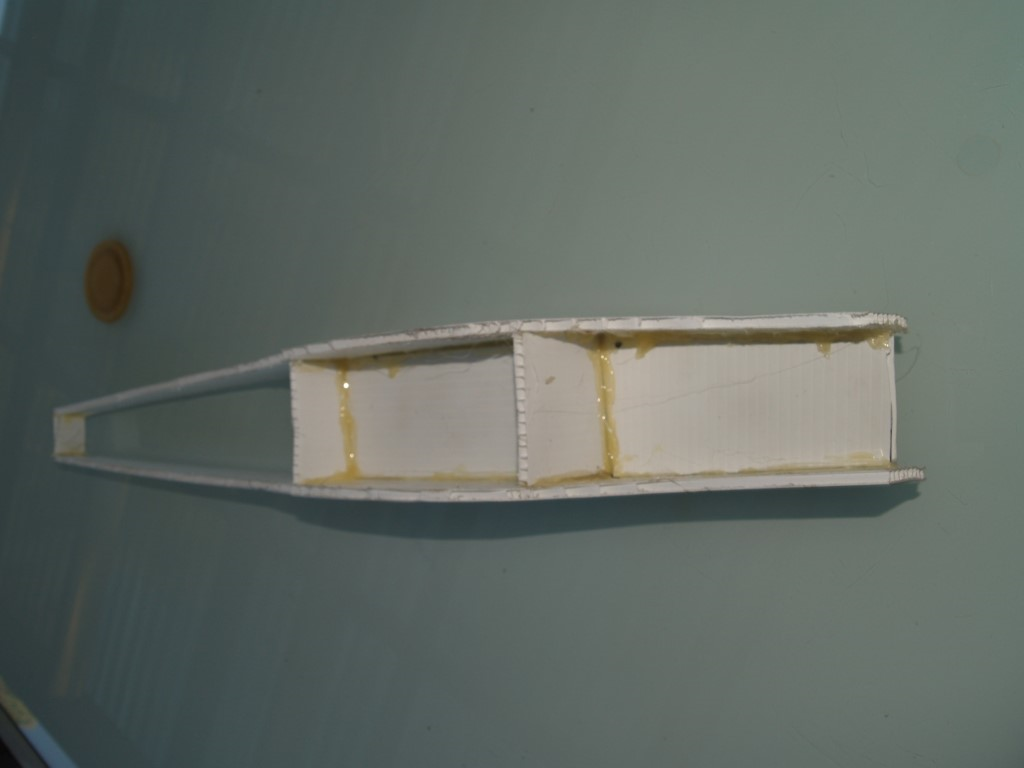
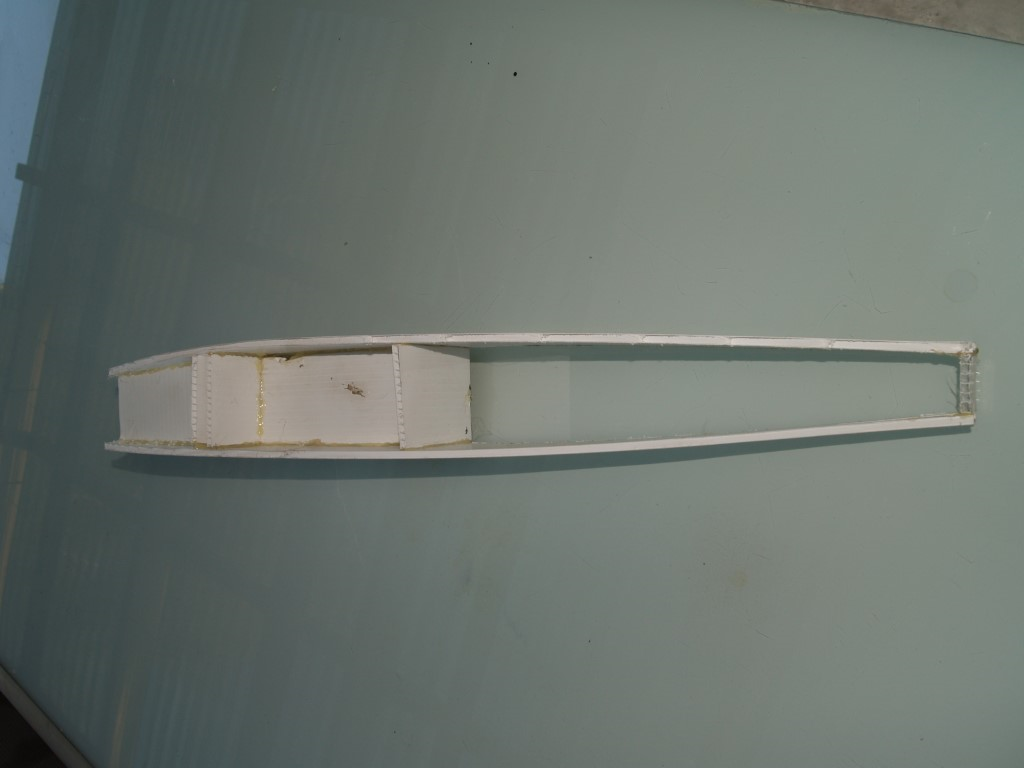
A tad more done today. Half a wing.
To get the corflute to fold back on itself without splitting, you have to cut the inside of the bend. This means cutting the surface. To do this, you use a pair of hook-blade cutters attached to the sides of a piece of plastic to get the width.
The next step was to fit span-wise strips of corflute to act as stoppers when the corflute was folded over to form the airfoil shape. The plan calls for a strip of balsa to be glued in as a main spar, but I couldn't be bothered hauling out my balsa supplies, so I used a bamboo garden stake.
Then I folded the corflute over, and stuck the folded half to the span-wise strips. This created the airfoil shape.