


old man emu
-
Posts
5,297 -
Joined
-
Last visited
-
Days Won
78
Content Type
Profiles
Forums
Gallery
Downloads
Blogs
Events
Store
Aircraft
Resources
Tutorials
Articles
Classifieds
Movies
Books
Community Map
Quizzes
Videos Directory
Posts posted by old man emu
-
-

When I first saw this in Silly Aviation Pictures, I thought it was someone's attempt to protect tier plane from COVID.
-
 1
1
-
-
I believe someone has just put together a J in Bankstown (vh-utz)
I think that I saw VH-UTZ at Rotorflight, Bankstown in February. I'll be at Bankstown tomorrow, so I'll make some enquiries.
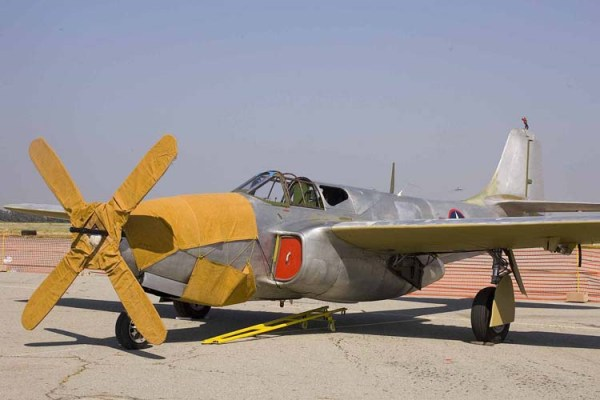
The Camden Museum of Aviation, a private aviation museum located at Narellan, NSW, has an Army Bell. Despite the hard work of the volunteers, it is a shame that it is no longer open to the public. They have an amazing array of aircraft, including an Avro Anson, and Vultee Vengence, plus part fuselages of a Mosquito and Beaufighter. There are engines and all sorts of aviation paraphernalia.
http://www.aviationmuseum.eu/Blogvorm/camden-museum-aviation/
The address is given as Harrington Park, but that's because it is on the Harrington Park side the road. Until the suburb of Harrington Park was created, the location was Narellan
-
 1
1
-
 1
1
-
-
To me, the Bell 47 is the epitome of what a helicopter should be: vertical take-off; hover/very low ground speed, and, of course, superb visability. I first fell in love with the Bell 47 back in the late 50's early 60's when I watched the TV show Whirlybirds, which featured the 47G and 47J models.
An interesting aside. Whirlybirds was produced by Desilu Studios, which was the producer of I Love Lucy. One particular episode of I Love Lucy became pivotal to the Bell 47's public image as the definitive light helicopter of the 1950s. In the episode "Bon Voyage" Lucy Ricardo misses the sailing of her trans-Atlantic ocean liner and commandeers a friendly pilot of a Bell 47G to fly her to the ship. Desilu Studios, intrigued by the Bell 47 and its manufacturer, began discussions with Bell Aircraft about how the entertainment potential of the Bell 47 might be further developed for a television audience. The result of this collaboration became The Whirlybirds.
-
2
-
1
-
-
The key to good voice radio communication is the elimination of umms and arrhs. and the knowledge of what you are going to say. The phrases that we use, say during a session of circuits and bumps, are set out for us in many publications. We know that we are going to use these phrases, and when. What all student pilots should do is practise using the language of circuits while they are not actually flying. There's lots of spare time to practise while driving to the airfield.
When actually making a communication there are a few steps to follow:
- Rehearse what you are going to say before you move on to the next steps.
- Listen. Before you key the mike, listen to determine if anyone else is broadcasting. You don't want to cut out someone else's transmission. If you are flying at a controlled airport, the blokes in the tower will have you under observation, so they know where you are in the circuit. It's the other aircraft that you are really informing of your proposed actions.
- Key the mike and pause. Some communication systems take a second or two to connect, so if you start talking immediately, you will "clip" your transmission.
- Say your piece in a normal speaking voice. You are not singing the lyric to Chopin's Minute Waltz, nor do you need to drag each word out.
- Know what you expect to hear back from other users. If you are receiving a clearance know how it will sound and what parts you need to confirm by a read-back.
-
2
-
 1
1
- Rehearse what you are going to say before you move on to the next steps.
-
OK. I'll look into that. I was thinking of adding a flat centre-section to increase the wingspan to get the 1: 1.5 ratio. I could make another wing with the dihedral starting from the outboard ends of the centre-section. If the plan calls for 7 degrees of dihedral now, how many degrees do you suggest to increase it to?
-
It's hangar - not hanger.
That's what I said earlier.
-
1
-
1
-
-
Found this on an RC Groups thread
For more or less "normal" looking designs the stabilizer and elevators together should be between 15 to 20% of the wing area. The fin and rudder together should be around 12 to 15%. From there it all depends on how long the tail is, the wing's aspect ratio and a bunch of other things. There's no one perfect size to any of this stuff unless you're making a very specific model to fly in a very specific manner. Even then there is still an acceptable range but the range is tighter.
The portion of the tail surfaces you use for controlling the model will depend on a lot of things but generally if you make the elevators about 1/8 to 1/4 the width of the horizontal tail and the rudder from 1/5 to 1/2 that's fine. The 1/2 being more for gliders or very slow flying models that do not have ailerons.
This is a really rough approximation so take it for that.
-
I will see if I can dig out the formula.
Looking forward to seeing that. I always prefer a formula.
-
At this stage there are no ailerons, so snap rolls are out of the question, unless I twist the wing by accident.
-
I think that this rough rule of thumb could be greatly influenced by the airfoil profile, which I think some have alluded to with technical words.
-
I had a search around and came up with this design. It's made from Depron, but corflute is half the price.
https://www.youtube.com/watch?v=MGCBfFOSgGI:578
I hauled out my old modelling stuff and found a 6V brushed motor from a foamy glider I once had. I've got a couple of radios systems, but I think I'll just start off with rudder and elevator. I'll use Ni-Cads, because I've got the charging equipment. I've got various types of hinges and control rod ends. I'm going to use mini servos, although I do have a handful of normal-sized ones. I've got axle clamps and collars. And I have plenty of hot glue sticks.
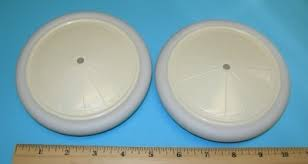
I downloaded the templates and had them printed at OfficeWorks (40 cents). I got the corflute from Bunnings at $9, but I'll need another $6 sheet for the top and bottom of the fuselage. I'll get down my box of aged balsa, or maybe just use some ply for the firewall and landing gear block. I have some Williams Brothers Antique wheels that might not be too heavy.
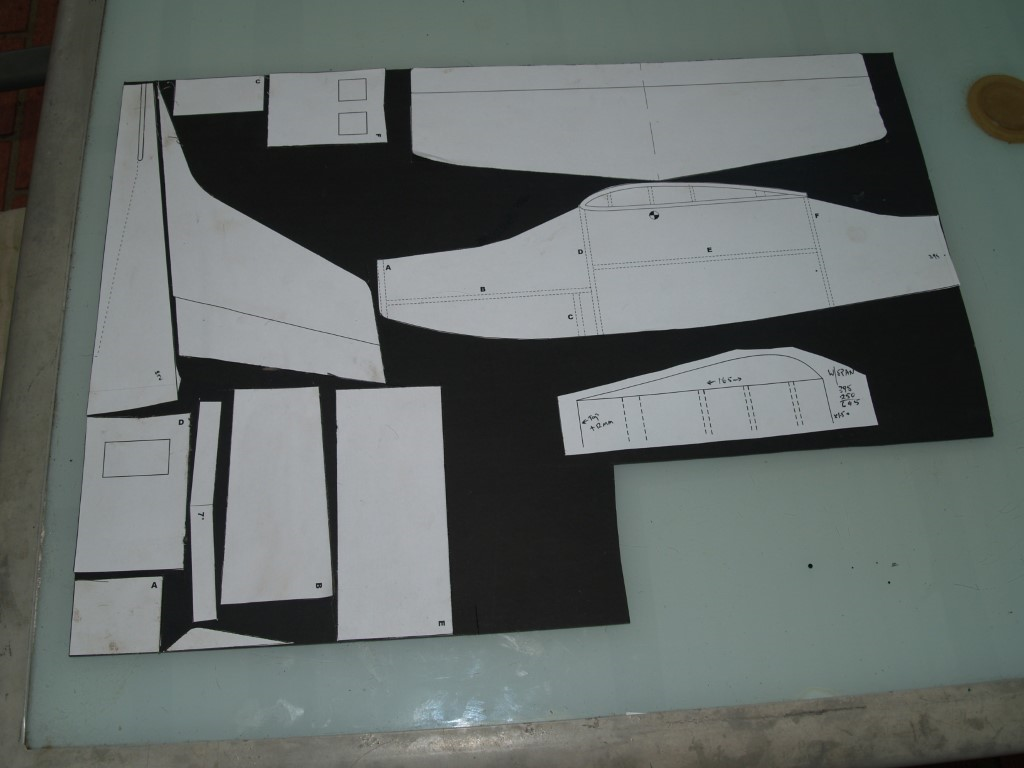
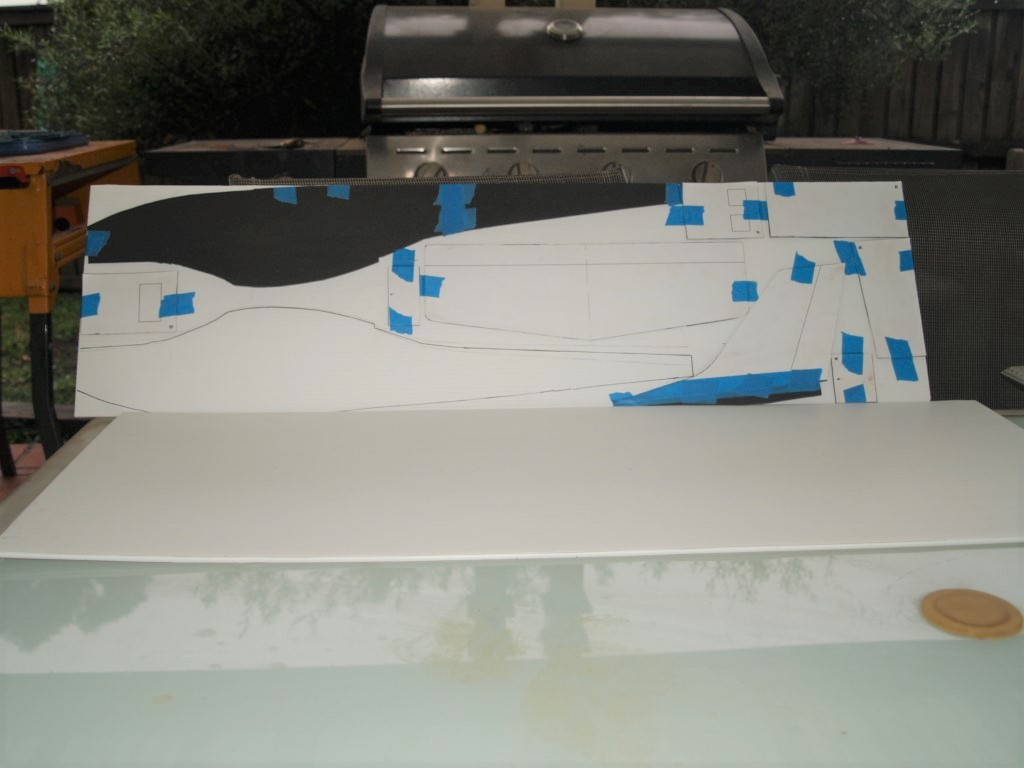
So far, I've made templates for the fuselage components and nested them on the corflute sheet.
The fuselage came out at 645 mm. If I wanted a length to wingspan ratio of 1:1.5, I'd need about 970 mm. The standard sheet is 900 mm, so I'll have to accept a 1:1.4 ratio. I think that's still withing the correct range for this type of plane, especially with a Clarke-Y shape.
-
1
-
-
You wouldn't knock back one if it was free!
-
Get yourself an RC flight sim.
But if I get one of those, I be spending my time with that and not regaling you all with my wit and wisdom here.
-
3
-
1
-
-
The Flying Flea.Now I'm not sure if I countered the comment, or agreed with it?
They do fly!
-
if you look at an F104 and then look at a U2, then maybe the answer is no
Those are a different kettle of fish. I'm talking about the things we fly.
Foxbat: Length 6.3; W/Span 10.1; W/L 1.6
J230: Length 6.55; W/Span 9.55; W/L 1.45
There are park flyer RC models availableYeah, costing over $150, RTF. I've got the radios and servos from wayback, I just needed a something to put them in. Don't forget that I'm trying to teach myself how to fly, so I need something cheap, but flyable.
-
The trouble nowadays is that you have to replace your various maps every time CASA adds a full stop.
-
1
-
2
-
-
For something to do, I decided to build an RC plane to fly in the park next door. Nothing fancy. Probably only rudder and elevator and a brushed motor. I did the usual Internet search for free plans and downloaded some for a simple high wing one that I can put together from corflute.
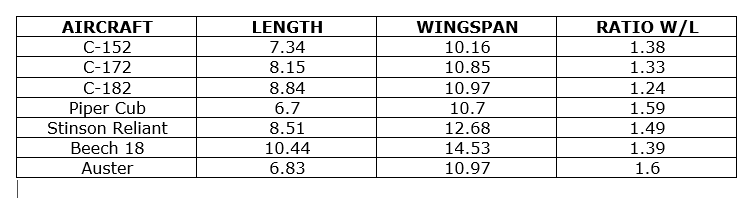
However, the plans did not show the wingspan. For some time now, while looking at aircraft specs, I've thought that wingspan and overall length might be related. There must be some ratio that fulfills the adage, "If it looks right, is probably is right. So I had a look at some common high winged aircraft to see what came up. Here are the results:
As a rule of thumb, perhaps one could say that for a slow flying aircraft the ratio of overall length to wingspan is roughly 1.5:1.
-
1
-
-
I used to cover my WAC charts with clear vinyl and write on them with a china pencil.
-
2
-
1
-
-
What to do if you don't have mobile phone coverage:
-
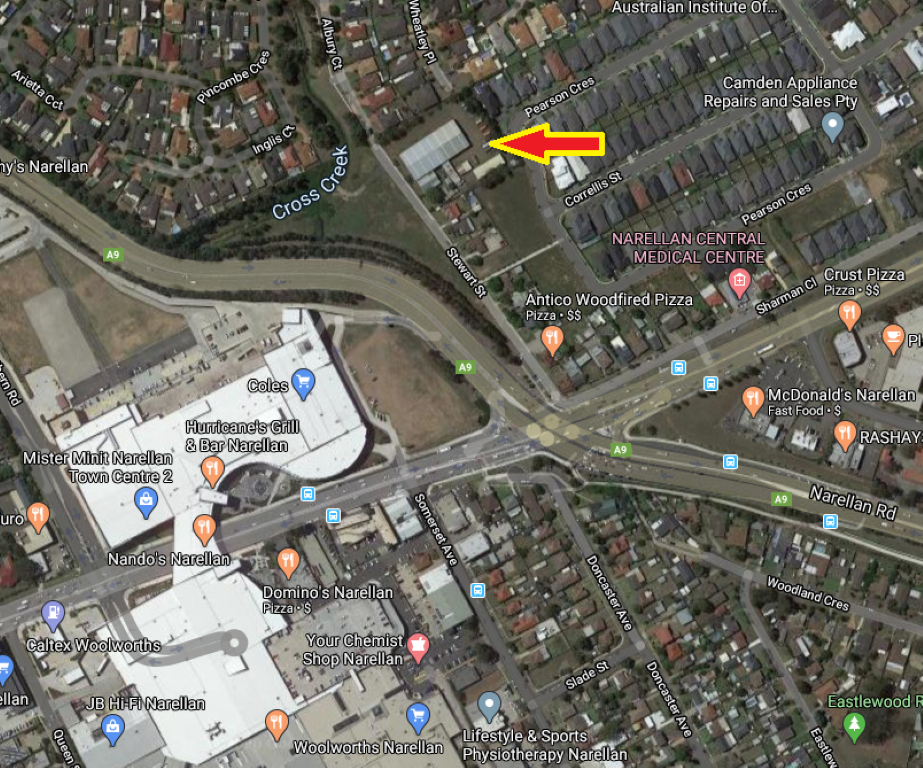
Here's my hanger.
-
5
-
6
-
1
-
-
You can get one off Whitworths for $19.95
Now that's something that every workshop should have.
-
Three things off the To Do list today - I finished the engine service and general bodywork tidy up on my lawn mower, and I got to the can recycling place and got $28.50 for my cans and bottles. Then I went and topped up the petrol in the car and filled some containers so I've got 30 litres on hand. It's amazing when the figure in the cost window is less than the figure in the litres issued window.
I'm tossing up whether to go to Officeworks tomorrow to get some foam sheet to make an RC plane, or to go to the steel suppliers to get the steel to make the bike trailer.
-
1
-
-
-



Navigation Using VOR?
in Aircraft General Discussion
Posted
If everyone used GPS, would AirServices be justified in decommissioning radio-navigation aids?