danny_galaga
-
Posts
2,327 -
Joined
-
Last visited
-
Days Won
33
Content Type
Profiles
Forums
Gallery
Downloads
Blogs
Events
Store
Aircraft
Resources
Tutorials
Articles
Classifieds
Movies
Books
Community Map
Quizzes
Videos Directory
Everything posted by danny_galaga
-

Spitfire Gear up @ Scone, 26 March 2026
danny_galaga replied to KRviator's topic in Aircraft Incidents and Accidents
I'm seeing some indications this is a fake story. -
Spitfire Gear up @ Scone, 26 March 2026
danny_galaga replied to KRviator's topic in Aircraft Incidents and Accidents
Gimme a Beachcraft Bonanza or summink and you'll soon know one 😄 -
Yes, that is my problem, and I have the manual but just winding down the volume on the passengers headset sounds a lot easier than trying to figure out how to do that 😄 Just didn't even occur to me to check that during the flight, until Skippy pointed out out ☺️
-
MGL V6. It was free and people tell me it's worth every cent of that 😄 Skippy, I hadn't even thought of that! I'll see if that helps on the next flight 😇
-
Spitfire Gear up @ Scone, 26 March 2026
danny_galaga replied to KRviator's topic in Aircraft Incidents and Accidents
You are not me 😄 -
Spitfire Gear up @ Scone, 26 March 2026
danny_galaga replied to KRviator's topic in Aircraft Incidents and Accidents
Fantastic scenes in that movie other than the fact he could have just as easily come down in friendly territory. -
Take care moneybox! My last flight was today. With passenger #1 ☺️ I still haven't done my navs so I'm still just pootling around the area. We flew Boonah, over Moogerah dam, over Kooralbyn, Beaudesert, Lake Wyaralong and then back to Boonah. The area is a great place to be stuck 🙂 Might have to go easy depending on this fuel situation though.
-
Flew it today with the capacitor soldered in. MUCH better. While I'd rather fix one thing at a time to solve a problem, at least it's fixed now. I've gone from a radio ranging from bad-ok, to ok-good 🙂 I have to adjust a few things though. The intercom is really loud, but if I just turn down the volume then the transmissions are quieter too. Pretty confident there is a setting to adjust the balance to make the intercom a little quieter than the radio. Remember digital watches in the 80s? How you had to hold this button, then tongue to the right, wait three seconds, click through an indecipherable menu and then somehow the time was set? This radio reminds me of that. I sucked at these PC LOAD LETTER situations back then, and I suck at them now. Stupid radio, adjust yourself! 😄 Anyway, I've brought the instruction book home and will peruse this evening 🙂 Language warning ☺️
- 14 replies
-
- 1
-

-
- aerial ground
- plane
- (and 2 more)
-
Spitfire Gear up @ Scone, 26 March 2026
danny_galaga replied to KRviator's topic in Aircraft Incidents and Accidents
I will NEVER fly a retractable aircraft. I look at all these really talented and seasoned pilots screwing up, and I just know it'll happen to me. -
Yeah, what the hell? T510, please explain!
-
The truck. They were very lucky it hit in the centre, and not the cabin

-
More information. No transponder in the firetruck. Finally occurred to me why I wasn't comprehending the image of the damaged plane- there was enough destroyed at the front that it's tipped back from the reduced weight. Probably obvious to most, but it just wasn't computing in my head. https://www.cnn.com/2026/03/24/us/laguardia-plane-collision-air-canada-wwk
-
Cctv of the impact. I'm amazed the drivers survived, and unsurprised the pilots died
-
ATC radio
-
Both pilots deceased. I'm not sure exactly what the aircraft was doing, if it had just landed. Clearly still going quite fast. I can't get my head around what I'm seeing at the front of the plane. But I'm sure there'll be more detailed reporting soon
-
Why does that picture remind me of the saying 'rolling poo in glitter'?
-
Fingers crossed. Regulator/rectifiers aren't super complicated, so hopefully they can't skimp on parts, unlike fake iPhone chargers, some of which are lethal.
-
I'm pretty happy with my car 115. About 40 hours running so far, solid 14.4V
-
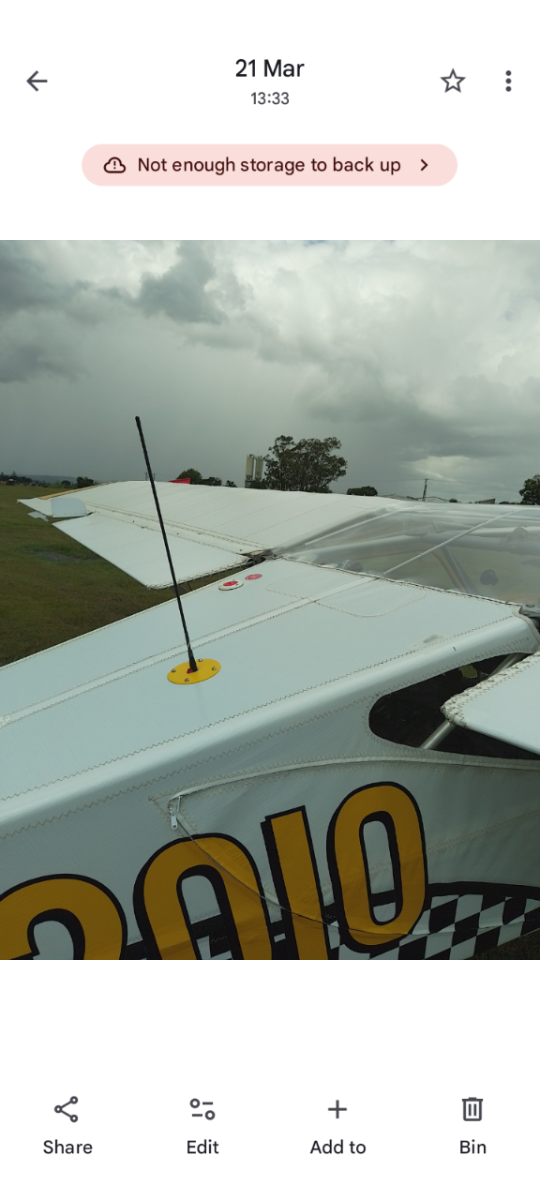
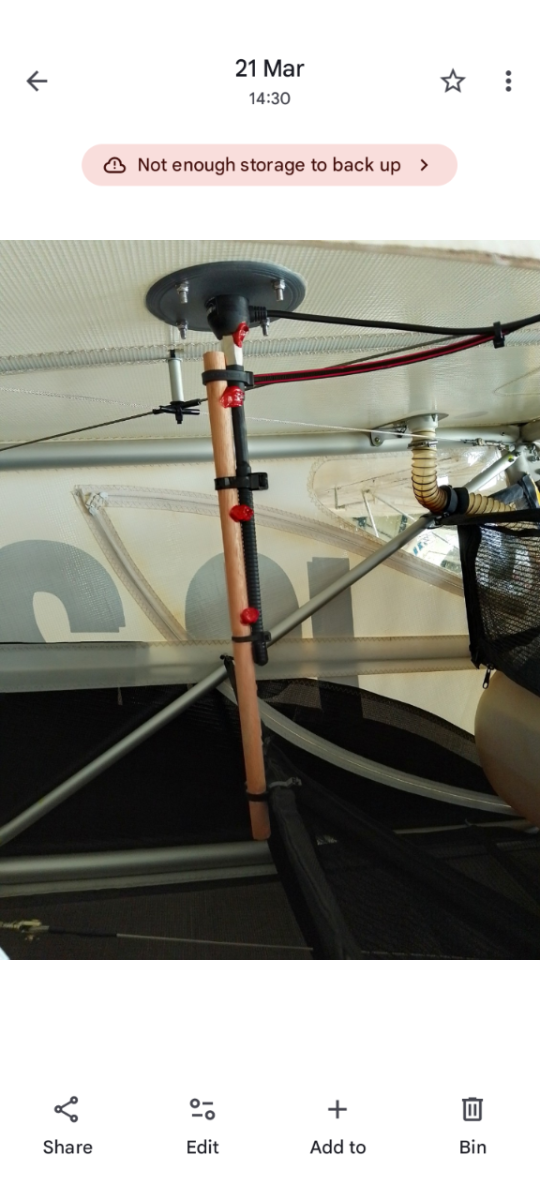
Job done! Is it better? Dunno 🤷♂️ But it's not worse 😄 Didn't get to fly due to the weather though. I'm going to install a capacitor next time. The regulator/rectifier I have isn't supposed to need one, but today I attached one using alligator clips and even though it wasn't an ideal location, near the starter instead of immediately after the regulator, it seemed to help when the engine was running. Internally, the dowel is to steady the aerial as I attached it to the fabric covering. I think this will work well 🙂
- 14 replies
-
- 4
-

-

-
- aerial ground
- plane
- (and 2 more)
-
Well, my plane is now fully registered, so hopefully can tell you about my NEXT flight, with my first official passenger ☺️
-
A nice exchange between controller and pilot
danny_galaga replied to danny_galaga's topic in Student Pilot & Further Learning
If you're talking about my link, the pilot doesn't sound upset to me. -
Wasn't sure where to put this, but the guy did say he learnt something today ☺️ Just nice to something constructive and non dramatic regarding safety for a change 🙂
- 6 replies
-
- 3
-
-
- air traffic controller departure
- takeoff
- (and 1 more)
-
I ask because if you didn't build it, then you are in the same boat as 24 rego.
-
If you are using resin flux, it's really not necessary.
-
I ended up soldering most of my connectors. The main danger with solder, as you mentioned is the wire is stiff right after the connector and could crack or break. But if you run your wiring so that there is little to no movement, it should be fine. I feel safer with solder.