IBob
-
Posts
3,117 -
Joined
-
Last visited
-
Days Won
27
Content Type
Profiles
Forums
Gallery
Downloads
Blogs
Events
Store
Aircraft
Resources
Tutorials
Articles
Classifieds
Movies
Books
Community Map
Quizzes
Videos Directory
Everything posted by IBob
-
sfG I can't speak for the Ventura, but for the Savannah I've come across two numbers: 400hrs and 700hrs. It would be really interesting to know where they came from, as an ex-airforce sheetmetal worker here took about 1700hrs on his. And while I did not log the hours, mine would easily have taken that long too.
-
New member intro with an interest in all matters of aviation
IBob replied to joehupp2004's topic in Just Landed - Welcome
Welcome, Joe. This is a very big site, with a huge historical wealth of information and discussion. And opinions.......we're rarely short of those.........) -
AN-2 crash Kamchatka due icing 20 dec 2024
IBob replied to pmccarthy's topic in Aircraft Incidents and Accidents
Pretty tough winters up there: I spent part of one on Paramushir, just off the end of the peninsula. The houses of the one village....about 2000 people......disappeared entirely under the depth of packed snow, with only raised escape doors sticking up above the surface enabling the inhabitants to come and go. And the weight of that same snow, which just builds up and progressively compresses to ice, completely bowed in the roof of one of our containers........ -
While I can't claim to know about fuel systems on other types, it seems to me the 701/Savannah setup is well thought out and functions very nicely: The 6L receiver tank with level switch buffers any momentary unporting of the wing tanks, while giving 15minutes of early warning of fuel exhaustion. And the fuel return (via orifice) addresses the problem of vapour lock.
-
Marty, that seems very comprehensive. Just some notes: 1. My receiver tank developed a leak from one of the upper fittings: the tank came with fittings in place and I had omitted to check they were tight. The leak did not occur initially and required removal of some plastic round the fitting to remedy. Almost certainly a one-off, but I suggest checking for any dampness on or round the tank during initial trials. 2. The electrical aux fuel pump should give you at least 2PSI once the carbs are full. I did my initial engine runs without wings, with the fuel return line blanked off. Since the pump has a non-return valve, the system maintained the 2+PSI with the engine off when the pump was run then turned off. With wings on and the return line connected, engine off, the aux pump should still give you 2+PSI but this will drop to 0PSI once the pump is turned off: this indicates that your return orifice and pipe are clear and functioning correctly. I did not top my tanks off, just used enough fuel to to flood the receiver tank etc and test for adequate flow. The aux pump delivered 1.2L/min. Assuming you have the Savannah receiver tank (?), the early Savs had no tank vent there. The result was that small amounts of air could become trapped in the upper tank and would give false 'tank low' indications. Typically this would occur when climbing to altitude, as the trapped bubble expanded. Later Savs fixed this by running a vent line from the tank top to the upper LH wing tank.
-
Skippy, the Savannah has a pronounced lip at the front of air outlet, to provide negative pressure there. It also has an airbox, but mounted to the rear engine mount, so not hanging off the carbs. For combustion air intake it has a NACA scoop......but I discovered that doesn't work so well at high angles of attack, was also pulling air from under the cowl. Was able to fix that by extending the airbox inlet to almost reach the scoop....while still leaving a small gap for drainage on the ground. Also: where specifically are you measuring the temperatures? Air temperatures tend to be very location specific, by which I mean there will be quite different temperatures in various places under the cowl.
-
Do I detect a degree of disrespect for the glorious future leader of the most heavily armed paranoid nation in the world..........?????
-
wrong thread..(
-
With the 912 standard throttle cable setup, throttling back is pulling the cables, but throttling up is pushing the cables, and relying on the springs on the carb throttle arms to pull the arms and cable at the other end. So it may be worth checking that the cables and linkages etc are all moving freely on both carbs.
-
It almost has a DC3 front end..........
-
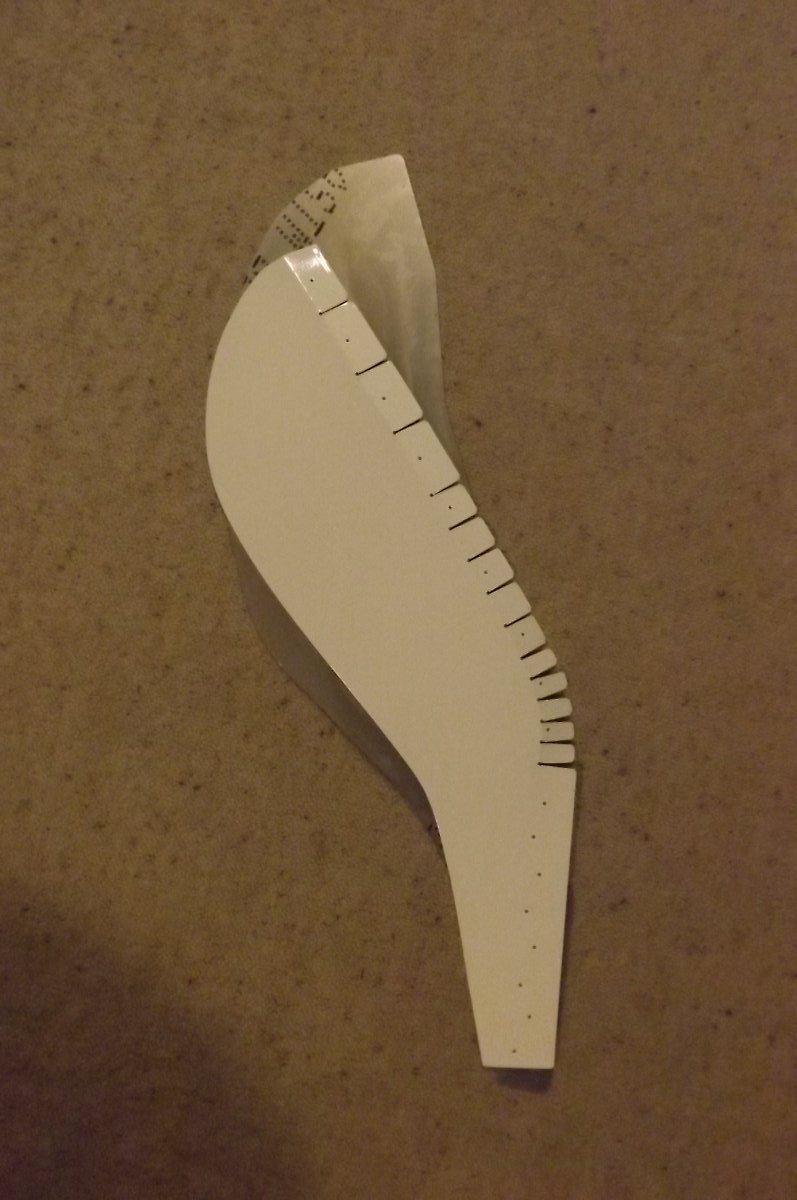
Bryan, now I think back: the pilot who test flew my Savannah taped over a small hole where the root fairings meets the wing skin LE. The fairings are non-standard, I wanted them to turn in more towards the screen and give me a wider field of vision. So that edge of the fairing (which tucks in behind the wing skin) has a series of cuts in it, resulting in small holes when they were fitted, one on each side out in the airflow enough to make noise. That tape is still there: two round silver dots of it.

-
The wing root fairings on my Savannah are aluminium, with a rubber edging where they meet the screen. At something over 95kts, I get a noise like someone blowing a high pressure raspberry. However, since you have to point at the ground to reach those sort of velocities, it doesn't happen during 'normal' flight. Though I do get the occasional quick blast at cruise in turbulence.
-
Assuming that you sealed where the bottom of the windscreen meets the fuselage......the next most likely place is where the wing root fairings meet the windscreen at the sides and top.
-
It seems to me that aircraft are like cars, in that certain models look good in certain colours or colour schemes. I do think that some homebuilts are let down by poor choice of colours/schemes, which is doubly unfortunate given the amount of time and care that goes into them. One approach to choosing a scheme is to colour in a profile of the aircraft, but I found this not useful at all, actually quite deceptive as the aircraft rarely appears in straight profile. I found it far more helpful to view the numerous shots of real aircraft online.
-
Once upon time I flew (as passenger, Olympic Airways) from Athens to Crete and back monthly to service some gear there. Sometimes they took forever doing their mag checks and warming up before taking to the skies. And shortly after takeoff the hostess would run from the back to the cockpit with 2 little paper cups: rumour had it this was ouzo. The USAF also used them at that time for airevac and routine hospital runs, as different hospitals specialised. So, for instance, maternity was in Frankfurt, and expectant military wives were all gathered up and shipped to Frankfurt when the time came. Sometimes it was possible to get on those runs, space available, but you could also get bumped and end up somewhere other than you thought you were going. On one such from Turkey, we got diverted to Tripoli to pick up an injured sailor. He had been hit by a broken cable, had brain damage and was strapped to his stretcher from where he screamed obscenities and called for his mother all the way to Athens. I was very glad to get off and felt sorry for all the mums-to-be sharing that flight.........
-
I'm pretty sure someone commented here a while back on the latency or delay in some of these data sources. As an example: where 90kts is about 150ft/sec, a 10sec delay will result in a 1500ft error in position reporting. 120kts and a delay of 30sec and the error is 6000ft, or 1 nautical mile.
-
Moving this over here to try and get away from the thread drift. I use a Ping and had similar position issues relative to my tablet, ended up moving the Ping to the brow of the windshield. Also mounted it properly rather than relying on suckering it to the screen. Works fine now.
-
coljones, the Ping USB does not require a USB connection to your EFB. It chats to your EFB via WiFi. As BurnieM states above, the ping USB port is only a power connection.
-
I'm pretty sure Mark Kyle noted somewhere here that he just uses the same stuff that's used on heatsinks etc in electronics. Which is available in a tube or syringe from any electronics shop. It's called heat sink compound. And I've also used it on my solar hot water evac tubes where they plug into the header.
-
-
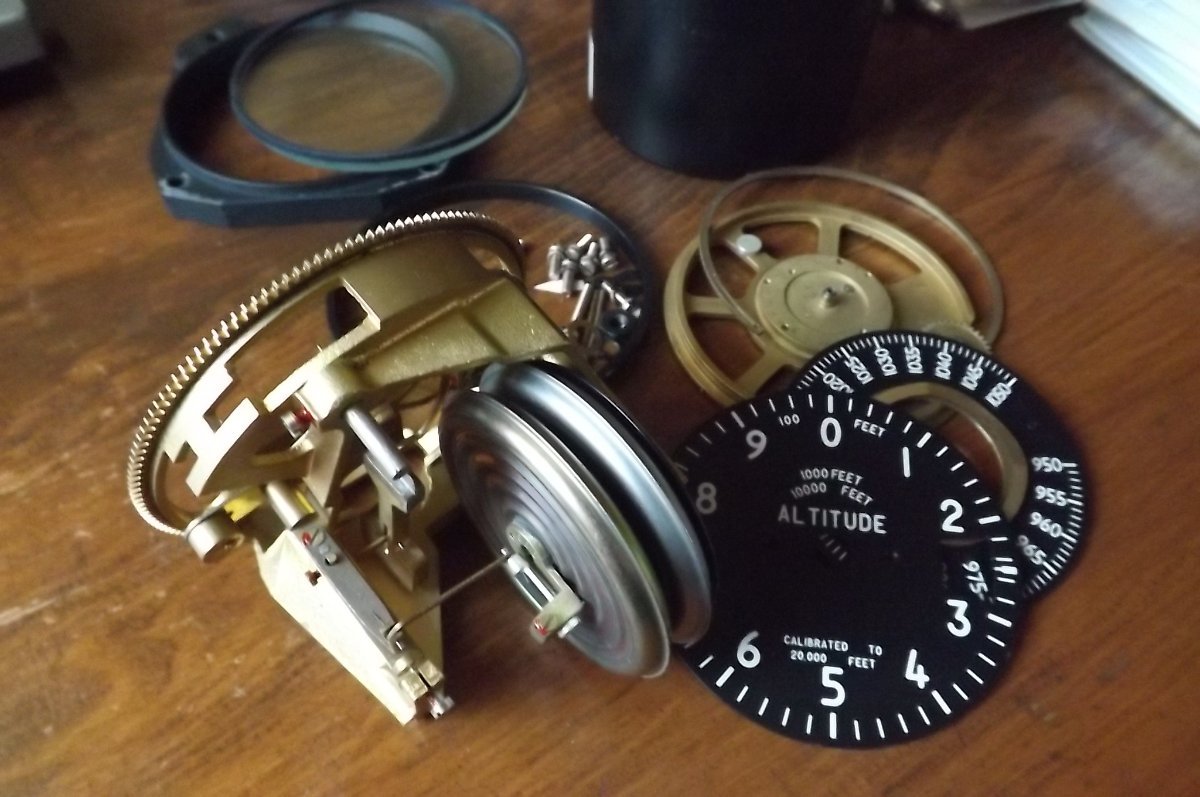
I had a altimeter fail very gradually: the first indication of that was when I set the QNH correctly preflight , it did not show the correct field elevation. Over a number of days it drifted further and further out. I would guess that one of the two internal bellows or cells sprung a tiny leak, and on inspection it looked as though one of them had not been put through a final plating process.
-
Hats off to the pilots who flew the tests with the Northrop HL_10. I'll stick with something that actually has wings...........
-
The pic certainly looks to be doctored.......while at the same time having been taken from slightly below. Maybe this was one of the tethered hovers mentioned, with the tethers blanked out. Nice hat, BTW.......)
-
Marty, FWIW, while the Savannah wing root skins do not fair down like the 701, I don't think I have ever had a fuel spill anywhere near that area. I routinely fuel from a 20L container via a funnel. I thought it would be clumsy, but it has worked out to be quite straightforward and manageable. Typically I do the starboard tank first, with the full container resting on the main spar (after first running my hand under the container to make sure it is free of dirt and grit). I am able to bend the nozzle over into the funnel, so delivery there is very clean. I get 10L into that tank, with the heel of the container resting on the main spar. I then move to the port tank, and here I must lift the container to deliver the remaining 10L. Occasionally I do get a small amount of splash just initially when doing this but certainly not any quantity, and nowhere near the wing root. Perhaps drape a cloth on the wing while you get your system worked out? But do remember to shut the doors......there have been a few doors damaged due to that oversight.
-
Right. Hm. That went well................