
red750
-
Posts
8,104 -
Joined
-
Last visited
-
Days Won
71
Content Type
Profiles
Forums
Gallery
Downloads
Blogs
Events
Store
Aircraft
Resources
Tutorials
Articles
Classifieds
Movies
Books
Community Map
Quizzes
Videos Directory
Everything posted by red750
-
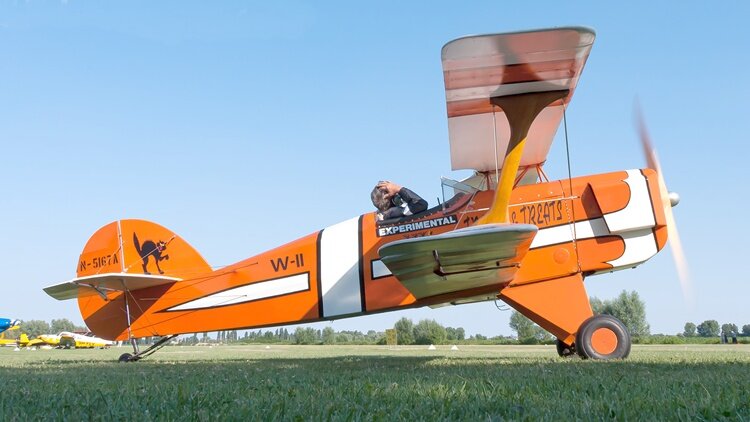 The Wolf W-11 Boredom Fighter is an American single-seat biplane designed by Donald Wolf of Huntington, New York. The aircraft is supplied as plans for amateur construction. The Boredom Fighter is a single-seat biplane designed to resemble a First World War SPAD S.XIII and completed aircraft are often painted in markings from that war. The aircraft is constructed of wood, has fixed conventional landing gear with a tailskid, and the recommended powerplant is the 65 hp (48 kW) Continental A65 piston engine.
 -
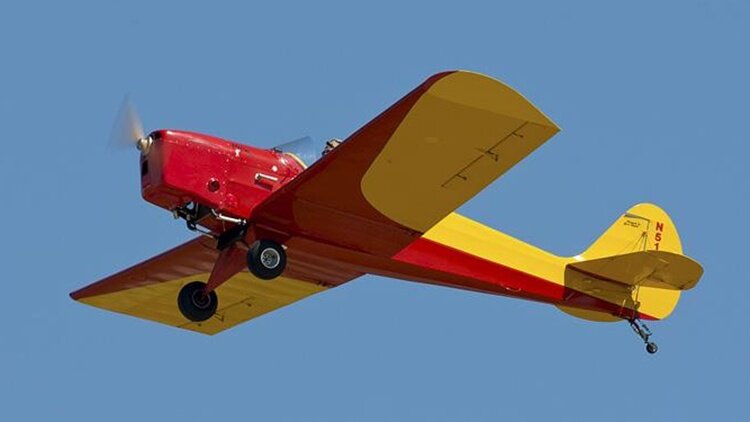 The Warner Revolution I, also marketed as the Spacewalker I, is an American homebuilt aircraft that was designed and produced by Warner Aerocraft of Seminole, Florida. When it was available the aircraft was supplied as a kit or in the form of plans for amateur construction. The aircraft is intended to be reminiscent of the open cockpit monoplanes of the 1930s, such as the Ryan ST. The Revolution I features a cantilever low-wing, a single-seat, open cockpit with a windshield, fixed conventional landing gear with wheel pants and a single engine in tractor configuration. The aircraft is made from a combination of wood and metal tubing, covered in doped aircraft fabric. Its 26.00 ft (7.9 m) span wing lacks flaps. The standard engine used is the 65 hp (48 kW) Continental A65 powerplant. The aircraft has a typical empty weight of 540 lb (240 kg) and a gross weight of 840 lb (380 kg), giving a useful load of 300 lb (140 kg). The Revolution I was later developed into a two-seat model called the Warner Revolution II. In May 2014 two examples were registered in the United States with the Federal Aviation Administration, although a total of three had been registered at one time.
 -
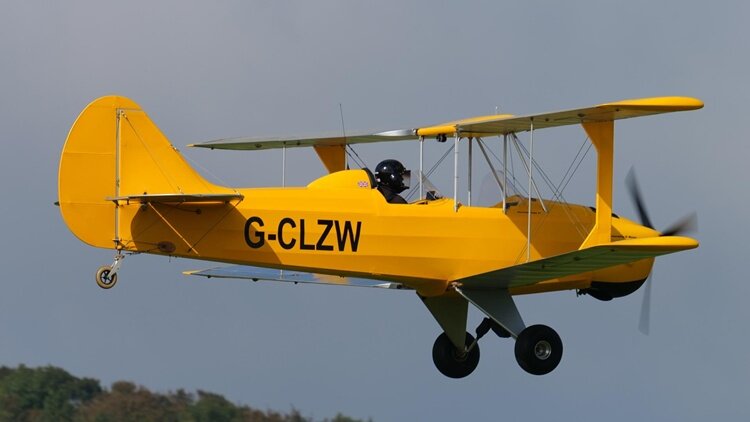 The Tiger Cub Developments (TCD) Sherwood Ranger is a single engine, tandem two seat biplane microlight designed and built in the United Kingdom in the early 1990s. Kits were originally produced by TCD; later, design rights were acquired by The Light Aircraft Company Ltd (TLAC) who resumed kit production in 2009. The TCD Sherwood Ranger was designed by Russ Light as a successor to the Micro Biplane Aviation Tiger Cub, a foldable biplane built in Worksop. Almost 100 Tiger Cubs, which Light partly designed, appeared on the UK civil aircraft register. The Sherwood Ranger is named after an inn in Retford, Nottinghamshire, perhaps the only aircraft to be named after a public house. The Sherwood Ranger is a single bay biplane, its wings having 3.83° of sweepback, 3° of dihedral on the lower wing alone but no stagger. They have constant chord and are of mixed construction, with single aluminium spars and drag struts, plywood covered D-box leading edges, ply and spruce ribs and fabric covering. There are externally interconnected Frise ailerons on both upper and lower wings. The latter are mounted on the lower fuselage longerons and single, faired, deep chord, I-shaped interplane struts position the upper wing well above the fuselage, assisted by central cabane struts. These latter struts, together with the wing centre section, are part of the tubular aluminium fuselage structure. Additional bracing is provided by two flying wires and two landing wires on each side. The wings fold for transport. For more details of design and development, operational history and variants, click here.
 -
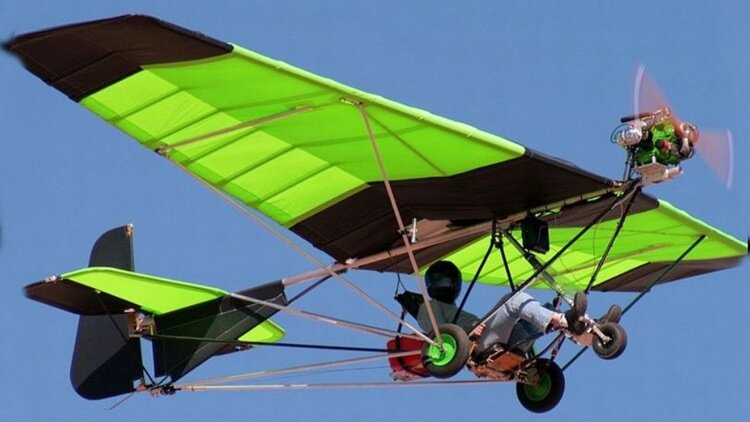 The Weedhopper is an American high-wing, tractor configuration, tricycle gear, two-axis control ultralight aircraft originally developed by John Chotia during the height of the 1970s ultralight boom and introduced in 1977. When it was in production the aircraft was sold as a kit for amateur construction and could be assembled in 25-30 man-hours. By early 2013 the company website had been blanked and put up for sale and it is likely that the company has closed and production ended. Many of the early ultralights used a "weight shift" method of control, requiring the pilot to push a control bar to shift the center of gravity of the aircraft. The Weedhopper differed from most other ultralights of the period in that it has a control stick which moves the rudder and elevator, giving it two axis control in pitch and yaw. The pronounced dihedral of the wings, along with the swept leading edge causes it to bank into the turn, and results in a very stable, easy-to-fly aircraft. The Weedhopper differs from many of the other early ultralights in that it had a strut-braced wing, whereas most period ultralights have wire-braced wings. The Weedhopper is constructed from aluminium tubing and covered with Dacron pre-sewn envelopes. The early versions of the aircraft developed a poor reputation due to the lack of reliable engines available in the 1970s. This was rectified with the adoption of the Rotax 277 28 hp (21 kW) and later the Rotax 447 40 hp (30 kW) powerplant. Over 13,000 Weedhoppers have been sold. It was popular because it offered people an inexpensive way to fly for pleasure. The aircraft could be easily disassembled and put on a trailer for home storage. It was not necessary to rent an expensive hangar. It could also be flown from just about any field because of its short takeoff and landing requirements (about 100 feet (30 m) with no obstacles). The kits originally sold for $2,000, and in 2011 the Weedhopper model 40 sold for US$8,495. In its home country versions of the aircraft are eligible for the FAR 103 Ultralight Vehicles category, the experimental amateur-built category and the light-sport aircraft category. Variants Weedhopper A Initial production version, also known as the JC-24A. Weedhopper B Improved production version, also known as the JC-24B. Weedhopper C Improved production version, also known as the JC-24C. Weedhopper Standard Basic model with a 28 hp (21 kW) Rotax 277 engine and an empty weight of 235 lb (107 kg) for the US amateur-built category. Weedhopper Deluxe Improved production model with a 40 hp (30 kW) Rotax 447 engine. Weedhopper 40 (Specifications below) Current production model with a 40 hp (30 kW) Rotax 447 engine. Weedhopper Super Up-engined model with a 50 hp (37 kW) Rotax 503 engine, many extras and an empty weight of 330 lb (150 kg) for the US amateur-built category. Weedhopper II Current production two seat side-by-side seating model with a 50 hp (37 kW) Rotax 503 engine. Also known as the Weedhopper Two Place.
 -
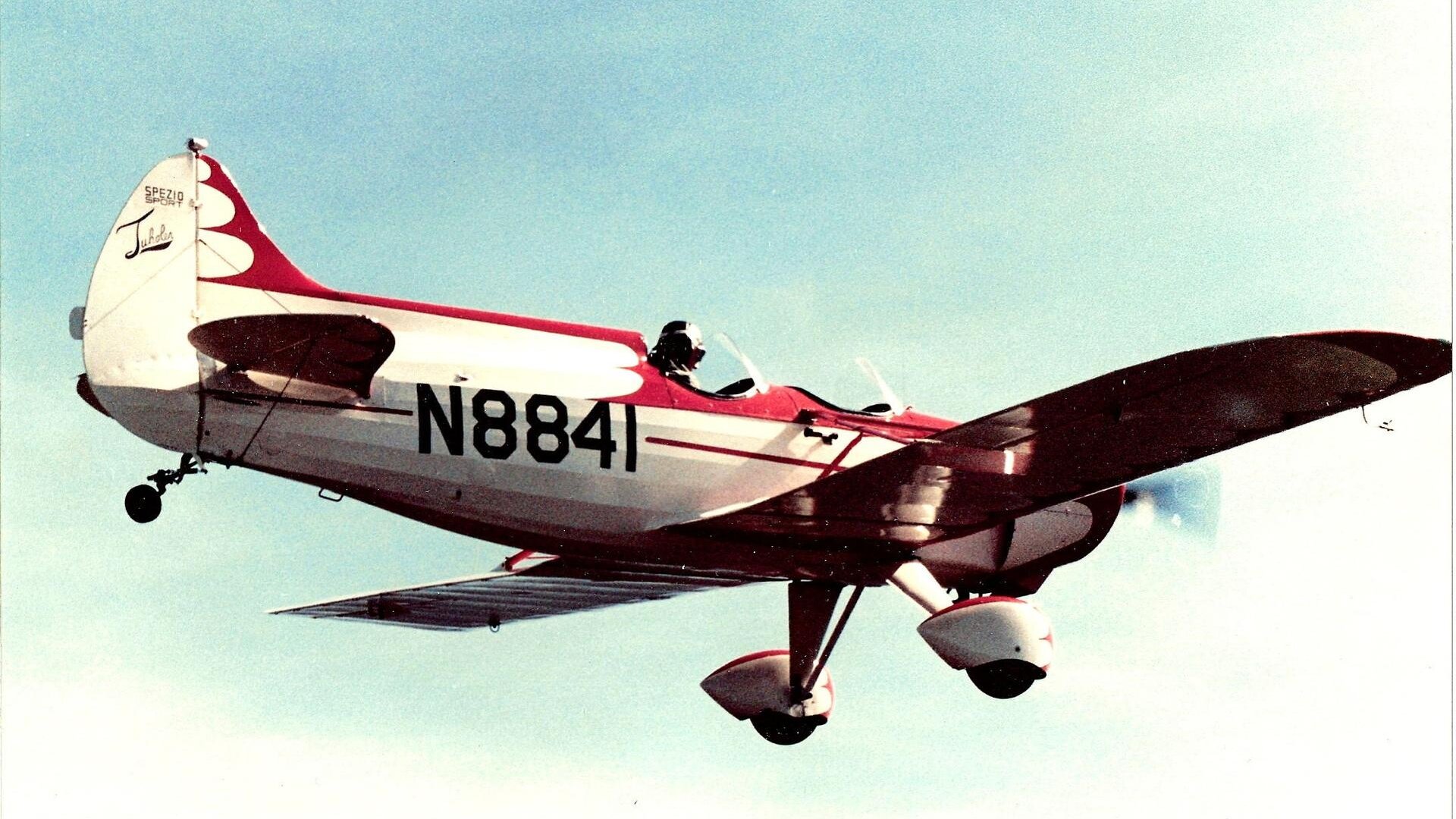 The Spezio Sport DAL 1 Tuholer is a two-place low-wing homebuilt aircraft using tube-and-fabric construction. A folding wing is incorporated to allow for trailering. The prototype aircraft was built for $287 using tubing from a Cessna UC 78, a Tri-Pacer propeller, wheels from a TG-6 glider, a Lycoming Ground Power unit and a variety of surplus materials. The nickname came from the president of the Experimental Aircraft Association remarking that the plane was a "two holer". The Tuholer is a tandem two-seat, strut-braced, low-wing, open cockpit aircraft with conventional landing gear. The dual control aircraft can be flown solo from the rear cockpit only. The fuselage is welded steel tubing with wooden stringers and fabric covering. The dual wing spars are wood, with wood ribs and fabric covering. The fuel tank is made of fiberglass. The horizontal stabilizer uses a Piper Cub style screw jack for trim. The rear headrest can be built streamlined flush with the vertical stabilizer or tapered. The designer flew the prototype 16 years.
 -
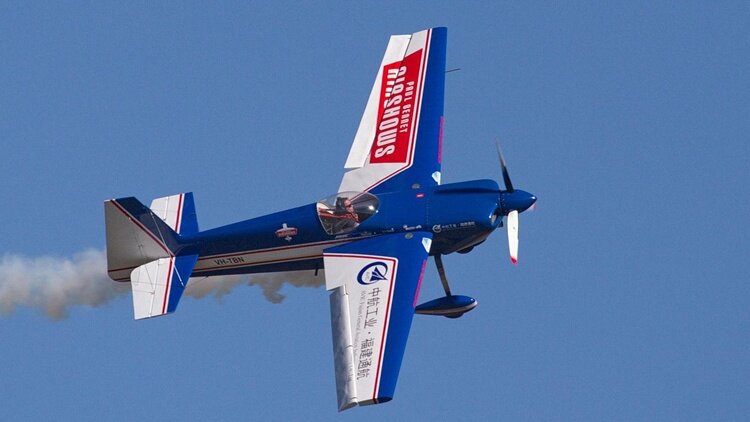 The Rebel 300 is the predecessor of the American-built Lazer Z-300 aerobatic aircraft, being a single-seater designed for high-performance unlimited aerobatics competition. The Z-300 itself was a larger and strengthened variant of the Z-200, a two-seat model also being produced as the Z-2300. The Lazer series in later years was produced by York Enterprises, which produced a fuselage kit, and Teebird Enterprises, which produced the wing. The Rebel series was produced in a number of models, the 2300 being produced later as the Z-2300 with a new wing to overcome issues with the composite wing of the Rebel model. The Rebel series had high power-to-weight ratios which provided good performance, and could be fitted with any engine in the Lycoming 540 range up to any power level that was available, usually driving a Hoffman three or four-blade propeller. It was of simple and robust construction and was produced in kit form to provide a relatively inexpensive, easy-to-build and simple to maintain machine. Construction was of steel tube with, metal, composite, wood and fabric. The first example of the type in this region was imported in early 2008, becoming VH-TBN (c/n S8-88-008) to its owner, Tony Blair, of Townsville, QLD on 23 July 2007. This aircraft was fitted with an AEIO-540 engine driving an MT propeller. In November 2016 ownership of the aircraft was transferred to Paul Bennet Airshows of Cardiff, NSW and has been operated on the Company’s eastern states airshow circuit.
 -

Sindlinger HH-1 Hawker Hurricane 5/8 Scale
red750 posted an aircraft in General Aviation (single engine)
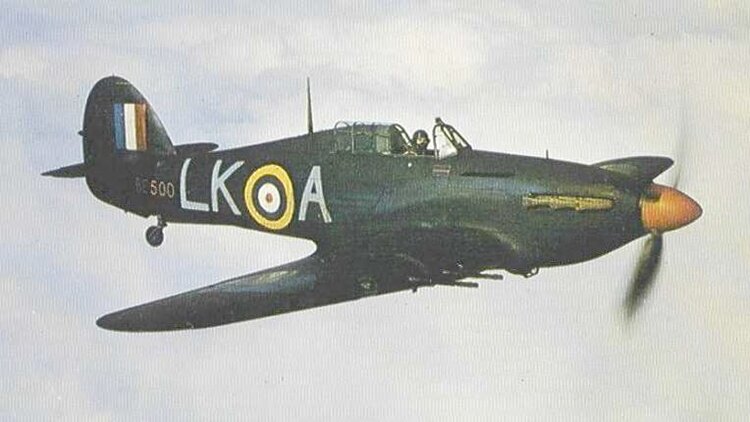 The Sindlinger HH-1 Hawker Hurricane is a 5⁄8 scale homebuilt design based on the Hawker Hurricane. Designed by Fred Sindlinger for amateur construction, the prototype was built between 1969 and 1972. Although based on the Hawker Hurricane the design makes some compromises for the amateur construction and the smaller size. It is an all-wood low-wing cantilever monoplane with a manual retractable main landing gear (the one pictured is electric retractable) and fixed tail wheel. Designed to take a 210 hp (157 kW) Lycoming engine. The cockpit is 4 inches (100 mm) out of scale in height and width and the elevators are 12% overscale. It used wooden stringers and fabric to give the appearance of the real Hurricane. Although originally designed for the Lycoming O-320 a number of people have successfully fitted auto (car) engines. The picture is of one such conversion in New Zealand which has been successfully flying for 900 hours as of March 2020 using a Mitsubishi 6G74 |Mitsubishi 6G74]] V6 engine driving a Dave Blanton designed kevlar cogged belt Propeller speed reduction unit. The prop is a WarpDrive 3 blade ground adjustable.
 -
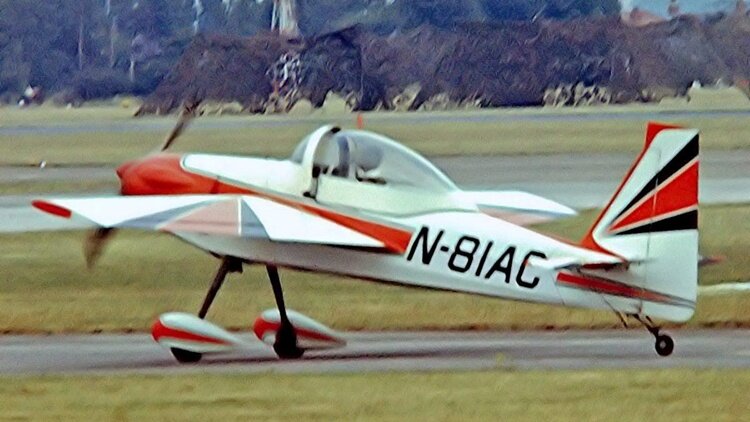 The Stephens Akro is a single engine monoplane designed in the United States for aerobatic competitions. It first flew in 1967 and proved very successful, leading to several developments of which one won seven US Championships and one World Championship between 1975 and 1982. The Extra EA-230 and Extra EA-300 were also Akro developments with over two hundred built. The Akro was designed as a homebuilt aircraft for pilots who competed in aerobatic competitions. It was the first U.S. aircraft design to be guided by the Aresti Catalog of manoeuvres for such events. The structure absorbs high stresses, +12/-11g. The Akro is a cantilever mid wing monoplane with a wooden, two spar mahogany skinned wing built in one piece, its forward spar passing unbroken through the fuselage and the rear spar in two parts. The plain, statically balanced ailerons have steel spars with spruce ribs and trailing edges ; they are fabric covered and carry ground adjustable trim tabs. The tail unit is a fabric covered steel tube structure, wire braced and with swept, straight tapered surfaces. Like the ailerons, all the rear control surfaces are statically balanced. The rudder has a ground adjustable trim tab. The tailplane is mounted at the top of the fuselage, with variable incidence and a flight controllable trim tab in the elevator. The Akro has a 180 hp (134 kW) Avco Lycoming AIO-360-A1A air-cooled flat-four engine in the nose, driving a two blade metal fixed pitch propeller. Its fuel is stored in a fuselage tank between the single seat cockpit and the engine. The cockpit has a fixed screen and a rearward sliding bubble canopy. In addition, there is a large window in the forward cockpit floor. There is a fixed, conventional undercarriage, with the mainwheels under glass fibre fairings on cantilever sprung steel legs. Hydraulic disc brakes are fitted. The tailwheel is steerable. Two slightly different models were designed specifically for the first two customers. The Model A design, begun in July 1966 was for Margaret Ritchie, the winner of the 1966 U.S. Women's Aerobatic Championship and first flew on 27 July 1967. The Model B had less tapered wings of greater area (6%) and bigger ailerons, though of unchanged span, slightly heavier (8%) and with windows in the fuselage sides below the wings. The B also carried 16% less fuel but had a lubrication system adapted to prolonged inverted flight. It first flew on 9 July 1969. . The Akro and its developments were one of the most successful aerobatic competition aircraft. Amateur builders began from plans of the Model A or B variants. The 180 hp Lycoming remained the most popular engine but Akros with up to 230 hp motors were produced. The Haigh Superstar is one of several Akro developments as are the Extra EA-230 and Extra EA-300 single seat aerobatic machines. Leo Loudenslager's Akro Laser 200 was a particularly successful development with a 200 hp (150 kW) Lycoming IO-360 engine; initially a standard Akro apart from the engine, it later acquired a different wing airfoil, lightened fuselage and revised, lowered canopy with the decking behind it raised. Flying this aircraft he won the U.S. Aerobatics Championship seven times between 1975 and 1982 and won the World Aerobatics Championships in 1980. Several Lasers have been home built by others. Variants Stephens Aircraft issued plans for two models: Model A (Specifications below) as described Model B Larger area wing and ailerons, reduced tankage, better inverted lubrication system, extra cockpit windows. In the amateur tradition, builders introduced their own variations such as bigger engines. Stand out variants/developments were: Haigh Superstar Akro Laser Z-200 Multiple US and single World Championship winner, adapted, built and flown by Leo Loudenslager between 1975 and 1982. Extra EA-230 Further adaptation of the Akro Laser by Walter Extra of Extra Flugzeugbau in Germany. Extra EA-300 Over 200 of the -230 and -300 produced.
 -
Web search for company name brings up this website in French: J & J AÉRO CONCEPT INC. Cancel est inactive Société par actions ou compagnie Québec (Canada) • 11 juin 2009 (il y a 17 ans)
-
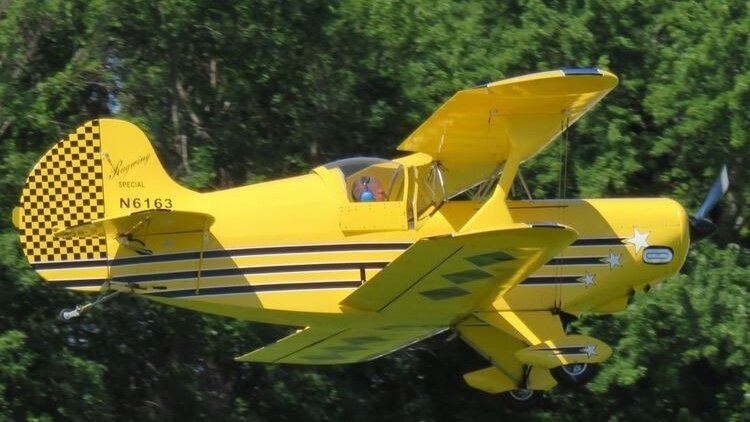 The RagWing RW2 Special I is a family of biplane, single engine homebuilt aircraft designed by Roger Mann and sold as plans by RagWing Aircraft Designs for amateur construction. The RW2 was designed as a single seat lightweight Pitts Special S-1 replica for the US experimental homebuilt aircraft category. The RW26 was added later and is a replica of the Pitts S-2 two-seater. As with many RagWing designs the RW2 and 26 feature airframes constructed entirely from wood and covered with aircraft fabric. The airframe uses a Pratt truss. The RW2 has an optional 4130 steel tube fuselage. The landing gear is of conventional configuration with bungee suspension. The wings are detachable for storage or ground transport. The RW2's installed power range is 35 to 65 hp (26 to 48 kW) and the standard engines are the 38 hp (28 kW) Kawasaki 440A and the 45 hp (34 kW) 2si 460, although the 40 hp (30 kW) Rotax 447 has also been used. The RW26's installed power range is 52 to 100 hp (39 to 75 kW) and the standard engines are the 52 hp (39 kW) Rotax 503 and the 100 hp (75 kW) Rotax 912S. In the early 2000s kits were available for construction, but today the aircraft are available only as plans. The designer estimates it will take 400 hours to complete either aircraft and claims that the RW2 can be built for US$5000, including a new engine. Variants RW2 Special (Specifications below) Single seat biplane RW26 Special II Two seats in tandem biplane
 -
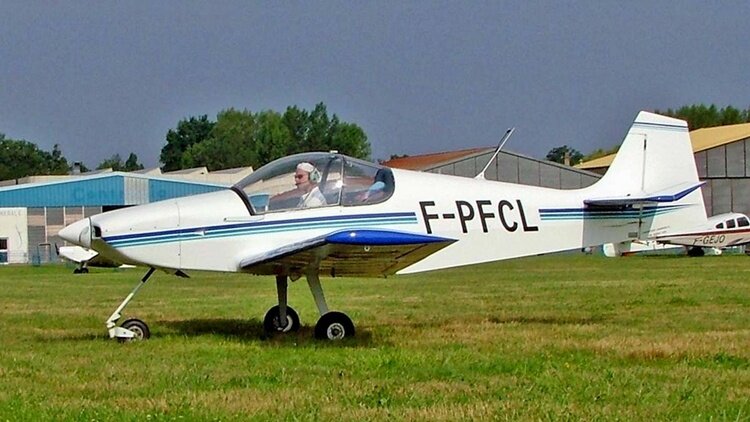 The CQR-1 two-seat homebuilt aircraft was more or less a scaled-up development of the Roussoulières Occitan and was a design of Louis Cariou, former RSA President. The prototype CQR-1 was constructed by the RSA at Centre Régional de Construction Aéronautique Amateur Quercy-Rouergue (CQR) under the leadership of Charles Roussoulières and it flew for the first time on March 2, 1997. This aircraft was powered by a 90 hp Limbach L2400EO3 engine. A second very similar aircraft was also completed in France in 1998 or 1999 and by late 2010 at least 6 were constructed.
 -
 The Aeroalcool Quasar is a Brazilian light-sport aircraft that is produced by Aeroálcool and was introduced in 2007. The aircraft was designed by American Frank Porter with assistance from James Waterhouse of the Federal University of São Carlos in Brazil, to comply with the US light-sport aircraft rules. It features a cantilever low-wing, a two seats in side-by-side configuration enclosed cockpit under a forward hinged canopy, tricycle landing gear and a single engine in tractor configuration. The aircraft is made from aluminum sheet and has a 9.25 m (30.3 ft) span wing. The initial engine used was the Japanese 60 hp (45 kW) HKS 700E four-stroke powerplant which gives it a cruise speed of 210 km/h (130 mph) while burning only 9 litres (2.0 imp gal; 2.4 US gal) per hour of auto fuel. A total of 60 had been built by 2015. Variants Quasar Lite (Specifications below) Initial model, powered by the 85 hp (63 kW) Jabiru 2200 four-stroke powerplant. Quasar 214SL Import version for the US market, distributed by Quasar Aircraft Company, Inc. Accepted as a US light sport aircraft in 2007. Quasar Fast Model powered by the 120 hp (89 kW) Jabiru 3300 four-stroke powerplant.
 -
I read this as C-IFKQ which is the Firekracker. If read as C-IFRQ. RegoSearch says that is a Six-Chuter SKYE RYDER AEROCHUTE. Certainly does not look like an Aerochute.

-
According to Rego Research, it's an Aero Concept Firekracker
-
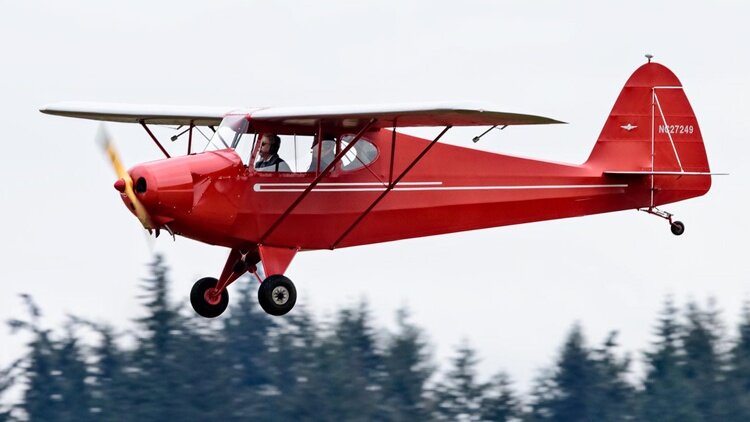 The Porterfield Collegiate is an American-built two-seat training and touring monoplane built by the Porterfield Aircraft Corporation of Kansas City. Developed originally as the Porterfield Zephyr, under Approved Type Certificate (ATC) 2-530, it is a light-weight version of the earlier Model 35 Flyabout for use as a pilot trainer. Powered by a 40 hp (30 kW) Continental A-40 engine it was later re-designated the Porterfield CP-40. Though roughly in the same general class with the tandem-seat Piper Cub, Aeronca Champ, and Interstate Cadet -- and the side-by-side seating Aeronca Chief, Taylorcraft BC-12D and Luscombe 8 -- the tandem-seat Porterfield is visually distinguishable from them by its twin parallel wing struts on each side (compared to the V-shaped struts on the other planes), and by its largely symmetrical airfoil wing (similar curvature top and bottom). Number built 476 For details of development, production, operation history and 9 variants, click here.
 -
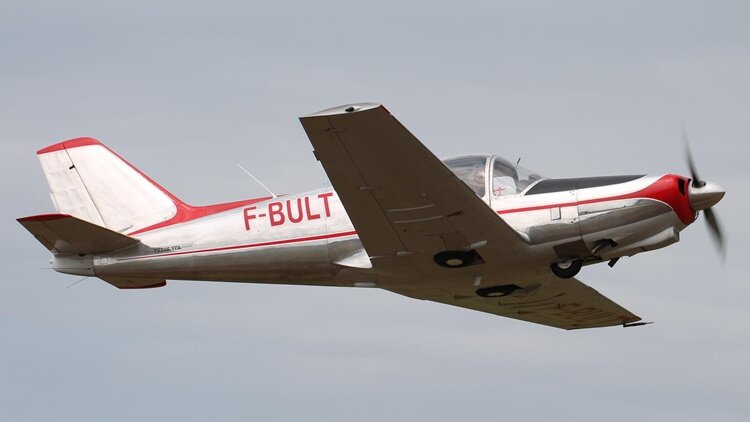 The Procaer F.15 Picchio (Italian: "Woodpecker") is an Italian-designed light utility aircraft built by Procaer (PROgetti Costruzioni AERonautiche). The Picchio was developed in Italy in the late 1950s as a further development of Stelio Frati's Falco and Nibbio designs. Similar to its predecessors, the Picchio featured a conventional low-wing cantilever monoplane design with exceptionally clean lines and a retractable tricycle undercarriage. Early versions of the Picchio retained the same wooden construction as earlier models but incorporated a thin aluminum skin over the plywood. The F.15E and F.15F, however, were all-metal. Production of the early, wooden Picchios was carried out by Procaer in Milan, but in the mid 1960s, Frati established General Avia as his own factory to build his designs, commencing with the F.15E. Only a few examples were built, however, and the design lay dormant until revived by an Austrian company, HOAC in the mid 1990s. HOAC arranged to have the two-seat F.15F model built at the JSC Sokol plant in Niznij Novgorod, but ran out of money, leaving Sokol with unsold airframes in various states of completion. The Picchio was primarily intended for operation by private pilot owners and the design was exported to several European countries as well as being purchased by Italian individuals. Several are still airworthy (2012). Variants F.15 - prototype and initial production with 160 hp (120 kW) Lycoming O-320 engine and three seats. 5 built. F.15A - revised production version with 180 hp (130 kW) Lycoming O-360 engine and four seats. 10 built by Procaer. F.15B - similar to F.15A but with larger-span wings and fuel tanks relocated from fuselage to wings (20 built by Procaer). F.15C - version with 260 hp (190 kW) Continental IO-470-E engine and tip tanks. One built. F.15D - proposed version similar to F.15B with 250 hp (190 kW) Franklin engine. Not built. F.15E Picchio - Four-seat, all metal aircraft with fuel in wing and wing-tip tanks and powered by 300 hp (220 kW) Continental IO-520K engine. First prototype flown 21 December 1968 and second aircraft flown 1976. F.15F - All metal, four-seat derivative of F15.E with bubble canopy and powered by 200 hp (150 kW) IO-360 engine. One built by General Avia, flying 20 October 1977. F.15F Excalibur - F.15F built by JSC Sokol at Nizhny Novgorod, Russia for assembly by Eurospace in Italy. Pre-production aircraft assembled by HOAC in Austria and flown in October 1994. Orders for 33 aircraft at end of 1995, with about 100 in various stages of construction or assembly at that time.
 -
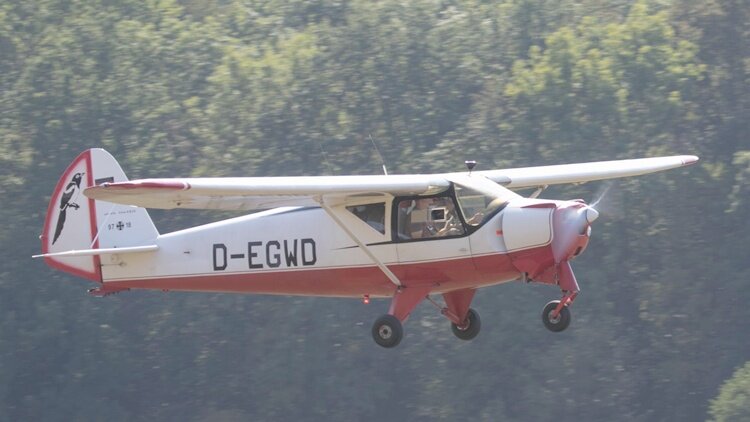 The Pützer Elster was a German single-engined light aircraft, manufactured by Alfons Pützer KG (later Sportavia) in Bonn. It served with the Luftwaffe and Marineflieger and was used solely for recreational sport flying. Some continue to fly in 2020 in private ownership. The Pützer Elster "Magpie" was developed from the Motorraab motor glider which had itself been developed from the Doppelraab glider. The Elster was the first aircraft produced in Germany after World War II in any significant numbers. The design shared the wing of the Doppelraab, braced by metal struts, but was given a new monocoque fuselage constructed of plywood with seats for two occupants arranged side by side. The tricycle landing gear unusually featured a steerable nosewheel controlled by a hand grip. Production ceased in 1967, by which time 45 examples had been built. Variants Elster Prototype aircraft fitted with a 52 hp Porsche 678/3 engine, first flight 10 January 1959. Elster B Elster of Luftwaffe used as glider tug, Pferdsfeld air base 1972 Main production version fitted with a 95 hp Continental C-90 engine. 25 aircraft were operated by the Luftwaffe and Marineflieger sport flying groups. These aircraft were initially operated with civilian registrations but were allocated military serials in 1971. In 1978 the maintenance contract with Pützer expired and the aircraft were placed on the civil market. Elster C The Elster C was fitted with the more powerful 150 hp Lycoming O-320 engine and other modifications for use as a glider tug.
 -
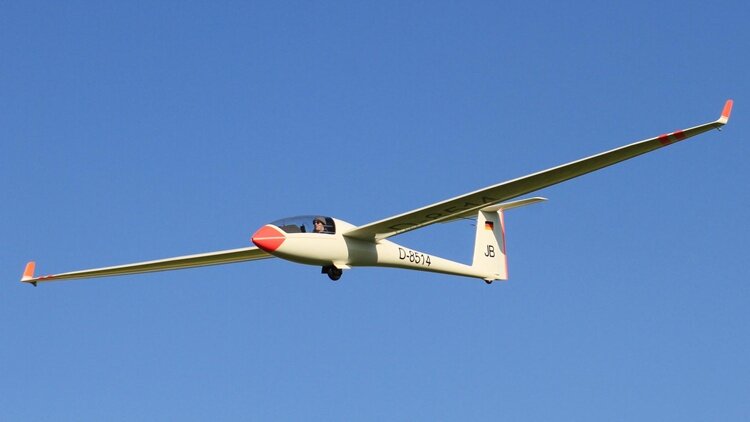 The Schempp-Hirth Discus is a Standard Class glider designed by Schempp-Hirth. It was produced in Germany between 1984 and 1995 but has continued in production in the Czech Republic. It replaced the Standard Cirrus. It was designed by Klaus Holighaus. The Discus was the first production sailplane to have a distinctive swept-back leading edge. This is now common in contemporary sailplanes. Studies had long shown that the ideal wing for minimizing induced drag should be an elliptic planform. To keep production costs down, a triple-trapezoidal approximation of this shape was adopted for the Discus. The wing section was also new. Winglets were only available towards the end of the production run, though many have been retro-fitted. The fuselage and tail were adapted from the Schempp-Hirth Ventus. A version with a narrow fuselage is called the Discus 'a' and the wider fuselage version is called the 'b'. The fuselage is made of glass-reinforced plastic around a steel tube frame. The wings and tail surfaces are also fiberglass with the exception of the main wing spar, which is made of carbon fiber. There is a 6.5 L (1.7 US gal; 1.4 imp gal) water ballast tank in the fin for trimming purposes when the main wing mounted ballast tanks are in use (184 L combined) for a maximum wing-loading of 50 kg/m2 (10 lb/sq ft). Competition use The Discus dominated standard class sailplane racing throughout the 1980s, winning six World Gliding Championships in a row from 1985 to 1995. Performance The best measured glide ratio is 42.5:1. Though it is considered a high performance sailplane, its handling is well within the capabilities of inexperienced pilots. With no bad manners, powerful airbrakes and a low landing speed, the Discus is popular with clubs. Discuses are easy gliders to assemble, having light wings, automatic control hookups and a single pin securing the wings. Production Over 850 Discuses had been built by 2004 and it remains in production today despite the introduction of its successor, the Schempp-Hirth Discus-2. About 12 per year are built under license by Schempp-Hirth Vyroba in the Czech Republic as the Discus CS. Some models are fitted with small sustaining engines (turbos) and are designated Discus T. Variants Discus a Short fuselage and narrow cockpit optimized for smaller pilots, utilising the fuselage and tail of the Ventus a. Discus b Standard production model utilizing the fuselage and tail of the Ventus b. Discus bT Discus b with a retractable sustainer motor Discus bM Motor-glider with retractable engine Discus CS Continued production in the Czech Republic Discus K Aerobatic version first flown on 18 November 1987. This was, due to disappointing performance in aerobatic, later converted back to a standard version.
 -
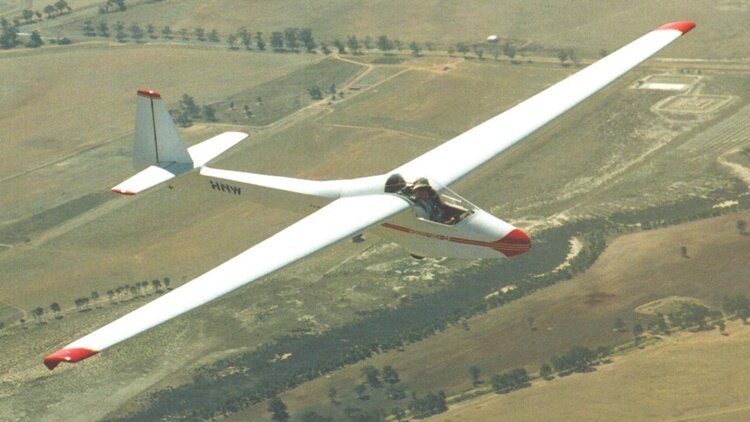 The Maupin Woodstock One is an American high-wing, single-seat glider designed by Jim Maupin and made available as plans for amateur construction. The Woodstock was designed in the late 1970s by Maupin, with assistance from Irv Culver, who designed the airfoil for the wing. Culver's airfoil is of 18% thickness at the root, thinning to 13% thickness at the wing tip and incorporates no washout. The aircraft's design goals were low cost and simplicity of construction. Four design principles were employed: using the least expensive materials, using as little material as possible, keeping the design simple and utilizing as many common parts as possible. The resulting airframe is all-wood, with the major structural parts fabricated from Douglas fir. The tail and wing covering are birch. The wing and tailplane ribs are made in pairs from marine-grade fir plywood using a bandsaw. The wing spar is a hollow box for the first 8 ft (2.4 m) from the root and then changes to a "C-section" outboard. Top surface spoilers are provided. The main landing gear is an 11 in (28 cm) go-cart wheel mounted as a fixed monowheel, with a brake fashioned from aluminium sheet and employed as a band brake, actuated by a bicycle brake lever mounted on the control stick. Variants Woodstock One Original prototype with 39 ft (11.9 m) wingspan. Woodstock (12.5m) Version with 41.5 ft (12.6 m) wingspan. Woodstock (13m) Version with 43 ft (13.1 m) wingspan.
 -
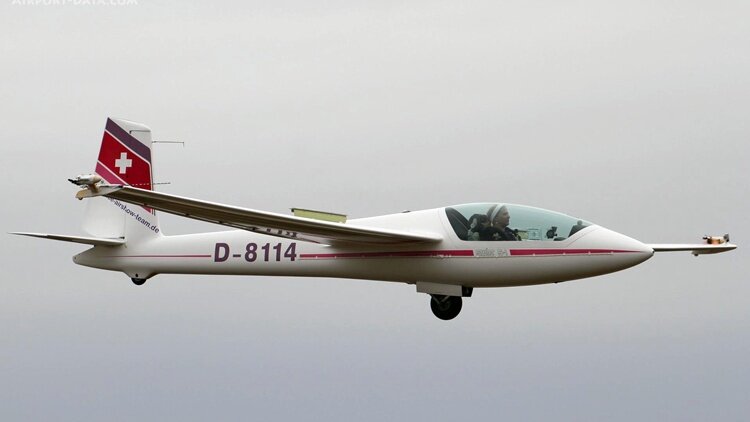 The Swift S-1 is a single seat aerobatic glider manufactured by Polish company Swift Ltd. Edward Margański, Jerzy Cisowski and Jerzy Makula developed the Swift at Bielsko-Biała from the SZD-21-2b Kobuz 3.[1][2] The prototype first flew in 1991. The glider is made of glass-fibre epoxy composite. It is very strong (stressed for plus and minus 10g) and manoeuvrable (a roll takes less than 4 seconds). Larger tips to increase the span to 15m were designed but not made. It has a retractable undercarriage.
 -
 A number of modifications were made for the Goose, but the most numerous are those by McKinnon Enterprises of Sandy, Oregon, which holds 21 supplemental type certificates (STCs) for modifying G-21-series aircraft and which also manufactured four different conversions that were recertified under a separate FAA type certificate as brand-new "McKinnon" airplanes. The first was the McKinnon model G-21C which involved replacing the original R-985 radial engines with four Lycoming GSO-480-B2D6 piston engines. It was approved under TC 4A24 on November 7, 1958, and two examples were converted in 1958–1959. In November 2007, Antilles Seaplanes of Gibsonville, North Carolina, announced it was restarting production of the turbine-powered McKinnon G-21G Turbo Goose variant, now identified as the Antilles G-21G Super Goose. Pratt & Whitney Canada PT6A-34 turboprops flat-rated to 680 shp (510 kW) would have replaced the original PT6A-27 engines, and the airframe systems and especially the avionics (aviation electronics – i.e. radios and navigation systems) would have been updated with state-of-the-art "glass panel" instrumentation and cockpit displays. However, as of 2009, Antilles Seaplanes' manufacturing center has been foreclosed and sold at auction. The fate of new Goose production is currently unknown.
 -
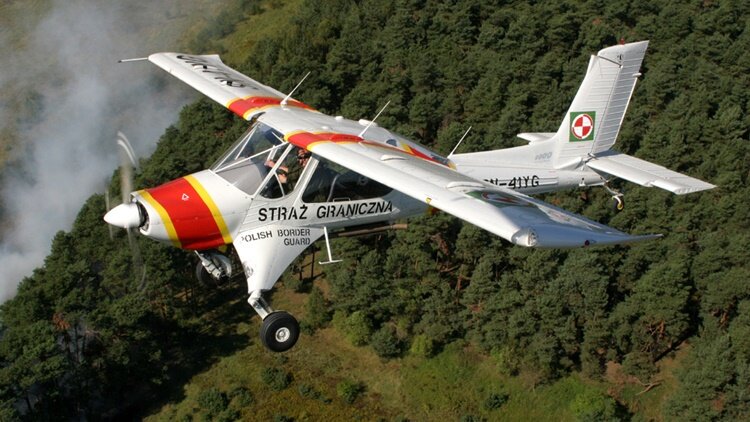 PZL-104 Wilga (golden oriole) is a Polish short-takeoff-and-landing (STOL) civil aviation utility aircraft designed and originally manufactured by PZL Warszawa-Okęcie, and later by European Aeronautic Defence and Space Company (EADS), who had acquired the original manufacturer during 2001. First flown on 24 April 1962 and entering service during the following year, the Wilga has evolved through many ever-improving versions during its continuous production from 1962 to 2006. The type was largely used by civil operators; those military air services that did fly the type typically used it as a trainer and liaison aircraft. In excess of 1,000 aircraft were produced prior to European Aeronautic Defence and Space Company (EADS) announcing on their website that production of the Wilga would cease in 2006. The PZL-104 was designed for robust use in sports and civil aviation, with a strong emphasis on glider-towing and parachute training. On 24 April 1962, the prototype of the initial Wilga Mark 1 variant made the type's first flight, powered by an existing Polish 220 hp (160 kW) horizontally-opposed engine, the PZL WN-6RB. The subsequent flight test programme with the prototype exposed a number of design faults, the most serious of which was the airframe's excessive weight and a rear view restriction that prevented the crew from easily seeing a towed glider. Accordingly, an airframe review was performed by the design team that resulted in the thorough redevelopment of the aircraft, led by Polish aeronautical engineers Bronisław Żurakowski and Andrzej Frydrychewicz. While the major structural elements and sub-assemblies which had been deemed to have been successful, such as the structure of the wings, were retained from the initial design, the redeveloped aircraft featured a completely new fuselage that was both slimmer and considerably strengthened beyond its prior counterpart; this new airframe also offered an excellent rear view aspect for the crew during glider towing operations, while the side doors were also re-engineered to open upwards for better aero observation or parachute jump sorties. If required, the aircraft could be flown with the doors open. It also featured an air ambulance cabin conversion capability. On 1 August 1963, the revised aircraft, which was designated as the PZL-104 Wilga Mark 2, conducted its first flight. While testing validated the qualities of the Wilga 2's airframe and had proved the aircraft to be a successful design, the WN-6RB engine that powered the model was not fully developed and thus, the aircraft did not enter serial production. In response, the decision was taken to convert the assembly line to instead manufacture the improved Wilga C and Wilga Mark 3 configurations instead. On 30 December 1963, the Wilga C (or Wilga Mark 2 Subvariant C) made its first flight; this variant which was a dedicated export model of the type for Indonesia powered by the imported North American -certified 225 hp (168 kW) horizontally opposed Continental O-470 engine. To address the immaturity of the original WN-6RB engine, the design team decided to adopt an in-production radial engine, the 260 hp (190 kW) Ivchenko AI-14R; furnished with this engine, the aircraft became the PZL-104 Wilga Mark 3 variant, which first flew on 31 December 1965. The new engine was more powerful but it spoilt the previously clean and aerodynamic fuselage lines, originally designed for a flat engine; nonetheless, the new variant was successful. Due in combination to the power of the AI-14R engine and the STOL capability of the airframe, an extraordinary high rate of climb of 11 m/s (2,165 fpm) (maximum) under minimal load was possible. One of a few remaining flaws was that the engine was relatively uneconomical to operate. For further development, design, operational history and variants, click here.
 -
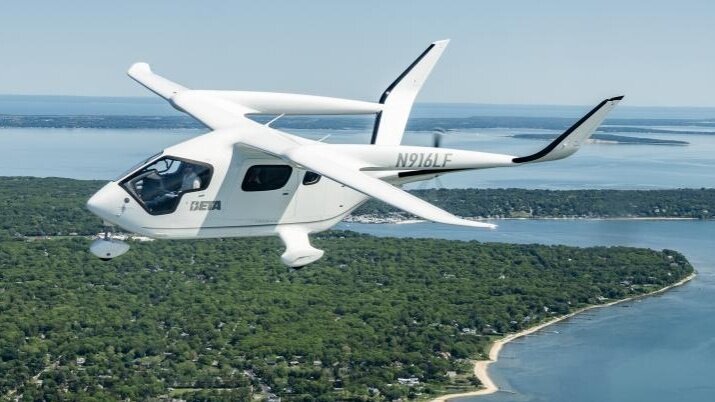 The Beta Technologies Alia (officially stylized as ALIA) is an electric utility aircraft built by Beta Technologies. The Alia is built in two models; the VTOL A250, and the CTOL CX300. An unmanned military variant is also in development as the MV250. Beta Technologies unveiled the Alia A250 eVTOL prototype in June 2020. A successor to the company's Ava prototype, the Alia is a small 6,000 lb (2,720 kg) aircraft with an arched 50 ft (15 m) wing. An electric aircraft, the Alia A250 is powered by a single pusher propeller for forward flight as well as four rotors mounted at wing level for VTOL flight. Beta announced a five-passenger variant of the Alia in September 2024, though a prototype had yet to be built. After several months of ground and tethered vertical flight testing at Beta Technologies' headquarters in Burlington, Vermont, the Alia A250 was airlifted to Plattsburgh, New York in June 2020 for advanced flight testing. In March 2021, the A250 made a test flight from Plattsburgh, across Lake Champlain, and back to Burlington. In May 2021, the US Air Force's Public Affairs office announced that Beta Technologies was granted the Air Force's first airworthiness certificate as a part of the AFWERX Agility Prime program, allowing the military to begin using the company's aircraft for test flights.[8] In July, the company completed a 205 mi (330 km) crewed flig[9]ht of its aircraft, its longest flight up to that point. The company announced on January 31, 2022, that it had won a US Army contract to support flight testing of its Alia electric vertical takeoff and landing aircraft. The partnership is designed to help the Army test specific military cargo and logistics missions for eVTOLs, while allowing Beta to accelerate development for both military and civil applications. Initially, Army engineers and Beta's team would evaluate how Alia might best be applied to specific missions by measuring its range, altitude, endurance, and payload limits.[10] In March 2022, the company hosted the United States Air Force and USAF test pilots flew the Alia aircraft for the first time. In May 2022, an Alia aircraft completed a flight of 1,400 mi (2,300 km) in total, from New York State to Arkansas. This included stops along the way for recharging on the company's network. In December, an Alia completed another test flight after traveling 876 mi (1,410 km) to UPS Worldport, where its founder was met by US Secretary of Transportation Pete Buttigieg. In March 2023, the company sought FAA certification for the Alia CX300 and had received orders for the new product from Bristow, Air New Zealand, and United Therapeutics. The company said that FAA test pilots had flown the aircraft during a qualification evaluation earlier that year. For more details of operational history, orders and variants, click here.
 -
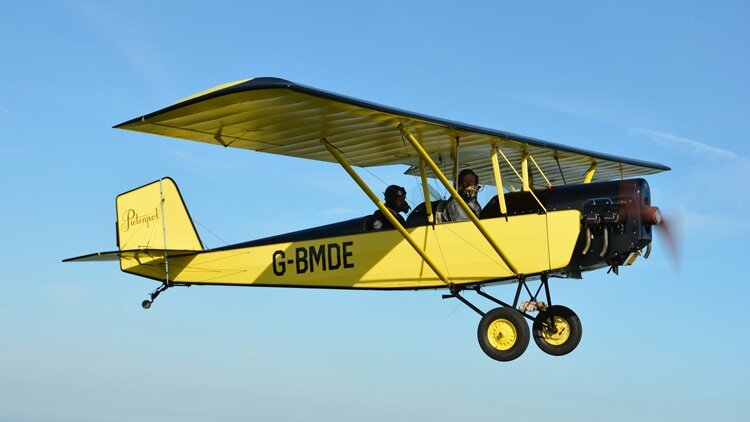 The Pietenpol Air Camper is a simple parasol wing homebuilt aircraft designed by Bernard H. Pietenpol. The first prototype that became the Air Camper was built and flown by Pietenpol in 1928. The Air Camper was designed to be built of spruce and plywood. One of Pietenpol's goals was to create a plane that was affordable and easy to construct for home builders. Building an Air Camper requires basic woodworking skills and tools. Builders also need to fabricate some metal fittings to attach the wooden parts. Some welding is required. The plans for the Pietenpol Aircamper were originally published in a four-part serial in the "Flying and Glider" Manual of 1932-33. The original model was flown using an Ace four cylinder water-cooled engine. The Model A Ford engine later became the standard powerplant used; the design was first flown with one in May 1929. In the 1960s Bernard Pietenpol began to favor converted engines from Chevrolet Corvair automobiles. The Corvair flat six was higher horsepower, smoother, and significantly lighter, compared to the Model A, and was similar to those already available for general aviation use. The length of a Pietenpol varies with the engine choices, as lighter engines needed to be mounted further forward for weight and balance reasons. Over the years over 30 different engines have flown in the Pietenpol Air Camper. Many modern Pietenpol builders prefer Continental A65, C85 or C90 air-cooled flat fours. Several examples of the Aircamper have been built in Europe and in 2012 were still flying. In the 1920s and 1930s, kits were available for the design, but there were none available again until 2015 when the Pietenpol Aircraft Company introduced a kit version of the Air Camper, with components supplied by Aircraft Spruce & Specialty. The kit includes all parts except the engine, dope, fabric covering, and hardware. For details of variants, click here.