red750
-
Posts
8,261 -
Joined
-
Last visited
-
Days Won
79
Content Type
Profiles
Forums
Gallery
Downloads
Blogs
Events
Store
Aircraft
Resources
Tutorials
Articles
Classifieds
Movies
Books
Community Map
Quizzes
Videos Directory
Everything posted by red750
-
Oops. Forgot to add it to the index spreadsheet. With about 275 One-offs, it's hard to remember which ones have been done.
-
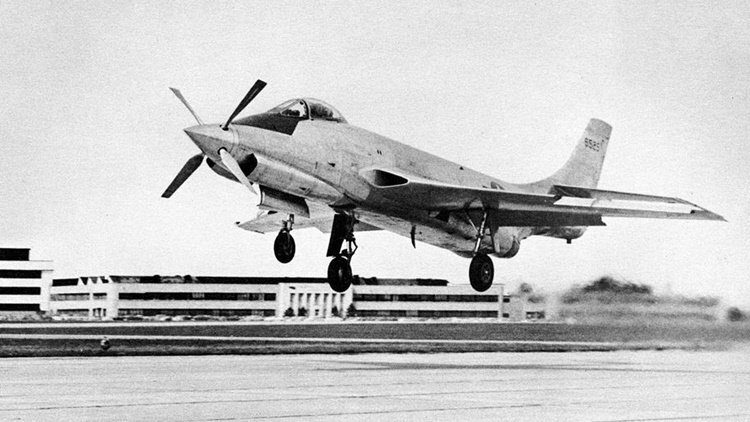
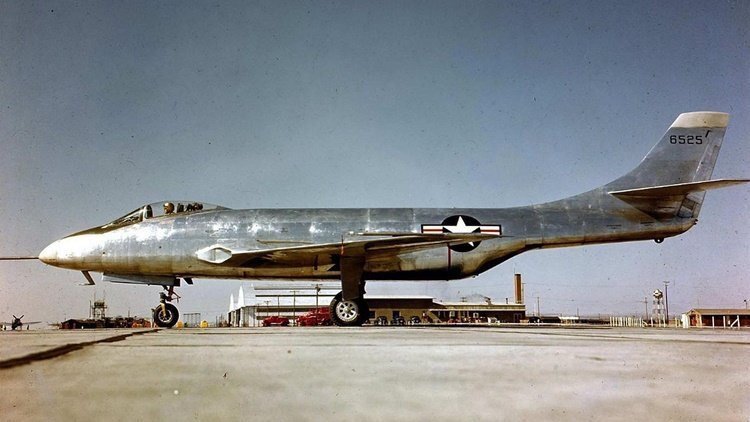
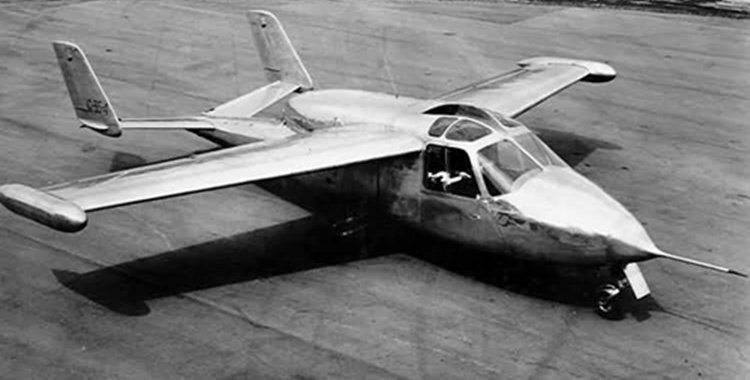
The McDonnell XF-88 Voodoo was a long-range, twinjet fighter aircraft designed for the United States Air Force. Although it never entered production, its design was adapted for the subsequent supersonic F-101 Voodoo. The XF-88 originated from a 1946 United States Army Air Forces requirement for a long-range "penetration fighter" to escort bombers to their targets. It was to be essentially a jet-powered replacement for the wartime North American P-51 Mustang that had escorted Boeing B-17 Flying Fortress bombers over Germany. It was to have a combat radius of 900 mi (1,450 km) and high performance. McDonnell began work on the aircraft, dubbed Model 36, on 1 April 1946. On 20 June the company was given a contract for two prototypes designated XP-88. Dave Lewis was Chief of Aerodynamics on this project. The initial design was intended to have straight wings and a V-shaped tail, but wind tunnel tests indicated aerodynamic problems that led to a conventional tailplane being substituted and the wings being swept. The USAAF confirmed the order for the two prototypes on 14 February 1947, while a change in designation schemes led to the unflown prototypes being re-designated XF-88 on 1 July 1948, with the type gaining the nickname "Voodoo". The Voodoo had a low/mid-mounted wing, swept to 35°. The two engines, specified as Westinghouse J34 turbojets were in the lower fuselage, fed by air intakes in the wing roots and jetpipes beneath the rear fuselage. This made room in the long fuselage for the fuel tanks required for the required long range. The Voodoo's short nose had no radar, being intended to house an armament of six 20 mm (.79 in) M39 cannon, while the fighter's single pilot sat in a pressurized cockpit and was provided with an ejection seat.

-
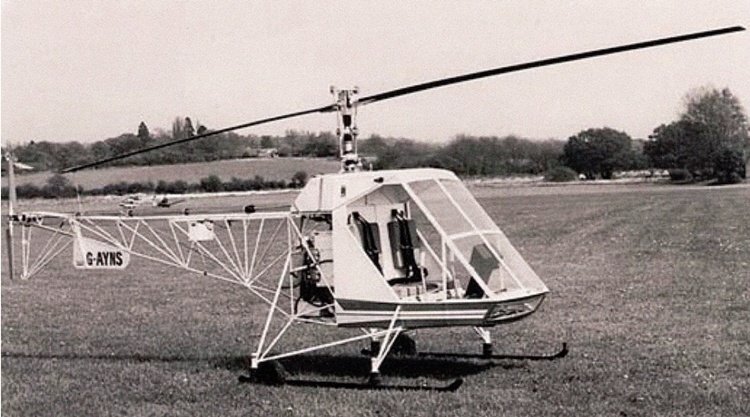
The Airmaster H2-B1 is a British two-seat ultralight helicopter built by Airmaster Helicopters of Camberley, Surrey. The H2-B1 was designed with the co-operation of the builders of the American Helicom helicopter. Construction of the prototype, registered G-AYNS, was started in September 1970 and it was first flown from Redhill Aerodrome on 12 September 1972. It was intended that an improved H2-B2 variant would enter production but only the prototype H2-B1 was built. The H2-B1 is a two-seat ultralight helicopter with a single two-bladed main rotor and a two-bladed tail rotor. The fuselage is a welded tubular structure skinned with aluminium and had two side-by-side configuration seats for the pilot and a passenger, it is also fitted with a skid landing gear, small wheels are fitted to allow the helicopter to be moved on the ground. The engine is a 100 hp (75 kW) Rolls-Royce Continental O-200-A air-cooled engine driving the main and tail rotors through a simple gearbox.
-
 The plane, a Piper JetProp DLX, had taken off from the Criciuma Diomicio Freitas Airport in Capao da Canoa, southeastern Brazil at around 10.40am on Friday. The Piper JetProp DLX is a Piper Malibu moified with a turboprop engine. But the six-seater jet clipped a pole at the end of the runway and crashed shortly after, killing all four on board. The restaurant was closed at the time. https://www.dailymail.co.uk/news/article-15705949/Horrifying-moment-plane-crashes-restaurant-killing-four-people.html
-
- 1
-

-
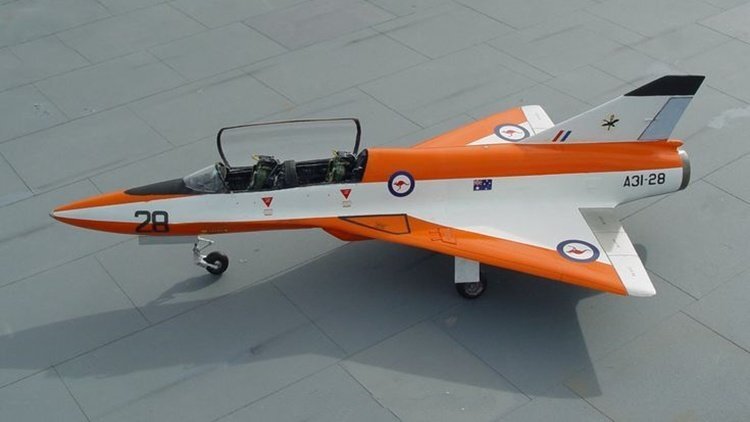
The CAC CA-31 (also known as the Sparrowhawk) was a supersonic lead-in fighter-trainer and light attack aircraft designed by the Commonwealth Aircraft Corporation (CAC) in the 1960s to bridge the gap between subsonic trainers and the supersonic Dassault Mirage III for the Royal Australian Air Force (RAAF). Although a full-scale mockup was constructed and the design was refined to include a Rolls-Royce RB.172 Adour turbojet engine capable of Mach 1.5 speeds, the project was cancelled in 1970 after the RAAF decided to procure the two-seat Mirage trainer variant instead.
-
Apparently not. Only one research model converted.
-
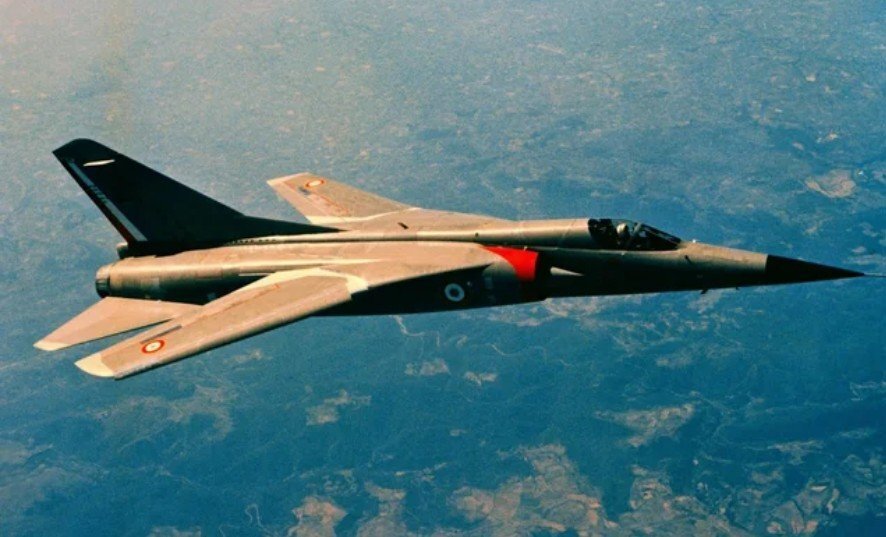
The Dassault Mirage G, also known as the Mirage IIIG, is a variant of the French Dassault Mirage series of supersonic warplanes, but with a variable-sweep wing. Three prototypes were flown; one single-engined G and two twin-engined G8 examples (which had begun construction as the G4). Various roles, equipment fits and other variants were proposed, but none entered production.,
-
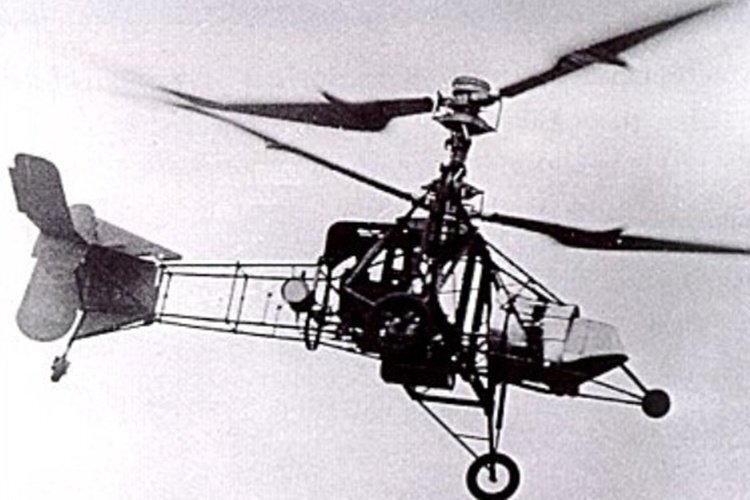
The Gyroplane Laboratoire was an early helicopter. Its designer, Frenchman Louis Breguet, had already experimented with rotorcraft in 1909; however, he chose to concentrate on airplanes until the end of the 1920s. In 1929 he announced a set of patents which addressed the flight stabilization of rotorcraft, and, in 1931, Breguet created the Syndicat d'Etudes de Gyroplane (French for "Syndicate for Gyroplane Studies"), together with Rene Dorand as technical director. Their goal was the development of an experimental helicopter, the Gyroplane Laboratoire. The aircraft consisted of an open steel tube framework, within which the engine, fuel tank, controls and pilot were situated, together with a tail assembly with plywood tail surfaces. The tailwheel landing gear was installed with the mainwheels on outriggers and with an additional small wheel at the front to avoid nosing-over during landing. Power was provided by a 240 HP Hispano radial engine which propelled the two contra-rotating, coaxial rotors. The coaxial rotor design was chosen because with the rotors turning in opposite directions the torque from one rotor was cancelled out by the torque produced by the other rotor. The two twin-bladed rotors made of metal were shaped like arrows and incorporated both cyclic and collective pitch blade control, with which movement around the pitch and roll axis was controlled, as well as climb and descent.
-
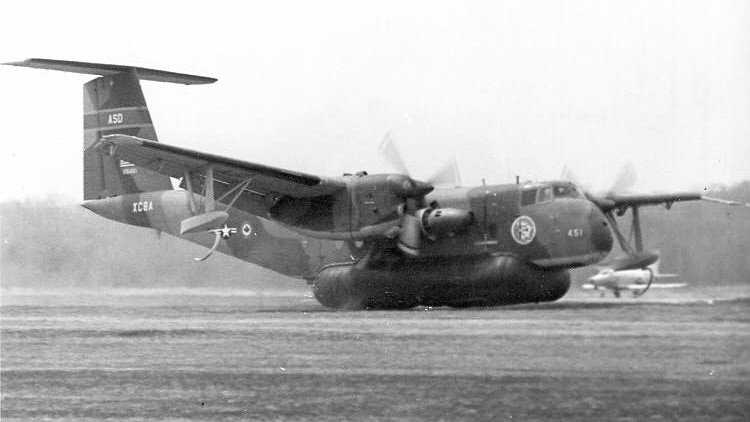
DHC-5A XC-8A Buffalo Air Cushion Landing System Aircraft After demonstrations by Bell aircraft using a Lake LA-4 fitted with an Air Cushion Landing Gear, the USAF and the Canadian Government wished to further explore the applications of the ACLS. They did so by retrofitting a similar system to a C-8A Buffalo. The air cushion system was inflated by two underwing air supply packages consisting of PT6F-70 turbofans powering two-stage axial flow fans. The aircraft also had underwing combination floats/skids.
-
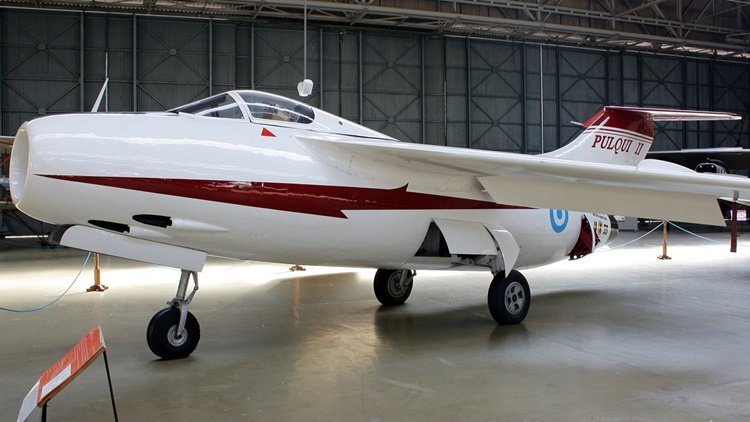
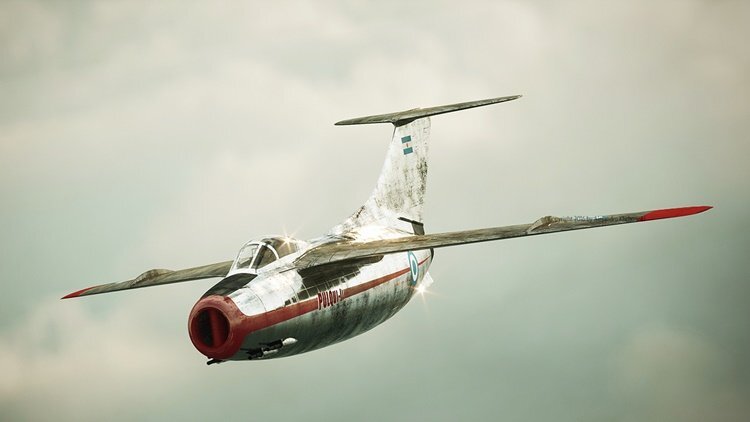
The FMA IAe 33 Pulqui II (in the indigenous language Mapuche, Pulqúi: Arrow) was a jet fighter aircraft designed by Kurt Tank in the late 1940s in Argentina, under the Perón government, and built by the Fábrica Militar de Aviones (FMA). Embodying many of the design elements of the wartime Focke-Wulf Ta 183, an unrealized fighter project, the FMA envisioned the IAe 33 Pulqui II as a successor to the postwar Gloster Meteor F4 in service with the Fuerza Aérea Argentina. The Pulqui II's development was comparatively problematic and lengthy, with two of the four prototypes being lost in fatal crashes. Despite one of the prototypes being successfully tested in combat during the 1955 Revolución Libertadora, the political, economic and technical challenges faced by the project meant that the IAe 33 was unable to reach its full potential, and the Argentine government ultimately chose to purchase F-86 Sabres from the United States in lieu of continuing development of the indigenous fighter to production status. Number built 1 static prototype + 4 flying prototypes Status Cancelled
-
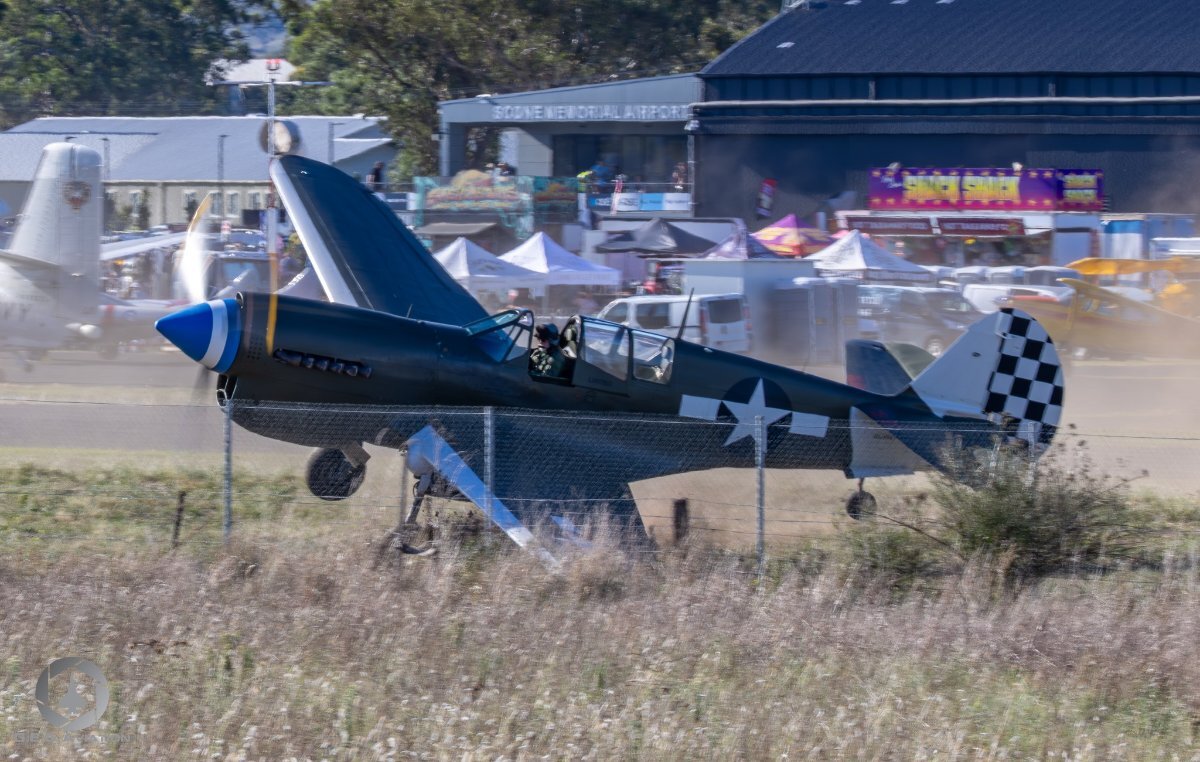
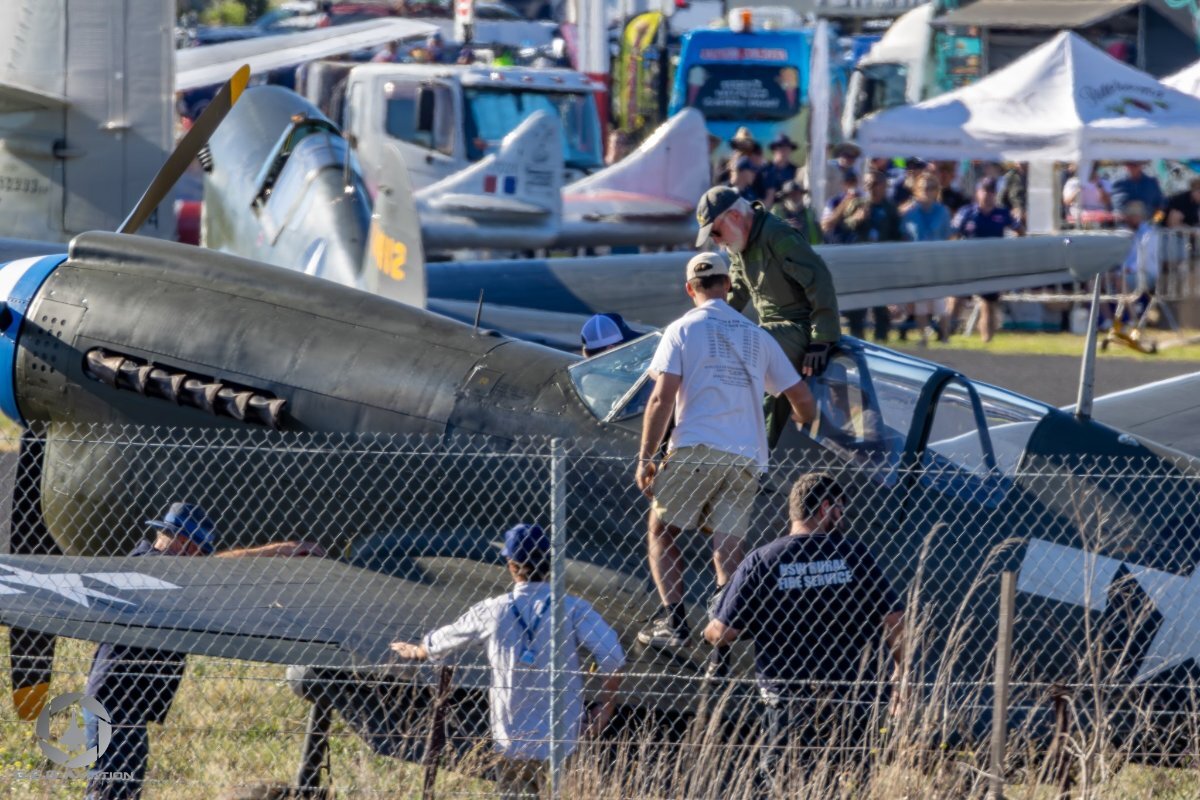
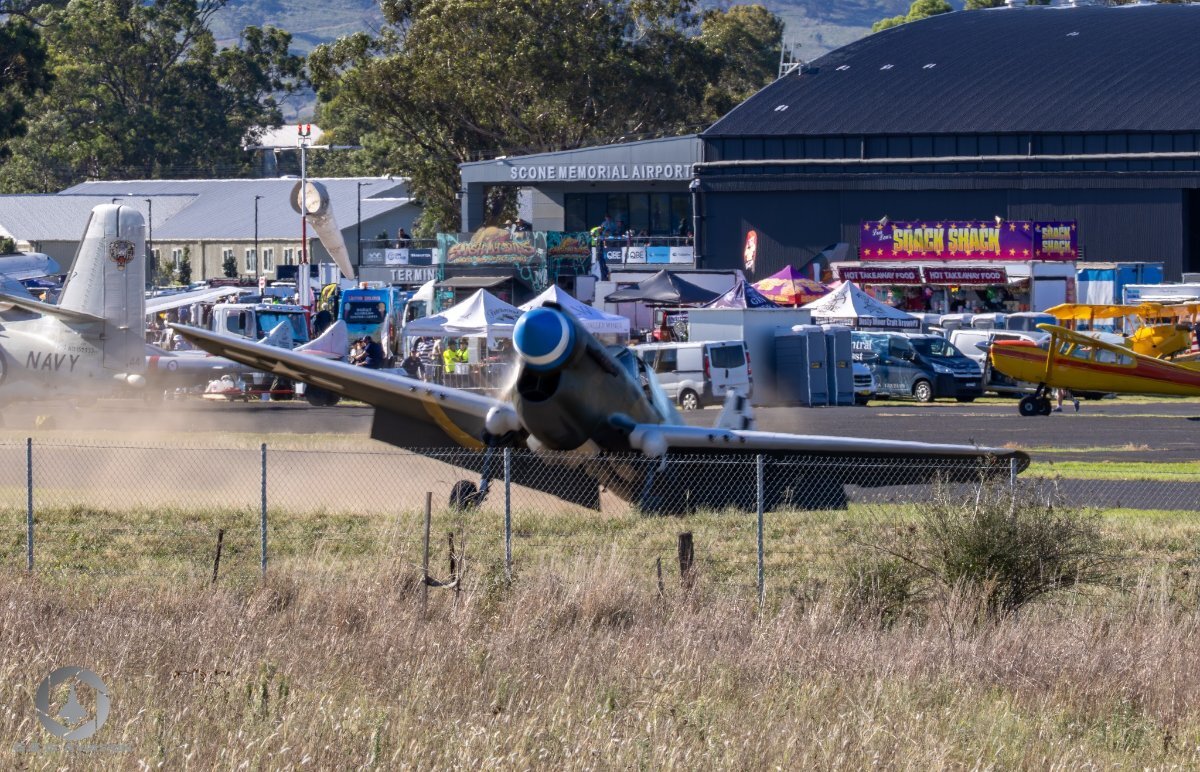
From a Facebook post by G.E.G Aviation Photography. 1943 Curtiss Kittyhawk P40N VH-PFO, Pacific Survivor incident at Warbirds Over Scone Sunday afternoon after landing ran off the runway, pilot was ok! Very professionalism of the pilot in a scenario like this,
-
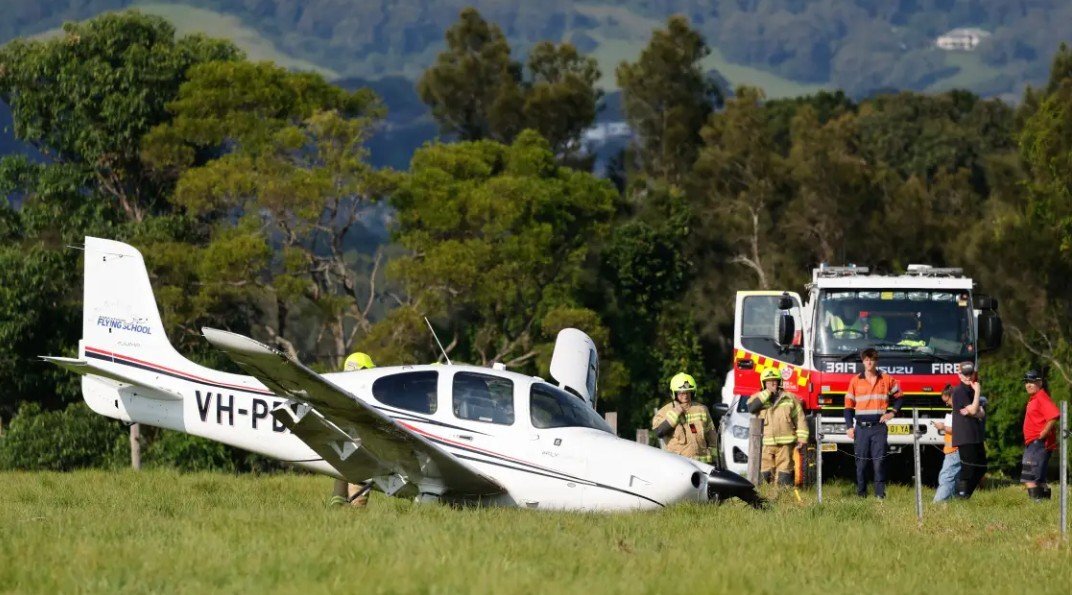
Plane crashes near Shellharbour Airport with 'funny echoes' heard moments before incident. A pilot has escaped with minor injuries after he crash landed in a dairy farm near Shellharbour Airport. I have no more details because I don't subscribe to the Illawarra Mercury.
-
Unfortunately I can't see them, I've been kicked off Facebook again. I read on reddit that this is fairly common. They quote some nonsense about breaching "Community Standards" (on Facebook???) but the common thought is, if you don't buy stuff advertised on FB, they don't want you. They keep details like your IP address, internet connection, etc, and now they require video facial ID, to prevent you opening another account under a different name. I thought Marty's photos were OK. Seen a lot worse.
-
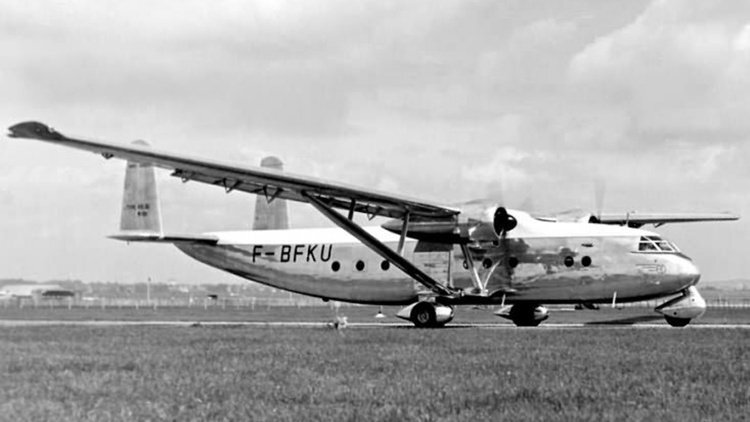
The Hurel-Dubois HD.321 was a high-wing, twin-engine tactical transport aircraft developed in France as an upgraded, elongated version of the HD.32, featuring more powerful Wright Cyclone 982-C9 engines (1,525 hp each) and a single vertical stabilizer. Although Air France ordered 23 units in 1955 to carry 44 passengers, the order was canceled in favor of the Vickers Viscount, leaving only two HD.321 aircraft built for the French Air Force. These two aircraft served primarily in tactical transport, aerial cartography, and special operations roles, including extensive testing in Algeria in 1956 and clandestine flights for the SDECE (French intelligence) beyond the Iron Curtain until 1967.
-
Top 10 Worst Planes of WW2 | Flite Test WWW.FLITETEST.COM Here is a shortlist of, quite simply, the very worst planes used during World War 2.
-
- 3
-

-
Gulfstream G100 (formerly IAI 1125 Astra)
red750 posted an aircraft in General Aviation (multi engine)
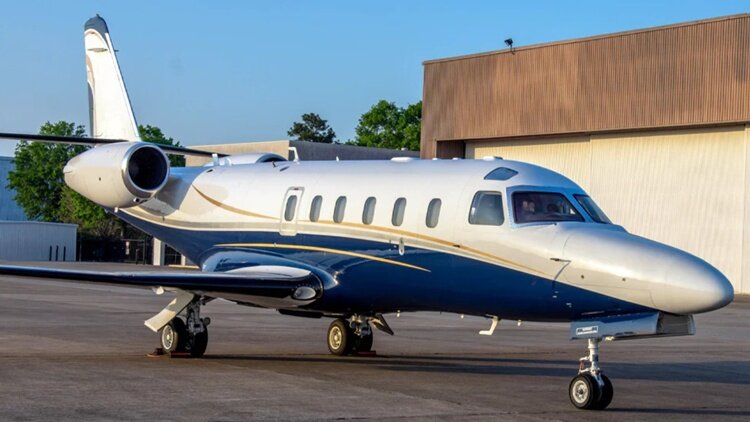 The Gulfstream G100, formerly known as the IAI Astra SPX, is an Israel Aerospace Industries-manufactured twin-engine business jet, that was produced for Gulfstream Aerospace. Deliveries began in 1986. The United States Navy employs the aircraft as the C-38A Courier. A later derivative known as the G150 was launched in 2002. Gulfstream announced the final sale of the G150 in September 2016 and the last delivery by mid-2017. Israel Aerospace Industries (IAI) developed the Astra from its Model 1124 Westwind business jet. Work on an improved Westwind began in the late 1970s, with the first prototype flight on 19 March 1984. The first production Astra flew on 20 March 1985, with FAA certification granted on 29 August 1985 and customer deliveries starting in 1986. The original 1125 Astra was replaced by the Astra SP, announced in 1989; 37 were built. The third variant, the Astra SPX, flew for the first time in August 1994. This variant was renamed G100 from September 2002 following Gulfstream's acquisition of Galaxy Aerospace, which held the Astra type certificate, in May 2001. In September 2002, Gulfstream announced the improved G150, based on the G100. This last variant features a wider (12 in) and longer fuselage (16 in aft of rear pressure bulkhead) updated avionics and an increase in maximum takeoff weight (MTOW) to 26,100 pounds (11,839 kg) compared to the G100's MTOW of 24,650 pounds (11,181 kg). It first flew on 3 May 2005 and was certified by the FAA in late 2005. It has been certified for the steeper-than-normal approach path required to land at London City Airport. IAI continued to manufacture G150s in Israel and the completed airframes were then flown to Dallas in the U.S. for interior outfitting. In September 2016, Gulfstream announced that, owing to slow sales, production would be stopped, with delivery of the final aircraft due in mid-2017. The Astra was further developed in the 1990s; the wing was modified and mated to a completely new fuselage. This development became the IAI Galaxy (later the Gulfstream G200). By 2018, Gulfstream G150s from 2006–2008 were in the range of $3.8 to $4.8 million. Variants IAI 1125 Astra Original version, powered by two 16.46 kilonewtons (3,700 lbf) Garrett TFE731-3A-200G turbofans. A total of 32 built. IAI 1125 Astra SP Version with modified aerodynamics (giving 53 nautical miles (61 mi; 98 km) increase in range), improved avionics and revised interior. A total of 36 built from 1990. IAI 1125 Astra SPX More powerful (18.90 kilonewtons (4,250 lbf) Honeywell TFE-731-40R-200G) engines and fitted with winglets. Increased weights and range. Gulfstream G100 marketing name of the IAI 1125 after the programme was taken over by Gulfstream Aerospace in 2001. A total of 77 Astra SPX and G100 aircraft were built. Gulfstream G150 Improved version of G100 with wider and longer cabin, a revised nose and uprated (19.7 kilonewtons (4,400 lbf)) engines. Nearly 120 were in service in 2016
 -
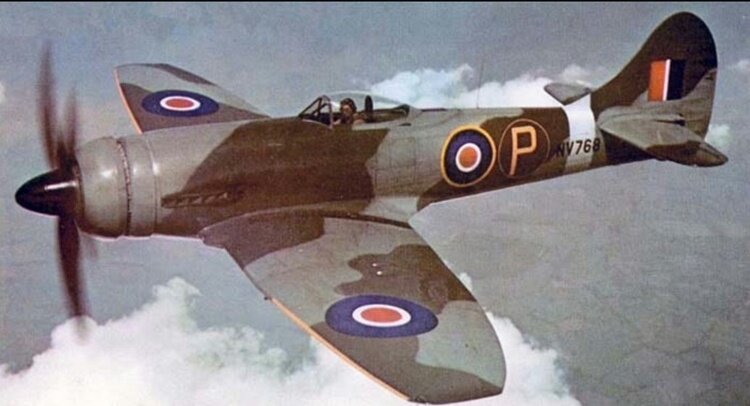 The Hawker Tempest is a British fighter aircraft that was primarily used in its Mk.V form by the Royal Air Force (RAF) in the later stages of the Second World War. The Tempest, originally known as the Typhoon II, was a significantly improved derivative of the Hawker Typhoon, intended to address the Typhoon's unexpected deterioration in performance at high altitude by replacing its wing with a thinner laminar flow design. Since it had diverged considerably from the Typhoon, it was renamed Tempest. The Tempest emerged as one of the most powerful fighters of World War II and at low altitude was the fastest single-engine propeller-driven aircraft of the war. Upon entering service in 1944, the Tempest performed low-level interception, particularly against the V-1 flying bomb threat, and ground attack supporting major invasions like Operation Market Garden. Later, it successfully targeted the rail infrastructure in Germany and Luftwaffe aircraft on the ground, as well as countering similar attacks by German fighters. The Tempest was effective in the low-level interception role, including against newly developed jet-propelled aircraft like the Messerschmitt Me 262. The further-developed Tempest II did not enter service until after the end of hostilities. It had several improvements, including being tropicalised for combat against Japan in South-East Asia as part of the Commonwealth Tiger Force. During development of the earlier Hawker Typhoon, the design team, under the leadership of Sydney Camm, had already planned out a series of design improvements; these improvements culminated in the Hawker P. 1012, otherwise known as the Typhoon II or "Thin-Wing Typhoon". Although the Typhoon was generally considered to be a good design, Camm and his design team were disappointed with the performance of its wing, which had proved to be too thick in its cross section, and thus created airflow problems which inhibited flight performance, especially at higher altitudes and speeds where it was affected by compressibility. The Typhoon's wing, which used a NACA 4 digit series wing section, had a maximum thickness-to-chord ratio of 19.5 per cent (root) to 12 per cent (tip), in comparison to the Supermarine Spitfire's 13.2 per cent tapering to 6 per cent at the tip, the thinner design being deliberately chosen to reduce drag. Other problems had been experienced with the Typhoon, such as engine unreliability, lack of structural integrity, and the inability to perform high altitude interception duties. In March 1940, engineers were assigned to investigate the new low–drag laminar flow wing developed by NACA in the United States, which was later used in the North American P-51 Mustang. A laminar flow wing adopted for the Tempest series had a maximum thickness-to-chord ratio of 14.5 per cent at the root, tapering to 10 per cent at the tip. The maximum thickness of the Tempest wing was set further back at 37.5 per cent of the chord versus 30 per cent for the Typhoon's wing, reducing the thickness of the wing root by five inches on the new design. The wingspan was originally greater than that of the Typhoon at 43 ft (13 m), but the wingtips were later "clipped" and the wing became shorter; 41 ft (12 m) versus 41 ft 7 in (12.67 m). The wing planform was changed to a near-elliptical shape to accommodate the 800 rounds of ammunition for the four 20 mm Hispano cannons, which were moved back further into the wing. The new wing had greater area than the Typhoon's, but the new wing design sacrificed the leading edge fuel tanks of the Typhoon. To make up for this loss in capacity, Hawker engineers added a new 21 in (53 cm) fuel bay in front of the cockpit, with a 76 Igal (345 L) fuel tank. In addition, two inter-spar wing tanks, each of 28 Igal (127 L), were fitted on either side of the centre section and, starting with late model Tempest Vs, a 30 Igal (136 L) tank was carried in the leading edge of the port wingroot, giving the Tempest a total internal fuel capacity of 162 Igal (736 L). Another important feature of the new wing was Camm's proposal that the radiators for cooling the engine be fitted into the leading edge of the wing inboard of the undercarriage. This eliminated the distinctive "chin" radiator of the Typhoon and improved aerodynamics. A further improvement of the Tempest wing over that of the Typhoon was the exceptional, flush-riveted surface finish, essential on a high-performance laminar flow airfoil. The new wing and airfoil, and the use of a four-bladed propeller, acted to eliminate the high frequency vibrations that had plagued the Typhoon. The design team also chose to use the new Mark IV version of the Napier Sabre H-block 24 cylinder engine for the Tempest, drawings of which had become available to Hawker in early 1941. For further details of development, prototypes, design and variants, click here.
 -
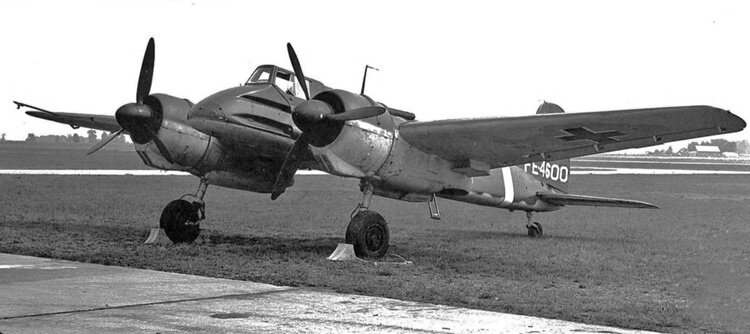 The Henschel Hs 129 was a ground-attack aircraft designed and produced by the German aircraft manufacturer Henschel Flugzeugwerke AG. Fielded by the Luftwaffe during the Second World War, it saw combat in Tunisia and on the Eastern Front. During the latter half of 1930s, influenced by the experiences of German Condor Legion during the Spanish Civil War, the Reichsluftfahrtministerium (RLM; "Reich Aviation Ministry") sought a new ground-attack aircraft. The specification required protection from ground-based small arms fire, for which Henschel's design (which was initially designated at the P 46) incorporated a steel "bathtub" with angled fuselage sides and a compact canopy that was fitted with tiny windows. A further requirement of the specification was that the aircraft be powered by engines that were not in demand for other types; accordingly, the Hs 129 was designed to be equipped with low-power German Argus As 410 engines, which were only capable of 465 PS (459 hp; 342 kW). On 29 May 1939, the prototype Hs 129 performed its maiden flight. Early flight testing was largely unsatisfactory, the aircraft proving to be underpowered and overweight while offering poor visibility to the pilot. These problems were addressed with a new canopy with more glazing and the more powerful French Gnome-Rhône 14M engine, which could produce up to 700 PS (690 hp; 515 kW). As such, the Hs 129 A-0 was promptly succeeded by the Hs 129 A-1 and Hs 129 B-1. While Henschel faced competition to fulfil the requirement in the form of the Focke-Wulf Fw 189, the Hs 129 was both smaller and cheaper, and thus continued to hold the RLM's favour. Quantity production of the type was achieved during early 1942. The Hs 129 was relatively effective when introduced to Luftwaffe service in April 1942. It served on the Eastern Front in a variety of frontline roles. As the conflict progressed, an emphasis on anti-tank support saw the aircraft being continually up-gunned, eventually mounting a 75 mm anti-tank cannon. Only a small number of these Hs 129 B-3 aircraft were produced to see action relatively late in the war. Production of the type peaked in 1943 and finished in September 1944 alongside Nazi Germany's declining military position, although use of the HS 129 continued into the closing months of the conflict. Despite the considerable development problems, a total of 865 units were ultimately built. For extensive details of the development problems with the 5 variants, click here.
 -
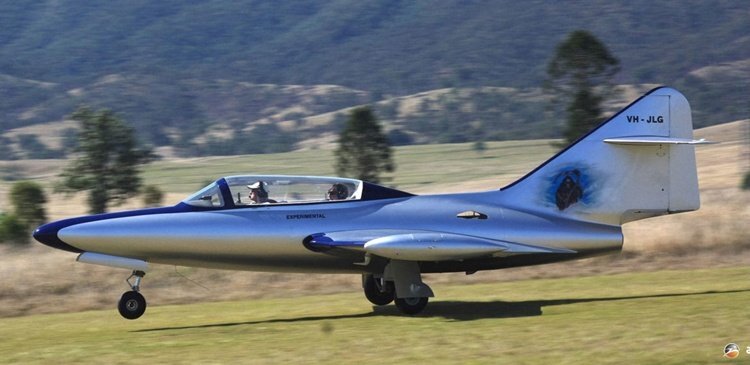
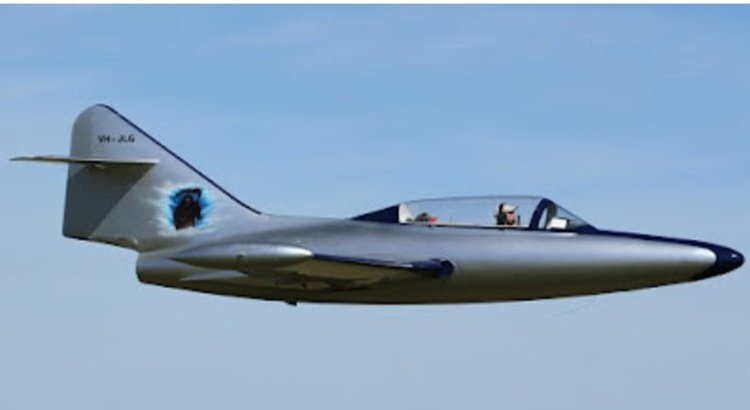
Gross JG-2 (Credit: aeropedia.com.au) The Panther was a two-seat experimental jet project that was constructed and developed in Queensland by John Gross. After designing and building the JG-1, a 15 metre sailplane (VH-KYI – c/n GFA/HB/113) he decided to build a 75 per cent scale replica of the Grumman F9F-2 Panther Korean war era United States Navy (USN) carrier-borne jet aircraft. The first successful US Navy jet fighter of the 1950s, the Panther went on to achieve its first ‘kill’ against a Mikoyan & Gurevich MiG 15 on 9 November 1950. The JG-2 took seven years to design and build and made its first flight in February 2006. It is constructed of fibreglass with a balsa-wood core and some carbon for strength. It was registered VH-JLG (c/n 1) to its designer / builder on 23 November 2005. Engine was a modified General Electric J-58, having a compressor diameter of 25.4 cm (10 in) and weighing 122.4 kg (270 lb). The aircraft was painted silver overall with dark blue markings. The engine that was installed commenced life as the J-58-8F providing 932 kw (1,250 shp) in the Kaman Seasprite helicopter in US Navy service and when it was decided to replace the engine with a new type many were removed and sold, some being converted to turbojets for aircraft and others being placed in racing boats. Following a series of 40 test flights the JG-2 was described by the owner as “a safe and forgiving aircraft”. On one occasion was flown from Queensland to Cowra, NSW for a Sports Aircraft Association aviation event, making two fuel stops on the way. At max throttle it used 500 litres (110 Imp gals) of fuel per hour; whereas at 370 km/h (230 mph) at 85 per cent power it used 200 litres (44 Imp gals) per hour. Gross JG-2 prototype VH-JLG (c/n 1) taking off at Watts Bridge, QLD (David C Eyre)
-
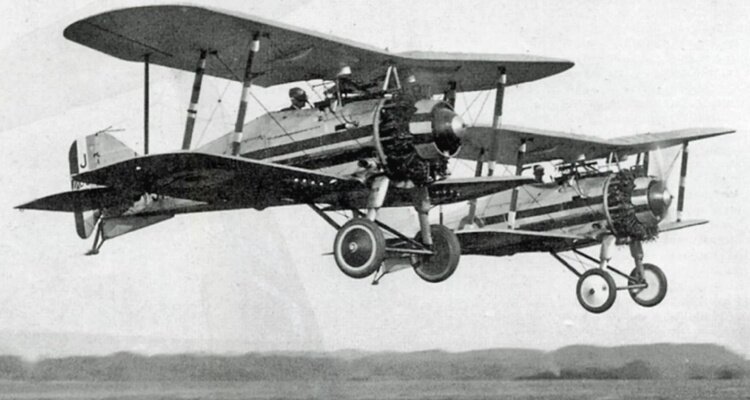 The Gloster Grebe was developed by the Gloster Aircraft Company from the Gloster Grouse (an experimental aircraft later developed as a trainer), and was the Royal Air Force's first post-First World War fighter aircraft, entering service in 1923. In 1923, Gloster modified a Gloster Sparrowhawk fighter trainer with new wings to test a layout proposed by chief designer Henry Folland, combining a thick, high-lift section upper wing and a thinner, medium-lift lower wing, with the intention of combining high lift for takeoff with low drag. After the Grouse demonstrated that the new layout was a success, the British Air Ministry placed an order for three prototype fighters based on the Grouse (and therefore derived ultimately from Folland's Nieuport Nighthawk fighter of 1919), but powered by a 350 horsepower (260 kW) Armstrong Siddeley Jaguar III radial engine, as the "Nighthawk (thick-winged)". The first of the prototypes (Gloster built a fourth machine as a company-owned demonstrator), by now known as the Grebe I, flew during May 1923. The performance of these prototypes during testing at RAF Martlesham Heath was good, and the Air Ministry decided to order the type into production as the Grebe II, this having a 400 horsepower (300 kW) Jaguar IV engine. Like the Sopwith Snipe it replaced, the Grebe was a single-seat, single-engined biplane of fabric-covered wood construction. The fuselage had ash longerons and spruce stringers joined to plywood formers, while the single-bay wings (which had a considerable overhang outboard of the struts), had fabric-covered spruce spars and ribs. Two synchronised .303 in (7.7 mm) Vickers machine guns were mounted on the fuselage top decking. Variants Gloster Grouse Experimental aircraft. Grebe Mk I Single-seat fighter prototype, 4 built. Grebe Mk II (Specifications below) Production single-seat fighter variant with a 400 hp Armstrong Siddeley Jaguar IV engine, oleo-type landing gear and other modifications, 129 built. Grebe (Dual) Following a trial modification to Grebe II J7519 a small number of the Grebe II production aircraft were completed as two-seat training aircraft in 1925.
 -
The Miles M.100 Student was built as a lightweight trainer as a private venture by F.G. and George Miles with development started in 1953. Although not specifically a Miles product, it was promoted as a British Royal Air Force trainer but failed to enter production. Building on the company's experience with the M.77 "Sparrowjet", the M.100 Student was a two-seat, side-by-side, all-metal jet trainer. The M.100 prototype was powered by a 400 kgf (882 lb) thrust Turbomeca Marbore turbojet and flew for the first time on 15 May 1957. Miles had hoped to secure an RAF order, but the contract went to the Jet Provost. The Student was proposed for several training programmes, but without success. G-APLK, the sole aircraft, was allocated XS941 when developed in the Mark 2 version as a prospective Counter-insurgency type. It was tested by the Royal Air Force but was not accepted and therefore did not go into production.
-
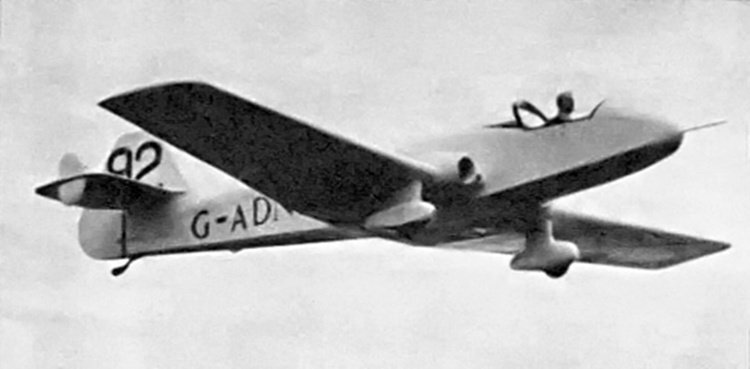
The Miles M.77 Sparrowjet was a twin-engined jet-powered racing aircraft built by the British aircraft manufacturer F.G. Miles Limited. It was a one-off conversion, involving the fitting of Turbomeca Palas turbojet engines to the prototype Miles Sparrowhawk, enabling the aircraft to achieve higher performance than could be achieved with its conventional piston engine arrangement. The Sparrowhawk had been a racing aircraft developed and produced in small numbers by Miles Aircraft during the 1930s. During the late 1950s, the owner of one such aircraft, Fred Dunkerley, requested that Miles look into converting the type to use jet propulsion for greater performance. During December 1959, the company received the aircraft to perform the extensive modification programme; in addition to the installation of French Palas turbojets, the original piston engine was eliminated while the forward fuselage was entirely replaced and rebuilt with the cockpit in a more forward position. The conversion took almost three years to perform. On 14 December 1953, the completed Sparrowjet conducted its maiden flight. While the aircraft proved to be capable of speeds in excess of 200 mph, it was noted to accelerate somewhat slowly. Its owner quickly put it to use as a somewhat unique racing aircraft for the era, a factor which likely aided the Sparrowjet in multiple victories, including the SBAC Challenge Cup on 21 May 1956, and the King's Cup Race on 13 July 1957, the latter in which the aircraft had reported attained a maximum speed of 228 mph (367 km/h). However, the Sparrowjet was heavily damaged by a hangar fire while being stored at RAF Upton during July 1964, ending its racing career. Only one Sparrowjet was built.
-
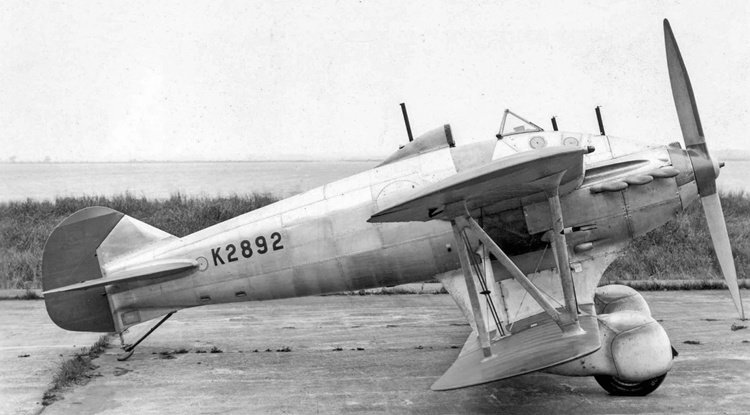
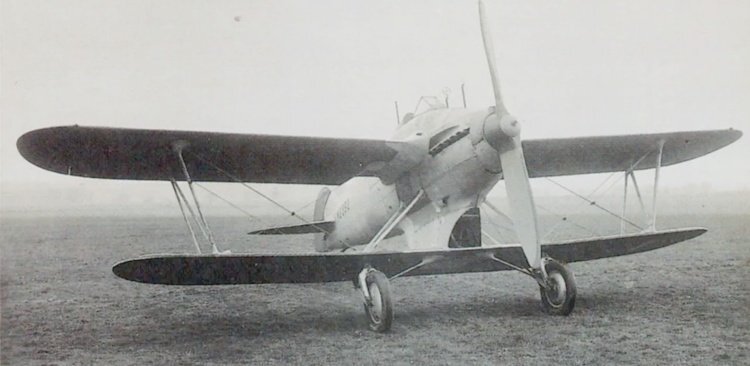
The Blackburn F.3 (also called the Blackburn F.7/30) was a British single-engined fighter aircraft produced in response to Air Ministry Specification F.7/30. Following the release of Air Ministry Specification F.7/30 for a single-seat day and night fighter, eight companies proposed twelve designs and three, including Blackburn Aircraft, received contracts to produce a prototype. Blackburn's design, the F.3, was a single-bay biplane of unequal wingspan and with an unusual configuration, the upper wing being mounted approximately halfway up the stressed-skin fuselage and the lower wing about two feet below it, the gap being occupied by an enclosure for the condenser of the evaporatively-cooled Goshawk III engine. The undercarriage was attached to the front spar of the lower wing, with diagonal struts transmitting the landing loads to the fuselage longerons. The wheels were fitted with spats but these were later removed. Four Vickers machine-guns were fuselage mounted, two in mid-position on the fuselage and the other two on either side of the top of the condenser housing. Taxiing trials of the F.3 began on 20 July 1934 but the combination of a short fuselage and a high centre of gravity made it difficult to manoeuvre on the ground and the engine suffered from cooling problems. Further development was stopped when, after an inspection revealed damage to the rear fuselage resulting from the taxiing trials, the Air Ministry withdrew support for the project since the aircraft would have been too delayed to take part in the trials. Following evaluation of F.7/30 designs an order was placed for the Gloster Gladiator. Only 1 was produced, but it never flew.
-
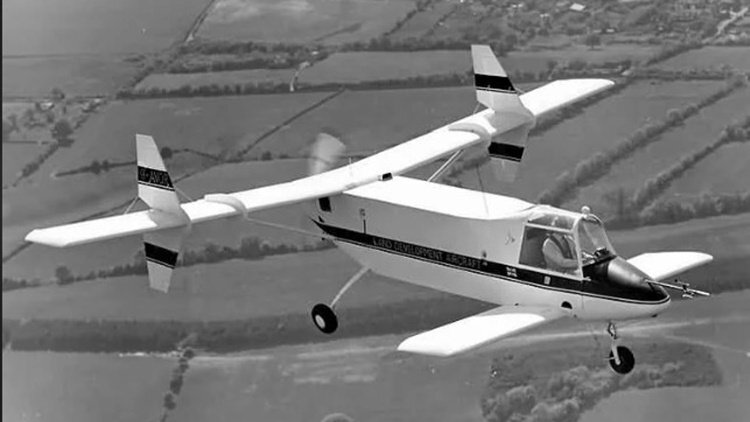
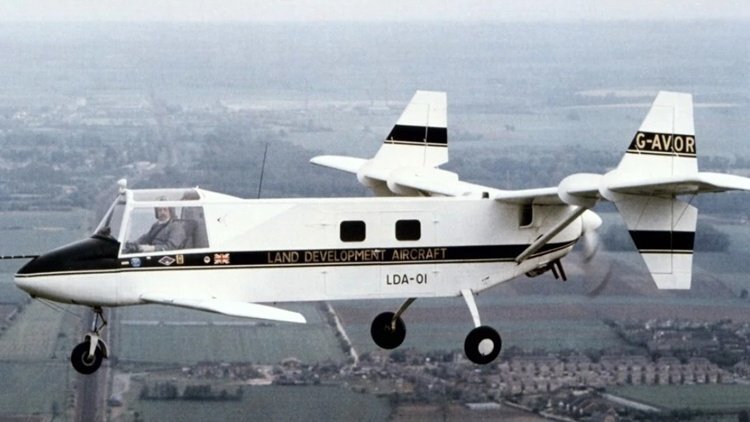
The Lockspeiser LDA-01 ("Land Development Aircraft") was a British seven-tenths scale research and development tandem wing aircraft, which was designed and built by test pilot and engineer David Lockspeiser to prove a concept for a low-cost utility transport. The LDA-01 was a single-seat tandem-wing monoplane, fabric covered with metal construction. The foreplane had a common design to the separately made port and starboard wings of the main plane, giving it half the area. The intention was to reduce the number of spare parts needed by re-using the same wing component interchangeably in each location. The main wings were mounted at the rear-end of the box structure fuselage and the fore wing was attached underneath the front. The fuselage was fitted initially with a four-wheeled landing gear and was designed to be fitted with a detachable payload container to allow easy conversion between roles. The landing gear was changed later in development to a more conventional tricycle configuration. It was powered by a rear-mounted pusher engine. The LDA-01 G-AVOR first flew on 24 August 1971 at Wisley in Surrey, under the power of an 85 hp (63 kW) Continental C85 piston engine, but was later refitted with a more powerful Lycoming O-320 engine. The aircraft (which by this time had been re-registered G-UTIL), and had been renamed the Boxer 500, was being modified to planned production configuration by Brooklands Aerospace at Old Sarum Airfield when it was destroyed in a fire on 16 January 1987.
-
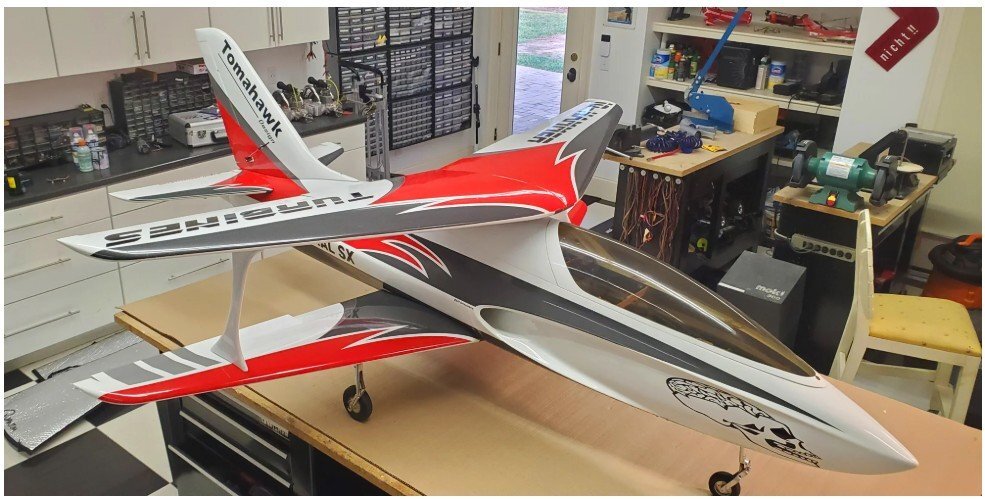
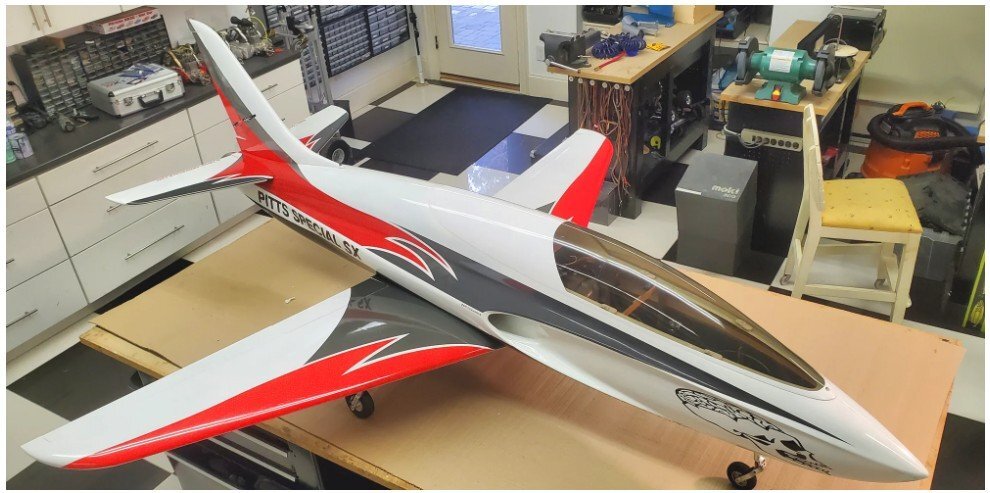
Tomahawk Quantum/Mono Biplane/LowWing Jet combo - 2 Jets in 1! With IQH180+ https://www.aeroscale.shop/products/tomahawk-mono-biplane-jet-combo-2-jets-in-1 On Youtube:
-
- 1
-