red750
-
Posts
8,261 -
Joined
-
Last visited
-
Days Won
79
Content Type
Profiles
Forums
Gallery
Downloads
Blogs
Events
Store
Aircraft
Resources
Tutorials
Articles
Classifieds
Movies
Books
Community Map
Quizzes
Videos Directory
Everything posted by red750
-
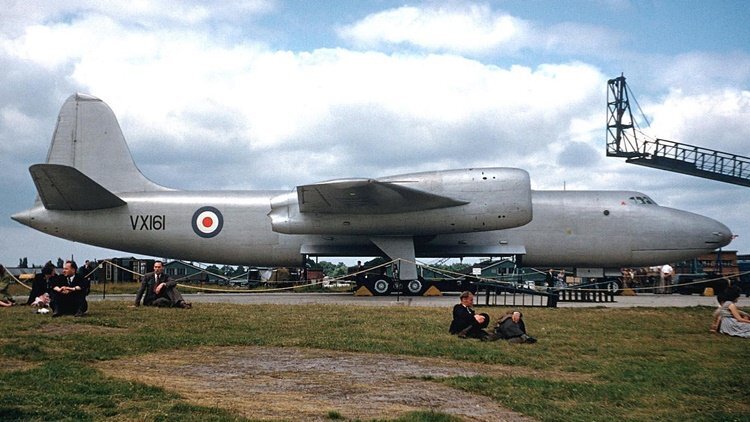
The Short SA.4 Sperrin (named after the Sperrin Mountains) was a British jet bomber design of the early 1950s, built by Short Brothers and Harland of Belfast. It first flew in 1951. From the outset, the design had been viewed as a fall-back option in case the more advanced strategic bomber aircraft, then in development to equip the Royal Air Force's nuclear-armed V bomber force, experienced delays; the Sperrin was not put into production because these swept-wing designs, such as the Vickers Valiant, were by then available. As their usefulness as an interim bomber aircraft did not emerge, a pair of flying prototypes were instead used to gather research data on large jet aircraft and to support the development of other technologies, such as several models of jet engines. The two aircraft completed were retired in the late 1950s and scrapped sometime thereafter. The Air Ministry issued a specification on 11 August 1947 B.14/46 for a "medium-range bomber landplane" that could carry a "10,000 pound [4,500 kilogram] bomb load to a target 1,500 nautical miles [2,780 kilometres] from a base which may be anywhere in the world", with the stipulation it should be simple enough to maintain at overseas bases. The requirements also included a weight of 140,000 pounds (64 tonnes). This request would become the foundation of the Royal Air Force's V bombers, Britain's airborne nuclear deterrent. At the same time, the British authorities felt there was a need for an independent strategic bombing capability—in other words that they should not be reliant upon the United States Strategic Air Command. In late 1948, the Air Ministry issued their specification B.35/46 for an advanced jet bomber that would serve as a successor to the Avro Lincoln, the then-standard heavy aircraft of RAF Bomber Command, and that it should be the equal of anything that either the Soviet Union or the United States would have. The exact requirements included that the fully laden weight would be under 100,000 pounds (45.36 tonnes), the ability to fly to a target 1,500 nautical miles (1,700 mi; 2,800 km) distant at 500 knots (580 mph; 930 km/h) with a service ceiling of 50,000 ft (15,000 m) and again that it should be simple enough to maintain at overseas bases. A further stipulation that a nuclear bomb (a "special" in RAF terminology), weighing 10,000 lb (4,500 kg) and measuring 30 ft (9.1 m) in length and 10 ft (3.0 m) in diameter, could be accommodated. This request would be the foundation of the V bombers. The Air Ministry accepted that the requirement might prove to be difficult to achieve in the time-scale required and prepared for a fall-back position by re-drafting B.14/46 as an "insurance" specification against failure to speedily develop the more advanced types that evolved into the Vickers Valiant, Avro Vulcan and Handley Page Victor, as this was to be a less ambitious conventional type of aircraft, with un-swept wings and some sacrifice in performance. The only significant performance differences between B.14/46 and the more advanced B.35/46 were a lower speed of 435 knots (501 mph; 806 km/h) and a lower height over the target of 35,000 to 45,000 ft (11,000 to 14,000 m).[8] According to aviation authors Bill Gunston and Peter Gilchrist, the specification's ignorance of a swept wing was odd for the era, and had been made in order to allow the prospective bomber to be delivered more quickly. A total of four firms submitted tenders to meet the B.14/46 specification, Shorts' submission was selected as it had been judged to be superior. The selection of Shorts was "astonishing" according to Bill Gunston and Peter Gilchrist, and noted that their submission, while being a sound design, had apparently been subject to luck. Under this requirement, the Air Ministry placed a contract for two flying prototypes and a static airframe with Shorts. The design was known initially by the company designations of S.42 and SA.4; the aircraft would later receive the name "Sperrin". As the Sperrin was considered to be a possible production aircraft early on, a decision was taken for the two prototypes to be constructed upon production jigs; this served to slow their construction. Bill Gunston and Peter Gilchrist commented that, if a subsequent production order had been issued, an initial operational squadron could have been equipped by late 1953.

-
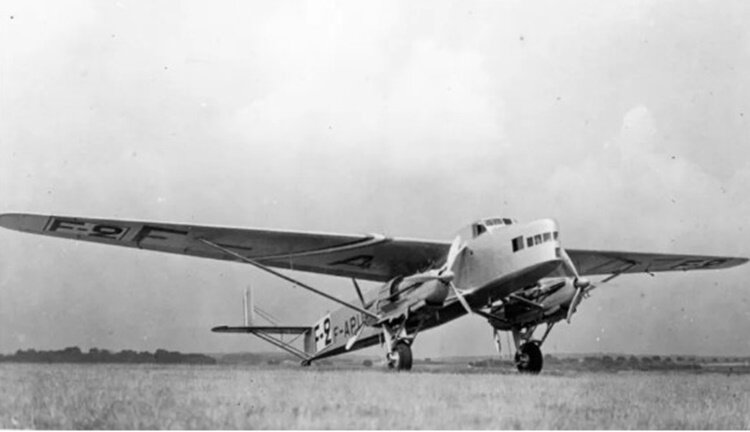 The Farman F.220 and its derivatives were thick-sectioned, high-winged, four engined French monoplanes from Farman Aviation Works. Based on the push-pull configuration proven by the F.211, design started in August 1925 and the first flight of the prototype was on 26 May 1932. The largest bomber to serve in France between the two world wars was the final F.222 variant. One variation was intended to be an airliner. After testing the sole F.220 prototype, Farman made a number of changes to the design, including a new tail fin, fully enclosing the nose and ventral gunners' positions, and changing from V-engines to radials. The first example of this version, dubbed the F.221 flew in May 1933, and was followed by ten production examples delivered to the Armee de l'Air from June 1936. These machines featured hand-operated turrets for the three gunners' stations. Meanwhile, the prototype F.220 was sold to Air France, where christened Le Centaur, it flew as a mail plane on the South Atlantic route. This led to a batch of four similar aircraft being built for the airline. The F.222 variant began to enter service with Armee de l'Air in the spring of 1937. Unlike its predecessor, this plane featured a retractable undercarriage. Twenty-four aircraft were produced with redesigned front fuselages and dihedral added to the outer wing. During World War II these planes were used in leaflet raids over Germany and then night bombing raids during May and June 1940. These resulted in three losses. The Farman F.222 was involved in a notable operation carried out by French fighter pilot James Denis. On 20 June 1940, realising that the Battle of France was lost, Denis borrowed a Farman F.222 from an airbase near Saint-Jean-d'Angély. He flew to Britain with twenty of his friends, and joined the Free French Air Force, in which service he subsequently became an ace, shooting down nine German aircraft. The F.223 (redesignated NC.223 when Farman was absorbed into SNCAC) incorporated significant changes, including a twin tail and a considerably refined fuselage. The first prototype was ordered as a long-range mail plane and in October 1937 established a record by flying 621 miles with a 22,046 lb payload. The Ministère de l'Air ordered a production run of 8 of the NC223.3 variation which was commenced in 1939. A variant NC 223.4 Jules Verne, a mail delivery plane converted back into a bomber after requisition in the beginning of World War II, of French Naval Aviation was the first Allied bomber to raid Berlin: on the night of 7 June 1940 aircraft of this variant dropped eight bombs of 250 kg and 80 of 10 kg weight on the German capital. This operation, which was of a primarily psychological-warfare nature, was repeated three days later. The first NC 223.3 bombers were delivered in May 1940 and participated in night bombing attacks on Germany before being transferred to North Africa in June 1940. The bombers were subsequently relegated to transport roles, seeing service with both the Vichy regime and the Free French. The F.224 was a dedicated civil variant able to seat 40 passengers. Six machines were produced for Air France, but were ultimately rejected because the 224 could not maintain altitude on three engines. The aircraft went on to serve in the Armée de l'Air instead with a reduced payload. Much of the known variants provided light carpet bombings of up to 52 50 kg bomb, one of the largest payloads ever to be dropped from an aircraft at that time. Variants Farman F.220 Farman F.220.01 - prototype with Hispano-Suiza 12Lbr engines (1 built) Farman F.220B - mailplane (converted from F.220) Farman F.220-0 - production version of the F.220B (4 built) Farman F.221 revised version with enclosed gunners' positions, powered by 4x Gnome-Rhône 14Kdrs engines, (10 built, plus one F.221.01 prototype). Farman F.222 definitive production version Farman F.222.1 - revised version with retractable undercarriage and turrets, powered by 4x Gnome-Rhône 14Kirs engines (11 built) Farman F.222.01 prototype converted from the F.221.01 Farman F.222.2 - F.222.1 with redesigned nose, powered by 4x Gnome-Rhône 14N-11 engines, (24 built). Farman F.2220 - airliner prototype for Air France as Ville de Dakar, powered by 4x Hispano-Suiza 12Xgrs engines, (1 built). Farman F.223 version with twin tail and revised aerodynamics, 1,100 hp (820 kW) Hispano-Suiza 14AA-08 / Hispano-Suiza 14AA-09 engines S.N.C.A.C. NC.223.1 - prototype, built as mailplane Laurent Guerrero (1 built) S.N.C.A.C. NC.223.01 - bomber prototype with Hispano-Suiza 12Xirs engines (1 built) S.N.C.A.C. NC.223.2 - bomber version with Gnome et Rhône 14N engines (not built) S.N.C.A.C. NC.223.3 - bomber version with 910 hp (679 kW) Hispano-Suiza 12Y-29 engines (8 built) S.N.C.A.C. NC.223.4 - mailplane version (3 built: Camille Flammarion, Jules Verne, and Le Verrier) S.N.C.A.C. NC-2230 - A single postal transport powered by 4x Hispano-Suiza 12Xirs engines. S.N.C.A.C. NC-2233 - A Bomber version of the F.233 powered by 4x Hispano-Suiza 12Y-29 engines, (15 built). S.N.C.A.C. NC-2234 - Three airliners built for Air France, powered by 4x Hispano-Suiza 12Y-37 engines Farman F.224 40-seat airliner with Gnome-Rhône 14N-01[5] engines for Air France but rejected (6 built)[6] Farman F.224TT - F.224s converted to troop transports for the Air Force.
 -
 Here's another one in LA, lucky to survive.
 -
Australia's world-leading Wedgetail surveillance planes coming up for replacement, Defence planning reveals - ABC News WWW.ABC.NET.AU Australia's fleet of world-leading surveillance aircraft is set to be replaced and analysts say the planes could be replaced by drones.
-
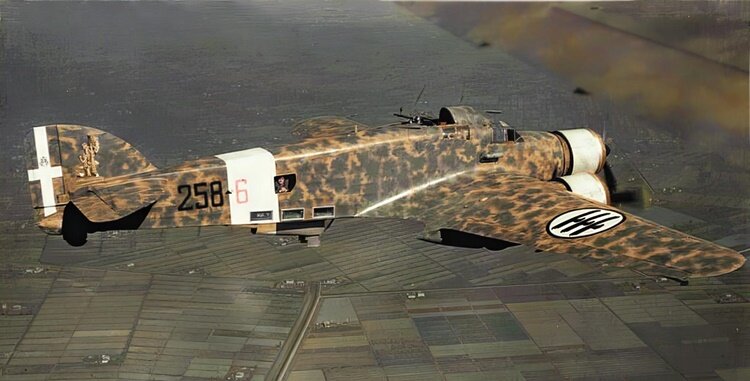 The Savoia-Marchetti SM.79 Sparviero (Italian for sparrowhawk) is a three-engined medium bomber developed and manufactured by the Italian aviation company Savoia-Marchetti. It may be the best-known Italian aeroplane of the Second World War. The SM.79 was easily recognizable due to its fuselage's distinctive dorsal "hump", and was reportedly well liked by its crews. It was nicknamed il gobbo maledetto ("damned hunchback"). The SM.79 was developed in the early 1930s. It is a cantilever low-wing monoplane of combined wood and metal construction, designed with the intention of producing a swift eight-passenger transport aircraft capable of outperforming the fastest of its contemporaries, but its potential as a combat aircraft quickly attracted the attention of the Italian government. It made its first flight on 28 September 1934 and early examples of the type established 26 separate world records between 1937 and 1939, qualifying it for some time as the fastest medium bomber in the world.[4] As such, the SM.79 quickly came to be regarded as an item of national prestige in Fascist Italy, attracting significant government support and often being deployed as an element of state propaganda. Early on, the aircraft was routinely entered in competitive fly-offs and air races, seeking to capitalise on its advantages, and often emerged victorious in such contests. The SM.79 first saw combat during the Spanish Civil War. In this theatre it normally operated without fighter escort, relying on its high speed to evade interception. The SM.79's performance during the Spanish deployment was successful and stimulated demand for the type, including a decision to adopt it as the backbone of Italy's bomber units. Both Yugoslavia and Romania opted to procure the type for their own air services, while large numbers were also procured for the Regia Aeronautica. Almost 600 SM.79-I and –II aircraft were in service when Italy entered the Second World War in May 1940; thereafter, they were deployed in every theatre of war in which the Italians fought. The SM.79 was operated in various capacities during the Second World War, initially being used mainly as a transport aircraft and medium bomber. Following pioneering work by the "Special Aerotorpedoes Unit", Italy put the type to work as a torpedo bomber; in this role, the SM.79 achieved notable successes against Allied shipping in the Mediterranean theatre of the war. A specialised drone version of the aircraft flown by remote control was also developed, although the Armistice with Italy was enacted prior to any operational deployment. It was the most numerous Italian bomber of the Second World War, with about 1,300 built. The type would remain in Italian service until 1952. The SM.79 was a cantilever low-wing monoplane trimotor, with a retractable taildragger undercarriage. The fuselage had a welded tubular steel framework covered with duralumin on the forward section, a mixture of duralumin and plywood across the upper fuselage surface, and fabric for all of the other exterior surfaces. The wings were of all-wood construction, with trailing edge flaps and leading edge slats (Handley Page style) to offset their relatively small size. The structure consisted of three spruce and plywood spars, linked with plywood ribs, with a skin of plywood. The wing had a dihedral of 2° 15'. The ailerons were capable of rotating through +13/-26°, and were used together with the flaps in low-speed flight and in takeoff. The aircraft's capabilities were significantly greater than its predecessor, the SM.75, with over 1,715 kW (2,300 hp) available and a high wing loading that gave it characteristics not dissimilar to a large fighter. For more details of development, design, operational history and 10 variants, click here.
 -
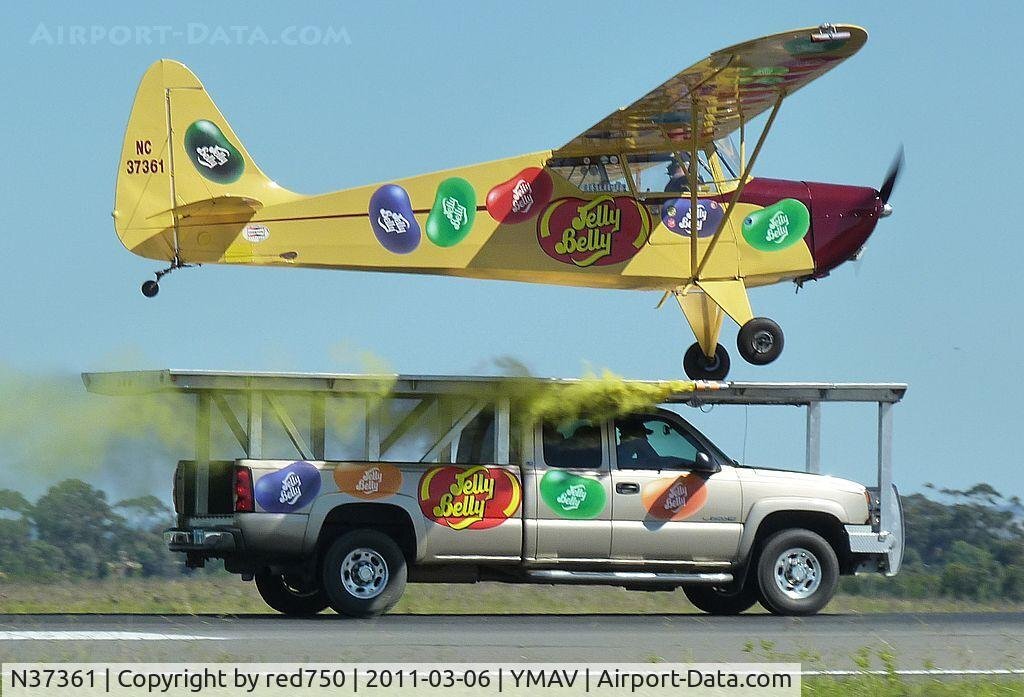
1941 Interstate S-1A-65F Cadet
-
Not unlike this at Avalon 2011.
-
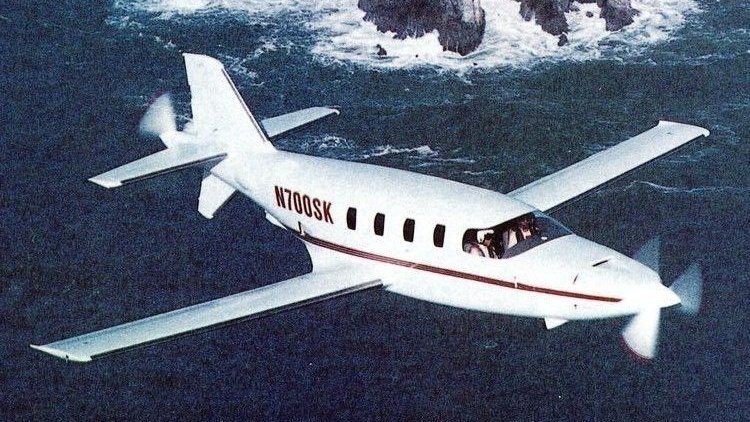
The Starkraft SK-700 is a light transport aircraft featuring a unique push-pull configuration with a low-wing, all-composite design. It was powered by two 350 hp Teledyne-Continental TSIOL 550A engines, with the forward engine acting as a tractor and the rear engine as a pusher connected via a drive shaft. The aircraft was designed by Martin Hollmann at Aircraft Designs and built by Star*Kraft Inc (with Roger Kraft as an owner). Key specifications and variants include: Configuration: 8-seat, twin-engine, push-pull layout. Variants: A single-engine version (SK-700SE), a 5-seat model (SK-500), and an 11-seat stretch version (SK-1100). Status: The design remained largely unbuilt, with only a few prototypes or test units (such as N700SK, registered in 1994) appearing in records, and it never reached full production status.
-
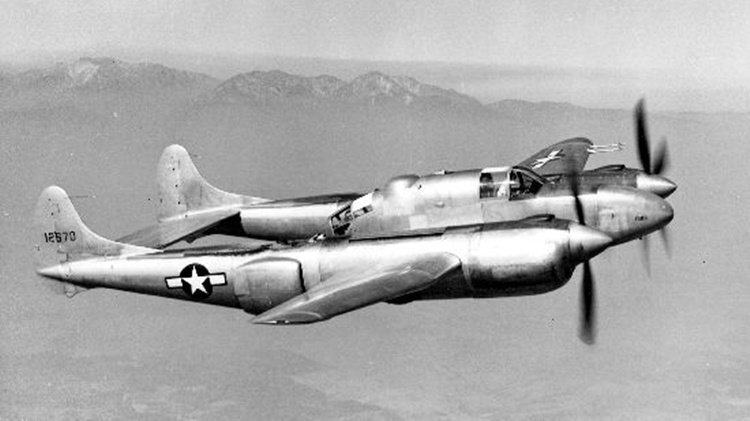
The Lockheed XP-58 Chain Lightning was an American long-range fighter developed during World War II. Although derived from the successful P-38 Lightning, the XP-58 was plagued by technical problems with its engines that eventually led to the project's cancellation. The XP-58 was a Lockheed Aircraft Company funded initiative to develop an improved Lightning as a long-range fighter following the release by the U.S. Army Air Corps of the Lightning for sale to Britain on 20 April 1940. Initially, two designs were formulated, both using the Continental IV-1430 engines. One would be a single-seat aircraft with one 20 mm (.79 in) cannon and four .50 caliber (12.7 mm) machine guns. The second would be a two-seat aircraft with the addition of a flexible .50 caliber (12.7 mm) gun at the end of each tail boom. In July 1940, Lockheed decided to switch to Pratt & Whitney XH-2600 engines as the aircraft would be underpowered with the Continental engines, with the aircraft having two seats and designated "XP-58". However, soon Lockheed was advised the development of the XH-2600 engine was terminated. After consideration of the engine alternatives, the design was changed to use two Wright R-2160 Tornado engines, as well as a change of the rear-facing armament to two turrets, one upper and the other lower on the fuselage, each turret containing two .50 caliber (12.7 mm) machine guns. As support equipment for the two crewmen was added, the estimated weight of the XP-58 grew to 34,232 lb (15,527 kg) by August 1941. In March 1942, the USAAF placed an order for a second XP-58 that would incorporate increased fuel tanks to obtain a range of 3,000 mi (4,800 km). The Air Force was uncertain about the role and armament of the aircraft, and in September 1942, a decision was made to convert the aircraft for a role as a low-altitude attack aircraft, armed with a 75 mm (2.95 in) M5 autocannon. Adequate aircraft were already available for this mission, with the Douglas A-26 Invader and Beechcraft XA-38 Grizzly under development. As a result, the second XP-58 was canceled and the role of the design reverted to that of a high-altitude fighter, using large-bore cannon firing high-explosive shells to break up bomber formations. The 37 mm (1.46 in) M4 autocannon was originally selected for a quadruple mount in the nose, but the trajectory of the 37mm shells dropped lower than other weaponry, limiting its effective range. A hydraulically articulated nose that could be bent up to correct this problem was tried, but was dismissed as too complex. Then, a 75 mm (2.95 in) M5 autocannon paired with twin .50 caliber (12.7 mm) machine guns was tried and proved much more successful. In January 1943, the USAAF initiated a separate program to build a dedicated photographic reconnaissance aircraft with superior range, altitude and speed characteristics, as the loss of air bases in China had placed strategic targets in Japan beyond the range of almost all existing Allied aircraft, and some USAAF leaders objected to diverting bombers such as the B-29 to serve in a pure reconnaissance role. Lockheed proposed a modified version of the XP-58. However, in August 1943, General Henry H. Arnold chose the Hughes XF-11 over the Lockheed against the recommendations of Air Materiel Command, which said that Hughes Aircraft lacked the expertise and industrial capacity for mass production. The XF-11 would be plagued by technical and managerial delays and never entered service; Arnold later publicly expressed regret for his decision. The Northrop F-15 Reporter, a development of the P-61 Black Widow, would enter service in this role.
-
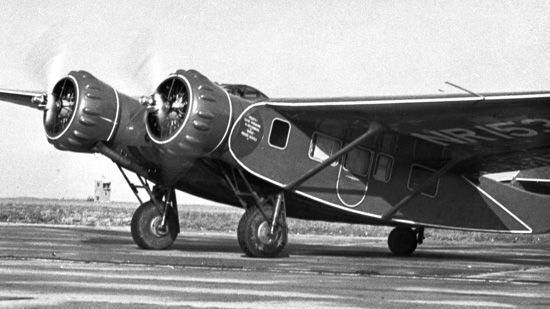
The Burnelli UB-14 and a developed variant named OA-1 Clyde Clipper were 1930s American prototype lifting-fuselage airliners designed by Vincent Burnelli, who was responsible for constructing the first two examples. Following on from his earlier designs Vincent Burnelli designed a commercial transport version using the lifting-fuselage concept. Burnelli's designs were based on the idea that an airfoil-section fuselage could contribute to the lift generated. The Burnelli UB-14 first flew in 1934, and had an airfoil-section fuselage that formed the centre-section of the wing. The aircraft had twin tailbooms and a widespan tailplane and elevator fitted with twin fins and rudders. The UB-14 had retractable landing gear and was powered by two Pratt & Whitney radial engines. An enclosed cockpit for the crew of two was located on the centre wing's upper surface. The cabin could hold 14 to 18 passengers. The first prototype, UB-14, was destroyed in a 1935 accident attributed to faulty maintenance on the aileron control system. Burnelli then designed and built an improved version, the UB-14B. An extensively modified version of the UB-14B design was built under licence in the United Kingdom by Cunliffe-Owen Aircraft, powered by two Bristol Perseus XIVC radials as the Cunliffe-Owen OA-1 Clyde Clipper. The UB-14B was to have been built by Scottish Aviation, but with more streamlined inline engines. Burnelli applied to the CAA for approval to fly a transatlantic flight with Clyde Edward Pangborn as the pilot in September 1936, however it failed its airworthiness certification due to an excessively long takeoff run and poor quality control. Its performance was later tested at A&AEE Boscombe Down in 1939. A total of 3 prototypes were completed.
-
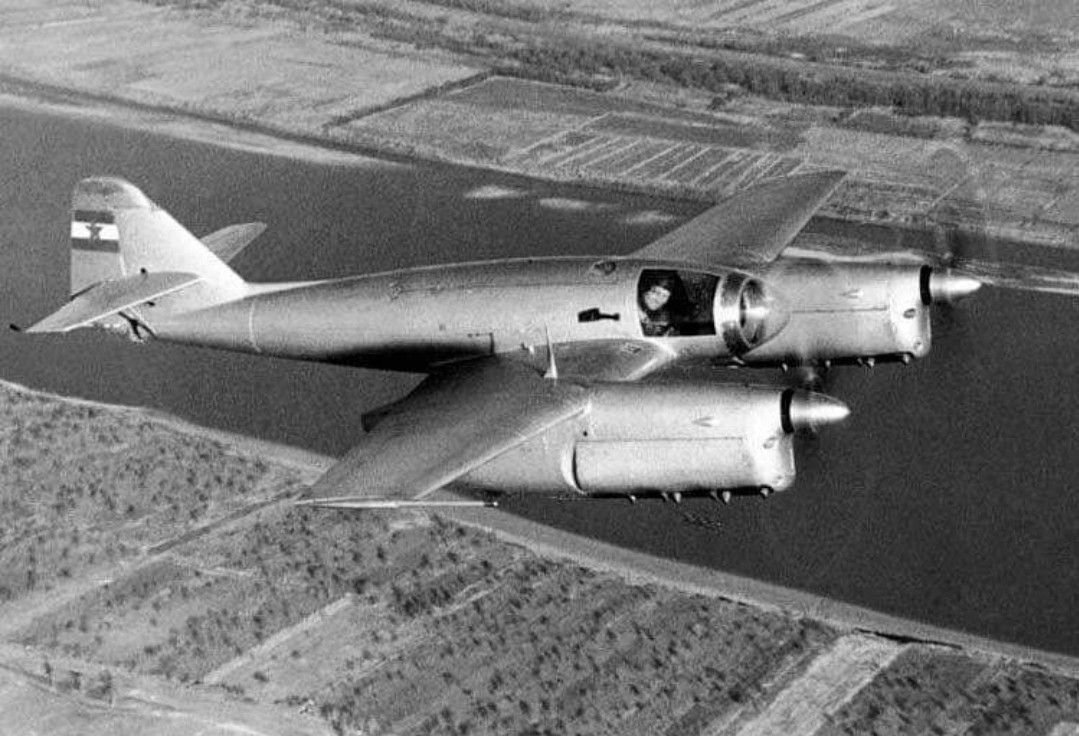
The Ikarus 451 is a family of research aircraft designs built in the former Yugoslavia in the 1950s by the Belgrade-based manufacturer Ikarus (now Ikarbus), all sharing the same basic airframe, but differing in powerplants and cockpit arrangements. To research prone pilot cockpit arrangements and controls, the Yugoslav Government Aircraft Factories developed the Ikarus 232 Pionir, a small twin-engined low-wing monoplane, powered by 2x 48 kW (65 hp) Walter Mikron III piston engines. An enlarged version of the Pionir was developed as the Type 451, powered by 2x 120 kW (160 hp) Walter Minor 6-III six-cylinder piston engines of 120 kW (160 hp) each. The Type 451 had a 6.7 m (22 ft) wingspan, a maximum speed of 335 km/h (182 knots), and a ceiling of 4750 m (15,570 ft). It first flew in 1952. It also accommodated the pilot in prone position, but was an otherwise conventional low-wing monoplane with retractable tailwheel undercarriage, the main units of which retracted backwards into the engine nacelles mounted below the wings.
-
Today in History - January 25: Shock discovery when surgeons cut open plane crash survivor WWW.9NEWS.COM.AU Doctors operating on a plane crash survivor on January 25, 1990, made a shock discovery.
-
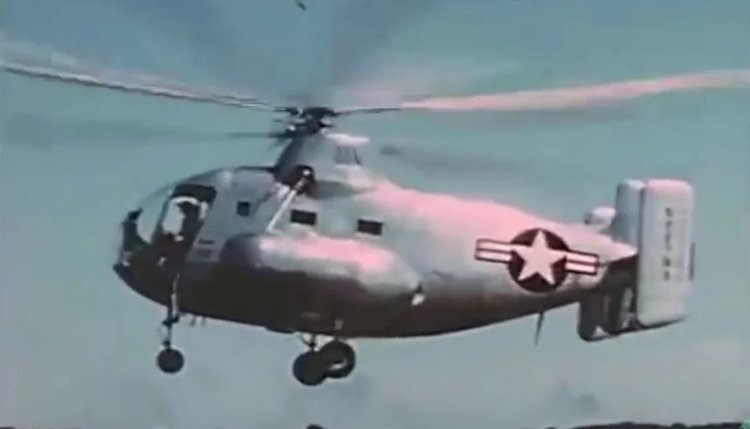
The Kellett XR-10 was a military transport helicopter developed in the United States in the 1940s that only flew in prototype form. It was designed in response to a USAAF Technical Instruction issued for the development of a helicopter to transport passengers, cargo, or wounded personnel within an enclosed fuselage. Kellett's proposal followed the general layout that the company was developing in the XR-8, with twin intermeshing rotors, and was accepted by the Air Force on 16 October over proposals by Sikorsky, Bell, and Platt-LePage. The XR-10 resembled a scaled-up XR-8, although its twin engines were carried in nacelles at the fuselage sides, driving the rotors via long driveshafts, and the aircraft was skinned entirely in metal. The first of two prototypes flew on 24 April 1947, and at the time, was the largest rotorcraft to fly in the United States. During test-flights, however, the same problem that had been encountered with the XR-8's rotor system emerged when blades from the two rotors collided in flight. With fixes in place, flight testing continued, but on 3 October 1949, the first prototype crashed due to a control system failure and killed Kellett's chief test pilot, Dave Driskill. The project was abandoned shortly thereafter, and a 16-seat civil variant, the KH-2, never left the drawing board.
-
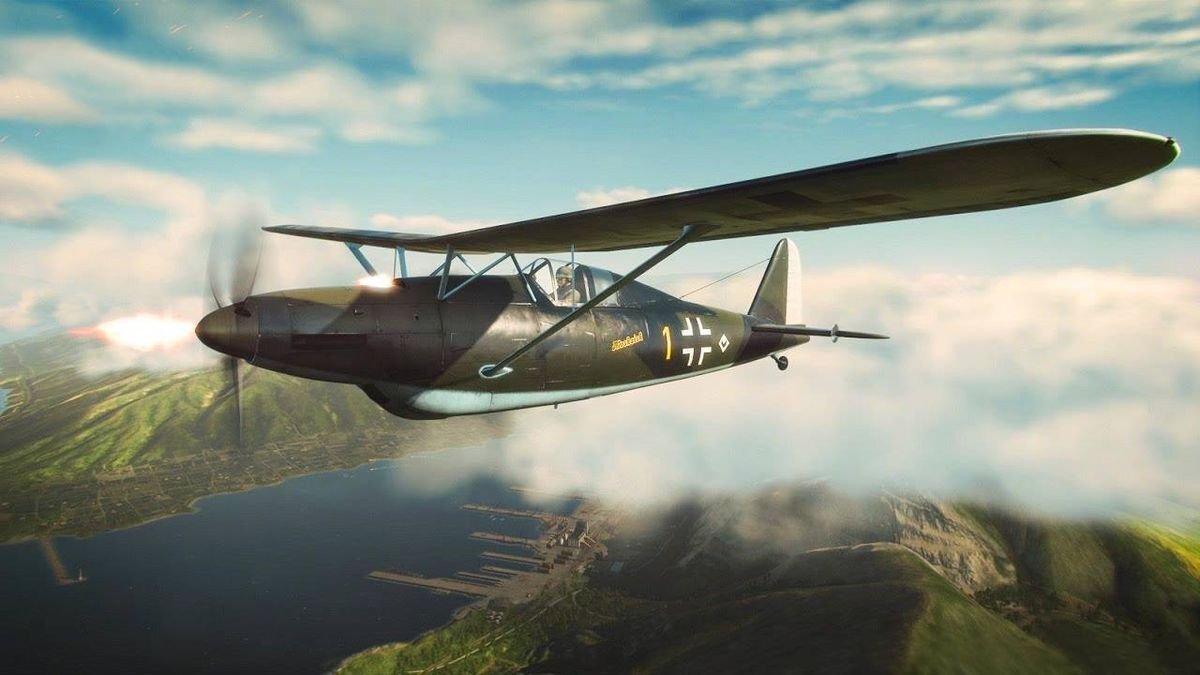
The Focke Wulf Fw 159 was an experimental German fighter of the 1930s, designed by Kurt Tank which never reached production, as it was considered inferior to the He 112 and Bf 109. It was a heavier variant of the Focke-Wulf Fw 56, with several improvements, such as a retractable landing gear and enclosed cockpit. The Focke-Wulf company designed the aircraft as one of the four entries for the Rüstungsflugzeug IV ("Armed Aircraft IV") 1934 fighter competition. Its parasol wing configuration was based on the company's successful trainer product, the Focke-Wulf Fw 56 Stösser, and it used a Junkers Jumo 210 engine. The plane had an enclosed cockpit and a rearward-retracting lever-action suspension main undercarriage which retracted completely into the lower fuselage. This mechanism was complicated, fragile and endlessly troublesome. The first prototype, the Fw-159 V1, was ready in the spring of 1935 but was destroyed when it crash-landed following the failure of the main undercarriage to deploy properly. The second prototype, the V2, had a reinforced undercarriage. The general flight characteristics were good but the rate of climb and rate of turn were unsatisfactory, and the aircraft suffered greater drag than its competitors in the contest, the Arado Ar 80, Heinkel He 112 and Messerschmitt Bf 109. The competition was won by the Bf 109.
-
https://www.msn.com/en-au/news/other/while-the-world-fights-over-oil-china-has-found-an-alternative-it-s-building-water-powered-airplanes/ar-AA20RJQx?ocid=winp2fptaskbar&cvid=69df67ab85984d87981513429ccbc3e9&ei=133
-
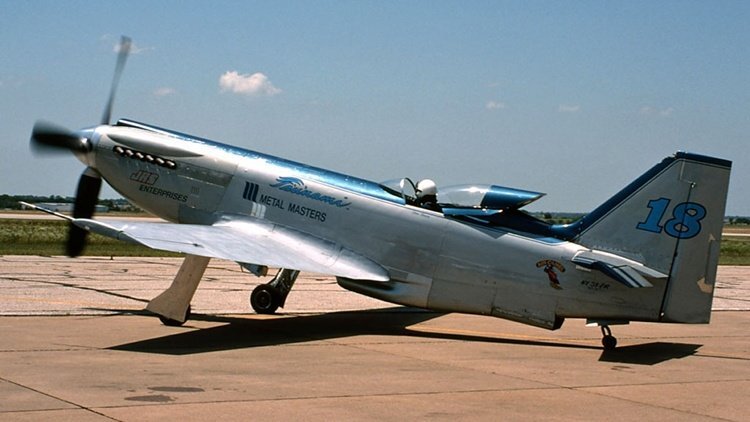
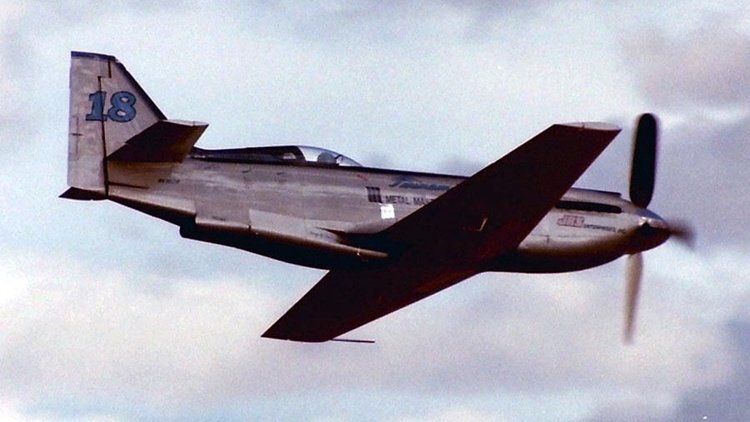
Tsunami was a purpose-built racing aircraft designed and built in the United States during the 1980s. After a short undistinguished career Tsunami crashed, killing its designer, John Sandberg, on 25 September 1991. After six years of building, the aircraft was first flown 17 August 1986 by Steve Hinton. It was designed specifically to break the 3 km world speed record for propeller driven aircraft by a private pilot and to compete in the Unlimited class at the Reno Air Races. The aircraft was designed by Bruce Boland, an aerospace engineer employed by Lockheed Martin, John R. Sandberg, owner of JRS Enterprises Inc (rebuilders of Allison and Rolls-Royce aircraft engines), Lockheed engineer Pete Law and builder Ray Poe. Tsunami, powered by a Rolls-Royce Merlin engine, designed and built by John R. Sandberg and the JRS Enterprise Inc. team, exceeded 500 mph (430 kn; 800 km/h). Originally, it was designed as a light-weight racer with a single-staged supercharged Rolls-Royce Merlin. However, as speed increased in the Unlimited Racing Class, a higher powered two-stage supercharged Rolls-Royce Merlin was installed. An attempt was made in August 1989 to break the 3 km (1.9 mi) world speed record at Wendover Utah with a private pilot at the controls. Due to a landing gear collapse the aircraft was unable to beat the existing record. Despite being very fast, in its racing career from 1986 to 1991 it only won one Unlimited Gold Race, in Sherman, Texas in 1990.
-
RA-AUS Cross country endorsement
red750 replied to danny_galaga's topic in Student Pilot & Further Learning
I don't recall. It's been over 40 years since I last flew. That incident would have been about 53 years ago. -
RA-AUS Cross country endorsement
red750 replied to danny_galaga's topic in Student Pilot & Further Learning
When the ball is dancing like a cat on hot bricks, it's hard to calibrate anything to it. (Edit) I had to wait till I landed at Swan Hill and had my lunch before I could recalibrate. Knowing what was going on helped on the last two legs of the trip. -
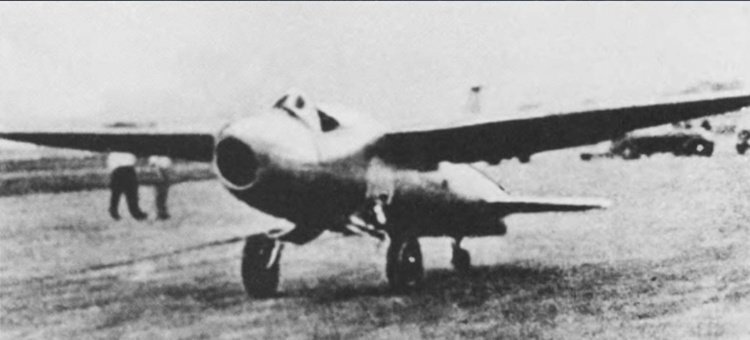
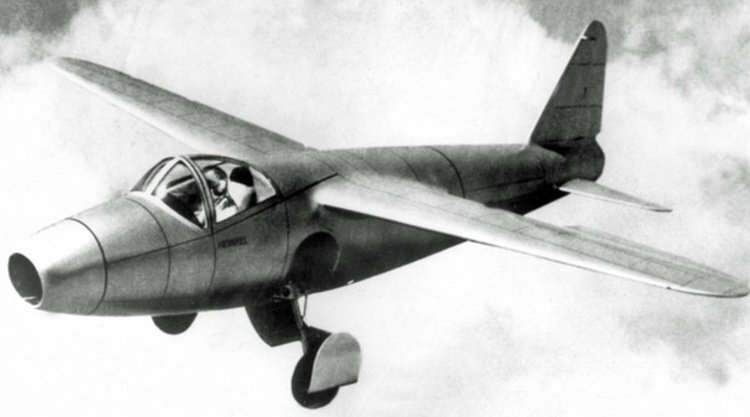
The Heinkel He 178 was an experimental aircraft designed and produced by the German aircraft manufacturer Heinkel. It was the world's first aircraft to fly using the thrust from a turbojet engine. The He 178 was developed to test the jet propulsion concept devised by the German engineer Hans von Ohain during the mid-1930s. Having secured the industrial support of Ernst Heinkel, von Ohain was able to demonstrate a working turbojet engine, the Heinkel HeS 1, in September 1937. Heinkel pursued development of the He 178 as a private venture, independent of the German authorities and the Luftwaffe, keeping the aircraft relatively secret for much of its development. Heinkel was keen not only to demonstrate the capabilities of aviation gas turbines, but had a separate emphasis on developing high-speed flight technologies. On 27 August 1939, the He 178 V1, the first prototype, performed its maiden flight, piloted by Erich Warsitz. This flight, which only lasted for six minutes, had been preceded by a short hop by the same aircraft three days prior. Due to its performance limitations, such as a maximum speed of 598 kilometres per hour (372 mph) and its relatively small endurance, the aircraft failed to impress high-ranking Nazi officials such as Ernst Udet and Erhard Milch, who attended a demonstration flight. Heinkel subsequently developed a twin-engined jet-powered fighter aircraft, building on the lessons of the He 178, to produce the He 280. The He 178 provided valuable test data to guide the development of subsequent jet-powered aircraft. The He 178 V1 prototype itself went on static display in Berlin for a time before it was destroyed by an Allied air raid on the city in 1943.
-
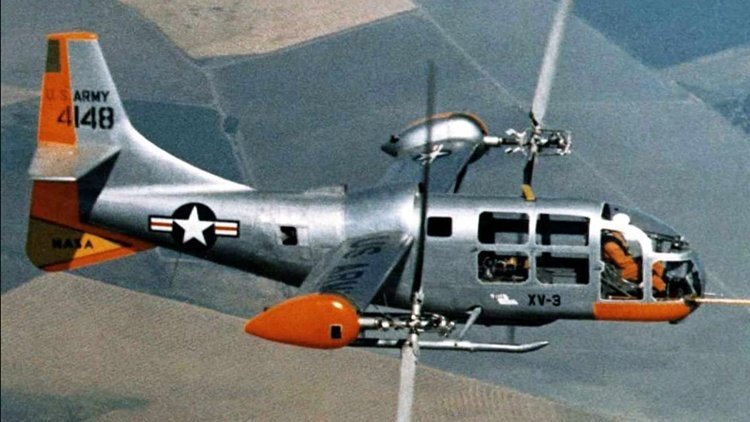
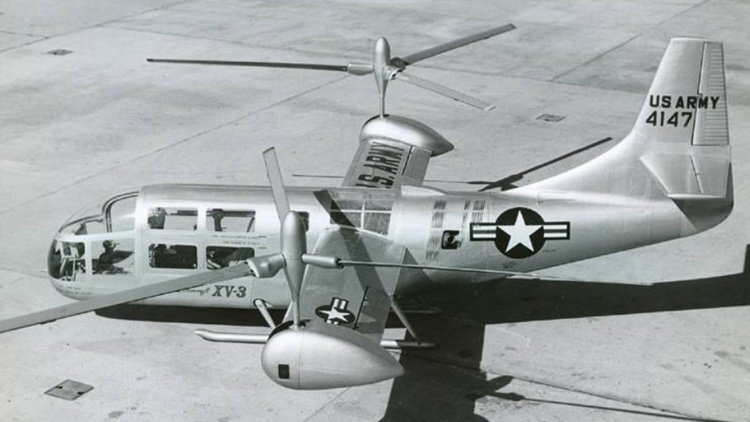
The Bell XV-3 (Bell 200) is an American tiltrotor aircraft developed by Bell Helicopter for a joint research program between the United States Air Force and the United States Army in order to explore convertiplane technologies. The XV-3 featured an engine mounted in the fuselage with driveshafts transferring power to two-bladed rotor assemblies mounted on the wingtips. The wingtip rotor assemblies were mounted to tilt 90 degrees from vertical to horizontal, designed to allow the XV-3 to take off and land like a helicopter but fly at faster airspeeds, similar to a conventional fixed-wing aircraft. The XV-3 was first flown on 11 August 1955. The first prototype use three blade rotors, and had issue with flutter crashing two months after its first flight. Tests were conducted on the second prototype with 2-blade rotors and flew successfully. Although it was limited in performance compared to later types, the aircraft successfully demonstrated the tiltrotor concept, accomplishing 110 transitions from helicopter to airplane mode between December 1958 and July 1962. The XV-3 program ended when the remaining aircraft was severely damaged in a wind tunnel accident on 20 May 1966. The data and experience from the XV-3 program were key elements used to successfully develop the Bell XV-15, which later paved the way for the V-22 Osprey. The remaining prototype survived to the 21st century when it was restored by Bell, with a two-year restoration that included engineers that worked on the XV-3 originally. It was then transferred to the National Museum of the United States Air Force in Dayton, Ohio, where it was put on display.
-
RA-AUS Cross country endorsement
red750 replied to danny_galaga's topic in Student Pilot & Further Learning
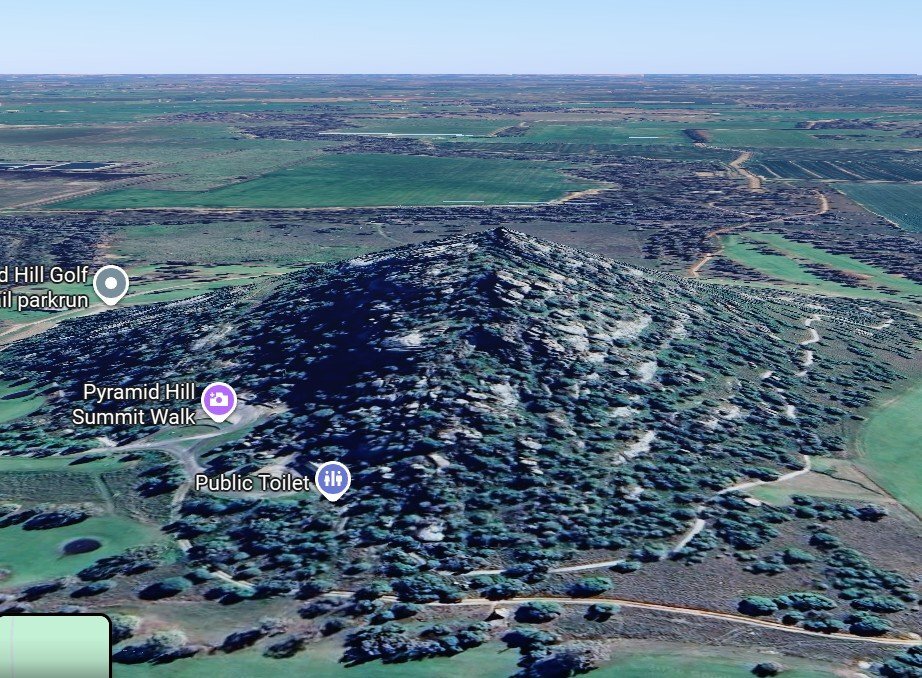
Faulty instruments can get you lost. I was on my naxex 5, a solo flight Moorabbin, Mangalore, Swan Hill, Horsham, Moorabbin. On the Mangalore Swan Hill leg, turbulence was pretty severe. The ball-in-liquid compass was bouncing around like a cork in a washing machine. So I was navigating using the directional gyro. One of my checkpoints was Pyramid Hill, photo below. It should have appeared a few miles off my port wingtip, When I arrived at the appropriate time, it was nowhere to be seen. Scanning the horizon, I spotted it well off my starboard wingtip. I worked out that the gyro had been precessing leading me on a curved path. I located the Loddon River and Loddon Valley Highway running close together. The highway ran straight into Swan Hill where I was due to land for lunch. I turned and followed the highway, and calculated my amended arrival time and notified ATC. On the third and fourth legs I had to do the best I could with a dancing compass. I lodged a fault report with the flying school on my return. I got my unrestricted licence.
-
RA-AUS Cross country endorsement
red750 replied to danny_galaga's topic in Student Pilot & Further Learning
You can get similar sensations sitting on a swivel chair. Have someone turn you around with your eyes closed. When the chair stops turning, your senses still feel like you are turning. -
RA-AUS Cross country endorsement
red750 replied to danny_galaga's topic in Student Pilot & Further Learning
Regarding the spacial disorientation thing, has anyone experienced this? You are laying on a hospital gurney being pushed down a corridor, say, to the Xray. The room is busy when you get where, so they park the gurney in the corridor and lock the wheels. You close your eyes and you feel like you are still moving. Open your eyes and look at the ceiling to confirm you are stationary. The same feeling occurs when you are rolling in and out of a CT scanner. -
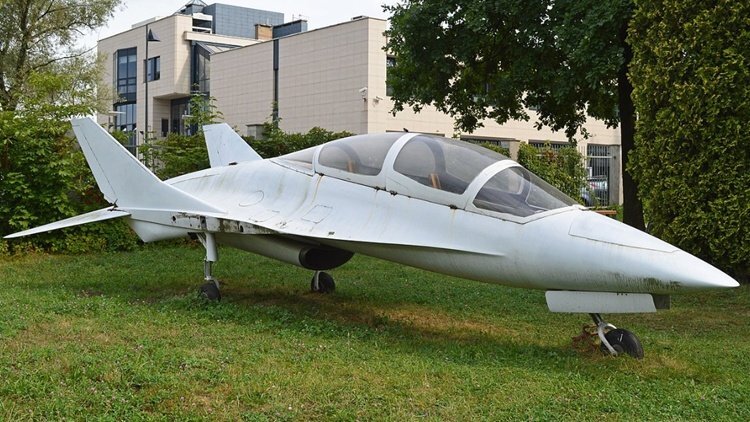
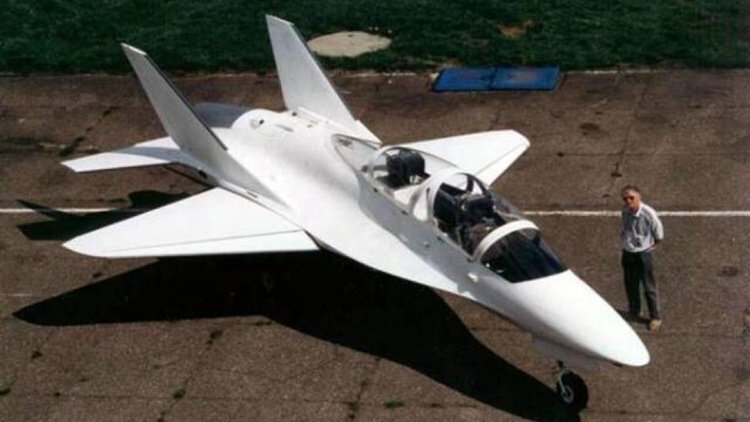
The Margański & Mysłowski EM-10 Bielik (English: white-tailed eagle) is a low-cost Polish military training aircraft prototype, built by Margański & Mysłowski Zakłady Lotnicze, and first flown on 4 June 2003. The single-engine aircraft has a composite (mostly carbon fibre) fuselage with a light-alloy aft section, and the pressurized cockpit is fitted with ejection seats.
-
As the Wikipedia article states, they were looking for a replacement for the P-51 Mustang. There were two prototypes to assess the comparative performance - the XF-88A, a jet powered version, and the XF-88B, a turboprop version.