red750
-
Posts
8,261 -
Joined
-
Last visited
-
Days Won
79
Content Type
Profiles
Forums
Gallery
Downloads
Blogs
Events
Store
Aircraft
Resources
Tutorials
Articles
Classifieds
Movies
Books
Community Map
Quizzes
Videos Directory
Everything posted by red750
-
Cirrus Tells Owners Not To Use Unleaded Fuel WWW.AVWEB.COM Cirrus is concerned G100UL may cause structural damage to its airplanes.
-
 https://nypost.com/2025/02/07/us-news/black-hawk-helicopter-had-important-safety-system-turned-off-during-collision-with-american-airlines-jet-senator-says/
 -
Black Hawk helicopter's shocking aviation blunder moments before crashing into plane in DC is confirmed in new NTSB report | Daily Mail Online WWW.DAILYMAIL.CO.UK Questions had been raised about how the collision - which killed all 67 people involved - occurred, given pilots follow strict protocol about the altitudes they can safely reach.
-
The Bering Air Caravan plane was reported 'overdue' when it failed to arrive in Nome about 4pm local time. It was traveling from Unalakleet with nine passengers and one pilot on board. Crews are frantically working to establish the plane's last coordinates, but weather conditions in the area are so poor that it has limited the ability to launch an air search. Bering Air flight carrying 10 people vanishes while flying over Alaska | Daily Mail Online WWW.DAILYMAIL.CO.UK A flight with 10 people on board has vanished over Alaska, sparking a frantic search.
-
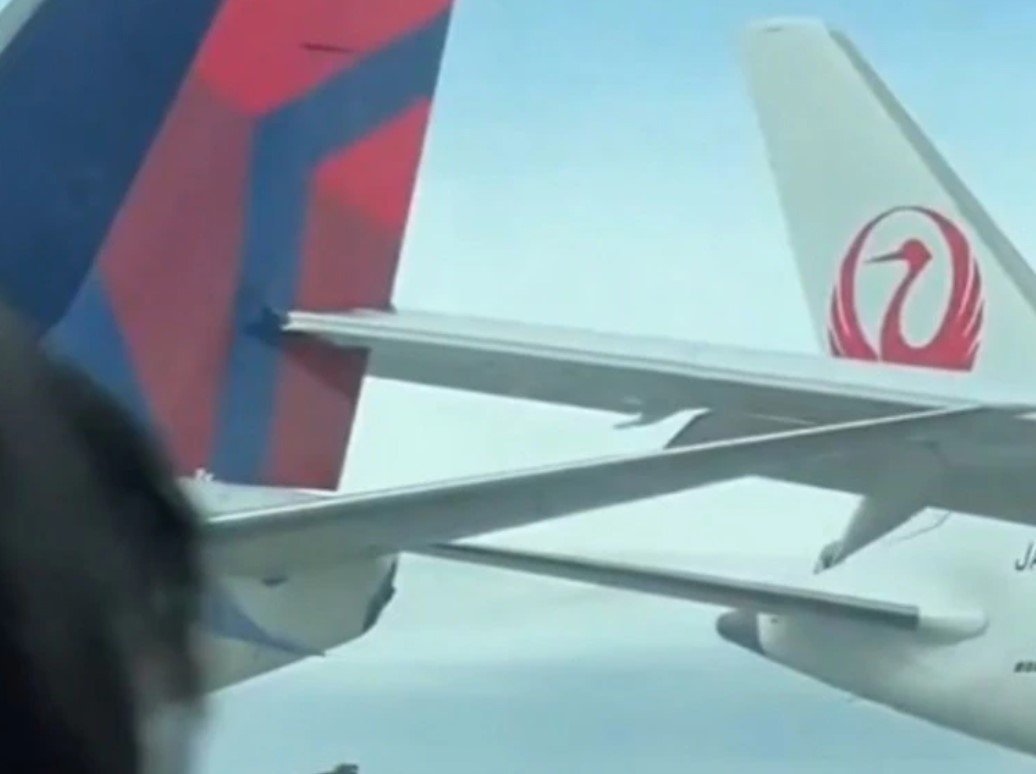
The wing of a taxying JAL aircraft sliced into the rudder of a Delta jet at Seattle airport. https://www.news.com.au/travel/travel-updates/incidents/two-planes-collide-at-major-us-airport/news-story/2613004864bf1d10c826695de5df745e

-
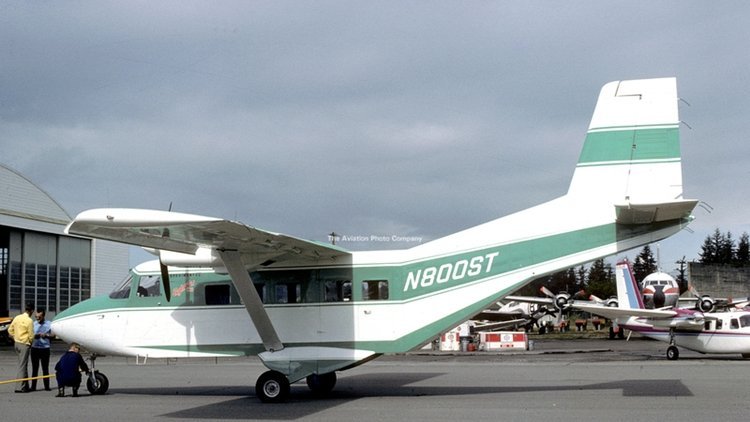
The Dominion Skytrader was a Canadian prototype STOL utility aircraft, originally designed by the Dominion Aircraft Corporation in Vancouver, British Columbia, but built in the United States in the early 1970s. Attempts to market the aircraft continued until the late 1980s, but proved fruitless. The Skytrader was a conventional high-wing, strut-braced monoplane with fixed tricycle undercarriage. The design was optimised for easy freight handling and featured a fuselage of rectangular cross-section with large loading doors to the side and a loading ramp at the rear. The aircraft's tail unit was angled upwards from the rear fuselage to facilitate loading operations beneath it, and the main undercarriage was fitted in sponsons on the fuselage sides so as not to intrude into the internal cargo volume. Passenger, freight, executive transport, and water-bomber versions were projected. As of 2007, the prototype lay derelict, with engines stripped, at Washington County Regional Airport, in Hagerstown, Maryland.
-
MSN WWW.MSN.COM Typical Trump response above. I haven't been through all the detail reported here, but could it be as simple as the wrong QNH set on the helicopter that had it at the wrong altitude?
-
394K views · 23K reactions | The first Beechcraft, manufactured in... WWW.FACEBOOK.COM The first Beechcraft, manufactured in 1932, used a split-rudder airbrake instead of flaps to slow down for landing. Thanks @parishcharles for the demo! Visit @beechcraftheritagemuseum to see this...
-
- 1
-

-
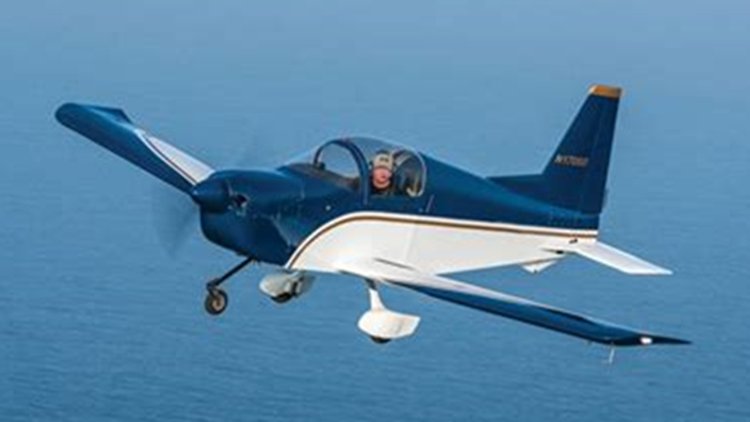 The Bede BD-17 Nugget is an American single-seat monoplane. designed by Bedecorp for amateur construction from a kit. The Nugget was announced in June 2000 and was designed to be easy to build with a maximum of 100 parts. The first flight of the tricycle landing gear prototype was on 11 February 2001. It is an all-metal low-wing monoplane, it has optional folding wings and is available with fixed conventional landing gear with a tailwheel or a tricycle landing gear. It can be fitted with an engine between 45 and 80 hp (33.6 to 59.7 kW). The prototype had a 60 hp (45 kW) HKS 700E two-cylinder four-stroke engine. The pilot has an enclosed cockpit with a rearward-sliding canopy.
 -
https://au.yahoo.com/news/trump-admin-emails-air-traffic-193838183.html
-
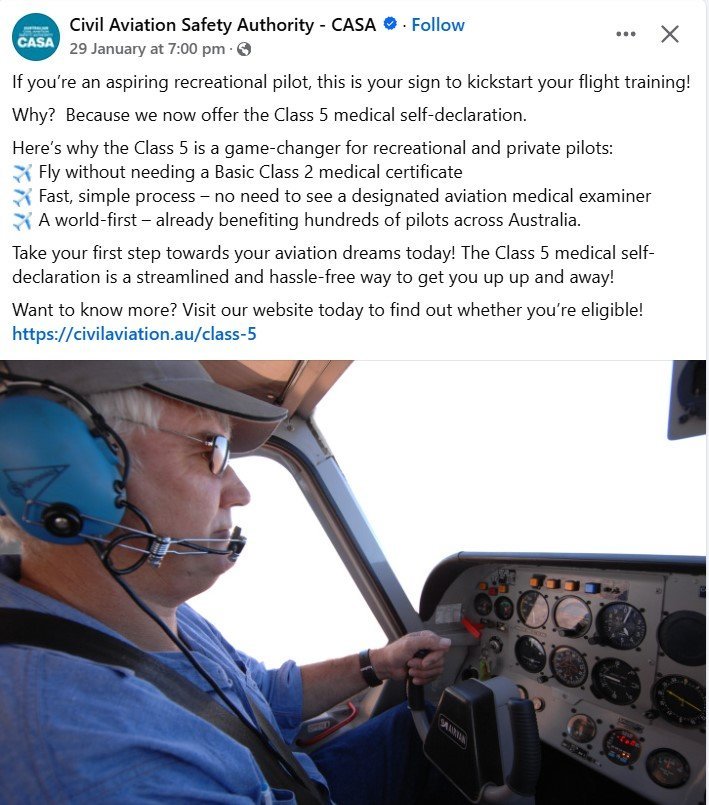
Class 5 medical declaration. My experience
red750 replied to NT5224's topic in AUS/NZ General Discussion
This appeared on my Facebook today.
-
My sincere apologies to all. In trying to move the Learjet 55 story to a new topic, I seem to have deleted the original thread. I thought I followed Ian's directions correctly.
- 1 reply
-
- 1
-
-
-
Further details on the Learjet 55 crash. The Federal Aviation Administration has confirmed that there were six people onboard the jet. In their initial statement, FAA had originally reported that there was only two people on board. The jet was operated by Jet Rescue Air Ambulance, and according to a statement from them was transporting a young girl who had been receiving treatment. Four crew members had been onboard the flight, alongside the young girl, who remains unknown, and her mother. They were travelling home to Tijuana, Mexico.
-
A second aircraft crash in America, A plane carrying two people has crashed in a residential area of Philadelphia, causing chaotic scenes on the ground. The plane, a Learjet 55, had been travelling to Springfield-Branson National Airport in Missouri after departing the Northeast Philadelphia Airport on Friday evening. After less than a minute in the air, the jet was caught on doorbell footage hurtling to the ground before exploding in a large fireball. Story with video here.
-
Chilling eight words heard on radio seconds after American Airlines plane crash Report here
-
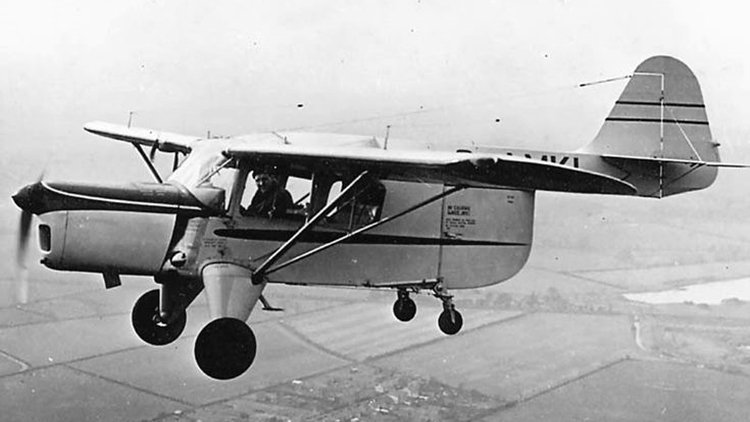
The Auster B.4 was an unusual British development of the Auster family of light aircraft in an attempt to create a light cargo aircraft. The conventional fuselage was considerably redesigned, turning it into a pod-and-boom configuration carrying the tail unit on a high boom. The rear of the fuselage pod was equipped with clamshell doors for easy loading and unloading, and a quadricycle undercarriage was fitted, retaining the mainwheels from earlier Auster designs, but adding a tailwheel to each side of the fuselage pod. The fuselage floor had fittings for seats, cargo tie-downs, or litters for the air ambulance role. The prototype was exhibited at the Farnborough Air Show in September 1953. Although evaluated by the British Army in military markings, neither civil nor military orders ensued, and no examples were constructed beyond the single prototype.
-
All the catastrophic mistakes that led to DC plane crash as it is revealed air traffic controller left tower early | Daily Mail Online WWW.DAILYMAIL.CO.UK An air traffic controller at Reagan National was left to handle both helicopter traffic and manage planes - which should have been a divided duty.
-
A grief-stricken widow who lost her husband on American Airlines Flight 5342 when it crashed in Washington DC has revealed they made a spontaneous decision on who would be on the flight. Natalya Gudin and her husband Alexandr Kirsanov coached two young figure skaters but only one of them would accompany the pair to Kansas for the National Development Camp for figure skating. Her husband was the one who ended up making the trip alongside the two kids, who all lost their lives in the midair collision. Speaking with ABC News, Gudin said: 'I lost everything. I lost my husband. I lost my students. I lost my friends.'
-
MARK MCEATHRON: I'm a Black Hawk helicopter pilot. This video shows all the red flags that led up to the deadly DC plane crash | Daily Mail Online WWW.DAILYMAIL.CO.UK I'm a former Black Hawk helicopter crew chief and flight instructor. I know how quickly a routine flight can turn into a terrible tragedy.
-
Hero pilot Captain Sully shares terrifying theory on why DC plane crash happened: Hero pilot Captain Sully shares terrifying theory on why DC plane crash happened | Daily Mail Online WWW.DAILYMAIL.CO.UK Sully, who famously landed a passenger plane on the Hudson River in 2009, has said that two factors could have made avoiding the chopper harder.
-
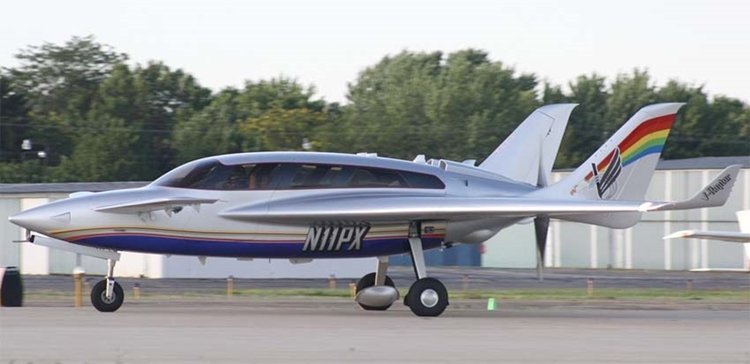
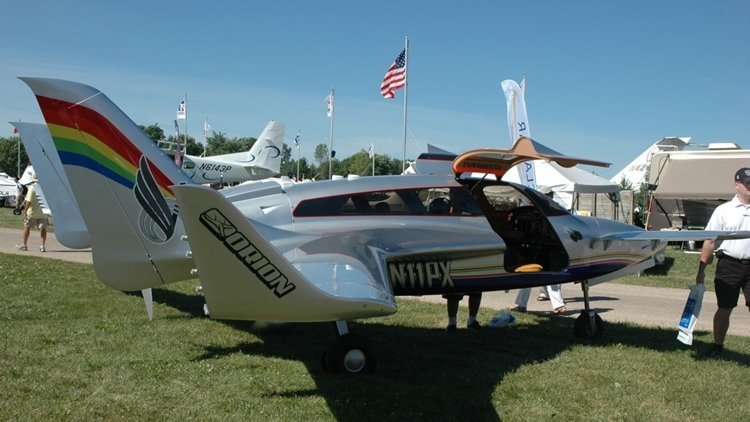
The Freedom Aviation Phoenix was a single-engine four-seat American airplane that was sold as a homebuilt composite canard aircraft. The kit was produced at a facility on St. Lucie County International Airport at Ft. Pierce, Florida. The Phoenix airframe was formed of carbon-fiber composite materials on factory molds. The aircraft was assembled as a homebuilt, with a factory-sponsored builder-assist program available. . The aircraft has a swept, dihedral canard mounted ahead of the cabin, and a swept main lifting surface. Each wing has a fin (with full-length rudder) mounted about midway to the tip. In addition, the wingtips have swept winglets, which provide additional yaw stability while decreasing induced drag. The Phoenix is powered by a six-cylinder horizontally-opposed piston engine driving a pusher propeller. The tricycle landing gear is retractable. Only one aircraft was ever built, and the company has since gone out of business.
-
Spacey, don't reply, it only encourages them.
-
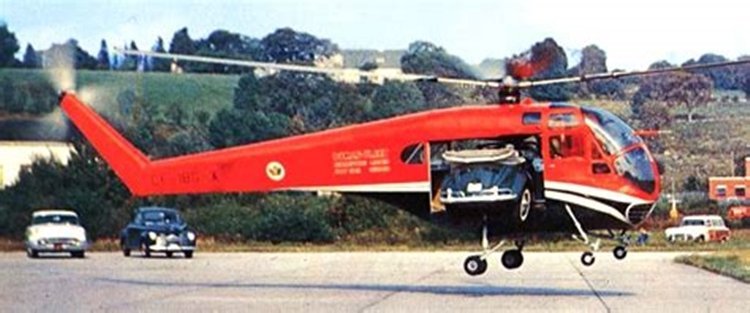
The Doman LZ-5 was a utility helicopter developed in the United States in the early 1950s by Doman Helicopters Inc. of Danbury, Connecticut. Despite the procurement of international manufacturing agreements, no series production of the aircraft ever occurred, and only three prototypes were built. Two of these were purchased by the United States Army as the YH-31, but eventually becoming VH-31. Like the preceding LZ-1 through LZ-4, the LZ-5 utilized designer Glidden Doman's unorthodox gimbaled rotor head system, which featured the elimination of rotor hinges and dampers and included blades of soft-in-plane dynamic design. The servo control system was entirely contained within the rotor head, with no external oil tanks or plumbing. The tail rotor was also hingeless and free floating to eliminate stresses in rapid tail rotor turns. In other ways, it had a conventional helicopter main rotor and tail rotor configuration. The pilot and co-were seated over the engine, which was in the nose, and a six-passenger compartment was located behind them. The engine was cooled by exhaust ejectors, producing an energy saving that increased payload by 800 pounds. The aircraft featured wheeled quadricycle undercarriage, the main units of which carried dual wheels. The first prototype (registration N13458) flew on 27 April 1953, and by the end of 1955, two machines had been delivered to the Army (52-5779 and 52-5780). Eventually, the Army concluded that they had no requirement for an additional piston-powered helicopter model in this size category, and no further order was placed. After extensive flight testing and pilot training by the Army, one of the prototypes was taken over by the Navy for a helicopter flight research program at the Patuxent River Naval Air Test Center. Later that aircraft was re-purchased by the Doman company and used in its commercial sales efforts. Doman continued with development, building another LZ-5 aircraft in a joint venture with Fleet in Canada. The LZ-5 helicopters were simultaneously Type Certificated in the U.S. and Canada in 1954. The third helicopter flew extensively in Canada under Canadian registration CF-IBG and in the United States, France, and Italy under U.S. registration N812. It flew in the Paris Air Show in 1960. This aircraft was also modified with the installation of full blind flight instrumentation, which was demonstrated extensively in the effort to sell it as a trainer. The aircraft thus equipped was advertised as the D-10. The planned production version would have been modified with a turbo-charged engine and designated as the D-10B. Doman sold production rights for military versions to Hiller and for the Italian market to Ambrosini. Ultimately, none of these plans were to eventuate, and the LZ-5 never entered production.