red750
-
Posts
8,261 -
Joined
-
Last visited
-
Days Won
79
Content Type
Profiles
Forums
Gallery
Downloads
Blogs
Events
Store
Aircraft
Resources
Tutorials
Articles
Classifieds
Movies
Books
Community Map
Quizzes
Videos Directory
Everything posted by red750
-
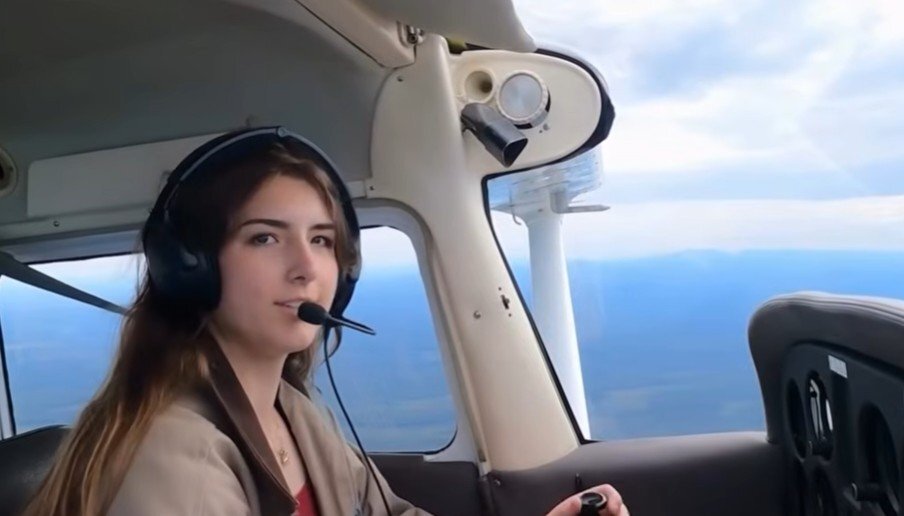
The topic was about the efforts of a teenage schoolgirl and her quest for a world record in the Guinness Book of Records.
-
Here we go again, led off the track of the original post. There is a Trips/Events/Seats forum. start a topic there.
-
 Two F-18 fighter jets have crashed during an airshow at Mountain Home Air Force Base IDAHONEWS.COM Two F-18 fighter jets have crashed while performing in the Fighter Skies airshow at the Mountain Home Air Force Base.This is a developing story and details are
 -
Seventeen year old year 12 student Rose Donald landed at Essendon Fields today to complete a solo round Australia flight in her Cessna 172 raising money for Little Wings, a charity providing air transport for country kids requiring medical treatment, and building hours towards her commercial pilot's licence. She has sent documentation of her trip to the Guinness Records organisation to claim the record for the youngest female to complete the trip solo.

- 28 replies
-
- 12
-

-

-

-
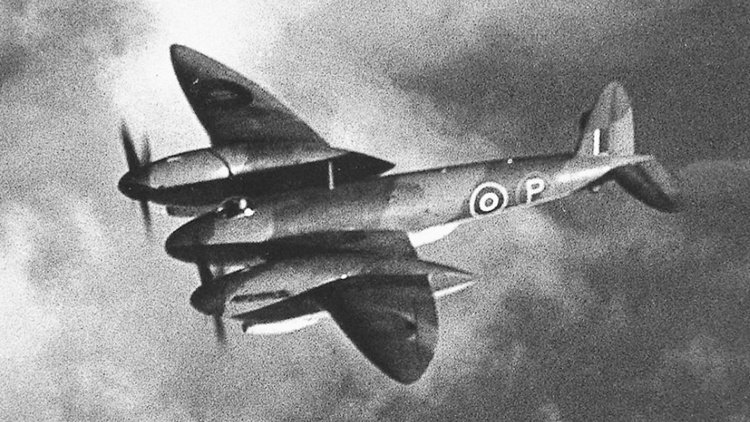
The Vickers Type 432 was a British high-altitude fighter aircraft developed by the Vickers group during the Second World War. Intended to enable the Royal Air Force to engage the enemy's high-altitude bomber aircraft, it was to be armed with six cannons. The origins of the Type 432 lay with a requirement set out in 1939 for twin-engined fighters with 20 mm or possibly 40 mm cannon. Vickers had set out a proposal for a Griffon-engined aircraft, equipped with a 40 mm cannon in a flexible mounting. This was subsequently encouraged by the Air Ministry. Further development was carried out for a design that could also meet F.6/39 for a fixed gun fighter with 20mm cannon. Specification F.22/39 was drawn up to cover the 40 mm project as the Vickers 414 to meet Operational Requirement (OR) 76. This was subsequently revised with aircraft redesigns to become specifications F.16/40 and then F.7/41 for OR. 108. In appearance it resembled a larger version of the de Havilland Mosquito and was known to some as the "Tin Mosquito". The pilot had a pressurised cockpit in the nose, with a bubble dome, similar to an enlarged astrodome. The pressurised cockpit took up the nose section so the cannon would have been fitted in a fairing below the fuselage, to the rear of the aircraft. The aircraft's elliptical wing was built using a unique stressed-skin structure, designed by Barnes Wallis for lightness. The top and bottom were manufactured separately, and then clamped together at the leading and trailing edges, this being named "peapod" or "lobster-claw" structure. This allowed a large internal space unobstructed by ribs, hence capable of housing large fuel tanks (similar to Wallis's geodetic designs). When the competing Westland Welkin was ordered into production, the second prototype of the Vickers fighter, the Type 446, was cancelled, before completion, on 1 May 1943. The first prototype was retained by Vickers for test purposes until the end of 1944, when the aircraft was scrapped after completing only 28 flights.
-
ENOUGH!!! If you want to argue politics, there's a whole forum for it on the other site. The next post on this subject will be deleted.
-
Just checked Who's online. 8 userid's. Checked the full list. 206 users online. The rest were Guests.
-
A plane has made a hard landing on a highway in Arizona, caught on a dashcam in a vehicle that was lucky to escape. Mesa family nearly hit by small plane during emergency landing near Superior WWW.AZFAMILY.COM A Valley family’s Mother’s Day drive home turned into a terrifying near miss when a small plane landed on US 60 right in front of them.
-
Angel Flight - Lottery to win Cirrus G6 SR22
red750 replied to SGM's topic in AUS/NZ General Discussion
I emailed him and got a reply within 15 minutes. He is well, but has had a few system problems logging onto different sites -
Experienced paratrooper dies in mid-air collision WWW.NEWCASTLEHERALD.COM.AU The defence community is mourning the loss of one of its senior soldiers after he died following a...
-
- 1
-
-
Angel Flight - Lottery to win Cirrus G6 SR22
red750 replied to SGM's topic in AUS/NZ General Discussion
I had the same thought. Opened a topic on the other site. His last visit there was Nov 25. -
"The Castle" has nothing to do with the Parafield accident. Stay on topic or have you post deleted.
-
Then why did you bring Trump into it?
-
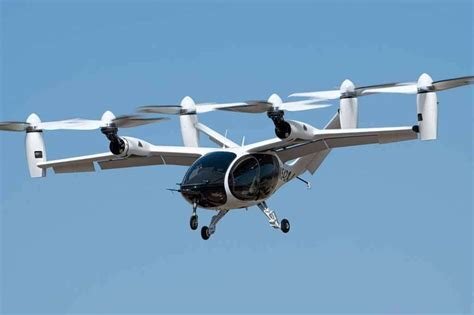
The Gold Coast mayor was on TV this morning saying they are looking into having eVTOL air taxis on the Gold Coast and in Brisbane in time for the 2032 Olympics.
-
A top contender for the Ugliest Plane contest - Tunison Scout. No text on this aircraft - no Wiki page or similar. Read the comments on this link: https://www.aviastar.org/air/usa/tunison_scout.php
-
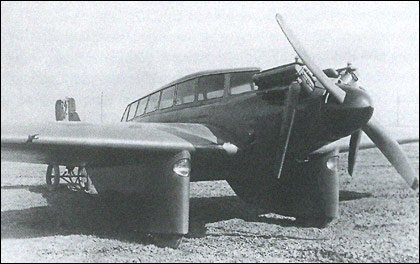
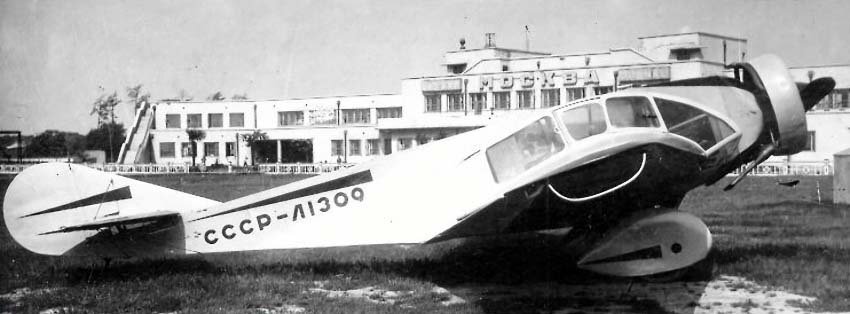
«Plywood-2» (NIAI-1, LK-1) —a Soviet light cargo-passenger aircraft, created in 1933 at the Leningrad Research Aeronautical Institute (NIAI) and built in a small series. It had an unusual layout. Production aircraft were used in Aeroflot and other civil organizations, including in the Arctic. Aircraft «Plywood-2» — single-engine all-wood monoplane with a cantilever wing, trapezoidal in plan. The power elements of the set (wing spars and ribs, tail parts) on the prototype were made of glued plywood pipes, on the serial ones they were replaced with solid wooden rods. A star-shaped piston engine with a two-bladed propeller is located in the nose and is equipped on production aircraft ring of Townend. Plumage — traditional scheme. Chassis — wheeled, two-post with tail support, non-retractable. On some production aircraft, the wheels are covered with fairings. The spacious cabin with developed glazing is made in the form of a thickened central part of the wing. Entrance to the cabin from both sides through sliding doors in the glazing. NIAI-1 on floats, which can be seen in the feature film «Seven brave ones», did not really exist. Fake the floats for filming are hewn from solid logs.
-
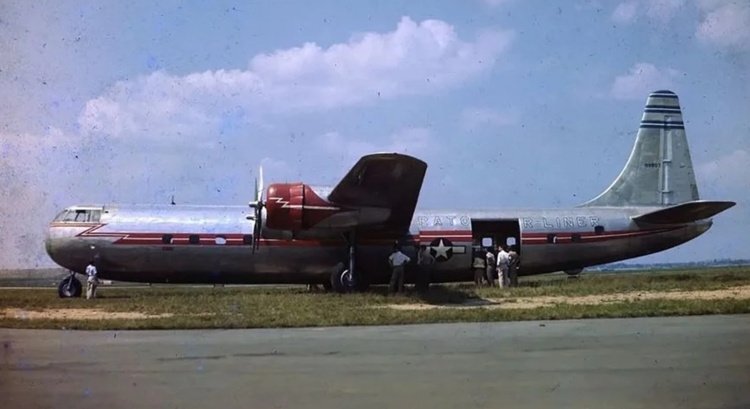
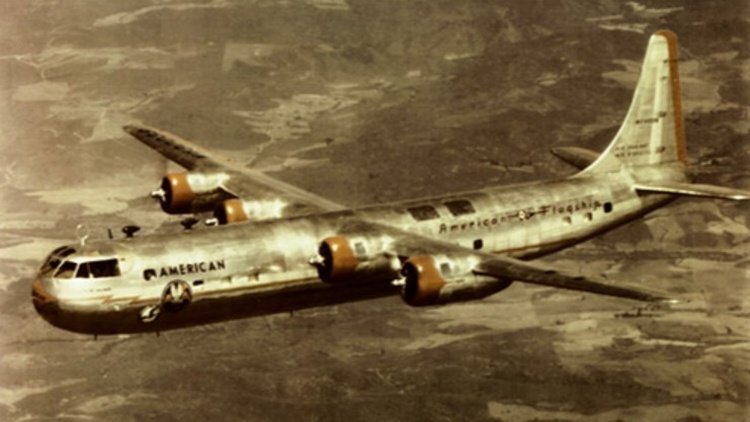
The Consolidated R2Y "Liberator Liner" (Consolidated Model 39) was an airliner derivative of the B-24 Liberator built for the United States Navy by Consolidated Aircraft. The XR2Y-1, as the single prototype was known in Navy service, used the high-aspect wing and tricycle landing gear of the Liberator. The fuselage was an entirely new design, and the vertical stabilizer was taken from the PB4Y Privateer. The final design looked much like a smaller, high-wing Boeing B-29 Superfortress, but with windows for passengers. The aircraft was meant to carry passengers or cargo to distant Navy bases, but after a brief evaluation the prototype was demilitarized in the mid-1940s, returned to Convair, and leased to American Airlines as a freighter with the name "City of Salinas".
-
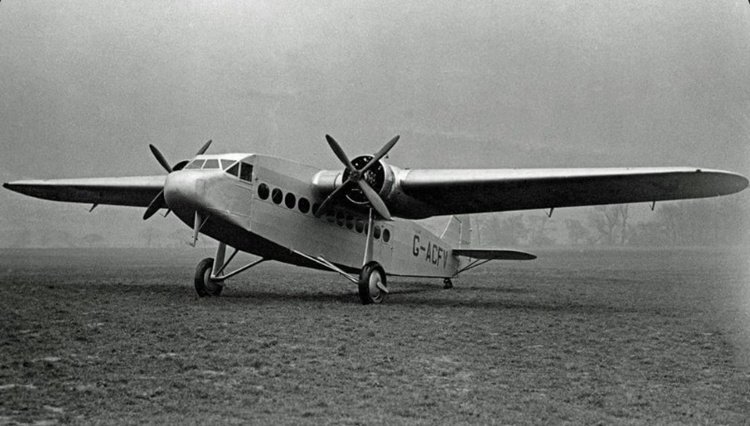
The Avro 642 Eighteen was a 1930s British monoplane airliner. Only two were built — one twin engine and the other four engine. The original had a circular partially glazed nose, but this was changed to a more traditional one. It used the wing of the Avro 618 Ten, which was a license produced Fokker V.II. The twin engine aircraft was used until it was destroyed during World War II, in early 1942. The four engine model was used in British India until 1940. As a follow-on to the Avro 618 Ten, the Avro 642 Eighteen was a larger aircraft but used a modified Avro Ten wing. The wing was moved to the shoulder position with the engines mounted on the wing and a new larger fuselage was used. When the design was completed in February 1933 it was the largest aircraft designed by Avro. The new fuselage was a fabric-covered welded steel structure with seats for 16 passengers, a baggage area and a toilet. The nose section was made of wood and originally had a semi-circular glazed front, although this was later changed to a more conventional-type windscreen. The wooden wing was designed to use any of the engines in the Armstrong-Siddeley family and the first aircraft was built with two Armstrong Siddeley Jaguar VID engines with four-bladed propellers. With an order from the Midland and Scottish Air Ferries the first aircraft was nearly complete by December 1933. Registered G-ACFV the aircraft performed official performance trials at Martlesham Heath and was then returned to Woodford Aerodrome when the nose was modified. On 6 April 1934, G-ACFV was handed over to the customer and was then flown to Castle Bromwich to pick up Prime Minister Ramsay MacDonald and the Secretary of State for Air Lord Londonderry. With these important passengers on board, G-ACFV was flown to Speke Aerodrome so that they could declare open a new air service between Glasgow, London and Belfast. At the same time Lord Londonderry named the aircraft The Marchioness of Londonderry. Following the ceremony the Prime Minister and party were flown to Heston Aerodrome in London. The second aircraft was ordered by the Viceroy of India, Lord Willingdon and was completed in November 1934 with four Armstrong Siddeley Lynx IVC engines and long rectangular windows on each side.
-
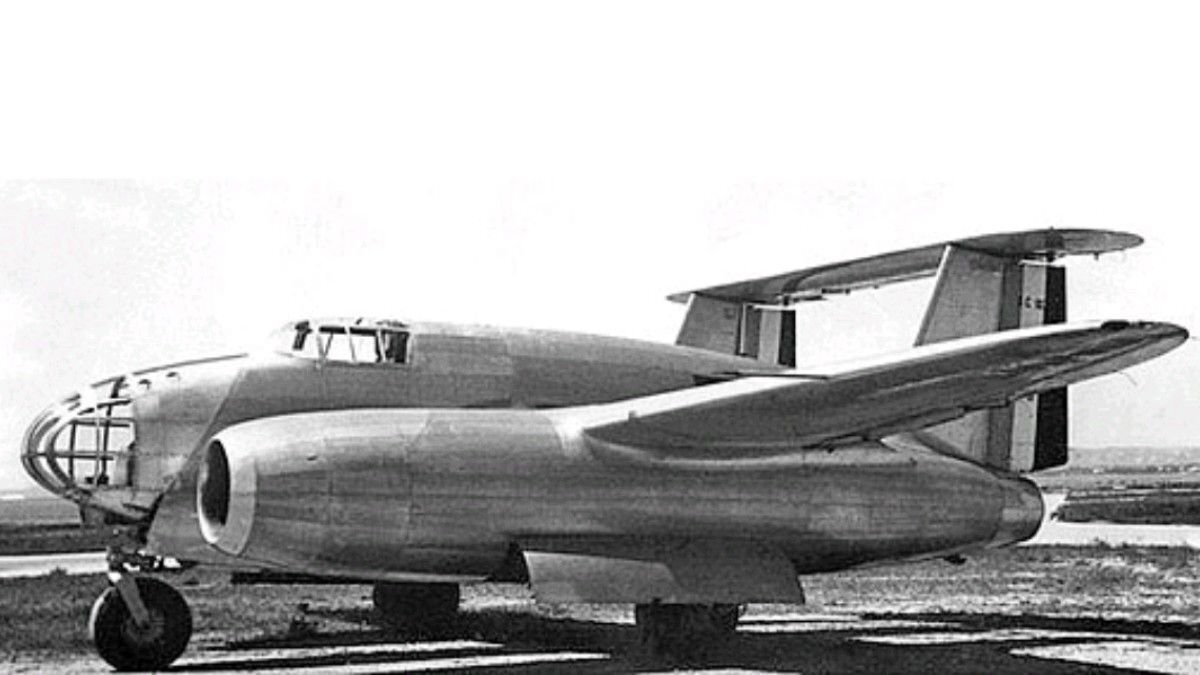
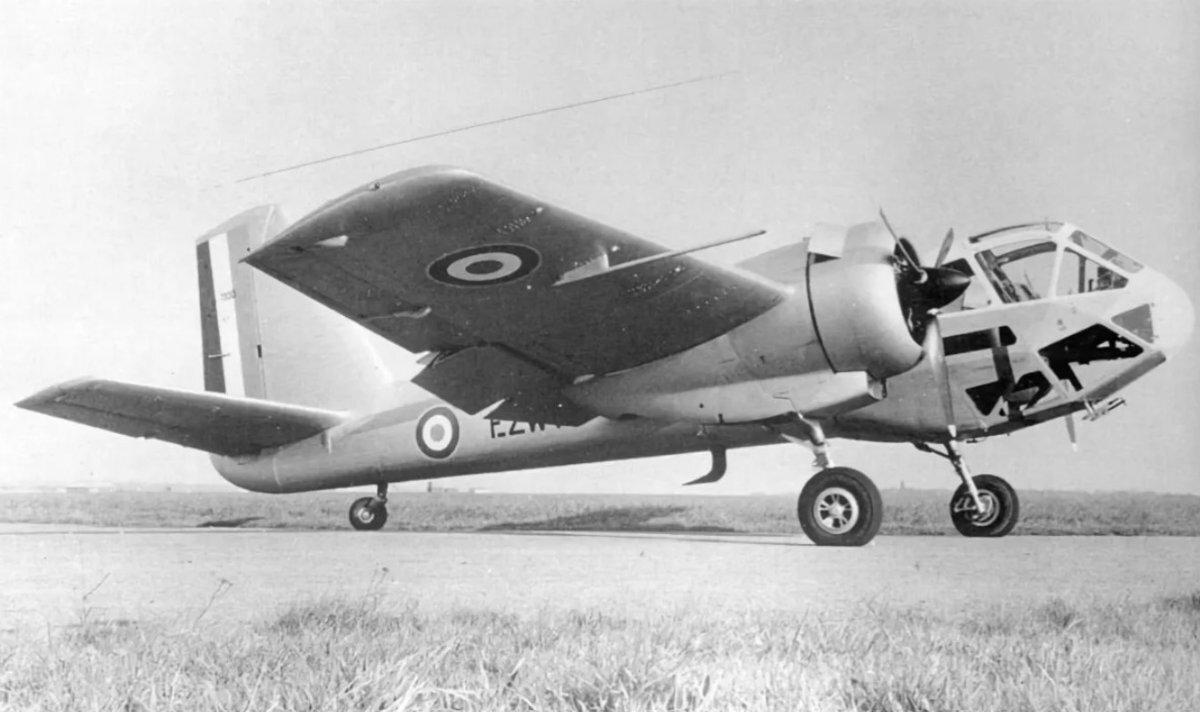
The SNCAC NC.1070 was a piston engined attack and torpedo bomber designed and built in France shortly after World War II. The second prototype, the NC.1071, was the first French multi-jet turbine powered aircraft. Built shortly after World War II, the NC.1070 was a contemporary of the Nord 1500 Noréclair and was intended to take a similar role. It was a twin engine aircraft of unconventional layout with twin booms, twin fins and a double horizontal tail. The central fuselage was not a pod, though short compared with the wing span, and extended beyond the tail. The NC.1070 was powered by a pair of SNECMA 14R fourteen-cylinder, two-row, air-cooled radial engines mounted well ahead of the wing. The fairings behind them extended around the wings and beyond as booms; at their rear, rectangular fixed tailplanes linked the booms to the fuselage. A straight tapered fin and rudder with trim tabs was mounted at the end of each boom with a constant chord, round tipped main tailplane mounted on top of them, carrying a one-piece elevator. The wings were mid-mounted and strongly tapered with slightly swept leading edges and marked curvature on the trailing edges. They were fitted with tabbed ailerons and flaps. There were three crew, a bomb aimer/observer housed in a partially glazed nose, the pilot in a conventional cockpit which merged into a raised rear fuselage and, in the extreme tail just beyond the fins, a rear gunner in a turret. The NC.1070 had retractable tricycle gear, the nose leg slightly offset to port and each leg with a large single wheel. The NC.1070 was first flown on 23 May 1947. Tests continued into 1948 but, piloted by Fernand Lasne, it was seriously damaged in a belly landing at Toussus-le-Noble Airport on 9 March 1948 and did not fly again. Instead, SNCAC concentrated on the jet powered second prototype, the NC.1071. This was powered by a pair of 22.24 kN (5,000 lbf) Rolls-Royce Nenes, mounted in booms like the piston engines of the NC.1070, though rather further forward, positioned below the wing and with their tailpipes emerging from the previously pointed boom ends. Because of the lowered booms/tailpipes the lower, fixed horizontal tail was removed. The rear gun position was replaced by a partially glazed observer's position and the bottom of the rudder was clipped to avoid the jet exhaust. Apart from these engine induced changes the NC.1071 was aerodynamically very similar to the NC.1070, with the same dimensions and only 130 kg (287 lb) heavier empty. Its maximum speed was increased by nearly 40% at altitude and it had a greater ceiling, (13,000 m (43,000 ft)) but its range, much reduced, was only 1,000 km (620 mi). The NC.1071 made its first flight on 12 October 1948. It suffered damage to its undercarriage on 27 April 1949, flew again in 1950 and was modified the following May after significant structural distortion appeared in flight. Though both an all weather fighter variant (NC.1072) and an attack bomber (NC.1073) were considered, they were not built and development was abandoned at the end of NC.1071's flight tests.
-
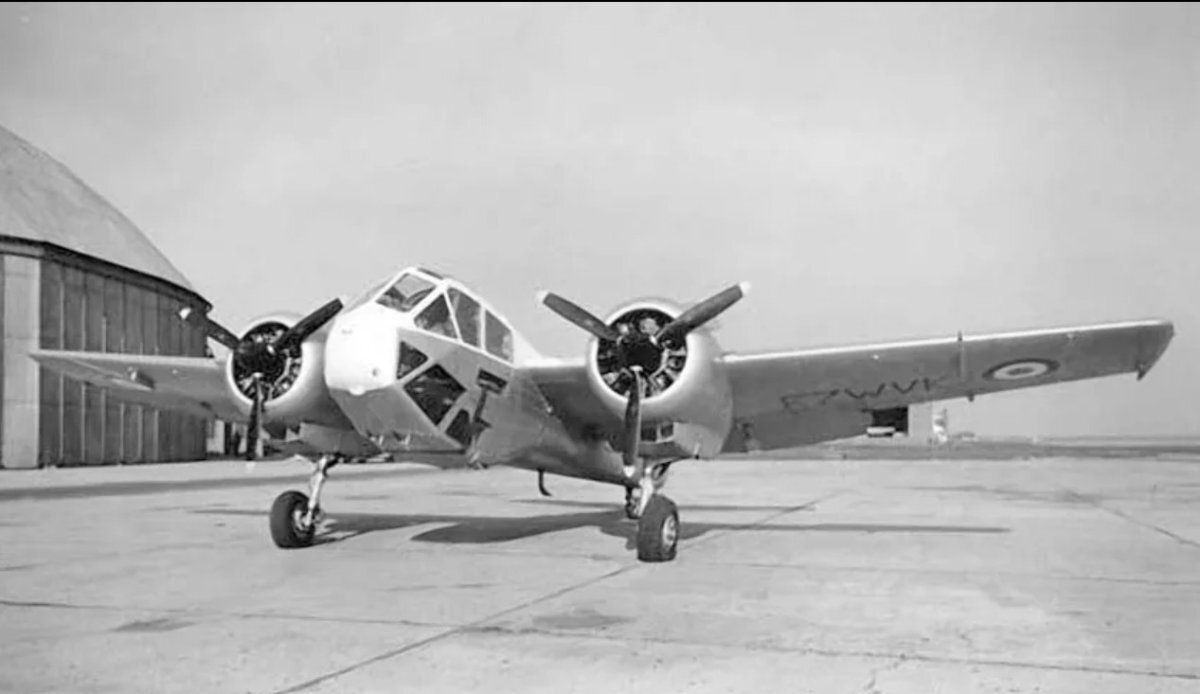
The SIPA S.1100 was a French twin engine observation and ground support aircraft flown in 1958. The first prototype was destroyed in a fatal crash only a few weeks after its first flight and no more were constructed. In 1958 France was in the middle of the Algerian War and felt a need for a counter-insurgency aircraft capable of observation, photography and ground support. This official programme led to three aircraft: the SIPA S.1100, the Sud Aviation SE.116 Voltigeur and, slightly later the Dassault Spirale. All three were propeller driven designs with twin engines, though the SIPA was the only one never fitted with turboprops. The SIPA SE.1100 was a mid wing cantilever monoplane. All its flying surfaces were straight tapered and square tipped; the wing carried flaps. Its 455 kW (610 hp) Pratt & Whitney R-1340 Wasp nine cylinder radial engines were mounted ahead of the wing leading edges, with cowlings which extended rearwards, both above and below the wing, nearly to the trailing edge. Its main wheels retracted backwards into the lower cowling and the tail wheel also retracted. Its crew compartment was in the extreme nose of a deepened forward fuselage, with multiple transparencies to provide good sideways and downward vision. For ground support work it was fitted with two 20 mm (0.79 in) guns. There were underwing attachment points for other armament packages. Ten SE.1100 prototypes were ordered but then cancelled before the SE.1100's first flight, flown on 24 April 1958 by Pierre Ponthus. Less than three months later, Ponthus and his colleague André Bouthonnet were killed and the aircraft destroyed when it crashed at Villacoublay during a low level demonstration. The unfinished second prototype was then abandoned.
-
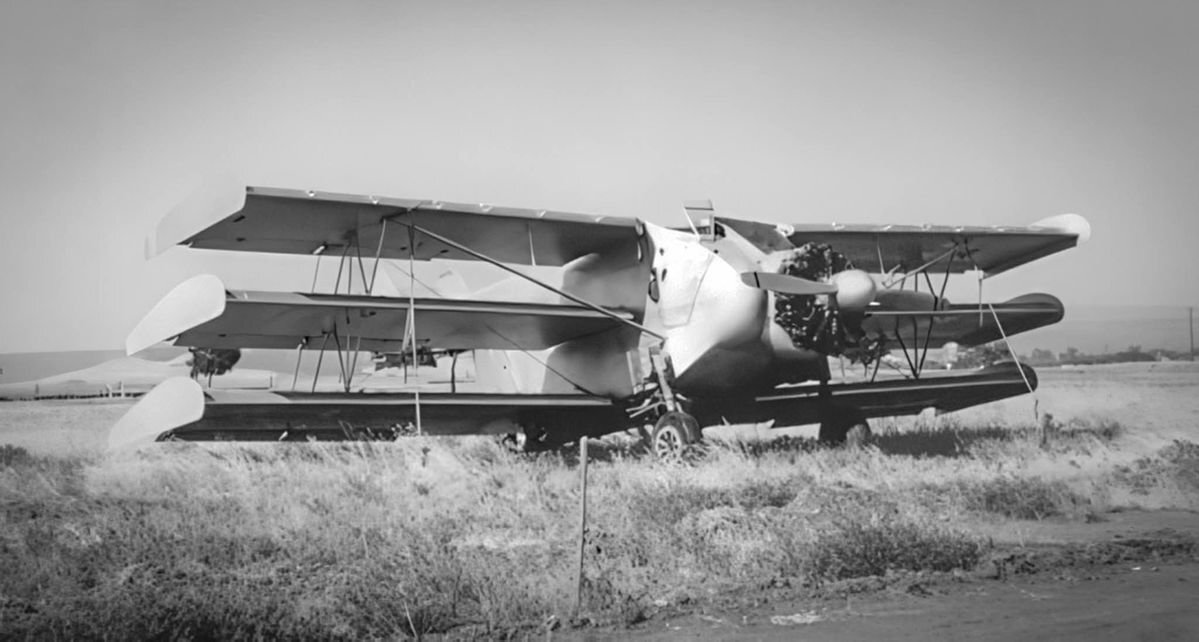
The DeKellis-Olson Air Truck, an experimental American light utility and agricultural triplane developed in the mid-1950s. History & DesignDesigner: It was designed by Tom DeKellis, a crop-dusting operator based in Oroville, California, who sought a more efficient alternative to the Stearman biplanes he was using. Construction: Built in 1957 by mechanic Alan Olson, the aircraft was a "chimera" constructed from surplus parts. It utilized three sets of wings from Piper PA-18 Super Cubs and components from a Vultee BT-13 Valiant. Purpose: DeKellis believed a triplane configuration would provide the additional wing area needed for better "low and slow" performance during crop-spraying operations. Its boxy fuselage was designed to house a large spray tank or dust hopper; some reports even claimed it could accommodate a Jeep. Technical Details: Engine: It was powered by a war-surplus 450 hp Pratt & Whitney R-985 radial engine. Configuration: The aircraft featured a unique four-wheel landing gear and a twin tail mounted on separate booms. Flight History: The Air Truck reportedly flew only once in 1955 (or 1957, depending on the source). The pilot, reportedly anxious to land, damaged the tail section during the circuit. The aircraft never flew again and was eventually abandoned. Legacy While this specific prototype was a failure, the "Air Truck" concept (a pod fuselage with twin tail booms for agricultural work) was later successfully refined by Italian designer Luigi Pellarini into the Bennett PL-11 and the more famous Transavia PL-12 Airtruk.
-
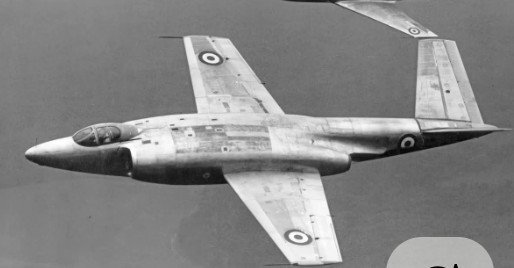
The Supermarine Type 508 was a British experimental jet fighter prototype developed by Vickers-Supermarine in the early 1950s, serving as the primary ancestor to the Supermarine Scimitar. It was designed to meet the Admiralty's Specification N.9/47 for a carrier-borne interceptor, featuring a straight-wing configuration, twin Rolls-Royce Avon RA.3 engines, and a distinctive "butterfly" V-tail designed to clear jet exhaust while maintaining stability. Key Development and Specifications Maiden Flight: The first prototype, serial VX133, flew on 31 August 1951 at Boscombe Down, followed by a second prototype (VX136, later designated Type 529) on 29 August 1952. Design Origins: The Type 508 evolved from the Type 505, which was originally intended to land on flexible rubber decks without an undercarriage; the Type 508 incorporated a conventional tricycle undercarriage after the Admiralty abandoned the rubber deck concept. Performance: The aircraft achieved a maximum speed of approximately 607 mph (977 km/h), though this was considered modest, leading to the development of the swept-wing Type 525 variant. Operational History: The Type 508 (VX133) conducted carrier trials aboard HMS Eagle in 1952 and remained in service until 1956, while the Type 529 variant was destroyed in a crash landing on 19 December 1953.
-
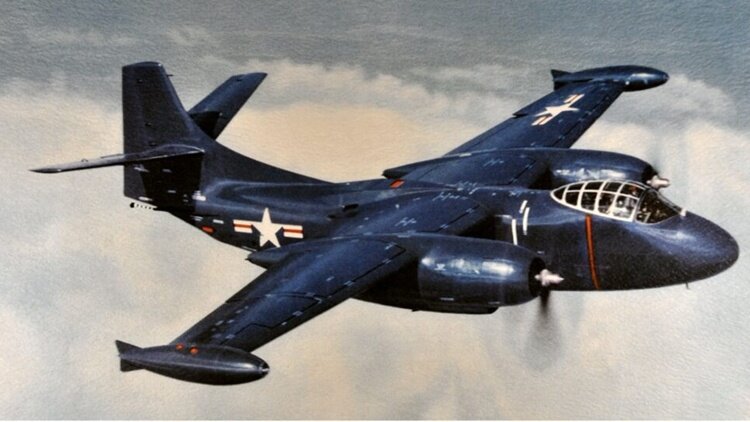 The North American AJ Savage (later A-2 Savage) was a U.S Navy carrier-based medium bomber built by North American Aviation. It was designed shortly after World War II to carry atomic bombs. To do this, it needed a 12,000-pound (5,400 kg) bomb load, making it the heaviest aircraft yet built to operate from a carrier. The Savage was powered by two piston engines and a turbojet mounted in the rear fuselage. The AJ-1 entered service in 1950. Several were deployed to South Korea in 1953 as a deterrent against North Korea. A total of 140 aircraft were built, along with three prototypes. Thirty were configured for reconnaissance. In the mid-1950s, inflight-refueling equipment was added. The Savage began to be replaced in 1957 by the Douglas A3D Skywarrior. After its military career, it was used for experiments such microgravity flights and jet engine testing. At the end of World War II, the U.S. Navy began a design competition on 13 August 1945 for a carrier-based bomber which could carry a 10,000-pound (4,536 kg) bomb that was won by North American Aviation. Later that year, the Navy decided that it needed to be able to deliver atomic bombs and that the AJ Savage design would be adapted to accommodate the latest Mark 4 nuclear bomb, the next step in development from the more sophisticated imploding-plutonium-sphere design Fat Man Mk3 used on Nagasaki. A contract for three XAJ-1 prototypes and a static test airframe was awarded on 24 June 1946. The first prototype made its maiden flight two years later on 3 July 1948. That same year the US Navy began an interim capability program employing the Lockheed P-2 Neptune carrying a crash-program reproduction of the smaller, simpler all-uranium 'gun' design Little Boy nuclear bomb as its first carrier-launched nuclear bomber aircraft until the Savage was in service. The Neptune launched using JATO assist but could not land on existing carriers; if launched they had to either ditch at sea after the mission or land at a friendly airbase. The AJ-1 was a three-seat, high-wing monoplane with tricycle landing gear. To facilitate carrier operations, the outer wing panels and the tailfin could be manually folded. It was fitted with two 2,300-brake-horsepower (1,700 kW) Pratt & Whitney R-2800-44W Double Wasp piston engines, mounted in nacelles under each wing with a large turbocharger fitted inside each engine nacelle, and a 4,600-pound-force (20,000 N) Allison J33-A-10 turbojet was fitted in the rear fuselage. The jet engine was only intended for takeoff and maximum speed near the target, and was fed by an air inlet on top of the fuselage that was normally kept closed to reduce drag. To simplify the fuel system, the jet engine used piston engine avgas rather than jet fuel. One 201-US-gallon (760 L; 167 imp gal) self-sealing fuel tank was housed in the fuselage, and another 508-US-gallon (1,920 L; 423 imp gal) tank was located in each wing. The aircraft usually carried 300-US-gallon (1,100 L; 250 imp gal) tip tanks and it could house three fuel tanks in the bomb bay with a total capacity of 1,640 US gallons (6,200 L; 1,370 imp gal). Other than its 12,000-pound (5,400 kg) bombload, the bomber was unarmed. Two of the three prototypes crashed during testing, but their loss did not materially affect the development of the aircraft as the first batch of Savages had been ordered on 6 October 1947. The most significant difference between the XAJ-1 and the production aircraft was the revision of the cockpit to accommodate a third crewman in a separate compartment. The first flight by a production aircraft occurred in May 1949 and Fleet Composite Squadron 5 (VC-5) became the first squadron to receive a Savage in September. The squadron participated in testing and evaluating the aircraft together with the Naval Air Test Center (NATC) in order to expedite the Savage's introduction into the fleet. The first carrier takeoff and landing made by the bomber took place from the USS Coral Sea on 21 April and 31 August 1950, respectively. Many, if not most, surviving AJ-1s had their tails upgraded to the improved AJ-2 configuration. A photo-reconnaissance version of the Savage, initially known as the AJ-1P, but later designated as the AJ-2P, was ordered on 18 August 1950. It had improved R-2800-48 piston engines and the tail was redesigned to add 1 foot (30 cm) of height to the tailfin. The 12° dihedral of the tail stabilizers was eliminated and the rudder enlarged which slightly lengthened the aircraft. Early AJ-2Ps retained the three-man crew, but late-model aircraft added a fourth aft-facing crewman to the upper cockpit. The Savage's internal fuel capacity was also increased. The nose of the aircraft was remodeled with a prominent "chin" to accommodate a forward-looking oblique camera and a variety of oblique and vertical cameras could be fitted in the bomb bay. Photoflash bombs could be carried for night photography missions. The AJ-2 incorporated all of the changes made to the late model AJ-2P and 55 aircraft were ordered on 14 February 1951. The AJ-2 deleted the separate compartment for the third crewman, but retained the third seat in the cockpit from the AJ-2P. Around 1954, NATC modified the sole surviving XAJ-1 to conduct inflight refuelling tests using the probe and drogue configuration. The turbojet engine was removed and the fuel hose and its drogue extended out from the jet's former exhaust opening. Aircraft in service retained the turbojet and had their bomb bay doors modified to accommodate the hose and drogue. They were refuelling aircraft during late 1954.A total of 143 units was produced. For details of operational history and 11 variants, click here.
 -
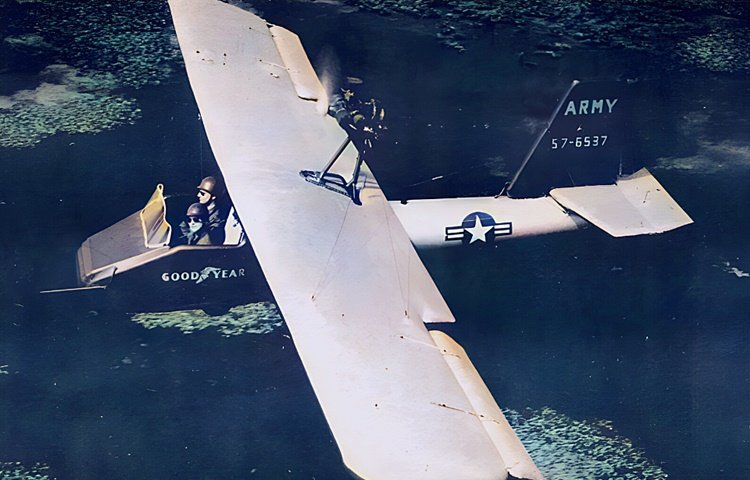
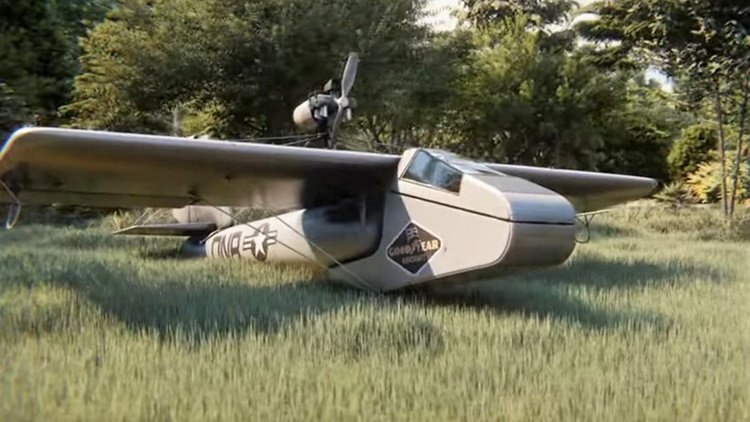
The Goodyear Inflatoplane is an inflatable experimental aircraft made by the Goodyear Aircraft Company, a subsidiary of Goodyear Tire and Rubber Company, well known for the Goodyear blimp. Although it seemed an improbable project, the finished aircraft proved to be capable of meeting its design objectives, although orders were never forthcoming from the military. A total of 12 prototypes were built between 1956 and 1959, and testing continued until 1972, when the project was finally cancelled. The original concept of an all-fabric inflatable aircraft was based on Taylor McDaniel's inflatable rubber glider experiments in 1931. Designed and built in only 12 weeks, the Goodyear Inflatoplane was built in 1956, with the idea that it could be used by the military as a rescue plane to be dropped in a hardened container behind enemy lines. The 44 cubic ft (1.25 cubic meter) container could also be transported by truck, jeep trailer or aircraft. The inflatable surface of this aircraft was actually a sandwich of two rubber-type materials connected by a mesh of nylon threads, forming an I-beam. When the nylon was exposed to air, it absorbed and repelled water as it stiffened,[clarification needed] giving the aircraft its shape and rigidity. Structural integrity was retained in flight with forced air being continually circulated by the aircraft's motor. This continuous pressure supply enabled the aircraft to have a degree of puncture resilience, the testing of airmat showing that it could be punctured by up to six .30 calibre bullets and retain pressure. There were at least two versions: The GA-468 was a single-seater. It took about five minutes to inflate to about 25 psi (170 kPa); at full size, it was 19 ft 7 in (5.97 m) long, with a 22 ft (6.7 m) wingspan. A pilot would then hand-start the two-stroke cycle, 40 horsepower (30 kW) Nelson engine, and takeoff with a maximum load of 240 pounds (110 kg). On 20 US gallons (76 L) of fuel, the aircraft could fly 390 miles (630 km), with an endurance of 6.5 hours. Maximum speed was 72 miles per hour (116 km/h), with a cruise speed of 60 mph. Later, a 42 horsepower (31 kW) engine was used in the aircraft. Takeoff from turf was in 250 feet with 575 feet needed to clear a 50-foot obstacle. It landed in 350 feet. Rate of climb was 550 feet per minute. Its service ceiling was estimated at 10,000 ft. The GA-466 was the two-seater version, 2 in (51 mm) shorter, but with a 6 ft (1.8 m) longer wingspan than the GA-468. A more powerful 60 horsepower (45 kW) McCulloch 4318 engine could power the 740 pounds (340 kg) of plane and passenger to 70 miles per hour (110 km/h), although the range of the plane was limited to 275 miles (443 km).