skippydiesel
-
Posts
8,276 -
Joined
-
Last visited
-
Days Won
84
Content Type
Profiles
Forums
Gallery
Downloads
Blogs
Events
Store
Aircraft
Resources
Tutorials
Articles
Classifieds
Movies
Books
Community Map
Quizzes
Videos Directory
Everything posted by skippydiesel
-
Crookwell Aerodrome!Sunday 15 November
skippydiesel replied to skippydiesel's topic in Trips/Events/Seats
Automated aircraft cancelling service?? 😈 -
Crookwell Aerodrome!Sunday 15 November
skippydiesel replied to skippydiesel's topic in Trips/Events/Seats
PPS - - https://www.crookwellaeroclub.org.au/general-clean Looks great! No expense spared - Even had a roller on the job. FYI - ERSA of of date - Seems that the Local Authority/Council is now the owner, yet to update ERSA entry. - No Landing Fees apply at this time. 😈 -
Crookwell Aerodrome!Sunday 15 November
skippydiesel replied to skippydiesel's topic in Trips/Events/Seats
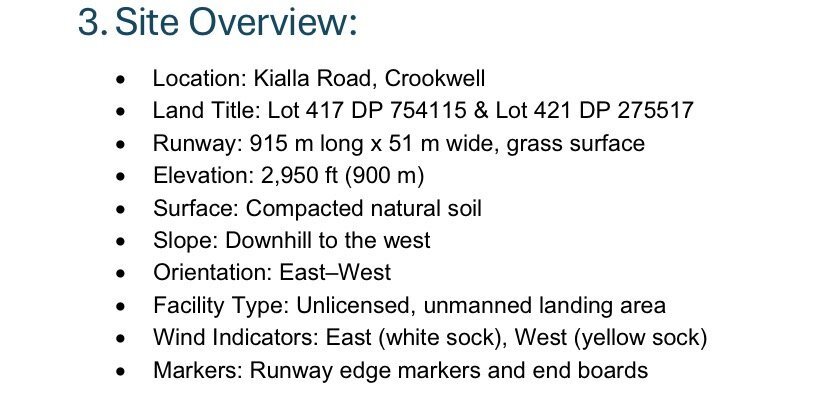
PS OzRunways has runway orientation as 09/27. Runway well marked. The Surface; Described below is actually grass (two mowings this season, to date). NOTE: There appears to be a parallel, private grass strip (no markings) 500 m (a guess) just to the north, with a large shed/hanger about mid way. I have been sent the following; 😈
-
Best to check that your "....VHF portable with headphone adapter..." will work in your aircraft. Mine does not like all the metal - almost useless without an external antenna hook up.😈
-
Crookwell Aerodrome!Sunday 15 November "Hi everyone, We’ve locked in a new date for the Crookwell Aero Club’s fly-in — Sunday 15 November, from 10am at Crookwell Aerodrome! Unfortunately, the weather forced us to cancel our September event, so we’re crossing our fingers for blue skies this time around. We’d love to welcome pilots, students, aviation enthusiasts and families for a relaxed day of planes, helicopters and a good chinwag. Whether you’re flying in or driving out, everyone is welcome! We’d love your help spreading the word! Please forward this email to friends, family, fellow pilots, anyone wanting to learn to fly and aviation enthusiasts who might enjoy coming along. Pop the new date in your calendar. We’ll share updates through email, our website, Facebook and Instagram as the day approaches, including any weather-related changes. Pilots are encouraged to check current aviation weather forecasts and conditions when planning their trip. We look forward to seeing you at the strip!" https://www.crookwellaeroclub.org.au/ 😈
-
Just read (after 5 years) - I now remeber why I didn't connect the warning LED - no less than 7 possible flashing combinations, with multiple pulse rates, combined with diffrent voltages, over times ranging from 3 minutes to 60. You may be able to memorise them all, this aged brain likly to self destruct. The only flashing combination that requires urgent response ; Slow Fashing (5s on/5s off). Greater than 15.2 V Over-charging. "If in flight, shut off the charging system immediately" My Dynon already gives me way more information (overload) than my last steam gauge panel. I am reminded of the Air France Flight 447 passenger aircraft that went down in the South Atlantic 01/05/2009- The crew spent the time, from first problem indication, at Cruising (FL350) altitude, of a problem, to crashinga perfectly fliable aircraft, reading manuals. Sometimes there can just be too much information. 😈
-
No battery or CARMO LED fitted. My Dynon has a voltage / amp draw, read out - As stated ; It would seem that I have no paid it sufficient attention on my relight checks. 😈
-
The engine started as per normal. As you say the 1.2 hrs was no long enough, hence my speculation that the battery charging was likly ineffective, for at least the previous two flight. Will have to pay more attention to charge condition during my run up checks. Note: My start battery is an Earth X ETX 900. These battery's have a reputation for delivering good cranking amps even when severely depleted. 😈
-
B'Flex landing gear
skippydiesel replied to Blueadventures's topic in Aircraft Building and Design Discussion
My ATEC Zephyr had something similar looking, but in composit. Always annoyed me that the brake tubes had to be secured with zip/cable ties (or similar) - Why cant there be a series of tubular brackets, down the trailing edge, of the leg, for the tube to be threded through. Would look so much more professional than zip ties.😈 -
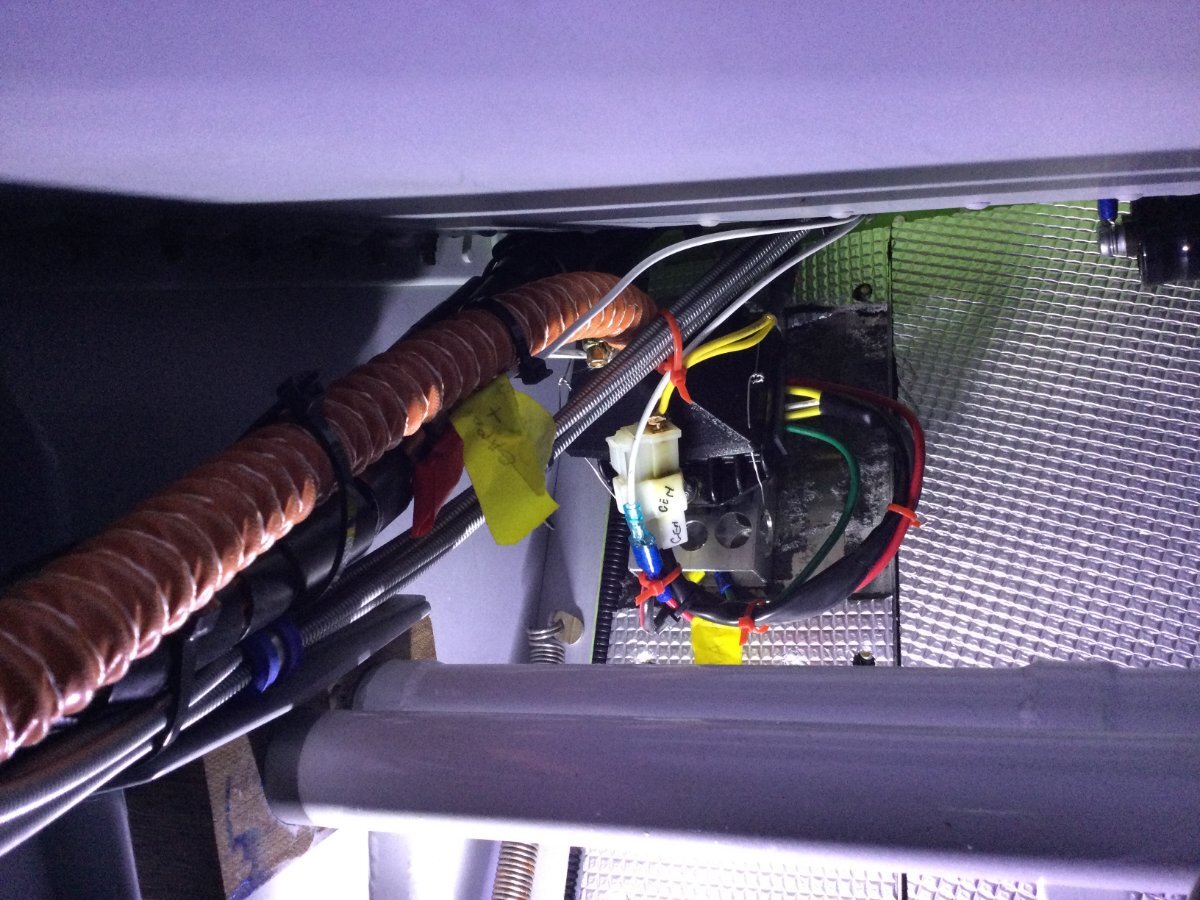
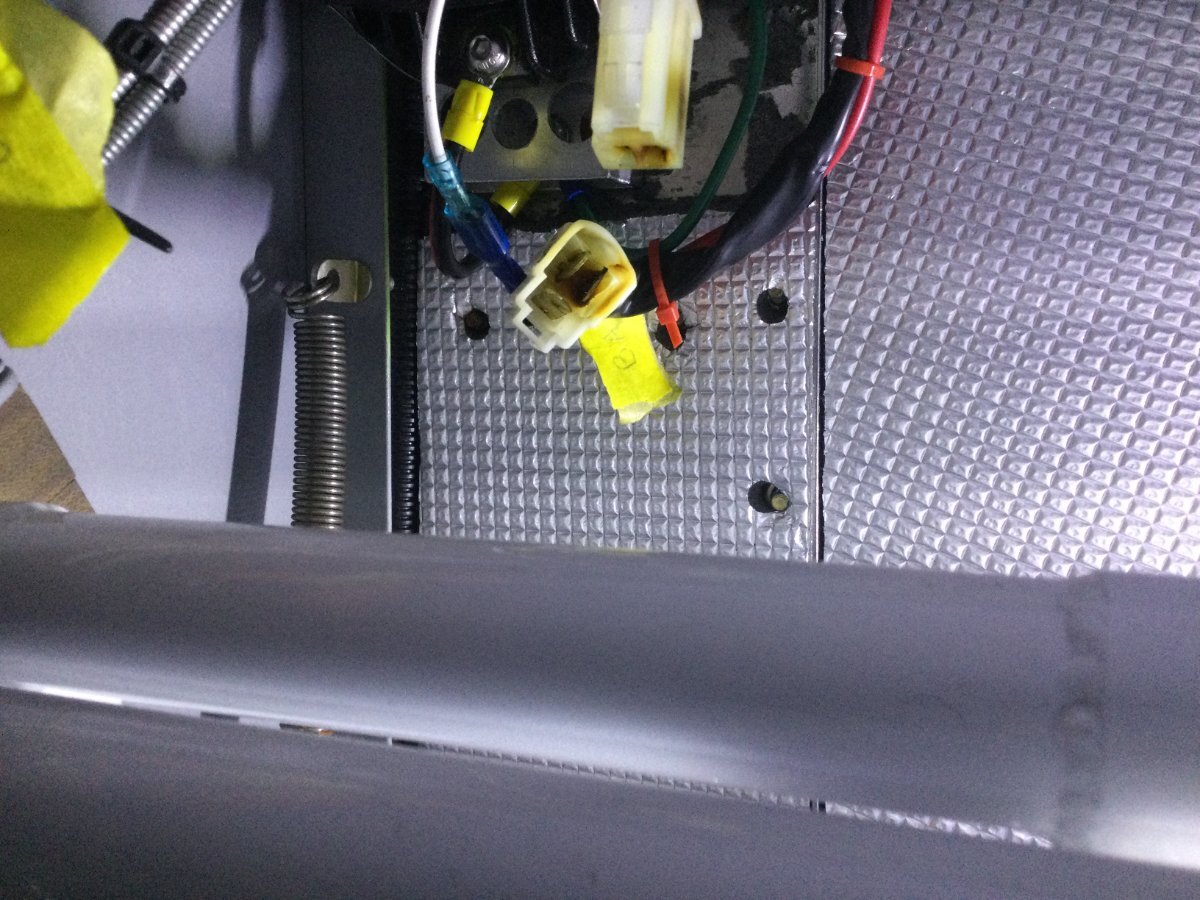
The Oaks - Crookwell Hobbs 1.2hrs Ambient temperature about 30 C. Engine start normal. Post start checks - normal. When oil temp above 50 C, taxied to run up area. Run up checks all normal (no recollection of checking electrical charge) Took off. Very little aircraft activity in Sydney Basin, possibly due to lumpy air (not real turbulence). On Climb-Out to 4000 ft (Max 4500 ft step above) oil temperatures a bit high @ 108 C. Still in the green but lowered nose to increase speed/airflow Continued Climb to 4500 when past CTA step. Oil temperatures established at 100C - prefere mid 90 C (Mental note to remove the last of the winter oil cooler blanking). All right with the World. Stunning scenery. Aircraft performing flawlessly. Crookwell was part of my conversion training from GA-RAA cross country review. Landed there that time - my prop mowed the long grass. This time just overflew - seems that they now have two parallel runways, some distance apart. One all marked out as per standard , the other no markings but similar length. Back home via Mittagong - Climbed up to 5500 ft for the return , much smoother trip. Life just great! Just as I was preparing my thoughts, to make my 10 NM overfly call to Mittagong, my radio/Mode S transponder went dead & I got a Battery Fail Warning on my Dynon - "Oh Bother Says I XXXXXXX" Checked everything I could in the air. Decided on a Precautionary Landing at Mittagong. Pulled all the none essential breakers,to conserve battery power. Made all the calls but transceiver dead! On descent for YMIG my electricals all came back. What to do? Can almost see The Oaks and still at 4000 ft, engine purring. Made a random call on 126.7 CTAF describing problem and that I would continue on to The Oaks. Naturally power went off again - on / off several times, on the short run to The Oaks. Unable to reduce prop from Course to Fine for landing. Made a Straight In Approach/Landing - something I rarely do, so a bit fast and not the smoothest - nothing bent. No other aircraft arround. On investigation found: The start battery down to 11.8 V The wiring spade connection between Generator & VR, significantly heat effected (see pic)- could this be the problem? Why did my main battery not last longer? I think the VR must not have been charging the battery adequately, for at least the last two flights, I somehow have not noticed (lesson learnt). I will: Replace the plug/spade connectors - make sure they are very tight & may even use a smear of conductive grease. Charge the start battery to full capacity. Start the engine and carefully note the power input volts & amps for any deviation (I hope the CARMO VR , only 100+hrs, has not failed). 😈
-
Disappointing response from Australian Airports Association (AAA). I may be mistaken, it would seem they are not intersted in the private pilot interaction, with the airports (owners) they would seem to be representing. Had a quick brows of their staff structure & comming conferences - no mention of staff being or ever training as a pilot - conference speaker list has one CPL, who seemed to be speaking on a safety (not sure what aspect). An earlier contributor, to this Thread, speculated that there is a lack of pilot representation amongst owners (Local Councils), which may be contributing to what appears to be an apathetic delivery of airfield services to private pilots. 😈
-
Air Australia V - A 1980’s ultralight trip to Cape York
skippydiesel replied to Reynard's topic in AUS/NZ General Discussion
Great! Just saw the notice. Probably for the best - getting out of the Sydney Basin yesterday , likly a non event. I hope they got some fly-in's. 😈 -
I have just Googled letters of petition to Government Ministers; Seems to me we can draw up a (formal) letter of request for action, that all supports can sign OR all supporters can send in their signed copy. The former is likly to be less disruptive, as such may have less impact (ignored) however if there are pages of co-signatures this may be hard to do. The latter may annoy the hell out the Minister - receive less favorable attention. Initial random thoughts; Much will depend on the number of signatures, to get any attention at all - any idea what the response may be from this Forum alone? Forum members who wish to participated, should consider presenting the letter to their local Flying Club/School ? It's been suggested that a copy of whatever is sent to Minister King, be sent to each signatories Federal member - what think you ? For greatest impact legitimacy; Supports may have to Sign, Print name, give ARN /Cert Number ? If going for a letter with many co-signatures - how best to achieve this (online/paper)? 😈
-
I will try & put something together. It would be helpful if I had a small number of people to assist - as in proof read/make suggestions - any volunteers? 😈
-
"The only other privateer is a long time user and has a second padlock on the gate..." Seems that a president has been established, that is acceptable (or turned a"blind eye "to) to your Council- fit your padlock. Why no run it past your Council, as a cost saving measure & service to a good rate payer,- even a verbal (unofficial) nod will get you in. 😈
-
Good man - make a point about my dyslexia, rather than the substance of my message 😈
-
I find the general acceptance of fees to access public assets/services and unfair /unproductive laws to be extraordinary. Public Assets/Services We the people own the assets /services. A simple fact that few seem to take on board. Yes there is a cost to provide them and it is we who pay that cost, through taxation (in all its names & forms). Charging an additional user fee, is more often than not, counterproductive and does not serve the community well. Clearly there are circumstances where a fee serves a good purpose -eg well structured parking fees, encourage short stay/access for others, use of public transport, etc Where fees are charged, they should just cover the cost - not be some cash cow for whatever level of Government instigates it (or delegates it to a private third party) . There is a concept in nature that we would do well to copy - that of synergy where two or more organisms (assets) produce a greater result (benefit) than each would achieve individually eg A Council owned airfield has the potentially to encourage; visitation which benefits the tourism/visors; fast emergency response (for individuals/community); aviation businesses, etc etc. Charging fees for small private aircraft landings (that can not possibly deliver the same wear & tear as commercial operations) is a turn off ie reduces the willingness of private pilots to use that airfield. A note on public assets/services; There should be no public assets/services in the hands of the private sector. Privatising is just a way for Government to avoid responsibility for the welfare of its people and the nation as a whole. Artificially reduce government taxation (you pay for profits instead ) Will ultimately lead to great disadvantage , lower education & health standards and social unrest. Unfair/Unproductive Laws We are swamped by laws/regulation that have no productive purpose. I am an advocate for ALL laws to be subject to two very sample rules: Is it for the genuine protection of the majority from the minority? OR Is it for the genuine protection of minority from the majority? If not either of the above, that law should either not go into legislation or if has, become redundant, be scrapped. This simple philosophy should also be a defense in law ie if the government/prosecution can not demonstrate the law fits into above, there is no case. At no time should anyone be convicted, just because a law exists (this is totalitarianism). (Australia's review process, for existing legislation, is way to slow, politically timid, almost a non event). Yes this is simplistic BUT can be applied to almost all (few exceptions) existing & future legislation and we, the community, would be the better for it. Dont start me on ASIC. 😈
-
I'm with you and others, who recognise that we Australian's are subject to far too much petty, irrelevant, unworkable and down right pointless legislation/rules. There was a time (or is it just self propaganda?) that Australian's, recognising worthless legislation, just ignored it. To be absolutely clear I am not a Sovereign Rights person, jut not an ovine accepter of rediculouse rules. 😈
-
Fascinatimg! You want to promote your make & model BUT don't want to invite "outsiders - there's logic for you Presumably you would like to promate recreational/private flying BUT you don't want any "outsiders" being part of your little world, so best not "risk it" - more questionable logice. You know all there is to know about your aircraft, so no point in risking any non conforming information /questions - good thinking? You do want to crow, post event, about your exclusive little tribal meeting, - to what practical end???? There is nothing wrong with a private aircraft event, any more than a family gathering. Just wonder why it's thought to be appropriate to post the family snapshots on a public forum. Silly me we live in the age of "Facebook" where everyone things its "cool" to tell the World all about your private comings & goings (sick!) 😈
-
Tip fees for locals/rate payers is in the same user pay context as Toll Road/Landing Fees/etc. It all part of the same sick policy. Our local/Council tip has closed. The wonderful Council, has delegated the job to a commercial entity, who naturally want to make a handsome profit. May be my imagination - starting to see more "fly tipping" in our area. 😈
-
FACT remains - the customer (pilot) should not have to search for the charge/fees. The service/good provider (airport owner) is responsible for providing the fee information "up front". It is neither reasonably, nor required for the customer (pilot) to search for the fess at all (no additional steps/effort needs to be taken). I hope that the airport owners will see our request to post the fees in ERSA as perfectly reasonable and act accodingly. If airfield owners are not willing to aspire to best practise/profession conduct and ultimately to Consumer Law, then why should the pilot pay??? Direction action is a last resort and would only occur after notice to the te authorities that such action will happen if the fees are not posted in ERSA. 😈
-
My first & second points have already been made; Private affairs have no business being mentioned in a public Forum. When ever possible make your fly-in, an all welcome occasion (not the avoidance of the word event, which seems to have connotation's for you/possibly others). Your having yourself on if you think that the Council could care less/needs to be involved, in a casual fly-in, of say an additional 6-12 aircraft, to a designated public airfield. No one want to impose on a private individuate/gathering - this would not have stopped the above + 6-12 aircraft from having an excuse to fly into Tocumwal. Its a good thing that other "special interest" groups are not so elitist, that they don't welcome diffrent aircraft. I had a great time/made welcome at the Antique Aircraft/Ford Customline, Leeton Fly-In a few weeks ago as one of about 6 "modern" aircraft that joined in. Even have an invite to the next at; Antique Aeroplane 2026 Spring Fly-in & AGM, Wentworth, NSW If you want to go privet/exclusive - good on yah! Just don't then write about it on a public forum, if you don't want feedback from the likes of me. 😈
-
"Don't take any notice of any pessimistic and cynical remarks from any of our jaded posters. " Our interest / sport is shrinking. Numbers are plummeting, the average age is increasing. Gender representation polarising. Fly-Ins/ Competitions/ Brunches /Casual get -to- gether's, (all welcome) were once common weekend events, now few & far between. While it's always great to read / talk about aircraft , its disappointing when one group, opt for exclusivity, rather than inclusion. All private pilots should be encouraging / promoting and including, taking every opportunity to welcome all, in a spirit of unity. 😈
-
Seeing as you don't believe/trust what I say, perhaps AI can enlighten you: Airservices Australia publishes and operates the National Aeronautical Information Processing System (NAIPS) in Australia. System Purpose: NAIPS provides Australian pilots and operators with essential pre-flight briefings, weather forecasts, NOTAMs (Notice to Air Missions), and flight notification services. Organization: Airservices Australia is the government-owned corporation responsible for the country's air navigation services. As you know (because I have told you several times) I have contacted Airservices - Airservices is responsible for the delivery/printing of NAIPS, which just happens to include ERSA; ergo NAIPS is the product of Airservices. If you want to get Landing Fees printed in ERSA you contact Airservices (as I have done) only to find out that Airservices neither solicit or approve information in ERSA. The information for airfields, is supplied by the airfield owner. The information is approved (or not) for publication by CASA. Neither Airservices or CASA can demand that the airfield owners must provide their Landing Fees for publication in ERSA. It is possible that: Australian Airports Association (AAA, an industry organisation representing 340 airports) who have regular National & Regional conferences, are considering my request to add the desirability for Landing Fees to be posted in ERSA, to their discussion agenda (I live in hope). The Minister may contact airfield owners, suggesting that they post their Landing Fees in ERSA (more hope). I doubt that the Minster would threaten the" big stick" - ie The airfields not posting their fees in an easily accessible location / format, are in breach of Consumer Law & therefor subject to civil proceedings . At this stage, my focus is getting the Minister on side. RAA have agreed to write letter in support of my campaign. AOPA yet to be contacted. Airservices/ NAIPS have passed responsibility, for action on this matter, to the Ministers office. 😈
-
Gathering? I take it private? Why are you now promoting the "gathering" on a public forum, after the fact? 😈