RFguy
-
Posts
3,542 -
Joined
-
Last visited
-
Days Won
49
Content Type
Profiles
Forums
Gallery
Downloads
Blogs
Events
Store
Aircraft
Resources
Tutorials
Articles
Classifieds
Movies
Books
Community Map
Quizzes
Videos Directory
Everything posted by RFguy
-
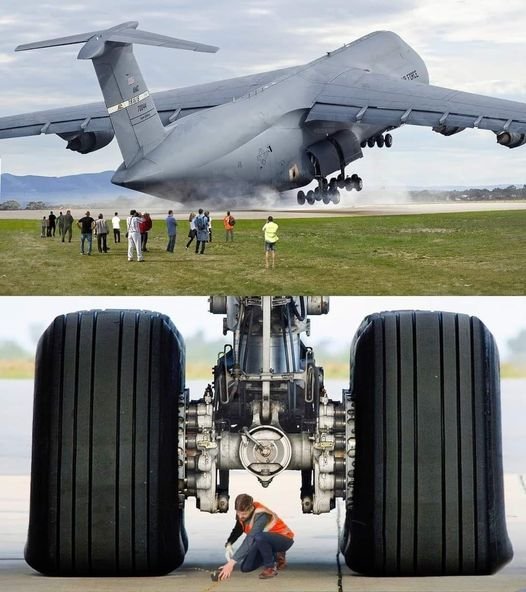 Reading on wiki. seems gear up landings happen to these guys also... "In July 1983, C-5A Serial No. 68-0216 landed gear up at Travis Air Force Base, California. There were no injuries. The accident occurred while the crew was performing touch-and-go landings, and did not lower the landing gear during the final approach of the day. The aircraft received significant damage to the lower fuselage, ramp, clamshell doors, and main landing gear pods. The C-5A was later flown to Marietta for repairs. "
 -
Kuntzleman Red LED tail beacon fault
RFguy replied to RFguy's topic in Instruments, Radios and Electronics
interesting lens no specs on luminosity. limited on brightness I think on the small number of LEDs. but probably fine in the circuit on a dark night -
Brendan The answer is .. yeah you can just set it to the known height- that's good enough for circuit work. There may be some difference with the published local QNH, perhaps a hecto either way. Once you get airborne though, flying hemispherical altitudes (4500,5500,6500,7500 etc) you are expected to be flying on the area QNH, regardless of what your altimeter /setting was at the aerodrome. and ATC separation requires / expects this. At Cowra, I just set the altimeter to the airport height 970', and then if going somewhere, once established, I set the altimeter to the area QNH (which I will have got from my weather and NOTAM checks before flight). or, you can call up Centre on the radio, and request the area QNH. When in the vicinity of my destination, I'll set the altimeter to the AWIS broadcast QNH, if AVBL.
-
Kuntzleman Red LED tail beacon fault
RFguy replied to RFguy's topic in Instruments, Radios and Electronics
Also, footnote - Flashtube is still best option , probably about the same complexity as driving high power LEDs. -
Kuntzleman Red LED tail beacon fault
RFguy replied to RFguy's topic in Instruments, Radios and Electronics
Jim, I will get one of the lens and those bulbs and see what I can come up with. I've built alot of led flashers and lights with modern leds. I have a 19,000 lumen flasher on the bike... -
Kuntzleman Red LED tail beacon fault
RFguy replied to RFguy's topic in Instruments, Radios and Electronics
what? We're not using rotating flashing beacons. this sort of light create very little drag. it is a good shape. -
Kuntzleman Red LED tail beacon fault
RFguy replied to RFguy's topic in Instruments, Radios and Electronics
Nice work Jim. I can do the flasher electronics for us. Let me know the precise lens used- I will buy some and generate some flasher electronics. Do we have a suitable LED 'bulb' to go init? there will need to be some optimization of LED launch location to maximize the lens coupling I will get my Jab flying again soon enough, I'll follow your path. -
If it was high summer, you might do it in one day- IE lots of light and potential for a 2 hour rest in the middle.. but I am sure you are going to feel like sh1t after two legs ... IE not going to enjoy the last hour, and ask yourself, would you pass your BFR in the last hour of the 7 hour flight??? >3.5 to 4 hours a leg is about the threshold for where I no longer enjoy it and, and the threshold where I might be fatigue compromised to deal with a difficult crosswind. But, it depends on the weather. and having an autopilot if good weather might assist depending on your aircraft rigging and fuel balance... (My Piper flys hands off S&L) Going out to broken hill at FL125 with no wind, clear skies, I was fresh as a daisy after 3.5 hours... Going from the YPMQ on coast over to Cowra, a similar distance, in poor, awful terrible weather crossing the range the whole way, I was trashed after 3.5 hours and elected 'to the easy way out' and do a straight-in & land on the grass at Cowra into the wind, rather than go into circuit and deal with the moderate X wind ....
-
Suitable hand held radio - Your advice, please
RFguy replied to old man emu's topic in Instruments, Radios and Electronics
use of a rubber duck inside a metal bodied aircraft is never going to work well, the metal; body at aviation wavelengths ~ 2.5m is like a shield can. -
and AC 43-6D (faa.gov)
-
it takes a bit of time to do because the altitude encoder needs to be walked at a reasonable rate (500 fpm) up AND down from peak altitude, and corresponding transmitter pressure altitude needs to be checked off. Most seem to use a a climbing 9declining pressure) rate and just watch the dials on the transponder and the instrument pressure generator. output of the encoder is 100 ft steps. +/-50' / 125' error, Per CAO100.5, section 14, refers to Appendix F of FAR part 43 eCFR :: 14 CFR Part 43 -- Maintenance, Preventive Maintenance, Rebuilding, and Alteration (FAR Part 43) More advanced gear reads the PA from the decoded, transmitted waveform, and checks for waveform fideltity, timing , which these days will be working, or not. The two techs I have see use a little buggery box that generates a ping to the transponder next to the aircraft (a few microwatts) and lists for the return and displays it. for those interested in the other instrument requirements - how to check : and has requirements, tolerable errors etc , subpart E eCFR :: Appendix E to Part 43, Title 14 -- Altimeter System Test and Inspection (Appendix E to Part 43, FAR)
-
So, these Generative AI tools, while pretty useless for facts (they just regurgitate) , I am surprised how well they enact a summary when asked. That 2400 reduced to 200 words was impressive and succinct .
-
I've asked Google Gemini to summarize Mr Stewart's last post: ---------------------------------------------------------------- The witness is expressing frustration and anger towards a group of people who they believe are not being respectful or helpful. They claim to have witnessed an incident involving a pilot and a plane but refuse to provide any further information or video due to the negative responses they have received. The witness accuses the group of being disrespectful and unhelpful, and concludes the conversation by stating that they will not be providing any further information. -------------------------------------------
-
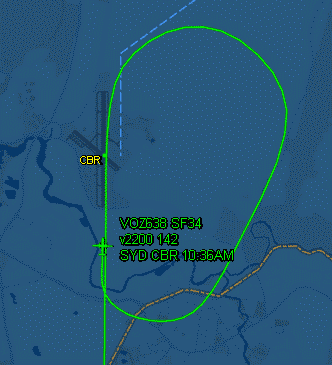
An Echidna on RWY35 in Canberra just caused a Saab 340 to go-around (from about 1000' AGL) ATC asked them to make a tight circuit . And was told " to slow down in circuit", (230 kts in the first 180 deg turn.... ), as there is 'some difficulty removing the beast'. I had an Echidna in the Hangar on Monday And a Echidna had to get removed from the RWY at Cowra last week.

-
+spare parts list- spark plug wrench to fix fouled plug
-
It made a reasonable fist of a summary eh ?
-
Put the post into an AI chat robut like Gemini and tell it to " reformat " here is the result after removing non printables The text you provided seems to be an eyewitness account of a light aircraft crash. Here's a breakdown of the key points: Witness account: The author witnessed a light aircraft crash at Boonah airfield. The author claims the aircraft was in good condition before takeoff. The pilot performed a normal takeoff but then climbed too steeply. The engine failed, and the aircraft crashed. The author recorded the incident on video and called emergency services. The author's thoughts on the cause of the crash: The author speculates that the pilot might have panicked or made a mistake during the climb. They also consider mechanical failure as a possibility. Additional points: The author emphasizes the importance of pilot training and safety procedures. They acknowledge the emergency services' work and the role of Nigel Arnott in the aftermath of the crash. The author mentions their own aircraft (Angel 1) and their experience in aviation. What I can't do: I cannot determine the cause of the crash based on this account. An official investigation is needed. I cannot verify the accuracy of the information provided by the author. Is there anything specific you'd like me to do with this information? I can help you summarize it further, answer questions about specific parts, or search for news articles about the crash (if available).
-
hose spec is -7 psi at 150C, so that hose is fine. max neg is -4.4psi at full smoke. I think there are a few bad installs around the place with radiators with too much pressure drop, or hoses too long/ of insufficient diameter (causing pressure drop) on the suction side. (min spec 10mm, suggest 12mm)
-
control surface cable wearout - macro pic of worn cable
RFguy replied to RFguy's topic in AUS/NZ General Discussion
A few days later.....Pull-Pull cable control airplanes. mutter mutter .. Well I can very much appreciate the simplicity of the jabiru with its pair of push-pull teleflex cables.....as sloppy as it is. -
Light plane crash Redesdale Vic 13/09/24 One dead.
RFguy replied to red750's topic in Aircraft Incidents and Accidents
and most aircraft (common , conventional types) that RAAUS fly all have similar ranges they work in as a % of MAC so a bit of a sanity check can assist. -
Light plane crash Redesdale Vic 13/09/24 One dead.
RFguy replied to red750's topic in Aircraft Incidents and Accidents
yeah but if they said aft CG limit was 900mm behind the datum , and the datum was specified as the leading edge of the wing, but that was wrong, and in fact it was the firewall , at say, 200mm forward, then operators would have been running 1100 mm aft of the datum.. a very different case... -
Light plane crash Redesdale Vic 13/09/24 One dead.
RFguy replied to red750's topic in Aircraft Incidents and Accidents
How far is the leading edge from the firewall (datum) ? -
control surface cable wearout - macro pic of worn cable
RFguy replied to RFguy's topic in AUS/NZ General Discussion
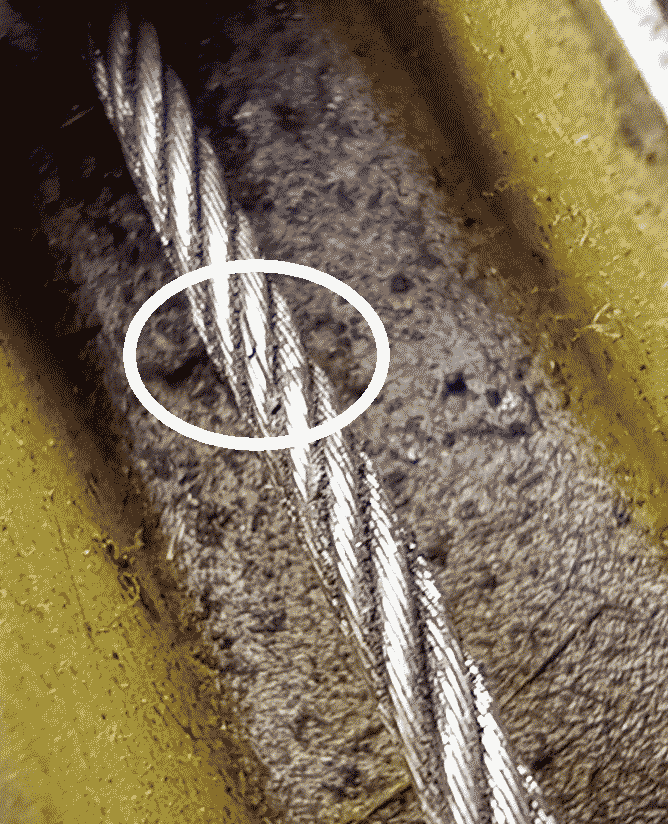
further.... think of the length of the region of flattening (usually in middle 20mm I think ) , this covers all the strand bundles because of the helical wind... IE you are getting flattening in all the bundles and a high proportion of all the wire in each bundle- this is not simply isolated broken weak strand. It will be interested to do a load test on this cable, see how far it is above the normal tension that it lets go. In radio masts, we'd use this size guy cable for about 500kg working. -
Control cables really do wear out. (steel) The macro lens of modern smartphone is rather useful for this : More closely investigating a rather shiny cable where is runs with considerable tension under the pulley, one broken strand. Can be felt with finger. Replaced. One might think 1 of of 49 (63?) strands is no big deal, but reading AC43, and closer inspection reveals the flattening wear of the cable (making for shiny appearance) is the cable strands being worn down and thinned under the pulley pressure... and eventually one lets go. Given that a lot of them are simultaneously worn down and thinned, a whole lot might let go shortly.... You could probably fly on this for another year (or 5) with before every flight inspection , but given that cables are in stock locally, it should be replaced. Document AC43 provides guidance on this, as usual . (replace it) . Lots of airplane maintenance stuff is annoying and painful, but ultimately these annoying things, will save your arse.
-
there are some differences and compatibilities between certain types of 'suppressor leads"