RFguy
-
Posts
3,542 -
Joined
-
Last visited
-
Days Won
49
Content Type
Profiles
Forums
Gallery
Downloads
Blogs
Events
Store
Aircraft
Resources
Tutorials
Articles
Classifieds
Movies
Books
Community Map
Quizzes
Videos Directory
Everything posted by RFguy
-

2nd piston ring always stuck- what's the story ?
RFguy replied to RFguy's topic in Engines and Props
Hi Nev , yes, I am already in conversation with SPS, thanks for the confirmation they're on your list, also. -
2nd piston ring always stuck- what's the story ?
RFguy replied to RFguy's topic in Engines and Props
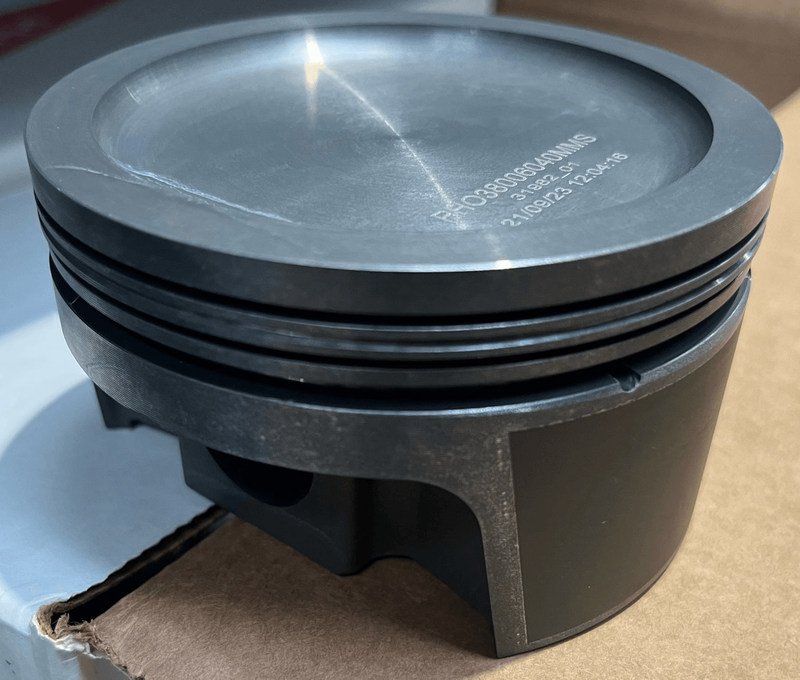
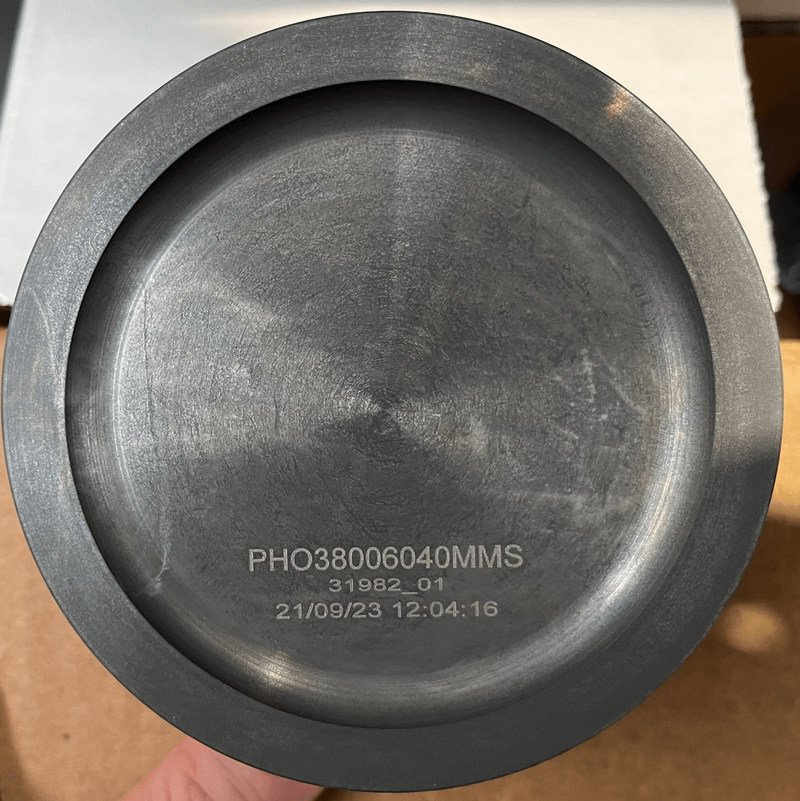
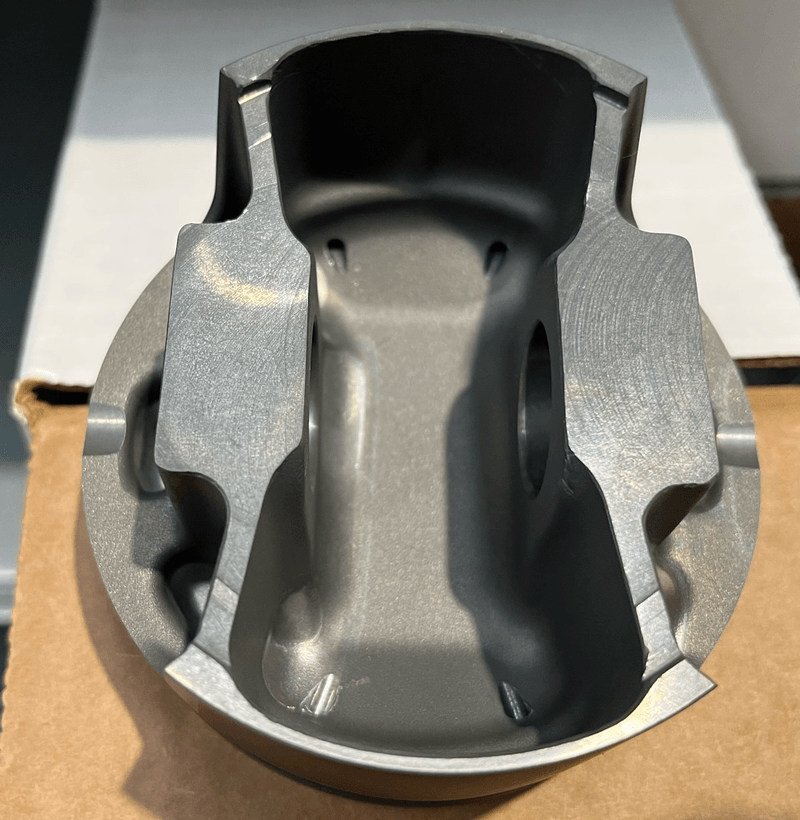
I have posted already- the parts are the homoglated holden saloon racing pistons They're specific to Precision Intl, and AFAIKT , the only suitable candidates. MAHLE MOTORSPORTSSKU: PHO38006040MMS is the part number at Precision Intl, and there is a ringset for it on the site. Yes Jabiru have a new HD piston for Gen3 , but I cannot seem to get any info from them . maybe busy with the new year. I wil call them tomorrow see what they say, I know they're $200 a pop I did post pictures of the ACTUAL MAHLE PISTON in question https://www.recreationalflying.com/topic/38710-2nd-piston-ring-always-stuck-whats-the-story/?do=findComment&comment=540314&_rid=11148 -
2nd piston ring always stuck- what's the story ?
RFguy replied to RFguy's topic in Engines and Props
Golly what has been going on while I have been underground all day. Dmech, if you are going to tout , on the Jab-Camit forum, just how great these pistons are in an experimental Jabiru and only offer or disclose an extra 20% of the information that is required to really make the conversion work , only providing tid bits of information, then people will be left to figure out the rest by themselves, which is what I am doing. Left to understand and figure out my myself : a) exactly what bore taper / shape you ended up with and b) why you decided to use your own rings instead of the piston suggested rings (and I have determined there is more clearance in the jabiru bore than the Holden bore) . Dmech is would be a asset and opportunity for the Jab community to know exactly what some of those missing pieces of the jigsaw are. You wont even give them to me in private, (since you do not want to modify any one's engine parts it would seem) , hence I am now full broadcast getting enough knowledge to figure it out for myself. I am thankful dmech for the information you provided, But of course, its not the whole story. ANyway, I will leave it at that ... -
2nd piston ring always stuck- what's the story ?
RFguy replied to RFguy's topic in Engines and Props
HMM ok, so this is assessing ring suitability. I will do this when back on the engine in a day or so. I've asked Jabiru for their latest offering, also. Exhaust valves look OK. moderate (average) head recession. -
2nd piston ring always stuck- what's the story ?
RFguy replied to RFguy's topic in Engines and Props
eh?. -
2nd piston ring always stuck- what's the story ?
RFguy replied to RFguy's topic in Engines and Props
slipper.... depends what it is made of. most graphines are smooth and have high thermal conductivity. but. I always wondered if the sump could be modified to have oil jets spraying up the guts, it can a pretty good view of things. -
2nd piston ring always stuck- what's the story ?
RFguy replied to RFguy's topic in Engines and Props
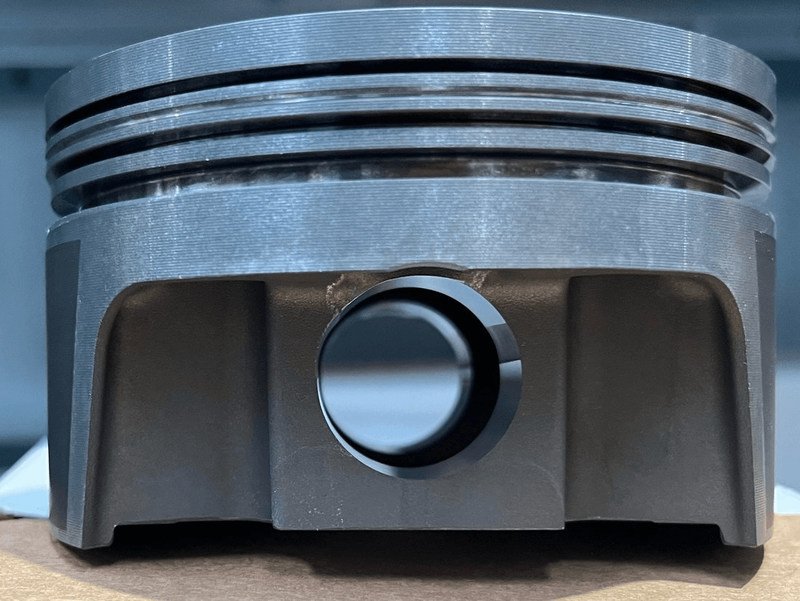
nice looken eh ? need piston retention pin clip grooves machined in. I am told people take a 0.5mm off the top rim to tweak compression down / increase clearance very slightly. Not sure I d want to touch the very important end of the piston. . Nev, evidently, the overbore in the GMH engine is 97.52 my bores are 97.6 -
2nd piston ring always stuck- what's the story ?
RFguy replied to RFguy's topic in Engines and Props
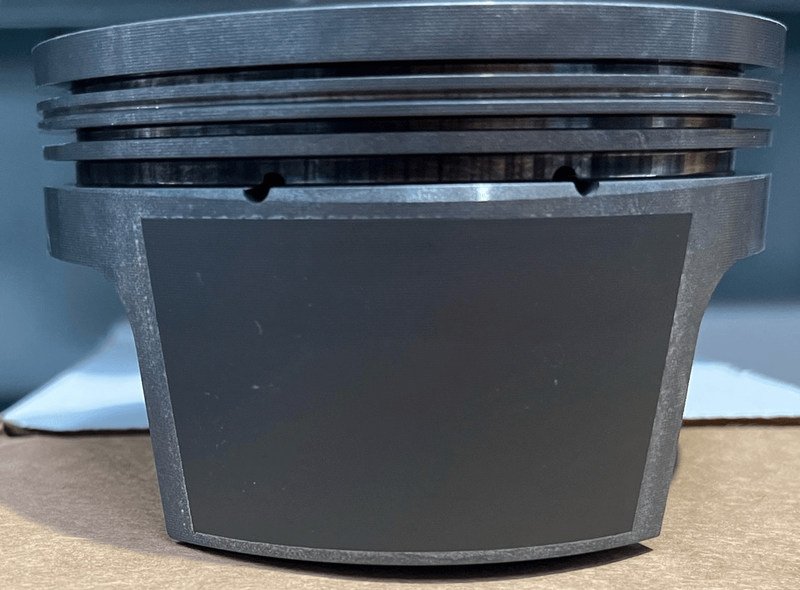
Supplier (Precision Intl) is most obliging with photos. These are std saloon car series homoglated racing parts...
-
2nd piston ring always stuck- what's the story ?
RFguy replied to RFguy's topic in Engines and Props
Mahle piston has a press fit pin, will need machining grooves for pin retention. I also asked Jab today about their current replacement piston (cast/forged, alloy type, any failures ). has no split skirt. -
yeah they have all the sizes 80,100,115,145..
-
11,000' DA is it ? . so ATR72-200 reference landing speed ~ 110kts. TAS = 134... looks fast over the ground. did they think it looks too fast over the ground ? But hangon these are ATP , not kids flying kites. severe wing icing ? (costs 10-15 kts according to the book) runaway trim ? passengers and lead bars loading in cargo slid to the back of the aircraft ?????
-
Even as a 19- you would need to be the original builder. But it wouldnt be quite as blatently flouting the rules. Or as a 24-, you could get an AP ( approved person ) to sign it off and the aircraft goes Exp24. However, I dunno whether an AP would sign it off .... Nev- can't go GA experimental - there is no paperwork path for a 24- airplane to go GA experimental. I have enquired.... so- consider you may have no insurance if it gets sticky. Rotaxes are fine I suggest the root of the problem be found. It is possible that you are just good at winning the lottery. (chance)
-
Or swap the rocker covers over - as long as any prospective future buyer is aware....
-
2nd piston ring always stuck- what's the story ?
RFguy replied to RFguy's topic in Engines and Props
Hi Turbs all the data is public on the Jabiru website- you just have to know where it is ! They don't specify any taper (though I suspect it would be useful give there is a hot and a cold end.) The Jabiru pistons were once upon a time just 40 thou oversize L27 engine pistons, but since, there has been some divergence in supply. These Mahles go in the racing segment, so they'll likely to have a different bore recipe. anyway, I have asked the Australian supplier. AFAIKT they have round wire clips. yeah, Ian Bent might know., PS- manufacturer recommends no taper on the bores. But the water cooled cylinders dont get anywhere near as hot. (but the inside of the cylinder walls - they do not stay at water temp, despite what people think) . currently communicating with some fellows on the commodore performance site. -
2nd piston ring always stuck- what's the story ?
RFguy replied to RFguy's topic in Engines and Props
mmm. These forged Mahles go into L27 Buick engines.... (3.8 litre commodore from mid 90s ) I cant find any engine manuals for the engines. IE bore size, limits, any shape etc Just trying to understand these piston's normal home. Can anyone assist or help me find a suitable forum or knows who to ask ? thanks - Glen -
2nd piston ring always stuck- what's the story ?
RFguy replied to RFguy's topic in Engines and Props
Running the expansion numbers, the diameter measurement numbers on the skirts both adjacent to the pins on the pin boss (which could very close to crown temperature on sustained high output heat soak) , and down the centreline of the skirts - in conjunction with the (measured) bore diameters indicate that interference WOULD occur under likely conditions. My guess is as the interference/ sqeeze on the oil film begins to occur, (minimum clearance) the region transfers more heat (narrower oil film) from that region into the bore, and keeps the "situation" at brinkmanship. (IE pistons cool down just enough to maintain the status quo) If the oil film ceases to exist, it's likely the heat transfer becomes much worse, since there will be a lower actual contact surface area. (its why in electronics we use a film of grease between two flat parts to aid heat conduction) -
Mark- depends if you are pricing a new core, or pricing a core with accessories...
-
By the way Kiwi, the 914 'lookalike' was 30k aussie. 912uls lookalike was 16k aussie. I wonder if they followed suite of rotax when rotax recently in a service bull uprated all the exhaust valves in the 914 ?
-
2nd piston ring always stuck- what's the story ?
RFguy replied to RFguy's topic in Engines and Props
given how they are measuring, they'll get a 3 stone hone in the bench drill with kero... (Nev- no coating) but what I do with the piston question is next. I'm suspect that Jab with their latest pistons for Gen3 have got it right yet (still cast my understanding but the split skirt is gone. ) I'm told on the first set of 4032 forged Mahles that someone used, one grabbed , but I have no knowledge of where and how, but subsequently a shaped hone (no other details) was used. I dont know maybe installed pin offset was wrong ...... I'd need to get a set and see what the expansion does. Since they are designed to go in standard water cooled L27 bores, the expansion cant be too different from the stock casts. (although in this service they may run alot hotter than standard pistons service) ..... I will need to find out exactly what size the standard bores are... all I know is they are designed for "97.5mm bores" (40 thou over) but the exact details could be found out. -
In general, but not always, ---in China quality at least on high volume parts, is reduced until the customer complains. I'm not quite sure how that works with airplane engines. Most of it is junk but they do make some good stuff. I buy my miniature coax cables from a single supplier on the HongKong border who has not made a bad nor failed cable in 10 years... The high end printed electronic circuit board business is interesting. it's labour intensive , and hard. lots and lots of precision. 12 stacked layers with blind internal interconnects over 300x300mm all stacked up in X and Y within 0.02mm.... and the best complex circuit boards ( IE before parts are soldered to it) come from China, no doubt about it worldwide. Working on low margins with extremely complex requirements and every circuit board is 100% tested for its literally thousands of connections internally .....I guess that hones their skills when they will go out of business if its not right and every single article is 100% tested for quality. But plenty of other stuff - like some of the cheap tools they sell, wel they really are first grade junk. and look at half the stuff in bunnings. junk. I did talk to the ZOngshen gentleman about getting a single engine at low cost to demonstrate to local market (if it was any good). that was 2021 but in the end I bought a used 1900 hour 912ULS.
-
But I agree with you Nev, I would consider a Rotax a much more difficult, sensitive and critical engine to copy well. compared to say, a Jabiru.
-
Try the Zongshen. for you, from your point of view, cant be worse...
-
2nd piston ring always stuck- what's the story ?
RFguy replied to RFguy's topic in Engines and Props
using my trusty Moore and Wright internal micrometer, with grats of 0.5 thou #1 bore. 97.6mm +/- 0.5 thou generally., and in the bottom skirt centreline shiny worn bits ( BDC, bottom of the centreline skirt) is +1.5 thou over minimum. This bore is at the narrow end of the permissible bore width range, FWIW -
I have had some contact with them a year or two ago. They were good to deal with. Price is by negotiation.... I made the point that pricing their 912ULS equiv engine at approx AUD20k ,--- that people would not pay 20k for a unknown, non tried and tested product, when they could pay 28k for a genuine rotax...... That is if people are going to spend 20k, they will spend 28k. So I think pricing came down to about 15k from memory. I am unsure to whether they are building under license, or buying some critical parts from rotax, or simply doing their best copy. Anyway, what are you doing to the poor Rotax to hurt them ? They DO need cylinder bore airflow, and you need to ensure the oil system doesnt end up with too much vaccuum, and keep them cool but nothing else.....
-
2nd piston ring always stuck- what's the story ?
RFguy replied to RFguy's topic in Engines and Props
I guess same thing with springs, when a spring is cooked , the tension is lost. Just like fuseholders with springs holding the thing in compression. fuse gets hot. springs gets hot. no more spring. on the jet. and I also have a wideband oxygen sensor to check what the average mixture is doing, IE an extra readout comnpared to just EGTs and plug colors. yeah I see wher eyou are goign - high wear perhaps caused by excessively rich conditions for too long.