

RFguy
-
Posts
3,542 -
Joined
-
Last visited
-
Days Won
49
Content Type
Profiles
Forums
Gallery
Downloads
Blogs
Events
Store
Aircraft
Resources
Tutorials
Articles
Classifieds
Movies
Books
Community Map
Quizzes
Videos Directory
Everything posted by RFguy
-
I would not be publicly stating that you used legally questionable access to an airport. Suggest just stick the the " I went flying bit" and avoid telling everyone you are a lawbreaker ! It doesnt do much for showing to the public that we as a group are good law abiding citizens, and not cowboys. Suggest you delete your post and repost.
-
Yeah, it bring up an interesting argument for them (Sodium Ion batteries) - (moneybox where did you buy those packaged cells - (I use cylindrical individuals) ?) (I am using them where safety is important in another application ) that they have high surge current (for these purposes 'cold cranking current" and the voltages from the cells are mismatched form the system in terms of acheiving optimal use of the capacity. But if you are happy to forgo the capacity, then they do what you need - start the airplane and dont weigh much The usual caveats apply for weight and balance of course. In the small jabiru, J160, J170, that weight up the front is important for safe CG operation and to meet the specifications for the design of the airplane (important - you can't just ignore this sh1t) in the J230, which are generally nose heavy the way they are loaded when not much in them, the lower nose weight might be some advantage in most weight configurations. But you would need to make an ammendment to the AFM/POH data (and be competent to do so)
-
good explanation Most battery BMS's are designed by people with little experience. It is seen as a "simple product" when the reality is, there is devil in the practical use detail. I avoid them unless they're simple shunt cell devices. How many Sodium Ions did you use in series ? FYI others- sodium ion vary between about 2V and 4V. There's a fairly linear ramp between those two voltages Where as Lithium Iron Phosphate (LIFEPO4) the useful range is about 2.8 to 3.35 (peak at charge termination of 3.65) .
-
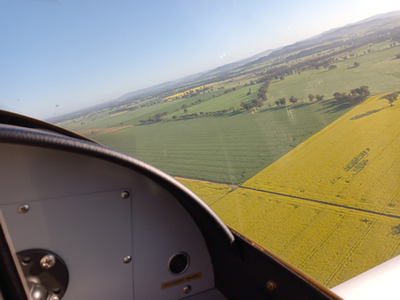
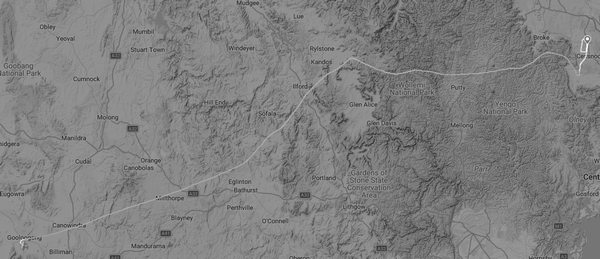
Saturday morning Thruster 88 and I flew from his strip at Goolagong NSW to Cessnock NSW in his RV6A, to deliver a box. Wow that tiny plane can accelerate, (same engine as my Archer, but CS prop and half the weight) Was going DCT but a sea of cloud awaited us to cross the dividing range. DCT route turned into a bit of a wiggly string track as we kept the land regions visible amongst the low cloud within glide range. A few big rocks poking up from the low cloud (not fog) to keep it real. Nice up at FL115. 160 TAS ~ 32lph I think ish. then needed to hunt around a bit to find the airport (to have visual) with the local low cloud. Stuart got a near perfect landing. The usual two pilots flying the one machine controversy ensued. LOL quite amusing, IE we've flown enough together that it's like a pair of morning TV show hosts running a regular show. but we both know its all about not missing something. I dont know any other activity that has to same .... I dont know what its called..... interaction between two people. I dont think adopting multi-crew helps anything. A 2nd pilot is certainly a nice help when you need to read a map, text someone, look at adsb traffic, eat, look around in the circuit for other planes, or the airport... Why did I not fly my Archer.? There is a leak the static system I am chasing. Found a bunch of problems related to.... a combination of age (the aircraft- although it is younger than me) and likely "temporary repairs" gone permanent. pictures : Sorry just a post departure picture send to the desitination. No cloud and mountain pictures, we had our hands full with.... flying the airplane

-
Moneybox, how did you get the Sodium Ion compatible with the charging and discharge system ? sodium ion are WILDLY different in min and max voltage.... ? If you have like 4 cells in series , the effective useful capacity would be about 20% of the label .
-
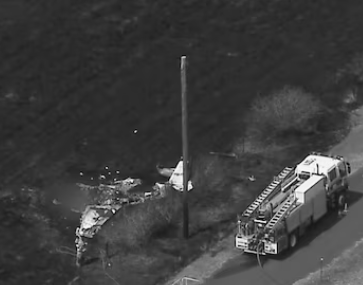
Stockliegh in logan aircraft down
RFguy replied to gareth lacey's topic in Aircraft Incidents and Accidents
or hitting that pole. can anyone tell which way in the picture there would have been flying ? IE just crossed the road, visible, or coming from the other direction etc ? -
Nev, "you are required to land (in principle) at THE NEAREST suitable AERODROME" is that in the M.O.S / CAR somewhere ? Or is that a POH / AFM requirement ?
-
I wonder if counter rotating ? LOL. Anyway, 2nd hand twins are cheap. I think generally cheaper than high performance singles. You fly a twin because you want to fly over bass strait at night in cloud .... And you'd want a casa schedule 5 maintained aircraft i think to make all that effort worthwhile.
-
Stockliegh in logan aircraft down
RFguy replied to gareth lacey's topic in Aircraft Incidents and Accidents
pure wild speculation : crashed right near a power line......So, forced landing, and then got tangled with a powerline ? if was inflight fire...we will know about a fire because they would have called a mayday.
-
as an excellent twin aircraft , and young pilots tend to be from my experience, very much on the ball, we can only WILDLY speculate and nothing else to the cause of this accident. IE pure imagination only..... - commercial service twin maintenance is a step above private cessnas (IMO) - maybe he hit some space junk , a drone or had a brain anurism. who knows. if I ever fall out of clear sky you can be pretty sure either I had some rapid physical incapacitation or a mid air collision. Stuart, is there enough flexibility in the Baron's pitch control to override a jam in either the yoke piitch or trim run ? I dont know that end of that plane.
-
any adsb logs ?
-
From my POV, the "Never Ending story" topic simply pollutes useful discourse on an otherwise useful site/engagement Does anyone know how I can permanently mute it from ANY of my sessions. I do not want it filing up my screen with IMO, useless time wasting rubbish ! (everyone is entitled to their own opinion) The site might get more traffic if the what's new wasnt filled up with the trash 🙂 glen
-
I would only fly flapless with a high crosswind to deal with. I suggested it because it might make the transition to flying the 230 easier. if you have power on in normal landing configuration in the flare it will not stop flying. (unless it is overweight) ....I think that's bad advice... are your flares performed with the stall horn blaring ? if not, then you're not going slow enough to flare decisively in the normal landing configuration ( flaps) . it will likely just balloon. Or, you'll use up twice the runway . Done right, ( I think) the stall horn is screaming its head off with quite a steep nose up flare, inches above the ground. OH AND DO CHECK THE STALL HORN IS WORKING ! Be also aware- the 230 is quite nose heavy with not much in it. put a bag of concretein the very back maybe to again ease the transition. however, that shouldnt need to be there when you are proficient.
-
Hello everyone, I am back in the living. I agree about the inertia comment. 1) what are your flapless approach / landings like in the 230 ? Tried that ? The extra speed will mean you are carrying a alot more inertia (and maybe give you a little more time) 2) are your flares performed with the stall horn blaring ? In benign conditions, I would recommend that be a telltale of the right airspeed for a J230 Like most planes, you never want to let them get too slow. depending on the plane, you run out of a varied number of performance requirements (tail authority, elevator authority, roll authority) I found when I first flew my 230, I wasnt letting it get slow enough in the flare, so I learned to fly is an inch above the deck - the feel and touch of just the right amount of back stick is quite tricky and very fine..... IE first few attempts resulted in balooning at low speed (bad) and resultant go arounds . Jabs with winglets, especially high aspect wings like the 230 and the 170, the induced drag increases very little as the wing gets slow. as a result, the wing tends to just fly and fly until suddenly it doesnt. compared to my PA28 wing that the wing gets mushier and mushier but there isnt any sudden death a few inches off the ground like the jab. Glen.
-
yep. the cabin muffer shroud heater or water jacket heater produces literally kilowatts of heat for the cabin..... and it is there for free if you want to burn up 300W say in a resistive element, your alternator might take 500W of engine power to do it (2/3 of a horsepower) , and create an extras 1kW of heat doing that.... so, that's why every system uses waste heat . even the electric aircraft use Waste heat from the water cooled engine and water cooled motor driver.
-
Walrus already posted above. numbers are right, I think.
-
reported- not know as fact ...Commissioner Mitchell. ATSB interview : ""We certainly saw the take-off speed around about what we would expect … about 61 knots," he said. " 61 knots is not enough LOL !!!!
-
OK, so I looked at the whole video, not just the frozen picture in the post yeah that is a bit narrow. I wonder what the going was iike on the grass- IE if it would have appreciably braked one wheel, (as to pull it one way) or was hard packed. I wondered, wouldn't you be better off with all grass? Maybe it takes concrete for the takeoff to have a low enough rolling friction to get airborne before flying off the cliff.
-
looks pretty wide to me
-
UPS cargo plane crash. Louisville Kentucky
RFguy replied to danny_galaga's topic in Aircraft Incidents and Accidents
the chicago crash is well written up in Air Disasters 2 (Macarthur Job) -
Hearing aide and headsets what is a good match?
RFguy replied to Blueadventures's topic in Aircraft General Discussion
OK. MIke so he just needs, on the headset side - GA earphones plug to 3.5mm stereo line socket (with the appropriate resistors in there to get the levels right for the line level input) since the headset is a few volts and the line audio is a 0.15V ? send me his address I'll make something up . -
my freight ..... doh.
-
Hearing aide and headsets what is a good match?
RFguy replied to Blueadventures's topic in Aircraft General Discussion
I'm not fully sure I understand the question. He has bluetooth capable connected heading aids that he uses IE they have bluetooth aux input facility ? He flys ? He wants to use hearing aids with his aviation headset ? -
Hearing aide and headsets what is a good match?
RFguy replied to Blueadventures's topic in Aircraft General Discussion
I have made a prorotype of one intercom box (for GA aircraft) that takes care of boosting specific frequencies to suit the user, in a dynamic context sensitive manner. So that sources with lots of HF (high frequency) do not get boosted, but content lackin gin HF do etc. Inserted in series with headphones and mic. But this is domestic use ? JUst boosting some frequencies and not others.. Many TVs now have equalisers (like the three band low, medium and high) all my TVs do. That will be the best place to start. you can also turn on voltume equalization to avoid quiet passages what's really required is a dynamic equaliser that tries to maintain a specific amount of energy in specific frequency bands. on headphones for aircraft. : Whereas plain old headsets seems to generate the same amount of audio in the 'cans for different brands, the noise-cancelling type headphones seem to be all over the shop with respect to the amount of soound prooduced for a given input This is not unexpected given the type of algorithms and as an implementation engineer this is something some how they;ve f**cked up because its an obvious problem. -glen -
(post script - I just saw Facthunters comment - yes I have written the same line just remember (and this is something my instructor reminding me off one BFR) : it can take 'some time' to stop the aircraft descending quickly. especially if the aircraft has some weight.. (inertia) (IE not so applicable to a high drag, lightweight aircraft like a Thruster) To takes time to slow down the vertical descent rate. In the piper, I can slip at 1800 fpm with full flap and max rudder. (9 meters per second). Not much short of free fall. bringing the aircraft back to a nil descent rate may take several seconds. IE you dont want to be too near the ground.... Fortunately, you are usually going pretty slow when doing this so less likely to tear the wings off. Just like when you are going down in a lift and you feel gravity increase as it comes to a stop at the bottom. Nev's point above wing down (roll ) first is important - and you'll get this from correct instruction. ....In the simulator , If I boot full rudder into the piper without aileron first, I get a spin entry...