

RFguy
-
Posts
3,542 -
Joined
-
Last visited
-
Days Won
49
Content Type
Profiles
Forums
Gallery
Downloads
Blogs
Events
Store
Aircraft
Resources
Tutorials
Articles
Classifieds
Movies
Books
Community Map
Quizzes
Videos Directory
Everything posted by RFguy
-
Finally Group G is getting closer
RFguy replied to Kyle Communications's topic in AUS/NZ General Discussion
Mark, do you have Borg implants ? -
Small plane missing Victoria 18/09/22
RFguy replied to BrendAn's topic in Aircraft Incidents and Accidents
Turbs, if that is all true, not sure how that passes muster at all, rather shocking- with the obvious consequences. I'd expect to see a lawsuit here . No doubt this is partially on the head of the instructor - he signed him off. I can't really beleive that RAAus would have approved this signoff. There's some missing information. -
thanks, that's quite useful for people to know. I know of a few. a couple of tecnams.
-
Nev, there is a crankcase calendar time limit. larger tyres, prop change- they're all changes with flying characteristic effects, that's why they need signoffs. on conditon engine doesnt affect flying characteristics, - that one is a bit easier to get.
-
but as I understand it, 24-experimental is NOT carte blanche. TMK it is for a specific item to be waived, like say, (stupid) calendar limit on the Rotax engine , and is not perpetual ?? Neil, please let us know your experience.
-
given that you dont have a tough fibreglass shell around you a-la Jabiru , I'd be only flying an Xair with gliding distance to a 300m straight clearing or road without power lines . Brendan, I thought you'd bought a little rotax poiwered 55 Jab ?
-
But the Tigers should bother you. why ? because the weather can be benign over the ocean, and you can ditch the plane with a low prob of killing yourself. and people can get to you quickly and find you easily. But in the hills and the mountains- you get all sorts of bad weather actors , turbulence, cloud out of nowhere, air forced to rise, oh it goes on and on, let alone where you might land if you have to ? and it will be weeks before you are found and by then you have died of exposure and bled to death trapped in your tin can coffin. I do fly over tiger country, but I have my route divided up into sectors and I have a LZ in mind for every sector, and I dont fly over it unless I can get high, and if there's any cloud base above or below, or any PROB30 with descent the other end, I take the long way.
-
.
-
I was gung ho when learning to fly about some of the routes and places I would go. But what I've found is some of these routes can be very uncomfortable and unpleasant to fly over with any wind around, without being up in the stratosphere. so now constraints are < wind? cloud ? after lunch weather ? fatigue ? > Alot of prerequisites to tick before I go anywhere.
-
Jack, and mine is too. my feeling is that modifications to RAAUS aircraft in a practical sense really only affect resale pain. (assuming they're 'good'). My J230 will be sold stock with the Gen3 or a Gen4 . Not with the rotax (which has been interfaced) and NOT with an LCH Gen3, because.... of the headaches for the next owner- that there has to be a condition report generates a paperwork trail trigger on changes........IE as a result the radical change to the engine IE a visible difference that could not plausibly missed by the L2 providing a 'condition report'.
-
Sometimes there is no obvious reason for less than stellar air performance... For me, it usually depends how much is on my mind multiplied by how many days since I last flew.. On Friday I was going to fly, but I felt a little off, slept very poorly had a bit of a stomach bug, so flew saturday morning instead. Always ask yourself. Is it absolutely necessary that I fly today ? Not flying won't kill you.
-
Jack, If I was keeping my J230, I would move the flaps switch to above the throttle. (and have another set on the other side)
-
KG he meant he went to full throttle on the go around. I would not be advocating to a student what you are at this point,, I think advice for the young lad is best come from the instructor at this point. @Brendan . did the nose pitch up when you applied full throttle ? How'd did you go managing putting the flaps away etc on the go around ! there is alot to do. flying the plane comes first. good work.
-
On the first big bounce, I gather that triggered a go around ? If so, that is good .... Make your go-around decisions early. 6 minutes of fuel is cheaper than a bent airplane.
-
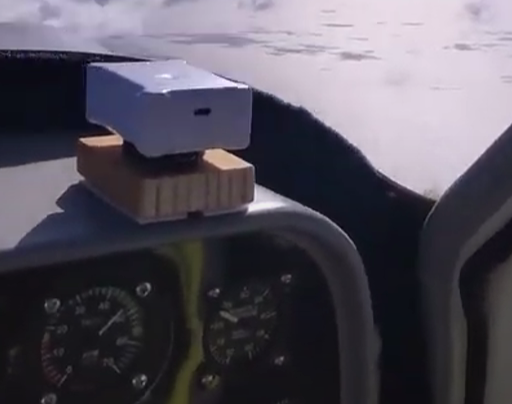
A friend sent me a photo of their flying, and I saw this !!! The SKyecho on its back ! ROFL. FFS. It MUST be vertical. on its back the GPS signal will be sh1t and your broadcast position will be crap , and your range on ADSB will be bollocks because the antenna is wrongly polarized LOL

- 1 reply
-
- 1
-

-
Finally Group G is getting closer
RFguy replied to Kyle Communications's topic in AUS/NZ General Discussion
All the Jabiru owners I know who are also gilder pilots reckon their Jabiru's need spoilers ! Yeah on the '382, I noticed the 'inverse' behaviour at low Re. that airfoil is quite ''clever' . 'any idiot ' can make a nice high Re airfloil, lots of fluid inertia, a high CL / low Re airfoil is more finesse. Rod's J230 wing (and J170) seems to just keep on flying , right until the bitter end. There is VERY LITTLE perceptible increase in drag as it gets slow. It just keeps flying. Mind you, a strongly provoked climbing, 30 deg bank, uncoordinated full flapped power on stall putit into a immediate 180 deg spin entry, quite nose down facing the other way .... LOL I will always remember that one... My simultaneous awe of what happens so fast and associated expletive my instructor said was impressive......it was a good lesson is just how much an otherwise well behaved aircraft can bite if provoked -
Aero Ex - Valkyrie 1 Design
RFguy replied to Peasant_Pilot's topic in Aircraft Building and Design Discussion
that's what happens when you taxi in and dont cut the engine early enough. -
Finally Group G is getting closer
RFguy replied to Kyle Communications's topic in AUS/NZ General Discussion
so the '382 ...... wow the CL/Cd versus alpha is really mild mannered , quite a soft dome. IE a good range of high L/D v AoA - compared to a '2412 .. The 382 airfoil shape reminds me of an aircraft canopy and fuselage side on. I quite like the jabiru 230 wing. (4412 or 4414 I think) . chord is only 1m of course (lower Re) ... is high aspect. low induced drag, thus likes to float, drag does not go through the roof when it gets slow, thus not so good for short landing in my opinion where you want an airfoil that ramps up the induced drag when it gets slow (IMO) .comments ? -
Finally Group G is getting closer
RFguy replied to Kyle Communications's topic in AUS/NZ General Discussion
for those interested, the expansive report on the NACA 23012 is available from 1934... https://ntrs.nasa.gov/api/citations/19930091603/downloads/19930091603.pdf as for tomcats, there are no RAAus swing wing / variable geometry aircraft, that I know. Cirrus have that dual airfoil wing. I guess we do variable geometry all the time in boats, I'm going to look up the airfoil used for the B2 and head to bed shortly after. -
Finally Group G is getting closer
RFguy replied to Kyle Communications's topic in AUS/NZ General Discussion
Love it . How about some reflexing flaps to increase Vso and thus Va ? or does it hurt L/D too much ? -
Finally Group G is getting closer
RFguy replied to Kyle Communications's topic in AUS/NZ General Discussion
In RAaus, as you all know, you must get your CAO100.5 every 2 years like any GA plane. (The air and static systems/ transponder baro checks ) However is RA, just seems nothing happens in RA if you dont do it. In GA, well you wont get a maintenance release and its grounded. Not sure how they deal with that, or at the moment if it is blissfully ignored. While aircraft vertical spacing is in my opinion, rather relaxed compared to the requirements, IE your altimeter would need to be country nautical mile out before you ran into someone 500' above or below you, It's important in CTA/CTR that people are where ATC expect them to be. There's probably more likeihood of an aviator not setting their altimeter for local or area QNH than it being out by a mile. Fortunately the transponder sends baro, and ATC can figure it out from that. but altitude encoders with their lots of parallel data lines are notorious for having a bad line and hence 100' error. (or much more if two lines are bad) -
Small plane missing Victoria 18/09/22
RFguy replied to BrendAn's topic in Aircraft Incidents and Accidents
I wonder how many other pilots he regularly associated with, and how many peers imparted airmanship ? I think that's important for a newly minted pilot. all my peers we talk about how easy it is to kill ourselves by various methods in an airplane- and how we are not going to , how we've goign to avoid not doing so, and examine a range of factors to infinitum. it's funny-serious talk. It would all sound rather macabre to others, but not aviators. -
Small plane missing Victoria 18/09/22
RFguy replied to BrendAn's topic in Aircraft Incidents and Accidents
after reading that article. lots of failures eh ? a litany of serious failures from one end to the other. One shakes their head and rolls their eyes. Now , how come this one has in inquest, but most RA accidents do not get one ? -
Finally Group G is getting closer
RFguy replied to Kyle Communications's topic in AUS/NZ General Discussion
like everything and everyone, the 'performance' of a LAME is variable. No surprises. I think before crucifying LAMEs etc in general, one needs to know context. Did the customer want to spend no money ? Was the customer a PITA ? Did the aircraft have so many problems the LAME doesnt know where to start without p1ssing off the customer ? An aircraft can be airworthy but not pass muster under the subjective examination. Subjective !, -
Finally Group G is getting closer
RFguy replied to Kyle Communications's topic in AUS/NZ General Discussion
which is interesting context considering the road death count has been going up not down. I wonder which of that list (above) would be applicable for them to try and target. Of course speed is some issue, of course it is, because if you had zero speed, there would be no accidents. Can they enhance the skill level of drivers ? I think we're at the point of the limit of what you can due to general human society. Improves the roads is one way. In vehicles you coudl say with the plethora of driver assist tech that we are "You enhance the specification of the aircraft flown" . SUbstance control (RBT) dealt with alcohol in the 70s.