


Downunder
-
Posts
3,170 -
Joined
-
Last visited
-
Days Won
29
Content Type
Profiles
Forums
Gallery
Downloads
Blogs
Events
Store
Aircraft
Resources
Tutorials
Articles
Classifieds
Movies
Books
Community Map
Quizzes
Videos Directory
Posts posted by Downunder
-
-
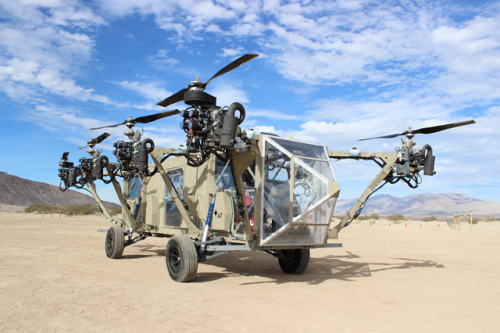
A bit of a wierd one.... not sure what to make of it?
AT Flying Truck Black Knight Transformer Air / Ground Automobile | eBay

-
Hello John, I hope to get over early next year and do some flying.
I met Preston last year (here in the South West WA) and he told me about it... Angeles City Flying Club- An Ultralight Flying Club and Pilot School
I lived in Subic/Olongapo 20 yrs ago, so pretty familiar with.... things...
-
It's mostly about what countries and regulating bodies consider to be the separation point between "ultralight" and a "real" aircraft.that would not be a nice paperwork thing to discoverthe thing that interests me is that you have say an empty 280 kg plane that is legal in Europe @ 450 kilos - 170 kilo useful loadin USA or Oz its say 600 kilos - same plane ? - 320 kilo useful load
................. but essentially the same plane ? ........... something doesn't seem right
MTOW (and stall speed) is a way of regulating and defining that point.
Also remember carbon fibre, computer simulation and such are new technologies allowing the strength without the weight and generally the regs have been in existance many years. So it is possible now to build an aircraft that can hold it's own weight...
-
 1
1
-
 1
1
-
 1
1
-
-
It's mostly about what countries and regulating bodies consider to be the separation point between "ultralight" and a "real" aircraft.that would not be a nice paperwork thing to discoverthe thing that interests me is that you have say an empty 280 kg plane that is legal in Europe @ 450 kilos - 170 kilo useful loadin USA or Oz its say 600 kilos - same plane ? - 320 kilo useful load
................. but essentially the same plane ? ........... something doesn't seem right
MTOW (and stall speed) is a way of regulating and defining that point.
Also remember carbon fibre, computer simulation and such are new technologies allowing the strength without the weight and generally the regs have been in existance many years. So it is possible now to build an aircraft that can hold it's own weight...
-
There was some shonky stuff going on about 10 yrs ago where importers were getting 600kg rego on their aircraft and when casa did an audit on raa, found they were not really certified for 600.
I believe a manufacturer can say they are structurally sound at 600 but if there is no certification then it is invalid for raa rego, or something like that.
The Allegro aircraft had their weights reduced and I think some 24 rego aircraft had to go to 19.
-
If they can do that, I'm waiting for the 600kg version with 915...... 165 kts should be a walk in the park...
-
It's a monopoly.....not like you can "buy" elsewhere.Has this been covered before? Does anyone else find the automated RAaus email stating that they will respond in 7 - 15 Business Days a little frustrating?My business wouldn't survive if I had that as a general response to queries. -
Just found a website dedicated to those who fly around the world in light aircraft.
Lots of good reading. (And dreaming!)
Looks like there is a jab 230 leaving Portugal next year to make the trip....
-
 2
2
-
-
Don't get the overspray on anthing else.... especially your screen.
-
Saw the vid, all good.
"Funny" because the buzzer was clearly audible but obviously not listened to....
-
1
-
-
It comes down to the cost of recovery and prosecution.
Lower amounts (up to 5 or even 10 thousand) are just written off and the losses absorbed into the business plan/model.
The cost for a bank employee (or worse, a contractor) per day to investigate and try to recover the funds can easily excede the funds lost. It's probably not morally right but that's how it is.....
-
Ha ha....airports visited..531... be easier to list the airports you haven't been to...lol.
You sure do get around! Well done.
-
It would be good to get the "country airstrips guide" included in this as well.It seems that OzRunways are soon going to release their own airfield guide:- The OzRunways Airfield Guide will replace the AOPA AFD Subscription.
- All existing AOPA and Premium subscriptions will convert over to the new OzRunways Guide in late November.
- You won't need to do anything; it will just start working automatically!
- The OzRunways Airfield Guide is a completely new, ground-up product developed by our data team in accordance with ICAO data processing standards.
- The OzRunways Airfield Guide will be constantly maintained and always showing the latest data available. You will see more airfields added over time.
I don't think there has been much development of this and in some respects it is more important than the AOPA one.
My hard copy of the country airstrips guide has proved invaluable.
-
1
-
1
- The OzRunways Airfield Guide will replace the AOPA AFD Subscription.
-
I believe you can use epoxy over poly but not vice versa..... so you should be good.
-
1
-
-
The number 1, best thing anyone can do for an engine is very simple.
CHANGE THE OIL.
Whether at specified intervals or before hand. If the money spent on additives went towards increased oil changes and perhaps a higher quality oil (synthetic over mineral) your engine will live a long and prosperous life....
-
2
-
-
Bstrachan...
"post 4" is 100% correct. A 1/8npt male may well screw into a 10x1 but that does not make it the correct thread.
Oil Pressure Sender - Rotax P/N 456-180
-
1
-
-
Sounds like a 10x1...
If it helps, the 10x1 bolt will screw into a 1/8 npt female about 1 to 2 turns.
Obviously the 1/8 tapers down so therefore gets tight.
As the oil pump housing is aluminium and the sender steel, it could have been forced I guess.
But you wouldn't expect to get very much thread depth. How far did it go it?
If the housing was 10x1, and sender 10x1, then it would continue to screw in to the shoulder of the sensor. If it screwed in and got tight without "bottoming" then theres mismatched threads, or (one or both) are tapered.
-
The problem it seems is that his gauge and sender are not a normal Rotax setup.
Most gauges are configured for a "normal" Rotax sender electrical out put, whether vdo, honeywell or keller.
His ohm range seems to be working in reverse of standard.
-
1
-
 1
1
-
-
Yes, it should be tapered.
Just to confuse it more, a straight npt is called a nps....
Then bsp is only 1 tpi from npt, 28 vs 27...lol...
So there is probably several diffrrent sensor threads that could forced into the 1/8x27 npt Rotax oil housing thread ....
-
Yes, it should be 1/8 npt. "1/8" is not a representative measurement of the actual thread.
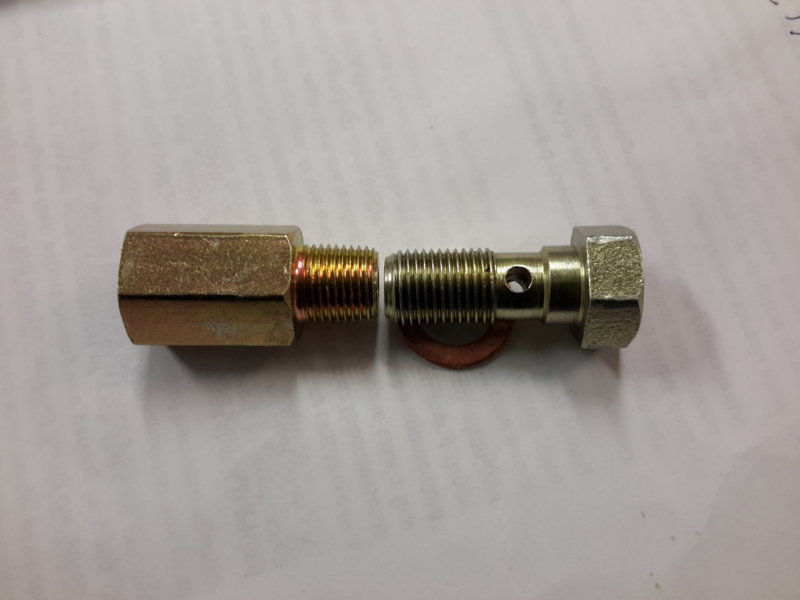
This is a pic of a 10x1 banjo bolt and 1/8 npt male end.
-
1
-
-
It is a 1/8npt x 27. Close to 10mm but not 10mm.
-
1
-
-
The oil pump housing thread was changed by rotax in about 2013(I think) to the metric fine 10x1.00mm(from 1/8 npt) because they moved to the "keller" pressure sender(the current rotax sender). Previously the black "honeywell" sender and before that the vdo (with brass anti vibration ring).
Your pump housing, being 10x1.00 would either have been tapped out previously or be a "new" type housing.
As the oil pressure is probably the most critical indicator on the engine, I would recommend going with the Rotax keller sender and finding a gauge to suit.
My honeywell failed some time ago and the keller is working fine.
The vdo's although cheap have a history of failing when mounted direct to the engine but seem fine when remote mounted.
-
1
-
-
My android ozrunways uses it as a standalone map but I can see it probably should be used as an "overlay".It seems that it's been setup for EFBs, very difficult to use manually. Should be interesting for students completing nav training! -
No towns, airports, geograghical features in the wind map...
Do we just random guess the correct box?
main wheels alignment
in Jabiru
Posted
Not sure if this is related but my outside left tyre wears the most.
I'm thinking it is from scrubbing on take off with the engine trying to pull to the left and I'm feeding in right rudder/steering.
Not a jab aircraft or engine I will add.