


Downunder
-
Posts
3,170 -
Joined
-
Last visited
-
Days Won
29
Content Type
Profiles
Forums
Gallery
Downloads
Blogs
Events
Store
Aircraft
Resources
Tutorials
Articles
Classifieds
Movies
Books
Community Map
Quizzes
Videos Directory
Posts posted by Downunder
-
-
Minor interest groups can make things happen, but they need to be well organised, vocal and punch above their weight.
CASA is fully aware of this and maintains a divide and conquer strategy amongst the small aviation players..
-
Merredin has it's own frequency. When you have 10 or 12 in the circuit, probably calling all legs, in chinglish, that's a bloody good thing for the rest of us!
Merredin is only 260 kms from Perth..... hardly "out in the sticks".
At least in the context of Australia/Western Australia's size.
-
Maybe this is what the whole thing is about?Cant involve international flights, bags and people cant be booked on at regional centres as far as I knowBags have to be rechecked and scanned in international point of departure.Airlines wanting streamlined baggage handling all the way through..... Scanned at your regional departure and then pick up your boogy board in Bali!
-
Welcome to recflying Dave.
You'll get used to FT. He hovers somewher between troll, devils advocate and self appointed recflying sheriff....lol.
-
 2
2
-
-
I agree. I'ts not my aicraft but and I never flown the type...I would suggest that fuel consumption is a secondary effect of rpm/manifold setting. It would work but is less than ideal.I believe the previous owner told him that's how it's done (rpm/fuel).
Every aircraft I I've seen with an IFA/CS has a mp gauge, so it probably has one.
Be careful with 5000 rpm John. Over coarse at that rpm you are "low speed loading" the engine out of rotax operating spec.
One of the reasons they changed the crankcase in 2006 was because of exactly this reason. Eg WOT/full coarse at 4800.
This loading was splitting the crankcases open, so not insignificant damage.
I would advise min 5200 until you know exactly whats going on and what loading is happening.
Also take a look at the power and torque charts...... my personal opinion is 5200 is the perfect economy cruise.
Below this the power/torque drops away and trying to keep up a good speed loads the engine unnecessarily...
They love to rev, so don't be shy....
-
1
-
 1
1
-
-
I think the allowable mp is variable with rpm and altitude too. You should be able to find chart for it....
My friend uses rpm and fuel consumption to set his cruise.
Says it works for him....
-
100hp rotax I imagine.
Minimum rpm at WOT 5200.....
-
Who?...... FT?What he says here is fine, but beware someone who thinks he is our born again saviour amd wants us all to bow down before him :beg:Kaz-
 3
3
-
 1
1
-
-
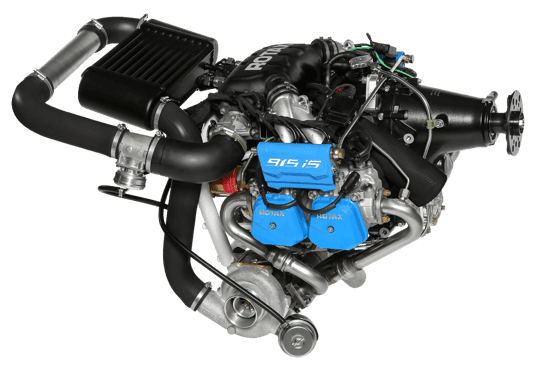
Yes, the price is a bit rich.... Two main advantages of the Rotax are weight and the benefits of a turbo (pressure normalising)It would be the perfect engine for the RV-9, but at over $10,000USD More than a typical brand-new Lycoming clone it doesn't make a lot of financial sense...http://www.continentalmotors.aero/titan/experimental-kit-engines.aspx
Titan X-340 118 KG at best. 915 84 KG.
I guess the 340/180 hp having more than 40 hp (high comp on avgas) over the Rotax negates the advantages of the turbo somewhat....
Running unleaded, the low comp 340 makes 166 hp, so it starts to level the field a bit.
At a guess, the Rotax would be better fuel economy...per HP.
-
What would be the case in Aus? RAA insurance would pay out?
Could the pilot still be sued....
-
What would be the case in Aus? RAA insurance would pay out?
Could the pilot still be sued....
-
I flew into Merredin a couple of years ago just to have a look.
Phoned up Saturday morning and they said "come on over, see you when you arrive".
Was met by a young aussie instructor and given a coffee and a tour.....no fees or charges.
Spoke to a few students and generally wondered around.
While I was there another aircraft came in for fuel unhindered.
I was actually treated far friendlier than many aussie owned council airports, of whom quite a few despise light aircraft.
It's quite a large facility, maybe 25 or 30 grobs with maint facility. I can see quite a bit of money coming into the town from it.
The pertinent question is, I think, "If the chinese never set up the facility would an Aussie or other company set one up"?
I think the answer is "no".
This sets it apart from other purchases of existing businesses previously aussie owned and run. A "real" investment rather than just a "take over".
Our "wheatbelt" farming towns have been in decline for sometime and councils are struggling to keep many viable.
-
1
-
1
-
 1
1
-
1
-
-
Lets just say.......every industry.....
-
No, I recon pretty good valve for what you get.
Bolt on, info direct to your tablet. Fly away.....
Some of the other "wired" systems need custom made looms, power supply (fusing, cables, switches).
Multiple "black boxes" located all over the place. Panel mounted screen.
Avionics tech $$$ to set up....
Up front purchase costs are one thing, but installed and flying is another.....
-
1
-
-
About $38 000 usd at CPS, so yeah, a bit over $49 000 aud in a direct conversion.Someone told me about 55K for oneFloods markup could well make it well over 50.
-
The small micron size with these things is a bit concerning.
They are basically a filter also.
One that's hard to check, hard to replace and non-cleanable. That's my concern, especially if a smaller unit was used.
-
1
-
-
Thanks Yenn.
When you bring in a particular aircraft (like engines) personal likes and dislikes can railroad the thread away from the topic at hand.
Lets say I was day dreaming about how a stol type aircraft could be made into more of a "cruiser" type aircraft. A higher cruise speed.
Staying within the RAA 45 kt rule, the wings could be shortened, lowering drag. As there would be a higher stall, rudder and elevator would not need to be so large as there would be no need for such low speed authority? That would allow less drag again.
These are just thoughts of the top of my head, so bear that in mind.
I have no aviation engineering experience....
-
Brumby just needs to look at how the chinese copied the Russian fighters....How 50-50 do you think Brumby's arrangement with the Chinese really is? I don't see Brumby calling out for workers to make their planes in Cowra.Built some under licence, then they reverse engineered everything, and stopped paying the Russians...
-
 1
1
-
-
I hope the govt doesn't do a "Holden" and simply throw money at aussie owned schools to keep them viable.
If the schools form their business plan revolving around predicted losses and bailout money it won't end pretty for anyone.
-
1
-
-
More than likely they have already been used extensively in drones to sort out the bugs....I suspect this engine will wind up in a few military applications. There are already quite a few 914 powered drones about and I presume something like this would extend their ceiling to some pretty decent altitudes. The military don't mind spending $60k or whatever on an engine where that is a bit beyond the target market for most Rotax product.All that said I want one!And I'll be in the queue right behind you (after my numbers come in:oh yeah:)
-
1
-
-
Oscar...It's nearly 2018 FFS...... I can't wait 2 weekends to fly it. I WANT IT NOW!
(A slight dig at the millennial approach to.... everything)
-
Gunskirchen, Austria, December 19, 2017 – BRP receives the European Aviation Safety Agency (EASA) Type Certificate (TC) for its new Rotax 915 iSc3 A aircraft engine. “The EASA Type Certificate (TC) allows BRP-Rotax to now produce the certified 915 iSc3 A engine for the European market thus allowing us to fulfill the request of our customers for a more powerful Rotax aircraft engine with proven reliability,” said Thomas Uhr, general manager BRPRotax, vice president Powertrain BRP and R&D / Operations Lynx. “Not only has the certification been achieved within the promised time schedule but the engine has been certified to even higher power than originally announced. Instead of 100kW (136hp) maximum power the engine will offer 104kW (141hp) maximum power instead and 99kW (135hp) maximum continuous power. Once more we will provide the ultimate flight experience to pilots.”
The European Aviation Safety Agency (EASA) promotes the highest standards of safety and environmental protection in civil aviation in Europe and worldwide. After the EASA Type Certification, BRP's Rotax aircraft engines team will concentrate on getting the American Federal Aviation Administration (FAA) certification. Other countries will follow as each has its own validation process.
The increased power of 104kW is available up to at least 15,000 ft (4,572m) making the Rotax 915 iSc3 A engine the perfect package for all fixed wings, gyrocopter and further applications; it will also offer the possibility to carry up to 4 persons already in single engine application. Based on the proven concept of the Rotax 912 / 914 engine series, Rotax is again offering the best power to weight ratio of its class combined with the best economy while allowing for a high flexibility on the usable fuels. It delivers the most advanced aircraft engine technology resulting in low operating cost and ease of use.
Up to this date already 12 OEMs (amongst them Tecnam, BRM Aero, NIKI Rotor Aviation, BlackWing, Zlin Aviation) have integrated the engine and will make their aircraft available very soon. Additional 47 OEMs are also already in the final stages of the integration of this engine.

-
3
-
-
Yes, I've had near freezing temperatures airborne but the sun was still burning my skin.
I think temperatures will be similar in a low/high wing but the direct heat/glare of the sun swings me in favour or high wings.
Is this what you call radiated heat?
-
1
-
-
Pedal power? Rubber band?...who knows....There's no cooling for the engine. Surely that thing doesn't intend to fly does it? Nev
Looking for rod ends and (matching) nut plates
in Aircraft Building and Design Discussion
Posted
Not sure if there is anything usable here.... Small Parts And Bearings
( put "rod end" in search box)