red750
-
Posts
8,261 -
Joined
-
Last visited
-
Days Won
79
Content Type
Profiles
Forums
Gallery
Downloads
Blogs
Events
Store
Aircraft
Resources
Tutorials
Articles
Classifieds
Movies
Books
Community Map
Quizzes
Videos Directory
Everything posted by red750
-
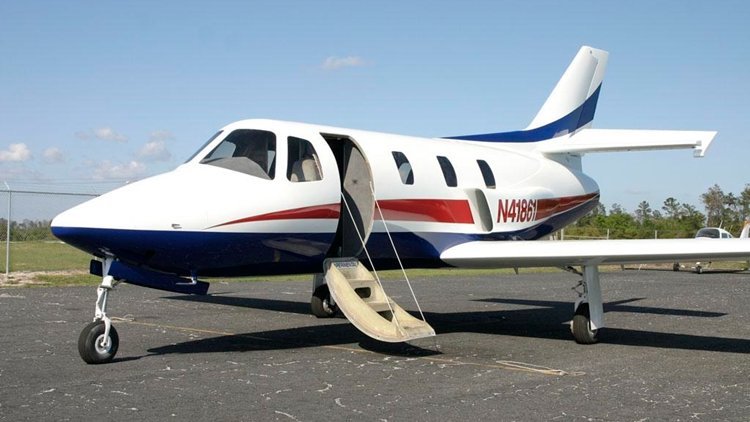
The Comp Air Jet is an American eight-seat, low-wing, pressurized, tricycle undercarriage, turbofan-powered civil utility aircraft marketed by Comp Air for amateur construction. In 2002 the co-owners of Aerocomp, which is now known as Comp Air, Steve Young and Ron Lueck announced the Comp Air Jet project. The jet is constructed from a "proprietary carbon-fiber hybrid sandwich" and powered by a Ukrainian Ivchenko AI-25 engine. Alternative engines planned for included the Pratt & Whitney JT12-8 or CJ610 or projected future Williams International or Agilis engines. On July 10, 2004 the Comp Air Jet flew for the first time from Merritt Island Airport. Though the gear was not retracted during the flight, the aircraft still reached speeds of 157 kn (291 km/h). The jet landed after 37 minutes with the landing taking about 2000 feet. On January 11, 2005 Aerocomp flew the prototype back to the Merritt Island Airport for further development work after more than 30 hours of flight testing at Space Coast Regional Airport, Titusville, Florida. As of April 2011 the prototype remained the sole example registered with the Federal Aviation Administration.

-
 Trump is blaming Democrat policies and DEI for the crash because the FAA hired people with physical and psychological problems, when last week he sacked all those people, who were replaced by lesser trained people.
 -
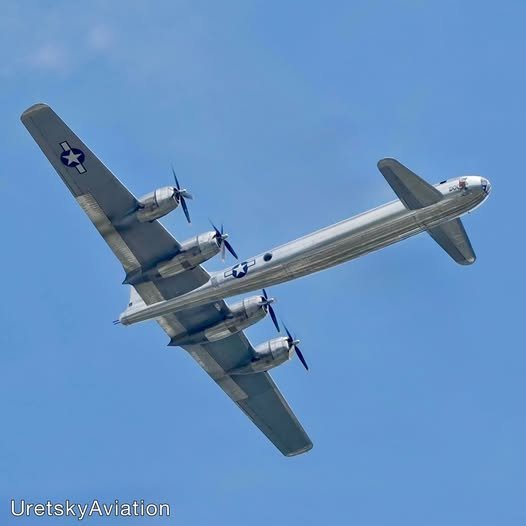
If Burt Rutan designed the B-29 Superfortress
-
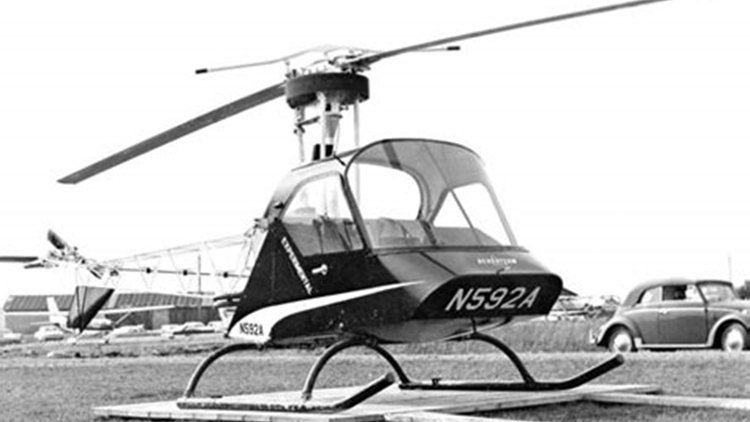
The Scheutzow Model B or Scheutzow Bee was a two-seat utility helicopter developed in the United States in the late 1960s and early 1970s. The aircraft was designed by Webb Scheutzow around a new type of rotorhead that he had developed, the FLEXIHUB. In this system, the two main rotor blades were mounted in rubber bushes, reducing vibration and requiring no lubrication. The design was otherwise entirely conventional, consisting of a cabin with two seats arranged side-by-side, a centrally-mounted engine and rotor mast, and an open-truss tail boom of triangular section that carried a two-blade tail rotor. The undercarriage consisted of skids. The frame was constructed of welded steel tube and the cabin was constructed of sheet metal. Power was transmitted from the engine to the rotor by a series of belts, eliminating the need for a gearbox and minimizing cabin noise. The prototype (registration N564A) first flew on 26 January 1967 and Scheutzow initially planned to have flight testing for type certification completed by the end of the year. At the time, Scheutzow hoped to sell the helicopter for somewhere in the region of $10,000–$12,000, although the following year, the estimated price rose to $16,700. Scheutzow still hoped that the helicopter would be in production the following year and planned to build 191 examples in 1969. However, the flight test program to obtain type certification did not commence until 1971. Certification tests were almost complete by the end of 1973, at which point funding ran out. Testing resumed again in February 1975 and the Bee was certified in May 1976. Development was abandoned during the 1970s after only four examples were built.
-
Looks like a Spartan Executive.
-
Another airliner crash - South Korea 29/12/24
red750 replied to red750's topic in Aircraft Incidents and Accidents
https://www.msn.com/en-au/news/world/bird-remains-found-in-both-engines-of-crashed-jeju-air-jet-report-says/ar-AA1xW8Ux?ocid=winp2fptaskbarhover&cvid=c768715bce754670b1ca9377d2da8b5a&ei=21 -
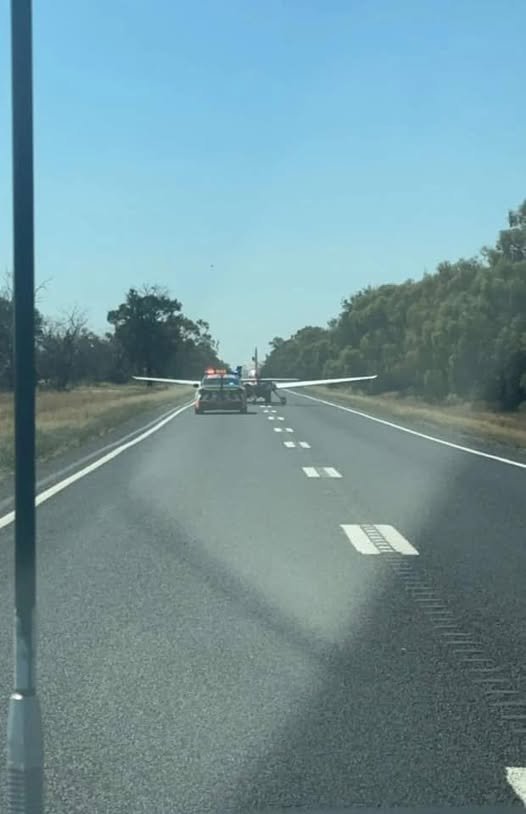
Anyonr hear about this? From Facebook Nyngan - 24 January 2025 - 1215 pm Report of an aircraft emergency landing on a roadway near Nyngan. Two persons on board - no injuries Mayday call was made - as other pilots had heard .
-
Red, BrendAn's original post showed a rotory engine with a propller, I didn't read every post so assumed it was aviation related. Unfortunately forum threads have a tendancy to drift off topic. Happens all the time on the other site. Part of a moderators job is to try and keep things on track. It just so happens I have a lot of research invested in this topic, alongside the Aircraft profiles.
-
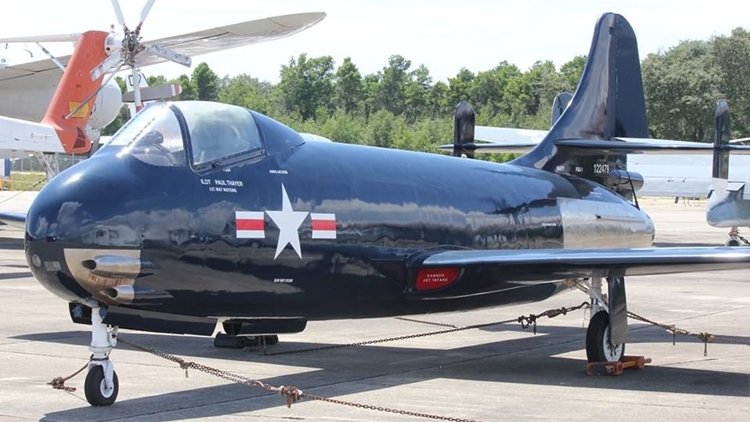 The Vought F6U Pirate was the Vought company's first jet fighter, designed for the United States Navy during the mid-1940s. Although pioneering the use of turbojet power as the first naval fighter with an afterburner and composite material construction, the aircraft proved to be underpowered and was judged unsuitable for combat. None were ever issued to operational squadrons and they were relegated to development, training, and test roles before they were withdrawn from service in 1950. A specification was issued by the Navy's Bureau of Aeronautics (BuAer) for a single-seat, carrier-based fighter powered by a Westinghouse 24C (later J34) axial turbojet on 5 September 1944. Chance Vought was awarded a contract for three V-340 (company designation) prototypes on 29 December 1944. The XF6U was a small aircraft with tricycle undercarriage and with straight wings and tail surfaces. The wings were short enough that folding wings were not used to reduce the aircraft's footprint on a carrier deck. To fit more aircraft into crowded hangars, the nose gear could be retracted and the aircraft's weight would rest on a small wheel attached by the ground crew. This raised the tail up so that it could overlap the nose of the aircraft behind it, allowing more aircraft to fit into available hangar space. The turbojet engine was mounted in the rear fuselage and was fed by ducts in each wing root. The most unusual feature of the aircraft was its use of "Metalite" for its skin. This was made of balsa wood, sandwiched between two thin sheets of aluminum. "Fabrilite" was also used for the surfaces of the vertical stabilizer and rudder; this was similar to Metalite but used fiberglass instead of aluminum. Two fuel tanks were fitted in the center of the fuselage; the forward tank, ahead of the wing, contained 220 US gallons (830 L; 180 imp gal) and the rear tank, 150 US gallons (570 L; 120 imp gal). These were supplemented by two jettisonable 140-US-gallon (530 L; 120 imp gal) tip tanks. The cockpit was well forward and was provided with a bubble canopy which gave the pilot good visibility. He was provided with a Mk 6 lead-computing gyro gunsight. Underneath the cockpit were four 20 mm (0.79 in) M3 autocannon. Their 600 rounds of ammunition were carried behind the pilot. The empty casings of the two upper guns were retained in the aircraft, while those from the two lower guns were ejected overboard. After a company-wide contest to name the aircraft, the initial prototype received the name Pirate and made its first flight on 2 October 1946. Flight testing revealed severe aerodynamic problems, mostly caused by the airfoil section and thickness of the wing. The vertical stabilizer also had to be redesigned to smooth out the airflow at the intersection of the horizontal and vertical stabilizers. Other changes included the addition of dive brakes on the sides of the fuselage and the replacement of the Metalite panels near the engine exhaust with stainless steel ones. The first XF6U-1 prototype was powered by a Westinghouse J34-WE-22 turbojet with 3,000 lbf (13.34 kN) thrust, one third of the weight of the aircraft. To help improve the underpowered aircraft's performance, the third prototype, which first flew on 10 November 1947, was lengthened by 8 feet (2.4 m) to use a Westinghouse J34-WE-30 afterburning engine of 4,224 lbf (18.78 kN) thrust, the first United States Navy fighter to have such a powerplant. Variants XF6U-1: Three prototypes, two with a Westinghouse J34-WE-22 turbojet engine (BuNo 33532, 33533), one with a J34-WE-30 with afterburner (BuNo 33534). F6U-1: Afterburner-equipped production version, 30 built (BuNo 122478-122507), 35 cancelled. F6U-1P: Conversion of one F6U-1 (BuNo 122483) for photo-reconnaissance.
 -
Firstly, BrendAn's post didn't lead to a thread drift to motorcycles. And I have asked Ian how I can move a post. I can move a whole topic to a different forum, but I'm not sure about individual posts. I admit that when I created the topic that I did not add 'aircraft' to the title, and did not specify it was for aircaft. But after 25 pages and 267 aircraft, I thought it would be obvious. It was to inform members about some ot the weird things people have built, or designs created for military specs which were not successful and did not enter production. Often there was only one photo of the design, and insufficient detail available to complete a profile in the Aircraft forum.
-
I remember my only experience with wind shear, back in the early 80's. I was in a Beech Musketeer on short final to Rwy 35 at Moorabbin, with my uncle, brother, and brother-in-law on board.Suddenly the bottom dropped out beneath us. My instructor had really pressed home - "If you get in trouble, throttle full forward and hold level to build speed". It kicked in automatically and we went around and landed safely. My B-I-L was white as a sheet, and talked about it for years.
-
Then he should have started a fresh topic. It does not fit the theme of this topic. There is a forum on this site called Engines and Props which is more apropriate. p
-
You are the one causing trouble. I am a moderator. Consider yourself warned. This site is dedicated to recreational aviation, not motorcycles.
-
What's this got to do with rare aircraft?
-
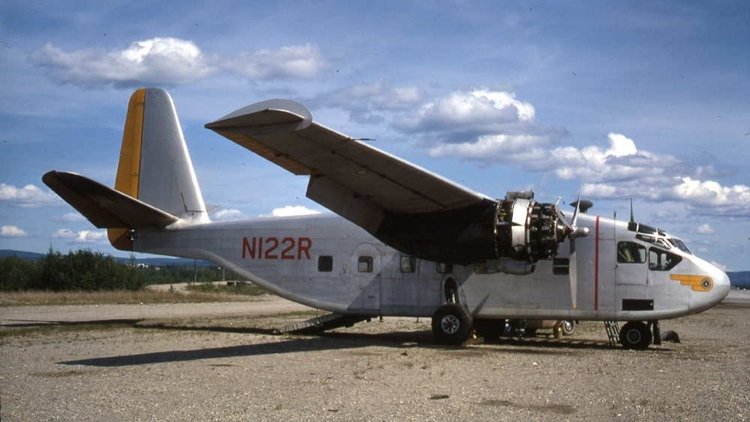 The Chase XCG-18A and YC-122 Avitruc (known internally as the Chase MS.7) was a military transport aircraft designed by Chase Aircraft and produced in limited numbers in the United States in the late 1940s, initially as a glider, but definitively in powered form. The design was based on the CG-14 cargo glider but was substantially larger and featured all-metal construction. It was a high-wing cantilever monoplane. The fuselage was of rectangular cross-section and featured a loading ramp at its rear. The main undercarriage units were carried at the sides of the fuselage and were fixed, while the nosewheel was retractable. In its powered form, two radial engines were fitted in nacelles in the wings. The USAAF's experiences with cargo gliders during World War II indicated a role for a similar aircraft in the post-war inventory, but one capable of carrying a substantially heavier load and with greater recoverability than the essentially expendable wartime wooden assault gliders. Chase's CG-14 was selected as a starting point, and in January 1947, the USAAF placed an order for an enlarged, metal version of this aircraft, initially designated XCG-14B but redesignated to XCG-18A to reflect the basically all-new nature of the aircraft. When the prototype flew that December, it was the world's first all-metal transport glider. One of the major improvements was the use of a thinner wing section which allowed high tow speeds and small aircraft like the P-47 fighter being able to tow it into the air and to its release point. In March 1948, the service (now the USAF) ordered four more aircraft under the new designation XG-18A and a fifth to be fitted with engines as the YC-122. The air force eventually lost interest in purchasing assault gliders, but continued with the development of the powered variant, purchasing two more examples for evaluation as the YC-122A and redesignating the second of these as the YC-122B when the original Pratt & Whitney engines were swapped for Wright units. This aircraft would form the basis for the definitive service trials version, the YC-122C. Nine of these aircraft were ordered and although they performed well in evaluation (first at Sewart AFB, Tennessee, later at Ardmore AFB, Oklahoma), the USAF no longer saw a need for a small transport aircraft and cancelled the project. Despite the short-lived history of the aircraft, it was used extensively at Ardmore AFB. By February 1955, at least one pilot, Captain Phillip C. Gromley of the 16th Troop Carrier Squadron, 463rd Troop Carrier Wing, achieved 1,000 hours in piloting the aircraft. All aircraft were replaced by Fairchild C-123B Providers by July 1955. The last YC-122C assault transport was flown to Tucson, Arizona, on 30 August 1955, for storage at Davis-Monthan AFB. Captain Gromely is recorded as making the final flight of a YC-122C to Tucson. The remaining machines served on in utility roles until 1957. Following their retirement, the fuselage of one of the YC-122s was used in the construction of the Hiller X-18. Variants Chase MS.7 Company designation for the XCG-14B / XCG-18A XCG-18A XCG-14B re-designated XG-18A revised glider version (4 built) YC-122 prototype powered version, an XG-18A with Pratt & Whitney R-2000-11 engines (one built) YC-122A refined version of the YC-122 (two built) YC-122B YC-122A re-engined with Wright R-1820-101 engines (one converted) YC-122C definitive service trials version (nine built)
 -
Cost and lack of currency were the reasons I gave up flying. Back in the day flying GA aircraft, I found renewal time coming up, and I hadn't done more than a couple of hours since last renewal, I just couldn't afford it, putting two boys through secondary college. I had a check ride with an instructor, got OK'd to fly and completed the 3 hours required. I decided that would be the last time that would occur.
-
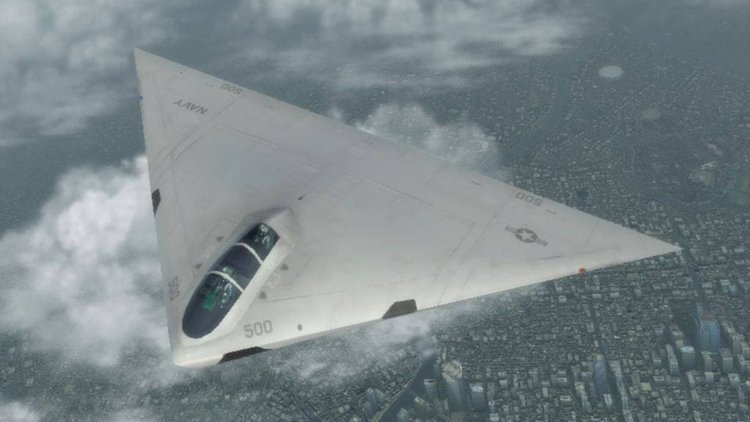
This one never made it past mockup. No actual aircraft built. Airborne photo by AI. Not to be confused with Lockheed A-12 or Curtiss A-12 Shrike. The General Dynamics/McDonnell Douglas A-12 Avenger II was a proposed American attack aircraft from General Dynamics and McDonnell Douglas. It was to be an all-weather, carrier-based stealth bomber replacement for the Grumman A-6 Intruder in the United States Navy and Marine Corps. Its Avenger II name was taken from the Grumman TBF Avenger of World War II. The development of the A-12 was troubled by cost overruns and several delays, causing questions of the program's ability to deliver upon its objectives; these doubts led to the development program's cancellation in 1991. The manner of its cancellation was contested through litigation until a settlement was reached in January 2014. The Navy initially sought to buy 620 A-12s and Marines wanted 238. In addition, the Air Force briefly considered ordering some 400 of an A-12 derivative. The A-12 was promoted as a possible replacement for the Air Force's General Dynamics F-111 Aardvark, and for the United Kingdom's Panavia Tornado fighter-bombers. The craft was a flying wing design in the shape of an isosceles triangle, with the cockpit situated near the apex of the triangle. The A-12 gained the nickname "Flying Dorito". The aircraft was to be powered by two General Electric F412-D5F2 turbofan engines, each producing about 13,000 pounds-force (58 kN) of thrust. It was designed to carry precision guided weapons internally, up to two AIM-120 AMRAAM air-to-air missiles, two AGM-88 HARM air-to-ground missiles and a complement of air-to-ground ordnance, including unguided or precision-guided bombs, could be carried in an internal weapons bay. It has been claimed that the A-12 was to be capable of delivering nuclear weapons held in its internal weapons bay as well. The A-12 was to have a weapons load of 5,160 pounds (2,300 kg).
-
Melbourne based upcoming startup carrier Koala Airlines faces winding-up application even before doing a flight. A creditor, Wealth Creation Pty Ltd has applied for the winding up of Koala Airlines Pty Ltd. As per the Australian Securities and Investments Commission, an application for the winding up of Koala Airlines Pty Ltd was commenced by the plaintiff Wealth Creation Pty Ltd ACN 007 200 179 on 20/12/2024, and a hearing will be done on 10:30 AM, 22 January 2025. Just two months after Bonza’s closure was confirmed, a new Australian Airline-Koala Airlines, had emerged as a fresh rival to the current duopoly of Qantas and Virgin Australia.
-
They arrive at the site at 18:30 minute mark.
- 1 reply
-
- 1
-

-
An internet search turns up a couple of reports, but at least a couple of years ago. Nothing recently.
-
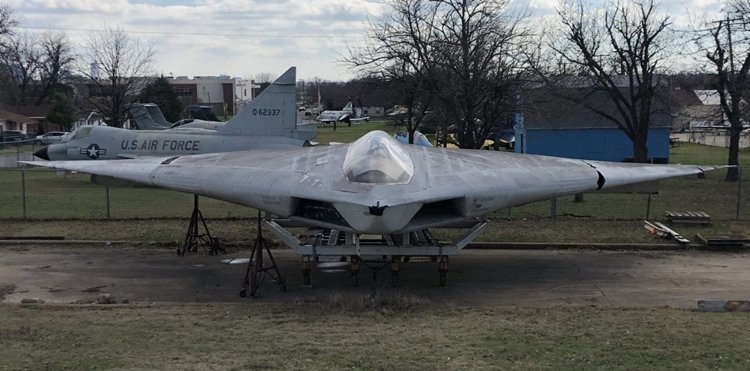
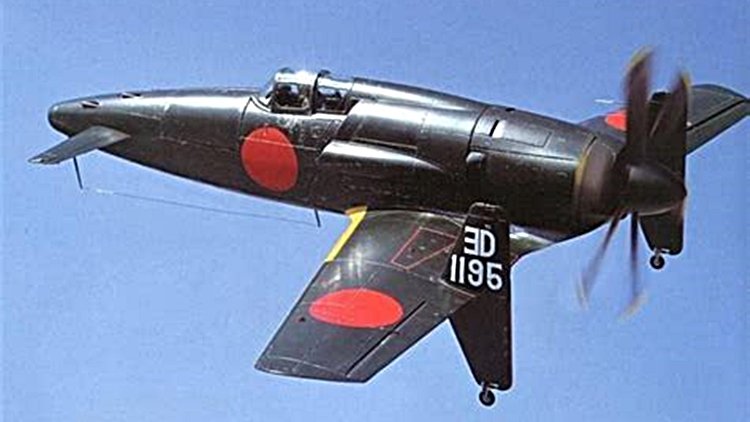 The Kyūshū J7W Shinden (震電, "Magnificent Lightning") is a World War II Japanese propeller-driven prototype fighter plane with wings at the rear of the fuselage, a nose-mounted canard, and a pusher engine. Developed by the Imperial Japanese Navy (IJN) as a short-range, land-based interceptor, the J7W was a response to Boeing B-29 Superfortress raids on the Japanese home islands. For interception missions, the J7W was to be armed with four forward-firing 30 mm type 5 cannons in the nose. The Shinden was expected to be a highly maneuverable interceptor, but only two prototypes were finished before the end of the war. A jet engine–powered version was considered, but never reached the drawing board. In the IJN designation system, "J" referred to land-based fighters and "W" to Watanabe Tekkōjo, the company that oversaw the initial design. The idea of a canard-based design originated with Lieutenant Commander Masayoshi Tsuruno, of the technical staff of the IJN in early 1943. Tsuruno believed the design could easily be retrofitted with a turbojet, when suitable engines became available. His ideas were worked out by the First Naval Air Technical Arsenal (Dai-Ichi Kaigun Koku Gijitsusho), which designed three gliders designated Yokosuka MXY6, featuring canards. These were built by Chigasaki Seizo K. K. and one was later fitted with a 22 hp Semi 11 (Ha-90) 4-cylinder air-cooled engine. The feasibility of the canard design was proven by both the powered and unpowered versions of the MXY6 by the end of 1943, and the Navy were so impressed by the flight testing, they instructed the Kyushu Aircraft Company to design a canard interceptor around Tsuruno's concept. Kyushu was chosen because both its design team and production facilities were relatively unburdened, and Tsuruno was chosen to lead a team from Dai-Ichi Kaigun Koku Gijitsusho to aid Kyushu's design works. The construction of the first two prototypes started in earnest by June 1944, stress calculations were finished by January 1945, and the first prototype was completed in April 1945. The 2,130 hp Mitsubishi MK9D (Ha-43) radial engine and its supercharger were installed behind the cockpit and drove a six-bladed propeller via an extension shaft. Engine cooling was to be provided by long, narrow, obliquely mounted intakes on the side of the fuselage. It was this configuration that caused cooling problems while running the engine while it was still on the ground. This, together with the unavailability of some equipment parts postponed the first flight of the Shinden. Even before the first prototype took to the air, the Navy ordered the J7W1 into production, with a quota of 30 Shinden a month given to Kyushu's Zasshonokuma factory and 120 from Nakajima's Handa plant. It was estimated some 1,086 Shinden could be produced between April 1946 and March 1947. On 3 August 1945, the prototype first flew, with Tsuruno at the controls, from Mushiroda Airfield. Two more short flights were made, a total of 45 minutes airborne, one each on the same days as the atomic bombings of Hiroshima and Nagasaki occurred, before the war's end. Flights were successful, but showed a marked torque pull to starboard (due to the powerful engine), some flutter of the propeller blades, and vibration in the extended drive shaft.
 -
GA8 Airvan new build by Gippsland Aero
red750 replied to Blueadventures's topic in Other GA Aircraft
The matter has been referred to Ian. -
GA8 Airvan new build by Gippsland Aero
red750 replied to Blueadventures's topic in Other GA Aircraft
Don't pull that modertator shit. You can see others agree with me. I've got strong feelings about certain people, but I keep them to myself. -
GA8 Airvan new build by Gippsland Aero
red750 replied to Blueadventures's topic in Other GA Aircraft
Keep them to yourself.