

Dafydd Llewellyn
-
Posts
1,513 -
Joined
-
Last visited
-
Days Won
43
Content Type
Profiles
Forums
Gallery
Downloads
Blogs
Events
Store
Aircraft
Resources
Tutorials
Articles
Classifieds
Movies
Books
Community Map
Quizzes
Videos Directory
Posts posted by Dafydd Llewellyn
-
-
You are pretty much stuck with glue (sorry about that!) at end ribs etc, unless you are using a sewn bag, but usually the fabric is wrapped around an edge before it is glued; this removes the "peeling" load. Also, one normally reinforces that with an overlapping piece of fabric. Glue is pretty reliable so long as it is loaded only in shear; it's unreliable under "peeling" loads. There's no way to wrap the fabric around a rib cap, so you cannot avoid peeling loads there. The width of the rib cap has no effect on the peel strength; "peeling" occurs along the line where the glue is being pulled away, i.e. it's solely a local effect, and the failure simply progresses along the joint as far as it needs to - twice the width does not change the tensile stress in the fabric necessary to start a peeling failure. If you look at the Poly-Fiber manual - I thoroughly recommend it - you will see how they deal with leading & trailing edges etc. Aircraft that have metal skin back to the main spar, and fabric aft of that, normally use some form of mechanical attachment where the fabric joins the metal skin; sometimes by wrapping the fabric around a strip of metal and rivetting that down to the skin, sometimes by metal clips, etcetera. I think you left a couple of words out of your post: "it works - for a while . . . "
-
I once had a panel of fabric come off the upper wing surface of an Auster I was flying as a glider tug. It simply tore adjacent to the rib stitching, so I lost the strip between two adjacent ribs, from the leading edge to the aileron shroud. I didn't know about it until after I had landed - tho I noticed a bit more crosswind on the landing than the windsock was showing. The rib stitching contained the failure so it wasn't a problem, in other words. Ever since then, I've been rather fond of rib stitching, if the aircraft has fabric-covered wings . . . it comes under the heading of "cheap insurance", as far as I am concerned. The added drag of rib stitching is only significant for the front part of the wing; aft of the spar, it has no measurable effect. Aesthetics? I can't spell the word . . .
-
Agree - provided you can couple the bulb to the sole plate of the iron with a dab of heat sink compound, which is a thermally-conductive paste. You can buy a tiny tube of this from Jaycar.Use an iron and calibrate it with a jam making thermometer. No problems. -
Re the engines, keep an eye on http://camitaeroengines.myshopify.com/pages/new-camit-aero-enginesClearly I am no expert in this area but there are a couple of things one could deduce. Firstly, an RA-Aus registered J230 with a design MTOW of 700kg is unlikely to have ever been flown close to its MTOW. Combine that with your view that it is well constructed in the first place and it would seem to me that you have an aircraft likely to do well compared to most others regarding fatigue life. But even a J230 will get to the geriatric stage one day.If you apply the same logic at the other end of the Jab scale, a J120 with an MTOW of 500kg that, quite possibly, is frequently flown above its design MTOW could you have a significant fatigue issue much earlier?And then there is the exposure to UV - kept in a hangar or outdoors?
We have Jabiru celebrating its 25 years in the air on the cover of the October SportPilot and we certainly don't hear much (anything?) about Jab structural issues in their older aircraft. That has to be encouraging. Now, if only the engines . . .
-
Andy has it right, I think. The wheels grind slowly . . .
-
 1
1
-
-
Ha - the reference is in the AC:Yes, well that's an Notice of Proposed Rulemaking. Once those changes have been incorporated into CASR Part 45, the underwing letters may be reduced to 75 MM high - but not until.6.1 Instrument number CASA EX10/10 ‘Exemption — Display of markings and
carriage of identification plates’ allows Australian fixed wing and rotorcraft with a
maximum take off weight below 5700 kg and operating wholly within Australian territory to
be exempt from some of the requirements of CASR Part 45 that cover the location and size
of markings and the carrying of an aircraft registration identification plate.
6.2 Under the terms of the exemption, applicable aircraft will be exempt from:
• displaying markings on the undersurface of the wings as required by CASR
45.045(1);
• displaying lateral markings of 300 mm as required by CASR 45.065(3)(b)(ii) and
© item 1 — under the terms of the exemption the minimum height is 150 mm; and AC 45-01(2): Nationality and Registration Marks 3
Revised: March 2010
• carrying an aircraft registration identification plate as required by CASR 45.145(1),
provided the aircraft carries a fireproof manufacturer’s data plate as required by
CASR 21.820. See Section 9.3 ‘Aircraft Registration Identification Plate’ for an
explanation of the term ‘fireproof’.
-
Sounds like the modern form of tax evasion.Seems to me when something wrong is found STOP this must be fixed .so when to owner finds out by post (yes post) or other means he usually will fix this straight away then it's to the bottom of the pile waiting for the casa guy,when he gets a chance to drop in .then he finds something else STOP etc etc.yep , best to phone up now and again or your rego may get left in the to hard basket longer.im now back in the casa guy pile hoping he can't find anything else when he next visits ,although nobody can say when this may happen. Sounds like the easy ones are getting done on time which is a great start, I just hope that flying is like riding a bike and I don't forget how when eventually back in the sky -
Yes, well that's an Notice of Proposed Rulemaking. Once those changes have been incorporated into CASR Part 45, the underwing letters may be reduced to 75 MM high - but not until.Dafydd, found this from the CASA site as a NPRM.http://www.casa.gov.au/wcmswr/_assets/main/newrules/maint/download/nprm0712ms_annexb.pdfMy experimental aircraft has the Rego on the side of the fuselage and it was issued with an experimental CofA by CASA inspector.
From what I can find there has been no underwing Rego letters since around 2010.
Cheers
-
Not quite - the Jabiru (like any composite aircraft) is laid up using various grades of uniaxial and biaxial or multiaxial cloth, not chopped strand mat - and the load-bearing skin of the wing is typically less than a millimetre thick. Also, it's epoxy, not polyester or vinyl ester. So the stress levels are usually quite a bit higher than for a boat or a refrigerated container. The boats, on the other hand, are affected by increased-intensity UV, and also osmosis; and the refrigerated container, by thermal stresses, to a greater degree than a recreational airframe. So the situations don't really compare well enough to be useful. However, there's a "rule of thumb" that E-glass/epoxy has a good fatigue life provided the strain level (i.e. how much the laminate is stretched) does not exceed 0.003 inches per inch (i.e. 0.3%) at the limit load. If this limit to the strain level is maintained, it makes a composite airframe rather heavy compared to a metal airframe - so this is not very likely to be the case for recreational aircraft that have extremely "tight" MTOW limits; and it also should give pause to people who tend to fly their aircraft over their certificate MTOW (and is no doubt a large part of the reason why CASA has clamped down on the overweight registration of aircraft by RAA. The morals of importers who pursue such weight increases can be judged accordingly).If it's any help there are tens of thousands of FRP boats which have gone to their maker over the years, and hundreds of FRP refrigerated vans which have probably been installed on their tenth cab/chassis, the only difference being the quality of the resin, and the original laminating skill.This is not the full story, of course; it's also highly desirable to keep the shear stress between individual layers in the laminate as low as possible (the Jabiru form of wing spar construction achieves this par excellence) and to avoid points of local compressive or flexure stress that tend to force the layers in the laminate apart. To the extent that the designer:
(a) Understood these points, and
(b) Managed to achieve them in his detail design, and
© His efforts have not been nullified by either poor detail design or exposure to solvents or environmental aspects such as UV,
a composite airframe can have better fatigue properties than a metal airframe.
However, composites have no ability at all to locally yield at points of stress concentration and thus relieve themselves; and they are extremely sensitive to stresses in more than one direction, and this means the quality of the detail design is much more critical in a composite aircraft than it is in a metal one, and much more difficult to assess by inspection.
The overall effect is that it is very dangerous to make sweeping generalisations about composite airframes - as somebody once put it, "when they are good, they are very, very good; and when they are bad, they are horrid." So if the purchaser "only buys the paint", he may be in for a rude surprise. Caveat Emptor.
-
 1
1
-
 1
1
-
 1
1
-
-
Yes, I've been watching a restoration of an early Jabiru, and whilst the original wings had been damaged beyond economical repair in an overturn (following a forced landing, caused by through-bolt failure) the bushes in the wing lift-strut lugs were still unmoving, despite the crash loads, indicating that the wing had not reached its fatigue life. The basic composite structure (once one gets below the many layers of unsuitable paint that had been indiscriminantly applied to the thing over the years, which should be done to the extent necessary to effect repairs, and no more) is in unexceptionable condition. The original lift-struts had been replaced by a later design, and they have to be replaced again, so there's no fatigue issue there. The only real deterioration was indentation of the bearing plates on the back of the firewall, that carry the engine mount bolts. It's of course, one of the early solid-foam-filled wing models. So if it's any indicator, I'd not expect to see fatigue issues with the composite structure of those early Jabs for quite a while, yet. Most of the damage was ham-fisted maintenance, actually.Clearly I am no expert in this area but there are a couple of things one could deduce. Firstly, an RA-Aus registered J230 with a design MTOW of 700kg is unlikely to have ever been flown close to its MTOW. Combine that with your view that it is well constructed in the first place and it would seem to me that you have an aircraft likely to do well compared to most others regarding fatigue life. But even a J230 will get to the geriatric stage one day.If you apply the same logic at the other end of the Jab scale, a J120 with an MTOW of 500kg that, quite possibly, is frequently flown above its design MTOW could you have a significant fatigue issue much earlier?And then there is the exposure to UV - kept in a hangar or outdoors?
We have Jabiru celebrating its 25 years in the air on the cover of the October SportPilot and we certainly don't hear much (anything?) about Jab structural issues in their older aircraft. That has to be encouraging. Now, if only the engines . . .
The main danger would be, if some idiot had chemically-stripped the aircraft prior to re-painting it; one should also keep solvents such as Acetone and MEK away from it. If we see an airframe failure in a Jabiru, it will in all likelihood be from that cause.
Alan Kerr (who amongst other things, designed a Boron-patch repair for the F-16) did the basic structural substantiation of the early Jabirus (up to about the 230/430) and he did some impromptu fatigue tests with induced damage; the indications were that the Jab airframe was quite resistant to fatigue. That seems to be being borne out in practice. If I owned one, however, I'd dye-check the lift-strut end fittings from time to time. The Jab. has some very intelligent detail design, though it does not look anything special to the casual observer. I can't say the same for quite a lot of other aircraft.
Yes, they should be kept indoors rather than being permanently tied-down in the open.
Re the engines, I think you will find some help coming along before much longer. Can't say more about it just yet.
-
Thanks, Don; however I suggest that "dubious" is an understatement; much stronger terms might perhaps be more appropriate. Perhaps "fraudulent" and "criminally negligent" would not be inappropriate? The case was settled because of the legal precedent that flying in a recreational aircraft is an inherently dangerous activity. However it does seem to have jolted CASA out of its sleep, so the effort was, perhaps, not wasted; it may save somebody else's life. That RAA seems to be making such extraordinarily heavy weather of sorting the problem out, should suggest that its ramifications go far deeper than people may wish to imagine.The reasons there was a registration debacle hitting the headlines back in November 2012 could indeed be found in poor management and governance in the past going back over perhaps a decade or more.RA-Aus had a wake-up call 5 or 6 years ago when a Sting crashed with, tragically, two fatalities. The aircraft registration was dubious and an action for negligence was taken out naming RA-Aus and CASA as co-defendants. That should have been enough to stir a Board and the Management into real action. Then, in 2012, four audits from CASA were not addressed with the urgency CASA would like to have seen and finally CASA withdrew the right to register our aircraft.However regrettable, virtually none of the above is relevant to the question of why we are still having issues with registrations 10 months later. And one Board member is actually suggesting it could be another 12 months before we get back to "normal".
Surely the problem is just a matter of logistics? Once you have an understanding of the size of the problem you can calculate what resources are needed to eliminate the backlog within an acceptable time frame - and apply the resources. I can't accept that 10 months is an acceptable time frame and the prospect of the issue running for a year and 10 months is way beyond my capacity to understand. Yes, the appropriate resources will cost money but it is money we have in cash reserves and there would be no reason to extract additional funds from members to redress the issue.
RA-Aus has just two core functions:
- approve pilots to fly;
and,
- approve aircraft to be flown.
All under the umbrella of Safety.
How can it be OK to fail in one of these two core functions for over a year, once it has been pointedly brought to your attention?
While I believe that the Management is doing the best it can with the resources granted to it by the Board, I wonder what will it take to get the message to the Board that not enough is being done - soon enough?
-
2
-
1
- approve pilots to fly;
-
Really? The last time I looked at CASR Part 45 it said:Why do RAAus still require the Rego Number under the wing???? CASA have dropped that requirement and I thought the rules were aligned?Removing this requirement could save quite a few dollars to some one registering for the first time and / or after a recover / repaint.45.045 Number and location of sets of markings — fixed-wing aircraft
(1) On a fixed-wing aircraft, 3 sets of the aircraft’s markings must be
displayed, as follows:
(a) 1 set either on the under surface of the port wing or across the
under surface of both wings, in each case as set out in
subregulation (2);
(b) the 2 other sets on:
(i) the fuselage, as set out in subregulation (3); or
(ii) engine nacelles or similar fixed obstructions on the
fuselage, as set out in subregulation (5); or
(iii) the vertical tail, as set out in subregulation (6).
-
1
-
-
We may someday come to calendar time limits for composite airframes, but there's definitely no universal rule of thumb in sight for that; they are mainly addressed by ongoing inspection. There is tremendous variation in the way composite airframes are put together; some are very good in regard to fatigue potential. Some have features that make me shake my head. I consider the Jabiru airframes that I am familiar with, to be in the former category, mostly. Some gliders are definitely in the latter group. So what advice can one give to owners?Given the statement above it would seem that life for composites would instead of cycles or hours be simply elapsed time? If Elapsed time are we talking a number that is likely to be seen in a humans lifetime? Measuring elapsed time since manufacture would seem to me to be relatively easy and not something that a dodgy logbook can hide whereas cycles/hours flown in a RAAus aircraft is something I wouldn't want to be betting my life on....unless they were my hours/cycles, or have I misunderstood?AndyFirstly, read the fine print in the maintenance manual carefully; not all manufacturers are irresponsible about this.
Secondly, some airframes have specific locations which can serve as indicators; for example, the bushing in the eye of the lift-strut lug on Jabiru wings; it will loosen before fatigue of the wing itself becomes critical. I've yet to see one that has come loose in service - but if you find one loose, do NOT glue it back into place, scrap the wing - and its mate! (same with the fuselage lug to which the lower end of the lift-strut attaches).
Thirdly, keep an eye on obvious critical load-path items, for example the end fittings of lift struts, and the fuselage carry-through structure to which they attach. If the lift-strut end fittings are aluminium, it may be prudent to have them dye-checked periodically. Do not lose sight of the fact that most airframes have metal parts at critical connections; the metal part may be more of a concern than the rest of the composite structure.
In composite aircraft, particularly ones with cantilever wings, a point of concern is the joint between the main spar web and the spar cap - especially where the spar cap is a block of rovings built into the wing skin sandwich, that is connected to the spar web by bog when the wing is assembled. This form of joint is usually uninspectable. This was the case with quite a lot of European glass gliders; the only inkling one can get is by measuring the wing natural frequency, but by the time that's affected to a detectable degree, it may be too late. These are in the head-shake class. Gliders are designed by stiffness, because of their very long wings, so they usually have excess strength and may not be as susceptible to fatigue as more lightly-built short-wing aircraft.
Steel is often considered to have a limiting stress below which fatigue does not occur. However, bad detail design will cause fatigue failure in steel parts also (especially if they are corroded). The fuselage carry-through member in Skyfox models is a case in point; however that was dealt with by the add-on reinforcing tube. I'd look carefully at this area in any related designs (Kitfox, Avid, etc) but I have no personal experience of those.
Because fatigue was not required to be addressed in the original design of so many recreational aircraft, it will eventually be dealt with by Airworthiness Directives. The problem with that is that, firstly, somebody probably has to die before the air safety authorities will do the investigation that will eventually lead to an AD - and secondly, the air safety authorities are disinclined to investigate accidents to recreational aircraft.
So, your safety in these aircraft depends upon your vigilance - and that depends on the level of your knowledge.
For myself, I'm flying an aircraft type for which I designed the fatigue life extension modification.
-
 1
1
-
-
I was suggesting that CASA may be a lot more happy about the GFA system than it is about the RAA system. If that's the case (and I do not know whether it is, but I would expect so) then it would seem only commonsense for RAA to go cap in hand to GFA and find out how they do it. This is no time to be parochial in one's thinking.Dafydd,I was not suggesting we try to match LAME but that if we had L2 taken away then that's all that's left.Fortunately for us all Trevor Bange is now on the Board and I'm happy to leave that techo stuff to him and stick to counting beans and having my aircraft looked after by the best L2 I can find. We are very lucky in the Hunter Valley to have an exceptional one in Keith Rule.
-
2
-
-
I think you can count on it. The ASTM standard - the version I have is F2245-04; presumably there are later revisions - is silent on the subject of structural fatigue. maybe the later revisions are more realistic, but if so I'm unaware of it. So was BCAR S preliminary edition. BCAR-S edition 3 has a "motherhood" statement (S 627) which really is largely meaningless. JAR-VLA gives some "safe" stress values - but for composite structures, one should design to strain values, not stress values. The JAR-VLA stresses seem to correspond with about three times what I would consider to be the strain level at which the life approaches indefinite. Most of these standards seem to be watered-down versions of the superseded American standard, CAR 3, and it was likewise silent on fatigue issues. The problems people are now having with SIDs for Cessna twins, is a direct result of this omission from the basic design standards.A question for Dafydd.As an engineer, do you think that at some stage, not too far down track, that we will begin to have a bunch of fatigue related issues on some of these very lightly designed but flash aircraft?I've seen some really nice but really lightly built aircraft and I've often wondered whether or not some kind of fatigue life was part of the manufacturers engineering calculations.
The reason for this omission from recreational aircraft standards appears to be the belief that private-owner aircraft seldom exceed 100 hours per year. However when the same standards are applied to aircraft for training, that philosophy goes out the window. The gliding types were grumbling last year because a popular two-seater is grounded at 15,000 hours . . .
Fatigue life is a difficult thing to pin down; the current rule in FAR Part 23 (as explained in FAA AC 23.13A) is that one calculates the mean time to failure under a statistical loading spectrum (based of thousands of measurements of G-loads) and divides it by eight, to obtain a "safe life". The "safe life" is a probability thing; generally one can think in terms of the probability of failure reaching a maximum of one in a thousand per flying hour, at the end of the "safe life". So one could exceed the safe life if one were prepared to accept a higher level of risk - and the risk increases progressively. So quite a few of these aircraft will no doubt survive well past what their "safe life" would be, if anybody had calculated it - but sooner or later . . .
Fatigue of rivetted aluminium alloy structures is pretty well understood; the research started in 1947. Metals fail by repeated tensile load cycles. Composites are quite different; they normally fatigue by inter-laminar shear - and as a consequence of the ongoing shringage of the resin matrix, which never really ceases. We still do not have full knowledge for composites, and the sensitivity varies enormously according to the detail design.
When you combine these considerations with the very light structures dictated by the tight MTOW limits, fatigue failure is a certainty, in the fullness of time. And if somebody get exuberant and starts throwing the things around, the life can be consumed ten times as fast, quite easily.
So yes, I think the overall situation is totally insane. There will inevitably be a spate of failures, and the authorities will knee-jerk and tighten up on it, and some aircraft types will end up on the ground; and it does not take much in the way of commonsense to guess which ones are likely to suffer this.
-
I was, actually, trying to make the point that drifting all the way to the "whitegoods" approach is a pretty horrendous scenario; it makes flying the prerogative of a wealthy few, in fact. The whole basis of the RAA has been affordable flying; the key to that is a really competent DIY maintenance ethos. That being so, I do not understand why you people are not jumping up and down to defend the L2 system - which in fact means it needs a serious shake-up, I suspect, because at present I doubt it would survive serious scrutiny. GA aircraft in the past had an economic life of about 40 years - i.e. at least double the life of most motor vehicles. The "throw-away" society suits manufacturers down to the ground; it's the ultimate expression of planned obsolescence, which started before WW2 as Rooseveldt's "new deal". We cannot afford it any more; it's time to start building consumer products that last longer. That will only happen if the consumers demand it. If you keep buying rubbish, you will keep having rubbish served up. This ethos also demands a high grade of maintenance practice. The GA maintenance system provides this, but it came into being (and its associated rules did also) in order to maintain aircraft built very much in the manner of WW2 military aircraft. That style is obsolescent, and so are the maintenance procedures that go with it, to a large degree.Single engine planes operating into places like Bankstown and Moorabbin that fly over populated areas are of more concern, realistically. Lately there has been a lot of failures due to having not enough fuel on board. The standard generally would not be good or certainly not improving.. The average person is not as "savvy' with mechanical things as they used to be, that would be a fact. Perhaps this has to be addressed as I can't imagine how we can totally make up for it. As Dafydd says it is a throw away white goods society. Whether an aeroplane could operate as a use and chuck away article is hard to imagine. To be safe it would have to be very sophisticated with inbuilt strain indicators or such to get away from the idea of inspections of the structure, which by it's very nature and use can be subject to overloads. Complexity is the opposite of the way we want to go. GA aircraft deteriorate to an unsafe condition easily too. Lying idle , exposed to rain hail . Water entering the fuel system Cylinder and valve stems rusting.The individual owner/pilot MUST have the responsibility to maintain the plane even IF they don't have the ability themselves. IF they can't do it they must find someone else who has the skill and is prepared/ WILLING to do it. Whilst a LAME might be expected to maintain an LSA or factory built plane how could most of them want to or be able to repair planes that are more one-off? ( and who really knows what "life" they might be expected to achieve, when things like corrosion protection are hardly addressed?) in some builds. A pipe frame fuselage with interconnected members that is pressurised with nitrogen is an example of a self test structure. A crack will let the gas out . Nev.As Nev points out, it is quite possible to design aircraft with damage-tolerant structure; in fact that is obligatory for Transport-category aircraft nowadays. Almost no light GA aircraft and no recreational aircraft of my knowledge has this; it costs more to certificate than a single load-path structure. Very few (if any) recreational aircraft have a published safe fatigue life; though it's quite possible to do so.
No manufacturer will incorporate such features unless his competition is forced to do likewise, because the bloody stupid customers (that's you lot) always buy the cheapest thing with the snazziest paint job. So it won't get better until or unless sufficient of the consumers get sufficient maintenance know-how to demand better-built aircraft. So there is no hope of turning this overall "whitegoods" trend around that does not involve better maintenance training of as many potential purchasers as possible.
So if RAA has a future at all, it will need to focus on upgrading the L2 maintenance system - because that way the buyers will be much better informed.
So - what are you all waiting for?
-
2
-
1
-
-
I'm afraid I disagree, Maj. The job that CASA has is to implement the relevant legislation and that has nothing to do with "serving" the aviation community. It's all about keeping the flying public safe.The legislation unfortunately does not, as you say, extend to the promotion of aviation per se and if you truly believe that you have a right to "freely" enjoy your sport outside the control of the regulator you are very sadly mistaken indeed.
Rights are always accompanied by Responsibilities, Maj. RAA was given responsibility for licensing and registration according to set rules and its track record thus far is a long way from good. It's rights to "licence" pilots of lighter aircraft for tv relational purposes is hanging in the balance right now and, in my view, its monopoly is severely dented by the advent of the RPL.
Why would you register your home built pride and joy with RAA when you can go VH Experimental and enjoy a one off rego and licence fee and still maintain it?
Why should CASA continue to cop flack from the legislators when an awful lot of aviation accidents involve RAA aircraft. I haven't kept count but 2013 has not been a good year!
Kaz
Why, indeed? Not this little black duck, certainly.
-
Your history is not very accurate - and therefore your conclusions are not, either.With reference to our thread topic header, 'The Future of RAAus?', well, I think the short answer is, there is no future. I guess that started with the end of the AUF.
Once we ran away from our heritage as ultralight people and tried to pretend we were like GA people, well, guess what, now we have become them.
All the above talk of material specs, certification, zero accident rates, world (ICAO) recognition ?!! and GA performance and privileges, has moved us so far away from our prime directive (sorry Gene) of affordable entry level basic flying.
While I have nothing against LSA class aircraft, I feel that by pushing for, and attaining the implementation of LSA, ie; just copying the American version of it, we, as I said in a previous post, took about a twenty year step backwards from what we already had...
If the RAAus board, and I guess more of us rank and file, had read between the lines of LSA, and negotiated with CASA to simply take 101:55 up to 600kg, as an ultralight class, none of the last 12 months of crap would have happened.
Now with RPL coming (when?), I'm going to stick my head out and say 'Maybe all the LSA machines need to migrate to GA and be utilised along side the aircraft they are trying to replace'.
Sure this may mean they will have to be looked after by LAME's, but truth is, any LSA aircraft currently being used in a training situation, is probably being looked after by a LAME anyway.
To put not too finer point on it, most of the people that can afford to buy these sort of aircraft for use in schools, usually can't do their own maintenance anyway.
I know, sounds like a generalisation, and there are a lot of guys (and gals) out there with LSA's that do their own work, but most of these are going to be eLSA's.
The system we had in the original 101:55 with simply 'approved' aircraft and parts worked OK.
I should point out that I still believed 101:55 to be a bit too restrictive, primarily with regard to props.
Manufacturers should not have been pushed into dictating one sort of prop or another.
Aircraft manufacturers make aircraft, engine manufacturers make engines and PROPELLOR manufacturers make props!
I know some out there will say that, 'Yeah, but some of the prop manufacturers are a bit dodgy', and what?, none of the aircraft manufacturers are a bit dodgy??
This is where a wider community comes into play keeping an eye on product quality, and reporting suspect items, which ends up as AD's
The concept that only one sort of prop is suitable for an aircraft/engine combination is rubbish.
Most of the prop manufacturers out there are trying to supply a quality product to the mass market at an affordable price, obviously if they had to go through the whole certification process, their props would be too expensive, but they obviously trust their product well enough to let it loose in the wider (idiot) community hoping to not end up with a bad reputation.
Once this has been achieved for any length of time, they can then look back on a 'Safe history of Operation' to justify their claims, and continue to produce without the cost of certification.
This is just like car tires, how many out there have Pirelli tires on their cars?
These are the best aren't they?
How many have Bob Jane Specials?
And to those about to complain that tires and props are nothing alike, well you're right, propellors don't endure half the torture the average car tire does!
I mean if your prop touches the ground, you usually throw it away, how many throw out their tires if they touch a curb or typical NSW pot-hole?
In fact the prop tire comparison is actually flawed in that most of us want to put on more expensive props than those supplied, or at least better quality for the same price....
OK, I ran off with my own personal hobby horse there......
But as I started out with, I think we (or we have allowed others) to have lost the plot.
While GA have expensive maintenance problems, they only pay an initial rego, while we have nearly as many hoops to jump through (for a lesser ability aircraft), and almost as expensive maintenance situation, and the privilege of paying for it each year.......
We are no longer the ultralight world (as evidence to our new name), and I feel the next step will be CASA's re-arranging of training with the implementation of the RPL, the possible closure of RAAus schools and forcing new pilots to learn at RPL GA schools before trying to fly their own ultralight!
Guess what, then we will have stepped back 30 years into the dark ages before HORSCOT's !!!
Need to get out of my firesuit and breathe a bit........
Firstly, CAO 101.55 aircraft were NOT "simply approved" - look up the Jabiru Type Certificate Data Sheet on the CASA website. They were Type certificated by CASA. The aircraft that were "simply approved" were those approved under CAO 95.25, i.e. the Thruster, the Lightwing, the Sapphire, and eventually the wire-braced Drifter - and the process was anything BUT simple; it involved a CAR 35 engineer taking on open-ended liability. There was virtually zero production quality control. There was no way that system could continue. Under CAO 101.55, the first major growth of the AUF occurred, due to the Jabiru and the Skyfox and the strut-braced Drifter.
Primary category and LSA were originated overseas - and as Australia has had, since 1985 or so, a policy of automatic acceptance of overseas certification (from certain accredited countries - see CASR 21.012 - we had to introduce those categories into Australian legislation also. You did not HAVE to buy them - you voted with your cheque books. What is happening is being driven by the consumers - YOU! Not by CASA - Not by RAAus - by the Great Australian Public (or the sector of it that wants to fly little aeroplanes. CASA and RAAus have simply reacted to consumer demand.
I agree that the consumer demand seems to be driven more by greed than by commonsense - and it shows almost zero interest in actually knowing something about the products it craves - (says a lot about advertising psychology; you're a lot of Pavlov's dogs, it would appear).
So railing about it is not actually the least bit productive. Thngs have changed; the DIY days are fading away along with those of us who grew up in that era. What we have now, is the "whitegoods" era - i.e. buy a turnkey package, use it until the ashtrays are full (or whatever the equivalent may be) and throw it away. Maintenance? When did you last get a mechanic to fix your fridge or washing machine? No, you scrapped it and bought a new one, didn't you? So there aren't any fridge & washing mechanics any more; guess why?
Well, like it or not, that's the way it is, to-day. Buy a new plastic fantastic, use it for five years, then flog it. All we need to do, is make it mandatory to flog it offshore, and we can do away with maintenance altogether, just as we have for fridges etc.
OR - we can start running maintenance schools; and handing out maintenance accreditation according to demonstrated knowledge and ability. (That's what technical colleges are for). And requiring an annual inspection pro-forma be filled out & returned to RAA. And require RAA to run a proper filing system for each registered aircraft.
You choose.
-
3
-
1
-
-
Don, I entirely agree apart from one point: I suggest it is not LAME maintenance that RAA needs to match (no hope of that; you'd have to go a fair way towards what is in CARs Part 4 &4A); but the GFA system - which would be a practical possibility. I strongly suggest you talk to Trevor Bange on this subject.If RA-Aus is to be able to logically argue that L1 and L2 maintenance should continue as it is then it has to have reasonable evidence that this is a safe system of maintenance compared with the fully "professional" LAME system.There is I would suggest, zero evidence to support L1 maintenance other than there has not been a statistical trail of carnage related to poor L1 maintenance (although Jabiru engine maintainers might be proving otherwise). The lack of failures due to poor L1 maintenance may have more to do with luck and the fact that pretty well everyone over 50 has lived through a time when car engines were simple and owner maintenance was typical.Compare then the young person coming to Rec Flying who has never as much as changed a spark plug on a lawnmower who assiduously learns to fly and is awarded L1 maintenance privileges with zero knowledge/skill testing.
How often in recent years have L2s had to do the maintenance equivalent of a BFR? How many got their L2 as a sweetheart deal with an obliging Tech Manager? I know of one L3 (a former long-serving Board Member) that I wouldn't let near my lawnmower (if i owned one).
Professionalism is something that, unfortunately, we don't automatically associate with RA-Aus, the organisation that has administered amateur aviation for 30 years. Like it or lump it, if RA-Aus does not become professional we will lose the privileges that were so hard won by the pioneers - albeit in easier times.
Like FactHunter and others have said, without owner (or L2) Maintenance RA-Aus loses its reason for being.
RA-Aus has an obligation to its members to continually provide CASA with the comfort of knowing Recreational Aviation is being administered with a high regard for and achievement of practical safety. We have not done that, I would suggest, for much of the last few years. And who knows that better than Lee Ungermann and his boss Jonathan Aleck?
-
1
-
1
-
-
I'm not saying you cannot use commercial quality stuff - but you need to look at the quality assurance aspect if it's in primary structure. For example, all the certificated recreational aircraft with whose certification I am familiar, that use lift-struts, use commercial-quality extrusions. However, lift struts are designed by the compression case, and have excess strength in tension. This makes it quite possible to proof-test each and every lift strut to a higher tensile load than it should ever encounter in service. This is relevant as a means of ensuring that certain kinds of defects that are peculiar to aluminium-alloy extrusions, are not present in the strut. It's therefore a relevant and sufficient test in that case. Ronstan fittings have both a part number and a specification, so they are pretty consistent. I do not know whether their rated strength meets aircraft requirements, but you can de-rate them appropriately - if you know what their rating basis actually is. Or you can test a statistically-significant sample, find the average strength and the standard deviation, and set your design loading accordingly; the procedures for this are set out in Section 9 of Mil-Handbook-5. However in cases like a main spar, unless it is grossly over-designed, proof testing is not necessarily a realistic option.Our early Condors and StolAeros used commercial grade alloy tubing and extensive use of Ronstan Marine fittings and s/s wire all bolts were aircraft grade. They stayed together pretty well.In other words, either you set up an appropriate quality assurance system for the critical commercial items - or you buy the QA as part of the material; this is what you pay for with aircraft-grade material.
-
3
-
-
Stripping and/or painting - but especially stripping - is maintenance, regardless of the colour. In GA it requires either an Engineering Order or an approved procedures manual. Professional aircraft paint shops must have one or the other. I don't know how it's handled (or, indeed, whether anybody is conscious of the issue) at RAA level. However a metal aircraft does indeed require approved procedures; it is possible to damage an aircraft to the point of write-off if incorrect procedures are used.Thanks guys. The one in question has no primer so it should be a bit easier "I think".Now heres a real prickley question....Is stripping and repainting the exact same colour maintenance or modification. Because the way i read it (which isnt the opinion that counts) is its maintenance if the paint type and colour are identical.
-
1
-
-
There seems to me to be a good argument for putting the RAA maintenance system on a less shaky basis. That is, take some steps to ensure that it can withstand serious scrutiny. The SOLE really important thing that the RAA system allows, is DIY maintenance. As Nev pointed out, an aircraft owner/pilot has high motivation. How about providing him with some real knowledge? For example, how many L2s have a copy of FAA AC 43.13-1? How many maintenance courses does RAA conduct, and what accreditation does it give attendees? I'm not an L2 so I do not know the answer to these questions - but I do know something of how the GFA system used to function in the 1980s; the GFA published National Gliding School course notes, which were valuable maintenance information. I've never seen anything equivalent from RAA. Yes, that was then and this is now - but if it comes to the crunch - and Don Ramsay is correct about how little that would take - then giving the L2 setup some real credibility should be a high priority, I'd have thought. Not my problem - but I suggest you people think about it instead of waving your arms. For a start, how is the Tech Manager going to cope with this as well as the registration issue and his other duties?
-
4
-
1
-
-
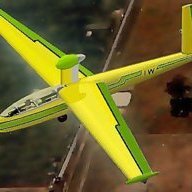
Please understand - I'm NOT trying to sell anything; this is a retirement project for my own enjoyment. Anybody who wants to can do likewise - but you'd best start with an L-13A1.Mike, I'd reply to your conversation, if I could get the thing to give me a "reply" button. meanwhile, in response to your question:Yes, it will have two seats; it will have an MTOW of 600 Kg in the normal category - i.e. a downgrade from the "cloud flying" category. However I'll not be certificating it; it will be under the Australian Experimental rules - see CASR 21.191(a) and 21.191(i). The reason is that the motor - Rotax 582 Model 99 (Type E gearbox) - does not have a TC; also I'm planning to use a single-blade folding pusher propeller, which will also be experimental. (The Hoffman option is out of the question, due to their ridiculous overhaul requirements). At that weight, the fatigue life is used at about 2.8 times the normal rate. The installation of the hard points in the fuselage for the engine pylon added about $2500 to the cost of the fatigue mod; I'll be building the rest myself. The engine mod. needs the nose bumper replaced by a wheel, to prevent it digging the nose in if you open the engine up too fast on takeoff; and I'm planning an improved tail wheel installation, with much better energy absorption, because if it does dig the nose in, it then comes down on the tail with a wallop when you throttle back. The Rotax 582 costs around $7000 here in Australia, complete with Type E gearbox, so the added cost of the powerplant is likely to be about double that. The reason I want to use the Rotax 582, is that it's an oil-injection motor, which means one can use it rather more like a four-stroke, than is normal with 2-stroke engines; it will cruise at around 80 KTAS on 50% power, so that's a significant consideration.There have been innumerable attempts at putting engines on Blaniks, including the L13J - but they have all failed, except the Riley one, because unless they are extremely "clean" with power off, they cause unacceptable buffet on the vertical tail.
-
Mike, I'd reply to your conversation, if I could get the thing to give me a "reply" button. meanwhile, in response to your question:Hi ExadiosMy Blanik L13A-1, VH-GPS, was back up in the air last Saturday. It was great to have her back up. I'm looking forward to many flights again this year and perhaps get the 300 kms done. I think this will be the third or fourth one back on line out of the original Llewlyn modified Blaniks.Cheers
Mike
Yes, it will have two seats; it will have an MTOW of 600 Kg in the normal category - i.e. a downgrade from the "cloud flying" category. However I'll not be certificating it; it will be under the Australian Experimental rules - see CASR 21.191(a) and 21.191(i). The reason is that the motor - Rotax 582 Model 99 (Type E gearbox) - does not have a TC; also I'm planning to use a single-blade folding pusher propeller, which will also be experimental. (The Hoffman option is out of the question, due to their ridiculous overhaul requirements). At that weight, the fatigue life is used at about 2.8 times the normal rate. The installation of the hard points in the fuselage for the engine pylon added about $2500 to the cost of the fatigue mod; I'll be building the rest myself. The engine mod. needs the nose bumper replaced by a wheel, to prevent it digging the nose in if you open the engine up too fast on takeoff; and I'm planning an improved tail wheel installation, with much better energy absorption, because if it does dig the nose in, it then comes down on the tail with a wallop when you throttle back. The Rotax 582 costs around $7000 here in Australia, complete with Type E gearbox, so the added cost of the powerplant is likely to be about double that. The reason I want to use the Rotax 582, is that it's an oil-injection motor, which means one can use it rather more like a four-stroke, than is normal with 2-stroke engines; it will cruise at around 80 KTAS on 50% power, so that's a significant consideration.
There have been innumerable attempts at putting engines on Blaniks, including the L13J - but they have all failed, except the Riley one, because unless they are extremely "clean" with power off, they cause unacceptable buffet on the vertical tail.

 I guess that started with the end of the AUF.
Shrinking Fabric
in Aircraft General Discussion
Posted