


turboplanner
-
Posts
24,363 -
Joined
-
Last visited
-
Days Won
159
Content Type
Profiles
Forums
Gallery
Downloads
Blogs
Events
Store
Aircraft
Resources
Tutorials
Articles
Classifieds
Movies
Books
Community Map
Quizzes
Videos Directory
Posts posted by turboplanner
-
-
Yes it’s about class actions, but the effect of the PL claims are pretty much the same. Well backed law firms tearing money out of whoever has the deepest pockets and destroying the country, whether financially or through the resulting legislation changes, which hit everyone financially anyway.
The story was written by a journalist.
-
It would be interesting to know what your Instructor is thinking Shafs. Was that “it” for stalling or was he going to do the power on (full power) stall in the next session.
The Piper Cherokee is an aircraft that mushes in a power off stall, leading many people to believe they’ll never stall one, but when you pull the nose right up with full throttle in a power on it drops like a brick, giving you a new respect for the WHOLE flying envelope.
-
This is a story about Class Actions; where large numbers of people are injured or killed and are packaged into a single claim.
There are penty of sordid stories about how lawyers are paid on a percentage of the total claim, so go about recruiting as many people as they can to make the pot as big as they can. Who knows if this happens.
The story balances the volume of class action PL claims against Australia's "fragile economy", and says investment and jobs are threatened, but doesn't produce a total for claims nor the degree of threats. Most of our jobs are not in areas where there are going to be multi-billion$ claims.
The story also confuses Public Liability, where the big dollar risks are, with Directors and officers insurance, which is a smaller field; the $400 million future pot quoted probably amounts to less than $30 per employee.
While Allianz pulling might make news, my past history is we were taking advantage of US critical mass by insuring with US companies in the mid 1980s.
What I think may have prompted this is a big Australian settlement which has led to US Tort companies seeking to match Australia's success with the Multi-National company which lost the case.
-
.....at that moment realised some wag had been playing solitaire on the EFIS and.....
-
.......just the same as it always meant. Men who volunteered to flght in WW2 all knew that, but the few commies, one of which we know well, would have trouble working that out because they were always excluded from serious assembly of the soldiers and are always making gaffes about what happened in certain battles, and whether there were any hyphens in words. The noise in the Casino was suddenly drowned out by the start of the Air Show where....
-
......although it was later found that they had delayed joining battle by half an hour while they finished their two up game, which was.......
NES NEWS
Onetrick's comments about the Captain's past may have triggered a bew panic in the UK which will make Brexit look like a Church fete.
NES readers may remember a few years ago that Turbo was visited by a couple of ASIO FoIs and told not to continue with his expose of the gruesome story of Captain Cook's visit to Cooktown and any reference to what happened in the rainforest in the hinterland. It seems that someone else may have go on to the story.

-
.....choreographer, and Turbo blushed at this unexpected compliment.
”Don’t cry” Turbo said “ look on the bright side. Six hundred horses charged
Into the valley of the shadow of death and the Cook family ran the other way straight into the support cannon, which had just been loaded with grape, a sad loss I agree, but you got rid of all the inbreeding in one hit, so you didn’t have to marry your sister and.....
-
.....group like the Gumly Gumly Six open the show.
”because their school packs hang lower than their knees” replied Turbo, “ they only have five teeth between them, and they couldn’t dance in tune to a line of Crimean Cannon!.”
”This seemed to unsettle the Captain somewhat, because........
-
Just looked again at the video and the wing looks very intact. Maybe a medical issue too I suppose..its all speculation I know. But again it would be good to find out some possible causes from RAA. Maybe we need to push this more with the committee
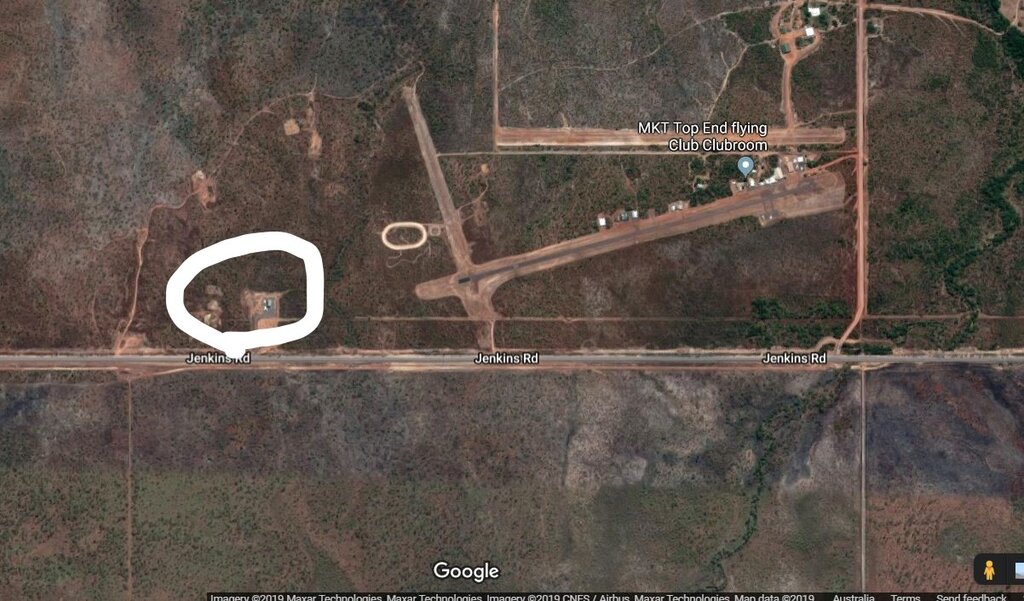
Based on a description elsewhere the white circle would be the location, if based from the Club. If the description is based of the left end of the main strip, the circle moves proportionately to the left. A witness report that the aircraft was flying normally then dropped into a spin, theen seemingly recover at the last minutue could indicate medical.
RAA accidents are a State Coroner responsibility, and Police prepare the Briefs. Police make the decision on whether to call in RAA, but RAA don't have any authority to release.
ATSB can step in at their discretion, limited by budget, and the type of accident (if it was an obvious cause like a heart attack there's no point in them investigating).
The most frustrating thing for us is that even though someone knows the cause, we never get to hear it. The Coroner is looking for a cause of death, not a cause of the chain of events we're interested in.
-
 1
1
-
-
Engine failure followed by an attempted turn back?
Well if it was, I’d hope he hadn’t read one of the RA forums where people discussed how easy it was to turn back and land on the runway you took off from.
Did you work that out from the runway and resting place?
-
Point Pointless loomed, evil, under a dark storm cloud.
Not many people know that Captain Cook called in here to build a new gallery after an argument with bullwhip, the cook (bull’s great grandfather). bullwhip had been making omelettes and smashed avocado out of chopped bully beef and rotten apples for six months, and when Captain Cook mildly commented that he’d rather eat some real food the cook took a crowbar to the galley. Cook called it Pointless and named the Point which was claimed by the First Nations people who a a tribe of Indians from Canada. Captain, Onetrick, bull, and Turbo had recently obtained planning approval to build a 20 story Casino and flying school. They had employed Mavis as the head dealer and Constable Doubtfire as head of security, and Nobushi Teppanyaki as CFI. The opening was due next Wednesday T....
-
I take the Whatsup forums to be the chat rooms of the Recreational Flying site. A place to kick back with a refreshing beverage and engage and join others in solving Society's problems, and enjoy the bonhomie of fellow enthusiasts.
I agree; they were
-
That's why the suggestion that people will be able to not see it if they choose.
You can only talk about aviation so much ....
That doesn't bother me because I know who's posting and can do an instant disregard.
However, I know some of the people in responsible postions who come on now and again, and they might take those posts to be the face of RAA.
-
Nice tone to a flying forum
-
Ready for the fright rine, so I’ll see if I can get bull to cough up another F4......
[Turbo and other NES readers appreciate him extrapolating after his posts, but you should see him at the Wagga TIn Shed on a Friday might]
-
 1
1
-
-
......with all that dithering the F4 crashed and burned. “Rong time since I had an ejection” chuckled Nob, but then......
-
...the exact azimuth to....
-
.....16 plastic containers to tidy up the shed bench...
-
Turbo, I have no idea where this "Lithium Propane" decal you speak of, fits in. I own an old Towmotor forklift, it is LPG from the factory, and nowhere can I find any "Lithium Propane" decal on it.
It was there in 1962. The model designation was something like 620 LP.
-
....needs to buy some illegal fireworks from Wun Bang Nao’s shop......
-
Turbo, I take issue with some of your statements;
1. "Peak Oil" is a furphy that is long dead and buried. Oil reserves are being expanded faster than we are using oil. Places such as Saudi Arabia have long been spoken of as their oil wells "running dry".
The truth is, Saudi Arabia has had to restrict oil production to keep oil prices inflated to levels where they can afford to buy more gold-plated Mercedes and Ferraris.
Who is telling the truth and who isn't, who is sitting on stock and so on would keep a person busy for months, but the world has started to pump more oil from deeper wells, and it is common now for drillers to put down curved bores to get to oil, but it doesn't really matter when you are about to design an engine for today, the price of fuel is horrifically high compared to what it was in the 1950s, and you can offset this cost by building an engine that uses less fuel. If you pick the fuel consumption of your old 1960s and 70s Holden or Falcon, and compare that to the 2 litre class today where Honda is achieving 4 litre/100 km on highway, and Mazda's 2019 SkyActive-X is targeting about 3.75 Litre/100 km, you can see there's a massive difference, so you can probably save yourself coming up with a 1930s radial engine design for tomorrow's recreational aircraft.
2. There is no such thing as "Lithium Propane". LPG stands for Liquified Petroleum Gas. The gas is actually a liquid under low pressure in LPG tanks, and it comprises a mix of largely propane and butane, with some lesser levels of other petroleum-based gases. Releasing the low pressure turns the liquid into a gas. The percentages of butane and propane vary from company to company, and vary from autogas to BBQ gas.
Well I used to specify, through Production Planning "Lithium Propane" decals for Towmotor Fork Trucks. I'm not up with the chemicals but the combination for Propane is C3H3 and for Lithium Propane C3H7Li. I'm not sure what happened of the years, but Lithium is highly inflammable, so may have been dangerous, as highly polluting. Liquid Petroleum Gas instead of Lithium Propane Gas doesn't make a lot of branding sense to me when, if Lithium has been taken out, you could call it PG. However I don't mind what it's branded as, the honeymoon for LPG is all over due to it's inability to meet current emission limits.
3. The price of a top of the range Falcon went from $5000 in the late 1960's to $20,000 in the late 1970's, for two specific reasons, not related to emission controls.
One - the late 1960's Falcon was "bare bones" - i.e. - it had no extras such as A/C, power steering, entertainment systems, electric windows, disc brakes, or even radial tyres. By the late 1970's, all the preceding "extras" were virtually standard fit, or available at extra cost, as demanded by customers.
Two, thanks to one economic genius PM known as Gough Whitlam, who spent Govt money on frivolities like a drunken sailor with a 6-month pay cheque, we endured inflation between 1974 and 1977 on a level never seen before or since in Australia. Inflation peaked at 17% in that period, and I can recall vehicle manufacturers printing new and increased price lists every month, in that era.
Emission controls added only a very small percentage to the cost of vehicles in that decade - because they were "tacked-on", not designed in.
What the tacked-on emissions controls of that era did do, was made engines sluggish, with revised late timing reducing power output, and increasing fuel consumption.
My $5000.00 was for an upmarket model with Rally Pack, so included those items, plus driving lights, extra instruments, paint etc. Those years of inflation would certainly not have helped. It would be interesting to cost up the emission percentage today which includes amortising the billions of dollars each company spends to achieve an ever higher bar. What's coming next are CO2 level Design Rules (As much as enivronmentalists have been talking about CO2 causing global warming, emission standards have been based on NoX and Particulates. Regardless of the amount, if we are designing an new engine today, and we want to use any automotive components, they will be more expensive. The aviation industry is also well overdue for cockpit noise levels, engine emissions etc. which will be politically driven
4. I don't believe the switch from Holdens to Falcons in the early 80's was due as much to size, as the fact that most Holden buyers were disgusted that GMH would supply us with a crappy, barely-disguised Opel product, that was built so badly, it cost GMH millions to strengthen the early Commodores, to enable them to withstand even mild Australian motoring conditions. The Commodores are still regarded with disdain by the true GMH believers.
I was working directly with the loser for much of that time, and we lost large market sectors. Virtually the instant the VN Commodore was released the tables turned and the new Holden Motor Company had a spectacular revival and Ford were on the rocks. I really feel for the guys who try to read those market demands in advance.
5. CNG is not "virtually extinct". Around 35% of Perth's 1475-strong public bus fleet runs on CNG (512 CNG buses), with CNG proving to be a very suitable product for use in diesels, with very low emissions and increased engine life.
Of course, Transperth has a large dedicated CNG dispensing arrangement, which is lacking in the public arena. If someone poured the money into CNG service stations, there would soon be an increased uptake of CNG diesel-engined vehicles.
The only downside of the Perth CNG buses is their increased complexity, as they are converted from diesel to CNG, leading to a shortened overall lifespan, due to increased fire risk with extended age, as compared to straight diesel buses.
The telling point on this side of the country was Benders Bus Lines in Geelong who had 100 CNG buses. They went back to diesel about ten years ago. Buses were the ideal product for CNG, long chassis to hold the tanks out of sight, accidents very rare, back-to-base refuelling etc, but I suspect the lead-foots wanting diesel performance probably added to the maintenance costs and increased fuel consumption and that was it for CNG there. My point is that if you are looking at powering a recreational aircraft, it's going to have a whole range of specific needs that you have to meet, and you can pretty much tell, if you look at the basic principles of the engine you are evaluating that you can fiddle and test until the cows come home, but if it has fundamental weaknesses for its application, you're better to rule it out.
-
My preferences are for gas turbines. Simple design, very light for the power output if compression ratio is high. With metal 3d printing the number of parts could be reduced to very few. 60%efficiency has been obtained with high temperature turbine blades. They can run on virtually any fuel. Even coal!!!!! On India a gas turbine station was built using coal, well it made coal gas first, fed that to a bank of gas turbines then burner the coal char in a fluidised bed boiler they generated using steam turbines.
A small gas turbine with high efficiency would be either very heavy or very expensive. But I would love to power my project with one.
You can also get two stroke engines that run on diesel with low pressure injection. Light weight high output. Not sure of the efficiency
12 hp turbo prop RC engine for sale today at $5000.00. Wonder what is would cost to scale that up.
-
.... the structure had so few load carrying points that it’s disadvantage turned into an advantage; a few holes which Qtas could fix by glueing bike tube patches on. Fortunately the stream of abuse from The pilot what’s in Mandarin so......
CORRECTION to CORRECTION
With respect to that peanut eating ass scratching Cappy, EVERYONE knows that all aircraft have two rudders. There’s left rudder and there’s right rudder and that makes two.
-
1
-
-
I like the idea of testing a design, even if it has little chance of final success, you always learn something. Knowledge is never a load to carry.
Many years ago I read of people experimental Rotary engines that tacked a third rotor onto the Mazda Rotary, apparently easily done. Obviously a new design of output shaft is required. The reports that I read said that they were having trouble with shaft breakage. The light weight for power would mayke such an engine attractive,even if fuel consumption is higher at high rpm.
There's nothing to stop you building a rotary engine with one cylinder, or any number of cylinders. Shaft breakages can be designed out.
However, before sinking your money into a design, it pays to do your research, because we are in an era of rapid change, and that change is in the process of eliminating quite a few different types of power units for real or imagined reasons.
M. King Hubbert came up with his "Peak Oil" analysis in 1956, which loosely showed that the fall off in new productive oil fields was going to produce a pattern where oil would become more scarce and so more expensive, and harder to pump and so more expensive as it slid down the back side of the production bell curve. He was on firm ground, some people say oil peaked in 2006, others say a bit longer.
Four years later, in 1960 the Intergovernmental cartel OPEC was formed, and oil prices started to go north faster.
Then in 1979 we had a group hissy fit and predicted the world was running out of oil without bothering to check the facts. In Australia GMH built a small platform Holden, even with a four cylinder option; Ford didn't and were caught with the big Falcon and V8, or were they? It didn't take long to expose the "oil crisis plot" and Australians switched to the Falcon and GMG went broke, showing the importance of homework.
In the late 1960s and early 1970s California convinced the world that we all needed to clean up our filthy cars; polution was the buzz word, and Australia introduced polution controls in 1976. No longer could you build an engine with the simple breathing systems and petrol guzzling that allowed us to buy cars so cheaply.
Within a decade we went from paying about $5,000 for a top of the range Falcon to $20,000.
We countered with Lithium Propane gas conversions, but the government quickly excised that up to the point that infrastructure was hard to fnd, and LP Gas became effectively extinct when manufacturers were unable to meet the increasingly stringent Emission reductions e.g. 97% particulate reduction between 1992 and now.
It became critical if you were going to try a new alternative to the tried and true petrol engine, so a lot of people went for diesel in cars.
It required a lot less refining than petrol, and so was selling for about half the price of petrol and most diesel engines were smaller; the little four cylinder cars could get up to 66 mpg. I went for a two week holiday in a 4WD from Melbourne to Fraser Island including a week on sand on the island - for $330 return. But then, the cost of diesel crept up close to petrol, the engines got bigger, customers started suffering from shock at around 200,000 km when they were given $3,800 quotes for a new diesel particulate filter, and about four years ago total cost of life switched back to favouring petrol engines. It's not surprise that the very latest engine designs are including compression ignition engines which run on......petrol.
What has allowed this to happen is lateral thinking from engine designers; when a staple product becomes prohibitively expensive, you can still afford it if you use less, and part of the current designi strategy is to use petrol, but much less of it, so the tank-fill cost of the latest cars becomes lower.
So it pays to research just where the engine industry is going, what is possible now, and what will be possible in the future.
Sometimes you only need to look at the chemistry and physics, to know someone's GREAT NEW IDEA is going to choke itself to death.
Take CNG (Compressed Natural Gas).
It is compressed to about 2000 psi.
The engine burns a lot more volume than petrol or diesel
The burning process is slower and less efficient so power is down about 10 to 15% compared to petrol or diesel.
But the pressure was on from the customers so we decided to build an evaluation truck.
I raised the first questions when we received the gas equipment. The fuel tanks were so big that under-floor lockers would have to be scrapped, and they were made of fibreglass (spun rovings). I asked "What happens when a car T Bones the side of the tank, with 2000 psi pressure" and got the answer "The tanks are designed to deflect or squash what they hit" Who wouldn't be nervous after that.
Within the first week a National carrier had decided CNG was out because the trucks were too slow, and there was no infrastructure.
We saved a lot of money, and CNG is virtually extinct.
So if you want to look at a potential power unit for a recreational aircraft, wouldn't it need to have:
(a) very light gross mass (engine/transmission/prop/support equipment.
(b) very low fuel consumption, so a fuel curve with the bottom at about maximum cruise speed.
So we would be looking for the basic principle of the engine design to support these two goals, wouldn't we?

Public Liability
in AUS/NZ General Discussion
Posted
What are you talking about?