pluessy
-
Posts
138 -
Joined
-
Last visited
Content Type
Profiles
Forums
Gallery
Downloads
Blogs
Events
Store
Aircraft
Resources
Tutorials
Articles
Classifieds
Movies
Books
Community Map
Quizzes
Videos Directory
Everything posted by pluessy
-
Correct, 0.35mm will give you ~3lph fuel return at the normal fuel pressure. Pre-startup check: when you test the electric fuel pump, watch the pressure climb slowly and settle at the electric fuel pump pressure (depends on fuel pump) turn the elelctric pump off and watch the pressure slowly decrease (it decreases to 0 over 5+ seconds) -> orifice is clean This orifice does nothing in flight, you have 7-9lph flowing to each carby and the 3lph of the return line is just change. The purpose of this orifice is to purge vapour and air prior to start, with the electric pump. It will help a bit on decent with low fuel burn but then you also have low power (heat) under the cowl, minimising the vapour problem. The fuel lines should be fire-proofed so they are not going to heat up the fuel by much in flight. Heat comes from the fuel pump, gascolator (not insulated) and any other exposed fitting or gadget. After shut-down, the temp of the fuel will increase and the orifice will prevent a build-up of pressure and overflowing of the carbys. The downside is that the 0 pressure will encourage vapour formation. Go back to pre-startup check point "check electric fuel pump"🙂
-
I invested $800 in a pair of precription sunglasses (brown tint, 1.5-2.0 reading insert at the bottom, slight correction for straight ahead) a few years ago and I wear them all the time (driving, flying and outside). It is expensive but is worth every cent. Beats having a small pair of reading glasses on the tip of the nose and a normal set of sunglasses behind. Most electronic displays are more difficult (or impossible) to read with polarised lenses. Polarised are great on the water and in the snow. I tried a set of small binoculars but they are pretty much a waste of time. As passenger, having a large pair and being able to concentrate might be ok. Using binoculars as PIC means you are becoming focussed (tunnel vision!) on looking for your target and will forget to fly.
-
If you have an air bubble in the top part of the cooler, there will be no heat transfer happening there. To flush this bubble out can be tricky. I haven't had any problems yet when changing the hoses but I don't run the engine unless I had good pressure while cranking with the plugs out. If there is a large volume of air flushed out while running, you could lose oil pressure while the engine is under load.
-
FYI, Tecnam (on the P92 Eaglet at least) is mounting the oil cooler up-side-down eg the oil cooler ports at the bottom. It takes a bit more priming after the 5-yearly hose change to remove all air from the suction line & oil cooler. I always crank it with the top spark plugs removed until I have positive pressure for at least 10s.
-
If you add the water after the carburetor or throttle, keep in mind that the high vacuum at low idle will suck the water up from about 5m below. You might need a solenoid or use a peristaltic pump (cheap off eBay). Proper water/methanol injectors have a minimum pressure valve as part of the injector body that only opens when the supply pressure exceeds a certain limit. Methanol is added for a number of reasons already mentioned (anti-freeze, power) but also to prevent algae growth in the bottle and lines. Especially important if any lines or the reservoir are open to light.
-
 I have that problem, but more with safety glasses and hearing protection. When flying for extended times, it becomes a nuisance and requires the sunglasses (arms) to be moved up off the ears to ease the pressure.
 -
Eliminate the source of the spike where possible and replace coil relays/solenoids with solid-state versions.
-
I also crank the engine with one set of spark plugs removed (caps grounded or ignition off) until I have positive oil pressure on the gauge. This way the engine (and starter) has no load and you can crank it for 10-15 seconds without overheating the starter motor or the engine firing up and running without oil pressure. Standard practice for every rebuilt engine and should be done on the Rotax whenever the oil lines have been opened. Burping the engine before draining the oil is also standard practice. If you don't understand the oil system on the 912, read the manual. The way Rotax designed the dry-sump system for the 912 is quite different (unique) to most conventional oil systems, dry or wet sump.
-
So what do people do these days when making a flight plan?
pluessy replied to flying dog's topic in AUS/NZ General Discussion
When I used to fly long trips (7-8h), I always printed a rough flight plan the day before for the 2 most likely routes (1 inland, one closer to the coast). Completed all way points, tracks & distances and just left the wind, GS and heading off. Then in the morning, I re-checked the weather/wind (Windy.com) and picked the route and altitudes that were more favourable and transferred the wind, heading, GS and time interval from OZrunways to the paper plan, updated NAIPS and off I went. Kept the paper plan updated as the flight progressed. ipad going blank from over heat or having some other hissy-fit, no problem, just keep flying the heading to the next waypoint. Gives you time to cool/re-start the ipad and concentrate on FLYING instead of fiddling. -
IBIS RJ03 Canard aircraft PLANS wanted
pluessy replied to Blackhawk's topic in Aircraft General Discussion
Hi Blackhawk, I have a set (S/number 210) but it is not quite complete. I have to check which sheets are missing when I'm home later in the week if you are interested. I bought them from Junqua directly, back in 1990 or so. -
Would the availability of fuel draw you to an airport?
pluessy replied to old man emu's topic in Trips/Events/Seats
When I used to fly longer distances, I was always looking for places with Mogas (servos) in walking distance. Having a small airport with fuel only for planes makes it expensive and the danger of fuel going stale due to the low volumes. The best approach would be to build a service station for cars/trucks and a taxiway from the airstrip👍 The airstrip is only about 300m from the main road, so not an excessive distance if you can go pretty straight. UL95/98 off the bowser and Avgas from drums. Where is the nearest servo? -
I usually get a couple of 3/4" heater hoses that have the required bends in them, then cut them up for the sections I need. My installation (Tecnam P92) has only short hoses with steel pipe between, so relatively easy to get suitable hoses. Do you need a long hose with a 90deg bend?
-
Batteries only gas during charge and heavy discharge. When rebuilding the post(s), we simply opened the caps while getting everything ready to vent any H2, then put them back on and no problem. More batteries went "boom" when removing the battery charger clips without turning the charger off.
-
you can also use a soldering iron or one of these small gas torches to just melt the lead around the hole and top it up with fresh lead or solder. In the old days, it was quite common to rebuild worn battery posts by fitting a steel collar of the correct size & taper (+ and - were different) over the worn/damaged post and use an oxy torch to melt the lead and rebuilt the post. If you need to drill the new holes partly over the existing holes, the epoxy solution could cause the drill bit to wander off. Filling it with lead only will prevent that.
-
It would also make a better impression if the manufacturer's names were spelt correctly.
-
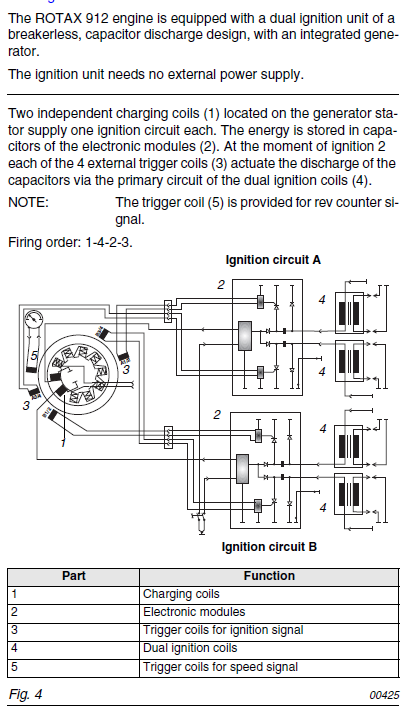
self-energised CDI, power is only required for the soft-start modules (ignition retard during cranking):

-
Some of this data is out-of-date. No one is using the Hirth F33. The most popular engine now is the SE-33, a converted industrial V-twin, delivering about 33hp (a 35hp tuned version is also available). People with need for more power are using the 50hp Hirth F-23. The LSA version from Skycraft never eventuated. There are UK SSDR and German 120kg Klasse compliant versions, some European countries accept the factory-built versions while most other countries are amateur-built from the basic kit (plans, wing, fin & elevator spars) up to 51% kits. SD-1 Minisport brochure.pdf
-
Finally, a (working) see-through carburettor.
pluessy replied to Garfly's topic in AUS/NZ General Discussion
It was mainly on the rotary engines (Gnome Monosoupape), they had no variable throttle valve, only minimal control on the valves and cutting the ignition either all or some cylinders. This resulted in the typical engine noise of engine off - engine on when coming in to land (same while starting up/idling/taxiing). https://en.wikipedia.org/wiki/Gnome_Monosoupape -
Finally, a (working) see-through carburettor.
pluessy replied to Garfly's topic in AUS/NZ General Discussion
The piston & diaphragm don't move unless the throttle has moved or the engine rpm changed. The piston has a very close fit with the guide tube and that captured volume acts as a damper. The passage of the vacuum port to lift the piston is also very small to reduce or just about eliminate the pressure fluctuations and piston movements. SU and Stromberg CV carbys have an oil-filled guide tube acting as a damper, mainly to reduce the movement when opening the throttle (lack of oil is noticeable by a flat spot when quickly opeing the throttle). -
I met Helmut (the owner) a 5-6 years ago when I was looking at the Terrier. I didn't like the way you had to climb over the gear leg and squeeze through the door to get into the seat. At that time, he was talking about out-sourcing the fibreglass work to China. He still had all the moulds for the components at his shed/factory. Not sure what happened since then.
-
My Tecnam has a very small overflow bottle (200ml) and I get a 10-15mm level difference between summer and winter (engine at ambient, temp around 20deg different). Very important to know your cold (ambient) level. Older 912s don't have the "window" so if in doubt, you need to remove the radiator cap to ensure the coolant level is at the neck. The fluctuating gauge reading could indicate an air lock/bubble, faulty wiring or sensors usually result in fast movements of the gauge. Being an EMS, that will depend on the dampening factors.
-
Lowering Class E between Melbourne and Cairns
pluessy replied to Bosi72's topic in AUS/NZ General Discussion
Thought the same. They really hit hard on the "where is the justification" which is my main gripe. No data at all from ASA to justify any change at this stage. The survey from RA-Aus might have shown them where our position is and they have repsonded to ASA accordingly. -
It depends how you value the 3% of lost power. If it is non-measurable in flight performance: no. If it is making a difference, maybe yes.
-
Lowering Class E between Melbourne and Cairns
pluessy replied to Bosi72's topic in AUS/NZ General Discussion
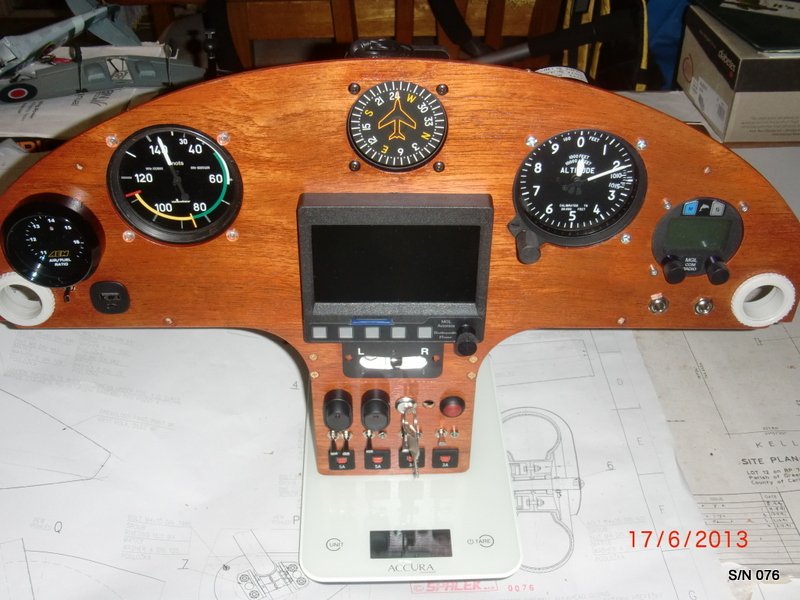
With all of this talk about getting a transponder to be able to use class E, what about some small aircraft (single seaters) with very limited panel space! I will not be able to fit a transponder in my panel/cockpit that is reachable in flight. And that is the incomplete panel, still need the fuel level tube and a few switches installed. I will have to crawl around the Atherton Tableland like in the old days with the limit of 500'!