skippydiesel
-
Posts
7,545 -
Joined
-
Last visited
-
Days Won
73
Content Type
Profiles
Forums
Gallery
Downloads
Blogs
Events
Store
Aircraft
Resources
Tutorials
Articles
Classifieds
Movies
Books
Community Map
Quizzes
Videos Directory
Everything posted by skippydiesel
-
CHANGES TO RAAUS MEMBERSHIP TERMS & CONDITIONS
skippydiesel replied to jackc's topic in AUS/NZ General Discussion
Dear Turbo, I do not follow your, I think its supposed to be a , rebuttal of my argument - That the Australian (British) adversarial system of addressing claims for injury/death is fundamentally flawed. No matter the origin, good intention, of this system, it has come to serve the legal/insurance industry, not we the people😈 -
CHANGES TO RAAUS MEMBERSHIP TERMS & CONDITIONS
skippydiesel replied to jackc's topic in AUS/NZ General Discussion
"..........is based on a Scottish precedent and has nothing to do with the USA. " Here is me thinking British - Scottish ?? okay if you say so / bit of a divided hair - I never suggested it was the US - read ! "Government pays for injury reserved for motor vehicle actions" - News to me! So nothing to do with insurance companies/policies, compulsory third party insurance ?? "...another where we have to pay for harming someone if we breach our duty of care. " - how is this even vaguely relevant?. Those that deliberatly breach their duty of care, a death/injury results, should be subject to criminal proceeding, another matter entirely. My argument is, where claims of injury/loss are being heard, the system of adversarial law (inherited from the British) is fundamentally flawed. It favours the rich and powerful, by so doing, disadvantages those without deep pockets & influence. Further it requires that there be a person/organisation at fault - if no fault is found, the claimant gets nothing, no matter the severity of the injury. The Government won't change this system, to something more equitable/just, without pressure from us. Personal injury/public liability lawyers, that operate in this septic pit of greed are , with good reason, commonly referred to as "ambulance chasers" . It is they and their linked insurance industry, that promotes (fear mongering) the need for all levels of society / organisations to take out ever higher public liability insurance premiums. It's Governments failure that they flourish.😈 -
CHANGES TO RAAUS MEMBERSHIP TERMS & CONDITIONS
skippydiesel replied to jackc's topic in AUS/NZ General Discussion
It is we, the Australian proletariat, who have accepted this adversarial system, without much more than a whinge now & again. In most instances, assistance/compensation for an injury, the injured party must demonstrate, in a court of law, that someone is guilty of failing to ensure their safety. There is virtually nil no fault compensation awards made in Australia. This system rewards/serves the ambulance chasing legal profession & insurance companies - not us. Its a legal rort that should have been changed decades ago but we don't make sufficient fuss to attract the attention of the law makers/politicians, so nothing changes. Sure the USA may excel at this sort of justice for $$$ but its our system thats being manipulated to enrich the insurance companies & legal vulture's.😈 -
Never slipped an EPIC however your third hand advice seems suspect. My limited understanding of a slip is the deliberate application of crossed controls, creating drag (in a side slip there may also be a contribution from the fuselage being presented sort of sideways, to the air flow) Hence my earlier comment on rudder effeteness (power) having a significant impute to how easy it will be to achieve a "good" slip. Landings, in a cross wind may (depending on technique) involve a side slip into wind. My Zephyr had a very powerful rudder - I could do really dramatic slips. My Sonex has a pissy little rudder and slips are bordering on non events. When I was taught slips, in a Cessna 172, they were almost as much fun as the Zephyr.😈
-
"A mate of mine found a nut missing on his 912 ULS Rotax (No 1 Cylinder head) still ran like normal" All very vague - from where exactly, on the engine,came the nut (s)???? FYI: If these are cylinder head nuts there is a specified loosening/tightening/turn degrees required. Refer to Heavy Maintenance Manual😈
-
Correctly executed slips do not increase air speed. I have heard that some aircraft advise against side slips. Some aircraft are easier to slip than others - good rudder authority may have a lot to do with this.😈
-
Not suggestion you do and if building a riveted, in whole or part, aircraft I wouldn't. The option is there & should not be discounted for the sake of "They need to be aviation grade ".😈
-
What I wrote earlier- "Much will depend on where used" Just because an item (pop rivet) is not branded aircraft/certified/ or some such term, does not mean it can not be used with care & consideration in an aircraft build. Personally I would not use a general purpose pop rivet in any structural/stressed part of an aircarft - I would be happy to use such in many other non critical areas eg a bracket for a 12V outlet.😈
-
Painting the beast
skippydiesel replied to Marty_d's topic in Aircraft Building and Design Discussion
Iso (about 75%) is the stuff they wipe your arm with before giving you a jab. The yanks use it (100%) a lot for pre painting prep. Its supposed to be less toxic than most every other thinner/degreaser/Acetone/ etc that you might use to clean a surface. I found out about it when I started using the Steward Paint System (US) I use it quit a lot. These days mostly for removing belly oil & petrol stains. You can make a great glass cleaner with it - from memory, dilute ,with H20, to 75% to make a litre, add a few drops of concentrated washing up fluid, shake well and dispense with a spray bottle. In Au you can a pay an arm & leg for a small (300ml) container from Bunnings Aerospace or go down to a wholesale cleaning supply shop and purchase 5 L for about the same price.😈 -
Painting the beast
skippydiesel replied to Marty_d's topic in Aircraft Building and Design Discussion
Did you try isopropanol ?😈 -
CHANGES TO RAAUS MEMBERSHIP TERMS & CONDITIONS
skippydiesel replied to jackc's topic in AUS/NZ General Discussion
You can sue away however wining a case will depend on culpability. ie it would have to shown that in some way RAA (or its representative) failed in its duty of care or erred in some other way that resulted in or contributed too the death/injury of the pilot. This will never be an easy gig, as every RAA pilot has acknowledged the inherent risks in flying, thereby casting doubt on any claim that involves decisions made or not by the pilot. Student pilots potentially have a greater chance in this, as they are by definition, not responsible for themselves or the aircraft. -
I don't have problem with your rivet display Moenybox BUT they are not aviation grade eg Probably little functional difference. Much will depend on where used😈
-
Your desire to have approval from the authorities, should be tempered by the knowledge of their need to avoided any level of risk to themselves ie refuse any /all request where there may be the perception of immediate/ future accountability. In line with the above, is the oft stated; "It's easier to ask for forgiveness than it is to get permission". Bureaucrats, at all levels, try to avoid making decisions, especially those that they may have to account for at some time in the future.😈
-
As several said - CASA not intersted in private strips. For the most part, nor are Councils (as long as not within town boundary or neighbours complain).😈
-
Painting the beast
skippydiesel replied to Marty_d's topic in Aircraft Building and Design Discussion
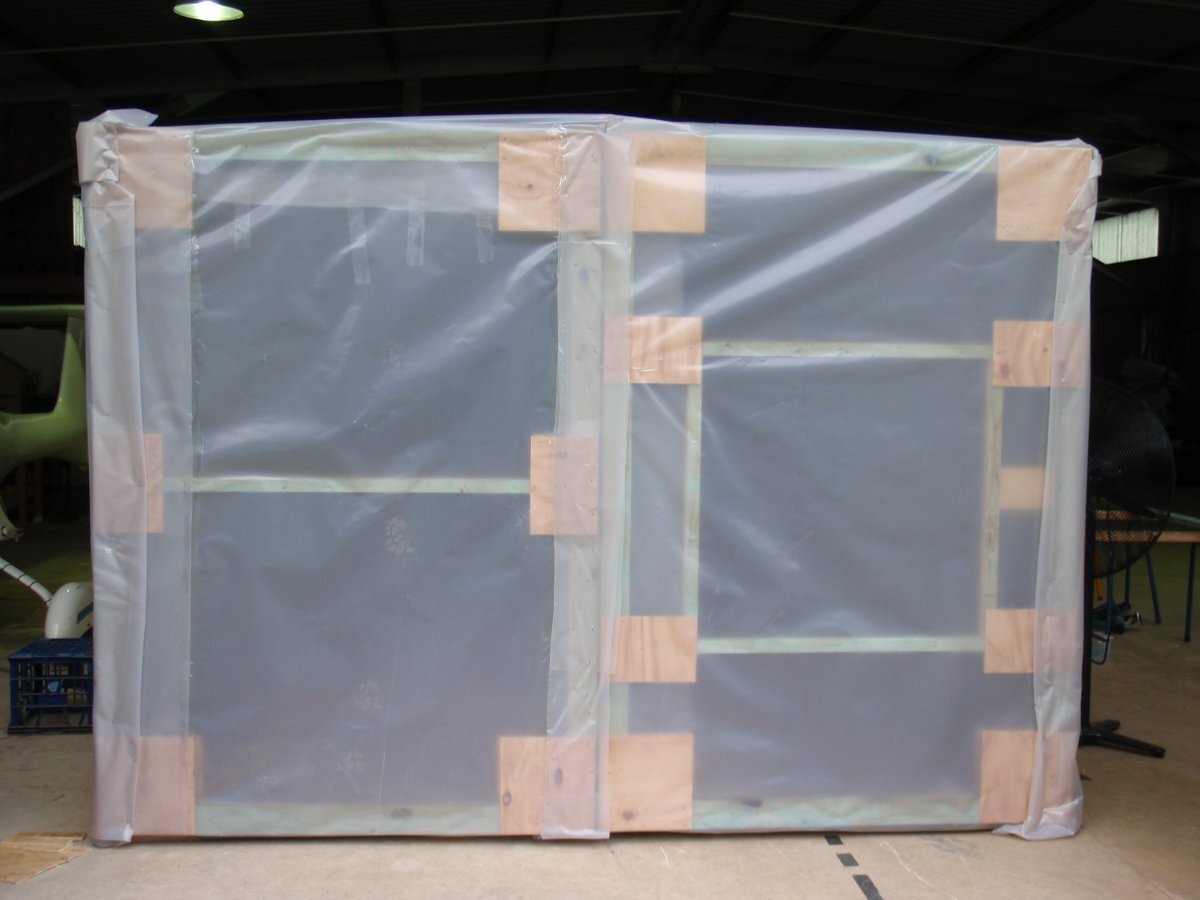
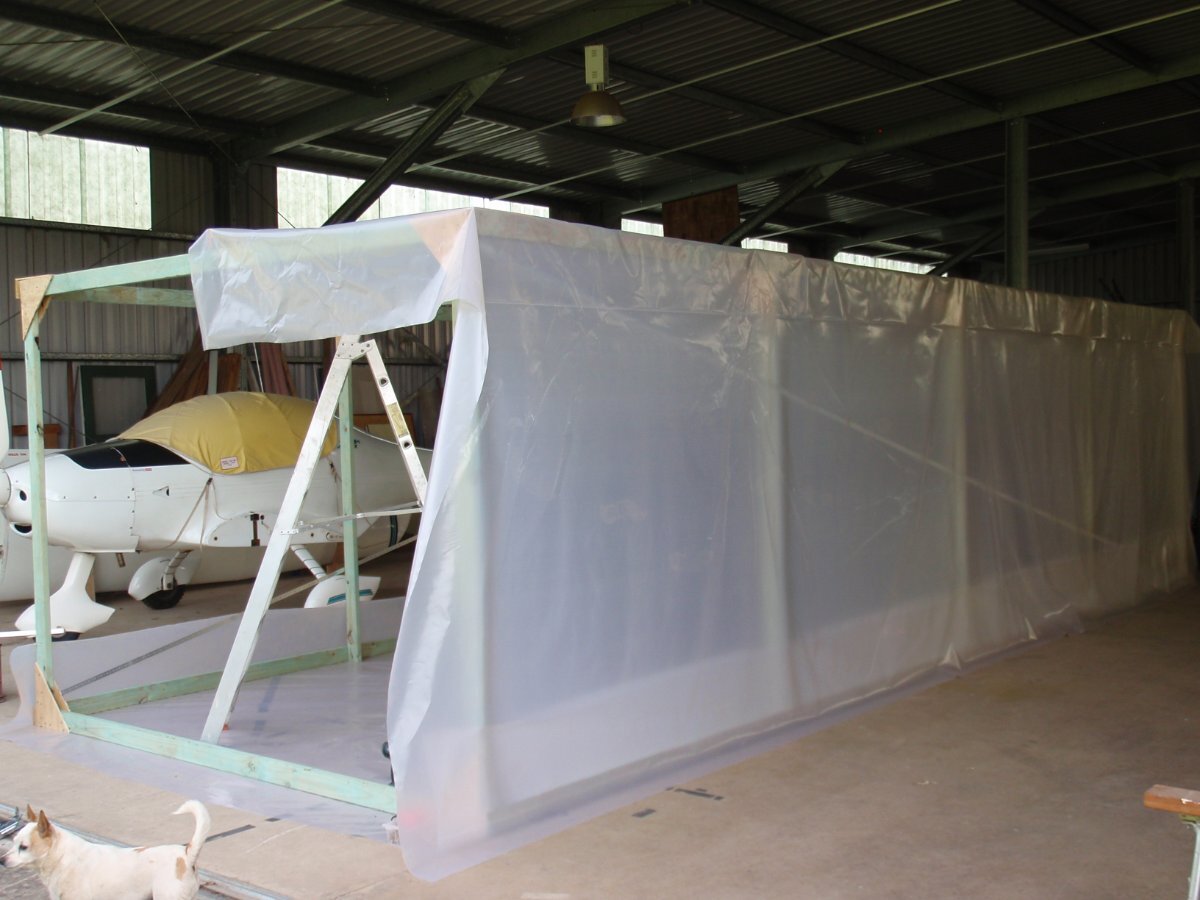
Probably should have made it .5 M wider & higher - bit squeezy when fuselage being painted. Used the Stewart System for paint & fabric - worked a treat. Most materials recycled for other projects. 😈 -
Painting the beast
skippydiesel replied to Marty_d's topic in Aircraft Building and Design Discussion

-
Painting the beast
skippydiesel replied to Marty_d's topic in Aircraft Building and Design Discussion
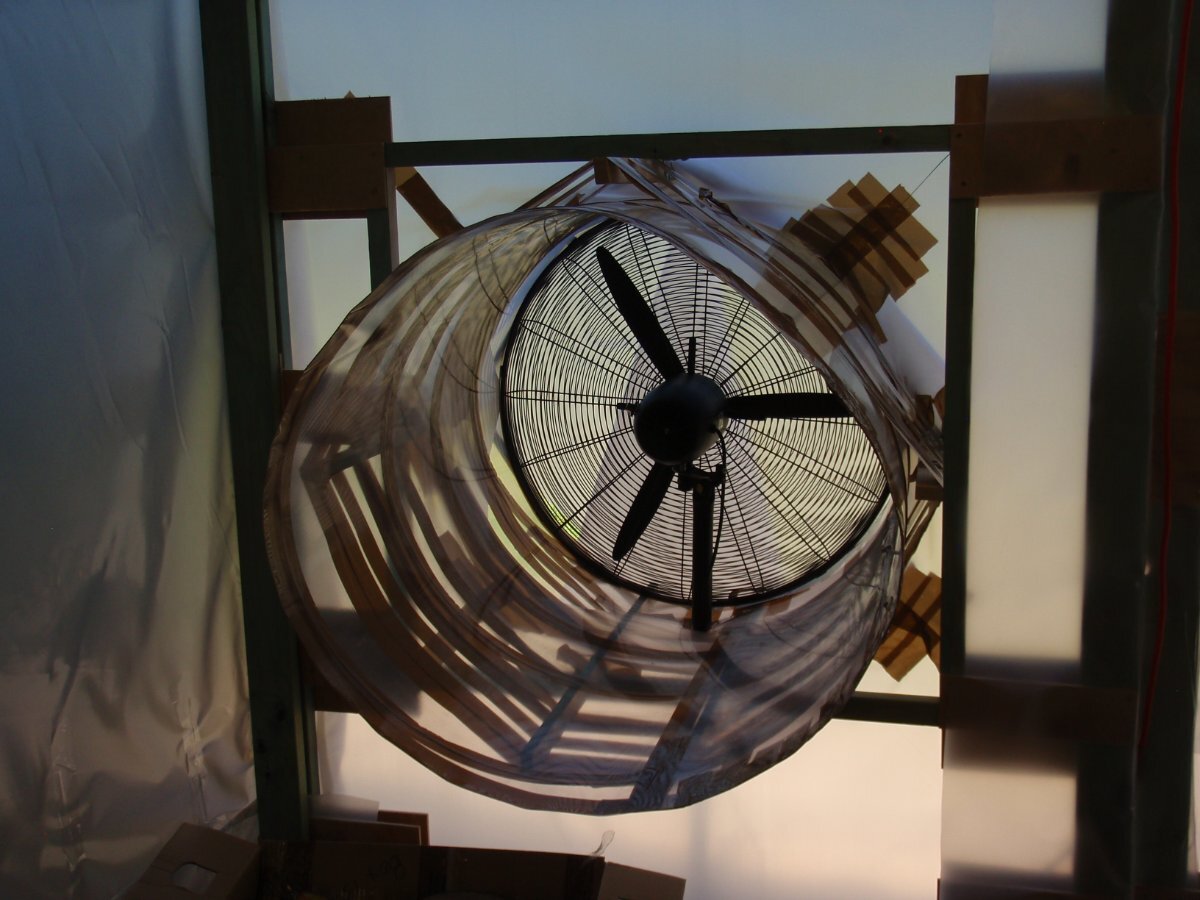
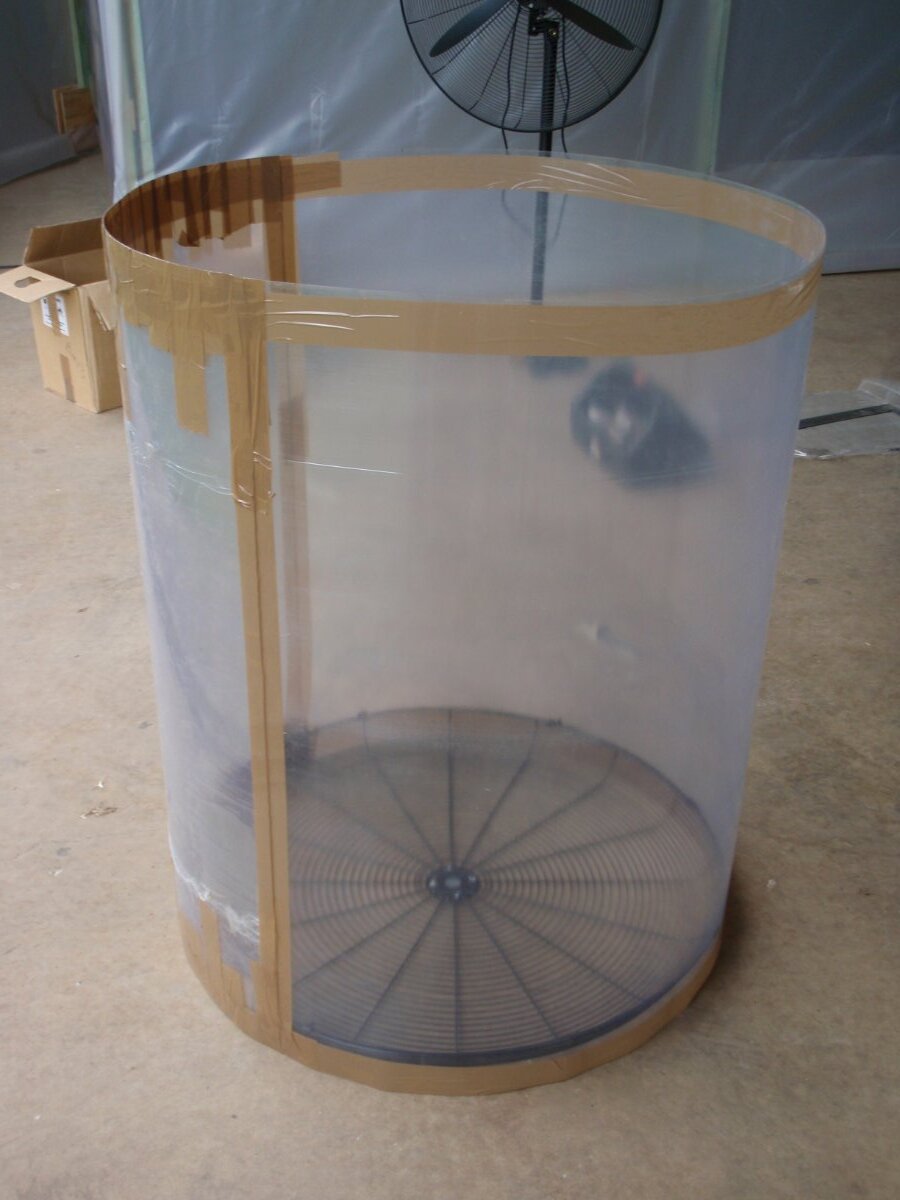
Extensive use of packing tape. Double doors for large component entry exit. Fan & cowling went into small square on right hand door.
-
Painting the beast
skippydiesel replied to Marty_d's topic in Aircraft Building and Design Discussion
-
Painting the beast
skippydiesel replied to Marty_d's topic in Aircraft Building and Design Discussion
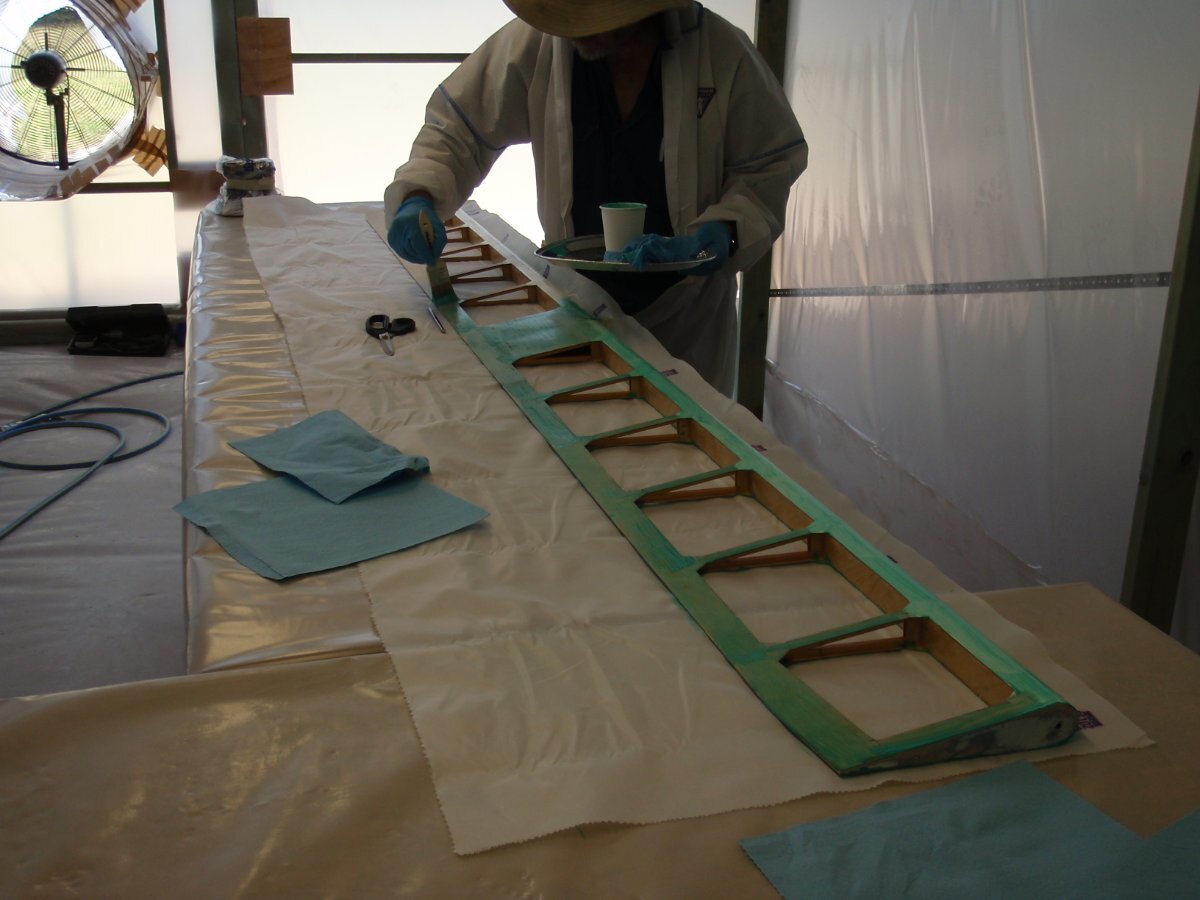
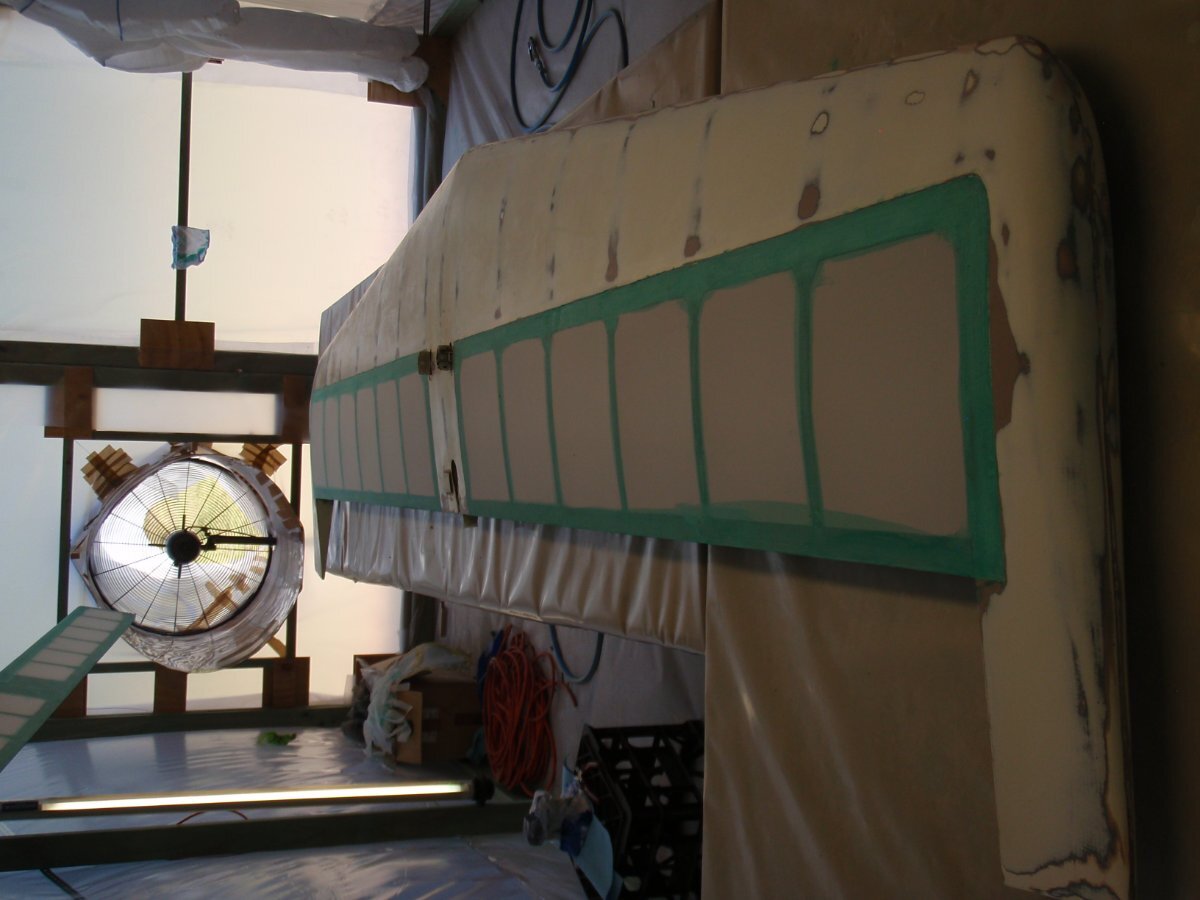
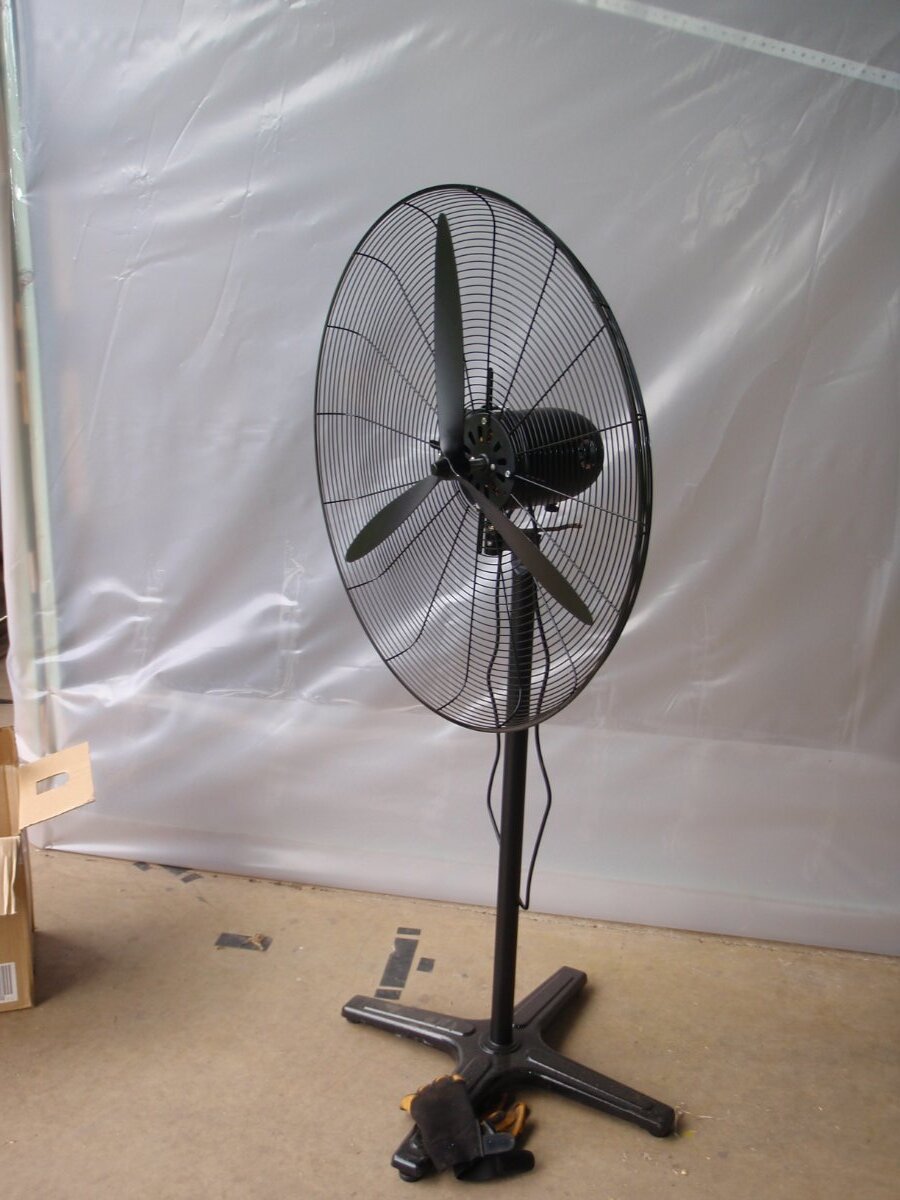
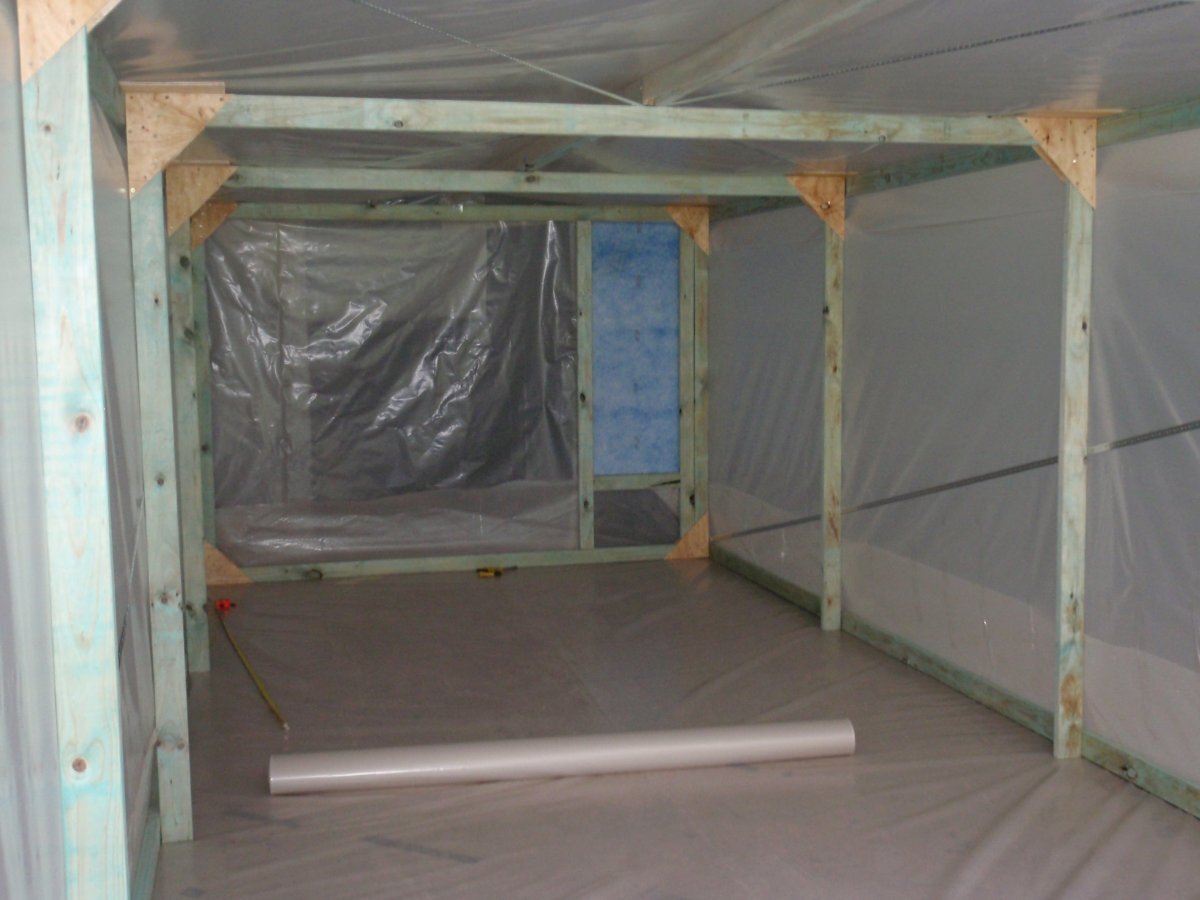
My spray booth under construction: Cheap timber, builders plastic wrapped, cheap pedestal fan (extracting) at one end and air-conditioning filter (blue stuff) at the other. Preloved window rattler reverse cycle air conditioner in centre to warm booth for paint curing. Doubled the floor plastic to hold water. Pr loved Fluro's hung all around. Whole system driven by 3.5Kva Honda generator (no 240V power)
-
Batteries with a BMS - Yes or No?
skippydiesel replied to BirdDog's topic in Aircraft General Discussion
To determine this a weight & balance assessment should be done. If the aircraft was designed/fitted out with a heavy lead acid battery, replacing it with lightweight LifePo4 may have a dramatic effect on W&B. This is something that should not be guessed at, taken lightly - proper measurement is the way to go. If space allowed, extra LifePo4 could be fitted & may come close to the weight of a single lead acid - need to check out the relative specifications.- example; Earth X, ETX 900, LifePo4, 400 CCA 2.2kg SSB Motorcycle AGM battery, 405 CCA, 6.72kg 😈 -
First jet lands at Western Sydney Airport
skippydiesel replied to red750's topic in AUS/NZ General Discussion
I would go one step further ; There seems to be an overuse/reliance on aerial bombing. We live on the eastern side of Burragorang Lake/Reservoir - to the west, thousandths of square kilometers of bush in very rugged terrain. In our 30+ years we have seen two major bush fires, numerous minor ones. The first bush fire came within meters of our property. The deep heavily vegetate gully running N-S to our immediate West was allowed to burn out (fuel reduction) - the correct management. Dont recall very much aerial activity. Years later, we had the second similar event - this time massive aerial action - way better than any airshow. Featured choppers, a Herc (doing realy crazy stunts) and sundry jets of varying sizes all at very low level,tooling around like aerobatic aircraft. All the action didnt seem to speed control any better/faster than the first event. After a day or so things calmed down, except for the aforementioned gully. Days & days of helicopter bombing ensued - for what???? At best they reduced the effectiveness of the hazard/fuel reduction at huge cost to the taxpayer. In my view the ridiculous gully exercise was only done because the aerial resources were available, not because a sensible fire management decision was made.😈 -
Batteries with a BMS - Yes or No?
skippydiesel replied to BirdDog's topic in Aircraft General Discussion
Your Rotax ignition is independent of your battery circuit ie a battery/charge system failure will not make you eat dirt. Further , the cautious aviator will have fitted a back up battery system, to keep the avionics functioning for a significant period after main system has failed.😈 -
First jet lands at Western Sydney Airport
skippydiesel replied to red750's topic in AUS/NZ General Discussion
There would be very few fires put out by aerial bombers alone - still take a lot of ground forces, no matter what the terrain. In fact if too rugged for ground attack, they let it burn to where ground forces can get access.😈 -
Wow! Thats one gigantic coolant expansion bottle - if thats what it is. Got to be x 3 of my Rotax unit. What does the down pointing SCAT tube do?😈