skippydiesel
-
Posts
8,276 -
Joined
-
Last visited
-
Days Won
84
Content Type
Profiles
Forums
Gallery
Downloads
Blogs
Events
Store
Aircraft
Resources
Tutorials
Articles
Classifieds
Movies
Books
Community Map
Quizzes
Videos Directory
Everything posted by skippydiesel
-
Repairing Transponder Antenna
skippydiesel replied to skippydiesel's topic in Instruments, Radios and Electronics
Maaate! I am a total electronics cluts but even I know that the basic components of most (meaning not all) aircraft antenna are ? For your future reference: A metal rod/wire. Length adjusted to give the optimum performance for a given frequency band A coaxial cable connector, to facilitate a good electrical connection between rod & inner wire and the outer conductor (shielding) of the coax cable, from the transceiver Some sort of secure mounting system, that includes the ability to make a good earth return Other than some, usually non contributing to efficacy refinements (paint/cover/etc), that is it - couldn't be more simple. Radio buffs & pilots have been making their own antenna, since radio was invented. What you purchase from a supplier/manufacturer is the esthetic (sometimes more streamlined) version of the above. 😈 -
ERSA already has entries, under the heading REMARKS for airport fees & other information. I suggest that the REMARKS information is of "operational" interest/importance to (private) pilots wishing to use that airport. The problem is not that airport charging for access has not signaled this in ERSA, its that there is a woeful lack of detail ie what the fee schedule is. While a one off (single landing), undisclosed $10, fee may not be too much of a shock, multiple landings on a trip will soon add up to a significant component of your flight budget. Add to this, the the shocking undisclosed $60 fee to access Lakes Entrance (BrendAn above), no matter how wealthy you are, you might start to feel a tad aggrieved, at not knowing before hand of the cost. Its a fundamental right, legal and ethical, that you have the choice in how much you spend - not disclosing the fee before the service is delivered, removes that choice.😈
-
Repairing Transponder Antenna
skippydiesel replied to skippydiesel's topic in Instruments, Radios and Electronics
Are you speaking from experince? An antenna that is made or repaired, to the same dimensional, material & connection standards, as the original, will perform just as well. 😈 -
I think you miss the point. Australia has an official, authoritative, information source for pilots, its called the En Route Supplement Australia (ERSA). ALL airport data should be in ERSA, including the airport fee schedule (landing/movement/parking/etc). A pilot planning an "away" trip should not need to search for the airport fees - they should be in the ERSA data for the airport(s) he/she wish to access, on their trip - End of story. If its in ERSA, the information it can be relied on. Alternative sources do not carry the authority of ERSA . 😈
-
I have writen to Council owners of Dalby & Armidale, regarding their failure to post the their respective airport fees in ERSA - I await their responses with interest. I did a very brief, random, search through ERSA, to get an idea of what airports are posting Landing Fees - not many. A few give comprehensive/unambiguous information. Most have a variation of; AD Charges; Refer to web site. or AD Charges: All aircraft. 😈
-
Repairing Transponder Antenna
skippydiesel replied to skippydiesel's topic in Instruments, Radios and Electronics
Thanks Onetrack - Expensive mistake; About 12 months ago, I saw evidence of wombat using the underside of my Sonex as a "rubbing post". No damage, just mud a hair. Errected an electric fence around aircraft. Did the job - no more nocturnal visits. Having to rotate batteries, remove/ replace fence "gate" was a pain- in- the- rectum. After 12 months, I thought that the local wombat(s) had been trained to stay away from the Sonex but Nooooo! Such is life. 😈 -
Repairing Transponder Antenna
skippydiesel replied to skippydiesel's topic in Instruments, Radios and Electronics
They all work. I had this Rod and Ball type on my last aircraft - poxy things don't put up with careless overenthusiastic aircraft cleaning. After the second snap, made my own. Easy to do. BNC Type Connector bases available from JayCar ( & others) for $1-$8, depending on type selected. Short length of copper wire (same length as original R & B). Some heat shrink. You have a functioning flexible Transponder antenna. Just not a "flash" looking as a Blade or R&B type. 😈 -
Repairing Transponder Antenna
skippydiesel replied to skippydiesel's topic in Instruments, Radios and Electronics
Thanks Kiwi - Way ahead of you. Just don't like scrapping things that may be repairable.😈 -
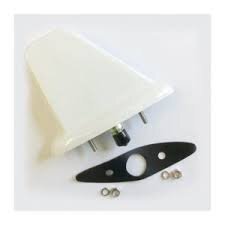
My blade type transponder antenna has suffer a mishap. A wombat (due to space limitations can only have been a wombat) has used the antenna as a convenient scratching post In the process, neatly separated the composite blade from its base. Blade filled with some sort of tough glassy looking material, with very thin antenna wire in centre. Need to remove glassy material to replace wire antenna. Looks like an easy repair, however glassy material resists drilling. Added pressure resulted in drill bit departing side of fin - not good. Replacement, with same unit, north of $400, so well worth repairing. Hoping that someone has been down this track before me and knows how to remove glassy material, without further damage to blade casing. All constructive suggestions welcome😈

-
"Private Twin $60 Under 5700 kg" ? Cri Cri? What constitutes an "Ultra Lights & 2 seater singles" ? Doesn't make a lot of sense, other than they dont want your business.😈
-
Anything over $10 for a 600 kg Max TO weight aircraft, is daylight robbery - perhaps they want you gone😈
-
Still not getting it. Have most of /similar to, the YARM inset you show but no Landing Fees😈
-
Thruster 88 "The correct landing fee information can be easily found on the Armidale council website. " Thanks for that BUT why not in the airman's airfield information bible, ERSA. No one should have to search other document/locating/publication's/etc for the cost of receiving a service (access to an airfield)😈
-
I suggest the question/responsibility lies with the service/good provider (airport owner)- did they make a reasonable effort to provide (post) the information in a readily accessible way??? 😈
-
Interesting - I have never "selected documents" I get all this sort of information from NAIPS/ERSA. There are no actual fees posted for Armidale - just words to the effect that fees will be charged. Please post a, for computer dummies (me), step by step, access to the information in OzRunways for Armidale. I would also make the point that not all private pilots use OzRunways - trading information/conditions should be posted where its most readily accessible to all - CASE CONTINUES! 😈
-
"If it is not published somewhere easy to access then sending an email to the manager of the airport you intend to land at say a week before you intend to land is a reasonable amount of time ahead to expect an transparent cost. If no response then refuse to pay any demand after." As previously mentioned - Contact a Council, for information that should be readily available, can take from, many minutes (if extremely lucky) to several weeks, to get an informed answer. The reality is you get past from one person to another, usually ending with a call back offer (that can take days to weeks to materialise) or delaying requests to put your enquiry in writing (I ask for a contact name to address the email to - more eqivacation). The few Council Fee & Charges web pages, that I have accessed, are so complex that it may take quite some time, just to find the aviation section, which then requires deciphering (not always successful). Your suggestion is fine for commercial aviation activities, that may be repeated over a significant period but not practical for most private/recreational pilots conducting "one off" trips, often at short notice due to weather & other considerations😈
-
AI is incorrect - no surprise! I was charged $17/landing Dalby $10.51/landing Neither posted their fee schedule in ERSA 😈
-
The impractical suggestion, to contact each and every Council, that does post its landing fees, has been addressed. If what I said, does not answer your statement, please repeat it.😈
-
As aviation matters are usually considered to be within Federal jurisdiction , this may be a more consistent/productive direction to explore. As we all know the State system in Au is a drag on our legal and economic system - well past time to get rid of it.😈
-
From the ACC; Price displays Businesses must communicate clear and accurate prices prior to consumers booking, ordering or purchasing. They must not mislead consumers about their prices. There are specific laws about how businesses must display their prices. Businesses must display a total price that includes taxes, duties and all unavoidable or pre-selected extra fees. If a business charges a surcharge for card payment, weekends or public holidays, it must follow the rules about displaying the surcharge. If more than one price is displayed for an item, the business must charge the lowest price, or stop selling the item until the price is corrected.
-
Agreed! There may be a difference here - Coles & Woolies would seem to have used a process intended to decisive customers, into believing they were getting a product at a lower price. The airport owner are not informing the customer of a price at all. Is this deceptive or just negligent? I guess the outcome is just the same, the pilot/customer gets a demand for payment that could be a lot more than expected. More or less, is the customer/pilot obliged to pay a fee that he/she did not contract for??😈
-
I am appalled by this sort of elitist sentiment. What does it matter if its $10 or $10,000? The principal that, you as the customer should know what you are up for BEFORE using the service is I believe, morally and legally required. Next time you go on a multi stage/landing trip (thats if you ever do)- should you not have some idea of what the cumulative landing/parking/overnight (even using certain taxi ways) fees may be?😈
-
Thanks Onetrack - I was hoping for some informed legal comment on what I understand is the responsibility of a service/good provider to a propective customer. Not much point in me firing off letters to Councils, if I am wrong in my understanding. 😈
-
When did you last try to contact a Council for airport fees? Unless you strike lucky, it will take anything from a few days to weeks for a response. Further, I believe the law requires fees to be "posted" meaning they must be easily accessible to protective customers BEFORE using the good/service. 😈
-
What do you feel about offering to/ or being asked to pay a fee, that you do not know what the amount will be, until you receive the bill/invoice???😈