


old man emu
-
Posts
5,297 -
Joined
-
Last visited
-
Days Won
78
Content Type
Profiles
Forums
Gallery
Downloads
Blogs
Events
Store
Aircraft
Resources
Tutorials
Articles
Classifieds
Movies
Books
Community Map
Quizzes
Videos Directory
Posts posted by old man emu
-
-
1 hour ago, Thruster88 said:
3 is wrong. Airspeed is a function of pitch and power or pitch only in a glider. Wind does not have anything to do with airspeed.
Sit in your plane on the ground with it facing into wind and tell me that the ASI doesn't move. If I'm wrong, why do people use tie-downs?
1 hour ago, M61A1 said:As are points 1 and 2....It's about AoA, not speed.
Point 1. So if I put a plane on trestles so that the wing is at an angle of, say 10 degrees to the horizontal, and there is no wind, then the plane will fly off the trestles?
Point 2. The speed of the air relative to the surface of the wing determines the amount of Lift produced.
Pilot operating handbooks (POH) or generic flight manuals describe stalling in terms of airspeed. This is because all aircraft are equipped with an airspeed indicator, but fewer aircraft have an angle of attack indicator. An aircraft's stalling speed is published by the manufacturer, but the stalling angle of attack is not published. As speed reduces, angle of attack has to increase to keep lift constant until the critical angle is reached. The airspeed at which this angle is reached is the (1g, unaccelerated) stalling speed of the aircraft in that particular configuration
The problem we are having in this discussion is to do with semantics and relativity. Notice the highlighted words in this paragraph:
Stalls depend only on angle of attack, not airspeed. However, the slower an aircraft flies, the greater the angle of attack it needs to produce lift equal to the aircraft's weight. As the speed decreases further, at some point this angle will be equal to the critical (stall) angle of attack. This speed is called the "stall speed".
Now those words are what is causing the problem. Is the "slower" referring to speed relative to the ground it is flying over, or it is, as I have been saying, the speed of the air relative to the wing, as measured by an ASI?
-
The discussion has been plagued by ifs, buts and maybe's. Before getting into those dark and confusing areas, we must first understand things in very uncomplicated ways.
Therefore the parameters are:
1. The aircraft has a known airspeed at which the wing stalls.
2. Stall speed is a measure of the speed of the air relative to the surface of the wing.
3. The speed of the air, relative to the wing is obtained from three independent sources: engine thrust and wind speed, and gravity (which we will ignore)
4. The speed of the air, relative to the wing is the vector sum of the velocity of the wing, and the velocity of the air speed.
5. It is assumed for the discussion that direction of the vector of the velocity of the wing is parallel to the runway heading, therefore its magnitude is not reduced by sideways movement from the runway heading.
6. For the discussion, the velocity (speed and direction) of the wind remains constant - no gusting or direction change.
7. The vector of the wind speed is the vector sum of its headwind component and its crosswind component relative to the runway heading.
If these parameters are applied, then we find that:
a. The contribution of the wind speed to the speed of the air over the wing is reduced as the angle of the wind relative to the runway heading is increased.
b. In order to make up for the loss of that contribution to wind speed, Thrust must be increased to a level above that required to produce an airflow over the wings that is greater than the stalling airspeed.
c. The increase in Thrust may not register as an increase in Indicated airspeed
In relation to the influence of gravity - this is what gliders use in lieu of engine thrust, or what is used in dead-stick landings for powered aircraft.
-
 1
1
-
-
31 minutes ago, Admin said:
end up finishing at the Mediterranean Sea
I'm glad you proof-read this post. "in" in place of "at" would be disastrous.
I have simple tastes. I'd love to do a Victor 1, or start with a Victor 1 at Barrenjoey and fly south along the coast to Moruya.
Doing Land's End to John o"Groats would be fun, as would Chicago to the east in Autumn.
-
 2
2
-
-
When I was learning, I couldn't get the gist of X-wind landings, so the CFI took me out in a C-150.
His said to me, "Can you drive a car? Then use the rudder to keep the aircraft flying along the centreline, and steer the plane like you steer a car." "Steering" is a method to keep the windward wing lower than the leeward wing. At flare, it's just a matter of centring the rudder while keeping the windward wing down with aileron. Land on the windward main wheel and slowly almost centre the ailerons as speed comes off so that the leeward main contacts the ground. When the leeward wheel touches, keep the aileron input going so that the windward wing doesn't produce as much lift as the leeward one. Then centre the elevators to drop the nose wheel. Using this technique, I nailed my X-winds after that.
Obviously the C-150 has a yoke aileron control which makes the mental and muscle memory knowledge transition from car to plane a lot easier than if the plane has a stick.
-
1
-
-
1 hour ago, Admin said:
Thanks for letting me know...Is it now in dd/mm/yyyy format for you now?
Yes, it seems to have changed it to the correct format. Thanks
-
 1
1
-
-
Please, can the date be displayed in the Australian way dd/mm/yyyy, instead of the American way?
-
On 9/23/2020 at 7:55 PM, RFguy said:
Crosswind landing techniques are a big topic... I don't profess to know much at all -but there are some basic physics at work.
Yes, it's a big topic. In this thread there have been posts relating to the sections: Why and How, and Who.
My contribution (?) was aimed at the Why, and the part that wind direction plays in the technique of landing (taking off, too).
-
7 hours ago, andy310r said:
FWIW the rule-of-thumb I use for mentally calculating x-wind components is the clock model...
Wind 15 degrees off runway heading = quarter crosswind component (picture a minute-hand at 15 mins: quarter of an hour) (e.g. 12 knots, 15 degrees off = 3 knot component)
30 degrees off = half (e.g. 12 knots, 30 degrees off = 6 knot component)
45 degrees off = three quarters (e.g. 12 knots, 45 degrees off = 9 knot component)
60 degrees off = all of it (12 knots across).
Which is pretty much what I said earlier. I would not argue with that means of remembering things. The values in this table come from looking up the value of sine for the angles, and are more mathematically accurate, but the Rule of Thumb is acceptable.

People have been having difficulty in understanding what I mean by "eroding the headwind component" Basically, if a wind of # kts is blowing straight down the runway, the headwind component is 100% of # kts. As the angle of the wind to the centreline of the runway increases, the headwind component reduces by a factor related to the cosine of the angle.
I suggest an exercise with plotter, ruler, pencil and paper. Has anyone even tried to do that exercise. If you do, you will find that " eroding the headwind component" becomes crystal clear.
-
1
-
-
40 minutes ago, Mike Gearon said:
I thought the higher speed was more related to extra command of the control surfaces.
You are not wrong, but you are getting into a completely different area with that.
Consider this. Let's say our aircraft stalls at 35 kts. In Nil Wind conditions, the ground speed at stall is 35 kts. If we have a 10 kt wind blowing directly down the centreline, the airspeed is still 35 kts, but the wind means that we only have to have enough power to get the airframe moving at a ground speed of (35 - 10 = 25) kts. If the wind is a crosswind, coming from an angle to the centreline, then that 10 kts is going to be reduced. Let' say that the the wind is coming from 30 degrees off the centreline. A 10 kt wind at 30 degrees will provide a headwind component of 5 kts. Ground speed will be (35 - 5 =30) kts, so you have to add power to get the airframe moving faster.
In relation to command of control surfaces, the instantaneous wind speed can vary greatly, so it is safest to approach the landing at a higher speed than for a still wind landing in order to have a margin of safety if the wind speed suddenly drops. By the same token, you have to be aware that the wind can also gust at an inappropriate moment.
-
23 minutes ago, M61A1 said:
How do gliders manage without an engine?
Let a glider pilot tell us. Is their approach speed increased for crosswind landings?
24 minutes ago, M61A1 said:Higher speed for a crosswind landing than still wind because it erodes the (non existent) headwind component?
Non-existent? You don't seem to understand vectors as they apply to a Force. Every Force can be represented by the sum of its vectors.
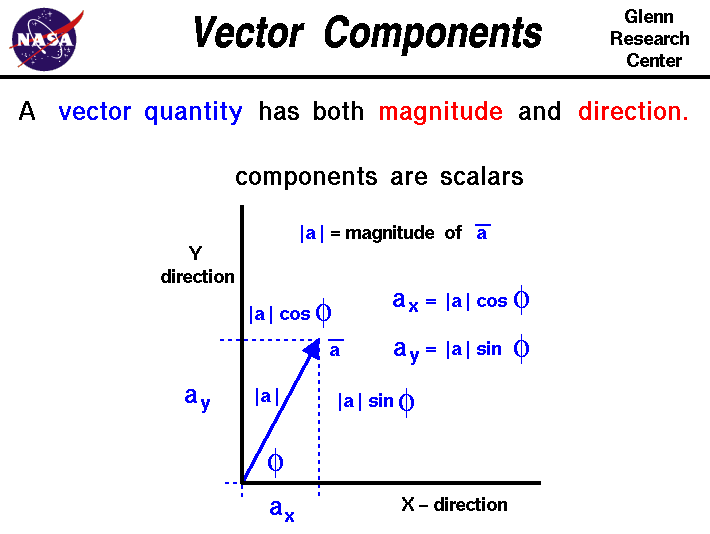
The triangle of vectors for a landing is represented by this diagram
Where the line AC, is the runway heading and the line AB is the wind direction at an angle to runway of BAC. The line BC is the crosswind component.
The magnitude of the wind speed is "c" and the magnitude of the headwind is "b". The magnitude of the crosswind is "a"
If the the angle BAC is zero, then b = c and a=0. No crosswind, and headwind = wind speed.
As the angle BAC increases, and the value of "c" remains constant, the length of "a" (representing the strength of the crosswind component) increases, and the length of "b" (the headwind component) decreases. Try this by drawing a line "b" from Point A. Then draw lines of constant length "c" at various angles between 0 and 90 from Point A. Then draw lines at right angles to line "b" to meet the various end points of line "c".
The diagram is a simplification. In the real world, the length of "b" would be (airspeed - headwind speed), which if represented to scale would be longer than length "c" representing wind speed. Consequently. the angle BCA would not be a right angle. The diagram would look like half a diamond, not half a square.
-
KISS!
Since Tan ranges from a value of zero for a headwind to "infinity for a 90 degree cross wind, it is not a value that can be used as a correction factor when doing these calculations mentally.
Canola? Whatever happened to golden fields of wheat, barley or oats?
Has The Lord's Prayer been changed to "give us this day our daily, gluten-free bread"?
-
4 hours ago, RFguy said:
I think that's simplistic.
It was meant to be simplistic.
I wanted to get people to think of the reasons of why you approach at a higher speed, which you do by using higher RPM than for a still wind landing. We tend to concentrate on the ability of the plane to handle the crosswind component, but forget how the crosswind component erodes the headwind component, leading to an higher ground speed at touchdown.
-
 1
1
-
-
3 hours ago, RFguy said:
210-240 = 30, sine 30 = 0.5, so 30 kts at 210 or 270 will produce 15 kts Xwind on 240
Excellent simplification

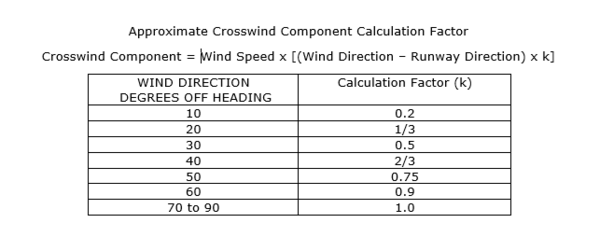
Here's a table of conversion factors that you can use to roughly calculate the crosswind component of a wind blowing from the side of a runway heading. The correction factor has, hopefully be reported in a way that overestimates the actual crosswind. It doesn't matter if the sum (Wind Direction - Runway Direction) gives a negative number, just use the absolute value of the number.
Now we can go into another factor of the effects of a crosswind on aircraft performance - how it reduces the headwind component.
In relation to runway heading, a wind blowing directly down the centreline is at an angle of Zero degrees to the aircraft. The headwind component is given by cosine(degrees) x wind speed. The crosswind component is given by sine(degrees) x wind speed. The value of cosine(0) is 1, and sine(0) is 0. That means that when the wind blows down the centreline of the runway, all of the wind is headwind, with no crosswind. As the angle of the wind goes from 0 to 90 degrees, the value of cosine goes from 1 to 0, meaning there is less and less headwind component.
That means that as the crosswind comes more and more from the side, the aircraft loses the headwind benefit of the wind. That's why you need to keep the Thrust up during a crosswind landing.
-
1
-
1
-
-
It is usual practice when laying out an airfield with set runways, to align the runways with the direction that the wind blows most of the time. In the NSW most main runways are aligned roughly 25/07 or thereabouts. You can check for your own State.
The average hourly wind speed in Sydney does not vary significantly over the course of a year. It keeps within about 0.5 kts of 6.75 kts
https://weatherspark.com/y/144544/Average-Weather-in-Sydney-Australia-Year-Round
Of course there are months when the wind could blow the hide off an elephant, but the direction in those months does not change from the average.
What sort of wind direction and speed would the wind have to produce a crosswind component of 15 kts on a runway heading of 240 degrees, if the seasonal wind direction varied between 210 and 270?
-
It's called the Donald J. Trump Process for fair and equitable elections.
-
1
-
 1
1
-
-
I would have thought that the value for Maximum Crosswind Capability would be a "never exceed" value, like Vne and engine "red line".
The value might have been demonstrated by a highly experienced test pilot, confirming the designer's calculations. However for the average joystick waggler, it is the boundary to a No Go zone. A prudent pilot would look at that figure and set a personal limit maybe 10% lower than the published value.
The whole matter of planting a crosswind landing is determined initially by calculating the crosswind component of the wind, and also the head wind component. It's a worthy exercise to look at the variables, headwind component and corresponding headwind component to see if a landing is indeed possible.
-
1
-
-
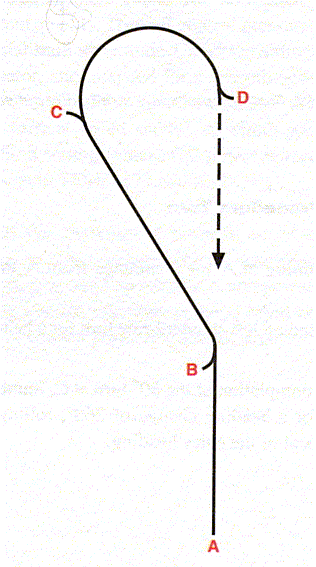
I found this bit very interesting: the first step was to turn left, count a few seconds, then turn back around 270 degrees to the right in order to line up on final. It sounds very much like an informal application of the formal Tear-drop turn for IFR flight:
Teardrop Procedure -
When a teardrop procedure turn is depicted and a course reversal is required, unless otherwise authorized by ATC, this type of procedure must be executed. The teardrop procedure consists of a departure from an IAF on the published outbound course followed by a turn toward and intercepting the inbound course at or prior to the intermediate fix or point. Its purpose is to permit an aircraft to reverse direction and lose considerable altitude within reasonably limited airspace. Where no fix is available to mark the beginning of the intermediate segment, it shall be assumed to commence at a point 10 NM prior to the FAF.
At B, enter a standard-rate turn for 30 degree change of heading. Time one minute from B to C. At C, enter standard-rate turn for a 210 degree change of heading, rolling-out on the reciprocal of the original entry heading. As usual, intercept the inbound course based on the CDI or ADF.
This sort of turn is also used by crop dusters (Go to 2:50 and watch after that)
-
3
-
-
3.2 Competence to carry out work
3.2.1 An individual that has completed the mandatory RAAus L1 or higher training process and has the appropriate qualifications and experience
The keyword in that is "experience". We all know of people in a multitude of fields who have textbook knowledge, but you would not let them do practical application of that knowledge without supervision.
GRAMMAR POLICE
"An individual that has" is incorrectly used in the sentence. "That" is used when describing a thing - He was a member of the team that won the competition. "Who" is used when describing a person - An individual who has completed ...
-
1
-
-
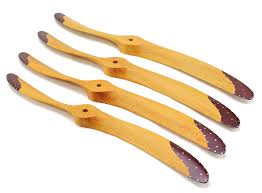
With amphibian beavers and metal props we used metal files to take the water damage out (smooth the dings) of the leading edge.
Ah! Veterinary dentistry in the wilds of Northern Canada. Another example of the Hudsons Bay Company looking after natural resources.
-
Seatbelts are meant to keep the person attached to the vehicle to prevent impacts with the interior of the vehicle, or ejection from the vehicle. The possible ways a body can move in response to collision forces is astounding, so designers look at the most likely.
The first designs were simply lap belts. However, in the event of frontal or side impacts (including rotation around the axes), the body was able to flex over the belt and strike the interior of the vehicle. Also, it is possible for the body to slip over or under the belt.
Aviation and motor racing showed that the four-point harness provided more protection, but are inconvenient for use in non-competitive use of the vehicle.
The lap/sash belt is a compromise between the protection of a four-point harness and convenience for daily use. The biggest problem with the lap/sash is improper use - not fitting the belt properly across the shoulder and lap. It is still possible to slip out of a lap/sash harness.
So what type do you use? For an aircraft that will be used by many different people, for non-aerobatic flights, the lap/sash is the best compromise. For flights involving unusual attitudes, four-or five point would be the go. In your own home built - go for the safety of the four-point. Once you adjust it for yourself, it will go on as easily as a lap/sash.
-
1
-
-
Anyone had the Urethane LE coating on their composite Jab prop get shed after a rain flight ?
Sorry to have dragged a red herring across your thread.
I have seen the leading edges of Jabiru props shedding. Whether those examples were due simply to flight through rain, or simply expected wear and tear. Don't forget that prior to a flight through rain, a propeller would have normally suffered damage to the integrity of the urethane seal simply by having been in contact with the pollutants in the air. Have a look at the blades of a room fan to see how much muck they accumulate.
So if the integrity of the seal is already compromised, then hitting it with anything else will accelerate the shedding. That anything else could be rain, or dust.
I'll also point out that rain drops fall vertically (usually) and at some non -zero velocity and might as well be included in the resultant vector. so the prop side on the up will hit the raindrops differently to the down side.Two points - Both blade halves will go up and down the same number of times so the average amount of damage will be the same at the end of an the flight through rain.
Secondly, the energy transfer (hence amount of "damage") in a collision between a raindrop and propeller can be calculated using the Law of Conservation of Momentum.
HOWEVER, as RFguy and Facthunter have correctly indicated, the raindrop and propeller have velocities before they collide. They will also have velocities after they collide. The hard part of the calculation is determining the angles of approach to the point of impact and the angles of departure afterwards. Unless someone wants to get bogged down in pages of Vector additions, seeking an actual mathematical answer to the question is far beyond the needs of this discussion.
This is about the best answer for here:
I prefer to think of raindrops as being as hard as gravel at the speed a prop hits them. Would you fly through a shower of fine gravel?There are two solutions to saving the prop:
1. Gently sand back the leading edges until they are smooth, then recoat with polyurethane
2. Shape and fit metal sheeting to the leading edges as sacrificial materials to be replaced when worn. (Yes, and balance the prop. And Yes, get an engineering order for the modification)
-
1
-
-
It's a helical path . The forward speed is added as a vector
I understand what you are saying, but I was just trying to get the message over in the simplest possible way. Perhaps I should have said that I was describing the simplest possible case - where the aircraft is stationary - like during an engine run up.
Also you need to define the frame of reference being used. Are we using the propeller's of the raindrop's? You can see that the calculations get more and more complicated as factors such as the forward velocity of the propeller, and/or, the size and velocity of the raindrop are taken into account.
The absolute simplest case is to consider the problem in relations to the raindrop's field of reference, and take it that at the instant of impact, the velocity of the raindrop is zero. Therefore it is the raindrop that is being struck by the propeller moving at a calculable velocity.
Which ever way you approach the calculation, experience tells us that a propeller moving through rain will have its surface eroded over time. That's why propellers used to have sacrificial brass strips on teh leading edge.
-
If you want to get positive proof of the effects of water at speed striking metal, just have a look at the propeller on an outboard motor. As Facthunter said: " is not aeroplane speed it is prop speed " Have you ever seen high pressure water cutting of steel?
Just think of the distance the prop tip travels. The Jabiru prop is 60 inches in diameter. That near enough to 1.5 metres. The distance the tip travels in one revolution is (pi x diameter) = (pi x 1.5) = 4.7 metres.
At 2500 RPM the tip will travel 2500 x 4.7 metres per minute = 11,750 metres. That is 11,750 x 60 metres per hour = 705,000 metres per hour (705 kilometres per hour), or (705000/3600) metres per second = 195 metres per second.
-
2
-
-
I knew that putting the Pie Chaser to bed would be the killer. It seems that the only time a plane can compete on economic terms with a ground hugger is if you have land on the boundary of an airport, or the airport is on your land. Then you can erect a minimalist cover for protection without the cost of renting airport space.
I know you may say that you will fly 100 hrs a year to reduce the fixed cost per hour, BUT most pilots I know started at 100 in their first year and tapered off rapidly to less than 20. And most quit altogether after 5 years.That's the lamentable truth. I bet it applies to people who by trailerable boats, too. They'd be forking out big bucks for their activities.


On "maximum demonstrated crosswind capability"
in AUS/NZ General Discussion
Posted
It got a tad breezy at Camden yesterday afternoon about 1600.
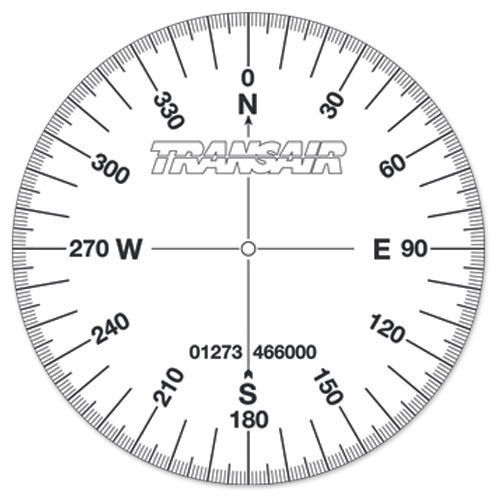
I wonder what the crosswind was on Runway 06 about 1615. NNW covers the bearings 320 to 330 degrees. The headwind component of that crosswind would have made stalling-on in most aircraft rather difficult.