


old man emu
-
Posts
5,297 -
Joined
-
Last visited
-
Days Won
78
Content Type
Profiles
Forums
Gallery
Downloads
Blogs
Events
Store
Aircraft
Resources
Tutorials
Articles
Classifieds
Movies
Books
Community Map
Quizzes
Videos Directory
Posts posted by old man emu
-
-
Tomo,
It seems that you've flown everything but the coop.
When are you going to get an Instructor's Rating?
OME
-
There are some very experienced organisations in the US who will disassemble the airplane, crate it and put it in a seatainer. You can find their ads in Trade-a-Plane.
We just unpacked a C172. When we opened the container there was the fuselage minus wheels bolted to the floor and two massive crates on the floor that contained the wings, tail feathers, U/C etc. Everything in the crated was wrapped in carpet underlay. Not a scratch on anything.
It did take us a day and a half to get the crates out of the container, remove the parts from them, then break down the crates. We have enough 3x2, 6x1, 8x1 and sheeting to build a three bedroom chook house.
Actually freighting an airplane from the US to Australia is the least of your problems.
OME
-
 2
2
-
-
I am looking for a route from the eastern side of teh Range to the western side.
OME
-
I must admit, it is easier just to work to engine time. A Hobbs meter really is only accurate around cruise RPM. Below 1500 RPM they run slow as compared to real time, so in a metered 100 hours, the engine probably doesn't actually operate for much more than 105 hours real time, which is really neither here not there. How many of us run up 100 hours in 12 months anyway?
Separate recording of airframe hours is only really important for airplanes that have time limited airframe components. I don't think any RAA airplane comes into this class. If we look at magnetos and gearboxes, maintenance based on hours of operation is usually carried out within a few hours of the required time.
It is legal to fly an airplane to a maintenance facility if, during the flight, the time in service will pass the 100 hour mark. This leeway is usually limited to about an hour. You couldn't fly home from Broome to the East Coast an go overtime during the flight.
OME
-
I am looking at flying from Camden, NSW to Warwick, Qld so I can pick up my Pride & Joy.
When I just put YSCN and YWCK into the flight planner thingy on this site, it comes back with a Great Circle route that looks to be mainly along the ridge of the Great Divide. Not really excited about that route - too much tiger country.
I did look at a route Camden: Mudgee: Tamworth: Glenn Innes: Warwick. That will have me crossing the Divide over Katoomba.
Is there a route coastal to the Newcastle Area, then up the Hunter Valley and on to Tamworth?
OME
-
Yeah. That's a good point.Don't they have to have an approved workshop as well? NevA person can be a LAME, but the premises where work is done has to be approved by CASA. Apart from being a suitable place to work (sealed floors, etc) there have to be available the appropriate tools, up-to-date data for the airplanes being serviced.
We are not even supposed to go into an owner's hangar to do an oil change to save having to drag the airplane out and taxiing it to ours.
OME
-
Glad to help. OME
-
When you are deciding on a LAME or L2 to do work on your airplane, one thing you should examine is his/her experience on your airplane type, or similar types.
Remember, a person can become a LAME by working on 747s for QANTAS, but still would not have the experience to do regular maintenance on a C152, or something powered by a Jabiru or Rotax. As for qualified rag and tube; wood, or composite people, they are a bit thin on the ground. And by qualified, I mean holding a CASA approval for that sort of work.
OME
-
That's right. I know it goes against the grain, but thems CASA's rules.So if you bench ran, any of the the engines you mention, for 20 hours, that wouldn't count!
As I said, that is the requirement of ONE manufacturer. If you use one of its engines, then you either keep separate logs of engine and flight hours, OR you run your airframe out of hours quicker than is allowed. I would suggest that you specify in the airplane's service procedures which record is to take precedence for servicing.As Crezzi says, the Rotax manual specifies engine run hours and makes the point that without limitation, it includes run-up, taxiing etc..OME
-
That's just one engine manufacturer. Jabiru, Lycoming and Continental don't prohibit it.
OME
-
You are making a rod for your own back and will cause confusion.I split the powerplant and airframe services according to engine and air hours, which get logged separately for every flight."Time in Service " is defined as the time between wheels off and wheels on, or "air hours" as you say. The engine hour meter is actually just a guide to that figure, and a great way for airplane hirers to make extra dollars on every hiring.
You should try to fit an recording system that operates via an air operated switch. The switch is adjusted to close an electrical circuit when the airspeed of the airplane exceed the stall speed, indicting that the wheels are off the ground and the airplane is flying.
As an exercise, calculate how much time you spend on an average flight in taxying to and from the runway, and the time spent in engine run ups. Over a year, that time may add up to several hours and over a few years, could add up to several, thus overstating the service time of the airplane, and reducing its value.
OME
-
I'm told that the A380's is a horse's arrrs.the mouse got it, popped it out of its bottom and installed it to the horn,OME
-
The best protection an owner who does not do the maintenance on his/her own airplane can have is to insist on a detailed log book entry whenever servicing is carried out on the airplane. I have seen some log book entries that just barely trip over the scratch mark for what is required in such an entry. I have often seen entries of the type: "Periodic Inspection carried out in accordance with Whizzo Wonder maintenance procedures. Refer to Job Sheet #### for details."
A proper entry should indicate that the work was done in accordance with the Manufacturer's published maintenance procedures, and/or any requirements made by CASA. The entry should show and describe what items were replaced, and if available should show the serial number or some other tracking means for the part. (I know that this is not a legal requirement for RAA airplanes, but better records will prove valuable to you when you want to sell the airplane.)
Take a Jabiru, for example. There is no serial number on the Z386 oil filter, or the Z14/15 fuel filter. However, I always make sure that I allocate a Part Identification Number (PIN) to them when I receive them into my parts store. When the boys take them from the storeroom to fit to an airplane, they record the PIN on a parts issue sheet and when the job is done, I write the part description and PIN on the Job Sheet. That way, I can trace these items back to the invoice that refers to them, and I can at least say where I got the parts from, and when.
When I get consumables from Jabiru, like brake pads, I insist on them sending me a Release Note because these parts are used on both RAA and VH reg'd airplanes we service. These parts get a PIN and the PIN relates back to the Release Note.
A comprehensive logbook entry is invaluable when you go to sell an airplane because the prospective buyer can see that the maintenance was done at suitable standard. By the same token, if you were buying an airplane, you should be more influenced by the contents of the logbooks than any claim that the maintenance was spot on.
So, if your maintenance organisation does not use up at least a page of the log book for every Periodic, and more than two lines of a page for work like checking radios and instruments; changing tyres, or any job that takes more than about an hour to do, then you should have a talk to them about improving their record keeping. (I wouldn't worry if a 25/50/75 hour oils change was written up on a line or two.)
OME
-
2
-
-
First week in April. Hangar 740 Camden Airport.
OME
-
I think I'll do what my African relatives do, and go stick my head in the sand
Nev can go stick his up his fundamental orifice.
OME
-
Yeah, and I'll be breaming over with excitement when I get it.So its a flathead...OME
-
STOP! STOP! STOP!
(Oh, sorry, just practising for my first ride)

OME
-
1
-
-
I had a thought ...
Perhaps someone has had the squeaker out at some time and put it back in rrrs-about. Try taking it out and putting it in the opposite way.
OME
-
1
-
-
I love a design where the designer incorporates a ballistic chute - just in case ....
But interesting, nevertheless.
OME
-
The thing that makes the noise is just like a clarinet reed, but it is made from palstic in a plastic surround. I'd suggest that the one you found in your plane is broken. You could try to replace it with the noise maker from a party toy. You know the ones, they are a coiled paper tube and when yoou blow on them, the tube fills with air and unrolls.
Failing that, just get a replacement. I've got a couple on hand and postage would be at normal letter rate.
Anyway, aren't you frozen in at the moment?
OME
-
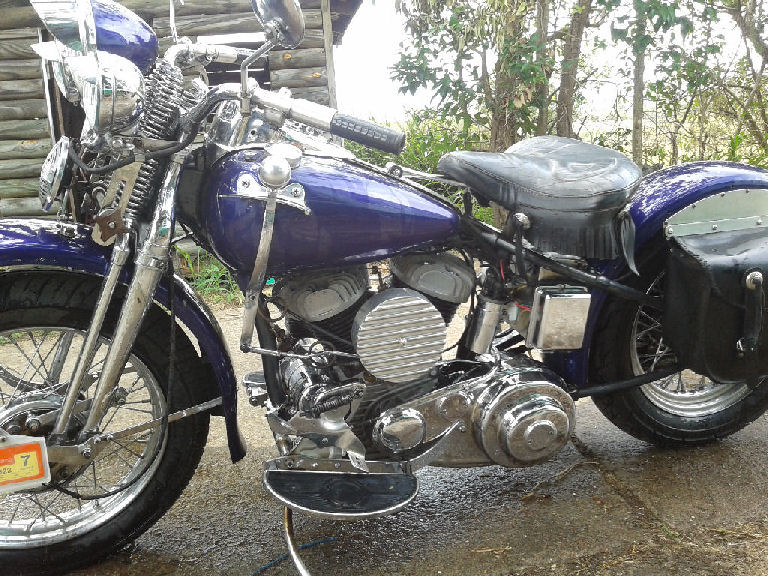
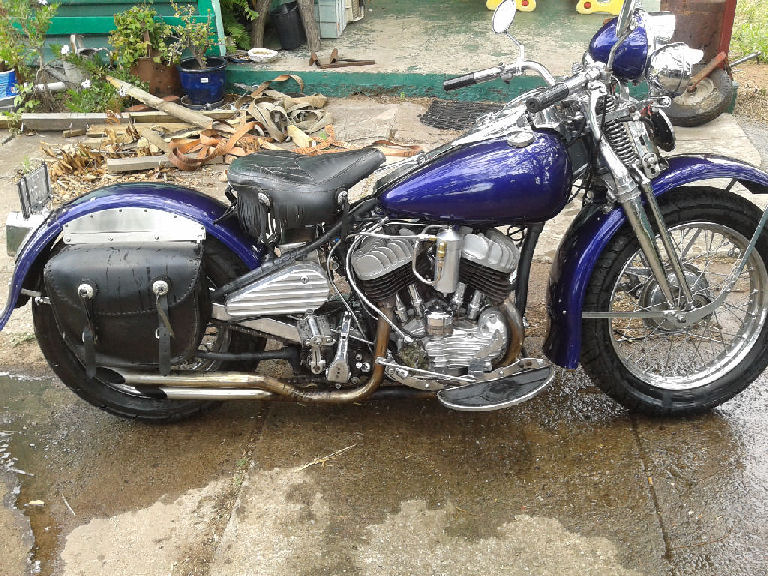
It's a 42 WLA that has been civilianised. It doesn't have magneto advance, but it does have manual timing advance - Retard to Start, then advance to run.
And since emus can't fly, the need for wings is reduced. But it will take me to places where I can attach wings to my carcase.
OME
-
Well, if you are a flightless bird like I am, you've got to get around using something that's big on style. Here's what I've just bought.
OME
-
4
-
-
She's coming home in the back of the ute. I've got to relearn how to ride one.That's awesome! Will be a pretty neat trip back south on the old girl.OME
-
Horatio:
O day and night, but this is wondrous strange!
Hamlet:
And therefore as a stranger give it welcome.
There are more things in heaven and earth, Horatio,
Than are dreamt of in your philosophy.
Hamlet Act 1, scene 5, 159–167
OME

First night flying lesson!
in Student Pilot & Further Learning
Posted
Sponsor Tomo!!!
The bugger get more flying in a month than I get in a year. Must be big bucks in heavy vehicle maintenance. Either that, or his Mum is not making him pay enough board.
OME