

Ian
-
Posts
519 -
Joined
-
Last visited
-
Days Won
11
Content Type
Profiles
Forums
Gallery
Downloads
Blogs
Events
Store
Aircraft
Resources
Tutorials
Articles
Classifieds
Movies
Books
Community Map
Quizzes
Videos Directory
Everything posted by Ian
-
Considerations in Engine Cowl Design
Ian replied to skippydiesel's topic in Aircraft Building and Design Discussion
It's not only pressure drop. The air warms as it flows through the radiator, warm air cools less efficiently, so that back half of the radiator cools less efficiently, or you need to move the air through the radiator faster compared to a thin radiator which creates more drag. But I do like the mosquito as a plane, it's an example of material design compromise where the design leveraged the properties of the material rather than simply building a wooden plane like a metal one. Apparently this is a quote from Hermann Goring 'The British, who can afford aluminium better than we can, knock together a beautiful wooden aircraft that every piano factory over there is building, and they give it a speed which they have now increased yet again. What do you make of that? They have the geniuses and we have the nincompoops!' -
Considerations in Engine Cowl Design
Ian replied to skippydiesel's topic in Aircraft Building and Design Discussion
A problem with most small planes is the lack of space and it's even worse in the engine bay. You're making compromises simply to make things fit. Cooling is really hard to get right. The aim is to accelerate the outflow as much as possible in the final duct recovering as much energy as possible. One of the things with these designs is that they tended to make the exit duct adjustable and not the inlet, higher pressure in the inlet duct makes the air spill around the intake so a static oversized inlet would appear to be OK. It's so difficult getting this right intially I'd be tempted to go down the variable geometry path as it would allow me to tune in flight rather than build 5 ducts before I found the best compromise. The other thing which people have alluded to it that the cooling requirements in climb are different to those in cruise so with any static design you're either over-cooling in cruise or cooking in climb. But it's another thing to build and another thing to manage in flight. These pictures are from another forum it's worth noting that the mosquito's design opted for a very thick radiator even though it's less efficient simply to make it fit. The P51 -
Turbos make engines more efficient by recovering energy from the exhaust gas however They increase the backpressure on the exhaust making valves hotter. They compress the intake charge making it hotter PV=nRT The turbine compressor blades transfer heat to the airflow as they're not 100% efficient You are generating more energy in a smaller space. This means more heat to dump Essentially it increases the heat load on the engine requiring more cooling. You can mitigate some of these issues with an intercooler however temperature remains an issue. Things like sodium filled valves also help with heat removal.
-
I like your confidence however I wasn't particularly optimistic based upon the views of the working group. From a quick review the thrust of the working group was to harmonize with NZ standards as the best approach and develop new standards.
-
Considerations in Engine Cowl Design
Ian replied to skippydiesel's topic in Aircraft Building and Design Discussion
Rather than argue about this I'd point you toward the article that I linked to and the section on "Classification of drag" being divided into 3 categories. Skin friction drag of stream flow. Drag due to eddying arising from separation of a stream from a surface. Drag due to expansion losses without actual stream separation. Points 2 and 3 are avoidable Thus the ideal system will be designed to to avoid stream separation or severe expansions To reduce the stream velocity over the cooling surface, and to reduce the external surface to a minimum. Even when following these principles it's hard to get the design right hence the design with maths and allow experienced people to fudge. -
Considerations in Engine Cowl Design
Ian replied to skippydiesel's topic in Aircraft Building and Design Discussion
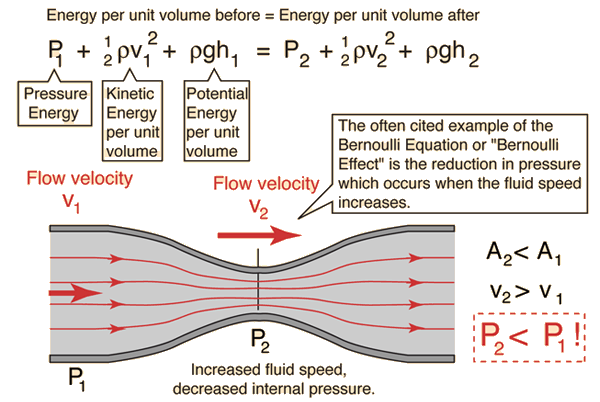
I'm not sure cowling pressure per se is bad for cooling. To create efficient low drag cooling you want small inlets and outlets and a large area of slow moving air across the radiator. Essentially the reverse of the below. http://hyperphysics.phy-astr.gsu.edu/hbase/imgmec/bernoul.gif High velocity airflow across the radiator is bad it equals lots of drag. Large thin radiators are more effective than smaller thicker radiators as the speed of the flow through the radiator can be lower for the same amount of cooling. Remember drag is proportional to v^2 Large inlets and outlets are bad (however you need them large enough to provide the requisite heat flow) and generally it's more effective throttling the outlet. This means that the additional heat you add to the flow can do work (but not really at the velocities we've talking about) However it allows you to minimise drag. WW2 was the epitome of radiator design as turbine engines made this field pretty much redundant. But there are some gems to be found in this area. https://history.nasa.gov/SP-445/ch5-5.htm https://reports.aerade.cranfield.ac.uk/bitstream/handle/1826.2/1425/arc-rm-1683.pdf
-
All Electric Proof of concept Prototype
Ian replied to red750's topic in Aircraft General Discussion
The energy content of 97 litres of fuel ~= 850 kW/h even at 30% efficiency that about 255kW/h at the prop. And the bonus is that as you use fuel you get lighter. A nice BMS might be this one. https://www.ennoid.me/ It's open source so if you don't want to buy it you might be able to save yourself a few shekels by building it. It has individual temperature sensors and achieves balanced charging. It also is scalable using master/slave model with the main controller controlling a number of smaller pack based units. -
All Electric Proof of concept Prototype
Ian replied to red750's topic in Aircraft General Discussion
The easiest way to make this lighter would be to go on a diet. You're pushing the boundaries of the technologies, it sounds interesting good luck with it. Does your BMS monitor cell termperature? If you get your estimated 2 hours with your setup how long would a charge take a between flights? -
All Electric Proof of concept Prototype
Ian replied to red750's topic in Aircraft General Discussion
It doesn't really matter whether a current battery is structural or not, they're just heavy. Battery powered electric airplanes might be OK for short duration training flights or for people who want to tool around on the weekend flying circuits. They're less attractive as a form of A-B transport. Batteries are heavy and the rate of improvement hasn't changed much in the last decade, cheaper yes, lighter no. One possibility for a battery would be a something like a lithium-air battery however there are significant issues to overcome prior to this becoming a thing. These issues may prove to be insurmountable, just look at fusion, conceptually easy in practice very difficult. You might want to consider aluminium-air batteries however they're non rechargeable which mightn't fit with the attractive vision of just plugging the plane in for a few hours before flying off, and they're not cheap. Another option for aircraft might be to resurrect the liquid salt reactor concept but while this is technically feasible in large transport airplanes I can't see many people waving flags to have flying reactors especially when we can't even get them built as a replacement for coal reactors. As an aside the French have the greatest percentage of nuclear power, are a net electrical energy exporter, have some of the lowest greenhouse gas emissions in Europe and power which costs about half the cost of Germany. They've been demonstrating how to operating their reactors in a dispatchable manner even though they weren't designed for this role allowing them to dovetail nicely with solar and wind generation. -
There's a nice picture on wikipedia of Carb formation https://en.wikipedia.org/wiki/Carburetor_icing There will be some pressure drop caused by long intakes but nothing compared the cooling caused by the venturi and part throttle configuration
-
I agree however there are a number of factors at play here. Some of which appear to be self interest where conflict of interest should be declared. At the very least there should be significant representation from aviation groups which should include. The PPL community The commercial industry The Gliding community I struggle to see why there are so many AV med representatives, it is a well understood science and all of the representatives should understand them well. Two representatives should be more than sufficient. Also the terms of reference should explicitly reference the international experience which should be the key driver for change. If there hasn't been an increase in accidents related to self certification of medicals then the existing process would appear to provide little value. It should be up to the committee to justify how any additional process would add value.
-
The members of the committee are: Dr Anthony McArthy Dr Jeremy Robertson Dr Sara Souter Dr Priti Bhatt (Didn't attend) Dr Ian Hosegood Peter Antonenko Matt Bouttell John Raby (Didn't attend) Will Stamatopoulos (Didn't attend) It is concerning that the current approach to the committee selection provides a degree of medical expertise with more that 50% representation, however there is not a similar representation by the flying community, the ATSB or people with the relevant mathematical skills to assess risk appropriately. For example even someone with a B Medical Mathematics would provide signficantly greater rigor to the process. One of the key outcomes of studies into air safety is that the types of conditions identified by the specialist Aviation medical community rarely contribute to incidents involving pilot incapacitation. It is conceivable that providing advice to pilots in relation to food choices prior to flight would provide a greater benefit that the current regulatory process.
-
The report doesn't bode particularly well for the minimal approach https://www.casa.gov.au/first-part-67-twg-report It might be worthwhile getting appropriate representation on this working group as it is currently made upon of members whole profession depends upon the current process.
-
Back to the matter at hand. I hope that everyone did respond to the survey, and they encouraged their acquaintances to do the same. Key messages are It is more important to watch what you eat rather than get a medical. (more incapacitation due to food) Reuse, don't recreate, don't replace an ineffective bureaucratic control with another ineffective bureaucratic control. There's an existing standard just use it. Redirect the funding to where accidents actually occur, focus on providing material to teach people how to measure fuel, how to not fly into clouds and how to retain control of their airplane. I'd also like to see the flight school system reformed so that qualified instructors can operate outside the artificial model of a school and provide flexible instruction as required. There are a lot of people who want to learn to fly however the opportunities and costs are often prohibitive. Policies and funding encouraging the creation of more airstrips and aerodromes in fire prone areas. We need operational areas established which enable a concerted early suppression of fires. While helicopters can provide limited suppression what is needed is a workhorse with a combination of range, speed and capacity at low cost. There is probably enough capacity in the recently retired brigade to man such an endevour, especially if additional training was provided.
-
Just remind you wife that it's polite to drive at the signposted speed. Driving slowly creates a traffic hazard and put's those around you at risk and depending upon the jurisdiction may actually land you in hot water. If you're annoying other motorists there's something fundamentally wrong with your technique which you should look into. I followed an elderly gent driving the other day doing about 50km/h in an 80 zone. After pausing at a roundabout he drove out in front of a couple of cars which honked at him and he just hunkered down behind the wheel. I worry about drivers like that going through a school zone. Rather than an age based driving test I'd prefer to see a voting system where other drivers could nominate a driver for a test. Collect a couple of votes and you get a mandatory test. Both fast and slow drivers could be nominated however only allow one or two votes per person per year to stop the haters. The gent the other day would have taken my vote for the year and I suspect that he'd be removed from the road pretty quickly. It's interesting as some people age they try to slow down to reduce perceived risks, this includes just walking around however what often happens is that your abilities evolve to match the constraints. What often changes is stride length, as people age they often significantly reduce their stride length which eventually makes them unstable on their feet as the lose the ability to take a large step to stop falling, so remember even if you're slowing down make sure that you take big steps ;-).
-
Yes it's age discrimination however that age discrimination comes with good reason. https://dit.sa.gov.au/__data/assets/pdf_file/0019/247330/Older_Road_Users_-_Road_Crash_Fact_Sheet.pdf Even though older drivers often aren't driving in a risky manner they have more accidents and they tend to involve fatalities. Put bluntly many older drivers are a bit shit and the figures back this up. Hence the test, any competent driver should be able to pass the test. I do think that the test should be free though.
-
Generally the evidence points to the whole medical assessment process providing minimal value from a safety perspective. This include both the commercial and private flight environments. There have been no RPT crashes relating to pilot incapacitation due to a physiological condition. To put this is context a significantly greater loss of life has occurred due to mental illness however the industry doesn't focus on this aspect of safety and relies on "self disclosure" as the primary means of diagnosis. The expense associated with controlling this perceived risk has been enormous over the life of the industry and there is demonstrable evidence that removal of the control makes no difference to outcomes. While engagement with stakeholders in many instances makes sense in this case there's zero value in the process. The only segment of the community which is impacted is the business which has built up around this folly.
-
Hi All, I was wondering if anyone was using the equivalent of MW50 or MW30 or water/oil injection to provided greater knock margin and cooling on engines. Water 99% 1% oil was most effective however it could freeze. NACA provided the following in the 1943 https://ntrs.nasa.gov/api/citations/19930091835/downloads/19930091835.pdf I know that there is a STC'd version was/is available but it sounds a little pricey for what is a simple system. A few benefits are; lower head temperatures at higher power settings Lower fuel consumption Increased knock resistance allowing lower octane fuels or higher compression pistons. removal of engine deposits It certainly seems simpler and less work than many other modifications.
-
I agree, and it's never been more true than at the moment with the future for mass produced IC engines looking pretty bleak. However history has demonstrated that keeping engines going remain possible for those with a desire to do so especially if you choose an engine that has a community the problems are soluble. For example if you go with a 13B or 20B engine you can buy mounts off the shelf and there's a whole industry devoted to parts. http://www.cozygirrrl.com/aircraftparts.htm Turbine engines push the limits of material science and making them moderately efficient and lightweight is prohibitively expensive. If you look at the BSFC figures there's no aero turbine engines with great fuel consumption, the Europrop TP400c recent generation expensive turbine engine consumes 213g/kW and your BMW BMW N47 2L consumes 198g/kW It somewhat ironic that the rotary engine which has for 50 years been considered a thirsty engine has been considered as a more efficient combustor for turbine engines. It will be interesting in the future as there's a greater push for carbon neutral transport whether the advantages of turbine engines will remain. I can't see a replacement however if fuel costs rise significantly other choices might become feasible.
-
I think in terms of power to weight the rotary wins, both the 13B and 20B have been used successfully. They're also easier to strip and reassemble than other engines. Subaru engines also worth a look, the key advantage is their form factor is a flat four which is similar to existing air cooled engines. I'm not sure if the marcotte is still around http://www.sdsefi.com/air14.html or http://www.glasairproject.com/Marcotte/Contact.html The problem with any PSRU is that they are often built by people without the engineering knowledge or equipment to properly analyze issues such as harmonic, tribology or torsional effects. So any design which has lots of miles on it is preferable. There have been a lot of people in this area with more sales and marketing ability than engineering knowledge. Eggenfellner probably fits into this class. Also from a safety point of view flying something that either has a low landing speed or has two engines might be wise when using automotive engines. Not that automotive engines can't run continuously and reliably at WOT, it's simply that there's a lot to get right when going down this path and you're generally doing it all yourself. It's easy to ignore/dismiss potentially dangerous installation issues. There's a nice article here about subaru vehicles being run continuously at high speed and high rpms which should put the whole "not designed to run continously at WOT" to bed. https://subarudrive.com/articles/15-2-legacy-endurance-record-attempt The EJ20 engine used in this would probably be a good starting point. Personally I think that automotive engines have a raft of advantages over the existing aviation engines, mostly due to the fact that they effectively leverage an additional 70 years of engineering knowledge.
-
And you thought these driverless cars were scary!
Ian replied to flying dog's topic in Aircraft Incidents and Accidents
Self driving I don't really follow your logic here and I not sure what you are trying to say? Autonomous cars drive by themselves, so if another car nearby goes haywire it will deal with them in the same manner as one of the many thousands of nuts currently behind the wheel. All bets are still on because they're autonomous they just react to another crazy driver. It's a little different being the occupant of the vehicle going crazy though but then you're in the same situation as taking a lift with someone and realizing that they're a pretty crap driver. Or were you trying to make a different point? Any moving powered object has a temporal bubble which indicates it's possible locations at some future point in time, the greater the time the larger the bubble. It's just maths and number crunching, some of these states are unlikely and that's what the systems try to work with on a crowded road. However the temporal bubbles can only be projected fractions of a second ahead without intersection. With planes it's much easier as there's so much more room that you can largely stay outside these temporal bubbles even when they're projected minutes ahead. There's a few stats published by tesla. https://www.tesla.com/VehicleSafetyReport In the 4th quarter, we recorded one crash for every 4.31 million miles driven in which drivers were using Autopilot technology (Autosteer and active safety features). For drivers who were not using Autopilot technology (no Autosteer and active safety features), we recorded one crash for every 1.59 million miles driven. By comparison, NHTSA’s most recent data shows that in the United States there is an automobile crash every 484,000 miles. -
The problem with helium is that it a finite resource and literally disappears into space. While lots of airships might seem like a good idea it would tap out all reserves pretty quickly. Unless we start making it using fusion but that's pretty unlikely. Recently the price for helium has been about $20L up from a couple of dollars a decade ago so this might kybosh the option of more airships in the future.
-
And you thought these driverless cars were scary!
Ian replied to flying dog's topic in Aircraft Incidents and Accidents
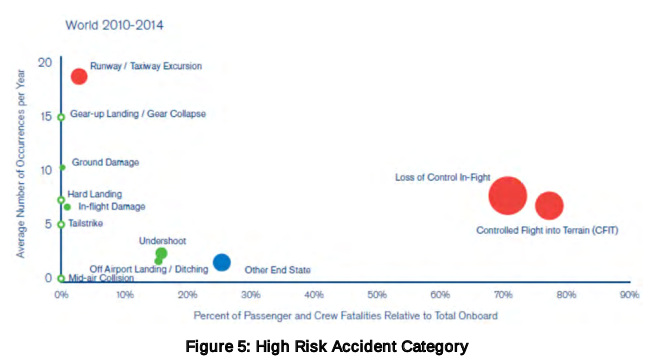
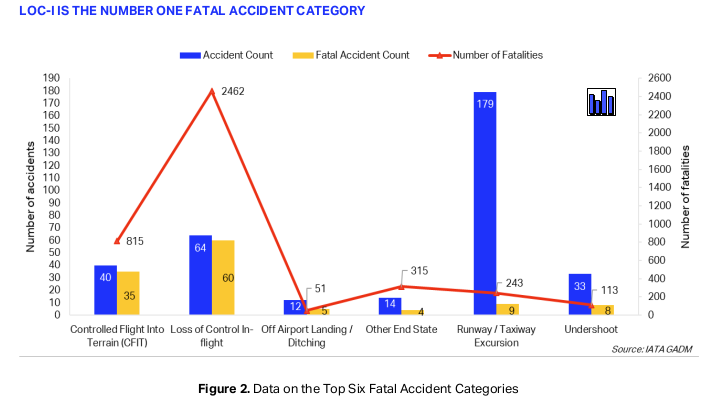
Total automation of the flight envelope would probably be both safer and cheaper however people don't make decisions based on logic. That's not to say that there wouldn't be incidents however from a computing perspective flying and landing isn't that difficult. Especially while you have an operational GPS system. However systems need to be designed effectively with the dumb design decisions associated with the boeing max where a single point of failure model was seen as appropriate. Essentially this was a half arsed attempt at automation. Airbus used triple reduncancy for the same sensors. https://www.faa.gov/sites/faa.gov/files/about/office_org/headquarters_offices/avs/CFIT_brochure.pdf From the above the top two in GA are Loss of control in flight Controlled flight into terrain Interestingly commercial aviation fatalities shows the same no 1 and 2 https://flightsafety.org/wp-content/uploads/2017/07/CFIT-Report-1st-Ed-2015.pdf Another fact is that controlled flight into terrain has reduced markedly over the past few years however controlled flight into terrain has remains significant. https://www.iata.org/contentassets/b6eb2adc248c484192101edd1ed36015/loc-i_2019.pdf
-
Private Training - A cheaper option?
Ian replied to Jeffmel's topic in Student Pilot & Further Learning
You should just be able to engage and instructor to teach you the skills. Unfortunately it's a bit more broken than that. The current approach to flight training is pretty archiac and geared toward propping up a business model rather than achieving an outcome. An independent review should occur. There are also training shortcuts which don't appear to have any real merit apart and have occurred simply because of lobbying by the organisations involved. For example a student who studies at an integrated flight school requires fewer hours to achieve the same qualification. https://www.casa.gov.au/licences-and-certificates/pilots/pilot-licences/commercial-pilot-licences/getting-commercial-pilot-licence-cpl The continued requirement for a classroom, given that students at most universities only go to uni for exams (not during covid) and practicals and most students watch the lectures at times of their own choosing the requirement to have a physical school is a bit dumb. It would be significantly better if the following could occur. An independant instructor could instruct a student who is of the pilots choosing. An independent assessors/Examinors could assess progress and validate progress is sufficient, this person should also be of the students choosing. The aircraft should simply be one in which the instructor and student believe is suitable to instruct in. CASA should responsibility for the entirety of the theory testing. There's a conflict associated with having those responsible for teaching, scrutinizing exams, especially when performed on a 1 on 1 basis. It appears that flight schools were modeled on the requirements of WW2 flight schools and the underlying model hasn't really been questioned ever since. If I had to distill the thought processes associated with flight schools it can be distilled down to a single item its the continued use of slide rules such as the e6b calculator. Guys it's not a computer, its a calculator and not a very good one at that. I was probably in the last generation of students who learnt how to use slide rules and they were considered outdated then and I'm getting on. I'm aware of the arguments associated with their continued use and they're pretty much bullshit. I can't point to a single near miss prevented by an e6b This isn't to say that I don't like the little whizz wheels, they're fun to tool around with. But the pleasure I get in using it is the same pleasure that I get pulling a 1950 victa lawnmower out from under a house and making it roar back to life. Would I mow the lawn with it? No of course not. But the real question is would I keep it as a spare mower just in case and the answer to that is no, if I wanted a spare I'd have a spare new mower. -
Does the cetane number impact startability? It's essentially the measure of combustion rate of diesel.