

Ian
-
Posts
519 -
Joined
-
Last visited
-
Days Won
11
Content Type
Profiles
Forums
Gallery
Downloads
Blogs
Events
Store
Aircraft
Resources
Tutorials
Articles
Classifieds
Movies
Books
Community Map
Quizzes
Videos Directory
Everything posted by Ian
-
Current simulators with a current VR headset are a massive change from the old simulators. They are completely immersive and engage your spatial senses I'd strongly suggest to anyone making recommendations about the relative benefits or the technology to try what is currently available. You'd be surprised, I've also tried the big old caravan sized sims and it is a completely different experience. The steps change over the last few years is huge.
-
Flying lessons are so expensive pretty much anything which lowers training time and reduces the likelihood of failing an exam is money well spent. If it cuts a few hours from your training or If it gets you through a test it, it's paid for itself. What's the hourly rate with an instructor - do the maths? And you can sell it once you're finished if you want.
-
I think that it's worthwhile but not quite in the way that you expect. Flying is quite easy but like learning to drive it takes time and it's full of things that can bring you undone. If you can afford it - go with a flight sim with a 3D headset, this helps you with your spatial awareness and get a yoke, joystick pedals to make it as real as possible. What it might be worth doing is to chip in with a few other trainee pilots because you're not going to be doing this 24/7, but it is way way cheaper than flying. Can you cut 5 hours of training time off - yes definitely. What flight sims can do is assist with the muscle memory, radio calls and spatial awareness, when is a good time to turn base, I've lost power, what are the steps I go through. Because it is so much cheaper even if it's not as effective as being in a plane you can do the rough cutting on a sim and polish in the plane. Like you, I don't really enjoy using a sim, but it is a useful tool. If they weren't useful airlines and the military wouldn't use them.
-
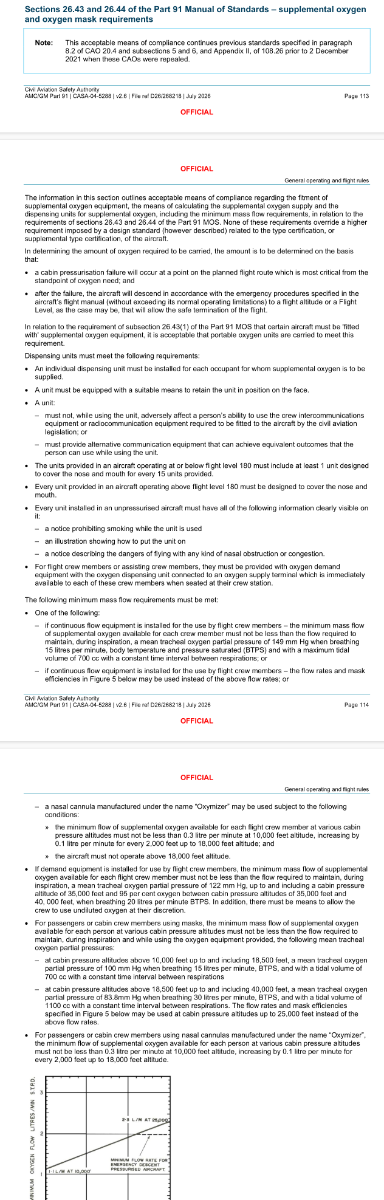
Not sure what the Best Brand is. Easier to read as part of the PDF so the link has been provided. The key points oxygen may have benefits even below 10000 especially at night, if you're older or you're an ex-smoker or fly at night. Put simply your judgement and ability to concentrate are likely to be better. Because you're not consuming a limited supply from an O2 bottle and the fact that you can now easily monitor your O2 levels it does provide options which in the past were simply not available. https://www.casa.gov.au/resources-and-education/publications/guidance-material/acceptable-means-compliance-and-guidance-material?search_api_fulltext=&dt_published[min]=&dt_published[max]=&field_tx_rules_part=71 Inogen appear to be pushing their device as being suitable to 18000 feet. https://www.inogenaviator.com/
-
Oxygen generators appear to be a reasonable way to fly to at least 18000 feet for a single person or 14000 for two people. You probably should ensure that you have a CO sensor as CO can clog the molecular sieve leading to a lack of oxygen concentration.
-
The relevant information. Acceptable means of compliance and guidance material General Operations and Flight Rules Part 91 of CASR Above 18000 you need a mask that covers the mouth and nose - below that cannulas are sufficient. Flow rates are specified and oxymiser cannulas are specifically stated to meet lower flow rates.

-
Not scientific but a reasonable baseline. I'm not really sure what you mean by this? Are you saying that canulas aren't used or endorsed by the relevant organisations or just not in common use? I'm pretty sure that both CASA and FAA have specific guidance in this regard.
-
There are many fundamental problems in using hydrogen for fuel. The first is that it's a cryogenic liquid, to keep it as a liquid you need refrigeration or use boil off to keep it cold. The boil off is extremely flammable (4%–75%) compared to 1.2%–7.4% for petrol. It's also very expensive. You can't store the fuel away from the passengers, you need it in the fuselage you can't store it in the wings.
-
I don't know, someone with greater knowledge of the industry might have more of an idea. One of my uncles was an engineer working in Kurnell but that's no longer a refinery. While fossil fuels mightn't be fashionable, we're still a long way from being able to do without them. Whether this crunch puts refineries and ammonia production back onto the essential industry table is yet to be seen.
-
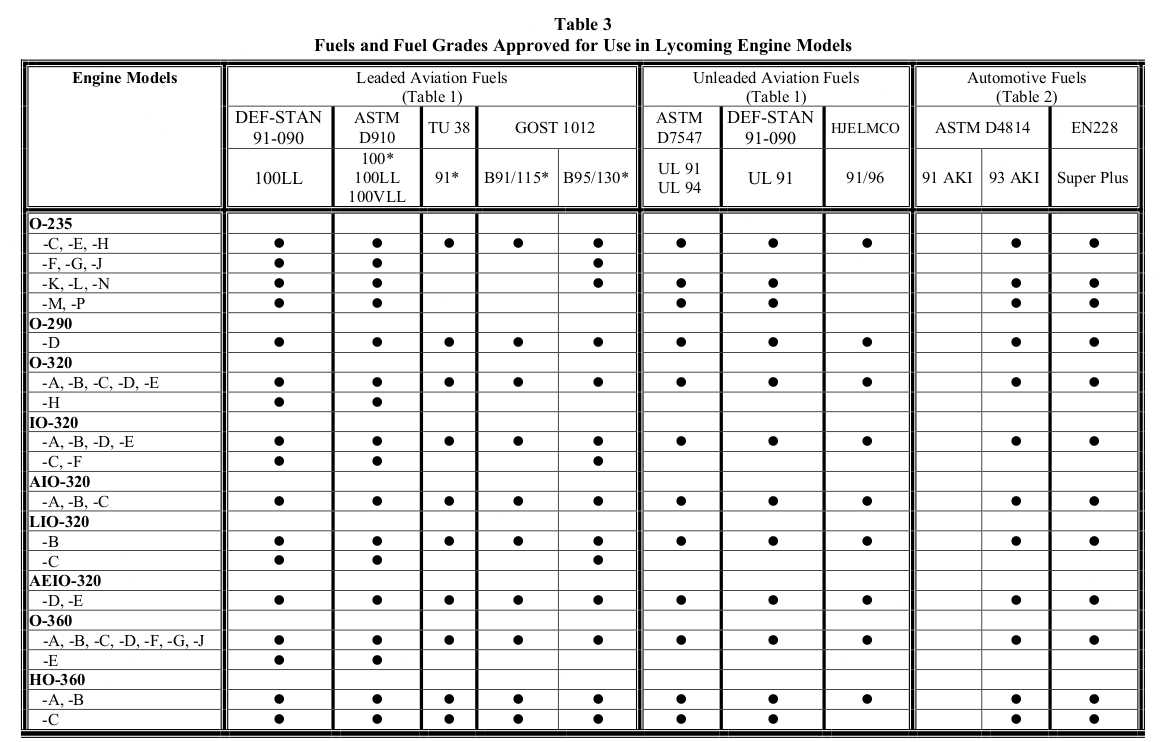
The current fuel crisis is caused by an ill considered attack by the US and Israel on Iran which has taken a significant portion of the worlds fuel supply out of circulation. This has made prices jump considerably, but not as much as many market pudits expected. Some people expected the price would rise to over $150/barrel in this situation. One arguments is TACO, Trump Alway Chickens Out. Trump appears to be looking for an exit strategy however to all appearances the Iranians look like they've got a firm hold of Trumps balls and won't let go. They want reparations and a toll system on the strait which would be extremely humiliating for Trump. So Trump's options are to accept a humiliating withdrawal and try to paint failure as success or do a full ground operation and force regime change. So things would have to get far worse for Trump to accept the former, and if he does the latter the strait won't be open for an extended period. From an aviation point of view, it will be interesting, in the Chinese curse definition, to see what happens to GA fuel supplies. Viva energy which makes avgas in Australia in Geelong, is increasing production of of this plant provide greater supplies of petroleum products, but what does this mean for GA aviation? Does the balanced plant argument mean more avgas, or will maximising production of essential fuels results in a squeeze in the sector. It might be a good time to review the fuel flexibility of your engines. I know that many flight schools use mogas purely for economic and maintenance reasons but more generally what options does the GA fleet have.
-
I acknowledge that the electrification of road freight transport has a way to go, but I suspect that economics will drive this at some point and the infrastructure will catch up. I own both an ICE car and an electric one. I don't think that I will buy another ICE one because electric vehicles are just better. Drive one for a month and it will change you mind. I didn't want my wife to buy one but my sons convinced her it was the way to go. I was 100% wrong, happy to admit it. 95% of the time I charge at home. When I'm away I charge using power points, yeah it takes most of a night but it's generally enough and most hotels, family and friends will do it for free. (I'll generally throw $20 at them) I drive on a 1000km trip about once a once a month across regional areas, that's 2000km return. I usually take my wife's car, if she'll let me because as I said it's better The only issue is poorly maintained chargers where it took 20 goes plugging it in before it activated. ICE cars will go the way of horses, at some point people will only own them for fun, not work. I like both horses and ICE cars, but do they really make sense anymore? And yeah yeah, I get the towing a caravan bit, but that too will change. On long
-
While these aren't perfect studies generally show about an 80% reduction in GCG compared to fossil diesel. Alcohol based fuels are slightly lower. But these sources lean into agriculture which is an Australian strength and they also provide fuel security. We still need liquid fuels for planes, the maths simply doesn't work for batteries and hydrogen is silly. What we're finding now is that fuel security matters.
-
Australia is reliant on foreign sources for crude and for refined fuel. We haven't developed fossil fuel resources or alternatives such as biodiesel of alcohol. When scarity makes the price of fuel rises, discretionary uses decline. The Grey nomads will stay closer to home, more people will catch public transport, deliveries will be bundled into larger bundles. The Government hasn't been making money from the increased price of fuel. Fuel excise is a flat rate per litre, saying otherwise is simply braying your ignorance to your peers. If you want to blame someone blame Trump and his cronies. His idiotic fumblings threatens the world's economy.
-
Light aircraft crash at Heck Field 27/01/26
Ian replied to red750's topic in Aircraft Incidents and Accidents
Fair point however it's actually a combination of the two. Modern vehicle engines are built to far higher tolerances and the efficacy of liquid cooling allows the use of very low clearances in engine operation from start to shutdown. Alloy choices such as hyper eutectic alloys for pistons have low expansion rates so you don't have pistons slapping and leaking when the engines cold. Debateable. Air cooling is thermodynamically more efficient, however liquid cooling provides far greater control and allows the transfer of heat from the engine to areas where is it easier to push into the environment. In reality it's a design issue, and a particular design is either effective or not. Well design radiator drag is lower than air cooling. This was demonstrated numerous times in WW2. But it required significant domain expertise to do this effectively. Yes there are risks associated with extra complexity however there are also benefits. Current airplane engines have numerous defects which have been designed out of modern automotive engines. They're also almost an order of magnitude cheaper as a rule. -
Light aircraft crash at Heck Field 27/01/26
Ian replied to red750's topic in Aircraft Incidents and Accidents
There is nothing wrong with a process which makes valve quickly, consistently to a standard. If the parts aren't failing in production they're good enough. Lycoming has issued recalls for defective crankshafts due to poor quality controls in their subcontractors many of which failed in flight prior to the recall. https://www.lycoming.com/content/service-bulletin-no-566 Sintered components are cheaper because they need less machining and waste less material. While there have been failures of sintered component there have been many sintered gears and conrods which have lasted the lifetime of engines. If an engine component is designed or manufactured poorly it will likely fail in production, it doesn't matter if it is sintered or forged. At then end of the day GA aircraft engines are 1950 technology and it shows. The alloys they're made from are no longer the best and many of the failures we see due to elevated temperatures are completely avoidable. The technology that's use for ignition is antiquated and unreliable compared to the automotive industry, the highlight of the current technology is roller lifters, introduced into the automotive industry in the 70s and 80s. Knock sensing, efficient fuel injection, automated advance, unleaded fuels, near zero oil use, low particulate emissions the list goes on an on. The controls introduced for safety resulted in an industry bereft of innovation due to a high barrier of entry. Ask yourself when's the last time you heard of a car engine with carbon build up or burnt valve seats, or low compression or swallowing a valve. Or how about the relative merits of using silk thread to an adjunct for effective seals in a modern production vehicle. -
Light aircraft crash at Heck Field 27/01/26
Ian replied to red750's topic in Aircraft Incidents and Accidents
Liquid cooling provides the control to operate engines at far closer tolerances and allows modern engines to meet emissions targets. Liquid cooling made sense for numerous for numerous WW2 airplanes because it allowed more effective aerodynamics. There was a significant debate at the time over which approach was best as both had their pros and cons. A better understanding of the merideth effect allowed fighter like the P51 to be extremely efficient using water cooling & the NACA cowling allowed large radials back into the game just prior to WW2. Water cooled engines were more efficient but air cooled engines were considered more robust. The bottom line is air cooling is simpler but water cooled engines properly installed can produce lower drag installations. But getting this right is difficult. -
Light aircraft crash at Heck Field 27/01/26
Ian replied to red750's topic in Aircraft Incidents and Accidents
The chestnut is "Automotive engines aren't designed to run at full power" In reality, automotive engines are designed to run at full power for long periods. Look into the testing regimes of automotive engines you'll find that is one of the basic qualifying tests. People who say they're only designed to run at part loads as flat out wrong. I'm not saying that the complexity of auto engine installations are manageable by most home builders, obviously it isn't. However what I'm saying is that mechanically the engines are more than up to the job when integrated correctly. The reason that I put in the subaru driving record was to show that when the engines are installed by the manufacturer they are can operation at 100% power for 100,000km without failure. Many people simply aren't aware of or qualified to understand the compounding effects of the modifications that make to the engines and this is one area of risk. But simple failures independent of an engine mechanical failure, like a loss of fuel, spark, boost or PSRU make up most of the failures. The thread below shows https://vansairforce.net/threads/lycoming-or-alternative-which-is-more-reliable.28452/ -
Light aircraft crash at Heck Field 27/01/26
Ian replied to red750's topic in Aircraft Incidents and Accidents
Hopefully the investigation will provided information which hopefully can assist others in understand what went wrong so there can be some positive outcomes from this trajedy. The old chestnut that auto engines aren't designed for full power loadings simply isn't true. The testing associated with auto engines includes extended operations at full power. An example of how robust these engines are is in this example. https://www.roadandtrack.com/car-culture/a60787517/subaru-legacy-still-holds-this-incredible-speed-record-from-1989/ Auto engines in aeroplanes do have a much higher failure rate however the vast majority of issues associated with these failures relates to installation and PSRU issues, not fundamental issues with the engine. Modern car engines are built to higher tolerances using better engineering that any of the aero manufacturer engines. Modern car engines are far more reliable than Lycoming engines and their brethren. Start a modern car engine, they're better balanced, faster starting and use less oil, they're far better. However these engines are far harder to install in aircraft and maintain that reliability, they're invariably bespoke engineering, often with unanticipated failure modes and innocent looking decision can have fatal consequences. These installation issues makes them less safe, but pretending that it's an engine design issue isn't helping. -
Can't a mine have an airstrip? There appear to be lots that do.
-
Out of curiosity does is anyone aware of the service fees charged by AVData? Is it possible to set up a low cost alternative? It's information capture + busywork which AI could handle.
-
I live in the deluded hope that one day someone might see the wisdom of a second airport in the Canberra region. If such as beast was created it with no or low landing fees it would quickly suck the life out of Goulburn. I found the information here a bit of a fascinating read. http://canberrasecondairport.com/
-
It's a sad story for all involved. It should have been a haven for aircraft and pilots pushed out from Canberra Airport, and should have been supported by the sale of leasehold blocks hangar blocks. Instead its became better known for petty tiffs.
-
So where we are is that Sensing mechanisms for knock detection are common and low cost Acoustic sensors are probably the simplest approach. No-one is aware of it being done on Lycoming engines. There are many mechanisms for controlling knock including mixture & throttle control but other mechanisms requires tweaking ;-). Of interest is the knock frequency calculator https://phormula.com/knock-frequency-calculator/ The frequency for the an 0360 would be about 4.4 kilohertz.
-
I wonder if this relates more to the condensate of carbonic acid ie CO2 in liquid water in a long exhaust where the gases cool significantly. This could possibly corrode steel exhausts. Are the exhausts of an airplane likely to get to the temperatures where an the steam would form a condensate and be able to form an acid? Probably only during startup. https://content.ampp.org/materials-performance/magazine-article/2613/Some-Aspects-of-Steam-Condensate-Corrosion
-
Your understanding of the term differs from mine. From the Oxford dictionary definition improve (a mechanism or system) by making fine adjustments to it. "engineers tweak the car's operating systems during the race" Based upon the above I think that adding telemetry doesn't change the system so it's not a tweak. Happy for you to continue to disagree but I'm not buying. 😉 You can take this to extremes and ask yourself if putting a car on a dyno is a tweak? It's temporary external instrumentation.