Ian
-
Posts
519 -
Joined
-
Last visited
-
Days Won
11
Content Type
Profiles
Forums
Gallery
Downloads
Blogs
Events
Store
Aircraft
Resources
Tutorials
Articles
Classifieds
Movies
Books
Community Map
Quizzes
Videos Directory
Everything posted by Ian
-
If there's a ban on "Jets" does that mean that private Turboprops or Propfans are OK. We might see a new class of private transport. The fastest twin turboprop is Piaggio P.180 Avanti Evo according to https://aerocorner.com/blog/fastest-twin-turboprop-planes/#1-piaggio-p180-avanti-evo-462-mph
-
The issues with swappable batteries is that you need to standardise on a battery unit, or subunit which is common across manufacturers. Swapable batteries work for fleets where there is standardisation and commonality, not with the current market. If Tesla had pulled it off a decade ago, given their first mover advantage they might have pulled it off however they gave up. Given the current state/rate of development of batteries it would probably slow innovation in the area rather than enhance it. What most people appear to be missing is that if we get to 80% EV the power demands on our grid are going to be about double what they were a decade ago, how's that going to work. Australia hasn't grown it's grid for a long time. The market models which optimise static capacity such as energy spot markets generally don't work to stimulate long term investments so you end up with suboptimal outcomes. Based upon the experience in other countries intermittent renewable power sources require equivalent gas peaking power generation to cover shortfalls, so essentially you're paying for 2 different types of generation and still burning fossil fuels. However the point that you're missing is that most people will refuel at home, the number of people travelling who require charging will only be a fraction of those who currently use service stations. Only on longer trips will peak demand occur, think queuing on long weekends at locations 4-6 hours out of Sydney, Brisbane and Melbourne during holidays. Holiday rentals will also change, with those within range of the single charge commanding a premium. Most consumer vehicles recharge in 20m not 20 hours from a fast charge point. If there's a car that requires 20hours I don't think many will sell.
-
I'll bet you a beer that this doesn't happen. Tesla tried this a number of years ago and couldn't make it work well, and different cars have different battery sizes. Happy to be wrong as I'll buy myself one at the same time. The differing battery size thing might just be a marketing gimmick to artificially make you pay significantly more though. However we're a long way from the topic of flying things. I'm actually more interested in how restrictions on fossil fuels will impact aviation. During the oil shocks in the 70s and 80s propfans were on the radar of most jet engine manufacturers as no other technology comes close to providing the efficiency gains. NASA pushed the initial prototypes through against an aviation industry which was upfront in their desire not to use propellers which were seen as both old fashioned and noisy. But they did achieve about a 30% lower fuel burn. They kept the industry interested until the fuel price dropped. It would be interesting to see how hard qantas is pushing their turboprops at the moment with high fuel prices, as they're more fuel efficient to run, but I think that their maintenance costs are higher. I suspect that they're wring the necks of the Q400s
-
The longest range Tesla has a range of 663km which is good for most regional areas (but not all). For instance I drive about 800km to visit family on a regular basis. Charging from solar isn't going to get you home unless you stay out for a long time. For example with a Tesla Cybertruck going offroad with a 200kWh battery, 16 panels (a lot to carry) gives about 20kW/h per day so that's a 10 day charge with 16 panels that you can carry to deploy. A 100kW/h battery of a normal long range Tesla would give you 5 days between charges. A portable grunty generator might make more sense to leave running overnight. https://www.carshtuff.com/post/can-you-charge-a-tesla-with-a-generator It's kind of a DIY hybrid and probably a lot cheaper in the long term than an integrated one.
-
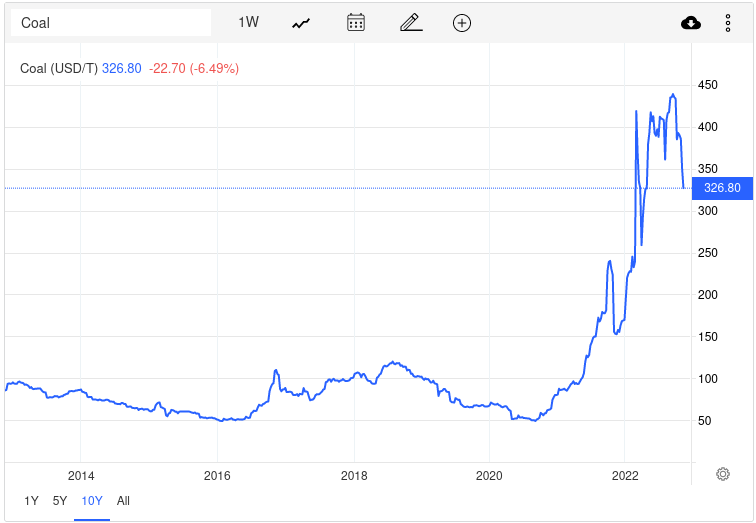
There's an article here https://www.carsguide.com.au/adventure/tesla-model-x-74243 where towing a caravan basically cuts the range of the vehicle in half. Maybe one day there'll be an option to put a battery pack in the caravan. Maybe we'll see the return of drovers and the TSR opening up again. But you're right in terms of segments of industry being disrupted as the scale of product lines are wound back, unfortunately there will be significant dislocation of some industries and with change comes winners and losers. The whole phasing out of this industry is going to be difficult and painful. However the alternatives will be much worse, so completely ignoring the issue, melting the antarctic icecap completely gives about 60m sea level rise, massive humanitarian causalities, dislocation and war on an unimaginable scale. An acidic ocean with no calcium carbonate based lifeforms would be very different, iron, currently largely insoluble in oceans becomes soluble and no longer limits growth leading to large hypoxic areas. But is remains hard to predict winners and losers, for example coal's medium and long term future is pretty grim but the combination of the conflict in Ukraine have led to some spectacular prices in the near term.

-
But the costs are way way less. For instance I drove my admittedly gas guzzling beast about 800km the other day and put about $200 of fuel into the atmosphere. My wife has an electric vehicle on order which would have cost about $50 in electricity or much less if charged from solar. The maintenance costs are significantly less as well so overall I'm pretty happy with the tradeoff.
-
For person transport batteries just work. Electric cars are faster and require less maintenance than their petrol and diesel brethren, they also cost significantly less to run. As battery costs decline, electric vehicles will get cheaper. For freight it's not so black and white, batteries wear out quickly and they eat into the carrying capacity of the vehicle. However for metro use they're probably still a good fit. Long haul will be using liquid fuels for some time. As costs of carbon capture are costed in some routes will be cheaper via electric rail. For air transport batteries don't make any sense at all. The only options that I can see are liquid at room temperature fuels and nuclear. Nuclear not because it's a good thing to put in a plane but it does have zero emissions and provides effectively unlimited range. And planes have flown with reactors aboard.
-
It is a free world and you can believe whatever you want, however I believe in occam's razor as a problem solving tool. Look I'm not a big believer in theories where organisations like the UN and agenda 41 and special agencies have significant hidden agendas and move mysteriously behind the scenes. Burning fossil fuels and polluting the atmosphere was a problem waiting to happen. You can't put gigatons of stuff into the atmosphere and expect nothing to happen. Similarly dumping CFC's into the atmosphere disrupted the ozone layer. In the past dumping pollution into streams and rivers created problems which are still with us today. Ask the Japanese about mercury. I believe things like politicians and people in position's of power taking bribes for personal advantage and vested parties corrupting processes for advantage. They happen and they're documented. Loonies tend to get together and try to influence things and when that fails they blow shit up and kill people. Just look at the current processes happening in Australia where christian groups are trying to use branch stacking to take over an established political party, but in essence they've making the party unelectable as moderates distance themselves from the fundis, demoncracy in action. Gambling related organisations lobby Governments to continue to allow problem gamblers to be their prey despite the obvious harm. The simple fact is that problem gamblers contribute the most, they give all their income and more. Essentially there are extremely powerful and well heeled groups in plain sight who will be significantly disadvantaged by the curtailment of fossil fuels. I'd be expecting them to be spending enormous sums to try to maintain the status quo and confuse simple souls for as long as possible. It worked for the tobacco industry so why not fossil fuels. 😉 Take a look at the Panama papers to see dishonest wealthy lying and engaging in fraud and cheating to keep their lucure. Show me any peer reviewed or even a paper endorsed by a number of academics or news organisations which shows that this spectre is haunting our society and handing power to faceless men? My world is pretty simple it's made up of money, power, issue motivated groups and individuals who like to create and do things and of course the mob who can be flushed in most directions. For my compass I use science and technology, other people use the vibe, whispers and happy thoughts.
-
In terms of efficiency the old piston airliners were pretty good in their fuel consumption per passenger mile. https://www.lowtechmagazine.com/2010/09/piston-powered-aircraft-as-fuel-efficient-as-current-average-jet.html
-
Yes they do. If you actually read the publications from climate scientists you'd find that this has been done to death. Cycles are well understood, there are many sources of data relating to this. What is poorly understood is by many people is the rate of change caused by greenhouse gases. Anyway I think banning private jets is dumb, making them carbon neutral is a much better concept.
-
What wrong with making private jets carbon neutral? Bill Gates does it with his? Just buy a starship and it's not a private jet and more efficient to boot. 😉
-
My takes on it is that Ann Bressington is a bit a looney, and taking in her theories as gospel is really drinking the cool aid. You have groups like this https://likethedaysofnoah.wordpress.com/agenda-21-by-anne-bressington/ who think its a good idea. I'd just call them the religious fringe. ie the world is 7000 years old and homos should be cured types. If man was meant to fly God would have given him wings etc. Agenda 21 is a non-binding resolution which simply says try not to shit in the nest. Build sustainably. https://en.wikipedia.org/wiki/Agenda_21 Conspiracy theories associated with Agenda 21 https://en.wikipedia.org/wiki/Agenda_21#Conspiracy_theories Articles on the conspiracy theories Conspiracy theory associated with Agenda 21 https://www.theguardian.com/sustainable-business/2015/jun/24/agenda-21-conspiracy-theory-sustainability This is pure nonsense and drivel.
-
I really don't understand what is so complicated. https://en.wikipedia.org/wiki/Sea_level_rise Greenhouse gasses make things warmer. Ice melts when it get hot. Water runs down hill and eventually gets to oceans. When you add water to a container the level in the container gets higher. Water also expands as it gets warmer. You can check this by visiting pretty much any glacier that you want to, they've receded or disappeared. The whole social media meme of Sydney harbour shows no sea level rise is simply bogus. https://www.usatoday.com/story/news/factcheck/2022/10/26/fact-check-sea-levels-sydney-harbor-rising-data-shows/10555953002/ Geologic processes make individual points rise and subside. So it is possible and even likely that some area will show sea level rising or subsiding, however by comparing lots of these areas you can average them together and figure out what is going on. Grabbing a single data point and spouting about it is called "cherry picking" for good reason. Just because a plane momentarily pitches down doesn't imply a mechanical problem when it flies well for the rest of the time, it could simply mean that you entered an area of descending air. On average the air is static however there are areas where it's moving up and others where its moving down. The atmosphere isn't a conspiracy.
-
This sound a bit conspiracy theoryish to me. I'd suggest that you read up on what the IPCC is https://en.wikipedia.org/wiki/Intergovernmental_Panel_on_Climate_Change and understand it's funding model. It paid for by Governments and the payments are voluntary. It's reports are based upon good science, not conspiracies or some special club's agenda. Look I've worked in an around Government agencies for decades and they struggle to tie their shoe laces, even given an instruction book. Yes the "Club of Rome" is an organisation however it's not a particularly potent lobby organisation. It reflects a point of view but not a particularly great one or one backed by rigourous modelling. https://en.wikipedia.org/wiki/Club_of_Rome they aren't particularly influential There is no "Climate change agenda", there is a climate change problem. Climate change is a real problem and it is based upon very simple science with some appalling outcomes, in many way the analogy to the recent Chinese booster launch stage coming back down recently is a good one. Just because we can't predict where it will land doesn't mean it won't be coming down. That sucker is coming down and it's based upon very simple maths which a high school student can do, similarly climate change is based upon very simple maths, however predicting the exact outcomes is very difficult. The key thing is that this lack of certainty is actually worse https://www.abc.net.au/news/2022-07-28/chinese-long-march-booster-rocket-fall-earth-china-doesnt-know/101276380 Shorthaul jet travel may have had a significant impact on the operation of some mines however that doesn't mean that it is a sustainable business model if you factor in the cost of emissions. Once you do other options might present themselves as more attractive. Even minor efficiency gains like turboprops start to add up so if you want to invest in transport they'd be the way to go. Look I want to do things which have an extravagant energy budget however I'm smart enough to know that fossil fuels are bad. They're extremely handy and we've 120 years of optimising processes to make stuff from them. If you look at the four pillars of modern society as "cement, steel, plastic and ammonia" we currently make them all from very old sunlight in the form of fossil fuel, getting away from that will be incredibly hard and expensive. Look while I think that wind and solar have a place in the overall energy solution personally I don't think that it is a viable solution for more than about 15% of our electricity grid needs. We need clever people making good decisions on what technologies to base our economy on which don't emit greenhouse gases. We don't need lazy thinking blaming it on a "conspiracy theory". I read up on the costs associated with ammonia production via solar and wind and it's pretty ludicrous. For example a best case scenario gives you about a 20% efficiency ignoring the fact that you might need to transport it, and the fact that nobody yet has a power generation turbine which can run on ammonia so you'd need to split it back into Hydrogen making it even less efficient, ignoring the fact that burning ammonia makes 100x the NOx emissions of natural gas. Also ignoring the fact that you'd want to be running the electrolysis unit as 100% rather than intermittently and the fact that you need to run the Haber-Bosch process continuously or otherwise it damages the catalysts.
-
I have a pretty good understanding of what science actually says in this area. While there is a lot of the non-science chatter in the popularist mediums (this one included), proper journals actually publish good material and I suggest you acquaint yourself with these sources of information. Wikipedia too is a good source of information. Contentious issues tend to be moderated by people who understand and attempt to provide a viewpoint which reflects consensus. Rather than argue I'll simply point to the following. Firstly read the wikipedia article on the guy. While he worked for a Government department he wasn't the go-to guy, he was an under-secretary. This is a member of the management team but not a head-honcho. The secretary is the go-to person. https://en.wikipedia.org/wiki/Steven_E._Koonin Secondly read a couple of rebuttals in either a respected popular science rag such as Scientific American which has had articles written by luminaries such as Einstein https://www.scientificamerican.com/article/a-new-book-manages-to-get-climate-science-badly-wrong/ Another nice rebuttal is provided by one of his previous PhD students, who actually liked the guy https://yaleclimateconnections.org/2021/05/a-critical-review-of-steven-koonins-unsettled/
-
NSW motor vehicle licence at 75year old
Ian replied to Geoff_H's topic in Student Pilot & Further Learning
The statistics that we're presented with often don't tell the real story of actual risks. For example young people are over-represented in the driving statistics fatality rate. However when you base your statistics on actual risk per unit of exposure ie the amount of travel that people actually do, the high risk drivers are the elderly. Essentially young people drive a lot and they tend to drive with full cars. People older than 70 don't drive near as much however they're over-represented in the accident statistics per unit of travel. And yet in Victoria you now require something like 200 hours or 5 weeks of 9-5 driving to get your provisional license. And yet there are no controls of the actual higher risk group. Another ignored risk is that young drivers generally get better over time and older drivers get worse. -
NSW motor vehicle licence at 75year old
Ian replied to Geoff_H's topic in Student Pilot & Further Learning
This might explain why our neighbour had to intervene and get their fathers license removed in Victoria. Can't say that I think that its a great policy from a safety point of view. -
Tool Kits: LSA, Trips Away
Ian replied to APenNameAndThatA's topic in Student Pilot & Further Learning
Lion or Tiger? -
Which DC's did you buy? Some of the higher end headsets just felt a bit plasticky, fragile and cheap despite the price tag. It's a pity that they don't publish measured attenuation figures, or if they do I'm not aware of them. One thing to considered with the ANR is the type of connectors to get with the headphones so they can receive power from the plane.
-
If you have the gift of the gab, truck weighing stations have set of weights calibrated against the National Measurements Institute standard weights. That way you could calibrate your standard bathroom scales.
-
Really enjoying the thread and seeing the different approaches being used. Would it be possible for those who've built or had hangars built to give the dimensions, floor type and costs. (probably the approximate year as well)
-
What's the advantage of noise cancelling and earplugs. Wouldn't it be simpler to buy earphones that attenuate the sound more? A combination of https://www.amazon.com.au/Professional-Safety-Decibel-Defense-PROTECTION-GUARANTEED/dp/B01BEENYCQ and earbud mikes might also be more effective if it floats your boat as it would combine the best quality of sound with an un-distorted sound feed. I'm not 100% sure what you're saying. Do you wear passive foam plugs under your headphones? If that was the case your headphones would need to be louder to overcome the passive plugs and thus would sound louder and even with foam plugs with attenuate different frequencies at different rates. The whole wearing a facemask and earplugs when sleeping never really lit my fire so I can't say I'm a fan. I wear ear protection when I need to but my house is pretty quiet of a nighttime. However if I slept with someone who snored I might change my mind 😉 https://apps.dtic.mil/sti/pdfs/ADA624086.pdf There's a good piece of research on this however it's a pity that it didn't include the David Clark One-X in the mix as I'd be interested to know how much passive attenuation they provide. I suspect that they'd pay more attention to the passive attenuation than other brands but that's just a guess.
-
NSW motor vehicle licence at 75year old
Ian replied to Geoff_H's topic in Student Pilot & Further Learning
It's a pity that the Government didn't go through with the Australia card years ago. Rather than try to force it down peoples throats it could have been a smartcard that combined all forms of Government identity in a secure element. The current approach of putting credentials on a phone is a bit dumb. A phone is just a computer complete with all the associated security vulnerabilities. A large chunk of the current medicare rorts would disappear if you had a simple tap and go style approach to medicare charges. -
NSW motor vehicle licence at 75year old
Ian replied to Geoff_H's topic in Student Pilot & Further Learning
I think that you'll find that Australia is importing most of its Doctors https://www.racgp.org.au/health-of-the-nation/chapter-2-general-practice-access/2-2-gp-workforce with 51% being foreign trained. So basically Australia takes scant medically trained staff from countries with major health issues which I find a bit wrong and think that we should be training far more doctors and specialists through the public purse. I know that there are lots of people who still want to study medicine and miss out by a couple of marks. It would also be reasonable to make science, engineering and computing degrees free so we have a workforce with management who are comfortable with maths and building things, because currently this isn't the case. It would also mean that might have a workforce who can look after our rapidly aging population both from a medical and economic perspective. I don't mind paying for things that are reasonable such as health checks, medicals etc, however a requirement for multiple different types of medicals is a bit silly. Also it is reasonably to take away a privilege if they pose a danger to others. However real risks should be apparent and it should be done efficiently. Unfortunately what we have now is not particularly efficient or risk based. It would be nice if there was a single medical test for non-commercial vehicle operations and a single test for commercial operations. If someone is to unfit to operate a plane then then they probably shouldn't be driving a truck or in command of a ship either. Does anyone know an overweight truck driver? https://www.hsph.harvard.edu/news/press-releases/truck-drivers-sleep-disorders-crashes/ https://www.abc.net.au/news/2020-05-08/canberra-truck-driver-with-sleep-apnoea-sentenced-to-jail/12228490 -
Or just imperial metric conversion. https://en.wikipedia.org/wiki/Gimli_Glider Aviation reintroduced me to the joys of the imperial system. Pounds, feet, gallons, quarts, knots, it's like learning how to write Chinese hanzi after using an alphabet. Both are pretty and interesting but not particularly functional and should have gone into the historical dustbin years ago. But inertia rather than common sense will keep both in use and people fighting for their continued existence. For giggles look up how to type on a Chinese keyboard, or how to calculate the energy absorbed by the braking system of an A380 which lands at 145knots or 75m/s weighing 575000 kg (633 US tons). By the way the formula for metric is 1/2mv2 and you're done. Would you answer in imperial units in BTUs, calories or "refrigeration tons"