

Ian
-
Posts
519 -
Joined
-
Last visited
-
Days Won
11
Content Type
Profiles
Forums
Gallery
Downloads
Blogs
Events
Store
Aircraft
Resources
Tutorials
Articles
Classifieds
Movies
Books
Community Map
Quizzes
Videos Directory
Everything posted by Ian
-
GAMI G100ul Unleaded aviation fuel finally approved by FAA.
Ian replied to Thruster88's topic in Aircraft General Discussion
Given your willingness to contest the vast majority of climate change research your definition of crap research could be considered somewhat arbitrary. When reading research papers, especially ones from good sites and journals check the bibliography. Unlike facebook and headline grabbing news sites that people often quote as gospel. The research appears reasonable and is based on the following North Carolina has an acknowledged lead problem and they have a program of testing for lead in children. This includes their place of residence and the age of residence in many cases. Rather than forcing the lead issue without solid research the EPA provides grants to agencies related to their areas of interest. Someone figured that they could use this data combined with the UPA documentation on airfield lead emissions to see if their data bore this out. They provided the source of their airport "Data U.S. EPA (U.S. Environmental Protection Agency). 2008. Estimated Pb Emissions from All NC Airport Facilities. Washington, DC:U.S. EPA Office of Transportation and Air Quality. " You can still source this data, instructions below. They only used counties which had good housing age data, this allowed them to control for lead in older buildings. They point that they're making is that lead solution from avgas created a measurable impact on the blood lead levels of children. The effect wasn't large but it was there, also some of the airports weren't large either. This is bad because there's no safe level for lead exposure, only levels which are tolerable because we've spread it around so much. I expect that it is research like this which has driven the sudden approval for unleaded avgas by FAA. Politically poisoning children is a bad look and doesn't win votes. By the way I've attached the instructions on how to obtain the data referenced in the paper. EPA maintains historical data and provides access for this purpose. As you'd expect, that wasn't the focus of the paper. I wouldn't expect a paper which is focused on the efficacy of lead testing coverage to somehow include a section to specially call out airport lead emissions. Also I meant to give a bit of a rebuttal to the book "Unsettled". But rather than that I'll let Scientific Amnerican and Inside Climate News do it for me. What isn't known is that he was employed as a known contrarian of climate science so that policies in this area would pass the guantlet of a know "Devil's Advocate" ensure that the research was incredibly solid. Koonin, the author is a fellow of the "American Enterprise Institute" which is funded by Kock and other Industries with significant fossil fuel investments to the tune of $380M USD. P100WYC3-1.PDF -
Angel Flight is a charitable service that operates successfully already and people are dealing with these issues already. It's a volunteer service which covers fuel costs etc. Do you help an old lady across the road or walk away because of the fear of liability. It's your choice. Personally I also think that it should be the choice of the passenger as to the aircraft and pilot they travel with.
-
Horses for courses Angel Flight doesn't replace emergency services, it complements them. Sometime people just need to travel for a scans such as an MRI or a specialist appointment and for that role sport aircraft might fit the bill. They don't need hand holding on the flight, they just need to get to and from the appointment in a day. When a carer is needed larger aircraft are needed however the key point is its not a one size fits all scenario. Comparing the requirements for emergency response vehicles to general transport is a bit out of the ballpark. It's like comparing an emergency response vehicle such as an ambulance or fire-engine to an uber or taxi. It is not that the requirements are particularly onerous, it is the general undertone that as a service Angel Flights or anything similar should be banned. Rather than the current adversarial ham fisted approach, a set of guidelines aimed at educating both the pilots and the passengers assisting with a risk based approach could have been taken. https://www.kitplanes.com/homebuilt-accidents-comparing-the-rates/ analysis indicates that the accident rates of experimental aircraft while higher than certified isn't enormously higher. I'm not sure that it's quite as cut and dried and a more nuanced approach could be more productive. The average age of the certified fleet is over 40 years and often their instrumentation reflects that age. For example the plane at the centre of the ATSB investation was a 1980s era certified aircraft. If the plane were equipped with autopilot and more modern instrumentation it may have ended differently. Certainly being able to press a button to fly straight and level after becoming disoriented might have facilitated a better outcome. Designs such as the RV series built to a standard design have accident rates similar to the certified aircraft. The big picture outcome is to facilitate better healthcare. If you live in outer regional or beyond your life expectancy is between 2.8 and 13.9 years lower. This is 10% of the countries population which means that between 1096 and 5646 lives are being lost every year in aggregate premature deaths. 26000000*.1*2.7/(80*80) or 26000000*.1*13.9/(80*80). The assumption is that the average age is 80 years, dividing by 80 again gives an annual result. Compared to the risks posed by experimental vs certified aircraft is like being concerned about the air temperature on impact velocity when you're skydiving without a parachute. Something which would be nice to see are more major hospitals built next to airports so there is no a commute for those needing treatment.
-
Regional areas are pretty poorly serviced by the medical services and Angel Flight in Australia has been a community response to meet some of the needs of people who need healthcare. The problem is very real with concept such as "Burdern of Disease", From the AIHW comes this statement A few of the aviation governance bodies haven't particularly taken a shine to the service and have effectively been trying to reduce it's scope of operations. However rather than trying to restrict these operations this type of ground roots aviation should be encouraged and expanded in scope. There is a simple calculus associated with the availability of healthcare and morbidity and death. Investigations by the ATSB into accidents related to Angel Flight appeared to be almost a vendetta against the concept and the organisation, however this completely misses the point that thousands of premature deaths and extended suffering are occurring because of a lack of access to medical facilities in a reasonable and convenient manner. A couple of questions for the group who may be understand the background and context of the current state of affairs. Why is there the degree of antipathy to the concept of Angel Flight from CASA and ATSB. Is it possible to garner greater support in regional areas by getting local GA to other local organisations like Lion/Rotary etc. What percentage of you have written to your local member to get this fixed. The current Minister for CASA is Catherine King Given that there's an increasing number of amateur built aircraft, wouldn't it make sense to include these in fleet of vehicles if the end users are happy to accept the risks. People are grown up and can read and accept a risk assessment. Basically it's and issue of equity and cost, and by any measure the current status quo is failing. I'd encourage you to reach out to these ministers and shake the tree https://minister.infrastructure.gov.au/c-king/contact https://minister.infrastructure.gov.au/mcbain/contact https://minister.infrastructure.gov.au/brown Offer to take them up for a flight to an airport with a twice a week service and explain how hard it is to get an MRI if you have kids, or have dependents or are a carer.
-
GAMI G100ul Unleaded aviation fuel finally approved by FAA.
Ian replied to Thruster88's topic in Aircraft General Discussion
If we could go back to just environmental lead you would have about a 99% reduction. The reality is that the natural geological processes to use your phrase emit "1/16 of a poofteenth of sweet f-all." Historical levels of environmental lead is pretty easy to measure as things like ice cores provides a nice record. The simple truth is that Aviation using leaded fuel is a bit shit. It makes aviation in your area look bad and will provide another nail to hammer into the coffin to those who want to close down airports. Because aviation has dragged their feet for so long they've become completely disconnected from the expectations of the community at large. Most people driving don't remember lead in fuel and consider it a joke. Trying to justify it's continued existence just make the entire industry look like a joke as well. It a bit like trying to argue that climate change is just hysterical nonsense and supporting clowns. https://www.washingtonpost.com/politics/noaa-staff-warned-in-sept-1-directive-against-contradicting-trump/2019/09/07/12a52d1a-d18f-11e9-87fa-8501a456c003_story.html -
GAMI G100ul Unleaded aviation fuel finally approved by FAA.
Ian replied to Thruster88's topic in Aircraft General Discussion
Yup, it all a conspiracy, lead's good for you, climate change is a mass hysteria phenomenon and those Government types are alien reptiles and they're covering up the coming invasion. If it's too warm the planet won't be suitable anymore. I think that you're in the position that the science is still out on what reasonable lead levels are even though Government health bodies have been consistently lowering the reasonable thresholds The recognised safe levels of lead have been progressively reduced as the toxicity has been recognised. Australia still has a Pb threshold of 10. There have been a number of comments that lead is naturally occuring substance and in the environment anyway. That's not true in to any reasonable extent. Atmospheric Lead created by leaded fuel spewed a huge amount of lead into the environment basically creating a nice lead right across the planet. This increased our environmental exposure by about 200x over normal, pre-industrial exposures. There is no safe level of exposure to lead so every reduction helps. For that reason the GAMI alone program should be lauded, tolerating lead in avgas has gone on for far too long. Yes lead was naturally occuring however the naturally lead minerals tended to stay put, locked away geologically. The fact that you can liquefy lead at room temperature and include it is fuel still blows my minds. Also in relation to Bromine it's the Bromine based fire retardants which are being increasingly viewed as high risk chemicals. https://www.dcceew.gov.au/environment/protection/chemicals-management/brominated-flame-retardants -
GAMI G100ul Unleaded aviation fuel finally approved by FAA.
Ian replied to Thruster88's topic in Aircraft General Discussion
You're as bad FB just believing stuff, have you had it measured? 😉 -
GAMI G100ul Unleaded aviation fuel finally approved by FAA.
Ian replied to Thruster88's topic in Aircraft General Discussion
Again rather than just channelling, I'll give you a couple of references and a quote. https://qz.com/2158594/do-you-live-near-enough-to-a-small-airport-to-have-lead-exposure/ https://www.researchgate.net/publication/305924497_Costs_of_IQ_Loss_from_Leaded_Aviation_Gasoline_Emissions In the last 100 or so years atmospheric lead levels increased by a factor of 200 over baseline levels. Also any the vast majority of the lead that we get from the oceans we put there. https://www.pnas.org/doi/10.1073/pnas.1417370111 https://www.science.org/content/article/3d-maps-reveal-lead-laced-ocean There's a nice little too that might by of help https://gprivate.com/60r5c -
OK, there are two schools of thought. One which thinks that climate change is a conspiracy and soon everyone will wake up and it will be business at usual. Given that is the case there's not much point in participating in this thread because it's nonsense. The other thinks that climate change is real enough that significant changes are coming and things like travel will have to demonstrate that they're carbon neutral in some way shape or form. Things like Macron banning private jets is just a populist move that makes people feel like they're doing something. Banning them unless they're carbon neutral makes more sense. At some point I suspect that we'll be forced to fuel our planes with a carbon neutral fuel, by considering what the options are hopefully we can make some sensible decisions going forward. Even if that means investing in canola farms of a bit of bioengineering to make better biofuels. (it has one of the lowest cloud points of the common vegetable oil) If you want to talk about coral reefs and bleaching I suggest that you reach out to a couple of scientists who specialise in that area. Their email addresses are on the page. If they agree with your point of view I'll buy you a beer 😉 https://www.aims.gov.au/research-topics/environmental-issues/coral-bleaching/coral-bleaching-events
-
GAMI G100ul Unleaded aviation fuel finally approved by FAA.
Ian replied to Thruster88's topic in Aircraft General Discussion
I agree, just search on google for lead contamination children Broken Hill. There's also a lot of sites in and around capital cities where environmental lead is high. https://www.smh.com.au/national/nsw/sydney-s-toxic-footprint-the-suburbs-most-at-risk-from-lead-contamination-20191130-p53fnx.html What's the issue with Bromines? I know that organobromides are are bit nasty however you can get bromide pool sanitisers. Not saying you're wrong I just don't know. -
While you might believe this it isn't what most of the scientific community believe. Also public opinion is also moving and accepting the fact that it is an issue. It would be good if you could be convinced by research, facts, published paper and journals but you're making a stand for your beliefs. I get it, I just don't do facebook, brietbart etc as I think they're nonsense. I know that you would like us believe differently however it's just a belief. The future will entail Lower carbon emissions Lower methan emissions Taxes on emission or equivalent like an emissions market. Significant reductions in fossil fuel Alternative energy technologies Somehow GA needs to dovetail into this framework. There have been some STCs for pure ethanol https://www.flightglobal.com/corn-to-run-can-ethanol-be-used-as-a-clean-alternative/71449.article so the whole zero carbon approach isn't a nail in the coffin of air travel or GA, it just needs a bit of innovation. I'd like to see some biodiesel powered planes funded by Government grants as well. But this is just my opinion 🙂 But I'd be willing to put a wager on it, as I said investment is all about timing.
-
GAMI G100ul Unleaded aviation fuel finally approved by FAA.
Ian replied to Thruster88's topic in Aircraft General Discussion
Personally I'd rather see lead phased out as soon as possible. Even relatively small amounts show an impact on children's IQs. https://pubmed.ncbi.nlm.nih.gov/8162884/ Given the choice I'd ban it tomorrow, I think that its continued use is negligent to the point of being criminal. As an industry aviation would deal with it. While lead IQ relationships are reasonably easy to measure a more insidious linkage relates to violent crime and antisocial activities. All in all it's a bad news story and a sucking chest wound on the industry. -
Have you noticed any changes at all in the oil or anything else? From an installation point of view how would you rate the difficulty out of 10? A couple of photos would be nice if you have the time?
-
GAMI G100ul Unleaded aviation fuel finally approved by FAA.
Ian replied to Thruster88's topic in Aircraft General Discussion
Thanks for that, it's good for someone to wrap a bit of analysis on the practicalities. In reality the only way that this will work is if drop dead dates are set for the phase out of leaded fuel. From an STC point of view does it make more sense to buy one for this fuel or mogas? On the one hand you will have compatibility across the fleet however it comes with an reasonably pricey STC and higher fuel prices. On the other hand you will have a cheaper and readily available fuel which only covers 80% of the fleet, some of which will require STCs which is about USD $1.50 per HP. https://www.eaa.org/eaa/pilots/eaa-stc-program/auto-fuel-stc I watched a presentation by an analyst recently who was of the opinion that we're already in the next cold war and his arguments were somewhat compelling. If that's the case supply chain security might garner a little more focus from Government. I think that his strongest argument related to the sell off of US treasury bonds by China which significantly reduces the potential for fiscal collateral damage. Of course tea leaf gazing is a difficult business. -
GAMI G100ul Unleaded aviation fuel finally approved by FAA.
Ian replied to Thruster88's topic in Aircraft General Discussion
It is a big achievement however it's probably about 20 years too late. From a value perspective using mogas and water mw50 injection starts to look pretty good. That's 90c in the US which based on the general pattern of pricing means about double over here, and that's an optimistic 90c With 80% of traditional certified engines having the ability to run on straight mogas it will be interesting to see how it pans out. -
All these things are possible as long as they're carbon neutral. But I can't see coal having any redeeming values in the future. The Government has thrown billions in subsidies toward lower emission coal and it's all failed. They could have built a nuclear power plant in the money that they gave away. That's the thing about investment, it's all about the timing. As Kerry Packer said, its easy, buy low, sell high. Maybe if we had politicians with a bit of vision pretending that climate change wasn't an issue things may have been different. If they actually start to make all vehicles carbon neutral maybe engines like this will become back in fashion https://en.wikipedia.org/wiki/Guiberson_A-1020 The efficiency was 0.37 lb. per h.p. which is about equivalent to the toyota prius engine. Imagine what it could do with a bit of turbocharging and modern fuel injection. Given the differential between boats and planes, maybe these might become more popular. I think that they're classed as boats https://en.wikipedia.org/wiki/Ground-effect_vehicle
-
It would be nice to get a good idea of the diesel auto engine conversions out there. We might all be running on ethanol or biodiesel soon as the most cost effective solutions. The advantage of diesel is the efficiency and energy density of the fuels. Both ethanol and biodiesel are pretty hard on plastic tanks though.
-
I try to minimise my carbon emissions. However flight doesn't have a good alternative to carbon fuels. I'd love a plane which could fly on biodiesel which is a reasonably feasible projects. Did you know that there's a special page on wikipedia dedicated to climate change conspiracies. https://en.wikipedia.org/wiki/Global_warming_conspiracy_theory However as I've stated I like to use profligate amounts of energy by travelling for pleasure, buying manufactured goods, swimming in winter and flying for fun. However as a someone with a vaguely scientific bent I don't see this as mutually exclusive to a zero carbon emissions philosophy. However to continue down this path I think that nuclear is the only real answer. I believe that scientists are generally smarter and more believable than either football players, politicians and hairdressers. They put their theories up for public scrutiny and accept the criticism. They generally get promoted and remunerated for being right, not being popular or charismatic. I also accept that at some point in the future we're going to be asked to demonstrate that we're carbon neutral and will get taxed when we're not. On the other hand because you think that this science stuff is all junk you'll probably just get old and bitter.
-
Bill Gates likes private jets and thinks that dumping CO2 is bad. So he offsets his carbon footprint. https://www.ladbible.com/news/technology-bill-gates-spends-7000000-each-year-to-offset-his-carbon-footprint-20210215 So does Jeff Bezos. https://www.cnbc.com/2021/11/05/why-bill-gates-and-jeff-bezos-buy-carbon-offsets-how-they-work.html So it might be reasonable to enforce a carbon neutral policy on emission for all travel, but you can start with the rich.
-
I suspect that you're making it a bit hard for yourself, you don't need to work in volumes, just pressure will work. There's a column of air above every square meter of land the weight of that air creates a force of 101.3 kPa. Divide this by gravity and you have about a ton of air above you. The % by weight of air that is CO2 is 0.063 and we want to reduce CO2 by about 0.25 This works out at about 16.2kg per m2 of CO2 or 4.4 kg m2. So for above your farm of 1500/2.2 hectares 110454 tons of CO2 or 30123 tons of carbon. There's a fair margin of error but you get the gist. This is similar to the pissing in the pool argument. Yes I understand that people do it however most people don't, and while it isn't grand, it's better than the alternatives. Also it's not the "global warming true believers" its what science says. You know that thing that allows engines to run, planes to fly and medicines to work. It really is that good. Your views are in the same camp as the "world is flat", "that vaccines cause autism", "The UN and Bill Gates vaccines programs are sterilizing women" and "fluoridation is a communist plot". Take a look at https://en.wikipedia.org/wiki/List_of_conspiracy_theories#Science_and_technology It has some corkers that you might want to believe in. I'm not out to hurt your feelings, but if you say dumb stuff I'll let you know, and I'm letting you know. 😉
-
The history of lead in fuel • a Veritasium video
Ian replied to Garfly's topic in AUS/NZ General Discussion
I'm not really sure of your point here. Are you saying that burning either Coal or Uranium makes the world hotter as a heat input. Appreciate the allcaps but nuclear is the safest form of power generation, this includes deaths from Chernobyl and Fukushima . https://www.altenergymag.com/article/2020/03/what-is-the-safest-energy-for-the-future/32904 I agree that what we're seeing in the Ukraine is cause for concern however the deaths are being cause by guns, bombs and bad people. About 14400 people have died so far in the war. None of them from nuclear power. This is a good example of perceived risk vs actual risk. It's a bit like the fear of flying. If you include greenhouse gas polution, coal is not cheap, none of the CO2 capture processes have come close to removing the carbon from the exhaust and they drive up the cost enormously. China is going nuclear, solar and wind in a big way. "Coal's Dead" get over it and move on. It's not smart its dumb. But we have gone a long way from the original topic of lead in fuel. Lead in fuel like coal and all the majority fossil is a dead technology. Find good alternatives and move on. Don't try to persist the status quo as this just causes more harm. -
The history of lead in fuel • a Veritasium video
Ian replied to Garfly's topic in AUS/NZ General Discussion
Fuel cost is a negligible input in nuclear. So efficiency isn't particularly important in that space either. However higher temperature plants can operate much more efficiently. Solar salt has been more expensive than expected when implemented. You're better off installing solar PV panels and heating the salt electrically for storage. Not to say that someone won't find a better way but no-one has become rich doing it yet. In terms of land usage. https://www.nei.org/news/2015/land-needs-for-wind-solar-dwarf-nuclear-plants -
I was thinking something like this. It removes the residual humidity and lowers the risk of corrosion. https://www.aviationconsumer.com/maintenance/engine-dehydrators-engine-saver-prevails/
-
The history of lead in fuel • a Veritasium video
Ian replied to Garfly's topic in AUS/NZ General Discussion
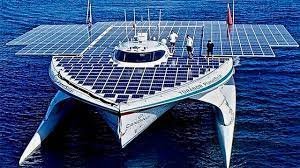
Peak efficiency is just that and tends to fall off pretty quickly especially with turbines. Solar cells are only about 20% efficient but the input is cheaper ;-). One of my recent surprises was the combined heat and power systems are less efficient at electrical production than their standard brethren. It's more cost effective and flexible to generate electricity more efficiently and buy heat pumps. Otherwise you need to force people to build close to power plants on tiny blocks. Coal, oil and gas are fossil fuels bringing carbon back into the atmosphere from millions of years ago. It cheap (excluding pollution costs), energy dense and readily available often near to where the power is required. Solar and wind are also cheap, however they are diffuse and intermittent. Wind as a resource is good for SA and Tasmania however not so much in other areas so you have Another way of looking at the problem is to look at the following https://en.wikipedia.org/wiki/Tûranor_PlanetSolar Nice boat but with all those solar panels it generates 93kW under the best rated conditions. I used to have a subaru which could output 200kW all day and night. Even with the streamlined hulls it can only cruise at 5 knots. Michael Phelps swam at 3.8 knots setting the world record. I love solar and wind and the new storage technologies. I just think that it's a bit of a fantasy thinking that they're going to sustain modern society in anything more than a bit part. I want zero carbon and I like to use lots of energy doing stuff like flying planes and travelling. Unfortunately I think that this can only happen if something like nuclear takes the majority of the load. Fusion's still a generation away unless someone cracks something like muon catalyzed fuision At the very least look what someone smart thinks about this subject. (They also point to the fact that old nuclear plants can only load follow slowly) https://www.withouthotair.com/c26/page_186.shtml He covers off on what is required for pumped storage to work in a country like the UK.
-
Is anyone using active extraction of water from the engine case? Ie an air pump going from the engine case to water absorbing beads to stop corrision?