RFguy
-
Posts
3,542 -
Joined
-
Last visited
-
Days Won
49
Content Type
Profiles
Forums
Gallery
Downloads
Blogs
Events
Store
Aircraft
Resources
Tutorials
Articles
Classifieds
Movies
Books
Community Map
Quizzes
Videos Directory
Everything posted by RFguy
-
So, got a instant reply from the council. which is good. Parking on the grass is free. Parking on the hardstand is space limited and $10/hour.
-
 There is a limit of the voltage produced without load. Regulators and alternators will survive it if load is disconnected. Dont worry about that. Danny have a look at a mid 70s schematic of a Piper Warrior or something, that will show the right way to do things in terms of battery and alternator disconnect. As for standards- in GA you will not satisfy the criteria unless there is a battery isolator. GA is driven by criteria to meet to ensure reliability and safety. There are generally two types of criteria that would apply- there may be a specific requirement in AC43 AND there will be the catch all 'thought shallt make every possible fault remote' elsewhere. As for 19/24, I doubt there is any requirement at all, (it would be in the ATSM) since Jabiru factory airframes have unfised, uninterruptable hot battery wires that are not particularly thick going through the firewire through metal grommets - a fire waiting to happen- (the only problem with Jabiru airframes IMO- otherwise they are excellent) . RAAaus doesnt make technical specifications, it refers to them.
 -
Anyone used this tool ? scroll to bottom and click START https://www.atsb.gov.au/avdata

-
might do this trip in next couple of weeks any suggestions ? main airport probably most convenient. Camden Haven also looks friendly. -glen
-
I put a report in. I was fair. identified possible causes and mitigation strategies...
-
Living with a flying school with 6+ planes airborne in the VC is busy. 1 RPT is not... But it wouldnt be any worse than Bankstown or Moorabbin. But maybe it is worse without tower OR defined approach/departure methods. Maybe' its the most dangerous airspace in the country.
-
Mechanical is good ! On the master breaker ? For an LSA ? You'd need to consult the ASTM for LSAs Probably not required because Jabirus have hot wires through the firewall and no isolator and they also have fires.... (should be the subject of an AD but .....) or maybe they are required but there isnt a competent body to check this stuff ? Danny, you could substitute it for a 200A relay as a master (IE starter runs through it also) , I've posted an affordable , reliable professional option a few times.
-
This was only 2 or 3 aircraft in circuit total . I've been in circuit with 4 other student/instructor PA28s without issue , (plus 2 x twin inbound !) , and everybody was making calls on every sector, no issue, everybody flying with the required position and awareness. It's tight , everyone is on their toes, but we all manage. This was likely at the end of the student intake where there is a bit of experience . Often one plane decides it's too much and goes and does an orbit etc , as if someone does a full stop, that jams of the runway for the next close aircraft..... This situation occurred with the students in their first few hours of flying experience, so while this is a specific situation, I think we need a generalized solution. One of my circuits I went a little wider and extended to downwind to get some spacing. So, something will need to change in the procedures to satisfy me from this point onward . Now, I could have slowed right down to give the aircraft in front that was seen to be wayward in their circuits for several circuits, but the 2nm separation should have been enough . Their crosswind must have been extra deep and perhaps their upwind extended. Would a downwind call by the student aircraft have prevented this ? No, probably not if I was early downwind and they were late (wide) downwind. Only a inflexion point call would have given position info- IE TURNING base, TURNING downwind. That provides more info. But in this case if I had heard a TURNING BASE call, I wouldnt have seen them into the sky I was looking into . I might have become a bit concerned when looking for them on base BUT you need to be flying your own aircraft also...... (I was looking for them late base when they came across my nose) So think this comes back to flying accurate circuits . Circuits always will vary a bit but this was a case where all the aircraft are PA28s of some sort. Wasnt like there was a twin trainer doing circuits amongst us, that usually messes things u a bit , but is rare. They are doing different training. I'll also look at my legal obligations to make a report, and whether I see any benefit to others doing this, since I think this can be mitigated with better procedures. I'll be at the airfield tomorrow.
-
I know of a few 912 failures, nothing related to the crankcase- majority all fuel delivery issues (carb or fuel supply) (complete stop) - and a couple of ignition module issues which were not complete stop..
-
flying in Class E / transition layer question
RFguy replied to RFguy's topic in Aircraft General Discussion
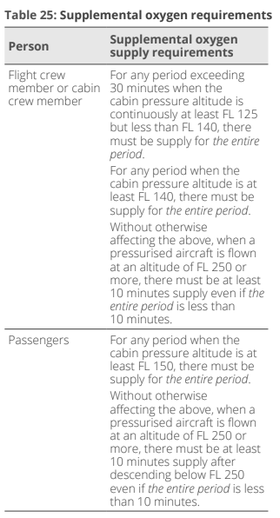
MOS26.43 Supplemental oxygen (MOS 26.43) An aircraft must carry sufficient supplemental oxygen as described in Table 25. Fitted or carried supplemental oxygen, must be able to be stored and dispensed to the crew and passengers. Flight crew members must use supplemental oxygen in accordance with the supply requirements set out in Table 25.
-
I can just tell when I am not cool as a cucumber. Very distinctly. In varying amounts. and nothing better shows that then going to an unfamiliar AD with a few planes in the mix. First obvious thing, tighter grip on yoke/ stick than required. etc etc legs frozen a little bit instead of dancing on the pedals . Breathing not smooth. All really subtle tell-tales that this is not your home patch. It's OK (unless you dont read you own signs) . On RPT- yes the Cessna Caravan courier plane that comes in daily, they just come and go in the direction they are travelling on their milk run. Parkes is same, terminal at south end, land to the south , take off heading north (no taxi).
-
very good points Nev. I know that I can monitor / estimate my competency and recency and capacity by simply noting my stress hormone level . It goes up significantly when I am away from my home field at another field.... and when stress hormones are up, checklists become more critical.
-
flying in Class E / transition layer question
RFguy replied to RFguy's topic in Aircraft General Discussion
It is significant that at least in the AIP, every couple of years there has been a change of the way they spell it out.. at least 4 times since 2011..... Now, the most recent AIP, that I think I can interpret with the intention of the text. But they did change it since 2017, presumably people like me writing in and querying. -
I think it is fine to say 'screw the MARAP system ' as long as you can demonstrate AND document that you did your homework (specification suitability) AND followed best practice. The insurance issues are something else. I'd be assuming your airframe insurance wont be covered / valid so forget that. I suggest to people if they have or want a factory aircraft , get one that doesn't need mods, not too old, and insure it fully, or go the other side which is fly an 19- aircraft, forget insurance (would it really payout) that screams experimental on the instrument panel and fly it with care and not over built up areas without able to glide. If you are going to crash big time, well you'll probably be dead anyway so don't worry. Its a reason I'm selling my 24- Jab230 and will look for a 19- aircraft .
-
and - remember a high proportion of the instructors at bulk flying schools are young kids getting hours. They're not 10,000-20,000 hour pilots. I'm beginning to think on how a pilot turns out, much depends on how their instructor was taught- whether they had an older instructor that taught an equal amount of airmanship, or a young , fairly green instructor (through no fault of their own- they just didnt get the full bottle ) that just teaches the basics. That's a generalization of course. There is good and poor across all ranks.
-
The trouble starts skip of course when there is no wind and some are going off north, some going off south..... no dead side. I am very cautious in that case. NEEDLESS TO SAY. I AM NEVER, EVER GOING TO LET THIS NEARMISS HAPPEN TO ME AGAIN. BY GADGETS OR WHATEVER
-
Yes, RAAus tech compliance is BS. But that's fine if you dont ever talk to them,--- as you get the opportunately, if you choose , to do whatever you like, as long as you do it sensibly, to some standard and consult your esteemed peers on their opinion. That is the GOOD thing about RAAus aircraft. The down side is that MFRs have the last word even if they are ++wrong. I beleive 24- (factory) aircraft should be within an AD regime , and 19- can pretty much stay like it is - that seems to work (per above - do it sensibly, do it to standard and consult your peers) . The Jabiru factory electrical wiring is a fire waiting to happen , and is sooo far from AC43.13 it's not funny. but, the MFR thinks it is fine !
-
it's funny a bit- true story here - when I get in my car and do a U turn , and then if the road ahead is dead straight.. I tend to out of aircraft habit, floor it, until I realise I am not on a takeoff roll....
-
problem is with itinerent / school aircraft is that there isnt any regime for keeping them charged AND in the metal PA28 , the position performance is "wholy inadaquite" unless they're out of the shadow of the metal skin under the windshield in front of the passenger . which is no good. so, they need to have the transponder upgrade which is notr so cheap because you got to put a GPS receiver into the roof skin which involes making a hole, a doubler plate, running a cable etc etc. This sort of problem would be mitigated with a dual receiver that talks to the other to get a composite picture of the sky.
-
smoke. yes. Yeah I like the marine radar idea. I've thought a handful of cameras could pick them up, also. A ground based system could also figure it out. However, ADSB on all ships make that much easier... However, if the flying school is not going to fit new transponders to all their fleet (although they have not specifically declined this- they MIGHT now) (about 16 aircraft I think) then I'll have to be defensive and have detection measures. The NVFR and IFR aircraft all have ADSB likely due to required / likely upgrades . It was like someone ran through a stop sign in front of me. 2 seconds max distance.
-
Now, I will get my ADSB-B TCAS style device out the door very much seriously. Yep, supervising instructor was briefed. They are my neighbours so we all need to live together, which is good because it drives objectivity in the post event chatter.
-
and avoiding this was purely luck..... more arse than class. been doing alot of different aerdromes lately. I've started to modify my inbound approach to a circuit if there is any traffic or activity such that I am unlikely to encounter arriving and departing traffic on straight ins straight outs even 5 miles out... (regardless of altitude) by coming over the dead side at 1500' and doing the steep sweeping descending 180 turn down to circuit height to midfield cross wind, so I maximize my chances of seeing things, and see what's going on the taxiways and runway. In busy circuits, there are good reasons for quick position calls on all the segments - despite the radio traffic increase which is sometimes discouraged.. It doesnt have to be your life story. quickly said Traffic Cowra Delta Romeo Foxrot base three-three Cowra. Doesnt even really need to word "Turning" or life stories like " intends to do a T&G after eating lunch and calling my mum:". Additionally, aircraft with one radio might go onto the AWIS from the CTAF and will miss radio calls.
-
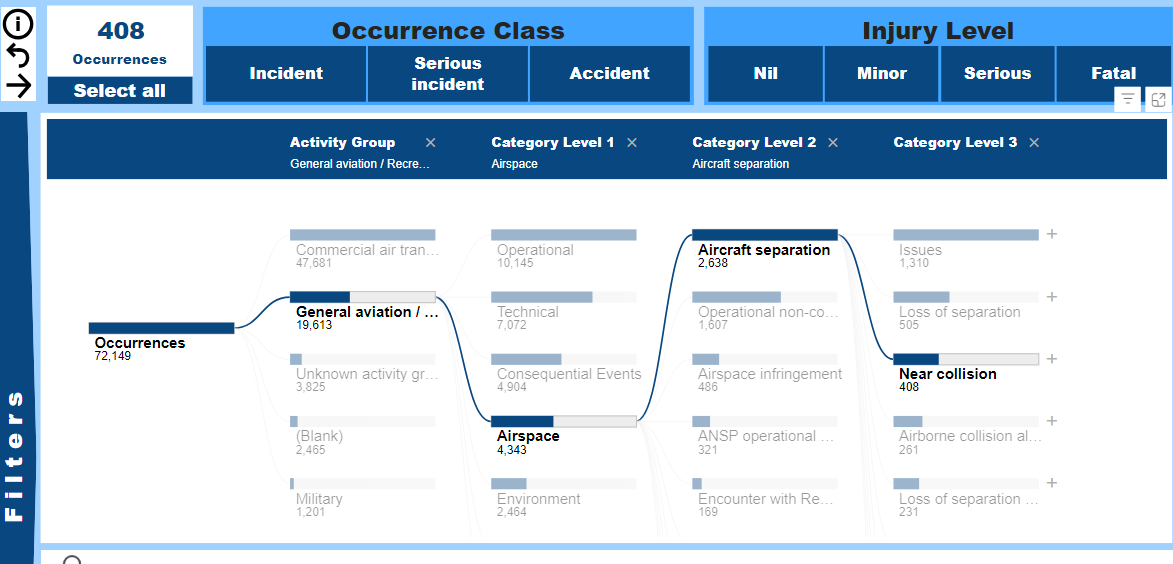
Yesterday had probably the closest call I will ever have . I was mid - late downwind (doing Xwind exercise circuits) and an aircraft 'joined base' and flew across my nose, .. no notice. no radio call. about 2 seconds gap. same height. 2 seconds faster on the downwind and I'd be dead. geezus. I had ADSB , other aircraft did not. Didnt see them by sight or by conspicuity device. I remarked 'that was close' calmly but scared the sh1t out of my passenger (also a pilot) . The student piloted aircraft was previously turning crosswind when I was touching down on my T&G , so I was looking for that aircraft on late base in the air. The guess is they did a very deep wide circuit. mutter mutter. I would never had seen them to my right , looking over into the town background.
-
Deadly yes, potentially. Nev I guess you have looked up or are familiar with limitationns of a Duchess - the single engine missed approach IA minima on 35 for a hot day in Canberra ?
-
It would not take much effort to change the organisation if we wanted to by getting active before the AGM. Its an org elected by members so we can change it if we want to... just takes a little effort.