Leaderboard



Popular Content
Showing content with the highest reputation since 09/03/25 in Aircraft Comments
-
To expand on my previous: Undaunted by aerodynamic reality, the design team at Pilatus/Britten-Norman has announced plans for the BN2-XL (Extra Loud), promising more noise, reduced payload, a lower cruise speed, and increased pilot workload. We spoke to Mr. Fred Gribble, former British Rail boilermaker and now Chief Project Engineer. Fred was responsible for developing many original and creative design flaws in the service of his former employer, and assures he will be incorporating these in the new BN2-XL technology under a licensing agreement. Fred reassured BN-2 pilots however that all fundamental design flaws of the original model had been retained. Further good news is that the XL version is available as a retrofit. Among the new measures is that of locking the ailerons in the central position, following airborne and simulator tests which showed that whilst pilots of average strength were able to achieve up to 30° of control wheel deflection, this produced no appreciable variation in the net flight path of the aircraft. Thus the removal of costly and unnecessary linkages has been possible, and the rudder has been nominated as the primary directional control. In keeping with this new philosophy, but to retain commonality for crews transitioning to the XL, additional resistance to foot pressure has been built into the rudder pedals to prevent overcontrolling in gusty conditions (defined as those in which wind velocity exceeds 3 knots). An outstanding feature of Islander technology has always been the adaptation of the 0-540 engine, which mounted in any other aircraft in the free world (except the Trislander) is known for its low vibration levels, so as to cause it to shake and batter the airframe, gradually crystallise the main spar, desynchronise the accompanying engine, and simulate the sound of fifty skeletons fornicating in an aluminium dustbin. Britten-Norman will not disclose the technology they applied in enhancing this effect in the XL, but Mr. Gribble assures us it will be perpetuated in later models and sees it as a strong selling point; "After all, the Concorde makes a lot of noise," he said, "and look how fast it goes." However, design documents clandestinely recovered from the Britten-Norman shredder have solved a question that has puzzled aerodynamicists and pilots for many years, disclosing that it is actually noise which causes the BN-2 to fly. The vibration set up by the engines and amplified by the airframe, in turn causes the air molecules above the wing to oscillate at atomic frequency, reducing their density and causing lift. This can be demonstrated by sudden closure of the throttles, which causes the aircraft to fall from the sky. As a result, lift is proportional to noise rather than speed, explaining amongst other things the aircraft's remarkable takeoff performance. In the driver's cab (as Gribble describes it), ergonomic measures will ensure that long-term PBN pilots' deafness does not cause inflight dozing. Orthopaedic surgeons have designed a cockpit layout and seat to maximise backache, enroute insomnia, chronic irritability, and terminal (post-flight) lethargy. Redesigned 'bullworker' elastic aileron cables, now disconnected from the control surfaces, increase pilot workload and fitness. Special noise retention cabin lining is an innovation on the XL, and it is hoped in later models to develop cabin noise to a level which will enable pilots to relate ear pain directly to engine power, eliminating the need for engine instruments altogether. We were offered an opportunity to fly the XL at Britten-Normans' developmental facility, adjacent to the Britrail tea rooms at Little Chortling. (The flight was originally to have been conducted at the Pilatus plant, but aircraft of Britten-Norman design are now prohibited from operating in Swiss airspace during the avalanche season). For our mission profile, the XL was loaded with fossil fuel for a standard 100 nm with Britrail reserves, carrying one pilot and nine passengers to maximise discomfort. Passenger loading is unchanged, the normal under-wing protrusions inflicting serious lacerations on 71% of boarding passengers, and there was the usual entertaining confusion in selecting a door appropriate to the allocated seat. The facility for the clothing of embarking passengers to remove oil slicks from engine cowls during loading has also been thoughtfully retained. Startup is standard, and taxying, as in the BN-2, is accomplished by brute force. Takeoff calculations called for a 250 decibel power setting, and the rotation force for the (neutral) C of G was calculated as 180ft/lbs of back pressure. Initial warning of an engine failure during takeoff is provided by a reduction in flight instrument panel vibration. Complete seizure of one engine is indicated by the momentary illusion that the engines have suddenly and inexplicably become synchronised. Otherwise, identification of the failed engine is achieved by comparing the vibration levels of the windows on either side of the cabin. (Relative passenger pallor has been found to be an unreliable guide on many BN-2 routes because of ethnic considerations). Shortly after takeoff the XL's chief test pilot, Capt. "Muscles" Mulligan, demonstrated the extent to which modem aeronautical design has left the BN-2 untouched; he simulated pilot incapacitation by slumping forward onto the control column, simultaneously applying full right rudder and bleeding from the ears. The XL, like its predecessor, demonstrated total control rigidity and continued undisturbed. Power was then reduced to 249 decibels for cruise, and we carried out some comparisons of actual flight performance with graph predictions. At 5000' and ISA, we achieved a vibration amplitude of 500 CPS and 240 decibels, for a fuel flow of 210 lb/hr, making the BN-2 XL the most efficient converter of fuel to noise since the Titan rocket. Exploring the constant noise-variable speed and constant speed-variable noise concepts, we found that in a VNE dive, vibration reached its design maximum at 1000 CPS, at which point the limiting factor is the emulsification of human tissue. The catatonic condition of long term BN-2 pilots is attributed to this syndrome, which commences in the cerebral cortex and spreads outwards. We asked Capt. Mulligan what he considered the outstanding features of the XL. He cupped his hand behind his car and shouted. "Whazzat?" We returned to Britten-Norman field convinced that the XL model retains the marque's most memorable features, while showing some significant and worthwhile regressions. Pilatus/Britten-Norman are however not resting on their laurels. Plans are already advanced for the three-engined Trislander XL, and noise tunnel testing has commenced. The basis of preliminary design and performance specifications is that lift increases as the square of noise, and as the principle of acoustic lift is further developed, a later five-engined vertical takeoff model is another possibility.5 points
-
This bloke has a very good 15 minute video of why he bought a Cozy MKIV Canard aircraft, and what the drawbacks are in their design. In essence, despite being promoted as "stall-proof", they're tricky to fly. A flapless wing (the design can't be fitted with flaps) makes for high speed takeoffs and landings, meaning a longer runway is needed. The tiny undercarriage and high landing/takeoff speeds means it is unsuitable for rough airstrips - and most importantly, a narrow C of G, and strict attention to load positioning, means you can't afford any mistakes in that load positioning. When he flies alone, he has two bags of shot that are required on board to balance the aircraft - and fat friends in the passenger seat, are out. So, not an aircraft that appeals to all, as it's quite unforgiving in numerous areas. Obviously, this bloke loves the advantages - high cruise speed, low fuel consumption, and a reduction in engine noise. He's a good presenter, with clear simple information and explanations - a lot of YouTubers would do well to copy his informative style.4 points
-
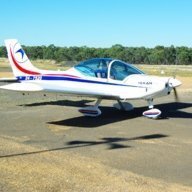
Lucky the rego on the bottom one doesn't end in an H4 points
-
EJJ is the Cavalier that flew from NZ and was based at Heck field , the owner built it in NZ he was a German guy Gunter it ws in the same hangar as our aircraft3 points
-
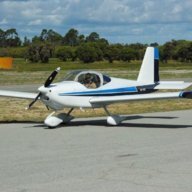
I suspect the Jodel in the third pic is unrelated3 points
-
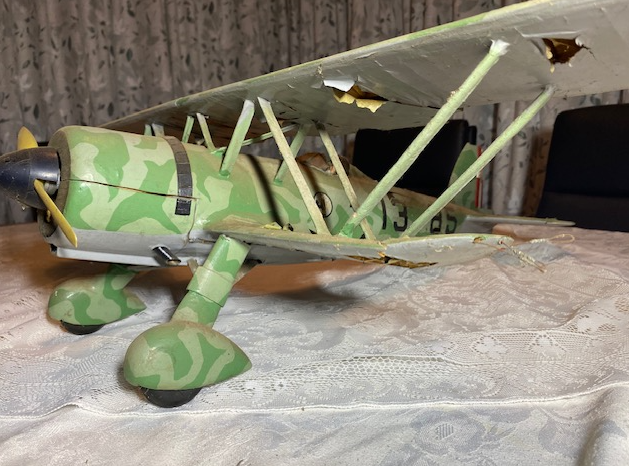
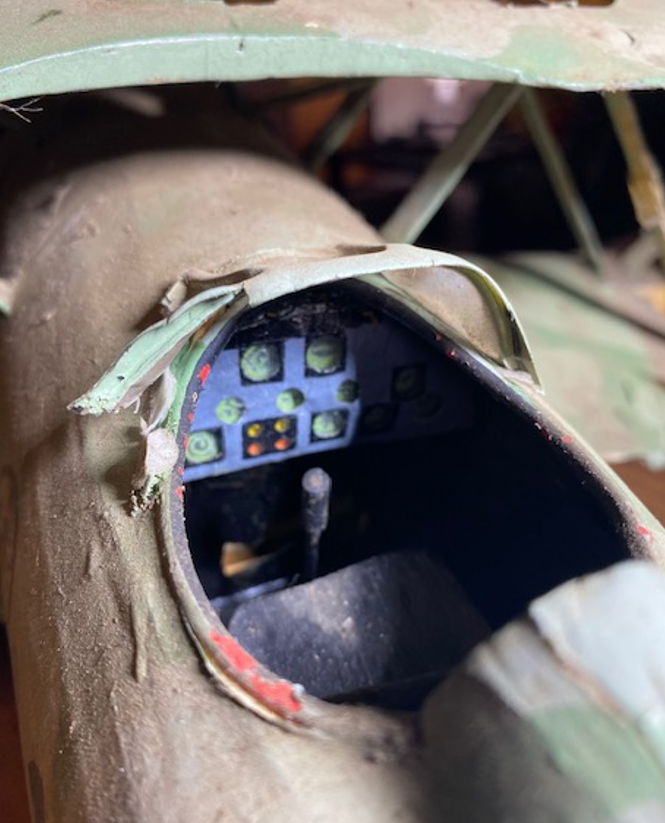
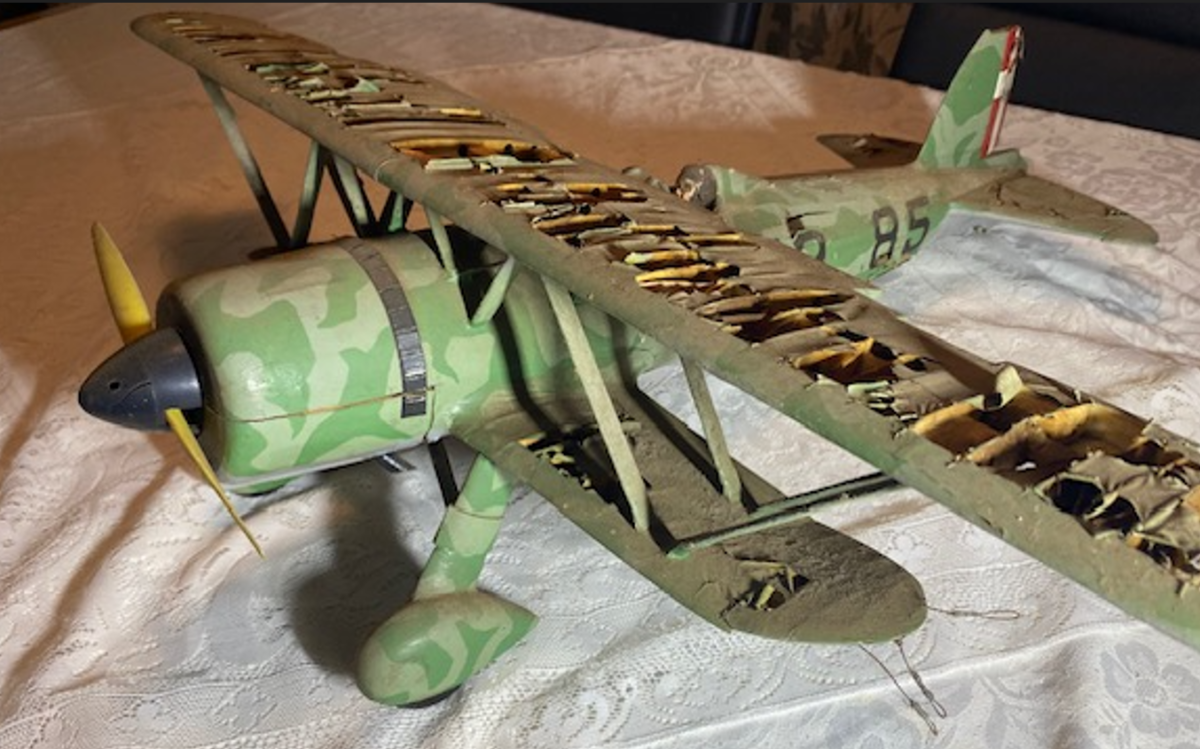
I scratch built one of these as a scale control line model with a third line throttle control many years ago. Sadly, it never flew but I still have the now very much worse for wear relic that I can't bring myself to part with. All the numbers and decals were hand painted. It's hardly a competition winner but not bad for a 16 year old. Never thought that one day I'd have a pilot's licence and build a real aircraft.
 3 points
 -
Landing distance required is ONLY 1900 Metres (approx. 1 Nm.) Nev2 points
-
Needs more take-off distance as it is underpowered . Nev2 points
-
I guess when you're landing at 130-140kts, 2700M does look like a pretty short distance to bring her to a halt.2 points
-
Been around for a bit as at Airventure in 2011 The Adventourer Kit Heli from Composite Helicopter Debuts at AirVenture By Mary Bernard - July 29, 2011 0 After seven years of development, Peter and Leanne Maloney of Composite Helicopters made their first appearance at AirVenture to promote their five to six place kit helicopter, the KC518 Adventourer. Carbon fiber and Kevlar composite construction with power from a single turbine engine (either the RR250 C20B/J or the RR250 C18/T63) make for a potentially impressive package, though the helicopter will not fly for the first time until August or September. The Mahoneys are working toward certification with both New Zealand’s Civil Aviation Authority (CAA) and the FAA, and they intend to continue manufacturing and supporting kits, which will only benefit from the certification process, Peter Mahoney said.The company plans to have U.S. distributorship with staff who will be able to provide initial flight testing and transition training, though it’s recommended that customers who may not already be currently licensed to fly a helicopter get training in a Robinson before piloting the Adventourer. One of the strengths of this kit, the company says, is its unique “frameless airframe,” which is designed and engineered to be assembled from the outside in in a specific predetermined order. Based on preliminary design data with the C20B/J engine, performance specifications are estimated to include a 135-knot cruise speed, 3.6 hour endurance (on standard tanks) and 5.26-hour endurance with auxiliary tanks, though as Mahoney points out, that’s more than most pilots and passengers would want at one stretch. The hover ceiling (IGE) is expected to be more than 10,000 feet, rate of climb more than 1000 feet per minute, and maximum operating altitude 14,000 feet. With the C20 engine, the max gross weight of the helicopter will be 3200 pounds, and the empty weight 1750 pounds, leaving a useful load of 1450 pounds. The left and right storage lockers have 9 cubic feet of space each, and an aft storage locker has 9.6 cubic feet. There is literally enough room to stow a surfboard and a lot more. The cockpit will have dual controls, and the panel will have dual EFIS displays, though which type was not specified. A cargo swing, spray system, tinted windows, and doors with upper and/or lower windows are options. The basic kit price is $335,000, and the quickbuild option adds $44,500. The estimated completed price of the Adventourer is $395,000. Customer visits to the New Zealand factory are encouraged. For more information, visit www.compositehelicopter.com. The Composite Helicopter display at AirVenture is in front of Hangar D.2 points
-
I remember the ME163 mainly because of the extremely reactive fuels it used. I didn’t know until now that it had gone transonic. According to Wikipedia, the aircraft landed after that 700 mph flight with almost all of the vertical rudder surface broken away from flutter. The wing sweep stemmed from its tailless nature and the need to balance the centre of gravity and centre of lift positions for stability purposes, not from any high speed aerodynamic requirements There is one in the Australia War Memorial in Canberra. It was captured by the British, taken to England for evaluation and presented to the Australian government in 1946.2 points
-
That unfortunate pilot. Sitting out in the weather, navigating with a paper chart on his lap. And so far back that he must have landed by braille. The view whilst taxying... well there isn't one. Gotta admire the skill of those pilots!2 points
-
I love the way they class the aircraft as having "all weather capability", but still give the pilot an open cockpit!2 points
-
Despite looking like a fragile death trap, Ken Brock was very successful with his gyroplanes, and they were inherently safe. But he was very badly injured in the mid-1980's, when he was hit by a rotor blade from his own gyroplane, when he landed quickly and exited too fast, to try and help another aviator who had crashed. However, the greatest irony of Ken Brocks shortened career, was that he was killed in 2001, when the Thorp T-18 he had built, crashed on rollout at his private airstrip. An official investigation showed the tailwheel fork had broken due to corrosion, letting the tailwheel depart the aircraft and causing Ken to lose directional control. The Thorp left the airstrip and hit a vertical steel post on an adjoining property, tore off a wing, and went inverted. Ken was trapped in the aircraft, suspended in his harness, and his death was caused by asphyxiation, as he'd suffered blunt force injuries and he was trapped upside down with his head pressed sharply to one side, causing the asphyxiation. His wife was passenger in the aircraft and survived with only minor injuries. The investigators commented on the lack of a roll cage in the Thorp, which would possibly have prevented Kens death, or at least allowed him to be extracted, before he suffocated. https://en.wikipedia.org/wiki/Ken_Brock_Manufacturing https://www.buildagyrocopter.com/sport-pilot-pioneer-ken-brock/ https://data.ntsb.gov/carol-repgen/api/Aviation/ReportMain/GenerateNewestReport/53646/pdf2 points
-
WRIGHT for weight at Randwick. There was a Pterodactyl at Gympie with a Norton Air-cooled Rotary in it. Nev2 points
-
Considered fail safe as the FRONT wing stalling prevents the Main ones doing so. BAD logic. No control surface should ever be stalled. Also if a bit nose heavy they can't be hard ROTATED on a soft field on take off. Nev2 points
-
What a sweet looking aircraft. 👍2 points
-
Just sold my Jabiru and purchased an Escapade 2200 with Rotec water cooled heads.2 points
-
Mr Google says top of range is US $ 350k which computes to OZ $ 540,000 .................. I think 20:1 glide ratio looks real good (price not so good)2 points
-
the flat roof version looks like something fell on it in the hangar2 points
-
The Pipistrel Taurus Electra is an electric powered version of the Pipistrel Taurus self launching glider. Refer Gliders section.2 points
-
Thank you Red 750, My R80 (BushCaddy kit number 105) was to my knowledge the second one to fly in Australia, now over 19 years ago. It still serves me very well.2 points
-
always an imposter mingles Red - a bit like this likely lot
2 points
-
Very Nice. Nev2 points
-
That's in still air. It's a fair bit of runway. Darwin's a long runway. (from memory) Those 707 types Had Dutch Roll issues. Wing sweepback.Nev1 point
-
.............. wierd1 point
-
An interesting article on the "Scariest aircraft of WWII". https://dailytopis.com/this-was-the-worlds-scariest-aircraft-during-ww2-2/1 point
-
Never have grabbed a beaver.1 point
-
It would be worth getting one of those just to be able to say "I fly an F-15"1 point
-
Spellcheck got me. A weight flyer probably wouldn't leave the ground.😁1 point
-
So can helicopters but not when they are travelling distances. Nev1 point
-
1 point
-
I think they Hover more like a chopper. Nev1 point
-
Marty - Did you know that hummingbirds can fly backwards?1 point
-
Yes. Like those pterodactyl ultralights. The weight flyer too for that matter.1 point
-
That's what I wondered . If they are stall proof why are not more popular, the ones I have watched on YouTube seem to need a lot of runway .1 point
-
It does a Job and gets up Hours.. I think the Caribou is the Noisiest . P&W R-2000's with exhaust augmenters. You can hear them 20miles away .,Nev1 point
-
Echo Juliet Juliet shown above could be the one that I mentioned.1 point
-
Damn web image searches. You put in a search criteria, and they find images with only one word of the criteria. Error removed.1 point
-
this was the development version of the aircraft that has gone on to become the first certified electric aircraft in the world, the Pipistrel ALPHA Electro. The 2nd photo you have above is a military variant which is not electric so I am not sure why the photo is there of that aircraft ?1 point
-
Nice aeroplane. I met John Isaacs and saw the prototype when I was in the UK back then.1 point
-
It wiped out the Hopes and lifestyle of many People. Started in the in 1929 in the USA. Some people actually Profit at such times. The stock Market is a Gambling House. Shareholders are the suckers if they don't have Inside Knowledge. US politicians are Buying or Unloading stock that they are passing Laws on.. It's a stacked Deck. Nev1 point
-
That motor properly used is not any more or less efficient than any other . It also has good CS props available. It's a known oil burner though. It's nearly 1/2 of a DC3's engine. R-1830. and it's moving along fast enough to justify it..Nev1 point
-
Yes, that information is correct, 8 Culver Dart GW's were built, powered by the 90HP Warner-Scarab Junior 5 cyl radial. https://1000aircraftphotos.com/Contributions/Braas/13545.htm https://planeandpilotmag.com/culver-dart-model-g/1 point
-
Yes, it's O-320 Lycoming powered. The article says, "A round cowling covers the engine to appear like a radial engine installation". This is correct. The name is spelt "Nugget". https://generalaviationnews.com/2022/06/15/25-years-of-fly-in-success/1 point
-
Video of Stratolaunch carrying and dropping the TA 2 hypersonic test aircraft. Worth a watch! https://youtu.be/9xTvKx5uCKg?si=Vwxt_w2JfTLPdVhQ1 point
-
Sharp eyes, there, Nev. You're correct, the Packard diesel was long ago scrapped and a buyer from Argentina fitted a Wright Whirlwind. That engine was lost along the way and the engineless airframe sold back to a buyer in the U.S. in 1989. That owner passed away before any restoration work could be carried out, and the sad remains of the aircraft only just escaped being dumped. Another American purchaser bought the remains and rebuilt the aircraft completely and fitted a Wright R-975. I have seen photos of complete Packard DR-980 aircraft diesel radials, some have survived, but it appears none are fitted to aircraft. https://airandspace.si.edu/collection-objects/packard-dr-980-radial-9-engine/nasm_A197108930001 point
-
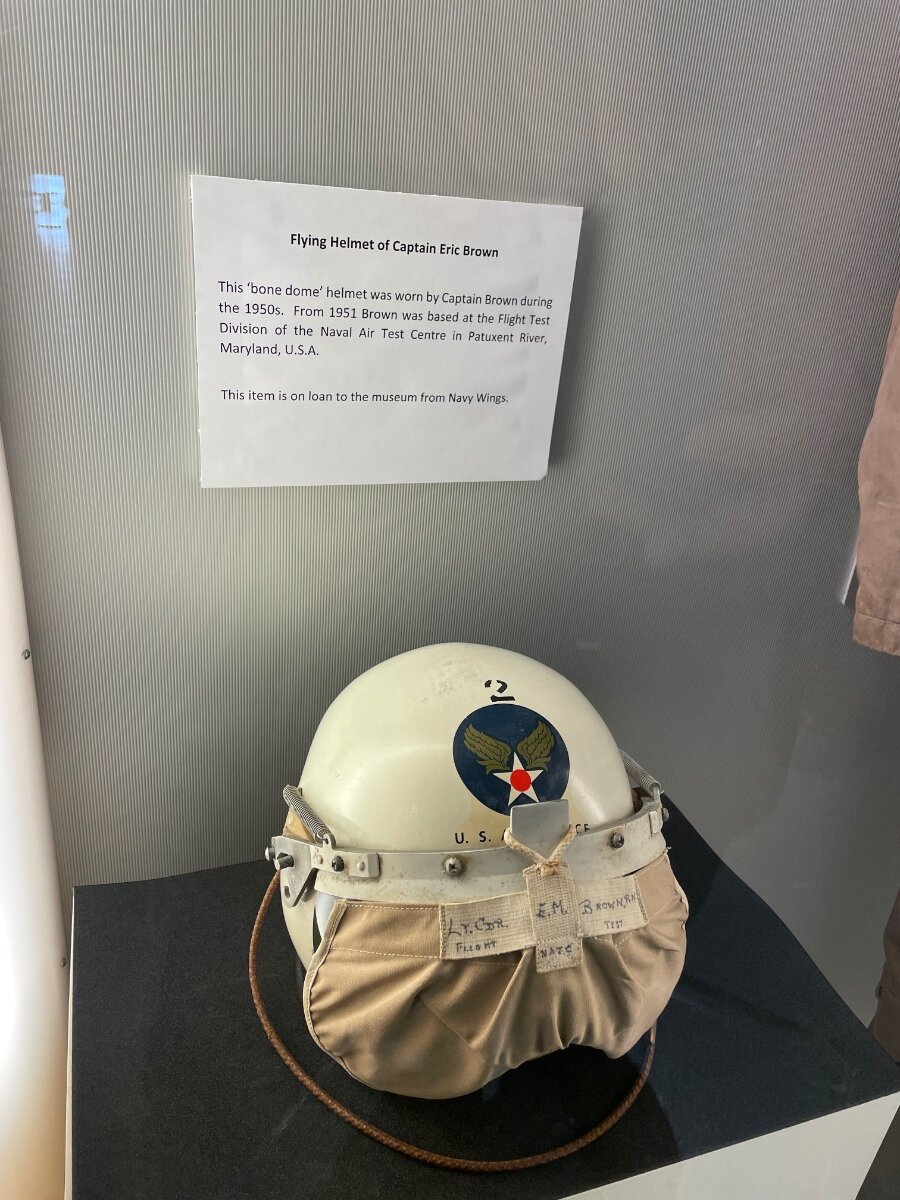
Winkle Brown’s helmet at the Yeovilton museum.
1 point
-
They all look "Ripley believe it or not". Stainless also fatigues. Nev1 point
-
Hard to weld thin SS sheet without it buckling. Nev1 point