red750
-
Posts
8,261 -
Joined
-
Last visited
-
Days Won
79
Content Type
Profiles
Forums
Gallery
Downloads
Blogs
Events
Store
Aircraft
Resources
Tutorials
Articles
Classifieds
Movies
Books
Community Map
Quizzes
Videos Directory
Everything posted by red750
-
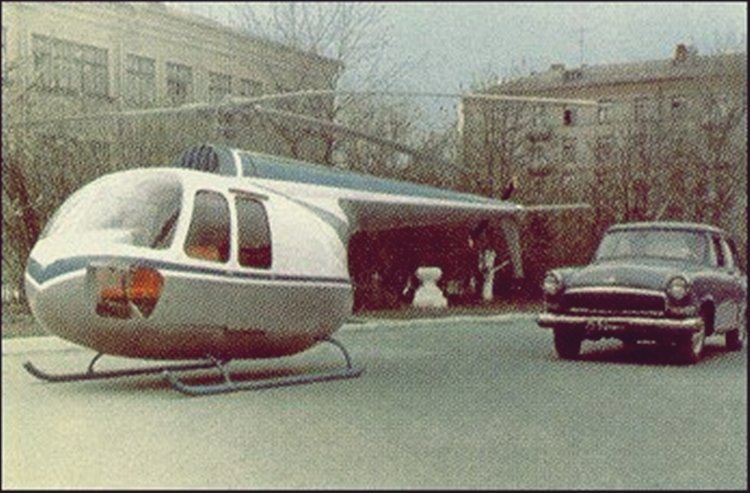
The Mil Mi-20 was a small, multipurpose helicopter developed in the mid-1960s to replace the Mil Mi-1. It was designed for transport, cargo, agricultural, training, and light combat roles. Equipped with Falanga or Malyutka missiles or UB-16-57 rocket pods in its gunship configuration, the Mi-20 failed to gain traction and was cancelled after the second prototype.

-
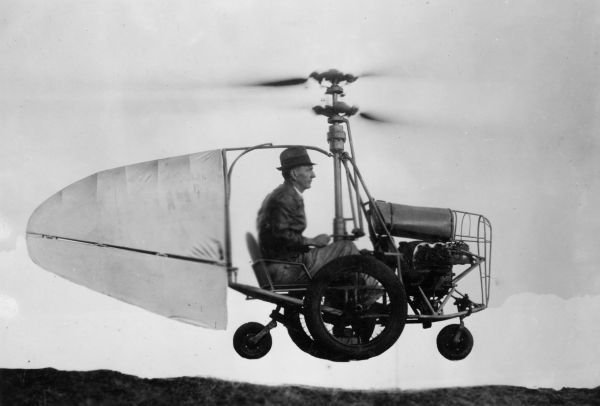
That has been suggested before, but the next para in the copied article said: Claims that the photo was actually retouched have since been invalidated, but in the absence of any other piece of evidence, it is hard to know whether Dixon's helicopter was as successful as he hoped. Still, the "Flying Ginny" must have been good enough since it made an impression on the Twin Coach Company of Kent, Ohio, previously known only as builders of motor buses, who hired Dixon and his machine and asked him to improve on it. For more information, Dixon helicopter photo was accurate - The Andalusia Star-News | The Andalusia Star-News WWW.ANDALUSIASTARNEWS.COM In November, I wrote an article for publication in the Star-News. The article was about Jesse Dixon and his helicopter. The article included a photograph of Jesse at the controls of his helicopter and airborne. I...
-
Flying Ginny Jess Dixon of Andalusia, Alabama (1886-1963), was a man continuously investigating mechanical or experimental fields, and he tinkered with almost anything mechanical. Even before receiving any formal flight training, he constructed and flew a glider of his own design that was flown successfully from Dixon airport. Tired of being tied up in traffic jams, he then devoted his efforts in 1936 to the development of a unique flying machine, a combination of automobile, helicopter, autogiro, and motorcycle. Dixon spent a lot of his spare time at the local airport with some of the early pilots and worked on gliders as well as his helicopter project. He did make a considerable contribution to the development of the machine and sought a patent on some of the apparatus that controlled the pitch of the blades. He then built a framework to hold a motor and provide a seat for the pilot. The “Flying Ginny,” as Dixon liked to call it, was designed to allow for the transfer of engine power from the rotor blades to the wheels, which enabled its operation on surface roads. For flight and hover, it had two large lifting rotors in a single head, revolving in opposite directions, with cyclic and collective pitch control. Foot pedals actuated a hinged vane on the tail, counting on rotor downwash for yaw control. The undesignated machine could fly forward, backward or straight up, or hover in the air. It could run on road or fly across country. Although Dixon himself called it a "helicopter", it was just as much an automobile, and even required automobile license plates. Powered by a 40 h.p. air-cooled angine, the Dixon helicopter could reach speeds to 100 m.p.h. and was supposedly test-flown in 1940-41. However, only one photograph of the type is known to exist, and although it appears that the machine is actually flying in that picture, no records have survived of the test flights. At times, Dixon would take ropes and tie the machine to the ground and the overhead blades would actually lift the machine. Initially, he had a big tail that was not enough to handle that torque, and that eventually brought about the tail fin motor.
-
 The Aeronca L is a 1930s American cabin monoplane designed and built, in small numbers, by Aeronca Aircraft. It differed significantly from other Aeronca planes by the use of radial engines, streamlining, and a cantilever low wing. Quite unlike other Aeronca designs, the Model L was a "cantilever" (no external struts for bracing) low-wing monoplane, that featured side-by-side seating in a completely enclosed cabin. The design reflected the greater attention being paid to aerodynamics in the period, including large wheel spats for the fixed undercarriage and a Townend ring for the engine. The aircraft was of mixed-construction with a welded steel fuselage and wings with spruce spars and ribs, all covered with fabric. Initial attempts to use Aeronca's own engines proved inadequate, and the company turned to small radial engines from other suppliers, particularly neighboring Cincinnati engine manufacturer LeBlond. The Model L was mainly flown by private pilot owners. The plane was not a big seller. Difficulty with engine sources, and a destructive flood, in 1937, at Aeronca's factory at Cincinnati's Lunken Airport, took the energy out of the program, and Aeronca went back to high-wing light aircraft. With the end of sales to Aeronca, LeBlond sold their engine-manufacturing operation to an Aeronca-rival planemaker, Kansas City-based Rearwin Aircraft, who resumed production of the engines under the brand name "Ken-Royce," largely for use in Rearwin planes. Variants LA Fitted with a 70 hp (52 kW) LeBlond 5DE engine, 9 built LB (Images this page) Fitted with an 85 hp (63 kW) LeBlond 5DF engine, 29 built LC (Specificatiions below) Fitted with a 90 hp (67 kW) Warner Scarab Jr engine, 15 built LCS A single LC, [NC16289], was fitted with floats to become the LCS, carrying a load of 659 lb (299 kg) for 450 mi (391 nmi; 724 km) at 100 mph (87 kn; 161 km/h). LD Fitted with a 90 hp (67 kW) Lambert R-266 5-cyl. radial engine
 -
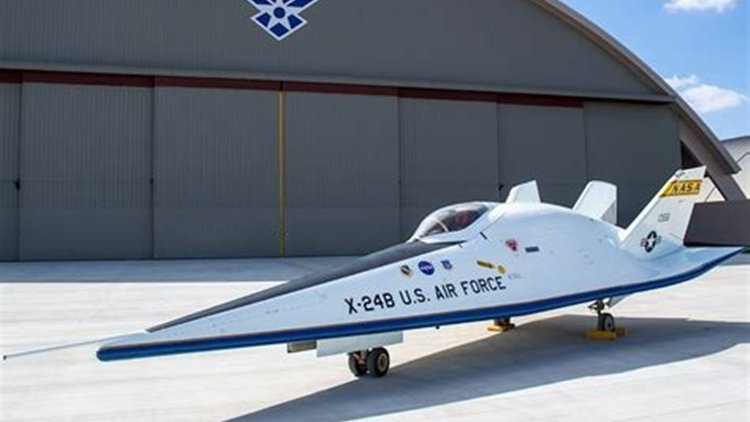
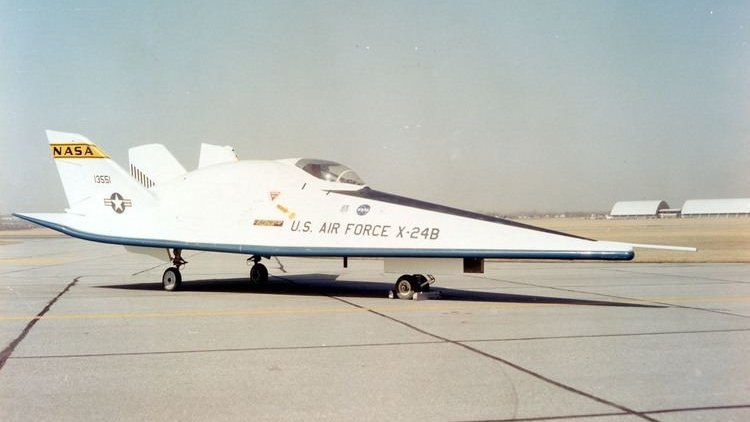
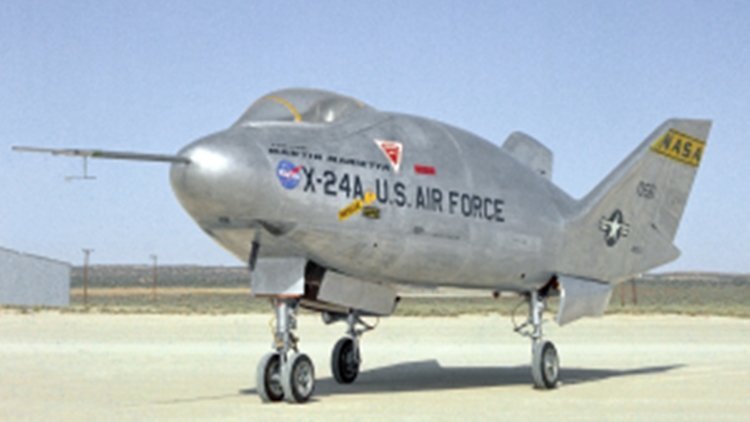
The Martin Marietta X-24 is an American experimental aircraft developed from a joint United States Air Force-NASA program named PILOT (1963–1975). It was designed and built to test lifting body concepts, experimenting with the concept of unpowered reentry and landing, later used by the Space Shuttle. Originally built as the X-24A, the aircraft was later rebuilt as the X-24B. The X-24 was drop launched from a modified B-52 Stratofortress at high altitudes before igniting its rocket engine; after expending its rocket fuel, the pilot would glide the X-24 to an unpowered landing. The X-24 was one of a group of lifting bodies flown by the NASA Flight Research Center (now Armstrong Flight Research Center) in a joint program with the U.S. Air Force at Edwards Air Force Base in California from 1963 to 1975. The lifting bodies were used to demonstrate the ability of pilots to maneuver and safely land wingless vehicles designed to fly back to Earth from space and be landed like an airplane at a predetermined site. Lifting bodies’ aerodynamic lift, essential to flight in the atmosphere, was obtained from their shape. The addition of fins and control surfaces allowed the pilots to stabilize and control the vehicles and regulate their flight paths. The X-24 (Model SV-5P) was built by Martin Marietta and flown from Edwards AFB, California. The X-24A was the fourth lifting body design to fly; it followed the NASA M2-F1 in 1964, the Northrop HL-10 in (1966), the Northrop M2-F2 in 1966 and preceded the Northrop M2-F3 (1970). The X-24A was a fat, short teardrop shape with vertical fins for control. It made its first, unpowered, glide flight on April 17, 1969 with Air Force Maj. Jerauld R. Gentry at the controls. Gentry also piloted its first powered flight on March 19, 1970. The craft was taken to around 45,000 feet (13.7 km) by a modified B-52 and then drop launched, then either glided down or used its rocket engine to ascend to higher altitudes before gliding down. The X-24A was flown 28 times at speeds up to 1,036 mph (1,667 km/h) and altitudes up to 71,400 feet (21.8 km). X-24B The X-24B's design evolved from a family of potential reentry shapes, each with higher lift-to-drag ratios, proposed by the Air Force Flight Dynamics Laboratory. To reduce the costs of constructing a research vehicle, the Air Force returned the X-24A to the Martin Marietta Corporation (as Martin Aircraft Company became after a merger) for modifications that converted its bulbous shape into one resembling a "flying flatiron"—rounded top, flat bottom, and a double delta planform that ended in a pointed nose. John Manke was the first to fly the X-24B, a glide flight on 1 August 1973. He was also the pilot on the first powered mission 15 November 1973. The X-24A was modified into the more stable X-24B with an entirely different shape in 1972. The bulbous shape of the X-24A was converted into a "flying flatiron" shape with a rounded top, flat bottom, and double delta planform that ended in a pointed nose. It was the basis for the Martin SV-5J. The X-24A shape was later borrowed for the X-38 Crew Return Vehicle (CRV) technology demonstrator for the International Space Station. X-24C There were a variety of "X-24C" proposals floated between 1972 and 1978. Perhaps the most notable was a Lockheed Skunk Works design, the L-301, which was to use scramjets to reach a top speed of Mach 8. X-24B
-
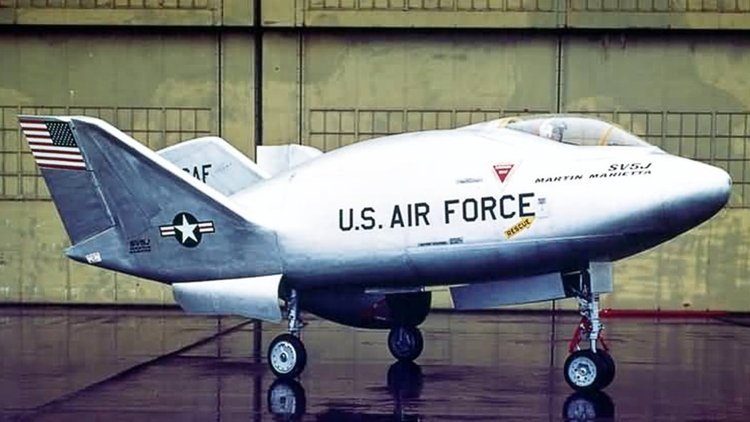
Martin SV-5J After learning about a remark by Chuck Yeager that he would like to have some jet-powered lifting bodies for training purposes, Martin designed and built, on their own initiative, two examples of the SV-5J. The SV-5J was a jet-powered version of the rocket-powered X-24A. The SV-5J had identical dimensions to the X-24A, but was powered by a single Pratt & Whitney J60-PW-1 jet engine of 1360 kgf, in place of the X-24A's Reaction Motors XLR-11-RM-13 rocket engine. Martin also manufactured a full-scale, unflyable, mock-up of the SV-5J. (Confusion over number built may be due to the mock-up being included in the production list.) Martin were unable to convince Milt Thompson to fly the SV-5J, even after offering a $20,000 bonus. Both examples remained unflown. As the original X-24A was converted to X-24B, one of the SV-5Js eventually was converted to represent the X-24A, for display at the National Museum of the United States Air Force, Wright-Patterson AFB, Ohio, beside the original X-24B.
-
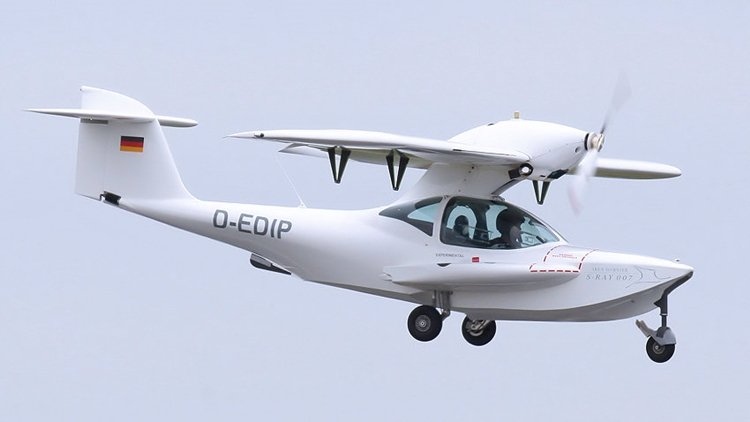 The Dornier S-Ray 007 is a two-seat amphibious aircraft concept designed by Dornier Technologie. The concept is similar to that of the Dornier Libelle from the 1920s, and thus originally, the aircraft also carried the name Dornier Libelle. However, it was later changed to Dornier Stingray. Before the first aircraft could be built, the name was changed a third time to the Dornier S-Ray 007. The leader of the project is Iren Dornier , grandson of Claude Dornier and owner of Dornier Technologie. The flying boat is a high-wing aircraft, featuring a one-piece wing which is connected with the centrally-mounted Rotax 912S engine and propeller, on a stable aerodynamically-shaped central support pylon, to the fuselage. The S-Ray 007 is built from reinforced plastics with carbon fibre reinforcements, which makes the flying boat very resistant to salt water. The aircraft is equipped with retractable landing gear, and two 50 litre fuel tanks. The maiden flight of the Dornier S-Ray 007 was held on 14 July 2007 at Friedrichshafen airport, and the aircraft was piloted by Gerhard Thalhammer.
 -
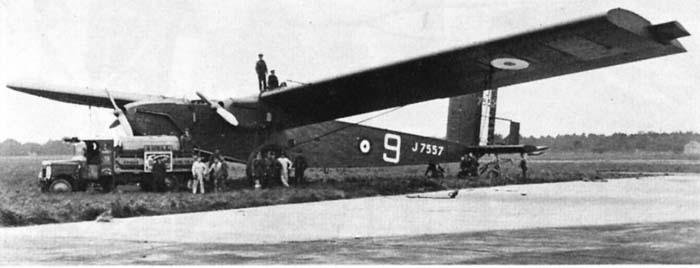
The Beardmore Inflexible, also known as the Rohrbach Ro VI, was a three-engined all-metal prototype transport aircraft built by William Beardmore and Company at Dalmuir, Scotland. William Beardmore and Company had acquired a licence for the use of the Rohrbach principle for stressed-skin construction. Using these principles and drawings supplied by Rohrbach for the RoVI, the Beardmore company built a massive all-metal three-engined transport, the Beardmore Inflexible. The aircraft was built in sections at Dalmuir between 1925 and 1927 which were shipped by sea to Felixstowe and from there delivered by road to the Aeroplane & Armament Experimental Establishment (A&AEE) at Martlesham Heath Airfield where it first flew on 5 March 1928. It appeared at the Hendon RAF Display later in the year. The aircraft was structurally advanced for its time and had good flying qualities. It was also a very large aircraft for the time, having a wingspan of 157 ft (48 m) - around 16 ft (4.9 m) greater than the Boeing B-29 Superfortress heavy bomber of World War II. However, with an all up weight of 37,000 lb (17,000 kg) it was underpowered and, with no interest forthcoming from the RAF for a production contract, the aircraft was dismantled at Martlesham Heath in 1930. It was then examined for the effects of corrosion on light-alloy stressed skin structures. One of the aircraft's wheels survives, and is on exhibit in the Science Museum, London.
-
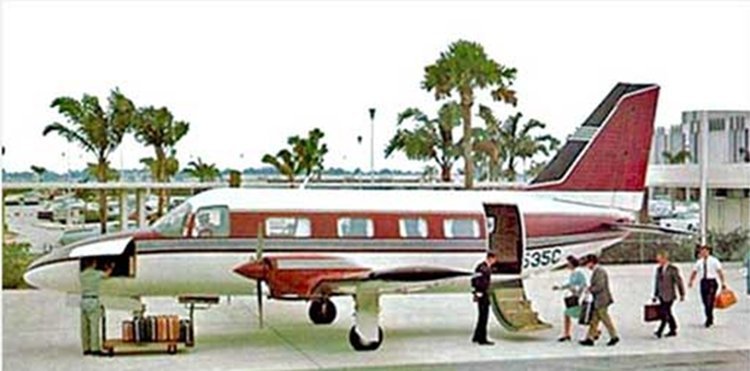
The Piper PA-35 Pocono was an American 16/18 seat commuter airliner developed by Piper in the late 1960s. Only one aircraft was built and the design was not developed. Piper started the design work in 1965 for a twin-engined piston non-pressurized commuter airliner and the prototype first flew on 13 May 1968. It was a low-wing monoplane that was intended to be powered by two 475 hp (354 kW) Lycoming TIO-720-B1A piston engines then under development. It was planned that the aircraft would be built at the new factory at Lakeland Municipal Airport in Florida. Due to problems during development the tail area was increased, the fuselage stretched and the engines uprated to 520 hp (388 kW) variants. Development was stopped in 1969 initially to let the company develop other aircraft, but the halt was also influenced by the lack of a suitable engine and a number of third-level airline operators in the United States going out of business. In 1970 the company proposed a four-engined and a turboprop version, but they were not developed. In about 1978 a cooperation program between Piper and WSK Mielec (Poland) was planned. As part of this one fuselage with wings was transported from Florida to Poland and a team of designers was assembled at the R&D Center in Mielec. The program was named M-19, with designer Tadeusz Widełka as the team leader. The program was abandoned when the An-28 program was launched in Mielec and the PA-35 fuselage was moved to the Technical University in Rzeszów. Later, probably in 1994, the aircraft was moved to the city of Widełka.
-
A new ceiling fan for the loungeroom
-
Instrument flight panel
-
 https://www.dailymail.co.uk/news/article-13923303/Sale-plane-crash-Victoria-RAAF.html?ito=social-facebook
 -
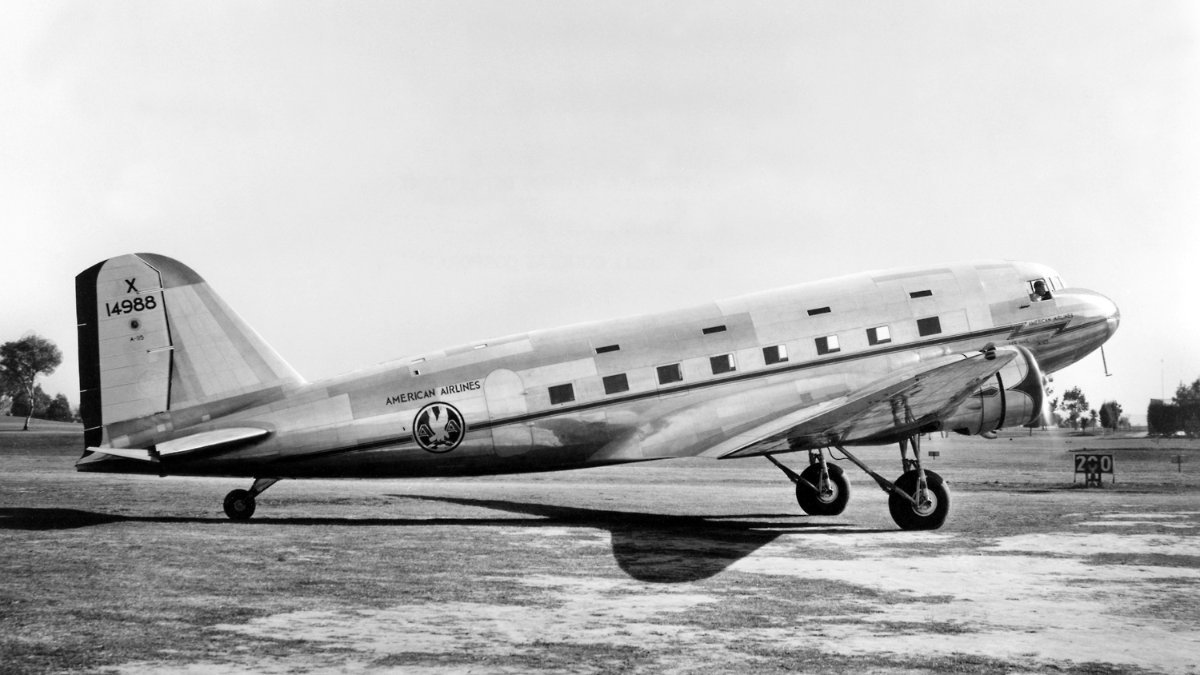
Right OT, the Douglas Sleeper Transport, identified by the upper level windows.
-
-
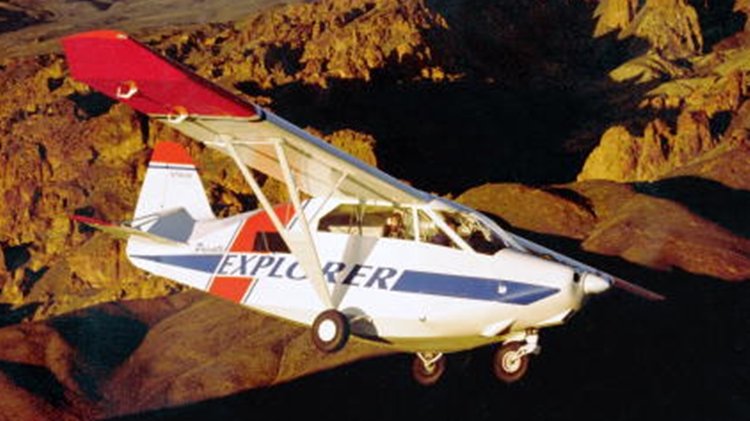 The Wilson Private Explorer is an American-built recreational aircraft of the late 1990s. The Private Explorer was designed by Hubert de Chevigny as a scaled-down single-engine version of his twin-engined Wilson Global Explorer. The Private Explorer is a strut braced high wing aircraft which utilises a tubular steel frame covered in fabric. The interior has four passenger seats in the front section and a rear accommodation compartment which contains a double bed and two armchairs. The tricycle undercarriage is fixed and can be quickly removed for attachment of floats for operations off water. Various Lycoming engines have been fitted ranging from 235 to 300 hp (175 to 224 kW). The aircraft has an excellent short-field performance and an endurance of up to 8 hours. The aircraft is supplied to amateur constructors in kit form. The type has been tested with a Pratt & Whitney Canada PT6 turboprop engine.
 -
Enough PUNishment.
-
The struts under the engines disprove that.
-
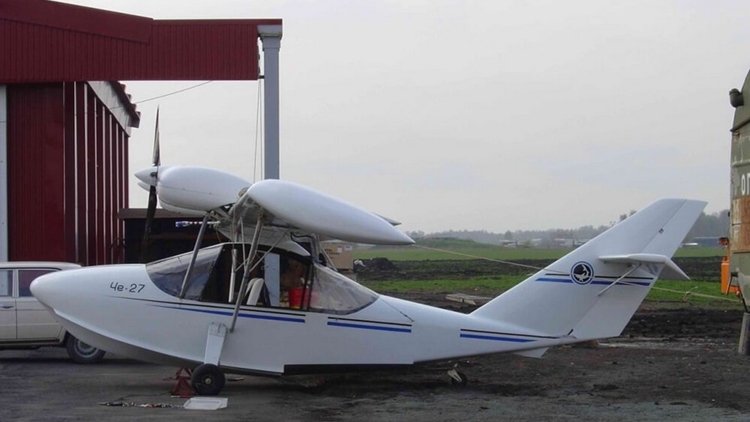 The Chernov Che-25 is a four-seat, twin engine parasol wing amphibious flying boat built in Russia in the 1990s. The Che-27 is an enlarged, five seat version. The Che-25 is very similar in general appearance to earlier Boris Chernov designs such as the two seat Korvet and the Chernov Che-23 but is a four-seat aircraft, with both span and length increased. It has an unswept, straight edged constant chord wing made from riveted duralumin, with a single spar. Lateral (roll) control is by full span flaperons and stability on the water is maintained by downturned fiberglass tips which act as simple floats. The parasol wing is braced by a single streamlined strut on each side to mid fuselage, assisted by jury struts, flying wires and a central section cabane. The twin engines are mounted above the wing leading edge. They can be either 47.8 kW (64 hp) Rotax 582 UL-2V air and water cooled, twin cylinder two strokes or 73.5 kW (99 hp) Rotax 912 ULS water cooled four stroke flat fours. The Rotax 582s are mounted uncowled and drive a two bladed propeller but the 912 installation is cowled, with three-bladed propellers. The Che-25 has a flat sided, two step hull formed from a vacuum moulded fibreglass sandwich. The integral fin forms a cruciform tail with a swept, tapered, straight edged fin initially carried a balanced rudder, though the Che-25M variant with its higher tailplane abandoned the balance. The underwing cabin has dual controls and is entered via gull wing doors. There is a water rudder attached just aft of the rear step. The optional land undercarriage has mainwheels on mid-fuselage mounted legs, which rotate forward through 90° to allow water landings, and a tailwheel fixed to the water rudder. The Che-25 was built by the student design bureau SKB-1 and first flew in 1995. It appeared in public in September 1996 at the Hydroaviasalon show in Gelendzhik. The Che-25M was displayed at the 1999 MAKS airshow, Moscow. Current production plans are not known. Variants Che-25 Original version. Che-25M (Specifications with Rotax 912 below) Raised tailplane, rudder balance removed. BD-205 Chinese version of Che-25 marketed by the Harbin Institute of Technology. Che-27 "Practically indistinguishable" from Che-25M with the same engine choices, weights and dimensions but 1.00 m (39.4 in) longer, a wider wheel track due to splayed undercarriage legs and five seats. First flown June 2003 and exhibited at the Moscow Aerosalon in August 2007. Che-25 Che-27
 -
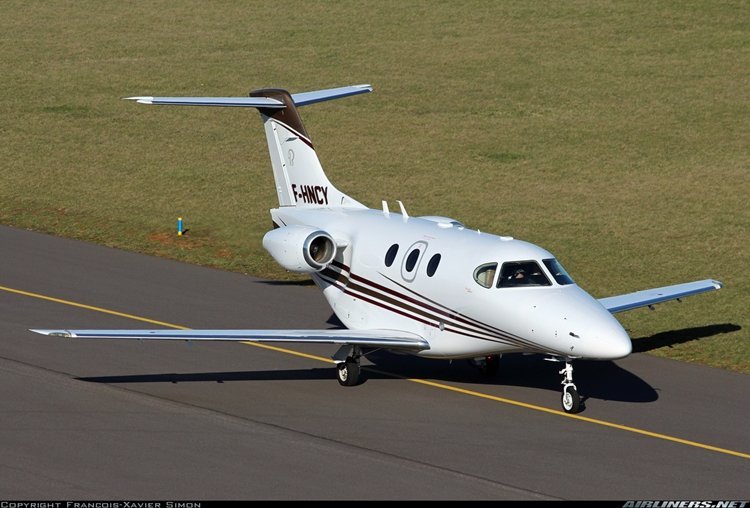
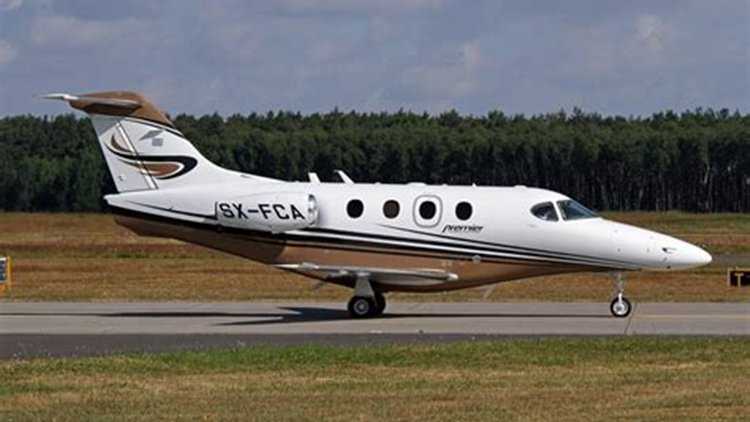 The Beechcraft Premier I is a light business jet aircraft manufactured by the Beechcraft division of Hawker Beechcraft. The aircraft was designed to compete with the Cessna CitationJet series of aircraft. Design of the Premier I began early in 1994 under the designation PD-374 (PD for Preliminary Design), and development was authorized to continue early the following year. The aircraft was officially launched at the annual National Business Aviation Association Convention in September 1995 and construction of the first prototype commenced late in 1996. In the mid-1990s, the light jet was to be priced at $5 million. The Premier I prototype was rolled out on 19 August 1998 and its first flight was on 22 December 1998; four prototypes were used in the flight test program. Its FAA Type Certificate was issued on 23 March 2001. After development delays, the aircraft entered service in 2001 but with poor runway performance, erratic lift dump and brakes, a noisy cabin and a substandard cockpit. It was upgraded as the Premier IA in 2006 for $7 million with improved brakes, avionics and cabin, and 163 were built in five years. It was certified on 22 September 2005. The Premier I is constructed with a high-strength composite, carbon fiber/epoxy honeycomb structure fuselage. The Premier I and IA can be certified as light aircraft for operation by a single pilot. The powerplants are Williams International FJ44-2A engines. Its cabin is nearly as wide as a Citation Excel with 3 in (76 mm) less headroom, and seating is 11.2 ft (3.4 m) long, similar to a CJ2, with a four-seat club plus two aft chairs and an enclosed, 2.3 ft (0.70 m) long aft lavatory. BOWs are usually around 8,400 lb (3,800 kg), leaving 570 lb (260 kg) for the payload at full tanks. The Premier 1A has a Mach 0.8 MMo, 451 kn (835 km/h) cruise at FL310 and a 817 lb (371 kg)/h fuel burn at 424 kn (785 km/h) and midweight. It can fly four passengers over 1,105 or 1,365 nmi (2,046 or 2,528 km) with two passengers and can take off within 3,792 ft (1,156 m) at ISA temperatures and sea-level. Line maintenance comes at 200-hour intervals, A checks at 600 hours and B checks at 1,200 hours, plus calendar inspections, approximating $300 per hour (2019). Engine maintenance is budgeted for $300 per hour for both (2019), with 2,500-hour hot section inspections and 5,000 hour TBOs. Variants Premier I - basic version, introduced in 2001. Premier IA - new cabin interior and improved systems. (Specifications below)
 -
Aeroplane yoga.. Hurricane damage USA
-
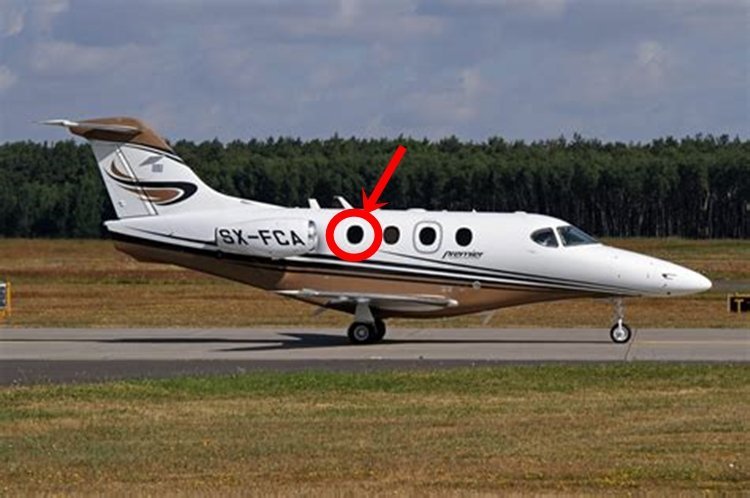
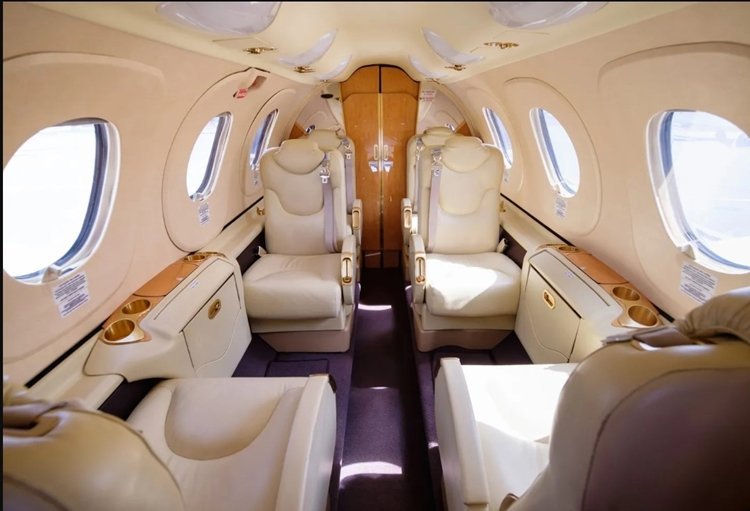
The fourth window on the Beechcraft Premier 1 is a decal to balance the look of the aircraft exterior. A look inside shows only 3 windows. The fourth window would be in the toilet. The actual exterior is shown below.
-
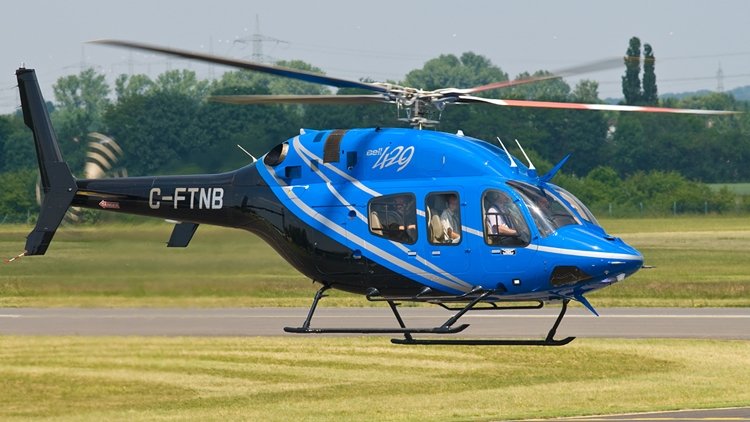 The Bell 429 GlobalRanger is a light, twin-engine helicopter developed by Bell Helicopter and Korea Aerospace Industries. The first flight of the prototype took place on February 27, 2007, and the aircraft received type certification on July 1, 2009. The Bell 429 is capable of single-pilot IFR and Runway Category A operations. The impetus for developing the Bell 429 came primarily from the emergency medical services (EMS) industry. The Bell 427 was originally intended to address this market, but the 427's small cabin size would not adequately accommodate a patient litter, and the systems did not support instrument flight rules (IFR) certification. Bell's original concept for the 429 was a stretched model 427 (unveiled as the Bell 427s3i at the 2004 HAI helicopter show), but this still did not provide what Bell and its customer advisers were looking for. Bell abandoned the 427 airframe and went to its MAPL (Modular Affordable Product Line) concept airframe[8] that was still in conceptual development at the time. The 429 employs the all-new modular airframe concept and the advanced rotor blade design from the MAPL program, but maintains a derivative engine and rotor drive system from the 427. The basic model includes a glass cockpit and is certified for single pilot IFR. Bell partnered with Korea Aerospace Industries and Mitsui Bussan Aerospace of Japan in the helicopter's development. Bell had flown most of the critical MAPL technology components, using a 427 testbed aircraft, by February 2006. The first completed 429 flew on February 27, 2007. Certification was originally planned for late 2007, but program schedule delays, primarily caused by parts and material shortages common to all aviation manufacturers in that time period, caused the manufacturer to stretch the development timetable. In October 2007, the external configuration was set. In February 2008, Bell had three 429s in flight testing that had completed 600 flight hours. Its high-altitude testing was conducted in Colorado and its high-temperature testing in Arizona. The helicopter received type certification from Transport Canada Civil Aviation (TCCA) on July 1, 2009, and from the Federal Aviation Administration (FAA) by July 7, 2009.[14] EASA certification was announced at Helitech on September 24, 2009. TCCA and authorities in some other countries later approved an increased weight exemption for the aircraft. However, FAA and EASA disagreed with the weight exemption, which had allowed the 429 to operate for the Canadian Coast Guard. For details of design and operational history, click here.
 -
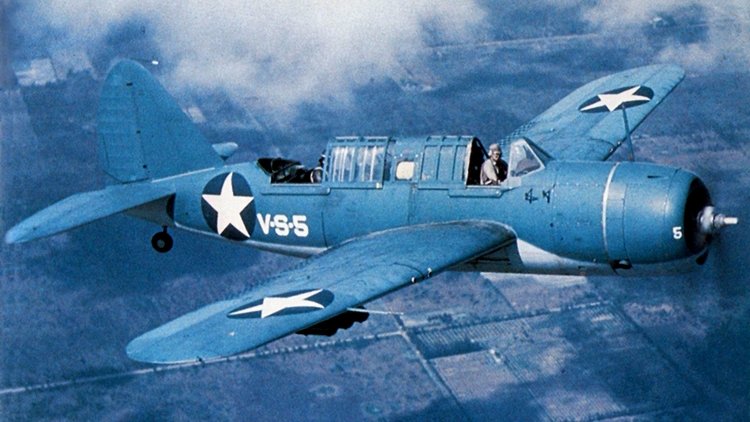 The Brewster SB2A Buccaneer (Brewster Model 340) is a single-engined mid-wing monoplane scout bomber aircraft built by the Brewster Aeronautical Corporation for the United States Navy between 1942 and 1944. It was also supplied to the Royal Air Force (RAF), United States Army Air Forces, and United States Marine Corps. The Buccaneer was overweight and lacked maneuverability, and has been described as a "classic failure." While designed as a scout bomber, none saw combat, although a number found use in noncombat roles. The SB2A was developed for the US Navy, and also ordered in large quantities by the Dutch, French, and British Governments. The Dutch order was later taken over by the US Navy and the French order by Britain. An Australian order was cancelled before any of the types were delivered. The Buccaneer was underpowered and poorly constructed, and all of its operators considered it to be unsuitable for combat. SB2As were used as target tugs by the RAF and US Navy, trainers by the USMC, and "hacks" by the USAAF. Many of the completed aircraft were scrapped without entering service. The type is considered by historians to have been among the worst of World War II. The Brewster Corporation itself went out of business in 1946. In early 1939 the United States Navy's Bureau of Aeronautics launched a program to develop larger scout/bombers to operate from the Navy's aircraft carriers. In April that year the Brewster Aeronautical Corporation was selected to build a prototype of its Model 340 design to meet this requirement; this aircraft was to be designated the XSB2A-1. The Navy had ordered a prototype of the Model 340/SB2A in April 1939. The XSB2A-1's design was heavily based on the earlier Brewster SBA scout-bomber. It shared the single-engined, mid-winged monoplane layout of the earlier aircraft, but was larger and had a more powerful engine. The XSB2A-1 was powered by a single Wright R-2600 engine which drove a three-bladed propeller. It was armed with two forward-firing 0.50-inch calibre machine guns in the fuselage and two 0.30 machine guns in each wing. The type was initially intended to have an enclosed gun turret and could carry up to 1,000 pounds (450 kg) of bombs in an internal bomb bay. The first XSB2A-1 prototype commenced flying trials on 17 June 1941. The results of this testing and changing requirements led to significant changes to the design. These included the airframe being lengthened by 1 foot and two inches, the turret being replaced by a flexible mount in the rear of the cockpit for a pair of 0.30 machine guns, the addition of armour and self-sealing fuel tanks, and changes to the design of the fins and canopy. The combined effect of these changes resulted in the aircraft's weight increasing by almost 3,000 pounds (1,400 kg), which greatly reduced its speed, weapons load, and flying range. For more details, including 6 variants, click here.
 -
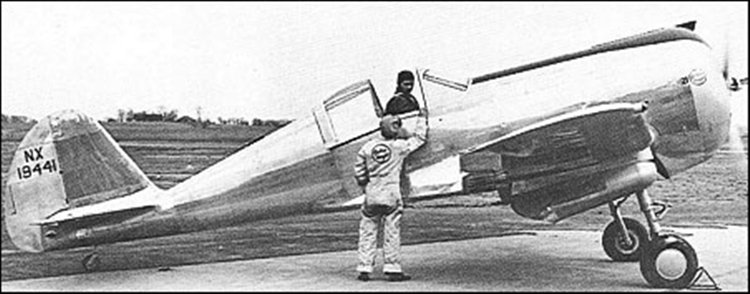 The Curtiss-Wright Model 21 (also known as the Curtiss-Wright Model 21 Demonstrator, the Curtiss-Wright CW-21 Interceptor, the Curtiss-Wright CW-21 Demon) was an American fighter-interceptor developed by the St. Louis Airplane Division of Curtiss-Wright Corporation during the 1930s. In 1938, George A. Page, head of the Saint Louis Airplane Division of Curtiss-Wright, decided to develop a fighter aircraft based on Carl W. Scott's two seater Model 19. Page's concept was a lightweight fighter interceptor with as high a rate of climb as possible in order to allow bomber formations to be attacked with minimal warning. If faced with fighter opposition, it was intended not to dogfight, but to use its superior climb rate to escape. While this was a direct contradiction to the United States Army Air Corps′ requirements for fighters (which stressed low-level performance), this did not concern Page, since the new fighter was intended for export. Detailed design of the new fighter, the Model 21, or CW-21, was carried out by a team led by chief engineer Willis Wells. It was a single-seat, all-metal cantilever low-wing monoplane with retractable tailwheel landing gear, where the mainwheels retracted rearwards into fairings under the wing. The fuselage was a semi-monocoque structure that tapered sharply behind the pilot's cockpit. It was powered by a 1,000 hp (750 kW) Wright R-1820-G5 nine-cylinder air-cooled radial engine. It was designed to carry various combinations of two .30 in (7.62 mm) or .50 in (12.7 mm) machine guns, mounted in the nose and synchronized to fire through the propeller, while no armor or fuel tank protection was fitted in order to save weight and hence improve performance. The prototype first flew on 22 September 1938, carrying the civil experimental registration NX19431. Although the CW-21 was not commissioned by the U.S. military, it was test flown at Wright Field in Dayton, Ohio. The Army Air Corps immediately rejected the aircraft, with one officer commenting that it took a genius to land it. Variants Model 21 Interceptor. One prototype built in 1938 (c/n 21-1 / NX19431). Three production units and a total of 27 sets of components shipped to the Republic of China to be assembled by CAMCO. Easily identifiable by the Seversky P-35 type of main undercarriage fairings; 31 built (unknown number assembled and flown). Model 21A Interceptor. Proposed design to use the Allison V-1710; not built. Model 21B (Specifications below) Interceptor. A total of 24 built for the Netherlands East Indies, easily identifiable by the inward retracting main landing gear, that eliminated the need for the undercarriage fairings notable on the Model 21. For details of operational history, click here.