


turboplanner
-
Posts
24,363 -
Joined
-
Last visited
-
Days Won
159
Content Type
Profiles
Forums
Gallery
Downloads
Blogs
Events
Store
Aircraft
Resources
Tutorials
Articles
Classifieds
Movies
Books
Community Map
Quizzes
Videos Directory
Posts posted by turboplanner
-
-
Why the last 10 years?I could be wrong but I don't think there are any ATSB investigations in the last ten years that showed corrosion or metal fatigue caused the accident.
You certainly have to make a safe ditching, but then the aircraft sinks; the problem is recovering waterlogged people before they drown, die of hypothermia, or drift off and are not found; it's a time problem.Cirrus is one aircraft that can guarantee a safe water landing if the wind is not to strong -
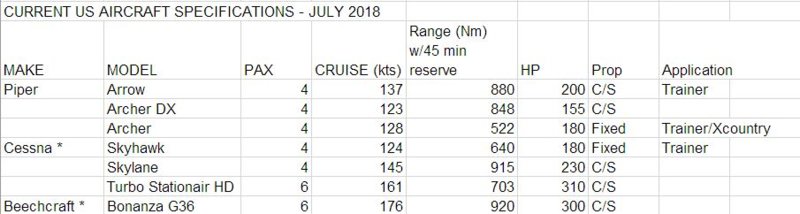
Cirrus and Lancair are both selling into that market. Both require a high standard of skills to operate efficiently and safety, and it's unfortunate that we best know them from the wallet orientated pilots dropping in from above. What struck me when I pulled the 2018 Cessna/Piper/Beechcraft data was the removal of the lower level aircraft, which people had come unstuck with on long trips, due to weather etc., and a training designation including C/S prop, but when you think about it, this would be a good path to being proficient in engine management before stepping into something like a Cirrus.Cirrus have been very popular in recent years and would qualify as the new GA standard, at considerable cost.-
 1
1
-
-
The thread is about someone wanting to cross Bass Strait to then fly to destinations around Australia, and Jethro suggested than an LA might be more reliable than an old Cessna 150.Any ATSB accident reports that show the cause as old ?I said I wouldn't start with less than a Cessna 182 RG, and I quoted his "old' in inverted commas, and I added the proviso "unless the aircraft is maintained to current condition"
If you want it to be at thesis level, the wording should be old, unless the aircraft is maintained to a level where all components are within as new tolerances.
I don't think you will find any ATSB reports listing the cause of a crash as "the aircraft was old", but you'll find plenty where a component has become unserviceable in flight, or failed during the flight due to exceeding its life cycle.
That's CASA's requirement, and the theory, but in practice that doesn't always happen. Just a few days ago I read about a Cessna which had been signed off for SIDS with corrosion areas not fixed, several instruments faulty, and one out of three radios working. I wouldn't want to hire that one past the taxying stage.GA are maintained by independent lame to current regs
Again, I was just replying to a post, not writing a thesis, and used a C182 RG, a well know aircraft, as a baseline on what I would use to cross Bass Strait.Last new C182 RG was built in 1984Facthunter also mentioned that a high wing aircraft wasn't good for ditching.
So, if you both like I can change the wording to "mechanical and avionics specifications similar to, but in no way restricted to, and aircraft such as the Cessna 182 RG"
Since that's still just my opinion, we could go on forever.
The GA sector, badmouths its fleet by repeatedly referring to "40 year old aircraft", "60 year old aircraft" etc as if this was the norm, along with some of the RA people, so it's not surprising that someone doing research would not be affected by this and may come to the conclusion that a new RA aircraft may be more reliable than "old" GA aircraft, as if that industry was dying, and only using up old 1950s and 60s aircraft until they land on the scrap heap, but that's no different to the scene in the 1960s when many flying schools were still using tiger moths, and byplanes from the 30s.
So country airfields may be using those old Cessnas and Pipers for low volume reasons, but you'll find current model GA aircraft right round Australia in the capital cities.
Here's a chart of the current versions of the makes and models that peaked in popularity in the 60s and 70s. There are plenty of new manufacturers, but I'm just keeping this simple.
Cessna, Beechcraft and Hawker aircraft are now owned and manufactured by Textron: Home
Piper are still manufactured by the Piper company: Piper.com - Piper
Where the manufacturer has specified a limited application, such as "Trainer", I've noted it, and you'll see that today's Cessna 172 equivalent is listed as a Trainer, with a fixed prop, and the 182 equivalent, the Skylane has constant speed prop and cross country performance (which is where I was coming from in my comment to Jethro.
If you go on to the company websites and look at the Avionics Specifications for each model, it makes it much clearer which models would be suitable for Bass Strait (or outback Australia).

-
Might pay to have a look at the title of this thread.It's nature's way of maintaining the breed. Slower, dumber ones get eaten.. No surprise there. Nev -
I wouldn't think of starting under a Cessna 182 with suitable nav, radio, and I wouldn't go for "old" unless the aircraft is maintained to current condition.I was thinking some of the new LSA were higher performance and possibly safer than and an old Cessna 150. A lot of places I want to go include controlled airspace and Launceston is surrounded by controlled airspace.I'm not sure what a new Cessna RG182 costs, but the 172 is around $350,000, and that's about the same as it always was in terms of average weekly wages. I'd be looking at hire rates on new units at the destinations.
-
 1
1
-
-
No; I think I know what you are trying to do.I was thinking there were Long-Ez aircraft RAA registered (a check only revealed several VariEze) and the new crop of carbon fibre aircraft have ranges qualifying them as touring aircraft. I didn't assess the other equipment like avionics, but expected their relentless miniturisation may have made it possible for small aircraft to be fully kitted.Why not go out to Launceston Airport, have a CFI show you the type of aircraft you would need, and you'll save a lot of time on false leads.
-
 1
1
-
-
Australian Bureau of Statistics, Australian Government This takes you to the front end of the siteHi Turbo, I have difficulty extracting data from the ABS. If you could tell us what the data was, and how you extracted it, that would be super!Across the top are five of the most frequently requested statistics.
In the General search field at the top, you could search for, say Workplace fatalities and injuries, and go through the various links, then the End Note links.
If that doesn't help, put different General Search criteria in, e.g.
Fatal accidents, which links to Yearbook Australia 2009/10 > Contents > Expanded contents > accidents, injuries and fatailties
Or
General search Criteria > Work related injuries >Work related Injuries, Australia > then lots of information can be found, and there is an end note for further research
You just keep looping and following down the chain of links until you find the statistics you need.
-
There are people who have successfully flown RA aircraft across Bass Strait, and one has paddled across in a kayak, and one even made it across on a paddleboard. So it can be done, provided you have the time and patience to wait for a guaranteed calm and VFR crossing, which can be days at a time from each side. The island route has been chosen by many in GA, but some of the islands are so small that even if you could do a spot touch down you would likely bounce off into the swell.Has anyone done/aware of an objective risk assessment comparing the Bass Straight Crossing to flying Canberra to Melbourne (or a motorbike at peak hour, or solo yachting across) for instance? Can anyone advise the practical/standard flight risk assessment approach, other than pilot's gut/experience after reviewing the flight path? Obviously this would be very plane-pilot specific with variables like season and safety arrangements having to be tied down.After the rescue of an ultralight pilot and his passenger a couple of years ago, possibilities of rescue reasonably close to land have opened up, so the unprotected Nm can be assessed as less, but in Bass Strait itself, no one has ever been rescued from a ditching, and rescue equipped helicopters are still fuel-limited, and have to fly from Melbourne to Gippsland to refuel if a central Strait mission is involved.
You have abnormal weather risks, radio transmission risks, engine performance risks, and also a whole lot of others such as a fuel leak, or a control malfunction - the sorts of things easily handled when there are paddocks to drop in on.
RA aircraft are not touring aircraft, even though they have been used for trans-Australia hopping. In a genuine touring aircraft, the radios alone are sometimes worth more than the aircraft itself, and total equipment would be too heavy for an RA aircraft. If they are forced down below VHF line of sight transmission, they can keep communicating on HF, over very long distances.
Safety equipment (life jacket, raft, food, hypothermia clothing), and any camping equipment would ensure an RA aircraft was operating at the top end of its envelope, which is not ideal for the potential risk.
So you are looking at quite an elevated risk above flying the same aircraft over land with plenty of landing spots.
You can flight plan Canberra to Melbourne quite safely away from the alpine region.
The risk compared to road transport is sky high. About 1200 people per year are killed on Australian roads, but that involves over a billion missions.
Even with the current blowout in motorcycle deaths, buying a Harley after never having been on a motor bike is about 20 times safer than normal RA missions.
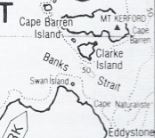
After the rescue of an ultralight pilot and his passenger a couple of years ago, in the more sheltered Banks Strait, possibilities of rescue reasonably close to land have opened up, so the unprotected Nm can be assessed as less, but in Bass Strait itself, no one has ever been rescued from a ditching, and winch equipped helicopters are still fuel-limited, and have to fly from Melbourne to Gippsland to refuel if a central Strait mission is involved.If you survive the crash, flight planning/reporting and EPRIBS/GPS positioning mean you don't have to survive misserable unpleasant shark infested cold water too long (based on reports of those planes that have gone in). That makes it a lot safer than years ago.You will read on these forums of RA GPS failure of up to three in one flight, so that's a potential risk; if you are forced down low, in some areas you will not be able to transmit your position.
Normal EPIRB failures are: in the heat of the moment it was completely forgotten and the people evacuated the aircraft leaving it behind; the pilot was incapacitated before he could trigger it etc. If you can counter these, Canberra will have your position immediately, but you still may have to be in the water for several hours. In one case the ditched pilot's position was pinpointed immediately, about the middle of the day. He had adequate thermal and flotation equipment, and airliners were dispatched successively during the day while a helicopter rescue was attempted, but it wasn't possible to complete the round trip back to Gippsland base, and he was lost.
I don't think fear should enter the decision either, but being objective, the answer is commercial flight to the Mainland, and maybe storing your own aircraft at somewhere like Bacchus Marsh and Lethbridge, or buying a fully equipped touring GA aircraft.I am risk averse, but fear should not enter objective aviation risk assesments. That is what the lay public and oldschool wives are forThe same argument can be put these days if you live in Melbourne and would like to do some flying around Cairns; leg one = Jetstar, then hire locally - easy solution.
-
1
-
-
Cross Bass Strait by Jetstar, hire an ac in Tasmania, cheaper, faster, safer, and hours less planning.
-
1
-
-
Hence you have to do a few days work before drawing the wrong conclusion and misleading people.You are correct. I am not experienced in extracting data from ABS, but that doesn't discount the many studies that have been done.One of the issues with ABS data was that it (from my uneducated view), appeared to lump a lot of things together, for example "technical and trades" is a very broad spectrum and covers a lot of industries. -
I take it from your response in 157 minutes, that you aren't familiar with extracting detailed data from ABS; out of the 12 million workforce, a compelling argument would involve the majority injured in that workforce, or at the very least the majority of an industries injuries.Searching ABS didn't find anything that dared to suggest lack of intelligence might be an issue, however there were quite a number of studies about the relationship between IQ and mortality (including accidents) which oppose your argument. -
That's not correct; A pillar failure is a serious issue because it allows the engine to drop down and flop around, usually taking the firewall with it; it's usually a failure in tension rather than compression and opens the occupants to serious injury. It can be caused simply by harmonics in an open paddock which has been cultivated, where you would least expect to be injured of killed.Regarding failure of the 'A' pillars that is at extreme g loading in a crash and greatly reduces the G load into the pilot cabin and that can be a life saver. Similar to modern cars crumple zones, the best design will crush/disgard structure to take up gLoads and save the pilot. Humans are very poor at absorbing big g loads.-
1
-
-
If you really care about this, I'd suggest you start with the ABS; you have hundreds of thousands of cases to choose from. They won't be quoting an IQ for every case, but a hint is that surveyors and other professionals are above your criteria of "low IQ" or "not so bright".Do you have some evidence for this? I've not been around many accidents/incidents, but those I have seen, are generally the "not so bright". -
It's good that someone comes out and gives us a bit of reality; someone previously mentioned that all three of their systems failed on the one flight.Currently I have to fallback to a Garmin90 because the last 3 GPS3 Pilots have all packed it in, the 90 display is similar to what you have and supplies situational awareness with distance and bearing to any selected waypoint. I carry a paper map but like to be able to give accurate position reportsUsually you can fudge it for a while until you see a recognisable landmark, or you may be flying in the Latrobe Valley where there are mountains to the north and sea to the south, but in some areas everything seems to look the same, and it's easy to mistake one landmark for another. It was during a Nav test, that I picked not only a hill plus a lake, but a railway line as well, and it just happened that there were two of those combinations just a few miles apart. On other occasions, low cloud or fog may obscure landmarks. In rough weather with the aircraft bouncing around, the last thing you want to be doing is reaching around trying to connect and boot up an electrical device, and hope it worked better than the last time.
If you also start to get low on fuel, the situation is elevated, and even reading from mp to ground can be very frustrating in open country. How much easier would it be to take out your phone and see simple bearings to your destination and maybe a couple of alternates to get you back on track.
-
You two might be correct about the systems of YOUR employers, but that is not the case for the majority of companies and organisationsIn any case it means the system is based for the dimmest participant.The proof of that is in the accident statistics, which rarely involve people of low IQ, and have a high percentage of rule flouters, who, after the accident, were found to have removed safety guards, and failed to adhere to safety procedures.
-
There is a big difference between driving to work, and driving within the workplace; understanding that is the first step in not making the comparison you made.The last lot I worked for (same industry) still wanted reporting of incidents to and from work, whether near miss, actual incident or injured wildlife. This lead to the feeling that perhaps these people were running out of thing to keep them employed.It is a little hypocritical I think to regard driving a work vehicle to a recovery as high risk, but the drive to work or to other destinations using a work vehicle don't rate. Either it is high risk or it isn't.We both know that it's not, people just want their backsides covered if anything goes wrong.
-
Driving to work is normally recognised as your responsibility, although the repeated deaths from fatigue and alcohol has led to bus drop offs and puck ups from coastal cities, and from that a drive towards autonomous operations
-
The safety system is the overall assessment of risk and planned response to that risk.the safety system would not be a person pushing a button to save the lives of the joy ridersI'm curious to know what the overall design safety system was supposed to be - there would have to be that basic overall fundamental thing ................ would n't there be ?Many safety systems include a manual shutdown; Someone I know was saved from being dragged by his clothes into a crusher, when he used his radio to call for help and the entire mill conveyor system was shut down immediately.
After an event it's often possible to decide that a simple change could have saved the person, and that change is made, but that doesn't mean the event was forseeable.
-
You've got that back to front; it may have saved the people if the ride had stopped automatically as someone suggested earlier.Post 130 sounds like CASA, or should I say the government.As far as automation making for safety, that would have worked really well in the Dreamworld case, if the participants in the ride had been automatoms.Whenever you mix machinery and people you are asking for problems.
It should be said that we have only been made aware of the statements of a few people from a small area relating that accident, so we can't draw any conclusions at all as to what the cause was or what the safety system was. For example, it could be that in the past, when the water lowered, following rafts just pushed the raft in front further up the framework, so what happened was not forseeable.
-
Drove past there a few weeks ago, it's looking shabby.And I would always contribute at a privately maintained airfield. It’s the Council controlled airports that annoy me intensely.Shepparton introduced landing fees at the beginning of the year and attendance at our flyin breakfasts and lunches has plummeted. Our club spends most of its time trying to raise money to pay the clubhouse and hangar site lease and rates charged by them ($11500 pa).Council has just announced it will,spend $2.1m on bike tracks and not $1 is recovered from users. There is a network of walking tracks around the lake in town, picnic facilities and boating facilities, but no use pays fee. I don’t ride a bike, walk the lake, or picnic there or sail a boat but my rates go to paying for these facilities. I don’t skateboard either but there is a $0.5m skatepark paid for with general rate revenue. I don’t object because they are assets that assist and benefit the community.
BUT so does the airport! We have several flights of the Air Ambulance and RFDS daily. The CFA base their helicopter there over the summer and the pilot, fuel tanker driver and half a dozen CFA guys use our club rooms at no cost. In fact everyone uses our club rooms rather than the terminal.
So I object to them charging fees to visitors arriving in private flights and so obviously do the large number of Pilots now staying away in droves.
Kaz
My guess is the core of flying enthusiasts which made the airport what it was, and constantly reinforced its public service factor, is long gone and their successors are just drifting along.
Bike tracks are the dream of the current generation of Councillors, and more particularly Officers pushing "sustainability" etc.
I was invited to a community meeting by a Councillor this week. An area which was reserved as Green Wedge Zone, had been corruptly changed to residential by a developer, who had on-sold it to real estate agents as soon as it had been rezoned Residential, without changing the country lanes to four lane roads, or providing public transport, schools, health centres, community hubs etc. You'll be irritated to know that you and I are paying for subsidised public transport, and a duplicated school so far, with a community hall and duplicated high school yet to come out of our pockets. The Meeting had been requested by the new residents, who had paid top dollar for homes without services, and now wanted to exclude through traffic from their estate, and ban trucks from "their" roads. All was going well and the Council Traffic Engineer was suggesting that traffic calming devices would be put in the program, when I stood up and explained that the road going through the estate was the main north-south freight route, and trucks could not be banned, and any calming devices would create pressure on the Council to remove them. Not only that, but the Council had rezoned a huge area on that road for Industrial use and already the factories were being built, so the road would be access for hundreds of trucks each day. The traffic engineer looked stunned; clearly no one had told him of the planning decisions, and I imagine it would have been an interesting week inside the Council offices as they try to solve that one.
My point is that the good Councillors and Officers of Greater Shepparton may be completely unaware of the effect on the airport you are referring to.
-
1
-
-
You pay for a touch - the money has to be spent to give you that smooth landing area, and secure the area.
-
1
-
-
It is sad, but that's no reason to tar all the efficient companies with the same brand.
-
If aeronautical engineers are assessing the base design and incremental changes, and there is a test program with a qualified test pilot, what could possibly go wrong?
-
 1
1
-
-
What about the scumbags who don’t pay landing fees?
-
4
-

DreamWorld and the importance of training records.
in AUS/NZ General Discussion
Posted